Cold Email for Beta Testers: How to Recruit Early Users
Learn how to use cold email to recruit beta testers for your product launch. Includes proven templates, targeting strategies, and incentive frameworks that attract engaged early adopters.
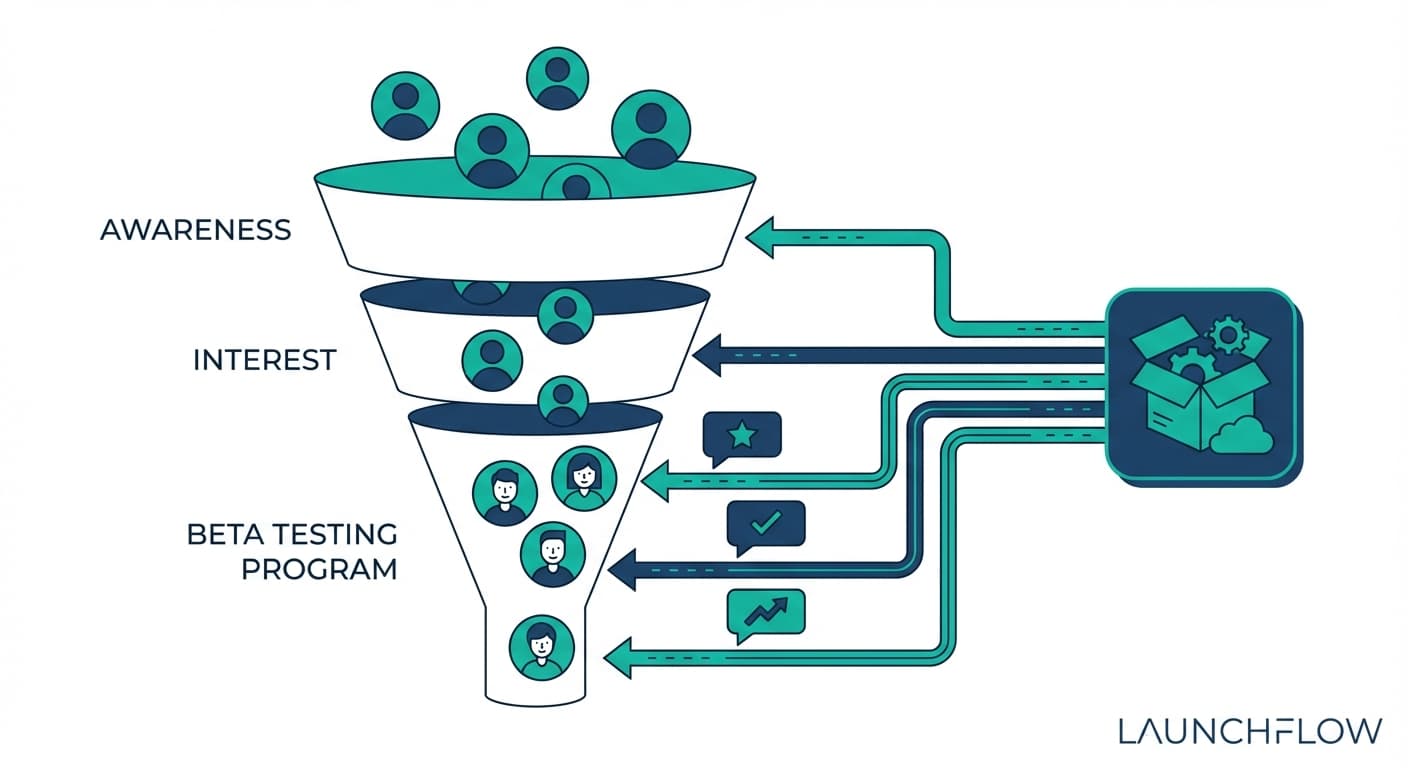
Cold email enables precise targeting of beta testers who match your ideal customer profile, offering direct relationship building and cost efficiency compared to social media or paid ads. Build a list of 200-500 prospects from LinkedIn, industry communities, and product review platforms, then personalize outreach based on specific relevance indicators like problem awareness, technical sophistication, and influence potential to recruit engaged early adopters who will provide substantive feedback.
Key takeaways
- Build a prospect list of 200-500 qualified beta tester candidates to account for typical response rates while keeping the outreach manageable.
- Cold email allows targeted recruitment of testers who match specific criteria including job title, company size, industry, and technology stack, ensuring your beta cohort represents your actual target market.
- Beta testers recruited through personalized cold outreach feel stronger connections to your team and provide more thorough bug reports and candid product feedback than those from passive channels.
- Ideal beta tester profiles should include five dimensions: problem awareness, technical sophistication, communication willingness, influence potential, and conversion likelihood.
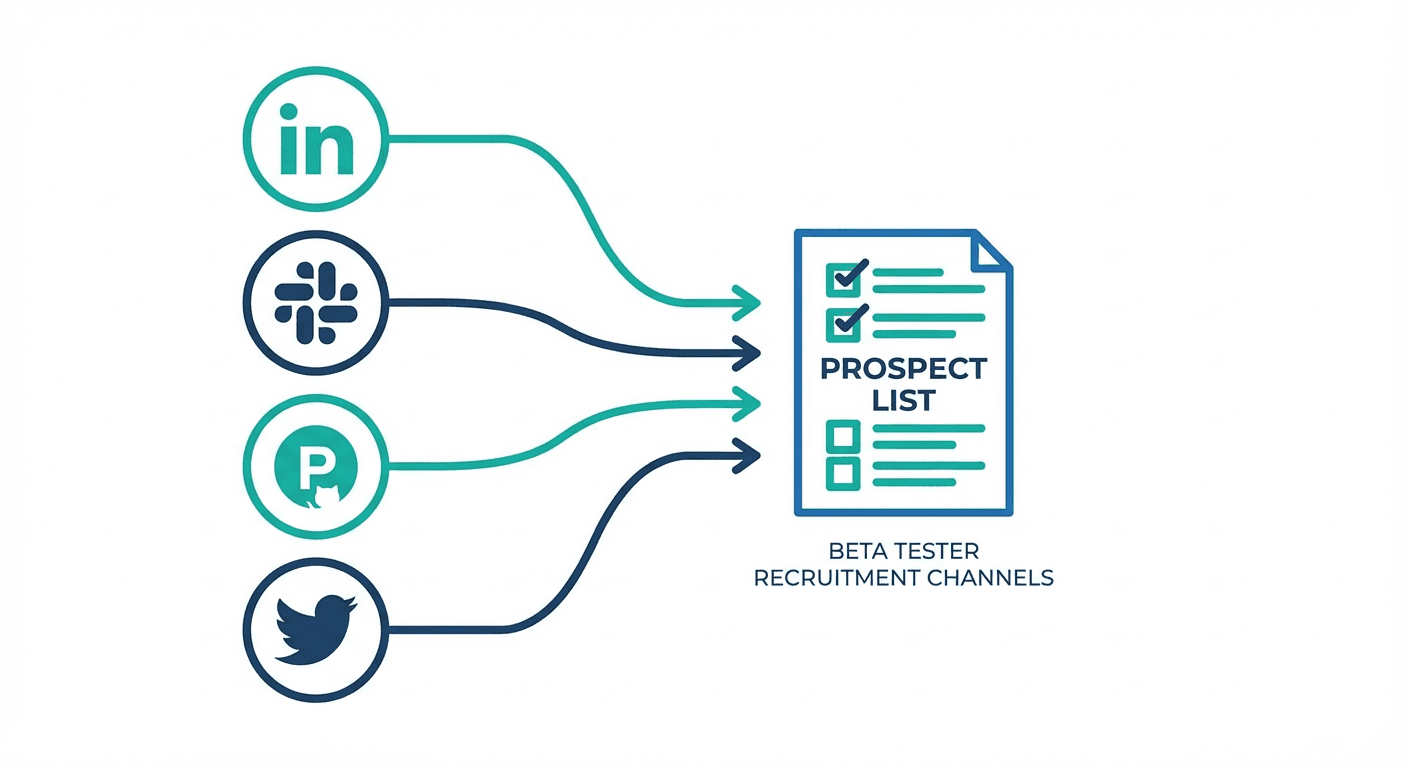
- Prospect sources for beta testers include LinkedIn Sales Navigator, industry communities, product review platforms like G2 and Capterra, conference speaker lists, and content creators discussing relevant problems.
Reviewed and updated September 15, 2026
Cold Email for Beta Testers: How to Recruit Early Users
A SaaS founder spent six months building a project management tool for marketing agencies. When launch day arrived, she had zero users waiting to try it. Her product sat dormant while competitors with inferior features captured the market simply because they had built an audience of beta testers who provided feedback, generated buzz, and converted into paying customers.
Beta testing represents one of the most critical phases of product development. The right early adopters can shape your product roadmap, identify critical bugs, validate your value proposition, and become your first evangelists. Cold email offers a direct, scalable path to finding these ideal testers when your network falls short.
Why Cold Email Works for Beta Recruitment
Traditional beta recruitment methods have significant limitations. Social media posts reach existing followers who may not represent your target market. Community forum posts often attract tire-kickers rather than committed testers. Paid advertising burns budget on users with no investment in your success.
Cold email solves these problems by enabling precise targeting of individuals who match your ideal beta tester profile. You control exactly who receives your invitation, can personalize your pitch to their specific situation, and reach people who would never discover your product through passive channels.
The Strategic Advantage of Cold Outreach
Cold email for beta recruitment offers several unique benefits:
Targeted precision: You can identify and contact individuals who match specific criteria, including job title, company size, industry, technology stack, and current pain points. This precision ensures your beta cohort represents your actual target market.
Scalable personalization: Unlike mass advertising, cold email allows you to reference specific details about each prospect's situation while still reaching hundreds or thousands of potential testers.
Direct relationship building: Beta testers recruited through personal outreach feel a stronger connection to your team. They respond to feedback requests, report bugs more thoroughly, and provide candid input on your product direction.
Cost efficiency: Compared to paid user acquisition, cold email requires minimal financial investment. Your primary cost is time spent on research and outreach, making it ideal for bootstrapped startups and resource-constrained teams.
Finding Ideal Beta Testers
The success of your beta program depends entirely on recruiting the right participants. The wrong testers waste your time with irrelevant feedback, while the right testers accelerate your path to product-market fit.
Defining Your Ideal Beta Tester Profile
Before sending a single email, create a detailed profile of your ideal beta tester. Consider these dimensions:
- Yes: Problem awareness: Do they actively experience the problem your product solves?
- Yes: Technical sophistication: Can they navigate early-stage software with incomplete features and occasional bugs?
- Yes: Communication willingness: Will they provide substantive feedback?
- Yes: Influence potential: Can they help spread the word if they love your product?
- Yes: Conversion likelihood: Are they potential paying customers?
Problem awareness: Do they actively experience the problem your product solves? Testers who feel the pain will engage more deeply than those evaluating your product theoretically.
Technical sophistication: Can they navigate early-stage software with incomplete features and occasional bugs? Your beta testers need patience and technical comfort with imperfect experiences.
Communication willingness: Will they provide substantive feedback? Look for individuals who actively participate in communities, write reviews, or share opinions publicly.
Influence potential: Can they help spread the word if they love your product? Early adopters with audiences, networks, or industry credibility multiply the value of your beta program.
Conversion likelihood: Are they potential paying customers? While some beta programs prioritize feedback over revenue, recruiting testers who match your paying customer profile provides more actionable insights.
Where to Find Beta Tester Prospects
Once you define your ideal profile, identify where these individuals congregate:
LinkedIn: Search for job titles, companies, and industries that match your target market. Sales Navigator enables advanced filtering by company size, technology usage, and recent activity.
Industry communities: Slack groups, Discord servers, subreddits, and niche forums contain concentrated populations of your target users. Identify active contributors who demonstrate expertise and engagement.
Product review platforms: Users who review competing products or adjacent tools in your category clearly care about the problem space. G2, Capterra, and Product Hunt reviewers make excellent beta candidates.
Conference speaker lists: Industry conference speakers typically combine expertise, influence, and willingness to share opinions. Their participation in your beta provides credibility and potential promotional value.
Company websites: For B2B products, identify companies that match your target profile and find relevant decision-makers through team pages, about sections, and LinkedIn searches.
Twitter/X and content platforms: People who create content about problems your product solves have demonstrated interest and communication skills. Their public profiles also provide personalization opportunities.
Building Your Beta Prospect List
Compile your prospect list with the following information for each contact:
- Full name and email address
- Company name and role
- Specific relevance indicator (why they match your profile)
- Personalization hook (recent content, company news, shared connection)
- Source where you found them
Aim for a list of 200-500 prospects for your initial beta outreach. This volume accounts for typical response rates while remaining manageable for personalized follow-up.
What to Offer Beta Testers
Beta testers contribute their time, attention, and expertise to your product. Your offer must provide sufficient value to justify this investment. The most effective beta programs combine multiple incentive types.
Incentive Categories That Work
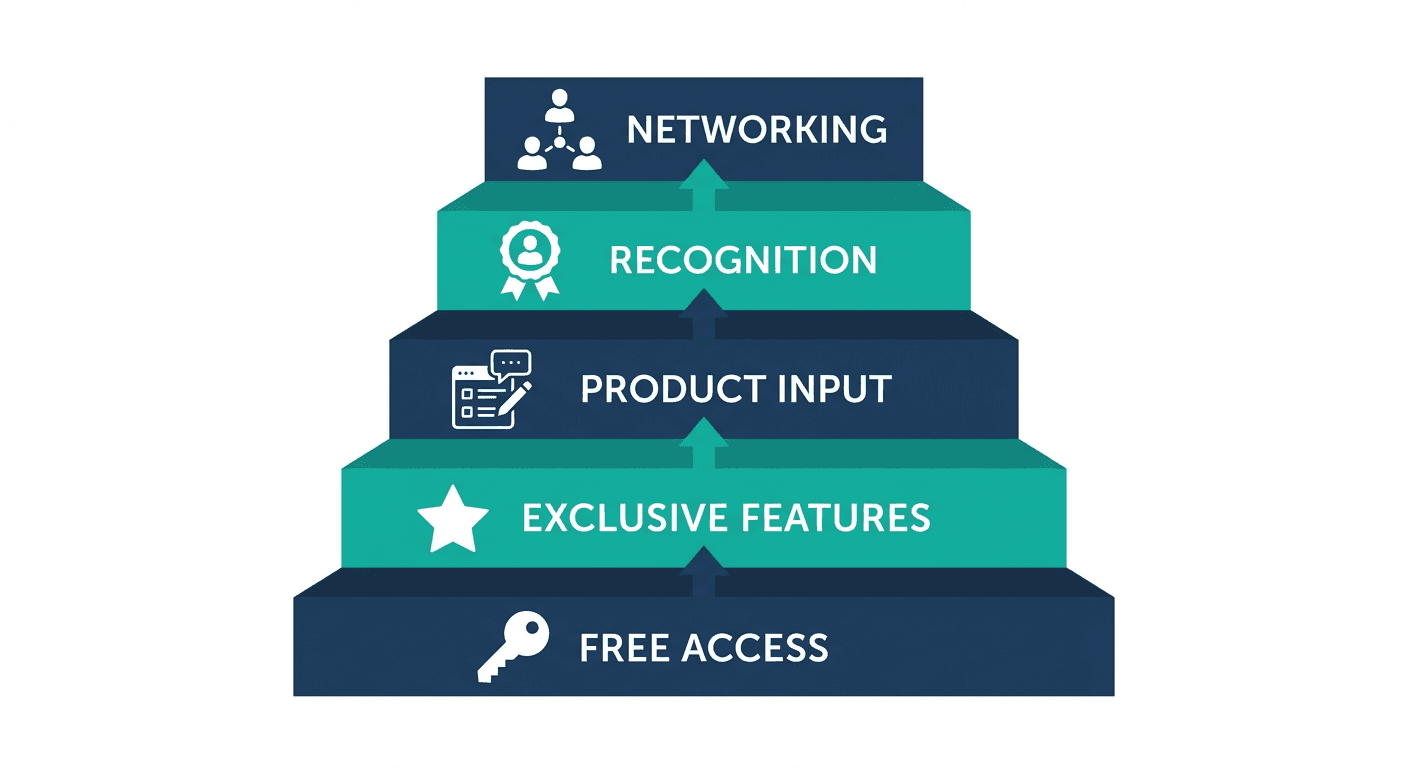
Free or discounted access: The most common beta incentive grants free access during testing and discounted pricing after launch. Consider lifetime discounts, extended free periods, or founding member pricing tiers.
Exclusive features: Offer beta testers access to features that will remain limited or premium after launch. This creates genuine scarcity and rewards early participation.
Input on product direction: Engaged testers value influence over the product roadmap. Offer regular feedback sessions, voting on feature priorities, or direct access to founders and product teams.
Recognition and status: Founding member badges, public acknowledgment, and insider community access appeal to testers who value status and belonging.
Networking opportunities: Connecting beta testers with each other creates community value independent of your product. Private Slack channels, exclusive events, and mastermind groups enhance the beta experience.
Cash or gift compensation: For products requiring significant testing time, direct compensation demonstrates respect for tester contributions. Consider gift cards, referral bonuses, or flat payments for completed feedback sessions.
Structuring Your Beta Offer
Your beta offer should clearly communicate:
- What testers receive (access, features, pricing)
- What you expect from them (feedback frequency, testing activities)
- How long the beta period lasts
- What happens after beta ends
Specificity builds trust and sets appropriate expectations. Vague promises attract casual participants, while clear commitments attract serious testers.
What Works: Beta Recruitment Email Best Practices
Effective beta recruitment emails balance professionalism with approachability. Your prospects receive constant pitches for their attention. Standing out requires authenticity, relevance, and clarity.
Subject Line Principles
Your subject line determines whether your email gets opened. For beta recruitment:
- Reference their specific expertise or role
- Mention the problem you solve
- Create curiosity without clickbait
- Keep it under 50 characters when possible
Examples that perform well:
- "Beta invite for [specific role]"
- "Early access to [category] tool"
- "Your feedback on [problem area]?"
- "[Mutual connection] suggested I reach out"
Email Body Structure
Structure your beta recruitment emails with these elements:
Personalized opening: Reference something specific about the recipient. Their content, company, role, or recent activity demonstrates genuine research.
Problem statement: Briefly describe the problem your product addresses. Use language that resonates with their experience.
Solution introduction: Explain what you built and why it matters. Focus on outcomes rather than features.
Why them specifically: Articulate why you want this particular person as a beta tester. Flattery works when sincere.
Clear ask: State exactly what you want them to do. Apply for beta access, schedule a call, or reply with interest.
Low-friction next step: Make responding easy. A simple reply is easier than filling out forms or scheduling calls.
Tone and Voice Guidelines
Beta recruitment emails succeed when they feel like genuine invitations from real people:
- Write conversationally, as if emailing a colleague
- Avoid corporate jargon and marketing speak
- Express genuine enthusiasm for your product
- Acknowledge that you need their help
- Be concise and respect their time
Real Beta Tester Outreach Email Examples
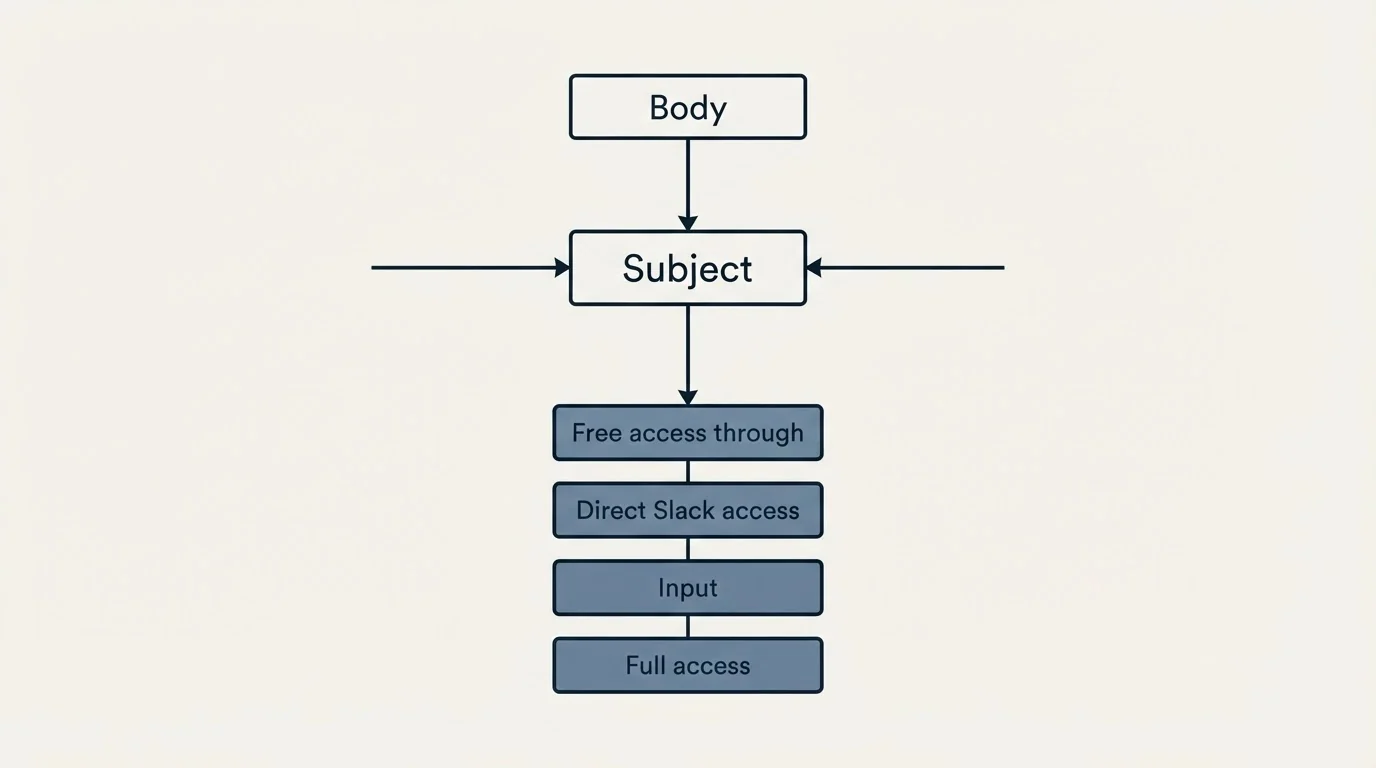
The following templates demonstrate effective beta recruitment approaches for different situations. Customize these frameworks with your specific product details and prospect research.
Example 1: The Problem-Focused Approach
Subject: Beta invite for agency ops leaders
Body:
Hi [First Name],
Your posts about agency workflow challenges caught my attention. The resource allocation problems you described at [Company] mirror what we heard from dozens of agency leaders during our research phase.
We built Projectify specifically to solve agency-specific project management issues that generic tools ignore. Our beta users report 40% faster project setup and significantly improved resource visibility across client accounts.
We are recruiting 50 agency operations leaders for our private beta. Given your experience managing complex client portfolios, your feedback would be invaluable as we refine the product.
Beta participants receive:
- Free access through launch (projected Q2)
- 50% lifetime discount on any plan
- Direct Slack access to our product team
- Input on our feature roadmap
Interested in taking a look? Just reply "interested" and I will send over access details.
Best, [Your Name] Founder, Projectify
P.S. We are specifically looking for feedback on our multi-client dashboard. Would love your take on whether it actually solves the visibility problem you mentioned.
Example 2: The Mutual Connection Approach
Subject: [Connection Name] suggested I reach out
Body:
Hi [First Name],
[Connection Name] mentioned you might be the perfect person to help us test something.
I am building Feedbackly, a customer feedback aggregation tool designed for product managers at B2B SaaS companies. [Connection] said you have been dealing with feedback scattered across Intercom, Slack, and Zendesk at [Company], which is exactly the problem we solve.
We aggregate feedback from 12+ sources, auto-categorize by theme, and surface patterns that usually get lost in the noise.
I am looking for 25 product managers to join our private beta over the next month. The commitment is minimal: use the tool with your existing feedback sources and share candid thoughts on what works and what needs improvement.
Beta members get free access through launch plus founding member pricing (40% off forever) when we go live.
Would you be open to a 15-minute call this week to see if it is a fit? I can show you the current state and explain exactly what feedback would be most helpful.
Here is my calendar link: [Link]
Thanks, [Your Name]
Example 3: The Expertise Recognition Approach
Subject: Your data viz expertise + our beta
Body:
Hi [First Name],
I have been following your work on data visualization at [Company]. Your recent piece on dashboard design principles articulated problems I have been trying to solve for two years.
I am building ChartFlow, a tool that automatically generates publication-ready charts from messy datasets. No more wrestling with Excel formatting or fighting with BI tool limitations.
Your specific expertise in [their specialty area] would make your feedback incredibly valuable. I want to build something that meets the standards of people who actually care about visualization quality.
For beta participants:
- Full access to all features during beta
- Lifetime Pro plan at our founding member rate
- Monthly calls with me to discuss product direction
- Credit in our documentation and launch materials (if desired)
The commitment is light. Use the tool when it fits your workflow and share feedback when something delights or frustrates you.
Interested in early access?
[Your Name]
Example 4: The Competitor User Approach
Subject: Building a [Competitor] alternative for [use case]
Body:
Hi [First Name],
I noticed you reviewed [Competitor Tool] on G2 last month. Your comment about [specific pain point they mentioned] resonated with me, and I am building something specifically to address that gap.
TaskMaster is project management designed for remote-first teams. Unlike [Competitor], we built async collaboration and timezone awareness into the foundation rather than bolting it on later.
I am recruiting 30 remote team leads to beta test before our public launch. Your experience with distributed teams at [Company] and your detailed feedback style (based on your reviews) make you an ideal candidate.
Beta benefits include:
- Free team plan through beta period
- 60% discount locked in for life after launch
- Priority feature requests
- Private community with other beta participants
If the problems you mentioned in your [Competitor] review still frustrate you, I would love to show you our approach.
Reply with "show me" and I will send a demo video and access credentials.
[Your Name] Co-founder, TaskMaster
Common Mistakes to Avoid
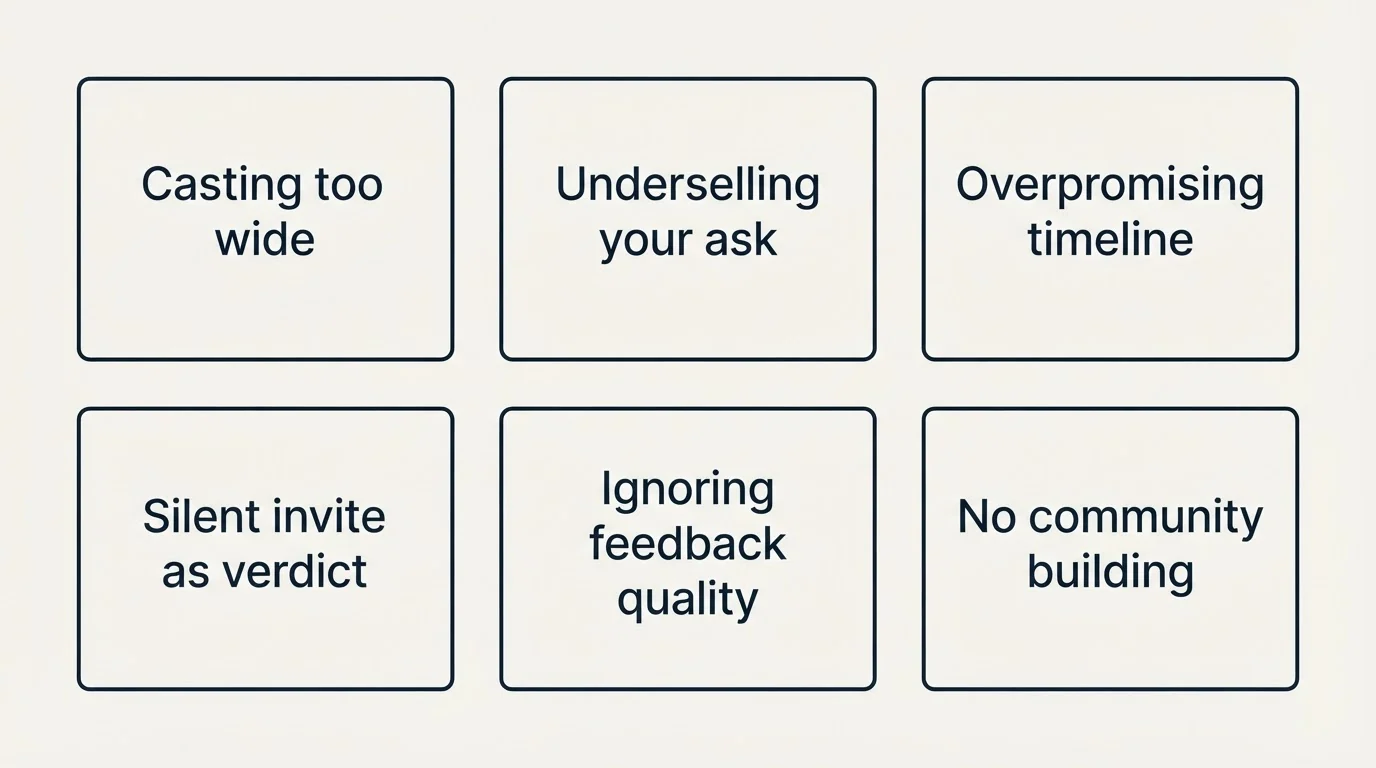
Beta recruitment campaigns fail for predictable reasons. Avoid these common errors:
Casting Too Wide a Net
Recruiting anyone willing to sign up produces low-quality feedback and high churn. Beta testers who do not match your target market provide misleading insights about product-market fit. Maintain discipline in your targeting even when response rates tempt you to expand.
Underselling Your Ask
Vague requests like "check out our beta" generate vague commitments. Be specific about what participation involves. Testers who understand expectations upfront deliver better feedback than those who discover requirements later.
Overpromising on Timeline
Promising features, launch dates, or benefits you cannot guarantee damages trust. Beta testers who feel misled become detractors rather than advocates. Communicate honestly about uncertainty and update participants when plans change.
Treating One Silent Invite As A Verdict
Beta recruitment emails often get read, considered interesting, and forgotten. That is a timing problem, not a fit problem. Rather than escalating urgency in the same thread, invite the segment again later with a genuinely different premise: a shipped milestone, a narrower cohort, a different problem your product now solves.
Ignoring Feedback Quality Signals
Not all beta testers provide equal value. Track who submits bugs, responds to surveys, and engages with feedback requests. Double down on high-engagement testers and gracefully exit those who disappear after signup.
Failing to Build Community
Isolated beta testers provide isolated feedback. Creating connections between testers generates richer discussions, surfaces more issues, and builds the foundation for your user community. Consider Slack channels, regular group calls, or shared feedback forums.
Treating Beta as One-Way
Beta testing should be a conversation. Respond to every piece of feedback, explain your decisions on feature requests, and share how tester input shapes the product. Engaged testers become invested advocates.
Your Beta Recruitment Checklist
Before launching your beta recruitment campaign, confirm you have completed these steps:
Strategy Preparation
- Defined ideal beta tester profile with specific criteria
- Set target number of beta participants (usually 25-100)
- Established beta timeline with clear start and end dates
- Created feedback collection process (surveys, interviews, bug tracking)
- Prepared onboarding materials for accepted testers
Prospect Research
- Built prospect list of 200-500 qualified contacts
- Gathered personalization details for each prospect
- Verified email addresses for deliverability
- Segmented list by relevance tier if applicable
Outreach Preparation
- Written 3-4 email templates for different segments
- Set up email tracking and response management
- Prepared quick-reply templates for common responses
Offer Structure
- Defined beta participant benefits (access, pricing, perks)
- Clarified participant expectations and time commitment
- Created simple application or signup process
- Prepared welcome sequence for accepted testers
Post-Recruitment
- Established communication channels (email, Slack, etc.)
- Scheduled regular check-ins or feedback sessions
- Created system for tracking and acting on feedback
- Planned recognition and appreciation for active testers
Build Your Beta Tester Pipeline
Recruiting beta testers through cold email combines the precision of targeted outreach with the scalability of automated campaigns. The strategies, templates, and frameworks in this guide provide everything you need to build a high-quality beta cohort that accelerates your path to product-market fit.
The key differentiator between successful and unsuccessful beta recruitment comes down to execution consistency. Sending personalized, relevant outreach to the right prospects, returning later with a genuinely new premise, and delivering genuine value to those who participate creates a flywheel of engaged early adopters.
Ready to fill your beta program with ideal early adopters? Our team specializes in cold email campaigns that connect you with exactly the right people. Get your free beta recruitment campaign and start building your user base before launch.
Related Reading
Frequently asked questions.
Frequently asked questions- Why is cold email better than social media for recruiting beta testers?
- Cold email enables precise targeting of individuals who match your ideal beta tester profile, while social media posts only reach existing followers who may not represent your target market. Cold email allows you to control exactly who receives your invitation, personalize your pitch to their specific situation, and reach people who would never discover your product through passive channels. It also costs significantly less than paid advertising while building direct relationships with testers.
- How many prospects should I contact for beta tester recruitment?
- Aim for a prospect list of 200-500 qualified candidates for your initial beta outreach. This volume accounts for typical email response rates while remaining manageable for personalized follow-up and feedback collection. The list should include prospects from multiple sources like LinkedIn, industry communities, product review platforms, and conference speaker lists to ensure diversity in your beta cohort.
- What makes someone an ideal beta tester?
- Ideal beta testers score well across five dimensions: problem awareness (they actively experience the pain your product solves), technical sophistication (they can navigate early-stage software with bugs), communication willingness (they provide substantive feedback), influence potential (they can spread the word if they love your product), and conversion likelihood (they match your paying customer profile). Prioritize testers who demonstrate expertise in your problem space and actively participate in relevant communities.
- Where should I find beta tester prospects?
- The most effective sources include LinkedIn and Sales Navigator for job title and company filtering, industry-specific Slack groups and Discord servers, product review platforms like G2 and Capterra where users review competing tools, conference speaker lists for influential experts, company websites to identify decision-makers at target organizations, and Twitter/X or content platforms where people create content about problems your product solves. Each prospect record should include their relevance indicator and a personalization hook.
About the author.

Ben Carden is CRO at RevenueFlow, which builds and operates outbound revenue engines for B2B companies. Previously at Gartner Enterprise. Studied at London School of Economics.
Ben Carden · CRO
Connect on LinkedIn →Explore more.
Ready to scale your outreach?
We build GTM engines that book real meetings. See the receipts.
Related articles.
Cold Email for Early Adopters: Complete Strategy Guide
Learn how to use cold email to recruit early adopters for your product launch. Includes proven templates, targeting strategies, and engagement frameworks that attract the right first users.
Cold Email for Influencer Outreach: Partner with Creators
Learn how to use cold email to build authentic influencer partnerships that drive real results for your brand, with proven templates and strategies.
Cold Email for Product Feedback: Complete Strategy Guide
Learn how to use cold email to gather valuable product feedback from users and prospects. Includes proven templates, feedback frameworks, and response optimization techniques.
Cold Email for PR: How to Pitch Journalists and Get Coverage
Learn how to craft cold emails that get journalists to open, read, and respond to your pitches. Includes real templates, timing strategies, and a complete PR outreach checklist.
Cold Email for Reviews: Complete Strategy Guide
Learn how to use cold email to generate authentic product reviews on G2, Capterra, and other platforms. Includes proven templates, compliance guidelines, and review generation frameworks.
Cold Email for Link Building: How to Get Quality Backlinks
Learn how to use cold email outreach to build high-quality backlinks that improve your SEO rankings, with proven templates and strategies that get responses.