Cold Email for Press Release Distribution: Strategy Guide
Learn how to use cold email to get your press releases covered by journalists and publications. Includes proven templates, pitch strategies, and best practices for press release outreach.

Cold email works for press release distribution because it delivers targeted, personalized pitches directly to journalists who cover your industry, bypassing the noise of wire services where most releases go unnoticed. Journalists prioritize stories relevant to their beat with genuine newsworthiness and easy-to-cover angles. Success requires building a qualified media list through byline searches and publication research, crafting personalized pitches that lead with the news hook rather than company promotion, and timing outreach to avoid major industry events.
Key takeaways
- Wire services distribute press releases passively to databases, but most releases go unnoticed as business journalists receive hundreds of pitches weekly and often filter wire releases automatically.
- Journalists prioritize covering stories within their specific beat that offer newsworthiness, unique angles, and relevance to their publication's audience.
- Effective media list building requires identifying journalists through byline searches, publication staff pages, and platforms like LinkedIn and Twitter, then qualifying them based on recent activity and coverage patterns.
- Pitches fail when they target irrelevant journalists, lack genuine news hooks, use overly promotional language, or send generic mass emails without personalization.
- Building a structured media list organized by publication tier, beat specificity, relationship status, and contact information forms the foundation for successful press release distribution.
Reviewed and updated September 15, 2026
Cold Email for Press Release Distribution: Complete Strategy Guide
Press releases remain an important tool for announcing company news, product launches, funding rounds, and other significant developments. However, distributing a press release through wire services alone rarely generates meaningful coverage. The publications and journalists you want to reach receive thousands of press releases daily. Cold email provides a direct channel to pitch journalists personally and significantly increase your chances of coverage.
This guide covers everything you need to know about using cold email to distribute press releases effectively, from identifying the right journalists to crafting pitches that lead to coverage.
These are PR email templates in the sense that matters: each one is a single pitch you can send to a named journalist, including the case where you have a story but no press release to attach.
Why Press Release Distribution Requires Direct Outreach
Press release wire services serve a purpose, but they have significant limitations for generating actual coverage.
Wire services are passive. They distribute your release to a database, but journalists must actively search for and find your news. Most releases go unnoticed.
Journalists are overwhelmed. The average business journalist receives hundreds of pitches and releases weekly. Wire distributions blend into the noise.
No personalization opportunity. Wire services send the same content to everyone, missing the chance to tailor your angle to specific journalists.
Algorithmic filtering. Many journalists filter wire releases automatically, meaning your news never reaches their attention.
No relationship building. Wire services create no opportunity for ongoing relationships with journalists who cover your industry.
Why Cold Email Works for Press Release Distribution
Direct email outreach to journalists addresses these limitations:
Targeted delivery. You reach specific journalists who cover your topic and have demonstrated interest in similar stories.
Personalized angles. Each pitch can emphasize the aspects most relevant to a particular journalist's beat or publication.
Direct relationship. Email creates a personal connection that can lead to ongoing coverage opportunities.
Standing out. A well-crafted personal pitch distinguishes your news from mass distributions.
Two-way communication. Journalists can respond with questions, requests for additional information, or interest in different angles.
Understanding What Journalists Need
Before pitching, understand the environment journalists work in and what motivates them to cover stories.
Journalist Priorities
Relevance to their beat. Journalists specialize. They care about news within their coverage area and ignore everything else.
Newsworthiness. The story must be genuinely newsworthy to their audience, with some element of timeliness, significance, or impact.
Unique angles. Journalists want stories their competitors don't have or angles that differentiate their coverage.
Easy to cover. Journalists work on tight deadlines. Stories with clear facts, available sources, and supporting materials get covered.
Audience interest. Ultimately, journalists write for their readers. Your news must matter to the publication's audience.
Why Pitches Get Ignored
Irrelevance. Pitching a consumer product to a B2B enterprise journalist wastes everyone's time.
No news hook. "Company does normal business activity" is not newsworthy. There must be something genuinely new or significant.
Too promotional. Journalists write news, not advertisements. Overly sales-focused pitches signal lack of understanding.
Bad timing. Pitching during major industry events or when a journalist is clearly busy reduces response rates.
Generic outreach. Mass emails sent to dozens of journalists with no personalization get deleted immediately.
Building Your Media List
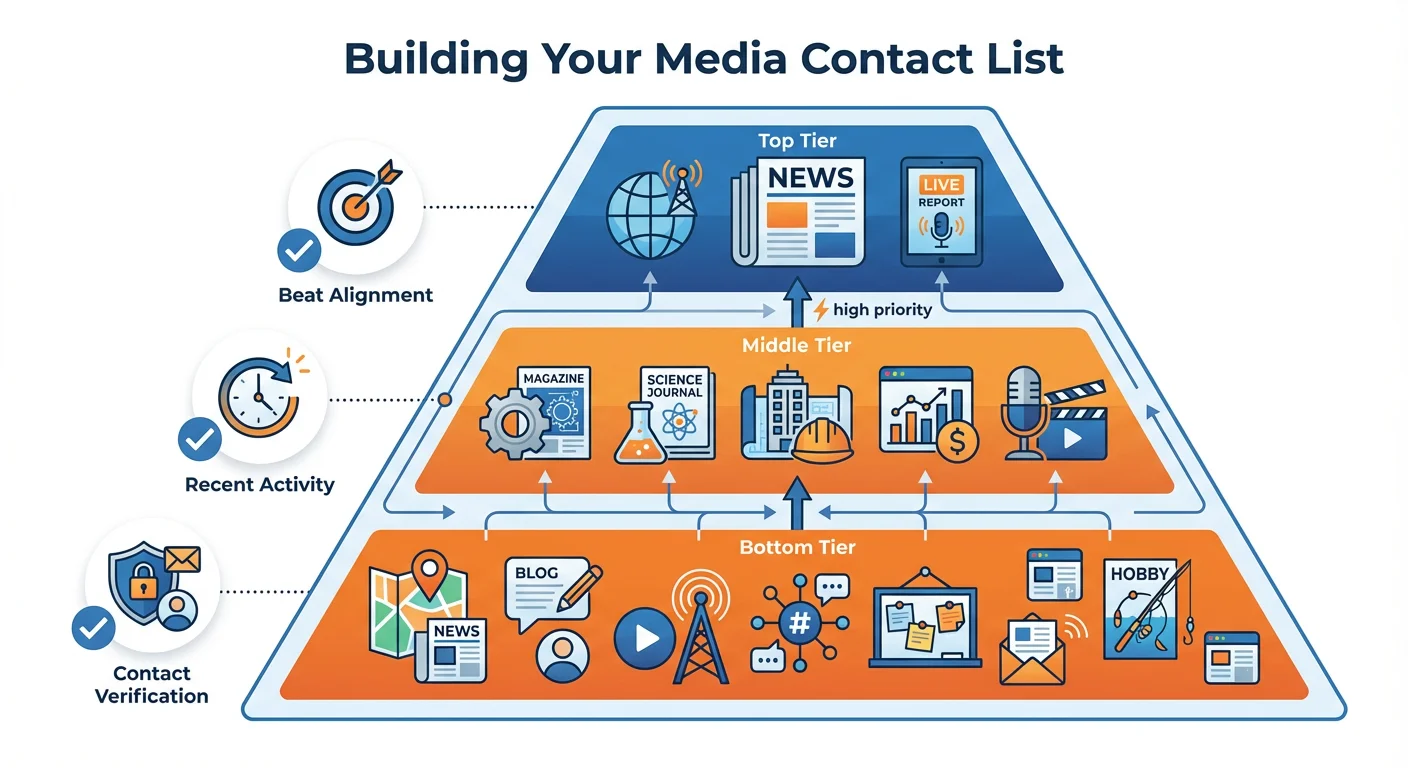
The foundation of successful press release distribution is reaching the right journalists.
Identifying Target Journalists
Beat alignment. Find journalists who specifically cover your industry, company type, or topic area.
Publication relevance. Target publications whose audiences align with who you want to reach.
Coverage history. Look for journalists who have covered similar announcements or competitor news.
Publication tier. Balance tier-one publications (major outlets) with industry-specific and regional publications.
Research Methods
Publication staff pages. Most publications list their reporters and their beats on their websites.
Byline searches. Search for articles about competitors or similar topics and note who wrote them.
LinkedIn. Many journalists list their beat and publication on LinkedIn profiles.
Twitter/X. Journalists often share what they're working on and what topics interest them.
Media databases. Services like Cision, Muck Rack, and Meltwater provide journalist contact information and beat details.
HARO and similar services. Journalists posting queries reveal their current interests and contact information.
Qualifying Journalists
Not every journalist who covers your industry is worth pitching for every release:
Recent activity. Have they published recently? Inactive journalists may have changed roles.
Coverage patterns. Do they typically cover the type of news you're announcing?
Publication fit. Is your news significant enough for their publication's standards?
Accessibility. Do they publicly share contact information and indicate openness to pitches?
Organizing Your Media List
Structure your media list by:
- Tier (major outlets, industry publications, regional/local)
- Beat specificity (exact match, adjacent, general business)
- Relationship status (existing relationship, previous coverage, cold)
- Contact information (email, social handles)
Crafting Your Pitch Email
Your pitch email determines whether journalists engage with your news or delete it.
Subject Lines for Press Release Pitches
Journalist inboxes are cluttered. Your subject line must communicate value immediately:
- Be specific about the news
- Indicate relevance to their beat
- Avoid hyperbole and spam triggers
- Keep it under 10 words
Examples:
- "[Company] raises $X million for [specific purpose]"
- "New [product category] for [target market]"
- "[Industry] data: [key finding]"
- "[Company] appoints [notable person] as CEO"
Pitch Structure
Subject line: Clear indication of the news
Opening (1-2 sentences): Lead with the most newsworthy element. Answer why a journalist should care right now.
Context (2-3 sentences): Provide essential background that makes the news meaningful. Why does this matter to their readers?
Details (2-3 sentences): Key facts, figures, and specifics that a journalist would need to evaluate the story.
Why now (1 sentence): Connect the news to current trends, events, or timing that makes it relevant.
Availability (1 sentence): Indicate who is available for interviews and what additional materials you can provide.
Attachment note (1 sentence): Mention that the full press release is attached (if applicable).
Total length: 150-200 words maximum.
Tone Guidance
- Newsworthy, not promotional: Write like a journalist, not a marketer
- Factual and specific: Numbers, names, and concrete details
- Respectful of their time: Get to the point quickly
- Confident without hyperbole: Let the news speak for itself
Press Release Pitch Templates
Template 1: Funding Announcement
Subject: [Company] closes $[X]M [Round] for [purpose]
Hi [Name],
[Company] just closed a $[X] million [Series/Seed] round led by [lead investor], with participation from [notable investors]. We're using the funding to [specific purpose].
This is significant for your [beat/publication] readers because [specific reason tied to industry trends or their coverage area].
Key details:
- Total raised to date: $[X]
- Current ARR/growth metric: [specific number]
- New hires planned: [number] in [specific areas]
[CEO Name] is available for an interview to discuss [specific topic angle]. I've attached our full press release with additional details.
Would this be of interest for [Publication]?
[Your Name] [Contact info]
Template 2: Product Launch
Subject: [Company] launches [product] for [target market]
Hi [Name],
[Company] is announcing [Product Name], a [product category] that [key differentiator/value proposition]. It's available starting [date] at [price point or model].
I thought of you specifically because of your recent coverage of [related topic]. This product addresses [specific problem] that you highlighted in that piece.
What makes this different from existing solutions:
- [Key feature/benefit 1]
- [Key feature/benefit 2]
- [Specific metric or result]
[Spokesperson] is available to discuss [specific angle]. I can also connect you with [customer/beta user] who has been using the product.
Full release attached. Let me know if you'd like additional information.
[Your Name]
Template 3: Executive Hire
Subject: [Company] names [Name] as [Title]
Hi [Name],
[Company] has appointed [Executive Name], formerly of [Previous Company], as our new [Title], effective [date].
This hire is notable because [significance: first external hire at this level, follows rapid growth, brings specific expertise]. [Executive Name] will be responsible for [specific focus].
Background on [Executive Name]:
- [Previous role and accomplishment]
- [Relevant experience]
- [Industry recognition if applicable]
[Executive Name] is available for an interview to discuss [specific topic: their vision, industry trends, strategic direction].
I've attached our full announcement with additional context about [Company]'s growth and strategy.
[Your Name]
Template 4: Research/Data Release
Subject: New data: [Key finding] in [industry]
Hi [Name],
We just published new research that I think would interest your readers: [one-sentence summary of key finding].
The data comes from [methodology: survey of X professionals, analysis of Y transactions, study period]. Key findings include:
- [Specific statistic 1]
- [Specific statistic 2]
- [Counterintuitive or surprising finding]
This is particularly relevant now because [connection to current trends or news].
I can provide the full report with additional data, charts, and methodology details. [Spokesperson] is also available to discuss the implications.
Would you be interested in covering this or using the data for an upcoming piece?
[Your Name]
Template 5: Partnership/Acquisition
Subject: [Company A] and [Company B] announce [partnership/acquisition]
Hi [Name],
[Company A] and [Company B] have announced [specific partnership or acquisition] to [purpose/goal]. The deal [is valued at $X / involves specific terms].
This matters for your coverage area because [specific relevance: market consolidation, new capabilities for customers, industry trend].
Key details:
- [What changes for customers/market]
- [Timeline for integration/launch]
- [Leadership changes if any]
Executives from both companies are available for interviews. I've attached our joint press release with additional context.
Is this something you'd want to cover?
[Your Name]
Timing Your Outreach
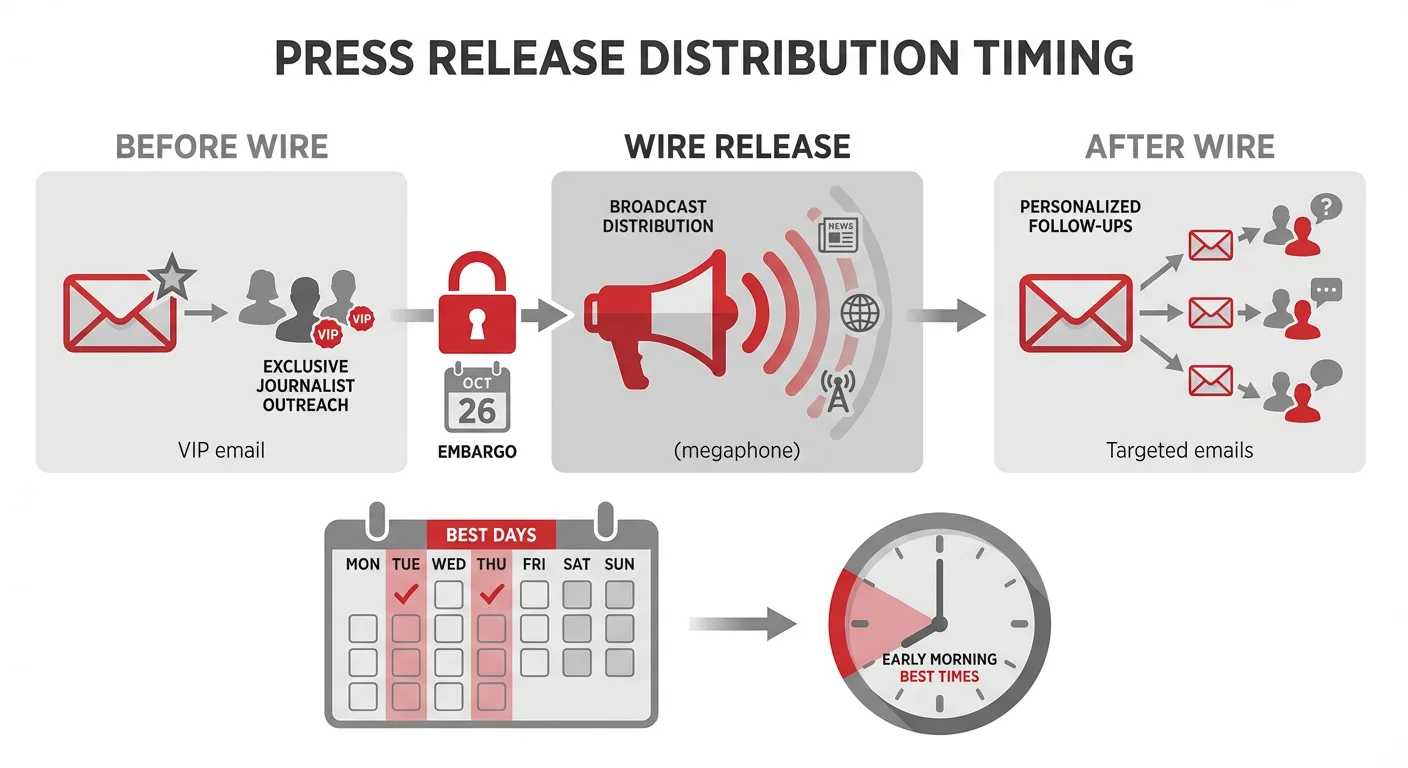
When you pitch matters almost as much as what you pitch.
Best Times to Pitch
Timing considerations:
- Tuesday through Thursday generally perform best
- Early morning (7-9 AM in journalist's time zone) catches them before the day fills up
- Avoid late Friday and weekends
- Avoid major industry events or breaking news days
Embargo considerations:
- For major announcements, consider offering exclusive or early access to top-tier journalists
- Clearly communicate embargo terms if using them
- Honor exclusivity agreements completely
Coordinating with Wire Release
If you're also using wire services:
- Pitch top-tier journalists before the wire release with exclusive or early access
- Send personalized pitches to remaining targets when the wire goes out
- Follow up with journalists who haven't responded within 24-48 hours
Where we differ from standard practice
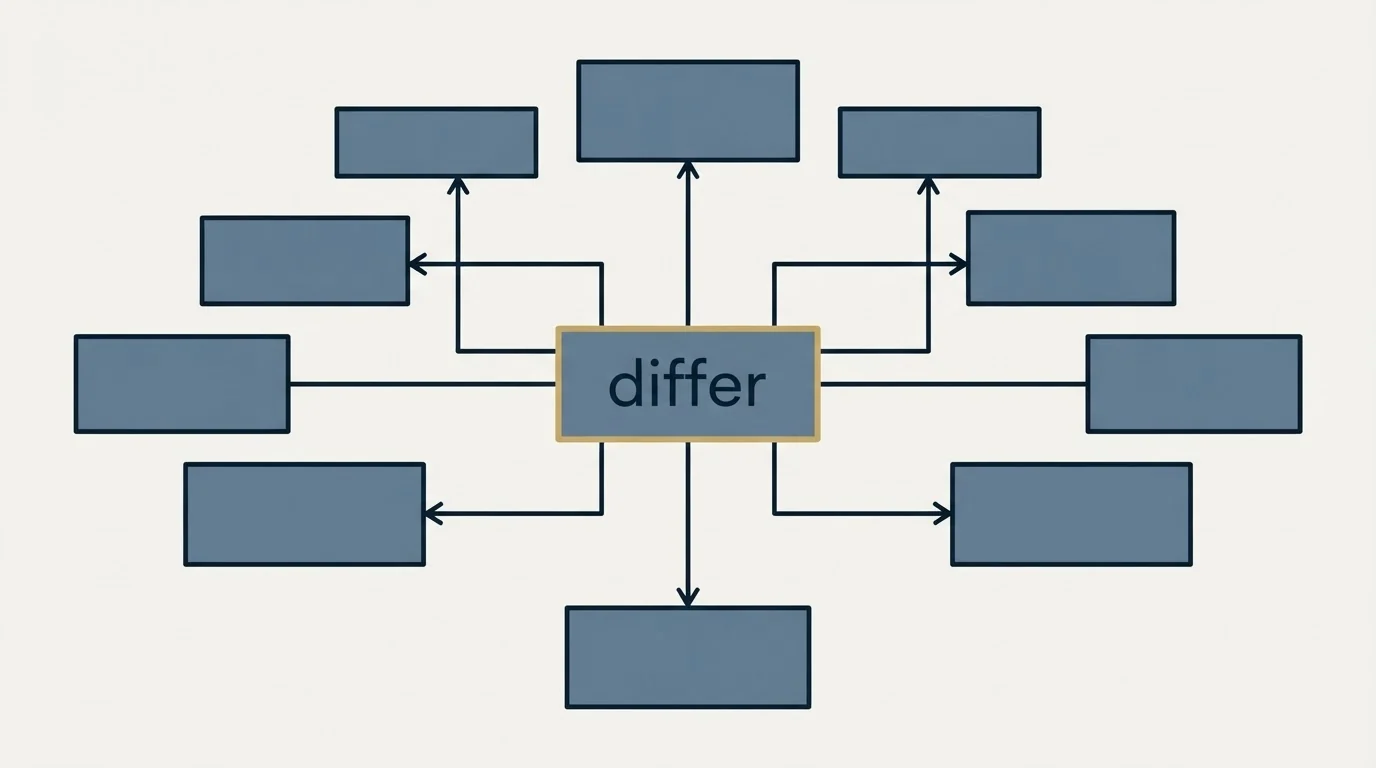
Much of the advice on this page reflects how outbound is commonly run. We run it differently, and since this page sits on our site it is worth saying where the difference is and what it costs us.
- A sequence of messages to each prospect over several weeks
- Later messages often land in the same email thread
- Every contact is reached more than once, so a distracted reader gets another chance
- The later messages go only to people who did not answer the first
- Reputation cost accrues on the sending domain across everything else it sends
- One message, then that campaign is finished for that contact
- No thread replies and no bumps
- A non-responding audience becomes a new campaign with a genuinely different premise, not a reminder
- More of the work moves into targeting and into the one message
- We reach each contact less often, and that is the cost we accept
The reasoning is mechanical rather than moral. A follow-up arrives underneath a message the recipient has already seen and chosen not to answer, so it is delivered to the population most likely to mark it as spam, and the reputation cost of that lands on the sending domain across every campaign running on it. We set that cost against the replies a sequence recovers and decided the trade was not worth it. The full argument, with the numbers from our own campaigns, is in why we stopped using follow-ups.
Follow-Up Strategy
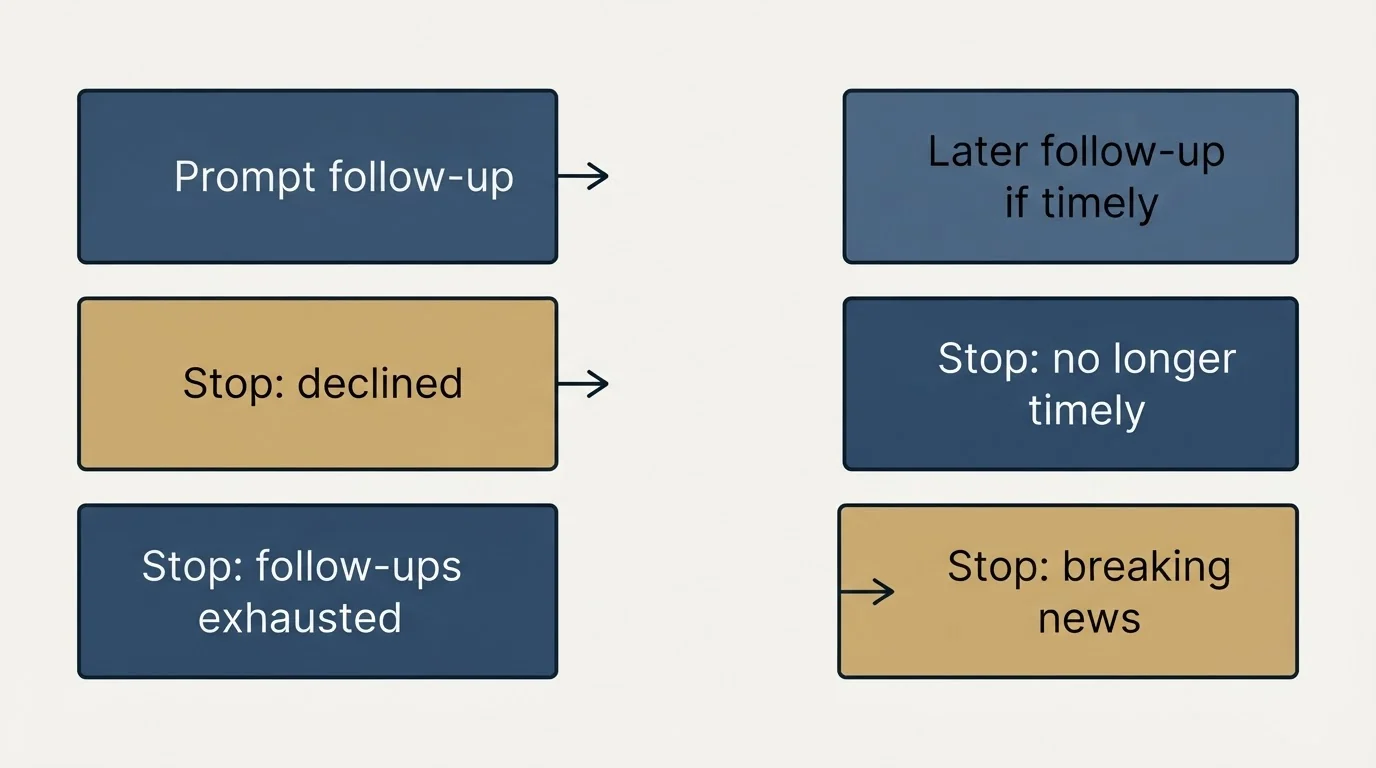
Journalists receive many emails. Thoughtful follow-ups increase coverage chances.
Follow-Up Timing
- Follow-up 1: 24-48 hours after initial pitch
- Follow-up 2: 2-3 days after first follow-up (if news is still timely)
Follow-Up Examples
Follow-up 1:
Hi [Name],
I wanted to make sure my note about [news summary] reached you. I know your inbox is busy.
The quick version: [one-sentence summary]. [Spokesperson] is available through [timeframe] if you're interested in covering this.
Let me know if you have questions or need additional information.
[Your Name]
Follow-up 2:
Hi [Name],
One more note on [news topic]. Since my initial pitch, we've had [relevant update: additional coverage, new data point, customer response].
If this story isn't right for you, I completely understand. I'd appreciate any feedback on what types of announcements would be more relevant for your coverage.
[Your Name]
When Not to Follow Up
- If they've explicitly declined
- If the news is no longer timely
- If you've already followed up twice
- If they're clearly dealing with breaking news
Building Journalist Relationships
The most effective press release distribution comes from established journalist relationships.
Before You Need Coverage
- Follow journalists on social media and engage genuinely with their work
- Share their articles when relevant (without expecting anything in return)
- Offer to be a source for background information on your industry
- Respond to HARO queries and journalist requests even when there's no direct benefit
After Coverage
- Thank journalists promptly when they cover your news
- Share their coverage through your channels
- Provide follow-up information if the story develops
- Remember them for future stories and exclusive opportunities
Long-Term Approach
- Maintain a database of journalist relationships and interaction history
- Provide valuable information even when you have nothing to announce
- Be honest and reliable in all interactions
- Respect their time and deadlines consistently
Common Mistakes to Avoid
Pitching the Wrong Journalists
Sending a consumer tech pitch to an enterprise software journalist wastes everyone's time and damages your credibility. Research beats carefully.
Leading with Your Company
Journalists care about stories, not companies. Lead with why the news matters to readers, not why it matters to you.
Overselling
Excessive superlatives ("revolutionary," "game-changing," "first-ever" when it isn't) signal inexperience and reduce credibility.
Attaching Large Files
Large attachments can trigger spam filters. Include links to high-resolution images and detailed materials rather than attaching everything.
Ignoring Timelines
Pitching old news or expecting immediate coverage without respecting publication schedules shows lack of media understanding.
Burning Bridges
Being pushy, dishonest about exclusives, or wasting journalist time damages relationships permanently in an industry where reputation matters.
Your Press Release Distribution Checklist
Preparation
- Press release finalized and newsworthy
- Supporting materials ready (images, data, backgrounder)
- Spokesperson availability confirmed
- Media list built and segmented by tier/beat
Pitch Content
- Subject line is clear and specific
- Opening leads with newsworthy element
- Pitch is personalized to journalist's beat
- Tone is journalistic, not promotional
- Call to action and availability are clear
- Total pitch is under 200 words
Distribution
- Exclusive offers coordinated (if using)
- Timing optimized for journalist schedules
- Wire distribution coordinated with direct outreach
Tracking
- Opens and responses tracked
- Coverage monitored
- Journalist feedback documented
- Relationship notes updated
Maximizing Your Press Release Impact
Cold email transforms press release distribution from a passive broadcast to an active pitch process. By reaching the right journalists with personalized, relevant pitches, you dramatically increase your chances of coverage while building relationships that benefit future announcements.
Success requires understanding what journalists need, respecting their time, and consistently delivering genuinely newsworthy content. Over time, these relationships become your most valuable media assets.
If you're looking to scale your press release distribution while maintaining personalized journalist outreach, RevenueFlow can help. Our done-for-you cold email campaigns apply these principles to maximize coverage for your announcements.
Get Your Free Campaign and see how targeted cold email can amplify your press release results.
Related Reading
Frequently asked questions.
Frequently asked questions- Why don't press release wire services generate meaningful media coverage?
- Wire services distribute releases passively to databases where they blend into overwhelming noise, with journalists receiving hundreds of releases weekly and many automatically filtering them. Wire distributions offer no personalization opportunity, no relationship building, and rely on journalists actively searching for your news rather than delivering it with targeted relevance.
- What makes journalists decide to cover a press release?
- Journalists cover stories that align with their specific beat, offer genuine newsworthiness to their audience, and provide unique angles their competitors don't have. They prioritize stories that are easy to cover with clear facts and available sources, and ignore pitches that are irrelevant to their coverage area or too promotional in tone.
- How do I find the right journalists to pitch my press release to?
- Identify journalists by searching bylines on articles covering competitors or similar topics, reviewing publication staff pages for beat assignments, and checking LinkedIn and Twitter profiles where journalists list their coverage areas. Use media databases like Cision or Muck Rack for contact information, and qualify journalists by confirming recent publication activity and coverage patterns matching your announcement type.
- What are the biggest mistakes that cause press release pitches to get ignored?
- Pitches get deleted when they target journalists outside their beat, lack genuine news hooks beyond normal business activity, use overly promotional language that reads like advertising, or send generic mass emails without personalization. Bad timing during major industry events and ignoring publication-appropriate significance levels also kill response rates.
About the author.

Ben Carden is CRO at RevenueFlow, which builds and operates outbound revenue engines for B2B companies. Previously at Gartner Enterprise. Studied at London School of Economics.
Ben Carden · CRO
Connect on LinkedIn →Explore more.
Ready to scale your outreach?
We build GTM engines that book real meetings. See the receipts.
Related articles.
Cold Email for PR: How to Pitch Journalists and Get Coverage
Learn how to craft cold emails that get journalists to open, read, and respond to your pitches. Includes real templates, timing strategies, and a complete PR outreach checklist.
Cold Email for Awards Nominations: Complete Strategy Guide
Learn how to use cold email to secure industry awards and recognitions. Includes proven templates, submission strategies, and best practices for awards outreach that gets results.
Cold Email for Influencer Outreach: Partner with Creators
Learn how to use cold email to build authentic influencer partnerships that drive real results for your brand, with proven templates and strategies.
Cold Email for Product Feedback: Complete Strategy Guide
Learn how to use cold email to gather valuable product feedback from users and prospects. Includes proven templates, feedback frameworks, and response optimization techniques.
Cold Email for Reviews: Complete Strategy Guide
Learn how to use cold email to generate authentic product reviews on G2, Capterra, and other platforms. Includes proven templates, compliance guidelines, and review generation frameworks.
Cold Email for Link Building: How to Get Quality Backlinks
Learn how to use cold email outreach to build high-quality backlinks that improve your SEO rankings, with proven templates and strategies that get responses.