Cold Email Subject Line Benchmarks: 2026 Performance Data
Industry data reveals that subject lines determine 35-50% of open rate variation. Discover the benchmarks for length, personalization, and format that drive the highest engagement.
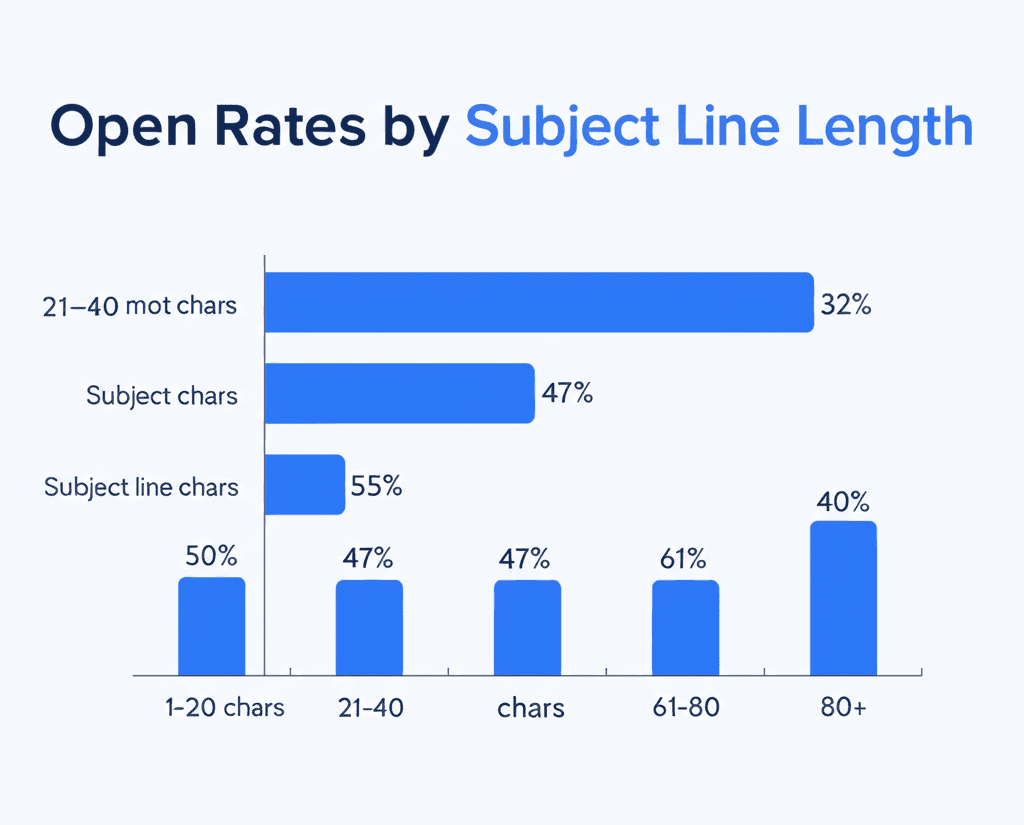
Cold email subject lines perform best at 4-7 words or 30-50 characters, with personalized elements increasing open rates by 10-60% depending on specificity. Question formats outperform statements at 45-55% open rates versus 42-52%, while sentence case appears most professional. Subject lines account for 35-50% of open rate variation, making them the single most important element of cold email performance.
Key takeaways
- Subject lines account for 35-50% of variation in cold email open rates, making them the primary determinant of whether messages get read.
- The optimal length is 4-7 words or 30-50 characters, fully visible on mobile devices where over 60% of emails are first opened.
- Personalization increases open rates by 10-20% for first names, 15-25% for company names, and 30-50% for specific references to the recipient's business.
- Question-format subject lines achieve 45-55% open rates compared to 42-52% for statements, with personalized questions reaching 55-65%.
- Sentence case subject lines perform best at 48-55% open rates while ALL CAPS and excessive punctuation drop performance to 25-40%.
Reviewed and updated August 28, 2026
Cold Email Subject Line Benchmarks: 2026 Performance Data
Your subject line is the gatekeeper of cold email success. Industry data shows that subject lines account for 35% to 50% of the variation in open rates. A compelling subject line can double your open rate, while a poor one ensures your carefully crafted message never gets read.
This benchmark report covers the performance data for different subject line approaches, including length, personalization, format, and specific word choices. Understanding these benchmarks helps you write subject lines that get your emails opened.
About This Data
The benchmarks presented in this report are compiled from publicly available industry research, aggregated data from email marketing platforms, and typical ranges observed across B2B cold email campaigns. These figures represent industry estimates and general ranges rather than definitive standards. Your actual results will vary based on your specific industry, target audience, and overall email quality.
We recommend using these benchmarks as directional guidance while testing subject line variations for your specific audience.
Subject Line Open Rate Benchmarks
Here are the general benchmarks for cold email open rates based on subject line quality:
| Subject Line Quality | Typical Open Rate | Notes |
|---|---|---|
| Poor (spammy, irrelevant) | 10% - 20% | Often filtered or ignored |
| Below Average | 20% - 30% | Generic, forgettable |
| Average | 30% - 40% | Functional but not compelling |
| Good | 40% - 50% | Clear value or curiosity |
| Excellent | 50% - 65% | Personalized and relevant |
| Exceptional | 65%+ | Highly personalized, perfect timing |
For cold email specifically, achieving 40%+ open rates indicates strong subject line performance. Top performers consistently hit 50-60% through strategic personalization and testing.
Subject Line Length Benchmarks
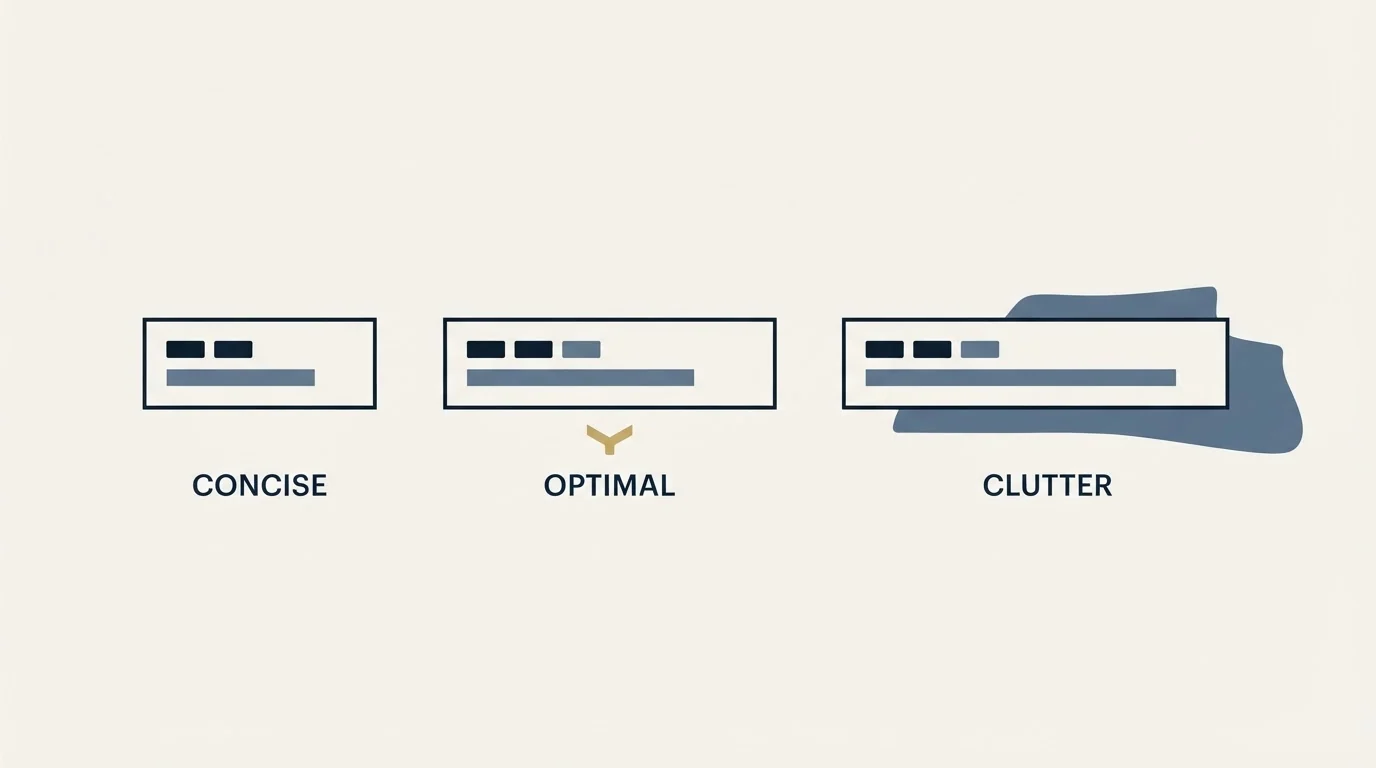
Length significantly affects open rates, with shorter subject lines generally outperforming longer ones.
Performance by Character Count
| Character Count | Open Rate | Mobile Display | Recommendation |
|---|---|---|---|
| 1-20 characters | 45% - 55% | Full display | Good for simple messages |
| 21-40 characters | 50% - 60% | Full display | Optimal range |
| 41-60 characters | 42% - 52% | Partial cutoff | Use carefully |
| 61-80 characters | 35% - 45% | Significant cutoff | Generally avoid |
| 80+ characters | 25% - 38% | Heavy truncation | Not recommended |
Word Count Performance
| Word Count | Typical Open Rate | Best Use Case |
|---|---|---|
| 1-3 words | 48% - 58% | Direct, simple messages |
| 4-6 words | 50% - 60% | Optimal for most cases |
| 7-9 words | 45% - 55% | When detail is needed |
| 10+ words | 35% - 45% | Generally too long |
The sweet spot is 4-7 words or 30-50 characters. This provides enough space for personalization and value while remaining fully visible on mobile devices.
Mobile Preview Considerations
| Device | Subject Line Display | Preview Text Display |
|---|---|---|
| iPhone | 35-40 characters | 90-100 characters |
| Android | 40-45 characters | 90-100 characters |
| Gmail mobile | 45-50 characters | 100-110 characters |
| Desktop Gmail | 60-70 characters | 100+ characters |
Mobile-first design matters. Over 60% of emails are first opened on mobile devices. Optimize for the shortest display window.
Personalization in Subject Lines
Personalized subject lines consistently outperform generic alternatives.
Personalization Element Performance
| Personalization Type | Open Rate Lift | Example |
|---|---|---|
| No personalization | Baseline | "Quick question about sales" |
| First name | +10% - 20% | "John, quick question" |
| Company name | +15% - 25% | "Quick question for Acme Corp" |
| First name + company | +20% - 30% | "John, question about Acme" |
| Specific reference | +30% - 50% | "Acme's Q3 expansion" |
| Mutual connection | +40% - 60% | "Sarah Chen suggested I reach out" |
Personalization Placement
| Placement | Open Rate | Example |
|---|---|---|
| Beginning | Highest | "[Company] - quick question" |
| Middle | Medium | "Quick question for [Company]" |
| End | Lower | "Quick question, [Name]" |
Starting with the personalized element captures attention immediately in preview text.
Subject Line Format Benchmarks
Different formats produce different results.
Question vs. Statement Performance
| Format | Typical Open Rate | Best For |
|---|---|---|
| Question | 45% - 55% | Engaging curiosity |
| Statement | 42% - 52% | Direct value proposition |
| Command/How-to | 40% - 50% | Educational content |
Questions create curiosity loops that recipients want to close by opening the email.
Effective Question Formats
| Question Type | Example | Open Rate |
|---|---|---|
| Personalized question | "How is [Company] handling X?" | 55% - 65% |
| Curiosity question | "Quick question about [topic]?" | 48% - 58% |
| Challenge question | "Struggling with X?" | 42% - 52% |
| Yes/No question | "Open to [topic]?" | 40% - 50% |
Case and Formatting
| Style | Open Rate | Professional Perception |
|---|---|---|
| Sentence case | 48% - 55% | Most professional |
| Title Case | 42% - 50% | Acceptable |
| lowercase | 45% - 52% | Casual, can work well |
| ALL CAPS | 30% - 40% | Spammy, avoid |
| Excessive punctuation!!! | 25% - 35% | Spammy, avoid |
Sentence case (first word capitalized, rest lowercase) typically performs best and appears most natural.
Subject Line Approaches and Performance

Different strategic approaches produce varying results.
Approach Performance Comparison
| Approach | Open Rate | Reply Rate | Risk Level |
|---|---|---|---|
| Personalized reference | 55% - 65% | 6% - 10% | Low |
| Mutual connection | 60% - 70% | 8% - 14% | Low |
| Question-based | 48% - 58% | 5% - 8% | Low |
| Direct value proposition | 42% - 52% | 4% - 7% | Low |
| Curiosity/intrigue | 50% - 60% | 3% - 6% | Medium |
| Urgency/scarcity | 45% - 55% | 2% - 5% | Medium |
| Re:/Fwd: (fake thread) | 55% - 65% | 2% - 4% | High |
Risky Approaches to Avoid
| Approach | Open Rate | Trust Impact | Recommendation |
|---|---|---|---|
| Fake "Re:" or "Fwd:" | High opens | Negative | Avoid (deceptive) |
| False urgency | Medium | Negative | Avoid |
| Clickbait | High opens, low replies | Very negative | Avoid |
| All caps | Low | Negative | Avoid |
| Multiple exclamation marks | Low | Negative | Avoid |
High-deception tactics may boost opens but damage reply rates and sender reputation.
Industry-Specific Subject Line Benchmarks
Different industries respond to different subject line approaches.
Technology and SaaS
| Subject Line Style | Performance |
|---|---|
| Tech stack reference | 55% - 65% open |
| Integration mention | 50% - 60% open |
| Growth metric focus | 48% - 58% open |
| Generic product pitch | 30% - 40% open |
Tech buyers respond to specificity and technical relevance.
Professional Services
| Subject Line Style | Performance |
|---|---|
| Mutual connection | 60% - 70% open |
| Industry peer reference | 52% - 62% open |
| Challenge question | 48% - 58% open |
| Service offering | 35% - 45% open |
Professional services buyers value relationship signals.
Healthcare
| Subject Line Style | Performance |
|---|---|
| Compliance/regulatory reference | 50% - 60% open |
| Patient outcome focus | 48% - 58% open |
| Healthcare-specific language | 45% - 55% open |
| Generic business pitch | 28% - 38% open |
Healthcare buyers require industry-specific framing.
Financial Services
| Subject Line Style | Performance |
|---|---|
| Risk/compliance framing | 50% - 60% open |
| Peer institution mention | 48% - 58% open |
| ROI-focused | 45% - 55% open |
| Generic financial pitch | 32% - 42% open |
Financial services respond to peer validation and risk awareness.
Words and Phrases: Performance Data
Certain words and phrases affect open rates positively or negatively.
High-Performing Words
| Word/Phrase | Open Rate Impact |
|---|---|
| [Company name] | +20% - 30% |
| [First name] | +10% - 20% |
| Quick question | +15% - 25% |
| Idea for | +10% - 20% |
| Thoughts on | +10% - 15% |
| [Mutual connection name] | +30% - 50% |
Neutral Words
| Word/Phrase | Impact |
|---|---|
| Opportunity | Neutral to slight negative |
| Partnership | Neutral |
| Introduction | Neutral |
| Follow-up | Neutral (when legitimate) |
Low-Performing/Spam Trigger Words
| Word/Phrase | Open Rate Impact | Spam Risk |
|---|---|---|
| FREE | -15% - -30% | High |
| Act now | -20% - -40% | High |
| Limited time | -15% - -25% | Medium |
| Exclusive offer | -20% - -35% | High |
| Guaranteed | -25% - -40% | High |
| $$$, money symbols | -30% - -50% | Very High |
| Urgent | -10% - -20% | Medium |
Subject Line Testing Benchmarks
A/B testing reveals significant performance variations.
Typical Test Results
| Test Variable | Performance Range | Winning Margin |
|---|---|---|
| Personalized vs. generic | 20% - 50% difference | Usually personalized |
| Question vs. statement | 5% - 20% difference | Variable |
| Short vs. long | 10% - 25% difference | Usually short |
| Name vs. company personalization | 5% - 15% difference | Variable |
Sample Size Requirements
| Confidence Level | Minimum Sample per Variant | Recommended Sample |
|---|---|---|
| Directional (70%) | 50-100 | 75 |
| Standard (90%) | 200-300 | 250 |
| High (95%) | 400-500 | 450 |
| Statistical significance | 500+ | 600+ |
Testing Best Practices
| Practice | Impact on Results |
|---|---|
| Test one variable at a time | Clear attribution |
| Run tests for full business week | Account for day variance |
| Test on similar audience segments | Valid comparison |
| Document all tests | Compound learnings |
Subject Line Examples and Performance
High-Performing Examples
| Subject Line | Open Rate | Why It Works |
|---|---|---|
| "[Company]'s [initiative] - quick thought" | 58% | Specific, relevant |
| "[Name], question about [topic]" | 55% | Personal, curiosity |
| "[Mutual] mentioned we should connect" | 65% | Social proof, trust |
| "Idea for [Company]'s [challenge]" | 52% | Value-focused |
| "Following up: [specific topic]" | 48% | Clear, legitimate |
Poor-Performing Examples
| Subject Line | Open Rate | Why It Fails |
|---|---|---|
| "Great opportunity for you!" | 22% | Generic, spammy |
| "URGENT: Please read" | 18% | False urgency |
| "Quick question" (no context) | 32% | Too vague |
| "Introduction from [Company]" | 28% | Self-focused |
| Long 15+ word subject | 25% | Gets truncated |
Strategies for Subject Line Optimization
Research-Backed Best Practices
-
Keep it short. Target 30-50 characters, 4-7 words maximum.
-
Personalize meaningfully. Include company or name at the beginning.
-
Create curiosity. Questions outperform statements.
-
Be specific. Vague subject lines get ignored.
-
Avoid spam triggers. No caps, excessive punctuation, or trigger words.
-
Test continuously. Small improvements compound over time.
Subject Line Framework
The most effective cold email subject lines follow this pattern:
[Personalization element] + [Relevance indicator] + [Curiosity hook]
Examples:
- "[Company] + [growth/challenge] + question"
- "[Name] + [topic they care about] + thought"
- "[Mutual connection] + [introduction context]"
Measuring Subject Line Success
Key Metrics
| Metric | Formula | Benchmark |
|---|---|---|
| Open Rate | Opens / Delivered | Above 45% |
| Reply Rate | Replies / Delivered | Above 4% |
| Open-to-Reply Rate | Replies / Opens | Above 8% |
| Spam Rate | Spam reports / Delivered | Below 0.1% |
Performance Tracking
Track subject line performance over time:
| Timeframe | What to Measure |
|---|---|
| Per campaign | Open rate, reply rate |
| Weekly | Trend direction |
| Monthly | Test results, winning formulas |
| Quarterly | Overall optimization progress |
Setting Subject Line Standards

Based on industry benchmarks, here are recommended standards:
| Element | Standard |
|---|---|
| Length | 30-50 characters, 4-7 words |
| Personalization | At least company name |
| Format | Sentence case, no caps |
| Open rate target | Above 45% |
| Testing | At least 2 variants per campaign |
Optimizing Your Subject Lines
Subject lines are the most testable element of cold email with the clearest performance impact. The benchmarks show that personalized, concise, curiosity-driven subject lines consistently outperform generic alternatives.
If you want to improve your subject line performance or need help developing high-converting email campaigns, our team specializes in building effective cold email programs for B2B companies.
Get a free campaign audit and see how your current subject line performance compares to top performers. We will identify specific opportunities to improve your open rates through better subject line strategy.
Related Reading
Frequently asked questions.
Frequently asked questions- What is the ideal length for a cold email subject line?
- The optimal length is 4-7 words or 30-50 characters. This range achieves open rates of 50-60%, provides enough space for personalization and value, and displays fully on mobile devices. Subject lines under 40 characters show full display on all devices, which matters since over 60% of emails are first opened on mobile. Longer subject lines suffer significant cutoff and see open rates drop to 35-45% for 61-80 characters.
- How much does personalization improve cold email open rates?
- Personalization increases open rates by 10-60% depending on the type used. First name alone adds 10-20%, company name adds 15-25%, and combining both adds 20-30%. The highest impact comes from specific references to the recipient's business (30-50% lift) and mutual connections (40-60% lift). Placement matters too: starting the subject line with the personalized element captures attention immediately and performs best.
- Should I use questions or statements in cold email subject lines?
- Questions typically outperform statements, achieving 45-55% open rates versus 42-52% for statements. Questions create curiosity loops that recipients want to close by opening the email. Personalized questions perform best at 55-65% open rates, such as "How is [Company] handling X?" General curiosity questions like "Quick question about [topic]?" achieve 48-58%. However, statements work well for direct value propositions when the benefit is immediately clear.
- What formatting style works best for cold email subject lines?
- Sentence case (first word capitalized, rest lowercase) performs best at 48-55% open rates and appears most professional. Title Case is acceptable at 42-50%, while lowercase achieves 45-52% and can work for casual approaches. ALL CAPS drops performance to 30-40% and appears spammy. Excessive punctuation like multiple exclamation points reduces open rates to 25-35% and triggers spam filters. Natural, conversational formatting consistently outperforms promotional styling.
- What open rate should I expect from a good cold email subject line?
- Good cold email subject lines achieve 40-50% open rates, while excellent ones reach 50-65%. Average subject lines see 30-40%, below average get 20-30%, and poor ones receive only 10-20%. For cold email specifically, consistently hitting 40%+ indicates strong performance. Top performers achieve 50-60% through strategic personalization and testing. Exceptional results above 65% typically require highly personalized subject lines with perfect timing and relevance to the recipient.
About the author.

Hosun Chung is COO at RevenueFlow, which builds and operates outbound revenue engines for B2B companies. Previously at Gleacher Shacklock LLP. Studied at London School of Economics.
Hosun Chung · COO
Connect on LinkedIn →Explore more.
Ready to scale your outreach?
We build GTM engines that book real meetings. See the receipts.
Related articles.
Cold Email Spam Rate Benchmarks: 2026 Performance Data
Industry standards require keeping spam complaint rates below 0.1% to maintain sender reputation. Learn the benchmarks and strategies to protect your cold email deliverability.
Cold Email Follow-Up Benchmarks: 2026 Performance Data
The follow-up benchmarks kept intact and read against their own definitions, plus why RevenueFlow sends one message per campaign instead.
Cold Email Bounce Rate Benchmarks: 2026 Performance Data
A 3.04% platform bounce rate held 1.27% true hard bounces, 2.38% with blocks included, and 12.6% delay notices. What low bounce email data is made of.
Cold Email Personalization Benchmarks: 2026 Performance Data
LeadMagic, Cognism, Explorium and others sell funding and competitor signals. What published data ties to higher reply rates, and how to turn a signal into a line.
Cold Email Sequence Benchmarks: 2026 Performance Data
Every industry sequence figure, kept intact and read honestly: the opening message produces 30-40% of replies, and here is what the rest of them cost.
Cold Email A/B Testing Benchmarks: 2026 Performance Data
Industry data shows systematic A/B testing improves cold email performance by 15-30% over time. Discover the benchmarks for test design, sample sizes, and expected lift.