15 Event Outreach Email Templates for Conferences
A conference email is one message with the event as its reason. These templates cover pre-event, during-event and post-event email, one per contact per window.
A conference email is a single message whose reason for being sent is an event you and the recipient both attend. It has three windows: one to two weeks before the event to book time, within hours during it to schedule a meeting, and within 48 hours after it to continue a real conversation.
Key takeaways
- A conference email works in three windows: before the event to book calendar time, during it to turn a short chat into a booked slot, and after it to continue a real conversation.
- Pre-event emails to attendees go out one to two weeks before the event and name a shared session, speaker or booth, because the event itself is the reason to write.
- An exhibitor's pre-show email competes with every other exhibitor's, so it names one thing worth seeing at the booth and offers a held time slot.
- Each contact gets one message per window with its own reason; a contact who does not answer the pre-event request gets no second pre-event request.
Reviewed and updated September 21, 2026
Conferences, trade shows and professional events put you in the same building as the people you most want to reach, with a ready-made reason to write. A conference email uses that reason. Before the event it books time on a calendar that fills by the first morning; during the event it turns a short booth chat into a scheduled conversation; afterwards it continues a conversation that actually happened.
Below are 15 event outreach email templates: six for before the event, four for during it and five for afterwards. Each is one message with one reason to exist, written in our voice as a starting point.
Conference email: what it is for and when to send it
A conference email is a single message whose reason for being sent is an event you and the recipient both attend. It has three windows. Before the event it asks for time on the calendar, one to two weeks out. During the event it turns a short meeting into a scheduled one, within hours. After the event it continues a real conversation, within 48 hours.
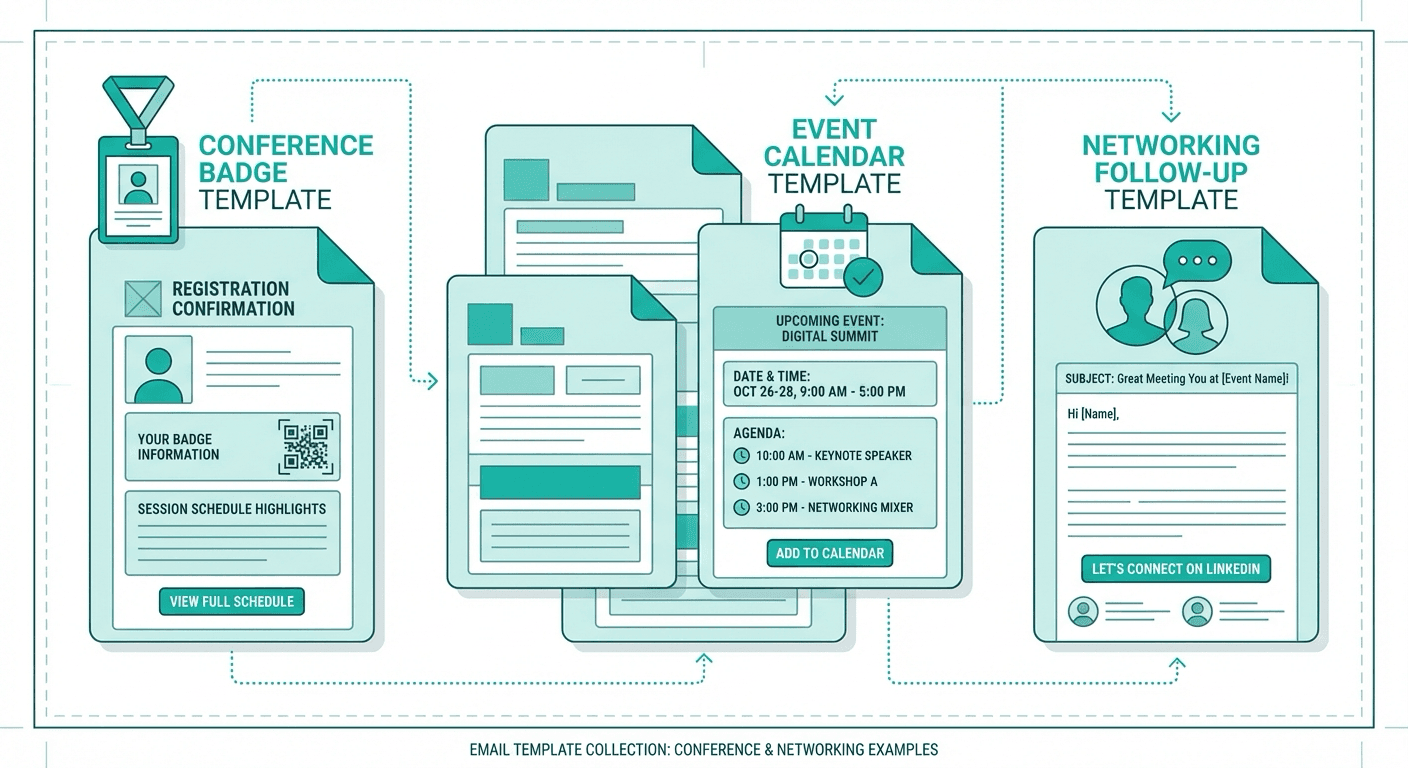
Four things set event outreach apart. Shared context creates relevance: the message can name a session, a booth or a conversation. Time sensitivity matters: sent too late, the context is stale and the email reads like any other. The audience has shown intent: someone attending an industry event is engaged in their field, which gives a message about that field a reason to be read. Competition is fierce: everyone at the event writes to the same people in the same week, so specificity decides which email gets read.
Pre-event email templates
Start before the event begins. Pre-event emails to attendees book meetings while calendars are still open and create familiarity before you meet in person.
1. The Pre-Event Meeting Request
Use it for prospects you know will attend the same event.
Subject: Meeting at [Event Name]?
Hi [First Name],
We noticed you'll be at [Event Name] next [week/month] too. We'd like to talk with someone at [their company] about [specific topic].
Would you have 15 to 20 minutes during the conference for a coffee? We're flexible on timing and happy to work around your sessions. If your schedule is already full, no problem; we may cross paths on the floor.
Best, [Your Name]
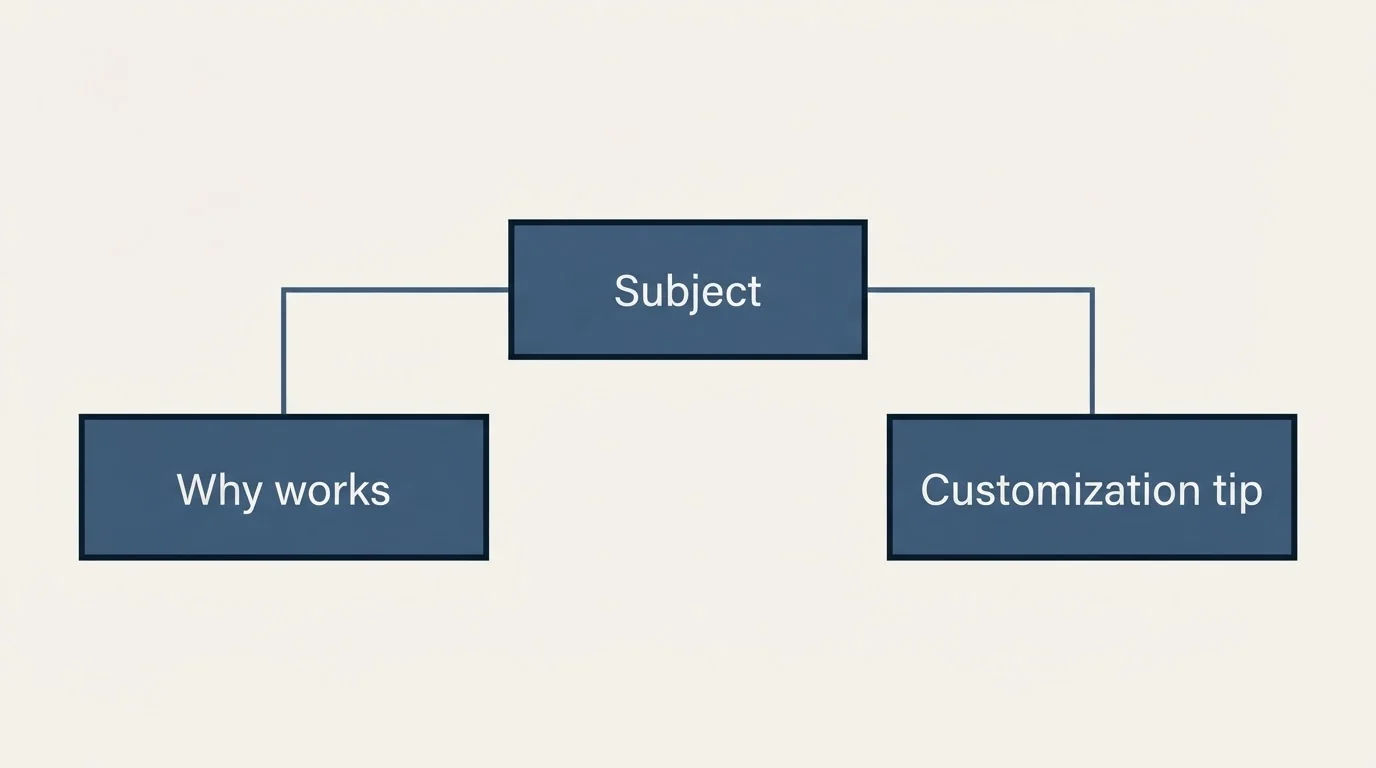
Why it works: it gets you on their calendar before the chaos begins, and a shared session adds common ground.
2. The Speaker Outreach Email
Use it for speakers whose sessions align with what you offer, before they present.
Subject: Your [Event Name] session on [topic]
Hi [First Name],
You're presenting on [session topic] at [Event Name], and it caught our attention because [specific reason tied to your work or theirs].
We'll be in the audience. If you have a few minutes before or after the session, we would like to buy you a coffee and hear more about [related topic]. No agenda beyond learning from someone who clearly knows this space.
Thanks, [Your Name]
Why it works: speakers get generic "great session" emails after the talk, so writing before it stands out. Reference their earlier work; generic flattery falls flat.
3. The Booth Visit Request
Use it when the prospect's company has a booth and you want a real conversation there.
Subject: Stopping by your booth at [Event Name]
Hi [First Name],
We'll be at [Event Name] next week and plan to stop by the [their company] booth. Is there a time you'll be there yourself?
We're interested in [specific product or initiative], which overlaps with the [related challenge] we work on. Would [Day] at [Time] work? We'll keep it brief, since booth duty is hectic.
Looking forward to it, [Your Name]
Why it works: it turns a walk-by into a scheduled conversation, and specificity stands out to busy booth staff.
4. The Exhibitor Pre-Show Invitation
Use it when your own company is exhibiting and you want named prospects to visit the booth.
Subject: [Your Company] at [Event Name], booth [number]
Hi [First Name],
We're exhibiting at [Event Name] on [dates], at booth [number] near [landmark]. We'll be showing [one specific thing], which matters to [their company] because [one reason tied to their situation].
Would you like to book a 15-minute slot at the booth? [Day] morning and [Day] afternoon are open, and we'll hold the time for you.
Best, [Your Name]
Why it works: every exhibitor sends a general invitation to drop by, so one thing worth seeing and a held slot stand out.
5. The Attendee List Outreach
Use it when you found the prospect on a published attendee list or in the event app.
Subject: Fellow [Event Name] attendee
Hi [First Name],
The [Event Name] attendee list shows you'll be there. Given your role at [their company], you may be dealing with [specific challenge].
We help companies like [relevant example] with that challenge, and we would like to hear how you're approaching it. Would you be open to 15 minutes during the conference?
Best, [Your Name]
Why it works: the list is a legitimate reason to write, but only when it is public or shared with registrants.
6. The Mutual Session Interest
Use it when you and the prospect are registered for the same session or workshop.
Subject: See you at [Session Name]?
Hi [First Name],
We noticed you're signed up for [Session Name] at [Event Name] as well, and we're curious to hear [specific aspect of the topic].
Would you like to grab a coffee before or after the session to compare notes? Either way, we'll look for you in the room.
Best, [Your Name]
Why it works: shared attendance is common ground, and the ask is small because you will be in the room anyway.
During-event templates
Events move fast. These four help you make connections in real time and set up meetings while you are both on site.
7. The Booth Conversation Email
Use it within minutes of a good conversation at your own booth.
Subject: From the [Your Company] booth
Hi [First Name],
Good to meet you at our booth just now. You mentioned [specific pain point or interest], and we'd like to continue that conversation somewhere quieter.
Would you have 15 minutes tomorrow morning before the sessions start? We'll be at [specific location or booth number].
[Your Name]
Why it works: speed matters at events, and naming what they said shows you listened.
8. The Session Neighbour Email
Use it after sitting near, or chatting briefly with, a prospect in a session.
Subject: From the [Session Name] session
Hi [First Name],
You were a few seats from our team in [Session Name] earlier, and your reaction when the speaker mentioned [specific point] matched ours.
If [their company] is facing something similar in [related topic], we're happy to share what we've learned. Coffee later today? We're free after [time].
[Your Name]
Why it works: it turns a passive moment into a conversation. Use it only when the interaction really happened.
9. The Evening Event Invitation
Use it to invite prospects to a dinner, reception or after-hours event during the conference.
Subject: Dinner tonight during [Event Name]
Hi [First Name],
We're hosting a small dinner tonight for [type of attendees] during [Event Name]: [number] people, with topics likely to include [one or two relevant themes].
We're meeting at [Restaurant] at [Time]. Would you like to join? A reply by [deadline] lets us confirm the table.
Best, [Your Name]
Why it works: a small private event offers what a conference floor cannot, so keep the group small and chosen.
10. The Same-Day Meeting Request
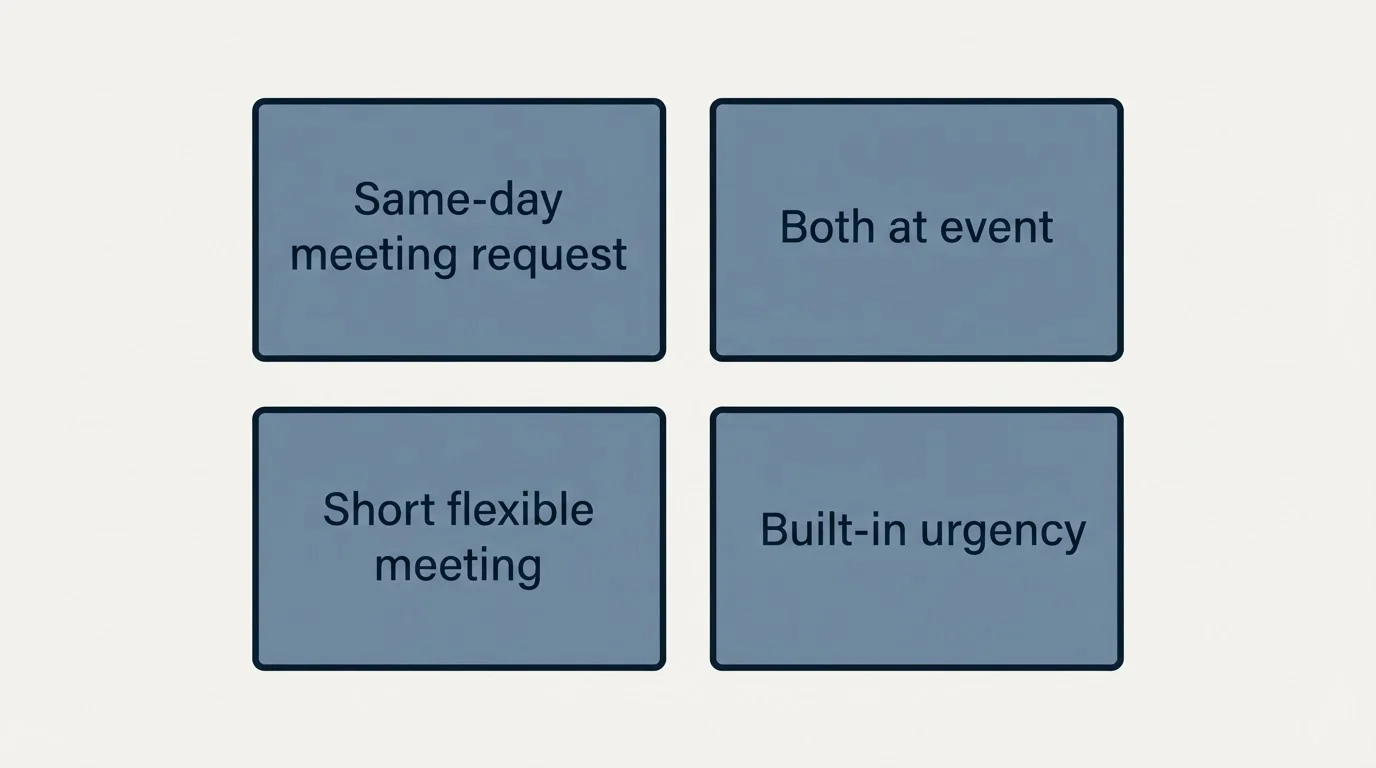
Use it when you keep missing each other at the event.
Subject: 15 minutes today?
Hi [First Name],
Quick note, since we're both at [Event Name] and keep missing each other on the floor. We'd like to talk about [specific topic], and it seems silly to wait until after the conference.
Would you have 15 minutes this afternoon? Booth, coffee station, wherever suits you.
Thanks, [Your Name]
Why it works: the urgency is built in, and it is honest about why you are writing instead of walking over.
Post-event email templates
The real work begins after the event ends. These five turn event contacts into pipeline.
11. The Post-Event Email
Use it as the default after a meaningful conversation, within 24 to 48 hours. It is taken apart line by line below.
Subject: [Event Name]: [the topic you discussed]
Good to meet you at [Event Name] on [Day]. 1
You mentioned [specific challenge or interest], and it has stayed with us. 2
We have worked with companies like [relevant example] on the same problem, and there may be useful overlap. 3
Would you be open to a 20-minute call next week? [Day/Time] or [Day/Time] both work, or suggest another. 4
- 1Names the event and the day, so the context is immediate.
- 2Quotes what they said. This is the line a generic follow-up cannot fake.
- 3One reason to continue, tied to a comparable company.
- 4One clear ask with two concrete times and an easy alternative.
Why it works: it names the conversation, gives one reason to continue and makes one clear ask. Send it inside 48 hours, before the context goes stale.
12. The Virtual Event Email
Use it after meeting someone in a breakout room, networking session or Q&A at an online event.
Subject: From [Virtual Event Name]
Hi [First Name],
Enjoyed the exchange in the [breakout room / networking session / Q&A] at [Virtual Event Name], especially your point on [topic].
At [Your Company] we help [type of companies] with [related challenge], and we wondered whether [their company] is thinking about it. Would you be open to a video call next week?
Best, [Your Name]
Why it works: virtual introductions are thin, so it names a specific moment and moves to a one-to-one call.
13. The Business Card Email
Use it for contacts whose cards you collected after only a brief exchange.
Subject: [Your Name] from [Event Name]
Hi [First Name],
We swapped cards at [Event Name] on [Day], briefly, near [location or context]. We help [type of companies] with [specific outcome], which may fit your work at [their company].
Would a quick call to check make sense? [Day/Time] works, or suggest a better one.
Best, [Your Name]
Why it works: it is honest about how brief the exchange was. Research them first, because a card alone is not personalization.
14. The Post-Event Value Share
Use it when a resource is a better next step than a meeting request.
Subject: [Resource] after [Event Name]
Hi [First Name],
Hope the trip home from [Event Name] was painless. One of the sessions sent us back to [resource, article or tool], and it connects to what you said about [topic]: [link]
No ask attached. If you want to continue the conversation later, we're happy to.
Best, [Your Name]
Why it works: something useful stands out among post-event emails, provided it is genuinely relevant.
15. The Re-Engagement Email After a Past Event
Use it when you met someone at a past event and never wrote afterwards.
Subject: Reconnecting from [Past Event Name]
Hi [First Name],
We met at [Past Event Name] in [Month/Year] and talked about [topic], and we never wrote afterwards. That's on us.
It's relevant again because [reason it matters now]. How is [their company] approaching [related challenge]? If 15 to 20 minutes in the coming weeks would be useful, we'd welcome it.
Best, [Your Name]
Why it works: it owns the gap and gives a real reason for writing now, without which it reads as opportunistic.
Event outreach best practices
Timing is everything. Pre-event emails go out one to two weeks before. During-event emails go out within hours. Post-event emails arrive within 48 hours.
Choosing the right platform matters just as much as timing, and a comparison of Gmail based cold email versus enterprise sequencing explains which tool fits which follow-up scale.
Personalize from the shared experience. The event is the hook: a session, a speaker, a conversation. Generic event emails read as automated.
Keep detailed notes. Write down what you discussed and what they are working on as a conversation ends; the post-event email is built from them.
Segment your post-event emails. Prioritize contacts with a clear fit and a meaningful interaction, and give the rest a simpler message. The table sorts every template by contact.
| The contact | Window | Template |
|---|---|---|
| Known to be attending | Before | 1 |
| Speaking at the event | Before | 2 |
| Staffing their own booth | Before | 3 |
| Someone you want at your booth | Before | 4 |
| Found on a published attendee list | Before | 5 |
| Registered for the same session | Before | 6 |
| Talked at your booth | During | 7 |
| Sat near you in a session | During | 8 |
| Worth a seat at a small dinner | During | 9 |
| Kept missing on the floor | During | 10 |
| Had a real conversation | After | 11 or 14 |
| Met at an online event | After | 12 |
| Swapped cards, briefly | After | 13 |
| Met at a past event, never written to | Months later | 15 |
Beyond timing and segmentation, the tool you use to manage these follow-ups matters too, and this breakdown of enterprise outreach versus cold email tools explains how the two platforms serve different stages of the workflow.
Connect on LinkedIn during or right after the event, so the contact has a second place to recognise your name.
Copper vs Outreach explains whether your event follow-up bottleneck is relationship tracking or outreach orchestration, helping you pick the right tool for the job.
One message per contact per window. Decide before the event which single email each priority contact gets in each window, and send it once. A contact who does not answer the pre-event request gets no second pre-event request; the next message, if any, is the post-event email with its own reason.
Building a system for event outreach
Events happen throughout the year, and the teams that get the most from them repeat one four-stage system rather than reinventing it each time: preparation, execution, follow-through and analysis.
Final thoughts
Events compress months of relationship-building into days, but only if the openings are captured: a stack of business cards on a desk is worth nothing, while one well-timed message per contact turns a short conversation into a real relationship.
Teams building a systematic follow-up process may also want to weigh their sales stack, since a comparison of Apollo.io and Outreach's differing roles explains how enrichment and engagement tools fit together.
Use these templates as starting points and customize each with what you actually discussed, so it reads as a continuation of the conversation.
Related Reading
- 14 Trigger Event Email Templates That Catch Prospects at the Right Moment
- 8 Sales Pitch Email Templates That Convert
If you would rather have this run for you, RevenueFlow books qualified meetings on a pay-per-meeting basis and publishes client results.
Frequently asked questions.
Frequently asked questions- What should a conference email say?
- It should name the event and one specific shared point, such as a session, a speaker, a booth or a conversation you had, then make one small ask with a concrete time. Before the event the ask is 15 to 20 minutes on the calendar. After the event it is a short call about what the two of you actually discussed.
- When should I send pre-event emails to attendees?
- One to two weeks before the event. That is early enough for calendars to still have room and close enough that the event is on the recipient's mind. Name something you will both be at, such as a session or a booth, and ask for a specific slot rather than a general meeting sometime during the conference.
- What is a good exhibitor pre-show email template?
- State the dates and your booth number with a landmark, name the one thing you will be showing and why it matters to the recipient's company, and offer a held 15-minute slot on two named half-days. Every other exhibitor is sending a general invitation to drop by, so a specific reason and a reserved time are what stand out.
- How quickly should I send a post-event email?
- Within 24 to 48 hours of the event ending, while the conversation is still fresh. Name the event and the day, repeat the specific thing they told you, give one reason to continue, and suggest two concrete times for a short call. After 48 hours the context goes stale and the message reads like routine inbox clutter.
About the author.

Ben Carden is CRO at RevenueFlow, which builds and operates outbound revenue engines for B2B companies. Previously at Gartner Enterprise. Studied at London School of Economics.
Ben Carden · CRO
Connect on LinkedIn →Explore more.
Ready to scale your outreach?
We build GTM engines that book real meetings. See the receipts.
Related articles.
10 B2B Cold Email Templates for One-Message Sends
Ten B2B cold email templates written for a single send, with the four slot structure underneath them and the test that separates a good example from a bad one.
Cold Email Templates for Customer Success Managers
Eleven cold email templates for customer success managers, covering champion change, expansion, renewal rescue, and win-back, with subject lines and timing.
14 Renewal Email Templates That Retain Customers
Master subscription and contract renewals with 14 proven email templates. Reduce churn, lock in renewals early, and maintain customer relationships.
13 Case Study Request Email Templates That Get Results
Get proven email templates for requesting case studies, video testimonials, and written reviews from your happiest customers. Includes templates for every stage from initial ask to final approval.
Email Subject Line Capitalization: What the Guides Say
What the style authorities actually rule on subject line case, what the published tests measured, and the default for a one to one sales email.
Follow-Up Call Scripts: Nine Calls Into a Live Conversation
Nine follow-up call scripts, each tied to the event that earns the call, from a demo to a renewal, plus the four moves they share and how each call should end.