15 Meeting Request Email Templates That Get Responses
Meeting request emails need to be compelling enough to earn calendar time. Here are proven templates for requesting meetings with prospects, executives, and busy decision makers.
Successful meeting request emails include a clear value proposition, a specific time ask (typically 15-20 minutes), personalization showing research, and easy scheduling through calendar links or proposed times. The 15 templates cover scenarios from initial cold outreach to referral introductions, event follow-ups, and executive targeting. Response rates improve when requests lead with observations about the recipient's business, offer upfront value like custom analyses, or leverage mutual connections.
Key takeaways
- Meeting requests should propose specific durations (15-20 minutes) rather than vague timeframes, and include calendar links or concrete time options to reduce scheduling friction.
- Referral-based meeting requests mentioning the mutual connection in both subject line and opening sentence dramatically increase response rates compared to cold outreach.
- Value-first templates that offer something actionable upfront (like a brief analysis) change the dynamic from asking for time to pitch into offering immediate utility.
- Executive outreach requires ultra-brevity with one-line value propositions and recognition of limited time, avoiding lengthy explanations.
- Event follow-up emails should be sent within 24-48 hours while the interaction is fresh and include specific details from the conversation to jog memory.
Reviewed and updated October 1, 2026
15 Meeting Request Email Templates That Get Responses
Getting a meeting on someone's calendar is one of the hardest parts of B2B sales. Decision makers receive dozens of meeting requests every week, and most get ignored or deleted within seconds.
The difference between a meeting request that gets accepted and one that gets trashed comes down to a few key elements: relevance, clarity, and respect for the recipient's time.
This guide provides 15 meeting request email templates you can use and customize for different scenarios. Each template includes an explanation of why it works and tips for making it your own.
Searched as a cold email template for a meeting, these are the same thing: every template below is a single cold email whose only ask is time on a calendar.
If what you need is an email to schedule a meeting with someone who already expects to hear from you, use Template 1 and cut the context paragraph: the scheduling ask is the whole message.
A meeting scheduling email template and a meeting request template are the same artifact: the request earns the meeting, the scheduling line just removes the friction of agreeing a time.
What Makes a Meeting Request Email Work
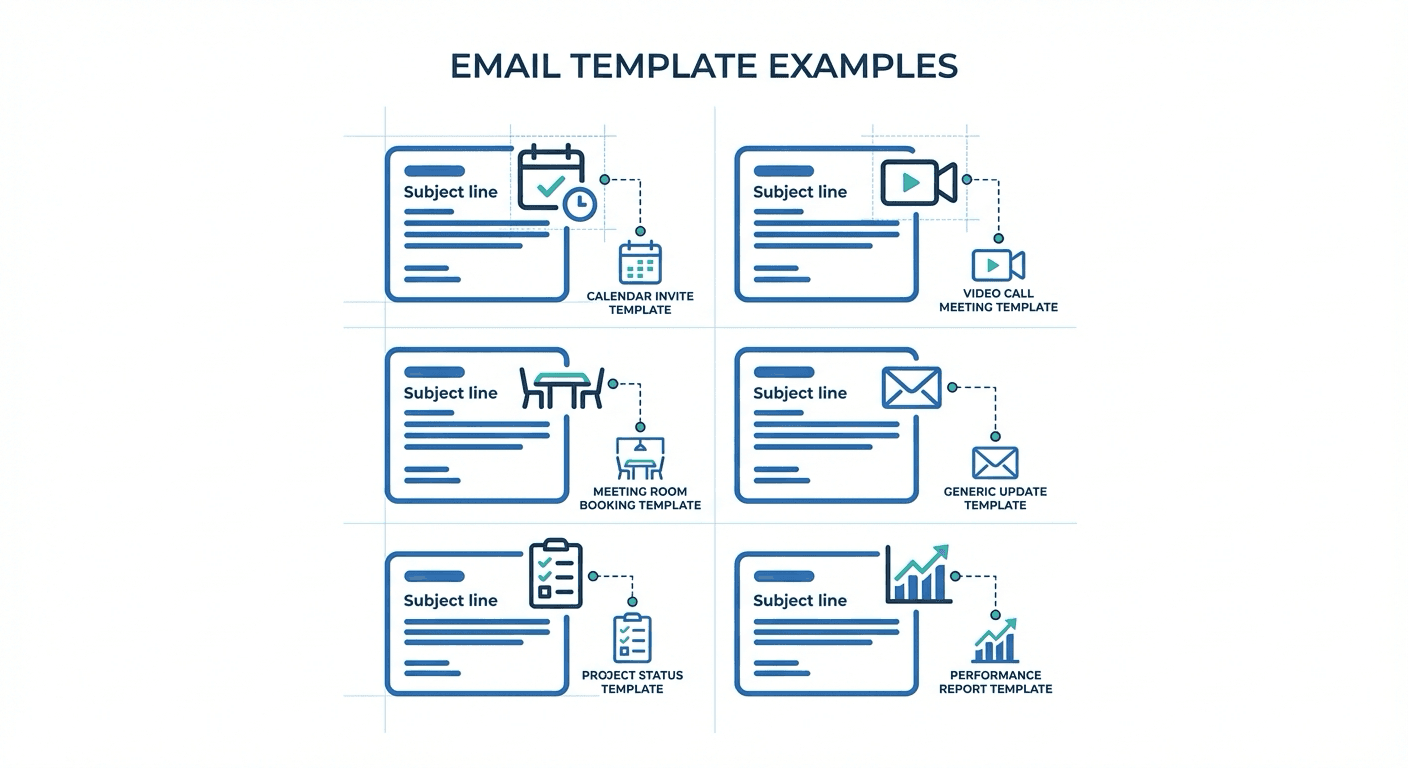
Before diving into the templates, let's cover the essential elements every meeting request needs:
Clear value proposition - Why should they meet with you? What will they gain from the conversation?
Specific ask - Vague requests get vague responses. Be clear about what you want.
Respect for their time - Acknowledge that their calendar is valuable. Keep it brief.
Easy next step - Make it simple to say yes. Offer specific times or a calendar link.
Personalization - Generic requests feel like spam. Show that you did your homework.
Now let's look at 15 templates that put these principles into action.
Template 1: The Initial Outreach Meeting Request
Use this when you're reaching out to a prospect for the first time and want to request an introductory meeting.
Subject: Quick question about [specific challenge/initiative]
Hi [First Name],
I noticed [specific observation about their company or role]. At [Your Company], we help [type of companies] solve [specific problem], and I thought there might be an opportunity to help [their company] as well.
Would you be open to a 15-minute call next week to see if there's a fit? I promise to keep it brief and focused.
If it's easier, you can grab a time directly on my calendar here: [Calendar Link]
Best, [Your Name]
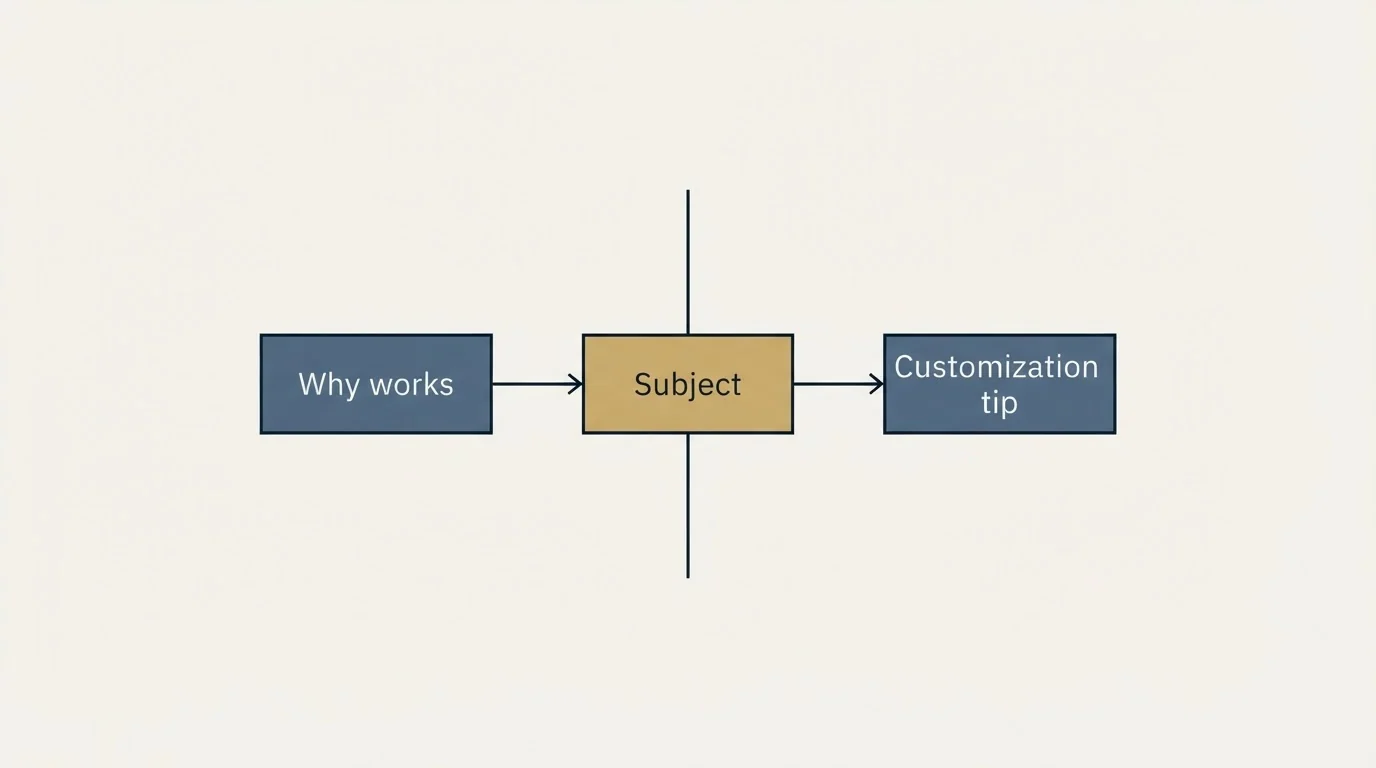
Why this works: It leads with an observation showing you did research. The ask is specific (15 minutes), and the calendar link removes friction.
Customization tip: Replace the observation with something genuine you noticed. Avoid generic statements like "I love what your company is doing."
Template 2: The Referral-Based Meeting Request
Use this when someone in your network connected you to the prospect.
Subject: [Mutual Connection's Name] suggested we connect
Hi [First Name],
[Referrer's Name] mentioned that you might be a good person to talk to about [topic/challenge]. They said great things about the work you're doing at [Company].
I help [type of companies] with [specific outcome], and [Referrer's Name] thought there could be some synergy worth exploring.
Would you have 20 minutes this week or next for a quick conversation? I'd love to learn more about what you're working on and share a few ideas that might be helpful.
Let me know what works for your schedule.
Thanks, [Your Name]
Why this works: Referrals dramatically increase response rates. Mentioning the mutual connection in the subject line and opening creates immediate credibility.
Customization tip: Ask your referrer for one specific detail about the prospect you can mention. This shows the introduction was thoughtful.
Template 3: The Value-First Meeting Request
Use this when you have something genuinely valuable to offer upfront.
Subject: [Specific resource] for [their company]
Hi [First Name],
I put together a brief analysis of [something relevant to their business] that I thought you might find useful. No strings attached.
[One or two sentence summary of what the analysis shows]
If you'd like to walk through it together, I'm happy to spend 15 minutes sharing what I found and answering any questions. Even if you decide not to work with us, you'll walk away with some actionable insights.
Would Tuesday or Thursday afternoon work for a quick call?
Best, [Your Name]
Why this works: Leading with value (something you've already created for them) changes the dynamic. You're not asking for their time to pitch them. You're offering something useful.
Customization tip: The value you offer needs to be genuinely useful. A generic PDF won't cut it. Do the work to create something specific to their situation.
Where we differ from standard practice
Much of the advice on this page reflects how outbound is commonly run. We run it differently, and since this page sits on our site it is worth saying where the difference is and what it costs us.
- A sequence of messages to each prospect over several weeks
- Later messages often land in the same email thread
- Every contact is reached more than once, so a distracted reader gets another chance
- The later messages go only to people who did not answer the first
- Reputation cost accrues on the sending domain across everything else it sends
- One message, then that campaign is finished for that contact
- No thread replies and no bumps
- More of the work moves into targeting and into the one message
- We reach each contact less often, and that is the cost we accept
The reasoning is mechanical rather than moral. A follow-up arrives underneath a message the recipient has already seen and chosen not to answer, so it is delivered to the population most likely to mark it as spam, and the reputation cost of that lands on the sending domain across every campaign running on it. We set that cost against the replies a sequence recovers and decided the trade was not worth it. The full argument, with the numbers from our own campaigns, is in why we stopped using follow-ups.
Template 4: The Industry Event Follow-Up
Use this after meeting someone briefly at a conference, webinar, or industry event.
Subject: Great connecting at [Event Name]
Hi [First Name],
It was nice meeting you at [Event Name] on [Day]. I enjoyed our conversation about [specific topic you discussed].
I'd love to continue that conversation and learn more about how you're approaching [challenge/initiative they mentioned]. I think there might be some interesting ways we could help each other.
Would you be open to a 20-minute call next week? I'm free [Day/Time] or [Day/Time], but happy to work around your schedule.
Looking forward to connecting, [Your Name]
Why this works: You've already established rapport in person. This email capitalizes on that connection while the interaction is still fresh.
Customization tip: Send this within 24-48 hours of the event. Include a specific detail from your conversation to jog their memory.
Template 5: The Executive Outreach Template
Use this when reaching out to C-level executives or senior leaders.
Subject: [One-line value proposition for their company]
[First Name],
I'll keep this brief because I know your time is limited.
[Your Company] helps [type of companies] achieve [specific outcome]. We've worked with companies like [1-2 relevant examples] to [specific result].
I'd welcome 15 minutes to explore whether there's potential fit for [their company]. If not, no hard feelings.
What does your calendar look like next week?
[Your Name]
Why this works: Executives appreciate brevity. This template respects their time, establishes credibility with relevant examples, and makes a clear ask without over-explaining.
Customization tip: Research the executive's priorities before reaching out. If you can tie your value proposition to something they've publicly discussed (earnings call, interview, LinkedIn post), mention it.
Template 6: The Problem-Specific Outreach
Use this when you know the prospect is dealing with a specific challenge.
Subject: Thoughts on [specific challenge]
Hi [First Name],
I noticed [signal that indicates they have a specific problem]. That challenge is something we help [type of companies] solve regularly.
Rather than send a lengthy email about our approach, I'd rather hear more about your situation and share a few ideas that might be useful.
Would you be open to a 20-minute conversation this week? Even if we're not the right fit, I'm happy to share what we've seen work for other companies in similar situations.
[Day/Time] or [Day/Time] work on my end, but I can adjust to your schedule.
Best, [Your Name]
Why this works: This template shows you understand their situation and positions the meeting as a consultative conversation rather than a sales pitch.
Customization tip: The signal you mention needs to be real. Job postings, news articles, LinkedIn posts, and company announcements are good sources.
Template 7: The Demo Request Template
Use this when your product requires a demonstration to convey its value.
Subject: Quick demo of [Product Name] for [their company]
Hi [First Name],
Based on what I've learned about [their company], I think you'd find value in seeing how [Product Name] works. Specifically, I'd like to show you how it can help with [1-2 specific use cases relevant to them].
Our demos typically run 20-30 minutes and are tailored to your specific situation. No generic slideshow, I promise.
Would any of these times work for you?
- [Option 1]
- [Option 2]
- [Option 3]
If those don't work, feel free to grab a time that does: [Calendar Link]
Thanks, [Your Name]
Why this works: This template sets expectations for what the demo will cover and promises a personalized experience. The multiple time options make it easy to say yes.
Customization tip: Mention specific features or use cases relevant to their industry or role. Generic demos feel like wasted time.
Template 8: The Discovery Call Request
Use this when you need to learn more about their situation before proposing a solution.
Subject: Learning more about [their initiative/challenge]
Hi [First Name],
I've been doing some research on [their company] and have a few questions about how you're currently handling [specific area]. I think there might be an opportunity to help, but I want to make sure I understand your situation first.
Would you be open to a 20-minute discovery call? My goal is to learn about your current process and challenges. If it makes sense to continue the conversation after that, great. If not, no pressure.
I'm available [Day/Time] or [Day/Time]. What works best for you?
Best, [Your Name]
Why this works: This template positions you as genuinely curious rather than pushy. It signals that you're not going to waste their time pitching something irrelevant.
Customization tip: Come prepared with thoughtful questions. A discovery call where you just wing it will fall flat.
Template 9: The Competitor Transition Template
Use this when you know the prospect uses a competitor's product or service.
Subject: Alternative to [Competitor Name]
Hi [First Name],
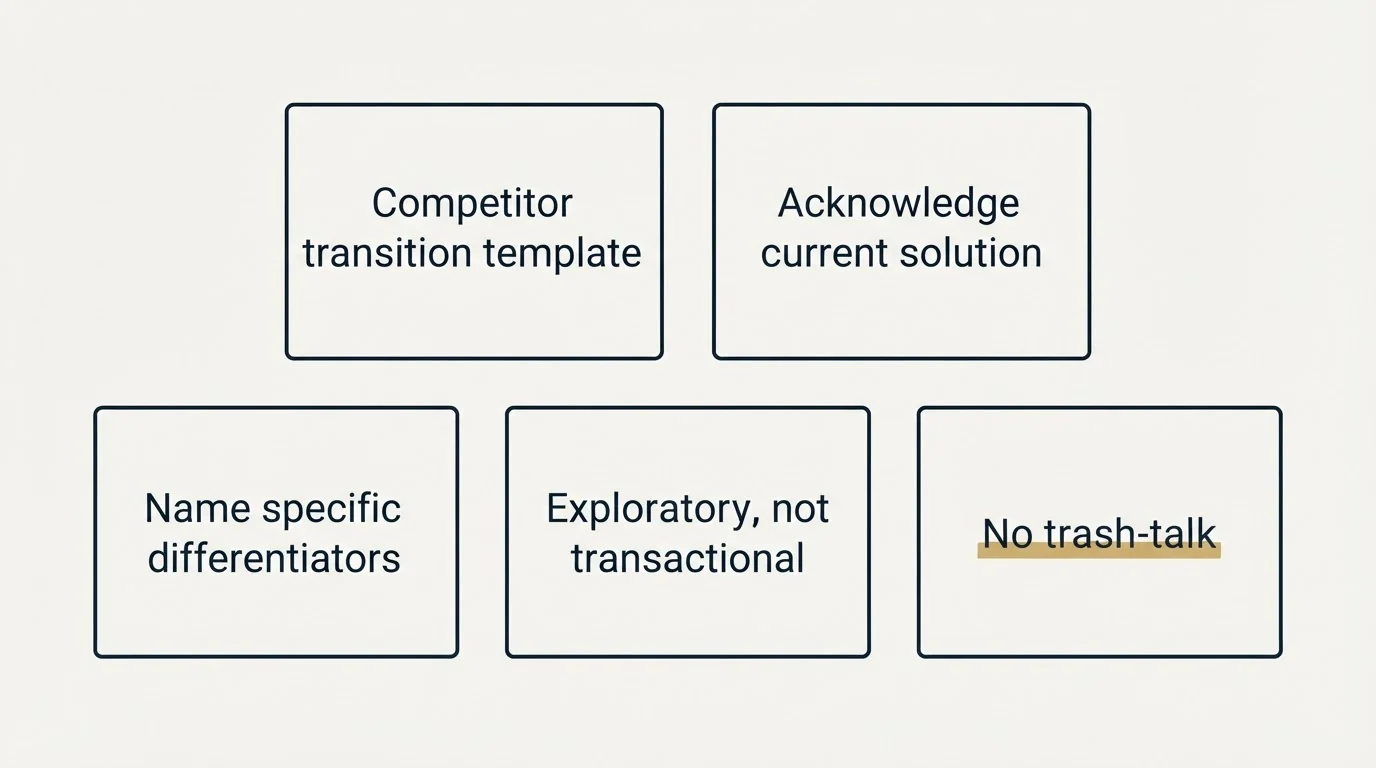
I noticed [their company] is currently using [Competitor Name] for [function]. A lot of companies in [their industry] have been making the switch to [Your Company] because of [1-2 specific differentiators].
I'm not saying [Competitor Name] is bad. But I think it's worth seeing how we compare, especially in areas like [specific area where you excel].
Would you be open to a 15-minute conversation to see if it makes sense to explore further? No pressure to switch. Just a conversation.
Let me know if [Day/Time] works, or feel free to suggest another time.
Thanks, [Your Name]
Why this works: This template acknowledges their current solution without being dismissive. It positions the meeting as exploratory rather than transactional.
Customization tip: Be genuine about your differentiators. If you trash-talk the competitor, you'll lose credibility.
Template 10: The Trigger Event Template
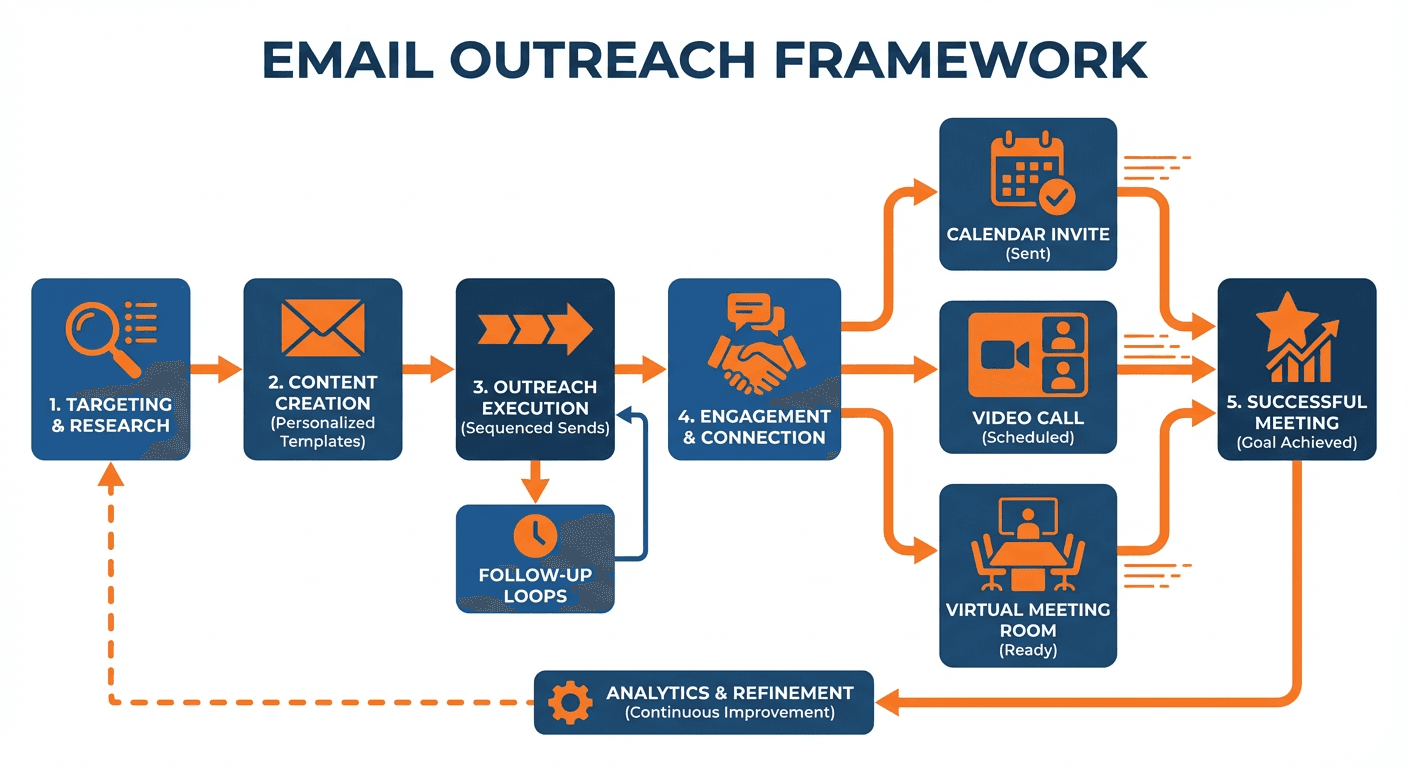
Use this when something significant happened at their company (funding, new hire, acquisition, expansion).
Subject: Congrats on [trigger event]
Hi [First Name],
Congratulations on [specific trigger event]. That's exciting news for [their company].
When companies [describe the trigger event situation], they often find themselves needing to [related challenge your solution addresses]. At [Your Company], we help with exactly that.
I'd love to learn more about your plans and share how we've helped similar companies navigate this stage. Would you have 15-20 minutes for a quick call next week?
Best, [Your Name]
Why this works: Trigger events create urgency and relevance. This template shows you're paying attention and ties your outreach to something they care about.
Customization tip: Be specific about the trigger event. A generic "congrats on your recent success" feels lazy.
Template 11: The Mutual Benefit Template
Use this when there's a clear opportunity for partnership or collaboration.
Subject: Potential partnership between [Your Company] and [Their Company]
Hi [First Name],
I've been following [their company] and think there's potential for a mutually beneficial relationship between our organizations.
Here's what I'm thinking: [Brief description of how you could help each other]
I'd love to explore this further and hear your thoughts. Would you be open to a 20-minute call to discuss?
I'm available [Day/Time] or [Day/Time], but happy to work around your schedule.
Looking forward to connecting, [Your Name]
Why this works: This template positions the meeting as a collaboration opportunity rather than a sales pitch. When done right, it creates genuine interest.
Customization tip: Make sure the partnership idea is realistic and valuable for both parties. Don't use this as a disguised sales pitch.
Template 12: The Re-Engagement Template
Use this when following up with someone you've previously connected with but lost touch.
Subject: Picking back up
Hi [First Name],
We connected a few months ago about [topic/challenge], but the timing wasn't right for [their company] at that point.
I wanted to check in and see if things have changed. [Brief mention of something new or relevant at your company or in their industry]
Would you be open to reconnecting for a quick 15-minute call? I'd love to hear what's changed and share a few updates on our end.
Let me know what works for your schedule.
Best, [Your Name]
Why this works: This template acknowledges the prior relationship and provides a reason for reaching out again. It doesn't pretend the previous conversation didn't happen.
Customization tip: Reference something specific from your previous conversation. It shows you remember them and aren't just working through a list.
Template 13: The Content-Based Outreach
Use this when someone from their company engaged with your content (downloaded a resource, attended a webinar, etc.).
Subject: Thoughts on [content piece they engaged with]
Hi [First Name],
I noticed someone from [their company] recently [downloaded/watched/attended] [content piece]. I hope you found it useful.
I'd love to hear your thoughts on [specific topic from the content] and learn more about how [their company] is approaching [related challenge].
Would you have 15 minutes for a quick conversation? I promise not to pitch you. Just a genuine exchange of ideas.
Let me know if [Day/Time] works, or feel free to suggest another time.
Thanks, [Your Name]
Why this works: Content engagement is a strong signal of interest. This template capitalizes on that interest without being pushy.
Customization tip: Reference something specific from the content they engaged with. Generic follow-ups feel automated.
Template 14: The Industry-Specific Template
Use this when reaching out to prospects in a specific industry where you have deep expertise.
Subject: [Specific industry challenge] at [their company]
Hi [First Name],
Working with [industry] companies like [1-2 examples], I've seen a common pattern: [describe common industry challenge].
Is [their company] dealing with this as well? If so, I have some ideas that might help.
I'd welcome a 20-minute conversation to learn more about your situation and share what's worked for other [industry] companies. Even if we're not the right fit, you'll walk away with some useful insights.
Would [Day/Time] or [Day/Time] work for you?
Best, [Your Name]
Why this works: Industry expertise creates credibility. This template positions you as someone who understands their world, not just another vendor.
Customization tip: Be specific about the industry challenge. Generic industry observations won't resonate.
Template 15: The Direct Ask Template
Use this when you've done enough research to know there's a strong fit and want to be direct about it.
Subject: [Their company] + [Your company]
Hi [First Name],
I'll cut to the chase: I think [Your Company] can help [their company] with [specific outcome].
Here's why: [2-3 sentences explaining the fit based on your research]
I'd like 15 minutes to walk you through our approach and see if it resonates. If it doesn't, I won't waste your time.
Are you available [Day/Time]? If not, here's my calendar: [Calendar Link]
Thanks, [Your Name]
Why this works: Sometimes being direct is the most effective approach. This template cuts through the noise and makes a clear, confident ask.
Customization tip: Only use this when you've done genuine research and have a compelling reason for the meeting. Being direct without substance comes across as arrogant.
Tips for Customizing These Templates
Templates are starting points, not scripts to copy verbatim. Here's how to make them work for your specific situation:
Research first, write second. Spend at least 5-10 minutes learning about the prospect before you write. Check their LinkedIn, company website, recent news, and any content they've published.
Match your tone to theirs. If someone's LinkedIn posts are casual and conversational, your email should be too. If they're formal and buttoned-up, adjust accordingly.
Be specific. Vague observations like "I admire your company's work" mean nothing. Specific observations like "I noticed you recently expanded into the European market" show genuine interest.
Test and iterate. Track which templates and subject lines get the best response rates. What works for one audience might not work for another.
Keep it short. Most of these templates can be shortened further. When in doubt, cut words.
Subject Line Best Practices
Your subject line determines whether the email gets opened. Keep these principles in mind:
- Keep it under 50 characters when possible
- Personalize with their name, company, or a specific reference
- Create curiosity without being clickbait
- Avoid spam trigger words like "free," "urgent," or "act now"
- Test questions vs. statements to see what resonates with your audience
Coming Back After a Meeting Request Goes Unanswered
Most responses come from a second or third contact rather than from the first email. We read that as a reason to come back, not as a reason to bump. As the comparison above sets out, each campaign carries one message and is then finished for that contact, so the later contact is a new email rather than a reply underneath one they already chose to leave. Here is the shape:
Campaign 2, about four weeks on: A new email with its own subject line and a genuinely different premise, sent only to the people who did not answer the first.
Campaign 3, the next open window: A new email again, this time carrying something usable on its own: a benchmark, a short teardown, a number about their business.
Campaign 4, on the next trigger: One routing question, still as its own message with its own subject.
Don't give up after one email. Persistence pays off when each attempt is a fresh message rather than a reminder about the last one.
Final Thoughts
Meeting requests work when they demonstrate genuine value and respect for the recipient's time. Use these templates as starting points, but always personalize them based on your research.
The best meeting request emails feel like they were written for one person, not blasted to a list. Put in the effort to make each outreach personal, and you'll see significantly better response rates.
For more help with cold email outreach, explore our resources on campaign structure, re-approach strategies, and personalization techniques.
Related Reading
- 10 Referral Request Email Templates for B2B Sales
- 13 Feedback Request Email Templates That Get Honest Responses
If you would rather have this run for you, RevenueFlow books qualified meetings on a pay-per-meeting basis and publishes client results.
Frequently asked questions.
Frequently asked questions- What are the essential elements every meeting request email needs?
- Every effective meeting request needs five core elements: a clear value proposition explaining what they gain from meeting, a specific ask rather than vague language, explicit respect for their time by keeping the email brief, an easy next step with proposed times or calendar links, and personalization demonstrating you researched their company or role. Generic requests without these elements typically get ignored or deleted within seconds.
- How long should a meeting request be?
- Meeting requests should propose specific short durations like 15 or 20 minutes. Decision makers receive dozens of meeting requests weekly, so asking for brief, focused conversations shows respect for their calendar. The email itself should also be concise, avoiding lengthy explanations. Templates that work best lead with the value proposition and get to the ask quickly rather than burying it in paragraphs.
- What makes a referral-based meeting request more effective?
- Referral-based meeting requests dramatically increase response rates because they leverage existing credibility. The mutual connection should be mentioned in both the subject line and email opening to establish immediate trust. To maximize effectiveness, ask your referrer for one specific detail about the prospect you can mention, which demonstrates the introduction was thoughtful rather than generic. This social proof changes the recipient's perception from cold outreach to warm introduction.
- What should I include in a meeting request subject line?
- Effective subject lines reference something specific to the recipient rather than generic phrases. Examples include mentioning a specific challenge or initiative they're working on, naming a mutual connection who suggested you connect, or referencing an industry event where you met. The subject line should create context for why you're reaching out and give them a reason to open the email beyond curiosity.
- When should I send a follow-up email after an industry event?
- Event follow-up emails should be sent within 24-48 hours while the interaction is still fresh in the recipient's memory. The email should reference a specific topic you discussed during your conversation to jog their memory and demonstrate genuine interest rather than mass outreach. This timing capitalizes on the in-person rapport you established before they've received dozens of other follow-ups.
About the author.

Ben Carden is CRO at RevenueFlow, which builds and operates outbound revenue engines for B2B companies. Previously at Gartner Enterprise. Studied at London School of Economics.
Ben Carden · CRO
Connect on LinkedIn →Explore more.
Ready to scale your outreach?
We build GTM engines that book real meetings. See the receipts.
Related articles.
10 B2B Cold Email Templates for One-Message Sends
Ten B2B cold email templates written for a single send, with the four slot structure underneath them and the test that separates a good example from a bad one.
Cold Email Templates for Customer Success Managers
Eleven cold email templates for customer success managers, covering champion change, expansion, renewal rescue, and win-back, with subject lines and timing.
14 Renewal Email Templates That Retain Customers
Master subscription and contract renewals with 14 proven email templates. Reduce churn, lock in renewals early, and maintain customer relationships.
13 Case Study Request Email Templates That Get Results
Get proven email templates for requesting case studies, video testimonials, and written reviews from your happiest customers. Includes templates for every stage from initial ask to final approval.
Email Subject Line Capitalization: What the Guides Say
What the style authorities actually rule on subject line case, what the published tests measured, and the default for a one to one sales email.
Follow-Up Call Scripts: Nine Calls Into a Live Conversation
Nine follow-up call scripts, each tied to the event that earns the call, from a demo to a renewal, plus the four moves they share and how each call should end.