We Stopped Using Follow-Up Emails. Our Meeting Rate Went Up.
We analyzed 23 meetings and 108 interested replies to see if follow-ups were worth it. The data was clear: first emails are 9x more effective. Here's why we removed all follow-ups from our campaigns.
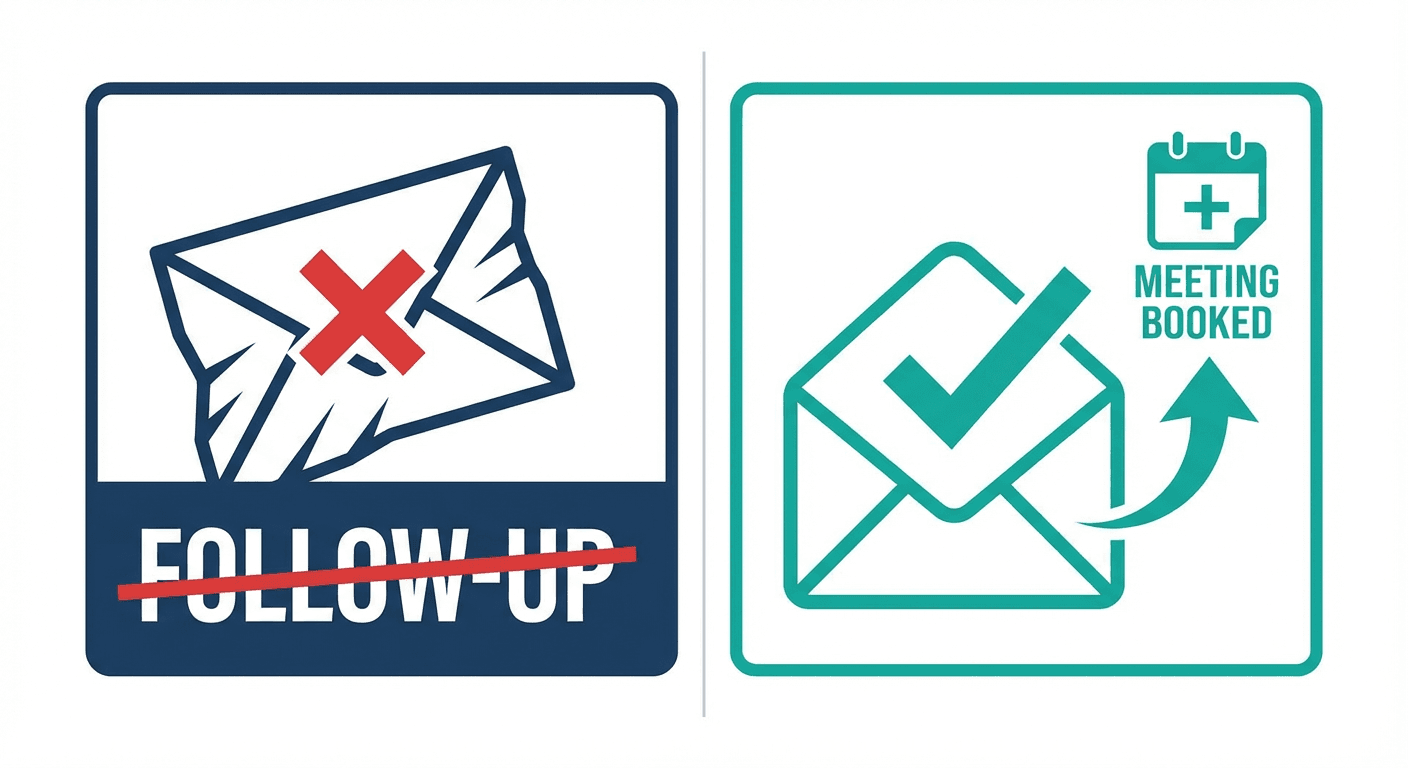
Removing follow-up emails and sending only one initial email can increase meeting rates because first emails are 9x more effective than follow-ups. Out of 23 meetings booked, 20 came from first emails and only 3 from follow-ups. Additionally, 90% of truly interested replies come from the first email, while most follow-up replies lead nowhere. The freed capacity enables targeting the entire addressable market every 60 days with fresh campaigns.
Key takeaways
- First emails generated 20 out of 23 meetings booked through cold outreach campaigns, making them 9x more effective than follow-up emails.
- 70% of interested replies came after the first email, and of the 30% who replied to follow-ups, 90% never sent another message.
- Follow-ups damage sender reputation and waste sending capacity that could be used for new campaigns targeting fresh prospects.
- The recommended strategy is hitting the entire target addressable market every 60 days with single-email campaigns testing 5-6 different offers per cycle.
- Reply rate per campaign drops without follow-ups, but opportunity rate remains stable because interested prospects respond to the first email anyway.
Reviewed and updated August 28, 2026
We Stopped Using Follow-Up Emails. Our Meeting Rate Went Up.
We removed every follow-up email from our campaigns.
No second touch. No third touch. No "circling back" or "bumping this to the top of your inbox."
Just one email. Then done.
Our meeting rate went up.
The data convinced us.
20 of 23 booked meetings came from first emails
The Data: First Emails Are 9x More Effective
I went down a rabbit hole analyzing our campaign performance.
Out of 23 meetings we booked through Instantly:
- 20 meetings came from first emails
- 3 meetings came from follow-ups
We sent roughly the same number of first emails as follow-ups (accounting for the 1-2% who reply to the first email and don't get follow-ups).
The first email was 9x more effective than the follow-up.
That's not a marginal difference. That's a completely different return on investment.
Interested Replies Tell the Same Story
I dug deeper into interested replies, not just booked meetings.
Out of 108 interested replies from our campaigns:
- 75 replies (70%) came after the first email
- 33 replies (30%) came after follow-ups
This is where it gets interesting.
Of those 33 people who replied to follow-ups, 29 never sent another message despite us following up five or six more times.
They probably saw the follow-up, got annoyed, and replied to make us go away.
"Yeah, sure, send whatever you have."
Then they ghosted.
Only 4 of the 33 continued the conversation, and none of them ended up being interested.
So 90% of truly interested replies come from the first email. Only 10% from follow-ups.
And most of that 10% aren't engaged anyway.
Why Follow-Ups Don't Work

This wasn't supposed to be the result.
Every sales playbook says to follow up. Persistence wins. Most deals happen after the seventh touch.
But those platitudes ignore the reality of cold email.
Most published sales follow-up tips are advice about spacing and wording inside a sequence, which leaves the only decision that changes the outcome untouched: whether a second message to somebody who said nothing should be sent at all.
1. Our CTAs Are Simple
We're not asking for a 30-minute call on the first email.
We're asking: "Can I send you more info?"
It takes one second to respond. If they're interested, they'll reply.
2. Our Emails Are Short
It's not like they're starring our email to read later.
They read it in two seconds. If it resonates, they respond.
If they don't respond, they're not interested. A follow-up three days later won't change that.
3. Timing Matters More Than Persistence
We get this response all the time: "Sounds interesting, but reach back out in 60 days. Other priorities right now."
If the timing isn't right today, it won't be right in three days.
But it might be right in two months.
You're better off waiting 60 days and trying again than annoying them with follow-ups when they're not ready.
4. If They Saw It and Didn't Reply, They're Not Interested
Two things happen when someone doesn't reply to a cold email:
- They're not in the market for what you're offering
- Your offer didn't resonate
In either case, a follow-up won't help.
If they were even slightly interested, they would have said something. Our CTA is that easy.
The Follow-Up Tax
Follow-ups don't just fail to generate results. They actively hurt your campaigns.
Deliverability damage: Following up increases the likelihood of spam flags. If they didn't respond to the first email, sending more emails to the same person who ignored you damages your sender reputation.
Resource waste: You're using half your sending capacity on emails that are 9x less effective. That's capacity you could use for new campaigns targeting fresh prospects.
Opportunity cost: Every follow-up you send is a first email you didn't send to someone new. First emails work. Follow-ups don't. The math is simple.
The New Strategy: Hit the TAM Every 60 Days
Three questions land on this section from buyers rather than from readers: whether the service includes automated follow-up messaging sequences, how to build a repeatable follow-up system so nothing falls through, and how to run recurring value-driven outreach that sends something new each month. The cycle below is the answer to all three. It is repeatable, it is scheduled, and the thing that recurs is a fresh reason to write rather than a reminder about the last one.
What we're doing instead:
- Yes: Single email campaigns
- Yes: Hit the entire TAM every 60 days
- Yes: Test 5-6 different offers per cycle
- Yes: Take the winning offer to the next cycle
- Yes: Segment for timing
Single email campaigns. One email. No follow-ups. Done.
Hit the entire TAM every 60 days. Reach everyone in the target addressable market within two months.
Test 5-6 different offers per cycle. Split-test various offers throughout the 60-day cycle to see what resonates.
Take the winning offer to the next cycle. Pick the best one or two offers and iterate on them for the next 60-day cycle.
Segment for timing. Split the TAM into segments so each segment gets hit every two months. By the time you circle back, they've forgotten the first email and their situation may have changed.
The One Exception: Active Conversations
Teams asking how to improve email campaign follow ups are usually describing two different things at once, and only one of them is a follow up worth improving: chasing somebody who replied is ordinary correspondence and should be relentless, while chasing somebody who read the first message and said nothing is the thing the data above argues against.
If someone replies interested to the first email, we follow up relentlessly until they either:
- Book a meeting
- Tell us they're not interested
- Stop responding after multiple attempts
But that's different. They've already expressed interest. Following up in an active conversation is expected and appropriate.
When that follow-up happens by phone, the wording for each situation is in our follow-up call scripts.
Following up on silence is annoying.
That distinction is the whole of our position on sales follow-ups, because the ones that chase a reply are ordinary correspondence worth doing well and the ones that chase silence are what the data above argues against.
What We're Testing Instead
With all the capacity we've freed up from removing follow-ups, we're doubling down on what matters:
Better first emails. All the effort goes into crafting compelling first emails instead of writing follow-up variations.
More offers. We test different offers constantly. The offer is 99% of what matters. Hooks and angles matter too, but offer is king.
More campaigns. We can run way more campaigns because we're not wasting sends on follow-ups.
One variable at a time. We control variables so we get meaningful insights. Maybe test different case studies, different angles, different offer framing. But we change one thing at a time so we know what's working.
What Happens to Reply Rate
Reply rate per campaign will go down.
And we don't care at all.
Most replies from follow-ups are "remove me from your list" or "not interested."
Those aren't valuable replies.
We care about opportunity rate, not reply rate.
Opportunity rate stays the same because the people who were going to be interested reply to the first email anyway.
But now we can run more campaigns with the same sending capacity, so we generate more opportunities overall.
Expected Outcomes

What we expect from this change:
More meetings from sends. First emails work 9x better, so we send more of them.
Better deliverability scores. Fewer spam flags from unwanted follow-ups.
Lower cost per meeting. We're not wasting sending capacity on messages that don't convert.
More campaigns possible. Freed-up capacity goes to new campaigns instead of follow-ups.
Same opportunity rate, more opportunities. By reaching more people with first emails instead of following up on silence.
The Counterintuitive Truth
Buyers who ask whether outreach is single touch or multi touchpoint are asking which side of this argument a supplier sits on, and the answer here is one message per campaign, with any later approach run as a separate campaign on a genuinely different premise.
Every time we send emails to fresh prospects, we get a wave of positive replies.
Every time most emails go to follow-ups, it's a quiet day.
The data was telling us what to do. We were just too attached to conventional wisdom to listen.
If your email is compelling, your offer is strong, and your CTA is simple, interested people will respond to the first email.
If they don't respond, they're not interested. Bothering them won't change that.
But reaching out again in 60 days with a different offer when their situation might have changed? That works.
So we stopped following up. And started showing up fresh every two months instead.
The results speak for themselves.
Related Reading
- One Personalization Tactic Delivered 6x Better Results Than Everything Else
- How We Cut Cold Email Costs by $2,600/Month: The Exact Infrastructure Switch
- Why We Buy 3x More Email Infrastructure Than We Need
If you would rather have this run for you, RevenueFlow books qualified meetings on a pay-per-meeting basis and publishes client results.
Frequently asked questions.
Frequently asked questions- How much more effective are first emails compared to follow-ups?
- First emails are 9x more effective than follow-ups. Analysis of 23 booked meetings showed that 20 came from first emails and only 3 from follow-ups, despite sending roughly equal numbers of each. This represents a dramatically different return on investment for the same sending capacity.
- Why don't follow-up emails work for cold outreach?
- Follow-ups fail for several reasons: the initial emails use simple CTAs requiring only seconds to respond, so interested prospects reply immediately. Timing matters more than persistence: if someone isn't ready now, they won't be in three days, but might be in 60 days. If someone saw the first email and didn't reply, they're either not in market or the offer didn't resonate, and a follow-up won't change that.
- What should I do instead of sending follow-up emails?
- Send single-email campaigns with no follow-ups, then hit your entire target addressable market every 60 days. Test 5-6 different offers per cycle and take the winning offer to the next cycle. This approach uses your sending capacity on new prospects rather than people who already ignored you, while giving enough time for situations and priorities to change before re-engaging.
- Won't my reply rate drop if I stop sending follow-ups?
- Reply rate per campaign will decrease, but opportunity rate stays the same because interested prospects respond to the first email anyway. Most follow-up replies are removal requests or disinterest, not valuable opportunities. The freed capacity lets you run more campaigns, generating more total opportunities despite lower individual campaign reply rates.
About the author.

Tim Carden is CMO / CTO at RevenueFlow, which builds and operates outbound revenue engines for B2B companies. Studied at McGill University.
Tim Carden · CMO / CTO
Connect on LinkedIn →Explore more.
Ready to scale your outreach?
We build GTM engines that book real meetings. See the receipts.
Related articles.
Cold Email Frameworks: Which One Fits Your Offer
AIDA, PAS and Before-After-Bridge arrange the same four elements in different orders. What each one assumes about the reader, and what none of them fix.
CAN-SPAM Act Compliance for B2B Cold Email: The Rules
The CAN-SPAM Act makes no exception for business-to-business email. Here are the seven requirements, the opt-out clocks, and where liability lands when an agency sends.
How to Write a New Year Outreach Email, Line by Line
A new year outreach email works only where January is a fact about the account. Who that is, the structure line by line, and two worked examples.
How to Write a Third Follow Up Email, Line by Line
A third follow up email belongs only in a thread where the person replied or agreed to something. When to send one, and how to write it line by line.
BASHO Email: Four Sentences Built on One Insight
A BASHO email is four or five sentences built on one researched insight about a specific person. The format is documented, and it cannot be produced at volume.
No-Reply Email Address: What It Costs a Sender
A no-reply address is defensible on a receipt and indefensible on a cold message, because the reply is the entire product of a first contact.