15 Lessons From Growing to 100k Followers and 360% Revenue
Two weeks ago I crossed 100k followers on X and our business grew 360% year-over-year. Here's what actually matters for turning social media into revenue.
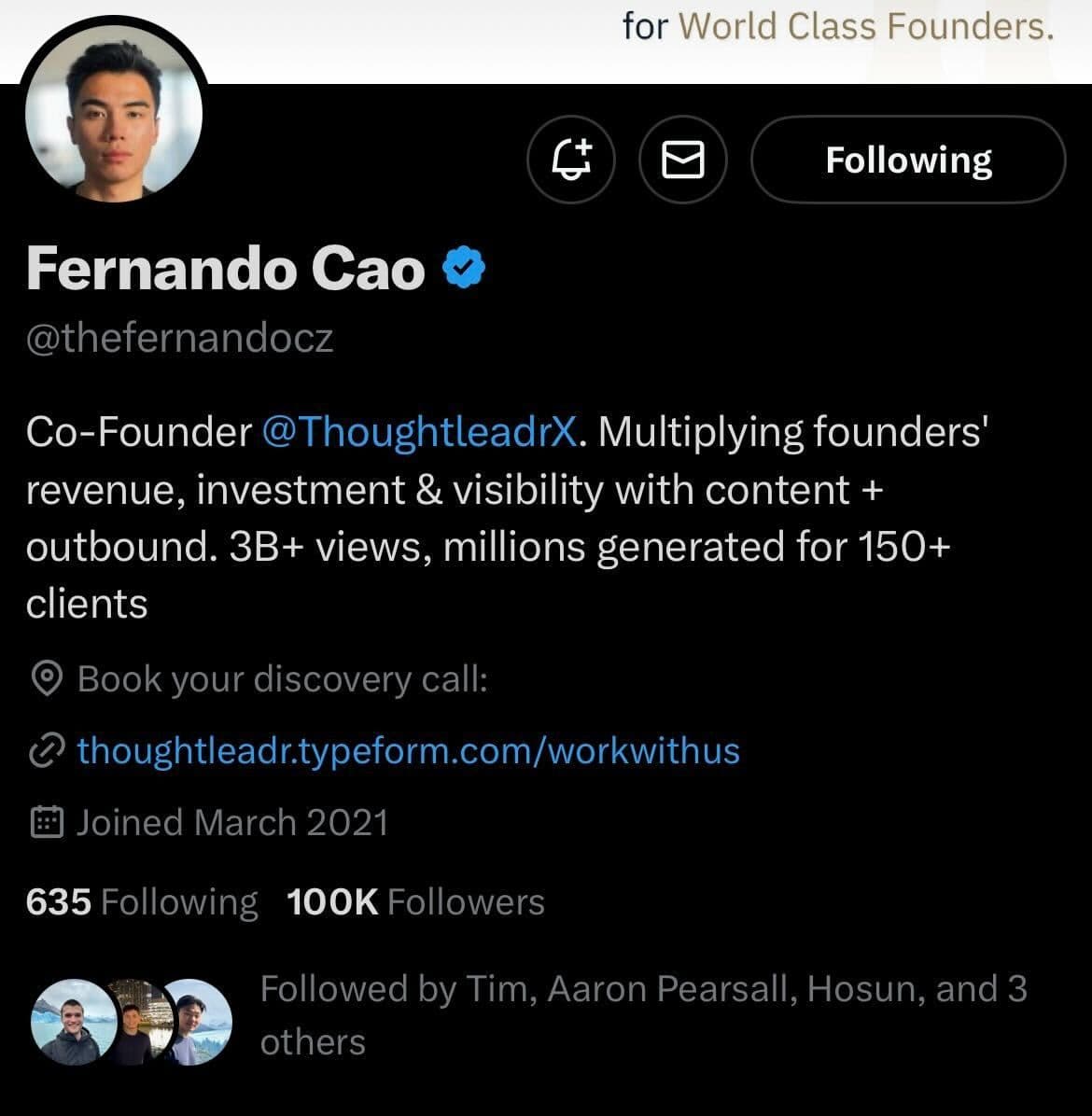
Growing to 100k followers while achieving 360% revenue growth requires treating content as a multi-year system, not a short-term experiment. Success comes from combining brand-building with outbound sales, maintaining consistency through systems rather than motivation, and dominating one platform before expanding. The key is understanding that content multiplies the value of a strong offer but cannot create demand for products nobody wants.
Key takeaways
- Outreach response rates improved from 2% to 17% as follower count increased, demonstrating how perceived authority directly impacts business metrics.
- Brand ROI materializes over years while outbound ROI appears within months, making a combined approach essential for both immediate revenue and long-term competitive advantage.
- PayPal pays $236k annually for their Head of Content because expertise and nuance cannot be effectively transferred to low-cost ghostwriters through brief documents.
- A single word change in a content hook can shift performance from 10,000 impressions to 1 million impressions with otherwise identical content.
- The business grew 360% year-over-year during the same period the founder reached 100k followers on X by treating content as a systematic, long-term investment.
Reviewed and updated August 28, 2026
15 Lessons From Growing to 100k Followers and 360% Revenue
Two weeks ago, I crossed 100k followers on X.
Same period, our business grew 360% year-over-year.
Those numbers are connected, but not in the way most people think.
Here's what actually matters.
1. AI Can't Replace Taste
If AI alone could build brands and generate revenue, every founder with ChatGPT would have 100k followers by next week.
They don't.
The difference isn't the tool. It's knowing when to use it and having the taste to recognize what resonates. AI is a multiplier, not a replacement.
2. You Can't Outsource Your Expertise
Handing your personal brand to a cheap ghostwriter is like handing your reputation to an intern.
PayPal pays $236k a year for their Head of Content. There's a reason.
Your decades of expertise can't be transferred via a brief document. The nuance, the perspective, the hard-won insights. That's you.
3. Winner Takes All
Social media is a winner-takes-all market.
If our content edges yours by 1%, we take 100% of the attention. Doesn't matter if you spent a minute or a week writing. The bar for agencies who execute this well is incredibly low because most don't clear it.
4. One Word Can Change Everything

The difference between good content and great content: one word change in a hook can mean the difference between 10K and 1M impressions.
Same content. Vastly different outcomes.
Obsess over the details. They compound.
5. Content Doesn't Fix a Bad Offer
A great content strategy won't save a product nobody wants.
Content is a force multiplier for great offerings that lack awareness. Most founders have this backwards. They think content will manufacture demand that doesn't exist.
6. This Is a Multi-Year Project
Building a personal brand isn't a 3-month experiment. You can't expect to build trust and reputation in 90 days.
The founders who treat this as a serious, long-term investment are the ones who win. Everyone else gives up before the compound effects kick in.
7. Brand and Outbound Operate on Different Timelines
Brand ROI shows up in years. Outbound ROI shows up in months.
Combine both for compounding returns. Outbound pays the bills while brand builds the moat.
8. Consistency Doesn't Require Motivation
You don't need motivation to be consistent. You need systems.
Invest in a team that executes for you. Big companies have dedicated content departments for a reason. This isn't a side project that runs on willpower.
9. Simplicity Scales

Our funnel is embarrassingly simple.
Content → Book a call CTA + outbound to a target list.
That's it.
The complexity is in execution, not architecture. Resist the urge to over-engineer.
10. Dominate Before You Expand
You don't need 10 social channels. Dominate 1-2 where your customers actually spend time.
Focus beats spread every time. Master one platform before adding another.
11. Followers Are a Proxy for Authority
Follower count has zero direct monetary value.
But the perceived authority is everything. Our outreach response rates went from 2% to 17%.
Note: you don't need a massive following. You need high perceived authority. Those aren't the same thing.
12. Copycats Can't Match Systems
People will steal your content. They can't steal your volume, scale, or systematic iteration.
We produce at a level copycats simply can't sustain. When someone takes one of our frameworks, we've already published twenty more.
13. Brand Compounds (If You Stay in the Game)
Content compounds, but only if you treat it as an infinite game.
When tied to clear business outcomes, you can play forever. When it's a vanity project, you'll quit when results don't come fast enough.
14. Haters Are a Signal

We've been told repeatedly that we're building our brand "the wrong way."
We kept going.
The results speak for themselves. If everyone agrees with your approach, you're probably not doing anything interesting.
15. Waiting for Inbound Is Self-Sabotage
Predictability is the goal.
Brand is a long-term force multiplier. Outbound provides predictability. Most founders never realize this. They wait for inbound to save them while pipeline stays empty.
The ROI Is Real
year-over-year
These lessons come from building our own brands and working with 150+ clients.
The pattern is consistent: founders who internalize these principles generate revenue from their presence. Everyone else generates likes.
The question isn't whether this works. It's whether you'll commit to it long enough to see results.
Related Reading
- How to Turn Viral Content Into Revenue (The View-to-Value Framework)
- 1.4K to 32K Followers in 5.5 Months: The Distribution Playbook Behind 36.5M Impressions
- The Outreach System Behind Our $3M ARR (Full Breakdown)
Want to build a brand that drives revenue? Book a call to see how we approach content strategy.
Frequently asked questions.
Frequently asked questions- Can AI tools replace human judgment in building a personal brand?
- No, AI is a multiplier but not a replacement for taste and expertise. If AI alone could build brands, every founder with ChatGPT would have 100k followers. The critical difference is knowing when to use AI and having the judgment to recognize what resonates with your audience. Your decades of experience, nuance, and hard-won insights cannot be transferred through automated tools or brief prompts.
- How long does it take to see revenue results from content marketing?
- Building a personal brand is a multi-year project, not a 90-day experiment. Brand ROI shows up over years, while outbound sales ROI appears within months. The founders who treat content as a serious long-term investment see compounding returns, while those expecting quick results typically quit before the compound effects materialize. You cannot build genuine trust and reputation in just three months.
- Should I focus on multiple social media platforms or just one?
- Dominate one or two platforms where your customers actually spend time before expanding. Focus beats spread every time. Master one platform completely before adding another. You don't need ten social channels: you need deep authority on the platforms that matter most to your specific audience.
- Will content marketing work if my product offering isn't strong?
- No, content doesn't fix a bad offer. A great content strategy won't save a product nobody wants. Content is a force multiplier for strong offerings that lack awareness, not a tool to manufacture demand that doesn't exist. Most founders have this backwards: they think content will create desire for products the market doesn't need.
- Do I need to wait for inbound leads before doing outbound sales?
- No, waiting for inbound is self-sabotage. Brand is a long-term force multiplier, but outbound provides predictability and immediate pipeline. Most founders never realize this: they wait for inbound to save them while their pipeline stays empty. The winning approach combines both: outbound pays the bills while brand builds the competitive moat.
About the author.

Fernando Cao is CEO at RevenueFlow, which builds and operates outbound revenue engines for B2B companies. Previously at Accenture Strategy. Studied at University of Bath.
Fernando Cao · CEO
Connect on LinkedIn →Explore more.
Ready to scale your outreach?
We build GTM engines that book real meetings. See the receipts.
Related articles.
Turn Content Into Revenue (The View-to-Value Framework)
Most founders can go viral. Almost none of them make money from it. Here's the 5-step framework that turns attention into pipeline.
B2B Marketing Conversion Rates: Who Published What
Every published B2B conversion benchmark, by channel and by stage, with the publisher, the population, the method and the date beside each figure.
Email Subject Line Capitalization: What the Guides Say
What the style authorities actually rule on subject line case, what the published tests measured, and the default for a one to one sales email.
Best Time to Cold Call: What the Studies Counted
The best time to cold call figures traced to their originals: one inbound study from six companies, three vendor call datasets, and what survives the read.
Best Time to Send a Sales Email: What Was Measured
The send time studies behind the midweek morning answer, what each one actually counted, and why a broadcast finding does not transfer to a sales email.
Sales Enablement Statistics, Traced to Their Sources
The sales enablement figures in circulation, followed to their publishers: which state a population, which are gated, and which are quietly seven years old.