8 Breakup Email Templates to Close the Loop
Sometimes the best email is the one that says goodbye. Here are breakup email templates that either get a response or let you move on gracefully.
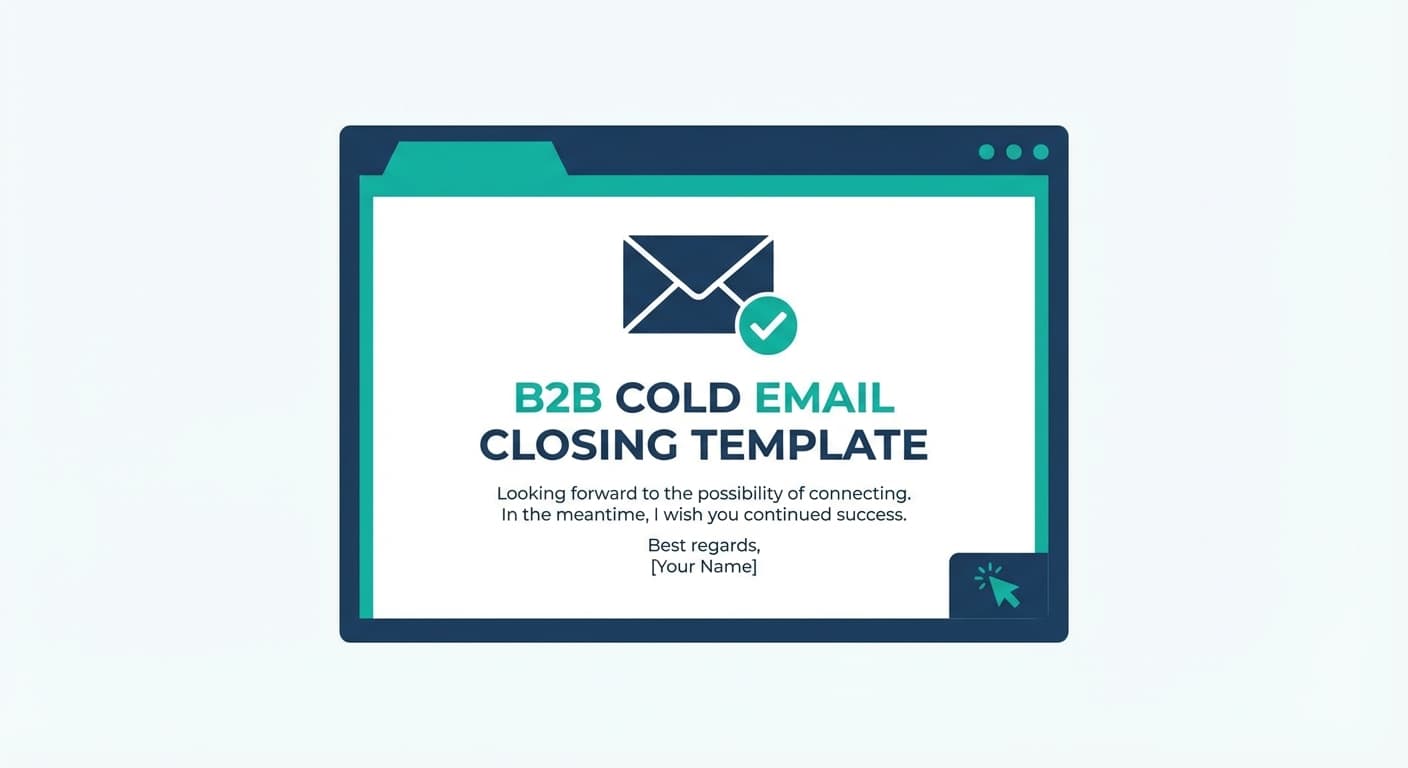
Breakup emails are final outreach messages sent after 2-3 unanswered follow-ups (typically 7-14 days for cold outreach). They work because signaling an ending prompts prospects to reconsider, often generating responses when previous emails failed. Eight templates include the direct close-out, permission-based approach, light humor, value recap, future timing inquiry, honest assessment, resource-based attempt, and brief close. Keep them short, use a neutral tone, include one clear ask, and actually stop reaching out when you say you will.
Key takeaways
- Breakup emails should be sent after two to three follow-ups with no response, typically 7-14 days after the last follow-up for cold outreach.
- Prospects often respond to breakup emails after ignoring previous outreach because the finality of an ending prompts reconsideration.
- The permission-based template asking "Should I close your file?" triggers responses by putting the decision in the prospect's hands with an easy yes/no question.
- Eight distinct breakup email templates cover different tones and situations, from direct close-outs to light humor approaches.
- Breakup emails should maintain a professional and gracious tone to leave doors open for future engagement rather than burning bridges.
Reviewed and updated September 15, 2026
8 Breakup Email Templates to Close the Loop on Cold Prospects
Every sales sequence needs an ending. The breakup email is that ending.
When a prospect has ignored multiple outreach attempts, you have two choices: keep emailing into the void, or close the loop with intention. The breakup email does the latter. It signals that you respect their time, creates a moment of decision, and often triggers responses that previous emails failed to generate.
This guide provides 8 breakup email templates for different situations and tones. Each one is designed to either get a response or give you permission to move on without wondering "what if."
Why Breakup Emails Work
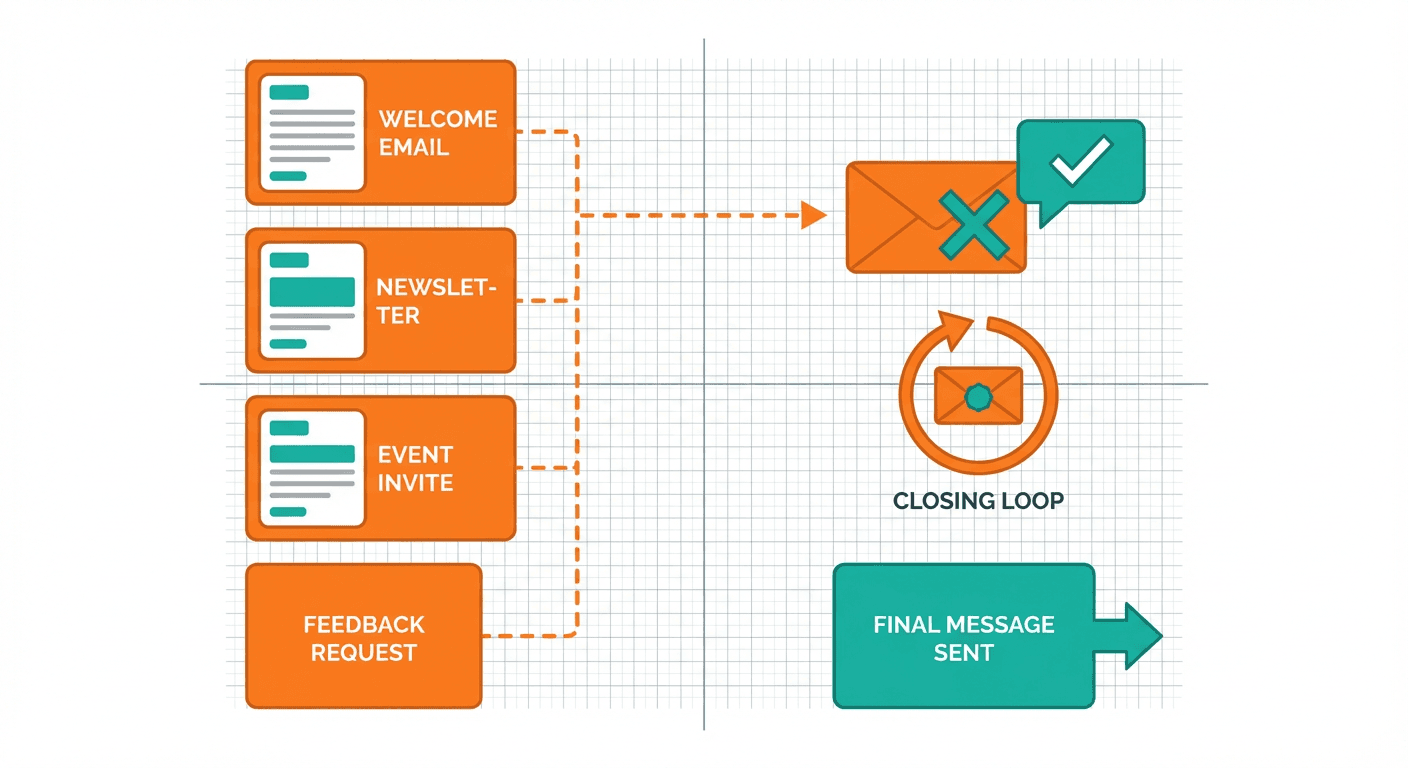
The psychology behind breakup emails is straightforward: people respond to endings.
When you signal that you're about to stop reaching out, prospects face a small loss. Even if they weren't ready to engage, the finality prompts reconsideration. Many will respond to a breakup email when they ignored the three emails before it.
Breakup emails also serve an important practical purpose. They clean your pipeline. Prospects who genuinely aren't interested will either confirm that or continue to ignore you. Either outcome lets you focus your energy on opportunities with real potential.
That said, breakup emails should feel professional and gracious. The goal is to leave doors open for future engagement while acknowledging that now isn't the right time. Passive-aggressive language or guilt-tripping will damage your reputation and burn bridges unnecessarily.
When to Send a Breakup Email
Send a breakup email after:
- Two to three follow-ups with no response on cold outreach
- A proposal has been pending for several weeks with no feedback
- A previously engaged prospect has gone completely silent
- Multiple meeting requests have been ignored or cancelled
The specific timing depends on your sales cycle and the relationship you've established. For cold outreach, a breakup email might come after 7-14 days of silence following your last follow-up. For warmer relationships, you might wait longer.
Template Categories
This guide covers breakup templates for:
- The direct close-out approach
- Permission to close the file
- The light humor approach
- Value recap before goodbye
- Future timing inquiry
- The honest assessment
- Resource-based final attempt
- The brief and simple close
Each template includes context for when to use it, the email itself, and tips for customization.
Template 1: The Direct Close-Out
When to use: When you want a straightforward final attempt that respects their time and yours. This works well for prospects who seemed initially interested but went dark.
Subject: Closing the loop
Email:
Hi [Name],
I've reached out a few times about [specific topic or solution] and haven't heard back. I understand priorities shift and timing matters.
I'm going to assume this isn't the right fit for [Company] right now and will close out this conversation on my end.
If anything changes or you'd like to revisit this down the road, feel free to reach out. I'm happy to pick up where we left off.
Wishing you and the team well, [Your name]
Customization tips:
- Be specific about what you were reaching out about so they remember the context
- Keep the tone neutral and professional, no hint of frustration
- Leave a clear path for future re-engagement without begging
Template 2: Permission to Close the File
When to use: When you want to prompt a response by asking for explicit permission to stop outreach. This framing often triggers a reply because it puts the decision in their hands.
Subject: Should I close your file?
Email:
Hi [Name],
I've followed up a few times regarding [topic/solution] without hearing back. I don't want to keep clogging your inbox if this isn't relevant right now.
Would it be alright if I closed out your file for now? If priorities change later, you can always reach me at [email] and we can pick things back up.
Either way, no hard feelings. Just let me know what makes sense.
Best, [Your name]
Customization tips:
- The question format makes it easy to respond with a quick "yes" or "no"
- Offering your email as a future contact point shows you're not bitter
- Works particularly well when you've had some prior engagement
Template 3: The Light Humor Approach
When to use: When your brand voice allows for personality and the relationship feels casual enough for humor. This approach can cut through the noise of standard business emails.
Subject: Did I say something wrong?
Email:
Hi [Name],
I'm starting to think my emails are going straight to spam, or maybe I accidentally insulted your favorite sports team.
In all seriousness, I've reached out a few times about [topic] and figured I'd check in one last time before I stop filling up your inbox.
If now's not the right time, totally get it. If you'd like to chat, I'm around. Either way, I'll leave you in peace after this one.
Best, [Your name]
Customization tips:
- Use humor that matches your natural communication style
- Avoid anything that could come across as sarcastic or bitter
- This template works best when your previous emails have also had personality
- Doesn't work well for formal industries or senior executives who prefer straightforward communication
Template 4: Value Recap Before Goodbye
When to use: When you want to remind them of the potential value before signing off. This works well when you believe they'd genuinely benefit from your solution but haven't connected the dots.
Subject: One last thought before I go
Email:
Hi [Name],
Before I close out this thread, I wanted to leave you with a quick summary of what we discussed:
- [Key benefit or outcome 1 relevant to their situation]
- [Key benefit or outcome 2]
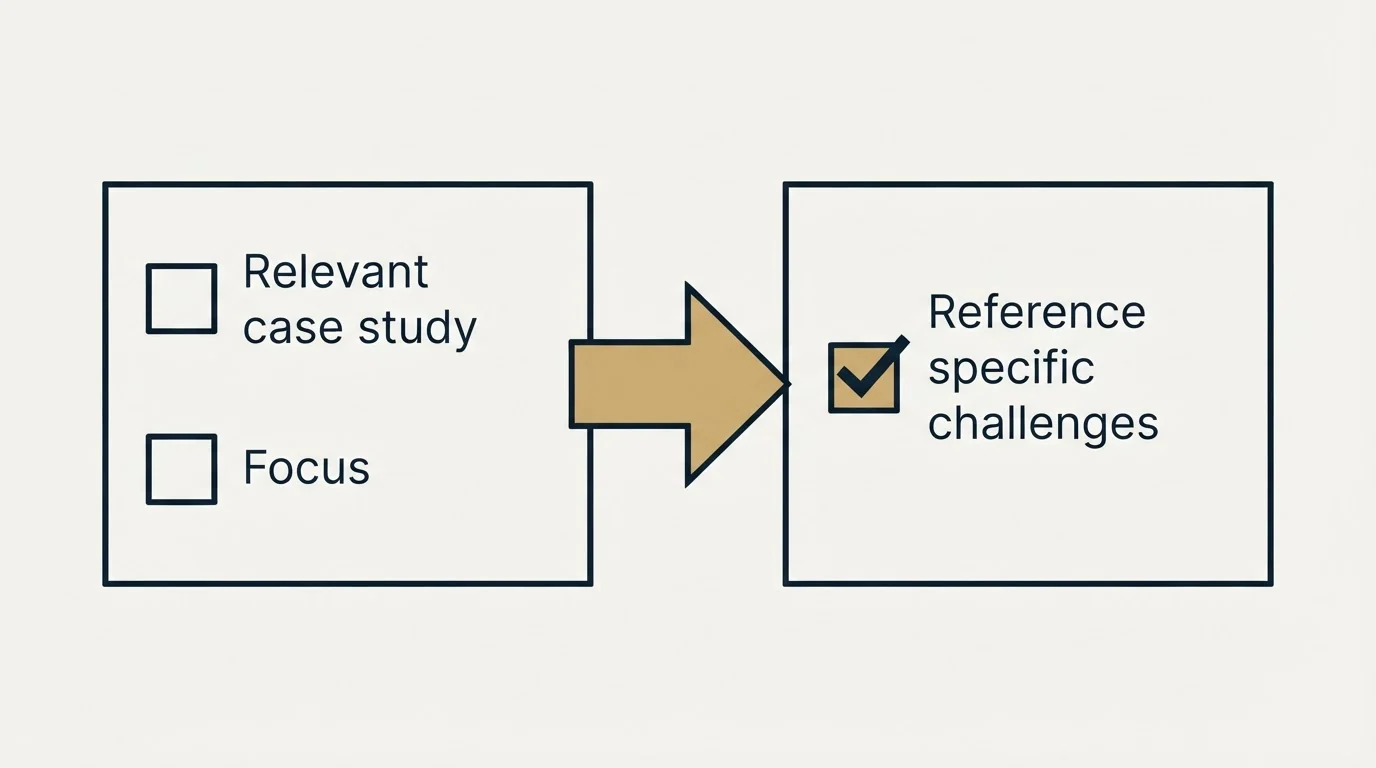
- [Relevant case study or result you've achieved with similar companies]
If any of this sounds like it could help [Company] right now, I'd be happy to carve out 15 minutes to explore it further. If not, I completely understand.
Either way, I'll stop the outreach here. Feel free to reach out anytime if things change.
Best, [Your name]
Customization tips:
- Focus on outcomes and benefits, not features
- Reference specific challenges or goals they mentioned in previous conversations
- Keep the value points brief and scannable
- This template works best when you've had at least one meaningful conversation
Template 5: Future Timing Inquiry
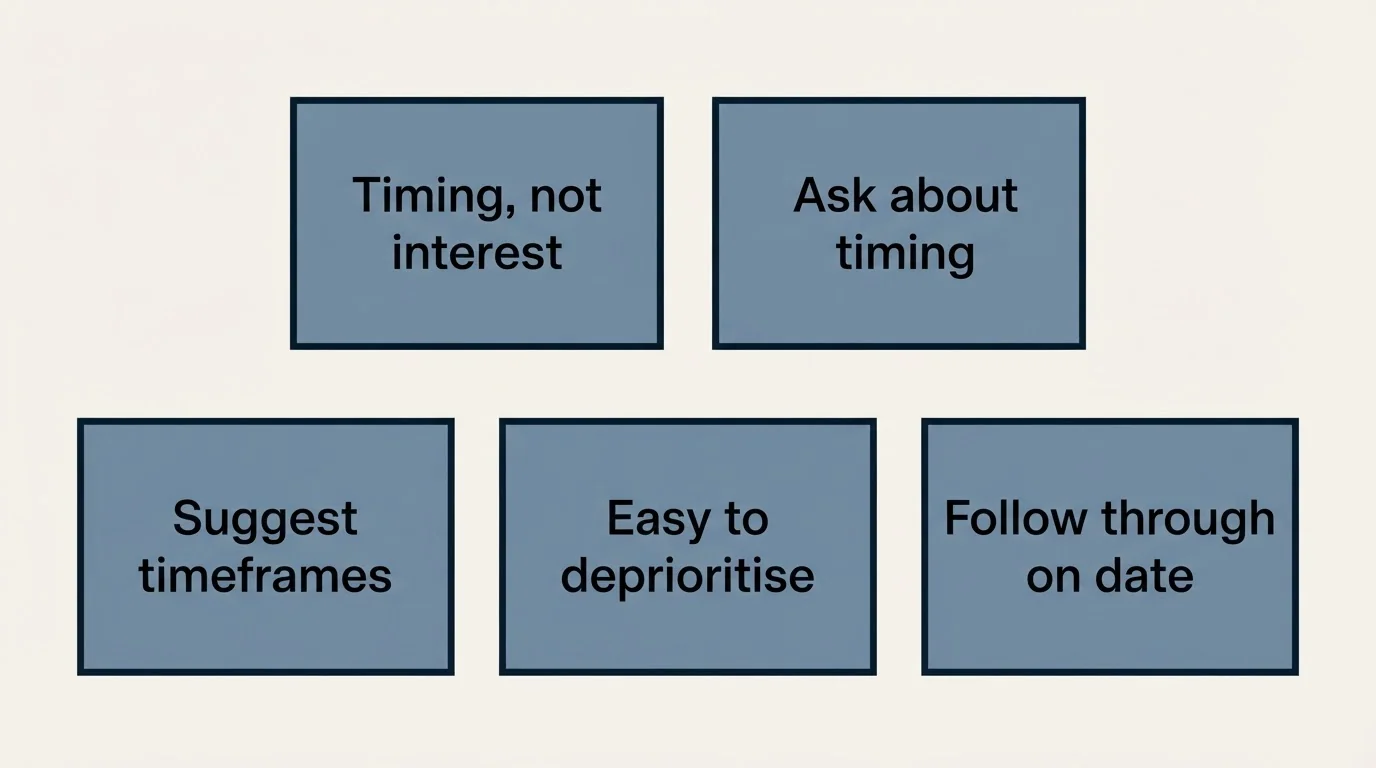
When to use: When you suspect timing is the issue rather than interest. This template keeps the door open for a specific future conversation.
Subject: Wrong timing?
Email:
Hi [Name],
I've been trying to connect about [topic] but haven't been able to reach you. Before I stop reaching out, I wanted to ask: is this a timing thing?
If so, when would be a better time to revisit this conversation? Happy to set a reminder and reach back out in Q2, Q3, or whenever makes sense for [Company].
If this simply isn't a priority, that's totally fine too. Just let me know and I'll close out the file.
Best, [Your name]
Customization tips:
- Suggest specific timeframes to make it easy to respond
- This approach is particularly useful for prospects in budget cycles or planning periods
- Works well when you've identified a genuine need but the timing was off
- Follow through if they give you a future date
Template 6: The Honest Assessment
When to use: When you want to be upfront and give them an easy out. This direct approach often gets responses because it removes any social pressure.
Subject: Honest question
Email:
Hi [Name],
I'll be direct: I've reached out several times about [topic] and haven't heard back.
I can think of a few reasons:
- You're interested but buried in other priorities
- You've looked at it and it's not the right fit
- You're not the right person to talk to about this
Any of those apply? I'd genuinely appreciate knowing so I can either help or move on.
No pressure either way.
Best, [Your name]
Customization tips:
- The numbered list makes it easy to respond with a quick "number 2" or similar
- Being upfront about your uncertainty can be refreshing in a world of polished sales emails
- Works well when you've had limited or no prior interaction
- Adjust the options based on what you genuinely think might be happening
Template 7: Resource-Based Final Attempt
When to use: When you want to provide value even in your final email. This approach positions you as helpful rather than pushy, even at the end of your outreach.
Subject: Something useful before I sign off
Email:
Hi [Name],
This will be my last email about [topic]. Before I close out the thread, I wanted to share something that might be helpful regardless of whether we work together:
[Brief description of resource: guide, case study, tool, or insight relevant to their situation]
Here's the link: [URL]
No strings attached. If you find it useful and want to chat, you know where to find me. If not, no worries at all.
Best of luck with [specific initiative or challenge they face], [Your name]
Customization tips:
- The resource should be genuinely valuable, not a disguised sales pitch
- Choose something specific to their industry or challenge
- This template leaves a positive final impression even if they never respond
- Works particularly well when you have strong content marketing assets
Template 8: The Brief and Simple Close

When to use: When you want to keep it short and give them maximum respect for their time. Sometimes the best breakup email is the shortest one.
Subject: Last note
Email:
Hi [Name],
I've reached out a few times and will leave it here. If [topic] becomes relevant for [Company], feel free to reach out anytime.
All the best, [Your name]
Customization tips:
- Brevity shows respect for their time
- Works well when previous emails have already explained the value proposition
- No guilt, no pressure, no passive aggression
- This is often the right choice for very senior executives
Best Practices for Breakup Emails
- Yes: Your breakup email is often the last impression you'll leave. Make it a good one.
- Yes: Aim for 50-75 words in most cases.
- Yes: Your breakup email should have exactly one ask: respond to close the loop or let you know if timing changes.
- Yes: Track which ones generate responses and which ones don't.
- Yes: If you send a breakup email, mean it.
- Yes: For cold outreach, the breakup should come after your initial email and 2-3 follow-ups.
Tone Matters More Than Ever
Your breakup email is often the last impression you'll leave. Make it a good one.
Avoid passive-aggressive language like "I guess you're not interested" or "Since you haven't bothered to respond." These phrases might feel satisfying to write, but they damage your professional reputation and guarantee you'll never hear from that prospect.
Instead, aim for gracious professionalism. Acknowledge that they're busy. Give them an easy out. Leave doors open for future engagement.
Keep It Short
Breakup emails should be among your shortest outreach messages. You've already made your case in previous emails. The breakup is simply about closing the loop, not rehashing your value proposition.
Aim for 50-75 words in most cases. If you include a value recap or resource, you might go slightly longer, but brevity remains the goal.
One Clear Ask
Your breakup email should have exactly one ask: respond to close the loop or let you know if timing changes.
Don't muddy the message with meeting requests, questions about their challenges, or additional offers. The simplicity of the breakup email is part of what makes it effective.
Track Your Results
Different breakup templates work better for different audiences and situations. Track which ones generate responses and which ones don't.
Over time, you'll develop a sense for which template fits which scenario. Some prospects respond better to humor, others to directness, and others to value recaps. Your data will tell you what works for your specific market.
Actually Stop When You Say You Will
If you send a breakup email, mean it. Nothing damages credibility faster than sending a "final email" and then following up again a week later.
If you want to re-engage in the future, wait at least 3-6 months and approach with a completely fresh angle. Don't pretend the previous outreach didn't happen.
Use Breakup Emails Strategically
Breakup emails work because they're final. If you use them too early in your sequence, you lose the opportunity to build familiarity and trust through multiple touchpoints.
For cold outreach, the breakup should come after your initial email and 2-3 follow-ups. For warmer relationships, you might extend the sequence before deploying the breakup.
What Happens After the Breakup
If they respond: Great. You've re-opened the conversation. Approach it fresh and respect whatever reason they give for the previous silence.
If they don't respond: That's okay too. You've done your job, provided value, and given them every opportunity to engage. Now you can focus your energy on prospects who are ready.
In either case, note the outcome in your CRM. Prospects who didn't respond to a breakup email might still be worth re-approaching in 6-12 months with a new angle or when their circumstances change.
The goal of a breakup email isn't necessarily to get a response. It's to get clarity. Either the prospect re-engages, or you get permission (explicit or implicit) to move on. Both outcomes are wins because both let you allocate your time more effectively.
Getting Help With Your Outreach Strategy
Breakup emails are one piece of a larger outreach system. The effectiveness of your entire sequence, from initial contact through breakup, depends on your targeting, messaging, and follow-up strategy working together.
If you're looking to build or improve your outbound system, we can help.
Schedule a free strategy call to discuss:
- Your current outreach sequences and where prospects typically go dark
- How to structure sequences that convert more consistently
- Breakup email timing and messaging for your specific market
- Building an outreach system that generates predictable pipeline
Schedule your free strategy call here.
We'll review your current approach and provide specific recommendations, whether or not you work with us.
Related Reading
Frequently asked questions.
Frequently asked questions- When should I send a breakup email to a cold prospect?
- Send a breakup email after two to three follow-ups with no response. For cold outreach, this typically means 7-14 days after your last follow-up. For warmer relationships or pending proposals, you might wait longer depending on your sales cycle. Other triggers include multiple ignored meeting requests or a previously engaged prospect going completely silent.
- Why do breakup emails get more responses than regular follow-ups?
- Breakup emails work because people respond to endings. When you signal you're about to stop reaching out, prospects face a small psychological loss. Even if they weren't ready to engage before, the finality prompts them to reconsider. Many prospects will respond to a breakup email after ignoring three previous messages.
- What tone should I use in a breakup email?
- Breakup emails should feel professional and gracious, with a neutral tone showing no hint of frustration. The goal is to leave doors open for future engagement while acknowledging now isn't the right time. Avoid passive-aggressive language or guilt-tripping, as these damage your reputation and burn bridges unnecessarily.
- Should I use humor in my breakup emails?
- Use humor only when your brand voice allows for personality and the relationship feels casual enough. The light humor approach can cut through the noise of standard business emails, but it must match your natural communication style and avoid anything sarcastic or bitter. This template doesn't work well for formal industries or senior executives who prefer straightforward communication.
About the author.

Ben Carden is CRO at RevenueFlow, which builds and operates outbound revenue engines for B2B companies. Previously at Gartner Enterprise. Studied at London School of Economics.
Ben Carden · CRO
Connect on LinkedIn →Explore more.
Ready to scale your outreach?
We build GTM engines that book real meetings. See the receipts.
Related articles.
10 B2B Cold Email Templates for One-Message Sends
Ten B2B cold email templates written for a single send, with the four slot structure underneath them and the test that separates a good example from a bad one.
Cold Email Templates for Customer Success Managers
Eleven cold email templates for customer success managers, covering champion change, expansion, renewal rescue, and win-back, with subject lines and timing.
14 Renewal Email Templates That Retain Customers
Master subscription and contract renewals with 14 proven email templates. Reduce churn, lock in renewals early, and maintain customer relationships.
13 Case Study Request Email Templates That Get Results
Get proven email templates for requesting case studies, video testimonials, and written reviews from your happiest customers. Includes templates for every stage from initial ask to final approval.
Email Subject Line Capitalization: What the Guides Say
What the style authorities actually rule on subject line case, what the published tests measured, and the default for a one to one sales email.
Follow-Up Call Scripts: Nine Calls Into a Live Conversation
Nine follow-up call scripts, each tied to the event that earns the call, from a demo to a renewal, plus the four moves they share and how each call should end.