Cold Email for AI/ML: The Complete Guide
Learn how to effectively reach decision-makers at AI and machine learning companies. This guide covers targeting strategies, technical credibility, and email templates for the AI/ML industry.
Cold emailing AI/ML companies requires technical credibility and precision targeting. Focus on specific decision-makers like VPs of Machine Learning, ML Platform Engineering Leads, and Data Science Managers. Use accurate terminology, reference concrete metrics, and address real workflow challenges like model deployment friction, infrastructure costs, and reproducibility. Avoid buzzwords and generic AI claims: these buyers are highly technical and skeptical of marketing language.
Key takeaways
- The AI/ML market includes five distinct segments: AI-first companies, enterprise AI adopters, infrastructure providers, consulting firms, and research organizations, each with different buying behaviors.
- Key decision-makers include VP of Machine Learning, ML Platform Engineering Lead, Data Science Manager, Chief Data Officer, and CTO, each prioritizing different aspects from model performance to infrastructure reliability.
- Building credibility requires using accurate terminology, referencing specific metrics, acknowledging complexity, and offering technical resources rather than generic marketing claims.
- Timing outreach around budget cycles, conferences, technology releases, and project phases increases response rates from AI/ML buyers.
- Common mistakes include buzzword overload, oversimplifying technical complexity, making generic AI claims, and ignoring integration requirements and governance needs.
Reviewed and updated October 16, 2025
Cold Email for AI/ML: The Complete Guide
Artificial intelligence and machine learning have moved from research labs into production applications across every industry. Organizations are building ML platforms, deploying models at scale, and integrating AI capabilities into their products and operations.
This rapid expansion creates substantial opportunities for vendors serving the AI/ML ecosystem. Whether you offer infrastructure, tooling, data services, or consulting expertise, cold email can help you reach decision-makers who are actively building their AI capabilities.
However, the AI/ML market presents unique challenges. Buyers are highly technical, skeptical of marketing claims, and bombarded with vendors promising transformative AI solutions. Breaking through requires genuine technical credibility and targeted messaging that addresses real challenges.
This guide covers everything you need to know about cold emailing AI/ML companies effectively.
Understanding the AI/ML Market
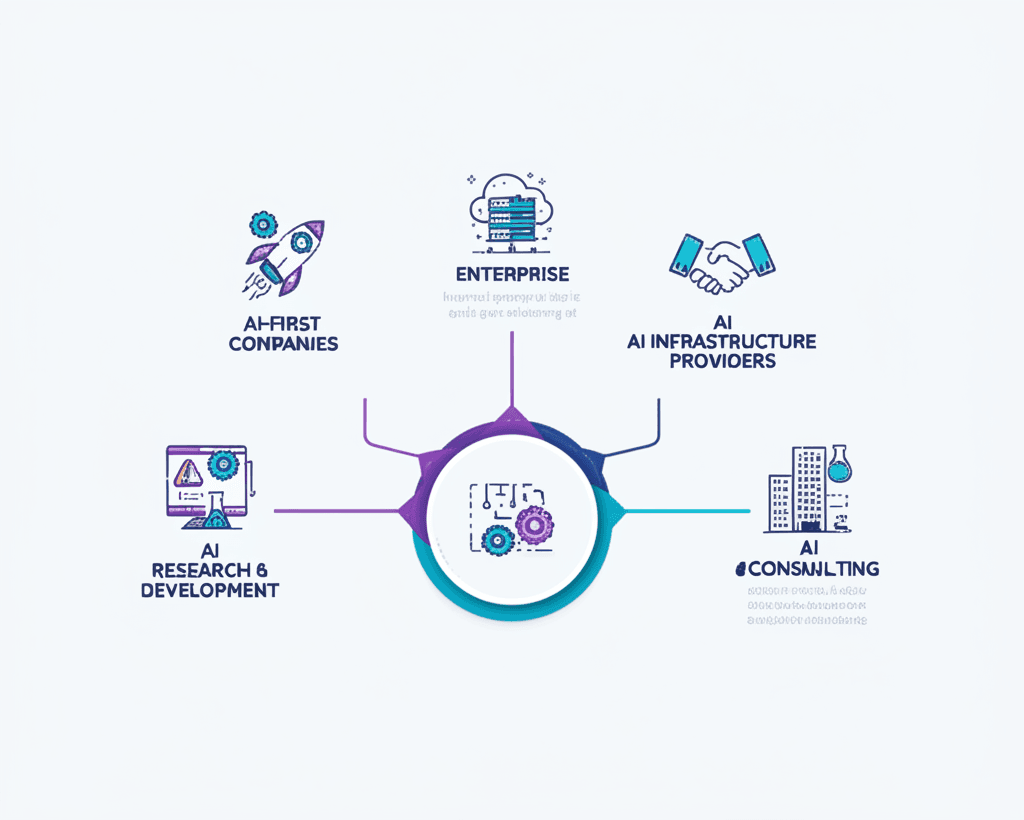
The AI/ML industry encompasses distinct segments with different needs and buying behaviors.
AI-First Companies
AI-first companies build products where machine learning is the core value proposition. They include companies offering computer vision, natural language processing, recommendation systems, and predictive analytics.
These organizations prioritize model performance, infrastructure efficiency, and development velocity. They evaluate vendors based on technical capabilities and integration with ML workflows.
Enterprise AI Adopters
Large enterprises are implementing AI to improve operations, enhance customer experiences, and create competitive advantages. They span industries from finance to healthcare to retail.
Enterprise adopters focus on deployment reliability, governance requirements, and integration with existing systems. They need proven solutions that work within their technical and organizational constraints.
AI Infrastructure Providers
Infrastructure providers build the platforms, tools, and services that enable AI development. They include cloud providers, MLOps platforms, and specialized hardware companies.
These organizations focus on developer experience, scalability, and ecosystem integration. They evaluate solutions that enhance their platform capabilities.
AI Consulting and Services
Consulting firms and system integrators help organizations implement AI solutions. They combine technical expertise with industry knowledge and change management capabilities.
Service providers focus on project delivery, customer success, and solution differentiation. They need tools and platforms that accelerate their AI engagements.
Research and Development
Research labs at universities, corporations, and government organizations push the boundaries of AI capabilities. They explore new architectures, training techniques, and applications.
R&D organizations value cutting-edge capabilities and technical flexibility over production-ready features.
Key Decision Makers in AI/ML
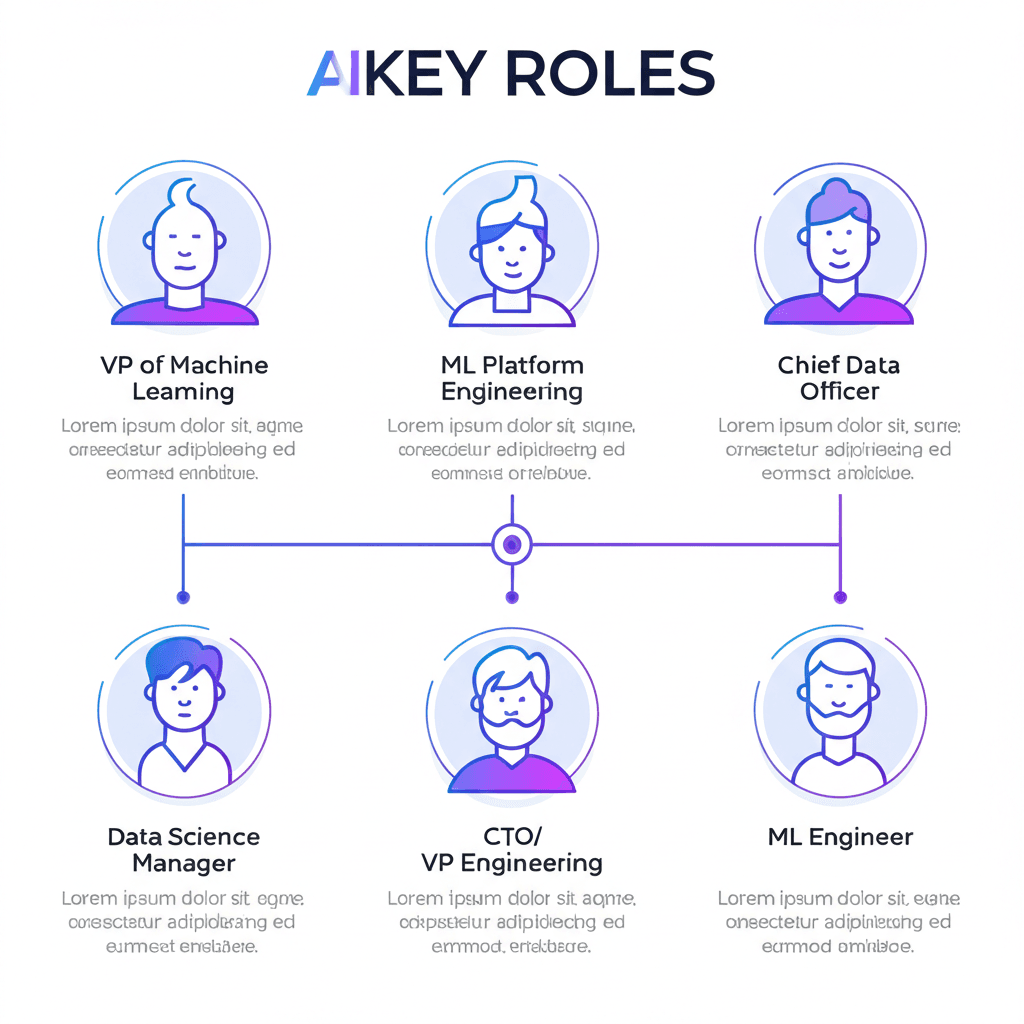
AI/ML purchasing decisions involve multiple stakeholders with different priorities.
VP of Machine Learning or Head of AI
What they care about: Model performance, team productivity, infrastructure costs, research-to-production velocity, and organizational AI strategy.
Pain points: Model deployment challenges, infrastructure scaling, talent retention, technical debt, and stakeholder alignment.
Trigger events: Team expansion, new project initiatives, infrastructure reviews, and strategic AI investments.
Email angle: Focus on team productivity and strategic AI capabilities. Emphasize how your solution accelerates their ML initiatives.
ML Platform Engineering Lead
What they care about: Infrastructure reliability, developer experience, cost optimization, scalability, and operational efficiency.
Pain points: Infrastructure complexity, cost management, tool sprawl, reproducibility challenges, and on-call burden.
Trigger events: Infrastructure incidents, cost overruns, team growth, and platform modernization initiatives.
Email angle: Address infrastructure and operations challenges. Quantify improvements to reliability, costs, or developer productivity.
Data Science Manager
What they care about: Team productivity, model quality, experiment velocity, stakeholder communication, and project delivery.
Pain points: Data access delays, compute limitations, experiment management, collaboration challenges, and production deployment friction.
Trigger events: Team scaling, new initiatives, workflow bottlenecks, and tool evaluations.
Email angle: Focus on data science workflow improvements. Emphasize how your solution helps data scientists work more effectively.
Chief Data Officer or VP of Data
What they care about: Data strategy, governance, quality, access, and the intersection of data and AI initiatives.
Pain points: Data quality issues, governance complexity, organizational data silos, and data-AI alignment.
Trigger events: Data initiatives, governance requirements, organizational restructuring, and AI project dependencies.
Email angle: Position around data foundations for AI success. Connect data capabilities to AI outcomes.
CTO or VP of Engineering
What they care about: Technical architecture, system reliability, engineering velocity, technical debt, and technology strategy.
Pain points: AI integration complexity, production reliability, skill gaps, and technology evaluation.
Trigger events: Architecture reviews, strategic planning, new product initiatives, and technology refresh cycles.
Email angle: Focus on engineering and architectural considerations. Emphasize system reliability and integration capabilities.
ML Engineer or Applied Scientist
What they care about: Model development tools, training efficiency, experiment tracking, deployment simplicity, and technical quality.
Pain points: Tool limitations, workflow friction, compute access, debugging difficulty, and production deployment challenges.
Trigger events: New projects, tool evaluations, workflow pain points, and team onboarding.
Email angle: Lead with technical capabilities and developer experience. Offer resources like documentation and trials.
Technical Considerations in AI/ML
AI/ML buyers are highly technical. Your outreach must demonstrate genuine understanding of machine learning challenges.
ML Development Workflow
Understanding the ML development lifecycle helps you position your solution appropriately.
Data preparation: Collection, cleaning, labeling, and feature engineering consume significant time in ML projects.
Experimentation: Hypothesis testing, model architecture selection, and hyperparameter tuning require extensive iteration.
Training: Model training involves compute orchestration, distributed training, and resource optimization.
Evaluation: Model assessment, comparison, and selection require robust evaluation frameworks.
Deployment: Moving models to production involves serving infrastructure, monitoring, and versioning.
Monitoring: Production models require performance tracking, drift detection, and alerting.
Reference relevant workflow stages when reaching out to accounts with specific challenges.
Infrastructure Considerations
AI/ML workloads have distinct infrastructure requirements.
Compute: GPU and specialized accelerators for training and inference. Compute costs often dominate ML budgets.
Storage: Large datasets and model artifacts require scalable storage solutions.
Networking: Distributed training requires high-bandwidth, low-latency networking.
Orchestration: Workflow management across development, training, and serving environments.
Understanding infrastructure trade-offs helps you address buyer concerns.
MLOps and Platform Engineering
MLOps practices bring software engineering discipline to ML systems.
Version control: Managing code, data, and model versions for reproducibility.
CI/CD for ML: Automated testing, validation, and deployment for ML systems.
Feature stores: Centralized feature management for consistency and reusability.
Model registry: Tracking and managing model versions and metadata.
Monitoring and observability: Understanding model behavior in production.
Reference relevant MLOps concepts when reaching out to platform and engineering teams.
AI Governance and Responsible AI
Governance considerations increasingly influence AI purchasing decisions.
Model explainability: Understanding how models make decisions.
Bias detection: Identifying and mitigating unfair model behavior.
Documentation: Maintaining records of data, training, and model decisions.
Compliance: Meeting regulatory requirements for AI systems.
Governance capabilities are particularly important for enterprise and regulated industry deployments.
Industry Applications of AI/ML
Different industries apply AI/ML for different use cases. Tailoring your messaging to specific applications improves response rates.
Financial Services AI
Applications include fraud detection, risk modeling, algorithmic trading, customer service automation, and credit decisioning.
Key concerns center on model explainability, regulatory compliance, and production reliability.
Messaging angle:
"Financial services teams deploying ML for [specific use case] need [specific capability] to meet regulatory requirements. We help organizations achieve [specific outcome] while maintaining compliance."
Healthcare and Life Sciences AI
Applications include medical imaging analysis, drug discovery, clinical decision support, and operational optimization.
Key concerns include FDA considerations, patient privacy, clinical validation, and integration with healthcare systems.
Messaging angle:
"Healthcare organizations implementing AI for [specific use case] face unique validation requirements. Our solution provides [specific capability] that supports clinical AI deployment."
Retail and E-commerce AI
Applications include recommendation systems, demand forecasting, pricing optimization, and customer personalization.
Key concerns center on real-time inference, personalization at scale, and A/B testing integration.
Messaging angle:
"E-commerce teams building recommendation systems need [specific capability] to serve personalized predictions at scale. We help retail organizations achieve [specific outcome] while managing inference costs."
Manufacturing AI
Applications include predictive maintenance, quality control, process optimization, and supply chain forecasting.
Key concerns include integration with industrial systems, edge deployment, and operational reliability.
Messaging angle:
"Manufacturing teams implementing ML for [specific use case] need [specific capability] to integrate with existing OT infrastructure. We help industrial organizations achieve [specific outcome] at the edge."
Natural Language Processing
Applications include chatbots, document processing, sentiment analysis, and content generation.
Key concerns center on language quality, domain adaptation, and latency requirements.
Messaging angle:
"Teams building NLP applications typically struggle with [specific challenge]. Our solution helps organizations [specific outcome] while maintaining language quality."
Computer Vision
Applications include image classification, object detection, video analytics, and visual inspection.
Key concerns include model accuracy, inference speed, and edge deployment capabilities.
Messaging angle:
"Computer vision teams deploying models for [specific use case] need [specific capability] to achieve production accuracy requirements. We help organizations [specific outcome] while optimizing inference performance."
Building Credibility in AI/ML Outreach
AI/ML professionals are highly skeptical of vendor claims. Building credibility requires demonstrating genuine technical understanding.
Use Accurate Terminology
ML has specific terminology. Using terms correctly signals expertise.
Correct usage examples:
- "Training" and "inference" rather than vague "AI processing"
- "Hyperparameter tuning" rather than "optimization"
- "Feature engineering" rather than "data preparation"
- "Model serving" rather than "deployment"
- Specific model architectures (transformers, CNNs) when relevant
Incorrect terminology immediately signals that you are unfamiliar with the field.
Reference Specific Metrics
ML professionals measure performance with specific metrics. Reference relevant metrics in your outreach.
Model metrics: Accuracy, precision, recall, F1, AUC, perplexity (depending on task type).
Infrastructure metrics: Training time, inference latency, throughput, GPU utilization.
Cost metrics: Cost per training run, cost per inference, total compute spend.
Productivity metrics: Experiment velocity, deployment frequency, time to production.
Including specific metrics demonstrates understanding of how ML teams measure success.
Acknowledge Complexity
ML involves significant complexity that simplistic solutions cannot address. Acknowledge nuances in your messaging.
Example:
"Production ML systems require more than model training. Our platform handles data versioning, experiment tracking, and model monitoring to support the full lifecycle."
This demonstrates understanding that real-world ML involves many challenges beyond model development.
Offer Technical Resources
Make it easy for technical buyers to evaluate your capabilities before committing to calls.
Example:
"Our documentation includes architecture guides, API references, and sample implementations. Happy to provide a sandbox environment before any call."
Technical buyers appreciate the ability to evaluate solutions independently.
Timing Your Outreach
Several factors affect timing in the AI/ML industry.
Budget and Planning Cycles
Enterprise AI initiatives typically follow annual budget cycles. Reaching decision-makers during planning periods (Q3-Q4) positions you for consideration in upcoming budgets.
Infrastructure and tooling purchases often occur alongside project approvals. Identify accounts launching new AI initiatives.
Conference and Event Timing
Major AI/ML events create natural conversation opportunities.
Relevant events:
- NeurIPS (December)
- ICML (Summer)
- CVPR (June)
- Industry events like AI Summit and Transform
Reaching out before or after events with relevant context improves engagement.
Technology Release Cycles
Major model releases, framework updates, and platform announcements create awareness and interest. Timing outreach around relevant technology developments can improve response rates.
Project Phase Timing
AI/ML projects have distinct phases with different needs. Identifying accounts in relevant phases creates opportunity for timely outreach.
Exploration phase: Teams evaluating approaches and technologies are receptive to educational content.
Development phase: Teams actively building may need specific tools and infrastructure.
Production phase: Teams deploying models need monitoring, scaling, and operational capabilities.
Email Templates for AI/ML
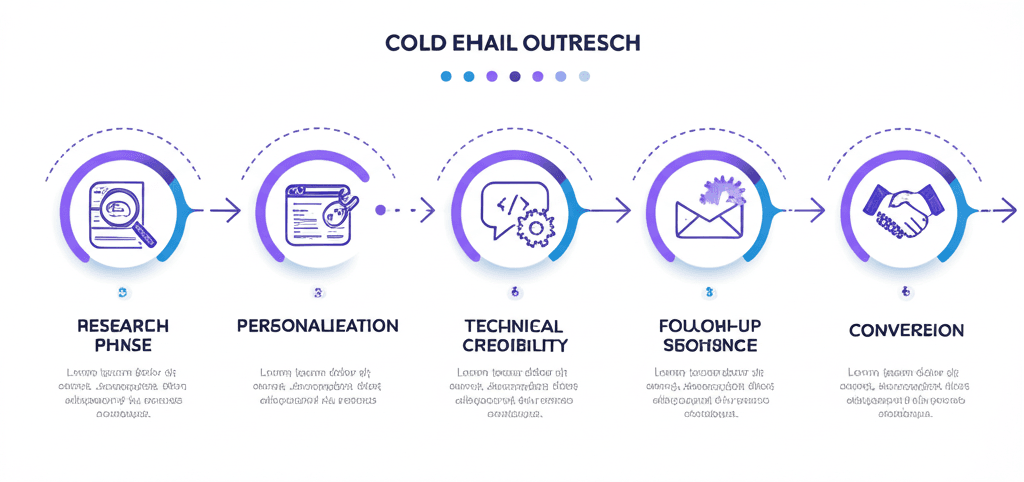
Here are templates adapted for different AI/ML scenarios.
Template 1: ML Platform Outreach
Subject: ML infrastructure at [Company]
Body:
[First Name],
Quick question: how is [Company] currently handling [specific platform challenge, e.g., experiment tracking, model deployment, feature management, compute orchestration]?
We work with ML platform teams to improve [specific metric, e.g., experiment velocity, deployment frequency, infrastructure costs].
Currently supporting [X] organizations with [scale indicator, e.g., thousands of daily experiments, millions of daily predictions].
Worth a brief conversation to see if this applies to your platform?
[Your name]
Template 2: Data Science Team Outreach
Subject: Data science workflow at [Company]
Body:
[First Name],
Data science teams typically spend significant time on [specific challenge, e.g., data preparation, experiment management, production deployment].
We help data scientists focus on model development by [specific capability].
Teams using our platform have achieved [specific outcome, e.g., 40% faster experiment iteration, 3x more experiments per quarter].
Happy to provide documentation and a trial environment before any call.
[Your name]
Template 3: Enterprise AI Outreach
Subject: AI initiative at [Company]
Body:
[First Name],
Noticed [Company] is expanding AI capabilities based on [specific observation, e.g., job postings, press releases, conference presentations].
Organizations implementing AI for [specific use case] typically face challenges with [specific challenge, e.g., model governance, production reliability, team collaboration].
We help enterprise teams address this with [specific capability]. Currently deployed at [X] organizations in [relevant industry].
Would it be useful to share how similar teams have approached this?
[Your name]
Template 4: Infrastructure Cost Outreach
Subject: ML compute costs at [Company]
Body:
[First Name],
ML infrastructure costs often grow faster than expected as teams scale training and inference workloads.
We help organizations optimize [specific cost driver, e.g., GPU utilization, training efficiency, inference costs] without sacrificing model performance.
Organizations using our platform typically reduce ML compute costs by [specific percentage] while maintaining or improving throughput.
Is compute cost optimization a priority for your team?
[Your name]
Template 5: MLOps Outreach
Subject: MLOps at [Company]
Body:
[First Name],
ML teams scaling from experimentation to production often struggle with [specific MLOps challenge, e.g., model versioning, CI/CD for ML, production monitoring].
We help teams implement MLOps practices with [specific capability].
Currently supporting [X] organizations moving ML to production at scale.
Worth exploring if MLOps is on your roadmap?
[Your name]
Common Mistakes to Avoid
Mistake 1: Buzzword Overload
AI/ML has attracted significant hype. Buzzword-laden messaging triggers immediate skepticism.
Weak:
"Our revolutionary AI-powered platform uses cutting-edge deep learning to transform your business."
Strong:
"Our platform reduces model training time by 40% through automated hyperparameter optimization and efficient distributed training."
Specific, measurable claims communicate more effectively than vague promises.
Mistake 2: Oversimplifying Complexity
ML professionals know that machine learning is complex. Claims that your solution makes everything easy ring false.
Weak:
"Deploy ML models with just one click."
Strong:
"Our deployment pipeline handles containerization, scaling, and monitoring. Typical deployment time: 2 hours from trained model to production endpoint."
Acknowledge complexity while showing how you address it.
Mistake 3: Ignoring Technical Validation
AI/ML buyers will thoroughly evaluate solutions before purchasing. Skipping technical depth in favor of business-only messaging fails.
Include enough technical substance to signal credibility and invite deeper evaluation.
Mistake 4: Generic AI Claims
"AI" means different things in different contexts. Generic claims about AI benefits fail to resonate.
Weak:
"Leverage the power of AI for your business."
Strong:
"Our computer vision models achieve 97% accuracy on defect detection with sub-100ms inference latency."
Specificity about applications, performance, and technical details builds credibility.
Mistake 5: Ignoring Integration Requirements
AI/ML solutions must integrate with existing tools, workflows, and infrastructure. Positioning as a standalone solution creates adoption barriers.
Weak:
"Replace your existing ML tools with our comprehensive platform."
Strong:
"Integrates with your existing workflow: native support for PyTorch and TensorFlow, Jupyter integration, and connections to major cloud platforms."
Acknowledge existing investments and show how you complement them.
Mistake 6: Overlooking Governance
Enterprise AI deployments increasingly require governance capabilities. Ignoring these requirements limits enterprise sales.
Address model explainability, bias detection, and compliance capabilities when relevant to your target accounts.
Building an AI/ML Cold Email Program
List Building
Quality targeting matters in the specialized AI/ML market.
Focus on:
- Companies with visible AI/ML investments (job postings, research publications, conference activity)
- Organizations in target industries implementing AI
- Decision-makers at appropriate levels for your solution
- Accounts with observable growth signals or challenges
Segmentation Approaches
Effective segmentation improves response rates.
By organization type:
- AI-first companies
- Enterprise AI adopters
- AI infrastructure providers
- AI consulting and services
By application area:
- Computer vision
- Natural language processing
- Recommendation systems
- Predictive analytics
- Generative AI
By maturity level:
- Exploration and experimentation
- Pilot and proof of concept
- Production deployment
- Scaled production
By technical focus:
- Data and feature engineering
- Model development and training
- Deployment and serving
- Monitoring and operations
Where we differ from standard practice
Much of the advice on this page reflects how outbound is commonly run. We run it differently, and since this page sits on our site it is worth saying where the difference is and what it costs us.
- A sequence of messages to each prospect over several weeks
- Later messages often land in the same email thread
- Every contact is reached more than once, so a distracted reader gets another chance
- The later messages go only to people who did not answer the first
- Reputation cost accrues on the sending domain across everything else it sends
- One message, then that campaign is finished for that contact
- No thread replies and no bumps
- A non-responding audience becomes a new campaign with a genuinely different premise, not a reminder
- More of the work moves into targeting and into the one message
- We reach each contact less often, and that is the cost we accept
The reasoning is mechanical rather than moral. A follow-up arrives underneath a message the recipient has already seen and chosen not to answer, so it is delivered to the population most likely to mark it as spam, and the reputation cost of that lands on the sending domain across every campaign running on it. We set that cost against the replies a sequence recovers and decided the trade was not worth it. The full argument, with the numbers from our own campaigns, is in why we stopped using follow-ups.
Follow-Up Strategy
AI/ML professionals are busy with technical work. Most programmes plan four to six touches spaced five to seven business days apart. We send one message per campaign and put that effort into targeting and into the first message instead.
Where that effort goes:
- Share relevant technical content or research
- Reference industry developments or new capabilities
- Provide useful information about their specific challenges
- Keep the message concise and focused
When a non-responding list is worth another approach, it becomes a new campaign with its own premise rather than a second message under the first.
Measurement and Optimization
Track metrics to improve your program over time.
Key metrics:
- Open rates by segment and persona
- Reply rates by application area and organization type
- Meeting conversion rates
- Pipeline progression from cold outreach
- Deal size and close rates by source
Use data to refine targeting, messaging, and timing continuously.
Staying Connected in AI/ML
The AI/ML industry values technical contribution and community engagement.
Contribute Technical Content
Publishing useful technical content, tutorials, or research builds credibility. Share content that helps practitioners solve real problems.
Engage in the Research Community
Following and engaging with AI/ML research demonstrates commitment to the field. Reference relevant papers and contribute to technical discussions.
Participate in Open Source
Many AI/ML tools and frameworks are open source. Contributing to relevant projects builds visibility and credibility.
Attend and Present at Conferences
AI/ML conferences bring together practitioners and researchers. Building relationships at events makes subsequent outreach more effective.
Summary
Cold emailing the AI/ML industry requires genuine technical credibility and targeted messaging that addresses real challenges.
Success depends on:
- Understanding the market including AI-first companies, enterprise adopters, infrastructure providers, and service firms
- Targeting the right decision-makers with role-appropriate messaging
- Demonstrating technical credibility through accurate terminology and relevant metrics
- Tailoring to application areas with use-case-specific messaging
- Timing outreach around budget cycles, events, and technology developments
- Avoiding common mistakes like buzzword overload and oversimplification
- Building for the long term through technical contribution and community engagement
The AI/ML market continues to grow rapidly as organizations implement machine learning across every industry. Vendors who demonstrate genuine expertise and provide real value will succeed in reaching decision-makers at AI/ML organizations.
Related Reading
If you would rather have this run for you, RevenueFlow books qualified meetings on a pay-per-meeting basis and publishes client results.
Frequently asked questions.
Frequently asked questions- Who are the main decision-makers for AI and ML purchases?
- The primary decision-makers are VP of Machine Learning or Head of AI, ML Platform Engineering Leads, Data Science Managers, Chief Data Officers, and CTOs. Each focuses on different priorities: VPs of ML care about team productivity and model performance, Platform Engineering Leads prioritize infrastructure reliability and costs, Data Science Managers focus on workflow efficiency, CDOs emphasize governance and data quality, and CTOs evaluate technical architecture and integration.
- What are the biggest mistakes to avoid when cold emailing AI companies?
- The six critical mistakes are buzzword overload, oversimplifying technical complexity, ignoring technical validation, making generic AI claims, overlooking integration requirements, and neglecting governance considerations. AI/ML buyers are highly technical and skeptical of marketing language. They need specific, credible information about how your solution addresses their actual workflow challenges, not vague promises about AI transformation.
- How do I build credibility when reaching out to machine learning teams?
- Build credibility by using accurate technical terminology, referencing specific metrics and outcomes, acknowledging the complexity of AI/ML challenges, and offering substantive technical resources. Avoid generic marketing claims and demonstrate that you understand their actual workflow, whether that's model deployment friction, infrastructure scaling, experiment management, or production reliability issues.
- What are the different types of companies in the AI/ML market?
- The market includes five main segments: AI-first companies where ML is the core product, enterprise AI adopters implementing AI for operations, AI infrastructure providers building platforms and tools, AI consulting and services firms helping with implementation, and research organizations exploring new AI capabilities. Each segment has distinct priorities, from model performance and development velocity to governance requirements and ecosystem integration.
About the author.

Fernando Cao is CEO at RevenueFlow, which builds and operates outbound revenue engines for B2B companies. Previously at Accenture Strategy. Studied at University of Bath.
Fernando Cao · CEO
Connect on LinkedIn →Explore more.
Ready to scale your outreach?
We build GTM engines that book real meetings. See the receipts.
Related articles.
Cold Email for Maintenance Services: The Complete Guide
A comprehensive guide to cold email outreach for commercial maintenance companies, covering how to reach facility managers, property managers, and operations directors with messaging that wins preventive maintenance and repair contracts.
Cold Email for Staffing Agencies: The Complete Guide
A comprehensive guide to cold email outreach for staffing and temp agencies, covering how to reach HR directors, hiring managers, and operations leaders with messaging that wins temporary staffing, contract placement, and direct hire business.
Cold Email for Telecom: Reaching Carriers and MSPs
Telecom companies face rapid technology changes and competitive pressures. Here's how to approach cold email outreach to carriers, MSPs, and UCaaS providers.
Cold Email for Electronics Companies: The Complete Guide
A comprehensive guide to cold email outreach for electronics manufacturers, component suppliers, and EMS providers, covering buyer personas, OEM relationships, contract manufacturing, and proven strategies for reaching engineers, procurement managers, and supply chain leaders.
Cold Email for Security Services: The Complete Guide
A comprehensive guide to cold email outreach for security service providers, covering how to reach facility managers, corporate security directors, and property managers with messaging that builds trust and wins contracts.
Cold Email for Cloud Services: The Complete Guide
Learn how to effectively reach decision-makers at cloud service providers and enterprises adopting cloud infrastructure. This guide covers targeting strategies, technical credibility, and email templates for the cloud services industry.