Cold Email for Construction: Contractors and Developers
Construction companies operate on tight timelines and project-based relationships. Here's how to approach cold email outreach to GCs, developers, and specialty contractors.
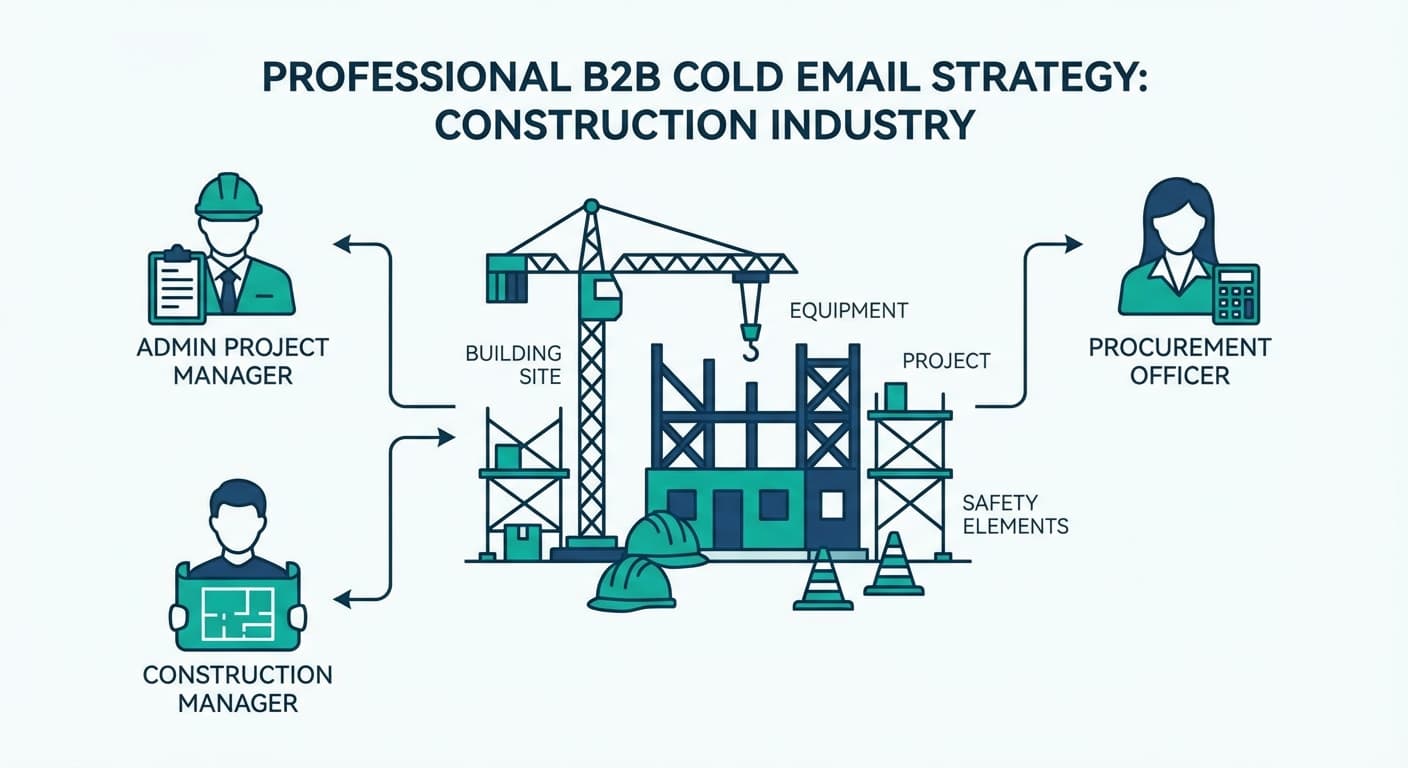
Cold email works for construction because the industry operates on project-based decision cycles with multiple entry points throughout the year, rather than annual purchasing cycles. Construction professionals value reliability and clear communication, making email effective for initiating relationship-building. Public records like contractor licenses, building permits, and project databases make building targeted lists straightforward. Messages should demonstrate local market knowledge, address specific pain points like timeline delays and safety concerns, and time outreach to align with project cycles and budget planning periods.
Key takeaways
- Construction offers multiple entry points for vendors throughout the year due to project-based decision cycles, unlike industries with annual purchasing cycles.
- Contractor licenses, building permits, and project records are public information, making it easier to build targeted prospect lists than in many other industries.
- General contractors evaluate potential partners primarily on reliability, quality, pricing, and capacity to handle volume and meet deadlines.
- Developers prioritize track record, financial stability, and the ability to deliver projects on time and within budget when selecting partners.
- Construction email outreach requires demonstrating local market knowledge and understanding regional regulations to establish immediate credibility.
Reviewed and updated September 15, 2026
Cold Email for Construction: Reaching General Contractors, Developers, and Subcontractors
The construction industry runs on relationships, deadlines, and trust. General contractors rely on subcontractors who show up on time and deliver quality work. Developers need reliable partners who can meet project milestones. Subcontractors depend on a steady pipeline of projects to keep their crews working.
Cold email offers construction companies a way to build these critical relationships at scale. Whether you are a subcontractor looking for more projects, a supplier seeking new accounts, or a service provider targeting construction firms, email outreach can open doors that would otherwise remain closed.
This guide covers how to approach cold email for the construction industry, including targeting different stakeholders, timing your outreach around project cycles, and crafting messages that resonate with busy construction professionals.
Why Cold Email Works for Construction
Construction professionals are practical people. They value efficiency, reliability, and clear communication. Cold email, when done correctly, aligns with these values.
Several factors make cold email effective for construction outreach:
Project-based decision cycles. Construction companies constantly evaluate new vendors and partners as projects begin. Unlike industries with annual purchasing cycles, construction offers multiple entry points throughout the year.
Relationship-driven purchasing. While price matters, construction professionals prioritize working with people they trust. Cold email can initiate the relationship-building process that leads to long-term partnerships.
Regional focus. Construction is inherently local. Demonstrating knowledge of local markets, regulations, and conditions creates immediate credibility with prospects in your service area.
Clear pain points. Delayed timelines, budget overruns, safety incidents, and unreliable subcontractors are universal concerns. Addressing these pain points directly resonates with construction decision-makers.
Accessible contact information. Contractor licenses, project permits, and business registrations are public records. Building targeted lists of construction companies is more straightforward than in many other industries.
Understanding the Construction Ecosystem
Before launching cold email campaigns, you need to understand who you are targeting and how they make decisions.
General Contractors (GCs)
General contractors manage entire construction projects, coordinating between owners, architects, subcontractors, and suppliers. They are your target if you offer:
- Subcontracting services (electrical, plumbing, HVAC, framing, etc.)
- Construction materials and supplies
- Equipment rental
- Project management software
- Safety training and compliance services
- Bonding and insurance
- Temporary staffing
GCs evaluate potential partners based on reliability, quality, pricing, and capacity. They need to know you can handle the volume and meet deadlines.
Key decision-makers: Project managers, estimators, procurement managers, and company owners.
Developers and Owners
Developers fund and initiate construction projects. They hire GCs but also work directly with design professionals, consultants, and specialty contractors for preconstruction services.
Target developers if you offer:
- General contracting services
- Design-build capabilities
- Preconstruction consulting
- Cost estimation
- Environmental and site assessment
- Permit expediting
- Financing and capital services
Developers care about track record, financial stability, and the ability to deliver projects on time and within budget.
Key decision-makers: Development managers, project directors, and principals.
Subcontractors and Specialty Contractors
Subcontractors perform specific trades on construction projects. They work under GCs but also bid directly on smaller projects.
Target subcontractors if you offer:
- Material supply
- Tool and equipment sales or rental
- Workforce management software
- Training and certification programs
- Fleet and vehicle services
- Marketing and business development services
Subcontractors often operate with thin margins and focus on utilization. They need solutions that save time, reduce costs, or help them win more work.
Key decision-makers: Company owners, operations managers, and estimators.
Architects and Engineers
While technically separate from construction, design professionals influence contractor selection and product specifications. They are worth targeting if you offer:
- Specialized products that require specification
- Technical consultation
- Value engineering services
- BIM and design technology
Key decision-makers: Project architects, principals, and specification writers.
Building Your Target List
Quality outreach starts with a quality list. Construction offers several data sources for building targeted prospect lists.
Data Sources for Construction Lists
Contractor license databases. Most states maintain public databases of licensed contractors. These typically include business name, address, license type, and status. Some states also list key personnel.
Permit records. Building permits are public records that identify active construction projects, property owners, and contractors. Permit data reveals who is working on what projects in your area.
Project databases. Services like Dodge Construction Network, ConstructConnect, and Procore provide detailed information on upcoming and active projects, including contractor assignments.
Industry associations. Membership directories from organizations like the Associated General Contractors (AGC), Associated Builders and Contractors (ABC), and trade-specific groups provide targeted lists of established companies.
Bid platforms. Public and private bid platforms show which contractors are actively pursuing work and what types of projects they target.
LinkedIn. For reaching specific individuals within construction companies, LinkedIn provides targeting by job title, company, and location.
Segmentation Strategies
Generic messages get ignored. Segment your list to enable personalized outreach:
By trade or specialty. An electrical contractor has different concerns than a roofing contractor. Tailor your message to their specific work.
By company size. A three-person operation differs from a 500-employee contractor. Adjust your value proposition accordingly.
By project type. Residential, commercial, industrial, and infrastructure contractors face different challenges and opportunities.
By geography. Construction is local. Reference specific markets, building codes, or regional factors that affect their business.
By role. An estimator cares about takeoff accuracy and bid success. A project manager cares about schedule adherence and coordination. A safety director cares about incident rates and compliance.
Timing Your Outreach
Construction has natural rhythms that affect receptivity to outreach. Aligning your timing with these cycles improves response rates.
Project Cycle Timing
Preconstruction phase. This is when GCs assemble their subcontractor teams and request bids. Getting on the bid list before projects go out is essential.
Project start. The first few weeks of a project are chaotic. Decision-makers are less available for new conversations.
Mid-project. Once projects stabilize, there may be openings for additional vendors or solutions to problems that have emerged.
Project completion. As projects wind down, contractors start looking ahead to the next opportunity.
Seasonal Patterns
Spring surge. In most markets, construction activity increases significantly as weather improves. Outreach in late winter positions you for spring projects.
Summer peak. Maximum activity means maximum stress. Keep outreach concise and focused.
Fall planning. Many companies plan their next year's project pipeline in the fall. Relationship-building in Q3 and Q4 pays dividends.
Winter slowdown. In colder climates, reduced activity means more time for conversations. Use this window for longer-form relationship building.
Budget and Planning Cycles
Fiscal year timing. Large contractors and institutional owners have budget cycles. Understanding when budgets are set helps you time outreach for maximum impact.
Bid deadlines. Track major project bid dates. Reaching out to estimators during bid week is unlikely to generate response.
Trade show season. The construction industry has major conferences and trade shows (World of Concrete, CONEXPO, etc.). Time outreach before or after these events when industry attention is high.
The Bid Process and Your Outreach
Many construction relationships begin through the bidding process. Understanding how bids work helps you craft more relevant outreach.
How Bids Work
For larger projects, GCs receive invitations to bid (ITBs) from owners or are notified of public bid opportunities. They then reach out to subcontractors they know and trust to request quotes.
The key insight: if you are not already in a GC's network when a bid comes out, you are unlikely to be considered for that project.
Getting on Bid Lists
Your cold email goal should often be to get on the bid list for future projects. This is a lower-commitment ask than trying to win work immediately.
Frame your outreach around:
- Introducing your company and capabilities
- Expressing interest in being considered for future bids
- Providing prequalification information proactively
- Offering references from past projects
Prequalification as a Door Opener
Many GCs require subcontractors to complete prequalification before bidding. Offering to submit prequalification materials in your initial outreach shows you understand the process and are serious about working together.
Safety and Compliance Messaging
Safety is paramount in construction. References to safety records, training, and compliance can differentiate your outreach and build trust.
Why Safety Matters in Outreach
Construction has significant safety requirements and liability exposure. GCs are responsible for jobsite safety and face penalties for incidents involving subcontractors.
Demonstrating a strong safety culture signals that you:
- Take your work seriously
- Will not create liability issues
- Invest in training your workforce
- Align with professional standards
Incorporating Safety Into Your Messages
When relevant to your offering, include:
- Your company's EMR (Experience Modification Rate)
- Safety certifications (OSHA 30, OSHA 10, etc.)
- Years without lost-time incidents
- Drug testing and screening policies
- Safety training programs you implement
Do not overload your initial email with safety statistics. A brief mention that you can provide safety documentation upon request signals credibility without cluttering your message.
Compliance and Licensing
Reference your proper licensing, bonding, and insurance. These are table stakes for legitimate contractors, but explicitly mentioning them reassures prospects that you are a professional operation.
Email Structure for Construction
Construction professionals are busy and practical. Your emails should be direct, clear, and focused on value.
Subject Lines
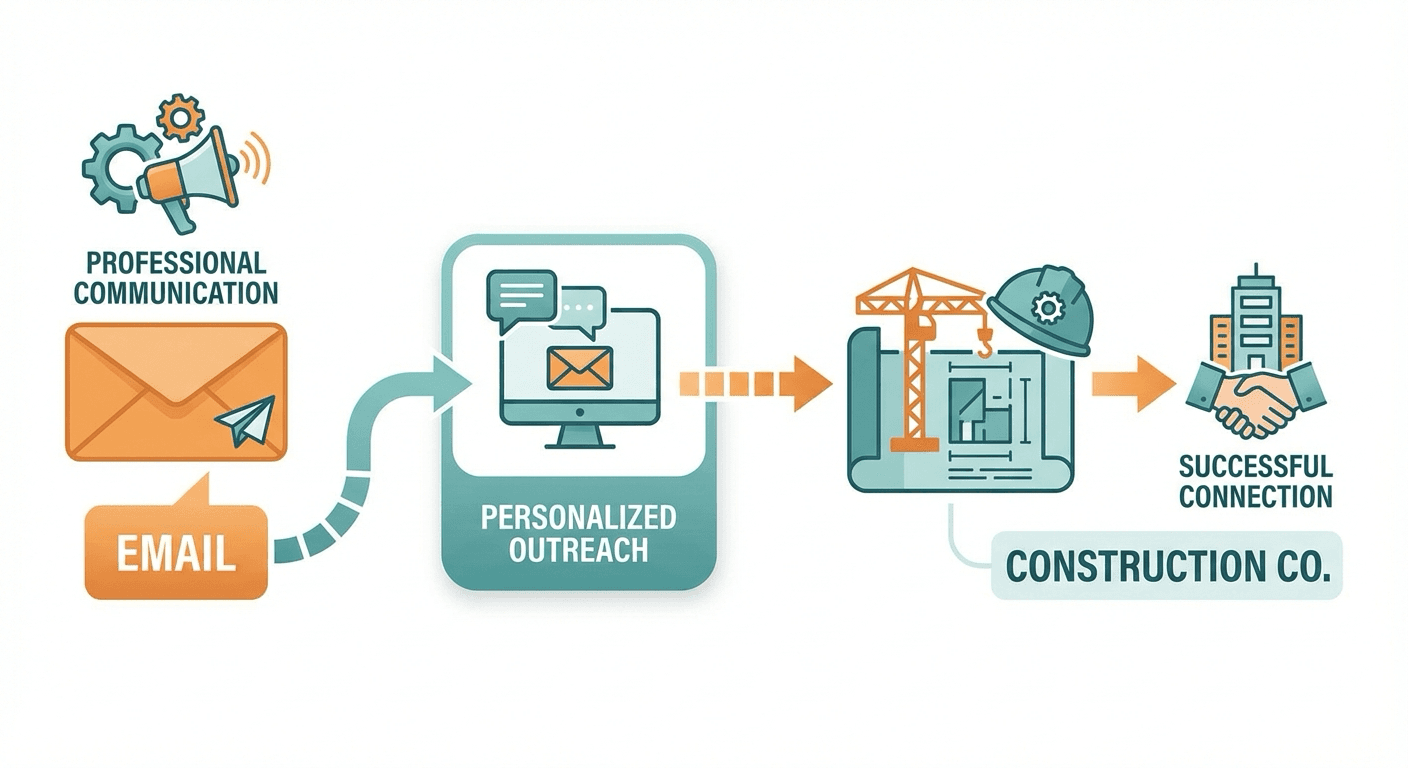
Keep subject lines short and relevant. Avoid salesy language.
Effective subject lines:
- "[Trade] subcontractor in [City]"
- "Quick question about your subcontractor needs"
- "Adding capacity in [Trade] for Q2 projects"
- "[Your Company] introduction for [Prospect Company]"
- "Available for bid list, [Trade] work"
Opening Lines
Get to the point quickly. State who you are and why you are reaching out.
Strong openings:
- "I run [Company], a [trade] contractor based in [City]."
- "We specialize in [specific service] for [project type] projects."
- "I saw that [Prospect Company] is working on [specific project or project type], and wanted to introduce ourselves."
Body Content
Focus on what matters to the prospect:
For GCs and developers:
- Your track record and experience
- Capacity and availability
- Safety record and certifications
- Bonding capacity
- References from relevant projects
For subcontractors:
- How your product or service saves time or money
- Reliability and availability
- Local presence and support
- Success stories from similar companies
Call to Action
Keep the ask simple and low-commitment:
- "Would you be open to adding us to your bid list for upcoming projects?"
- "Can I send over our prequalification package?"
- "Would a brief call make sense to discuss your upcoming project pipeline?"
- "What is the best way to get on your vendor list?"
Avoid asking for commitments they cannot make until they know you better.
Sample Email Templates
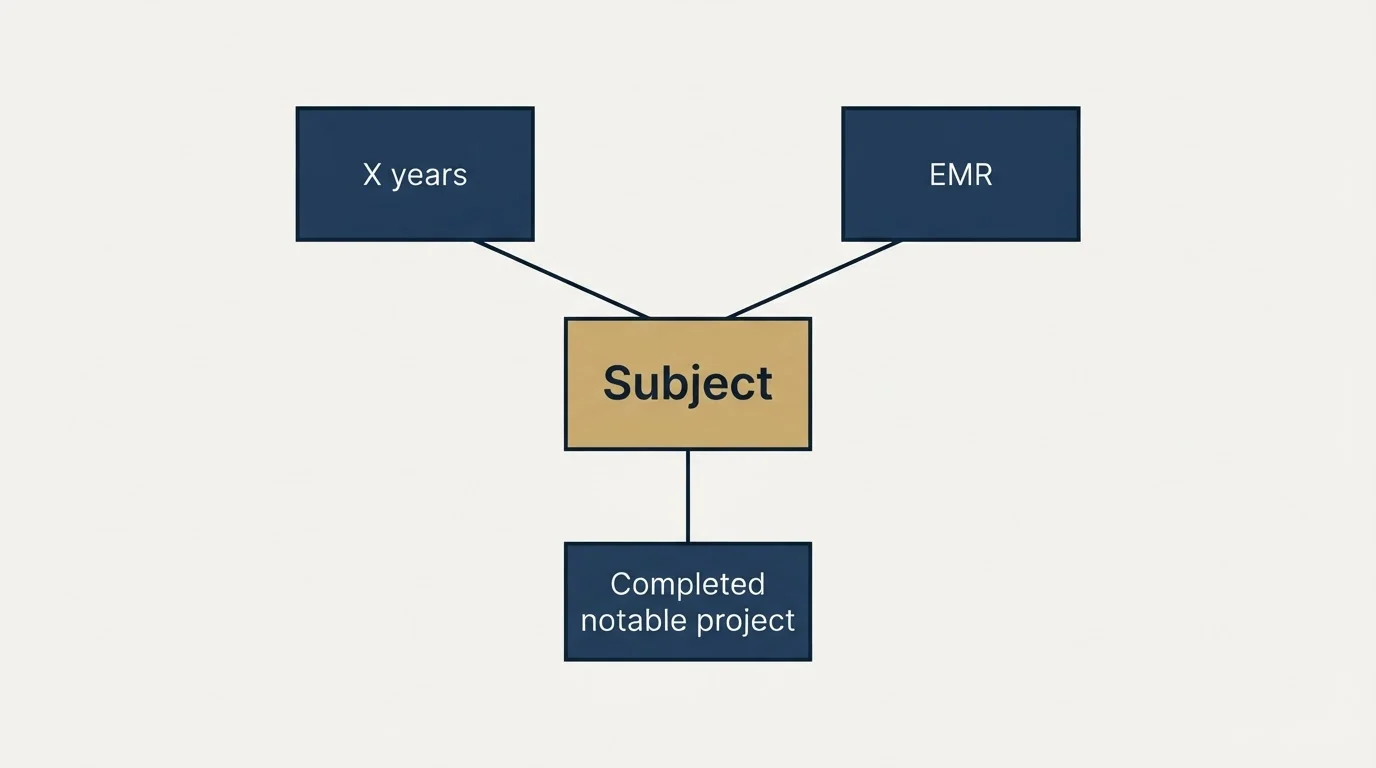
Template 1: Subcontractor to General Contractor
Subject: [Trade] sub available for [City/Region] projects
Hi [First Name],
I am [Your Name], owner of [Your Company]. We are a [trade] contractor serving [City/Region] with [X] years of experience on [commercial/residential/industrial] projects.
I came across [Prospect Company] and wanted to reach out about being considered for your subcontractor bid list on future projects.
A few quick details about us:
- years in business, licensed and bonded
- EMR of [X.XX] with no lost-time incidents in the past [X] years
- Completed [notable project type or size] projects for [reference company types]
I am happy to send over our prequalification package and references if that would be helpful.
Would you be open to a brief call to discuss your upcoming project pipeline and how we might work together?
Best, [Your Name] [Your Company] [Phone] [Email]
Template 2: Supplier to Subcontractor
Subject: [Product type] for [City] contractors
Hi [First Name],
I work with [trade] contractors in [City/Region] and wanted to reach out to [Prospect Company].
We supply [product type] with [key benefit: next-day delivery, competitive pricing, technical support, etc.]. Several [trade] contractors in the area have switched to us for [specific reason: lead times, product availability, pricing, etc.].
Not sure if you are currently evaluating suppliers, but I would be happy to set you up with pricing and availability information so you have another option when you need it.
Would you like me to send over our catalog and a quote on your most common items?
[Your Name] [Your Company] [Phone]
Template 3: Service Provider to General Contractor
Subject: [Service] for construction companies in [City]
Hi [First Name],
I lead business development at [Your Company]. We provide [specific service: safety training, fleet management, workforce scheduling, etc.] to construction companies in [Region].
I noticed [Prospect Company] is active on [project types] in the area. Many GCs we work with have used our [service] to [specific benefit: reduce incident rates, save admin time, improve crew utilization, etc.].
Would you be open to a 15-minute call to see if there is a fit? If the timing is not right, no problem. I am happy to reconnect when it makes sense.
Best, [Your Name] [Your Company] [Phone]
Template 4: General Contractor to Developer
Subject: [Project type] contractor in [City]
Hi [First Name],
I am [Your Name] with [Your Company], a general contractor specializing in [project type: multifamily, retail, industrial, etc.] in [City/Region].
I saw that [Developer Company] has been active with [project type or specific development]. We recently completed [brief description of comparable project] and are looking to build relationships with developers in the area.
We would welcome the opportunity to prequalify for your bid list on future projects. I am happy to send over our qualifications and references.
Would a brief call be useful to introduce ourselves and learn more about your upcoming pipeline?
Regards, [Your Name] [Your Company] [Phone] [Email]
Template 5: Specialty Contractor for Design-Assist
Subject: Design-assist [trade] for [Project Type] projects
Hi [First Name],
I noticed [GC Company] works on [project type]. We are a [trade] contractor specializing in design-assist partnerships on complex [trade] scopes.
Our approach is to get involved during preconstruction to help value-engineer the [trade] package and identify potential issues before they become costly changes. We have worked on design-assist basis with [reference companies] on [project types].
If you have any projects in preconstruction that could benefit from early [trade] input, I would welcome the chance to discuss.
Would a brief call make sense?
[Your Name] [Your Company] [Phone]
Where we differ from standard practice
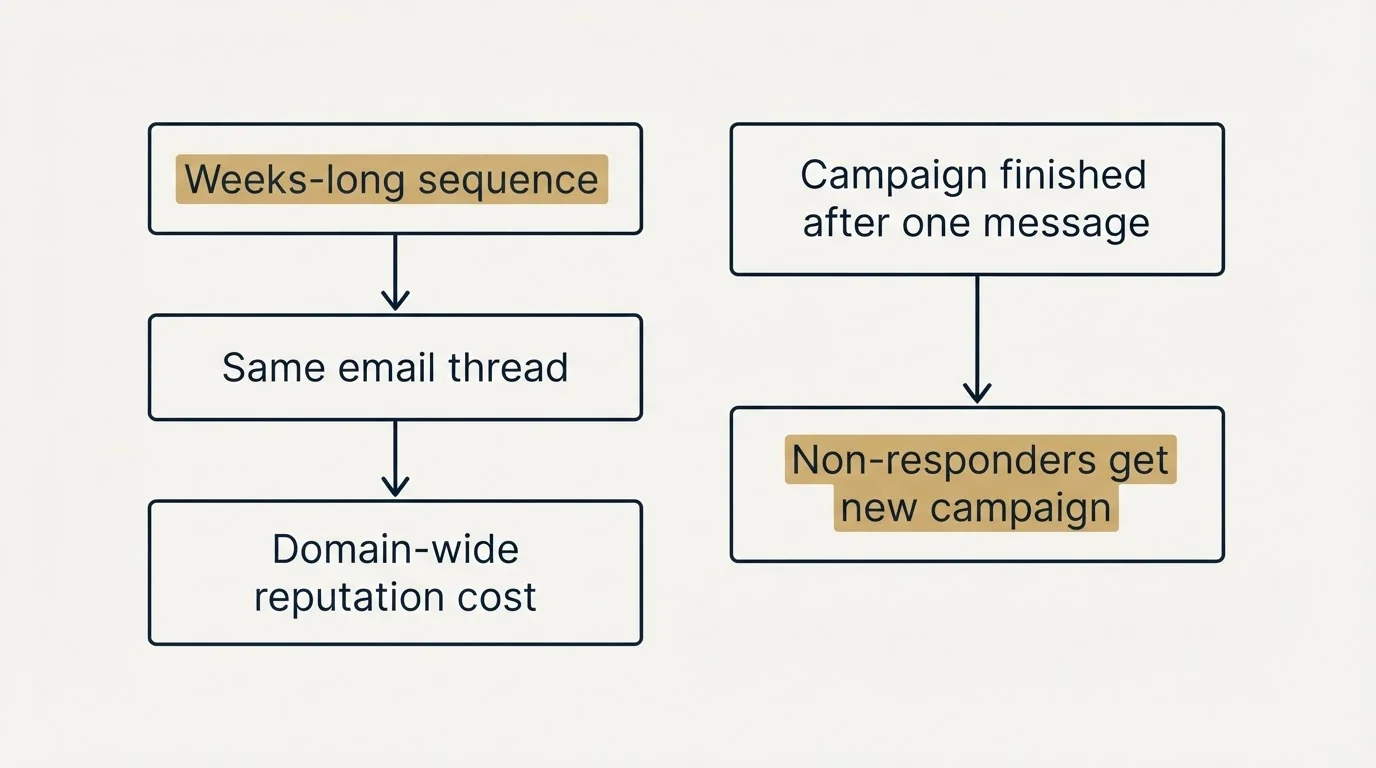
Much of the advice on this page reflects how outbound is commonly run. We run it differently, and since this page sits on our site it is worth saying where the difference is and what it costs us.
- A sequence of messages to each prospect over several weeks
- Later messages often land in the same email thread
- Every contact is reached more than once, so a distracted reader gets another chance
- The later messages go only to people who did not answer the first
- Reputation cost accrues on the sending domain across everything else it sends
- One message, then that campaign is finished for that contact
- No thread replies and no bumps
- A non-responding audience becomes a new campaign with a genuinely different premise, not a reminder
- More of the work moves into targeting and into the one message
- We reach each contact less often, and that is the cost we accept
The reasoning is mechanical rather than moral. A follow-up arrives underneath a message the recipient has already seen and chosen not to answer, so it is delivered to the population most likely to mark it as spam, and the reputation cost of that lands on the sending domain across every campaign running on it. We set that cost against the replies a sequence recovers and decided the trade was not worth it. The full argument, with the numbers from our own campaigns, is in why we stopped using follow-ups.
Follow-Up Strategy
Construction professionals are busy and often working in the field. Follow-up is essential, but persistence should be balanced with respect for their time.
Follow-Up Timing
- Email 2: 4-5 days after initial email
- Email 3: 7-8 days after Email 2
- Email 4: 10-14 days after Email 3 (optional)
Construction professionals may take longer to respond than office-based workers. Give each email adequate time before following up.
Follow-Up Content
Each follow-up should add value:
Follow-up 1: Brief check-in with one additional relevant detail (recent project completion, capability highlight, etc.)
Follow-up 2: Offer something useful (case study, project photo, market observation)
Follow-up 3: Final touch with a clear close ("I will not keep following up, but feel free to reach out when the timing is right")
Example Follow-Up Sequence
Follow-up 1 (Day 5): "[First Name], following up on my note from earlier this week. We just wrapped a [project type] in [location] and have crew availability coming up in [timeframe]. Happy to send over details on our recent work if that would be helpful."
Follow-up 2 (Day 13): "[First Name], one more thought. I attached a few photos from our recent [project type] project with [reference company]. Let me know if you would like to discuss adding us to your subcontractor list."
Follow-up 3 (Day 25): "[First Name], I will not keep filling your inbox. If you are ever looking for a [trade] contractor with [key differentiator], feel free to reach out. Best of luck with your projects."
Regional Focus and Local Expertise
Construction is fundamentally a local business. Demonstrating local market knowledge differentiates your outreach from generic messages.
Demonstrating Local Knowledge
Reference local projects. Mention specific projects, buildings, or developments that show you know the area.
Acknowledge local conditions. Climate, soil conditions, seismic requirements, and other regional factors affect construction. Reference these where relevant.
Cite local regulations. Knowledge of local building codes, permitting processes, and inspection requirements signals expertise.
Mention local relationships. If you have worked with recognized local companies (with their permission), reference these connections.
Market-Specific Considerations
Urban markets. Tight sites, traffic restrictions, noise ordinances, and limited staging create specific challenges.
Suburban and exurban. Different scale of projects, often with different contractor pools.
Industrial and infrastructure. Specialized requirements for safety, environmental compliance, and technical capabilities.
Union vs. open shop. Understand the labor environment in your target market and adjust your messaging accordingly.
Measuring Results
Track these metrics to evaluate and improve your construction cold email campaigns:
Open rate. Target 35-50% for well-targeted construction lists. Construction professionals receive less email than some other industries, so well-crafted messages should achieve solid open rates.
Reply rate. Expect 5-15% reply rates for quality outreach. Construction professionals tend to be direct. You may receive more brief replies and more explicit declines than in other industries.
Bid list additions. Track how many prospects add you to their bid list or request prequalification materials.
Bid invitations. The ultimate measure is receiving invitations to bid on projects.
Conversions to work. Track which outreach leads to actual projects won.
Common Issues and Fixes
Low open rates: Test subject lines with trade or location specifics. Verify your sending reputation.
Opens but no replies: Your value proposition may not be clear or relevant. Test different angles (safety record, capacity, experience).
Replies but no bid invitations: You may be reaching the wrong level (targeting project managers when you need estimators, or vice versa).
Bids but no wins: This is a pricing or qualification issue, not an email issue. Review your bid strategy.
Common Mistakes to Avoid
Being too generic. "We are a construction company looking for work" tells the prospect nothing. Specify your trade, capabilities, and what makes you different.
Overselling. Construction professionals are skeptical of big claims. Stick to facts and let your track record speak.
Ignoring project timing. Reaching out mid-project is less effective than catching contractors during planning phases.
Neglecting safety. Failing to mention safety credentials when they matter signals a lack of professionalism.
Targeting the wrong role. Understand who makes subcontractor decisions at your target companies.
One-size-fits-all messaging. A message for a $10M revenue GC should differ from one for a $500M revenue GC.
Getting Started
If you are new to cold email for construction, here is a practical roadmap:
Week 1: Research and List Building
- Define your ideal target (GCs, developers, subcontractors in specific trades)
- Build a list of 200-500 prospects from contractor databases and permit records
- Research company details and identify key contacts
Week 2: Email Infrastructure Setup
- Set up a dedicated sending domain
- Create email accounts and begin warm-up (minimum 2 weeks before sending)
- Configure tracking for opens and replies
Week 3-4: Campaign Preparation
- Write your initial email and 2-3 follow-ups
- Prepare prequalification materials to send when prospects respond
- Set up your sending schedule (mornings and early afternoons work best for construction)
Week 5: Launch
- Start with small daily volume (20-30 emails per account)
- Monitor deliverability and responses
- Respond promptly to replies
Ongoing:
- Add new prospects regularly (monitor permit records for new project activity)
- Test different value propositions
- Track which approaches generate bid invitations
- Follow up consistently on all replies
Final Thoughts
Cold email for construction is about initiating relationships that can lead to project opportunities. Construction professionals value reliability, professionalism, and clear communication. Your outreach should reflect these qualities.
The construction industry rewards persistence and relationship-building. A prospect who does not respond today may have a project next quarter where your services are needed. Stay on their radar with occasional valuable touches, and be ready when the opportunity arises.
Focus on demonstrating local market knowledge, relevant experience, and a strong safety culture. Make it easy for prospects to add you to their network and consider you for future work.
Start with a focused niche, build a quality list, write emails that speak to specific construction concerns, and follow up professionally. Measure what works, refine your approach, and scale the strategies that generate results.
Related Reading
- Cold Email for Retail: The Complete Guide to B2B Outreach
- Cold Email for SaaS Companies: The Complete Guide to B2B Outreach
If you would rather have this run for you, RevenueFlow books qualified meetings on a pay-per-meeting basis and publishes client results.
This guide provides general information about cold email practices for construction industry outreach. Consult with legal and compliance professionals regarding regulations that may apply to your specific situation and market.
Frequently asked questions.
Frequently asked questions- Why does cold email work for reaching construction companies?
- Cold email works for construction because the industry operates on project-based decision cycles with multiple entry points year-round, not annual purchasing cycles. Construction professionals value efficiency and clear communication, which aligns with well-crafted cold email. The industry is relationship-driven, making email an effective tool to initiate partnerships. Additionally, contact information is readily available through public records like contractor licenses and building permits, and regional focus allows you to demonstrate local market knowledge that creates immediate credibility.
- Who should I target with cold email in the construction industry?
- Your target depends on what you offer. General contractors manage entire projects and need subcontractors, materials, equipment, and project management tools. Developers fund projects and hire GCs, making them targets for general contracting and preconstruction services. Subcontractors perform specific trades and need material suppliers, equipment, and workforce management solutions. Architects and engineers influence contractor selection and product specifications, making them relevant for specialized products requiring specification. Each group has different decision-makers, from project managers and estimators to company owners and principals.
- How do I build a targeted email list of construction companies?
- Construction offers several public data sources for building lists. State contractor license databases provide business names, addresses, license types, and key personnel. Building permit records identify active projects, property owners, and contractors working in your area. Project databases like Dodge Construction Network and ConstructConnect offer details on upcoming and active projects with contractor assignments. Industry association membership directories from organizations like AGC and ABC provide lists of established contractors. These sources allow you to segment by trade, project type, geographic area, and company size.
- What do general contractors care about when evaluating new partners?
- General contractors evaluate potential partners based on four primary criteria: reliability, quality, pricing, and capacity. They need to know you can handle project volume and consistently meet deadlines because they coordinate multiple subcontractors and answer to project owners. GCs value clear communication and efficiency since construction projects operate on tight timelines. Demonstrating a track record of completed projects, understanding local regulations, and addressing construction-specific pain points like timeline delays and safety concerns helps establish credibility with general contractor decision-makers.
- When is the best time to send cold emails to construction companies?
- Timing cold email to construction companies requires understanding project cycles, seasonal patterns, and budget planning periods. The article emphasizes that construction operates on project-based decision cycles with multiple entry points throughout the year, unlike industries with single annual purchasing windows. This means opportunities exist whenever new projects begin. However, the article notes the importance of timing outreach around project cycle stages and seasonal patterns specific to construction, though it doesn't specify exact months or periods without additional context from sections not fully included in the excerpt.
About the author.

Fernando Cao is CEO at RevenueFlow, which builds and operates outbound revenue engines for B2B companies. Previously at Accenture Strategy. Studied at University of Bath.
Fernando Cao · CEO
Connect on LinkedIn →Explore more.
Ready to scale your outreach?
We build GTM engines that book real meetings. See the receipts.
Related articles.
Cold Email for Telecom: Reaching Carriers and MSPs
Telecom companies face rapid technology changes and competitive pressures. Here's how to approach cold email outreach to carriers, MSPs, and UCaaS providers.
Cold Email for Architecture Firms: 2026 Strategy Guide
Architecture firms buy on project phases rather than fiscal quarters. How to build a list, time the spec window, and write cold emails principals answer.
Cold Email for Trucking and Fleet Companies: 2026 Guide
How to reach carriers, fleet operators, and safety buyers with cold email: FMCSA-driven list building, trigger timing, four templates, and compliance.
Cold Email for Cannabis Companies: 2026 Strategy Guide
The April 2026 rescheduling order split cannabis buyers into two tax realities. Here is how to segment, list-build, and write cold email for each.
Cold Email for Private Equity Firms: 2026 Strategy Guide
How to run cold email into private equity: mapping fund-level and portfolio-level buyers, list sources, four templates, and PE-specific deliverability rules.
Cold Email for Wealth Management Firms: 2026 Strategy Guide
RIAs are 16,500+ mostly small firms with public Form ADV data, small buying committees, and a compliance gate. How to run cold email into wealth management.