Cold Email for Early Adopters: Complete Strategy Guide
Learn how to use cold email to recruit early adopters for your product launch. Includes proven templates, targeting strategies, and engagement frameworks that attract the right first users.
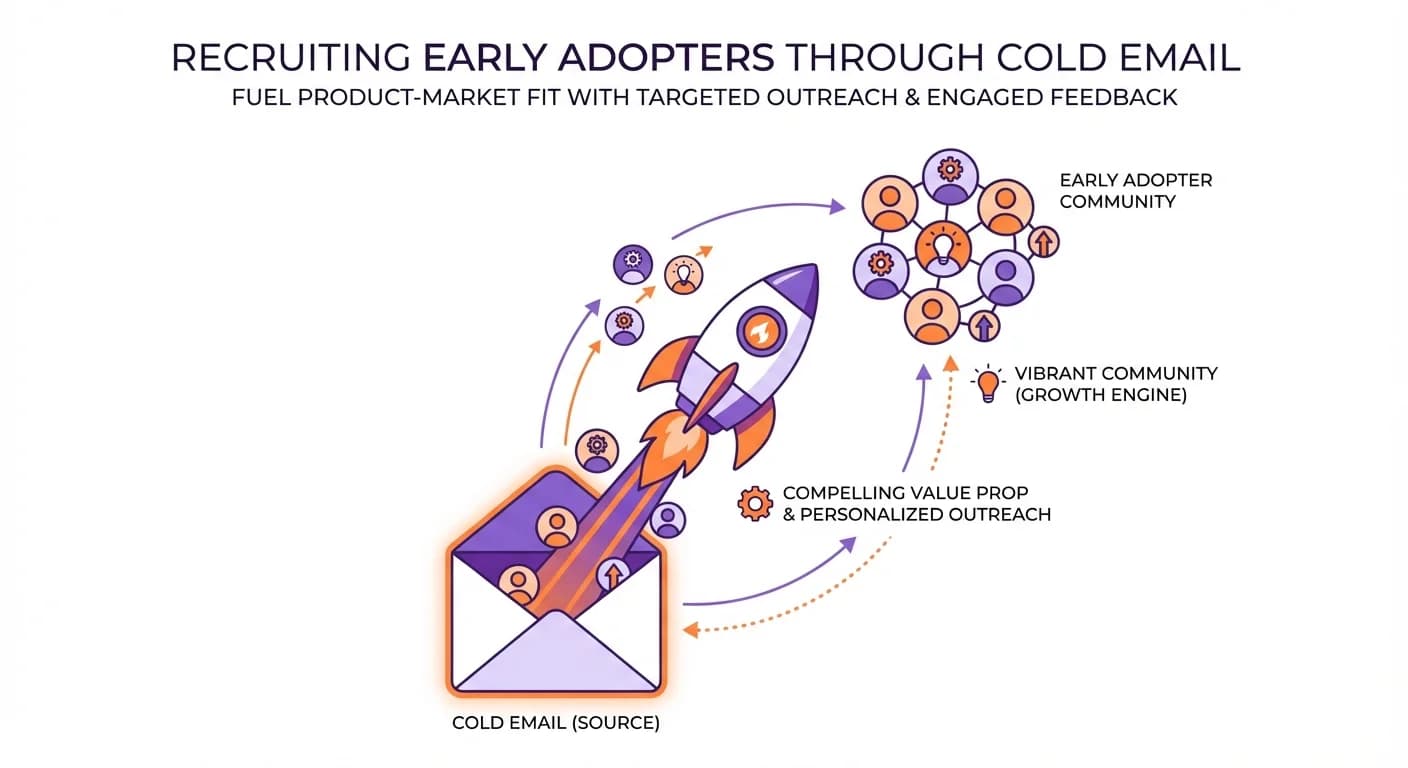
Cold email enables direct outreach to individuals matching your ideal early adopter profile, offering faster validation than passive discovery. Target people who actively experience your problem, seek solutions, tolerate imperfect products, and will provide feedback. A developer tools startup recruited 127 early adopters through targeted cold email to engineering leaders before their public launch, validating product-market fit and securing seed funding.
Key takeaways
- A developer tools startup recruited 127 early adopters through targeted cold email before public launch, which shaped their product and helped them raise their seed round.
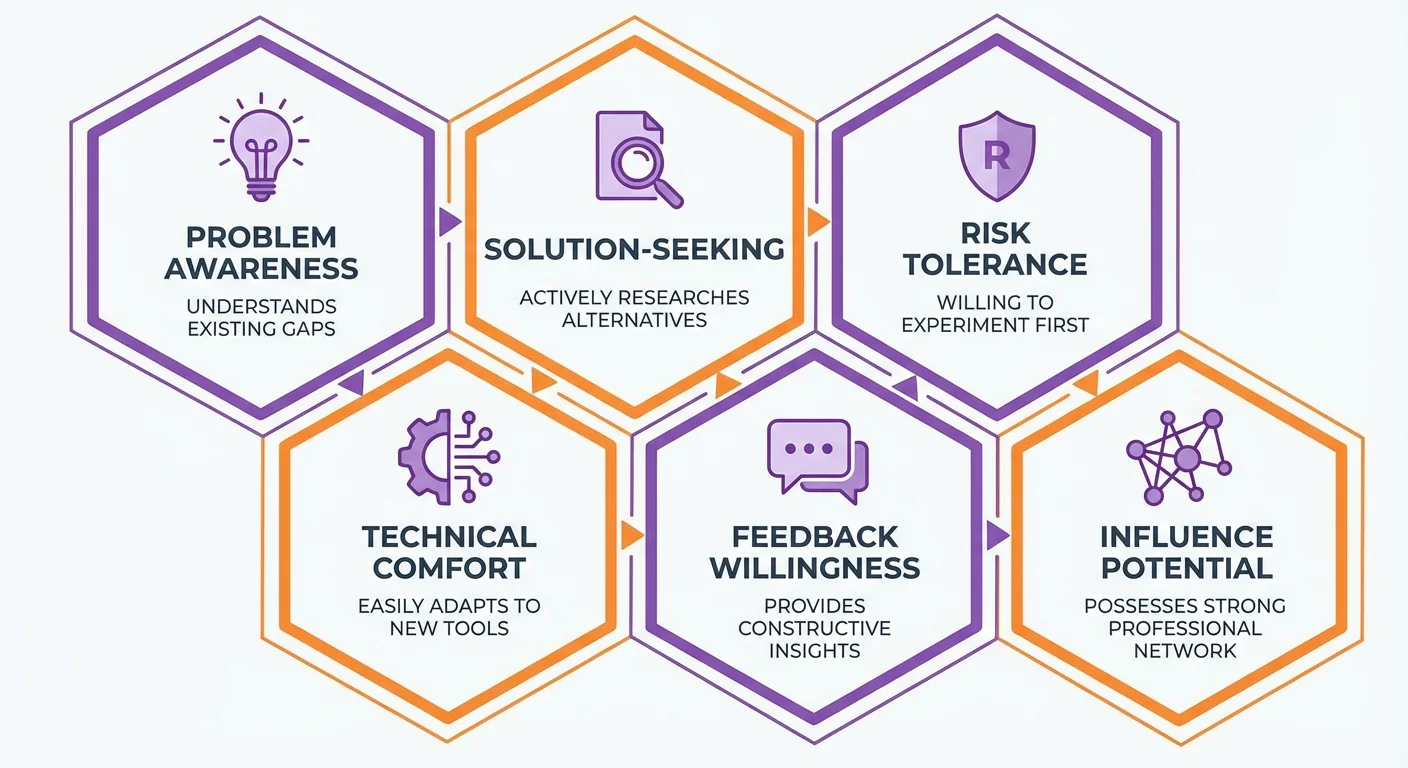
- Effective early adopters share six key traits: problem awareness, solution-seeking behavior, risk tolerance, technical comfort, feedback willingness, and influence potential.
- Cold email provides profile precision, allowing you to contact specific individuals matching early adopter characteristics rather than accepting whoever discovers you passively.
- Early adopter archetypes include innovators, visionaries, pragmatists with pressing problems, frustrated power users, and industry insiders.
- Successful early adopter recruitment requires defining detailed criteria including problem fit, context requirements, technology indicators, and behavior signals before initiating outreach.
Reviewed and updated September 15, 2026
Cold Email for Early Adopters: Complete Strategy Guide
Early adopters can make or break a product launch. These initial users provide critical feedback, generate word-of-mouth momentum, validate product-market fit, and create the foundation for sustainable growth. Yet finding them presents a significant challenge. Early adopters do not announce themselves, and they rarely respond to generic marketing. Cold email provides the precision and personalization needed to identify, reach, and recruit the ideal first users for your product.
A developer tools startup spent months building a code review platform but had no users waiting when they finished. Their team lacked industry connections, and their marketing efforts reached general developers rather than the tech leads and engineering managers who would actually adopt new tools. Through targeted cold email outreach to engineering leaders at companies facing the exact problems their tool solved, they recruited 127 early adopters before public launch. Those early users shaped the product, generated case studies, and provided the reference customers needed to raise their seed round.
Why Cold Email Works for Early Adopter Recruitment
Traditional early adopter strategies have significant limitations. Posting on Product Hunt attracts browsing enthusiasts rather than committed users. Relying on personal networks limits reach to existing contacts. Waiting for organic discovery delays validation and burns runway. Cold email eliminates these constraints by enabling direct outreach to specific individuals who match your ideal early adopter profile.
The Strategic Advantage of Targeted Early Adopter Outreach
Cold email for early adopter recruitment offers several distinct benefits:
Profile precision: You can identify and contact individuals who match specific characteristics that define your ideal first users, rather than accepting whoever discovers you through passive channels.
Problem validation: Reaching people who experience the problem you solve validates that your target market actually exists and cares about solutions.
Feedback quality: Early adopters recruited through personal outreach feel more connected to your mission and provide more thoughtful feedback than anonymous signups.
Speed: Direct outreach accelerates user acquisition compared to waiting for organic discovery or content marketing to compound.
Relationship foundation: Personal recruitment creates relationships that extend beyond product usage to advice, referrals, and ongoing engagement.
Characteristics of Ideal Early Adopters
Early adopters differ from mainstream users in important ways. Understanding these differences helps you identify and recruit the right first users.
What Makes Effective Early Adopters
The best early adopters share certain characteristics:
Problem awareness: They actively experience and acknowledge the problem your product solves. Problem-aware users evaluate solutions more seriously than those who need convincing the problem exists.
Solution-seeking behavior: They are actively looking for better solutions, not satisfied with status quo approaches. This motivation drives engagement and feedback.
Risk tolerance: They accept that early-stage products have rough edges. They can tolerate bugs, missing features, and evolving interfaces in exchange for early access.
Technical comfort: For most products, early adopters need sufficient technical ability to navigate imperfect experiences. They can work around limitations and communicate issues clearly.
Feedback willingness: They want to share their experiences, identify problems, and suggest improvements. Engaged early adopters become active participants in product development.
Influence potential: The best early adopters have networks or platforms that amplify their recommendations. Their adoption can drive additional users.
Conversion likelihood: While feedback matters, early adopters who can become paying customers provide more actionable validation than those who would never pay.
Paying customers who emerge from this early adopter group later become strong candidates for structured outreach, a topic covered in cold email testimonial collection strategies.
Early Adopter Archetypes
Different products attract different early adopter types:
Innovators: Technology enthusiasts who try new products for the novelty itself. They provide early feedback but may not represent mainstream users.
Visionaries: Strategic thinkers who see how new solutions enable competitive advantage. They become champions and reference customers.
Pragmatists with pressing problems: Mainstream users pushed to seek solutions by urgent pain. They provide perspective on mainstream adoption barriers.
Frustrated power users: Heavy users of incumbent solutions who have hit limitations. They understand the problem space deeply.
Industry insiders: People with deep domain knowledge who can evaluate solutions against real-world requirements.
Finding and Targeting Early Adopters
Success with early adopter recruitment depends on reaching the right people. Generic outreach to broad audiences yields poor results. Targeted outreach to qualified prospects generates engaged first users.
A companion guide on recruiting beta testers walks through building a targeted prospect list and personalizing outreach based on relevance signals like problem awareness and influence potential.
Defining Your Ideal Early Adopter Profile
Before initiating outreach, establish detailed criteria for your ideal early adopters:
- Yes: Problem fit: What specific problem must they experience?
- Yes: Context requirements: What company size, industry, role, or situation makes them ideal?
- Yes: Technology indicators: What tools, platforms, or technologies suggest they would value your product?
- Yes: Behavior signals: What public behaviors indicate early adopter tendencies?
- Yes: Access and authority: Can they actually adopt your product?
Problem fit: What specific problem must they experience? How can you identify that they face this problem?
Context requirements: What company size, industry, role, or situation makes them ideal? These filters narrow targeting.
Technology indicators: What tools, platforms, or technologies suggest they would value your product?
Behavior signals: What public behaviors indicate early adopter tendencies? Content creation, community participation, product reviews?
Access and authority: Can they actually adopt your product? Do they have decision-making ability or require approval?
Where to Find Early Adopter Candidates
Identify potential early adopters through multiple channels:
Community participation: Active participants in relevant communities (Slack groups, Discord servers, forums, subreddits) demonstrate engagement and opinion willingness.
Content creation: People who write, speak, or create content about your problem domain have demonstrated expertise and communication ability.
Product reviews: Reviewers on G2, Capterra, Product Hunt, and similar platforms have shown willingness to try and evaluate new tools.
Conference speakers: Speaking on relevant topics indicates expertise and industry engagement.
Social media activity: Active discussion of relevant topics on Twitter/X, LinkedIn, or industry platforms signals interest.
Job postings: Companies hiring for roles your product serves may be experiencing growing pains that create opportunity.
Funding announcements: Recently funded companies often adopt new tools as they scale. Growth creates urgency.
Technology usage signals: Use of complementary or competing technologies indicates relevant context.
Building Your Early Adopter Prospect List
Compile comprehensive information for each potential early adopter:
- Full name, title, and company
- Email address and alternative contacts
- Problem fit indicators (how you know they experience the problem)
- Technology context (what tools they use)
- Engagement signals (community activity, content creation)
- Personalization opportunities (recent content, shared connections)
- Influence factors (audience, network, reputation)
Prioritize your list by fit quality and accessibility likelihood. Begin with prospects most likely to engage and expand from there.
What to Offer Early Adopters
Early adopters invest their time, attention, and credibility in unproven products. Your offer must provide sufficient value to justify this investment and differentiate you from the constant stream of new tools seeking their attention.
Value Propositions That Attract Early Adopters
Different early adopters respond to different incentives:
Free or discounted access: The most common early adopter incentive. Consider free beta access, extended trials, lifetime discounts, or founder pricing.
Exclusive features: Access to features that will be premium or limited after launch creates genuine scarcity value.
Product influence: Early adopters often value direct input on product direction. Offer regular feedback sessions, feature voting, or direct founder access.
Early competitive advantage: For B2B products, early access to effective tools provides advantage over slower-moving competitors.
Recognition: Founding member status, public acknowledgment, or visible participation appeals to users who value association with new innovations.
Community access: Connection to other early adopters creates networking value independent of the product itself.
Results and outcomes: If your product delivers measurable results, early access to those outcomes provides immediate value.
Structuring Your Early Adopter Offer
Your outreach should clearly communicate:
- What access they receive (features, timeline, pricing)
- What you expect from them (feedback, testing activities)
- How the beta or early access period works
- What happens when general availability arrives
- How they can provide input on product direction
- Any exclusive benefits for early participation
Specificity builds trust. Vague promises attract casual curiosity rather than committed early adopters.
What Works: Early Adopter Email Best Practices
Effective early adopter outreach combines authentic enthusiasm with clear communication. Your emails should convey genuine belief in your product while respecting recipient intelligence and time.
Subject Line Principles
Your subject line determines whether prospects open your email:
- Reference the specific problem you solve
- Mention early access or exclusive opportunity
- Create curiosity without clickbait tactics
- Keep it conversational rather than promotional
Examples that perform well:
- "Early access: [product category] for [role/use case]"
- "Building something for [problem/audience]"
- "Thoughts on [problem area]?"
- "[Mutual connection/community] suggested I reach out"
Email Body Structure
Structure your early adopter recruitment emails with these elements:
Connection establishment: Open with something that demonstrates why you are contacting them specifically. Reference their work, content, company, or community presence.
Deciding how to open that message becomes easier after seeing how reaching out for guidance from experienced professionals uses the same personalized connection approach to earn a reply.
Problem articulation: Describe the problem you are solving in terms that resonate with their experience. Validate that you understand their world.
Solution introduction: Explain what you built and how it addresses the problem. Focus on outcomes rather than features.
Why them: Articulate why you want this particular person as an early user. Be specific about what makes them ideal.
Clear offer: State exactly what early adopters receive and what you expect from them.
Simple ask: Make the next step easy. A brief reply indicating interest is easier than immediately committing to extensive participation.
Tone and Voice Guidelines
Early adopter emails succeed when they feel like founder-to-user communication:
- Write with genuine enthusiasm for what you are building
- Be honest about where the product is in development
- Acknowledge that you need their help and expertise
- Avoid marketing jargon and corporate speak
- Sound like a real person excited about solving a real problem
Early Adopter Recruitment Email Templates
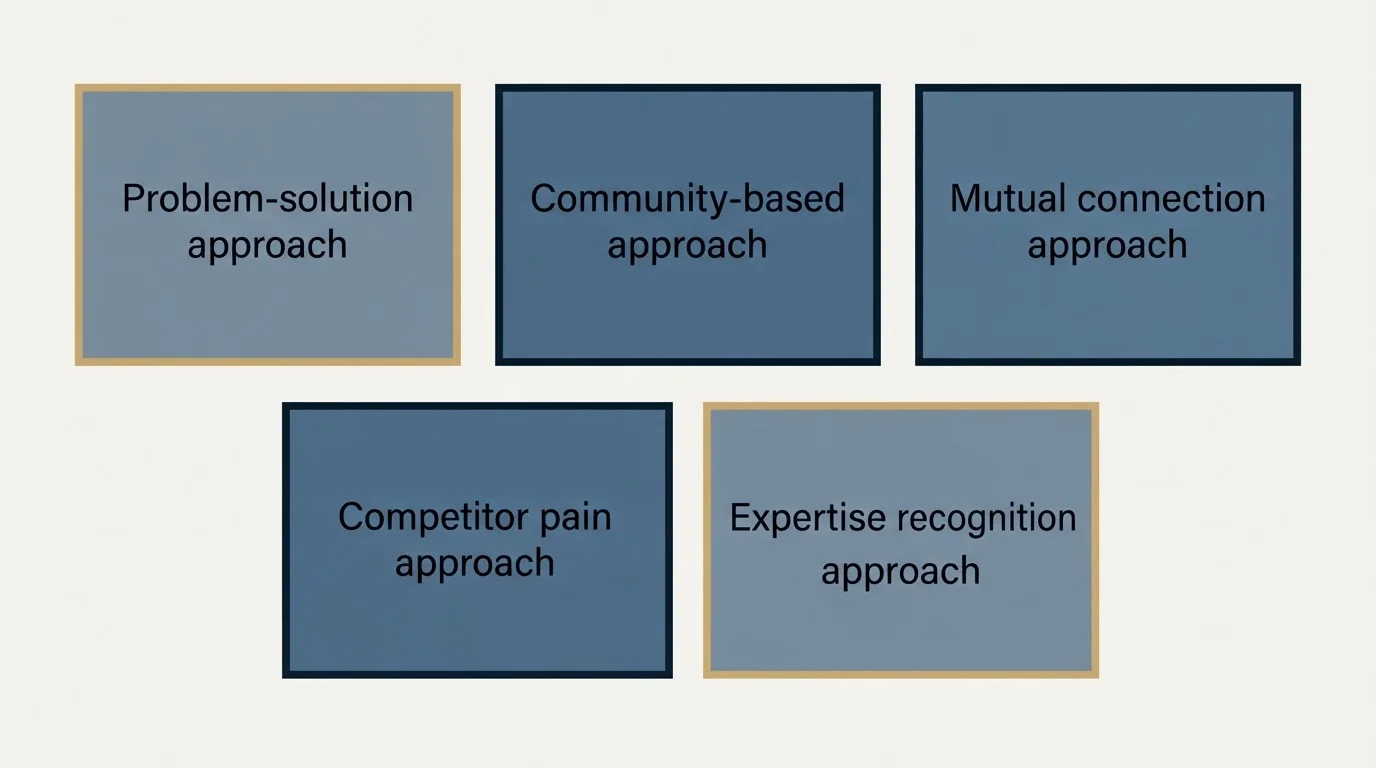
The following templates demonstrate effective approaches for recruiting early adopters. Customize these frameworks with specific details about your product and target users.
Template 1: The Problem-Solution Approach
Subject: Early access: [Product category] for [target user]
Body:
Hi [First Name],
I noticed your work on [specific reference to their work/content/company]. The way you approach [relevant topic] suggests you might understand a problem I have been obsessed with solving.
[Brief description of the problem, 2-3 sentences max]
I have been building [Product Name] to address this. We [brief description of solution and key differentiator].
We are looking for a small group of [role/type] professionals to be our first users. Given your experience with [relevant area], I think you would be an ideal early adopter.
For early users:
- Full access during our private beta (no cost)
- [Specific pricing or access benefit] locked in for life
- Direct line to me for feedback and feature requests
- Input on our product roadmap
Would you be interested in taking an early look? Happy to share a demo or just answer questions about what we are building.
[Your Name] Founder, [Product Name]
Template 2: The Community-Based Approach
Subject: [Community/Industry] tool in early access
Body:
Hi [First Name],
I have been following your contributions in [community/forum/group]. Your perspective on [topic they discussed] aligned closely with problems I have been thinking about.
I am building [Product Name], a [brief description] for [target user type]. We are in early development and looking for people who understand the space deeply to be our first users.
Based on your [specific reference to their expertise or experience], you would be exactly the kind of user whose feedback would be most valuable.
Early adopters get:
- Free access through our private beta
- [Ongoing benefit like founder pricing or lifetime discount]
- Direct input on features and priorities
- Weekly updates on what we are shipping
We are keeping the group small (around [number] users) to ensure we can incorporate everyone's feedback meaningfully.
Interested?
[Your Name]
Template 3: The Mutual Connection Approach
Subject: [Connection Name] thought you'd want to see this
Body:
Hi [First Name],
[Connection Name] suggested I reach out. They mentioned you have been dealing with [specific problem] at [Company], which is exactly what we built [Product Name] to solve.
Quick context: [Product Name] is [brief description]. We are in early access with about [number] users, mostly [user types].
[Connection] thought you would be both a great fit for the product and the kind of user whose feedback we need as we develop further.
Early users receive:
- Full product access (free during beta)
- [Specific ongoing benefit]
- Direct access to our team for feedback and questions
Would you be interested in checking it out? I can send you access credentials, or we could do a quick walkthrough if you prefer.
[Your Name]
Template 4: The Competitor Pain Point Approach
Subject: Building an alternative to [Competitor]
Body:
Hi [First Name],
I noticed [Company] uses [Competitor Product]. If your experience is anything like what I have heard from others, you might be frustrated with [specific known limitation or complaint about competitor].
I am building [Product Name] as an alternative that specifically addresses [pain point]. We [key differentiator from competitor].
We are in early access and looking for users who understand [competitor] well to help us build something genuinely better. Your experience with [relevant aspect] would make your feedback particularly valuable.
For early adopters:
- Free access during our development phase
- [Specific pricing benefit versus competitor]
- Migration support if you decide to switch
- Input on features that would make [Product Name] work for your use case
Would you be interested in taking a look? No commitment required, just curious if what we are building resonates with your experience.
[Your Name]
Template 5: The Expertise Recognition Approach
Subject: Your [specific expertise] + our beta
Body:
Hi [First Name],
Your work on [specific project, content, or contribution] caught my attention. You clearly understand [relevant domain] at a level most people do not reach.
I am building [Product Name], which [brief description]. We are at an early stage where feedback from people with real expertise matters enormously.
Honestly, most of our current users are [type], but we need input from people like you who [specific expertise value]. Your perspective would help ensure we build something that works for sophisticated users, not just beginners.
For expert early adopters:
- Full access during development (no cost)
- [Specific benefit]
- Direct influence on product direction
- Credit in our documentation if desired
Would you have interest in being one of our expert early users?
[Your Name]
When A Recruitment Email Goes Unanswered
People who match an early adopter profile are pitched constantly, so silence is the default outcome and it is rarely a judgment on your product. Usually the email read like every other beta invitation, or it arrived in a week where trying an unfinished tool was not going to happen.
Do not chase it. A second message in the same thread reads as a bump, and this is the wrong audience to spend goodwill on: you will want to email these people again at launch, at your next launch, and when you raise. Send one recruitment email, then earn the next one.
What To Do Instead
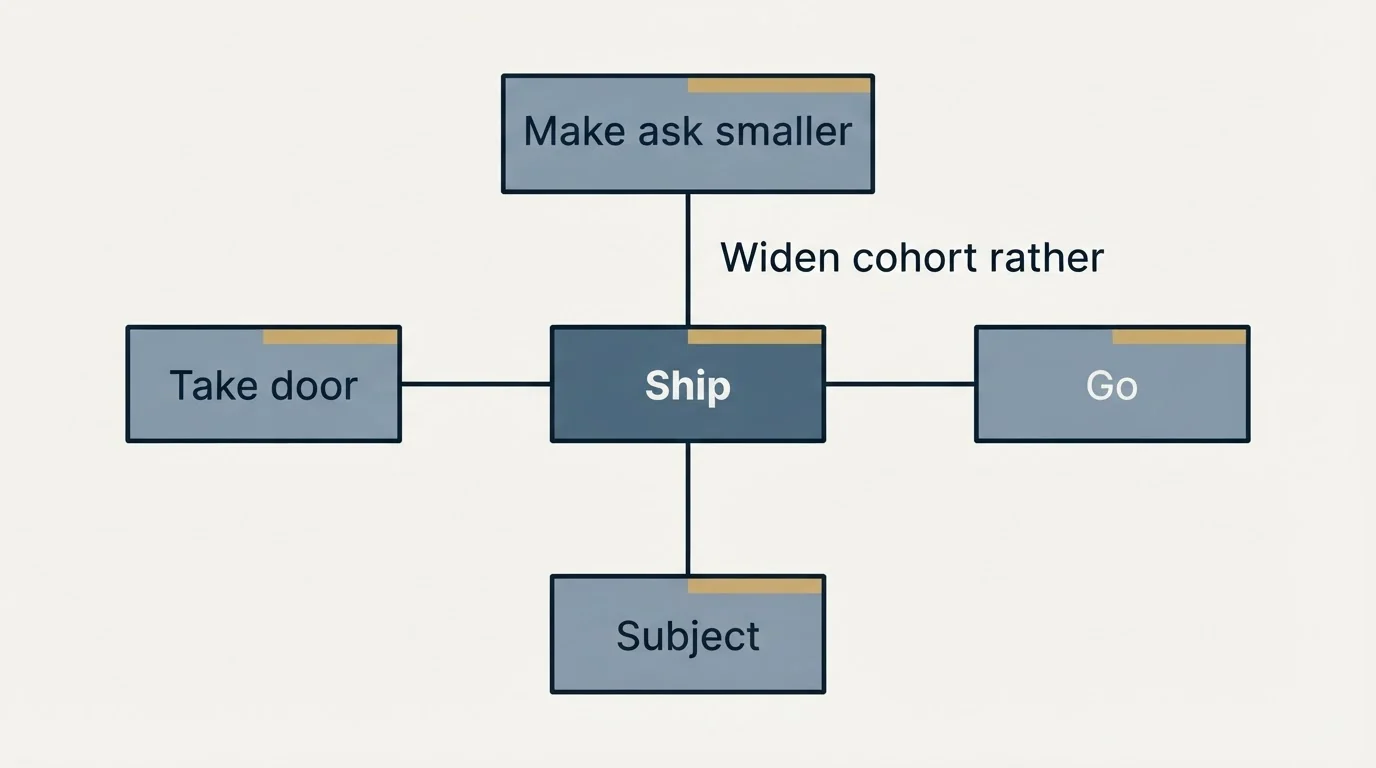
Ship something, and let that be the next email. This is the strongest move available to a founder and it has no equivalent in any other outreach type. "We built [thing] because people in [their world] kept hitting [problem]" is a message with news in it, sent to someone who never has to know you wrote to them before. Every release gives you a fresh, honest reason to write.
Make the ask smaller. Adopting an unproven product is a large commitment. Fifteen minutes talking about the problem is not, and most people who will not install anything will happily explain their workflow. Those conversations are what the beta was for anyway, and someone who gives you one becomes a warm contact for the launch email.
Widen the cohort rather than working the same names. Early access is a numbers exercise at the top: a hundred well-chosen people approached once will fill a beta faster than thirty approached three times, and it costs less of your reputation in a small community where people talk.
Go where they are already talking, on your own merits. Answer questions in the community, publish what you have learned, contribute something useful. Do that because you have something to say, never as a way to nudge someone who ignored an email. Following the same person across channels with the same ask is still the same ask.
Take the door when it opens. "Ping me when it is out of beta", a reply from a colleague, a public "I'd try this" post. Put the date in the calendar and treat the launch note as its own campaign with its own subject line.
Re-Approach Example
A later approach is a new first message: its own subject line, its own news, no reference to the email that went unanswered.
Subject: We built [specific capability] for [their problem]
Hi [First Name],
Short version: [Product Name] now does [specific capability], which we built because [type of user] kept running into [specific problem]. Given [specific reference to their work, stack, or public post], you are one of the few people who would immediately see whether we got it right.
It takes [realistic setup time] to try, it is free while we are in beta, and the honest answer is that [known rough edge] is still rough.
Want access? Reply and I will send credentials. If you would rather just tell me where we are wrong, fifteen minutes on a call is worth more to us than a signup.
[Your Name] Founder, [Product Name]
Engaging and Retaining Early Adopters
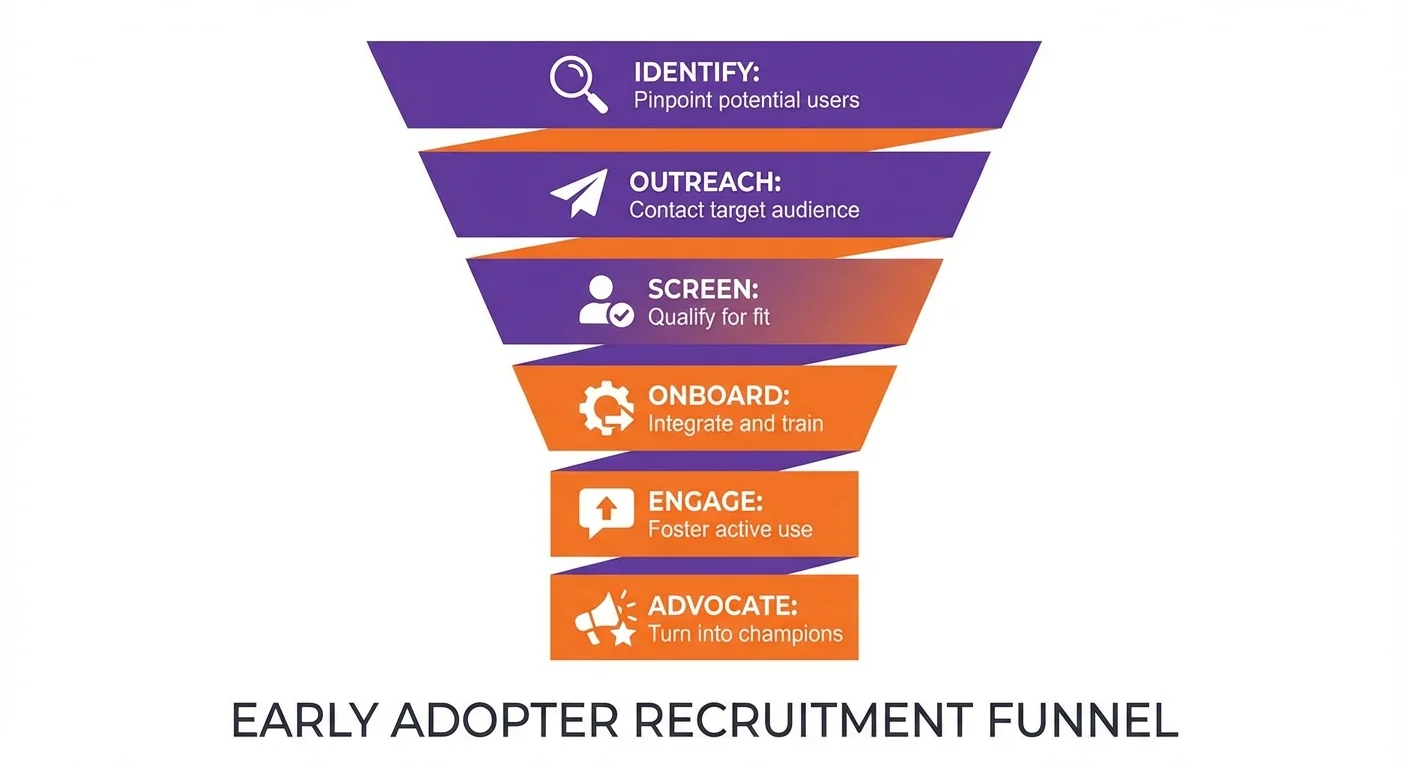
Recruiting early adopters is only the beginning. Keeping them engaged and maximizing feedback value requires ongoing attention.
Onboarding Early Adopters Effectively
Set early adopters up for success:
- Provide clear getting-started guidance
- Offer direct support for initial setup
- Set expectations about current product state
- Explain how to provide feedback
- Introduce them to the community if applicable
Maintaining Engagement
Keep early adopters active and contributing:
- Send regular product updates
- Acknowledge and respond to all feedback
- Show how their input influences decisions
- Recognize contributions publicly (with permission)
- Create exclusive channels for early adopter communication
- Provide advance notice of new features
Converting Early Adopters to Advocates
Transform engaged early adopters into active promoters:
- Ask for testimonials and case studies
- Request reviews on relevant platforms
- Encourage referrals with incentives
- Feature their success stories
- Invite them to speak about their experience
Common Mistakes to Avoid
Early adopter recruitment fails for predictable reasons. Avoiding these errors improves both recruitment success and early adopter value.
Targeting Too Broadly
Generic outreach to broad audiences attracts low-quality users. Tight targeting produces engaged early adopters.
Overpromising Product Readiness
Setting expectations that early-stage products cannot meet leads to disappointment and churn. Be honest about current limitations.
Undervaluing Feedback
Collecting feedback without acting on it or communicating outcomes discourages ongoing engagement. Close the loop consistently.
Ignoring Engagement Quality
Counting signups rather than measuring actual usage and feedback leads to inflated early adopter numbers without genuine validation.
Neglecting Relationship Building
Treating early adopters as data points rather than partners misses their full value. Invest in personal relationships.
Moving Too Slowly
Early adopter enthusiasm has a half-life. Ship improvements quickly and maintain momentum.
Your Early Adopter Recruitment Checklist
Before launching your early adopter campaign, confirm completion of these steps:
Strategy Preparation
- Defined ideal early adopter profile with specific criteria
- Established target number and composition of early adopters
- Created early adopter value proposition and offers
- Planned onboarding and engagement approach
Prospect Identification
- Built prospect list of qualified early adopter candidates
- Gathered personalization details for each prospect
- Prioritized list by fit quality and accessibility
- Segmented by relevant criteria if applicable
Outreach Preparation
- Written customized email templates
- Set up tracking for outreach and responses
- Prepared quick-reply templates for common responses
Post-Recruitment Preparation
- Created onboarding materials and process
- Established feedback collection mechanisms
- Set up communication channels for early adopters
- Planned engagement cadence and content
Build Your Early Adopter Community
Recruiting early adopters through cold email provides the foundation for successful product launches. The ability to reach specific individuals who match your ideal early user profile accelerates validation, improves product quality, and creates relationships that extend into sustained growth.
The strategies, templates, and frameworks in this guide provide everything needed to build a high-quality early adopter cohort that shapes your product and drives initial traction.
Ready to recruit your first users? Our team specializes in cold email campaigns that connect you with ideal early adopters. Get your free early adopter campaign and start building the user base that transforms your launch.
Frequently asked questions.
Frequently asked questions- Why is cold email better than Product Hunt for recruiting early adopters?
- Cold email enables you to reach specific individuals who match your ideal early adopter profile, while Product Hunt attracts browsing enthusiasts rather than committed users. Direct outreach validates that your target market exists and cares about solutions, accelerates user acquisition compared to organic discovery, and creates personal relationships that extend beyond product usage to advice and referrals.
- What makes someone a good early adopter for a new product?
- Good early adopters actively experience the problem your product solves, are seeking better solutions, tolerate bugs and missing features, have sufficient technical ability to navigate imperfect experiences, want to share feedback and suggest improvements, have networks that amplify their recommendations, and can eventually become paying customers. These traits ensure engaged participation in product development.
- How do I find the right early adopters to contact?
- Define detailed criteria for ideal early adopters before outreach, including the specific problem they must experience, company size and industry context, technology indicators like tools they use, and public behavior signals such as content creation or community participation. This targeting precision ensures you reach qualified prospects rather than generic audiences, generating more engaged first users.
- What should I offer early adopters in exchange for their participation?
- The article discusses value propositions and structuring offers in dedicated sections. Effective offers balance early access, involvement in shaping the product, recognition for their contribution, and solving their specific problem. The key is making early adopters feel connected to your mission rather than treating them as anonymous signups.
About the author.

Ben Carden is CRO at RevenueFlow, which builds and operates outbound revenue engines for B2B companies. Previously at Gartner Enterprise. Studied at London School of Economics.
Ben Carden · CRO
Connect on LinkedIn →Explore more.
Ready to scale your outreach?
We build GTM engines that book real meetings. See the receipts.
Related articles.
Cold Email for Beta Testers: How to Recruit Early Users
Learn how to use cold email to recruit beta testers for your product launch. Includes proven templates, targeting strategies, and incentive frameworks that attract engaged early adopters.
Cold Email for Influencer Outreach: Partner with Creators
Learn how to use cold email to build authentic influencer partnerships that drive real results for your brand, with proven templates and strategies.
Cold Email for Product Feedback: Complete Strategy Guide
Learn how to use cold email to gather valuable product feedback from users and prospects. Includes proven templates, feedback frameworks, and response optimization techniques.
Cold Email for PR: How to Pitch Journalists and Get Coverage
Learn how to craft cold emails that get journalists to open, read, and respond to your pitches. Includes real templates, timing strategies, and a complete PR outreach checklist.
Cold Email for Reviews: Complete Strategy Guide
Learn how to use cold email to generate authentic product reviews on G2, Capterra, and other platforms. Includes proven templates, compliance guidelines, and review generation frameworks.
Cold Email for Link Building: How to Get Quality Backlinks
Learn how to use cold email outreach to build high-quality backlinks that improve your SEO rankings, with proven templates and strategies that get responses.