Cold Email for Electronics Companies: The Complete Guide
A comprehensive guide to cold email outreach for electronics manufacturers, component suppliers, and EMS providers, covering buyer personas, OEM relationships, contract manufacturing, and proven strategies for reaching engineers, procurement managers, and supply chain leaders.
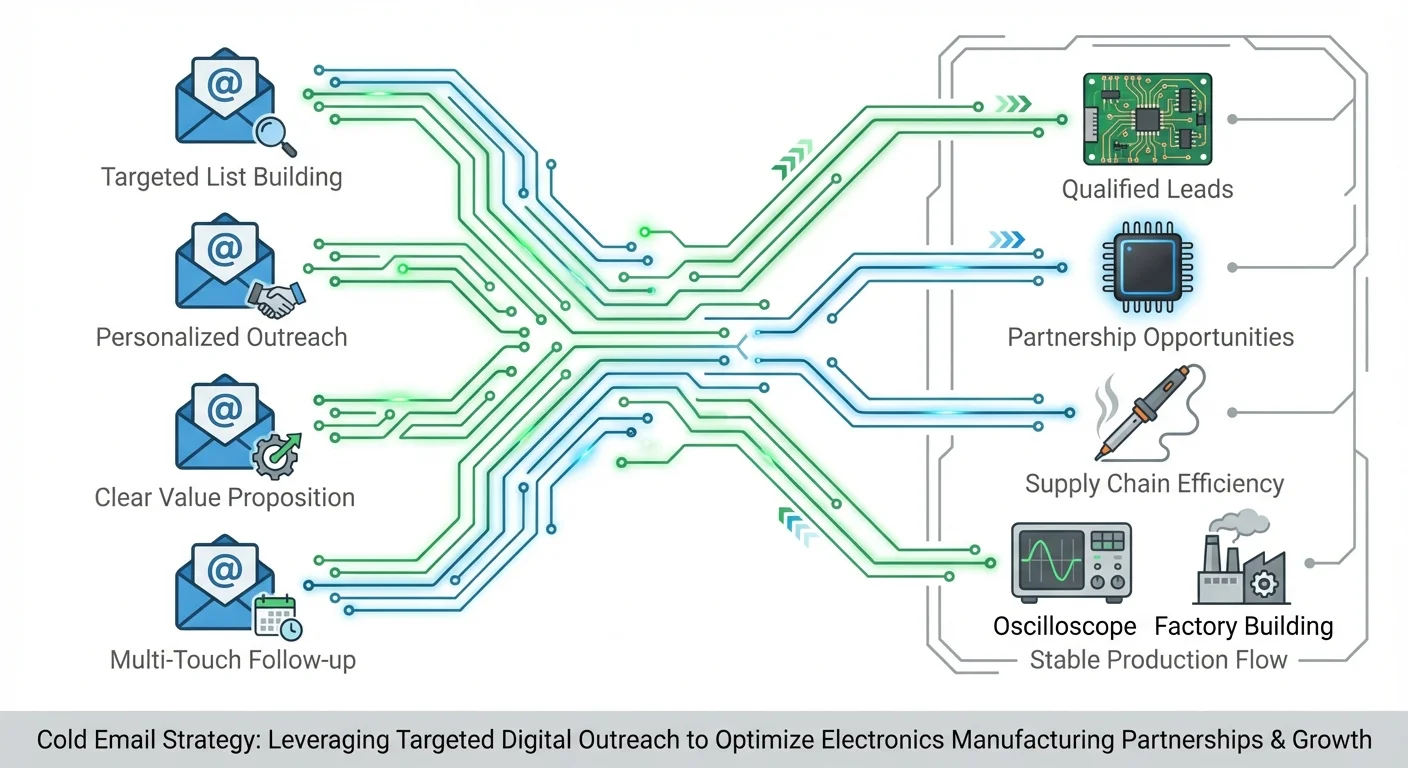
Cold email works for electronics companies because continuous new product development creates ongoing supplier evaluation opportunities, supply chain resilience has become strategic priority driving secondary supplier qualification, technology evolution creates capability gaps requiring advanced suppliers, and regionalization drives geographic diversification. The $3 trillion global electronics industry involves multiple stakeholders: design engineers prioritizing technical specifications, procurement managers evaluating total cost and reliability, quality engineers ensuring certifications and process control, and supply chain leaders managing capacity and continuity.
Key takeaways
- The global electronics industry generates over $3 trillion in annual revenue across consumer devices, industrial equipment, automotive systems, and medical electronics.
- Electronics purchasing decisions involve multiple stakeholders across engineering, procurement, quality, and supply chain functions, each bringing different priorities to supplier evaluation.
- Design engineers focus on technical specifications, design support capabilities, component availability, and documentation quality rather than primarily on cost.
- Procurement managers evaluate suppliers based on competitive pricing, delivery performance, capacity availability, financial stability, and quality certifications including ISO, IATF, and AS9100.
- Supply chain resilience has become a strategic imperative, with OEMs actively qualifying secondary and tertiary suppliers to reduce single-source dependencies even when primary suppliers perform adequately.
Reviewed and updated September 15, 2026
Cold Email for Electronics Companies: The Complete Guide
The global electronics industry generates over $3 trillion in annual revenue, spanning consumer devices, industrial equipment, automotive systems, medical electronics, and countless specialized applications. For electronics companies seeking growth, cold email provides direct access to OEMs, contract manufacturers, and distributors who continuously evaluate suppliers based on technical capability, quality, cost, and supply chain reliability.
The cold email guide for textile companies explains how sourcing managers and sustainability directors evaluate new suppliers during seasonal cycles.
Electronics purchasing decisions involve multiple stakeholders across engineering, procurement, quality, and supply chain functions. Each stakeholder brings different priorities to supplier evaluation. Engineers focus on technical capability and design support. Procurement evaluates cost and commercial terms. Quality ensures manufacturing processes meet standards. Understanding these dynamics and crafting messages that resonate with specific buyer needs distinguishes effective cold email from generic outreach.
This guide covers everything electronics companies need to know about cold email outreach, from identifying high-value prospects to crafting messages that open technical discussions and develop into production partnerships.
Why Cold Email Works for Electronics Companies
The electronics industry operates through technical relationships where capability, quality, and reliability determine supplier selection. While established relationships create barriers, cold email creates opportunities to reach decision-makers during evaluation periods and position for new business.
Several factors make cold email effective for electronics suppliers:
New product development creates continuous opportunities. Electronics companies constantly develop new products requiring new components, capabilities, and manufacturing partners. Each new design represents a fresh evaluation where suppliers compete on technical merit.
Supply chain resilience has become a strategic imperative. Concentrated supply chains have proven fragile. OEMs actively qualify secondary and tertiary suppliers to reduce single-source dependencies, creating opportunities even when primary suppliers perform adequately.
Technology evolution creates capability gaps. Evolving technology requirements (miniaturization, power efficiency, connectivity) create demand for suppliers with advanced capabilities. Cold email allows companies with leading-edge capabilities to reach buyers who need precisely what they offer.
Regionalization drives supplier evaluation. Geopolitical concerns and supply chain disruptions drive demand for regional manufacturing alternatives. Cold email allows electronics companies to reach buyers actively seeking geographic diversification.
Understanding Electronics Buyers: Who Makes the Decisions

Electronics purchasing involves multiple stakeholders with distinct priorities. Effective cold email campaigns target appropriate personas with messages addressing their specific concerns.
Design Engineers and Engineering Managers
Engineering professionals specify components and capabilities for new product development. Their selections determine which suppliers receive consideration during procurement evaluation. Engineers focus on whether capabilities meet technical requirements.
What they care about: Technical specifications, design support capabilities, component availability, documentation quality, and engineering responsiveness. Engineers evaluate whether suppliers can support their design requirements, not primarily on cost.
How to reach them: Engineering decision-makers respond to technical capability demonstrations. References to specific technologies, performance data, application support, and design resources establish technical credibility.
Email timing: Engineers engage most actively during new product development. Monitoring company announcements for new product initiatives, technology investments, or engineering hiring can inform timing.
Strategic Sourcing and Procurement Managers
Procurement professionals manage supplier relationships, negotiate pricing, and ensure supply continuity. They evaluate suppliers based on total cost, quality performance, delivery reliability, and risk factors.
What they care about: Competitive pricing, payment terms, delivery performance, capacity availability, financial stability, and quality certifications. Procurement evaluates total value including quality costs, inventory requirements, and risk mitigation.
How to reach them: Procurement responds to commercially focused messaging. Information about certifications (ISO, IATF, AS9100), capacity, lead times, and pricing structures opens commercial discussions.
Email timing: Procurement operates on contract cycles and annual planning periods. Understanding when existing agreements expire and when supplier reviews occur improves timing.
Supplier Quality Engineers and Quality Managers
Quality professionals ensure suppliers meet quality system requirements and maintain consistent output. In regulated industries (automotive, aerospace, medical), quality approval gates supplier qualification.
What they care about: Quality certifications (ISO 9001, IATF 16949, AS9100, ISO 13485), statistical process control capabilities, traceability systems, inspection documentation, and corrective action processes.
How to reach them: Quality professionals respond to quality system capability demonstrations. References to relevant certifications, measurement capabilities, and process controls establish qualification baseline.
Email timing: Quality becomes involved during supplier qualification and after quality issues. Initial outreach during stable periods should establish capability for future qualification consideration.
Supply Chain and Operations Leaders
Supply chain professionals manage material flow, inventory, and logistics. They evaluate suppliers based on delivery reliability, lead time flexibility, and ability to support production requirements.
Cold email for appliance companies breaks down buyer personas like retail buyers, builder purchasing directors, property managers, and commercial buyers who each weigh different purchasing priorities.
What they care about: On-time delivery performance, lead time management, inventory programs (VMI, consignment), logistics capabilities, and responsiveness to demand changes.
How to reach them: Supply chain responds to reliability-focused messaging. Delivery performance data, lead time options, and inventory management programs address their core concerns.
Email timing: Supply chain evaluates suppliers when facing delivery challenges, capacity constraints, or supply disruptions.
Industry-Specific Challenges in Electronics Cold Email
Cold email for electronics companies faces unique challenges requiring strategic responses.
Challenge 1: Technical Complexity and Specification Depth
Electronics purchasing involves detailed technical specifications that prospects need to evaluate before engaging commercially. Communicating capabilities through cold email without overwhelming recipients or appearing superficial requires balance.
Strategic response: Lead with capability categories and application experience rather than exhaustive specifications. Offer technical resources (datasheets, application notes, design guides) for detailed evaluation after establishing initial interest.
Practical application: Instead of listing every product specification, reference capability categories and offer detailed documentation. "High-speed PCB assembly including fine-pitch BGA, 01005 passives, and RF applications" positions capability without overwhelming detail.
Challenge 2: Long Qualification Cycles
New electronics suppliers typically undergo extensive qualification processes including documentation review, sample evaluation, first article inspection, and production validation. Qualification timelines of 6-18 months are common in automotive and aerospace.
Strategic response: Design campaigns for relationship building through extended qualification cycles. Recognize that cold email initiates a multi-month process rather than an immediate transaction.
Practical application: Set appropriate expectations against the qualification timelines typical for your target industries, and size the opportunity accordingly rather than assuming a fast close.
Challenge 3: Incumbent Relationships and Tooling Dependencies
Electronics manufacturing often involves supplier-specific tooling, programming, and process optimization. These investments create switching costs that discourage supplier changes even when alternatives offer advantages.
Strategic response: Target new programs where tooling decisions remain open. For existing programs, position for consideration during design revisions, capacity expansions, or quality issues that create natural transition points.
Practical application: Frame outreach around new program opportunities. Messages addressing new product development or capacity overflow face less resistance than requesting existing program transfers.
Challenge 4: Counterfeit Concerns and Supply Chain Integrity
The electronics industry faces significant counterfeit component risks. Buyers evaluate supplier practices for component authentication and supply chain integrity.
Strategic response: Demonstrate supply chain integrity practices and certifications. AS6081 counterfeit prevention certification, authorized distribution relationships, and traceability systems establish credibility.
Practical application: Reference supply chain integrity practices in your messaging. "Authorized distributor for [manufacturers] with AS6081-compliant counterfeit prevention program."
Challenge 5: Price Pressure and Global Competition
Electronics manufacturing faces intense global competition, with buyers evaluating options across multiple continents. Price pressure can compress margins and make differentiation difficult.
Strategic response: Focus on applications and buyer segments where your capabilities provide genuine differentiation. Technical complexity, quality requirements, regional presence, and service capabilities create value beyond lowest-cost competition.
Practical application: Target buyers who value your specific differentiators rather than competing purely on price.
What Works: Electronics Cold Email Best Practices
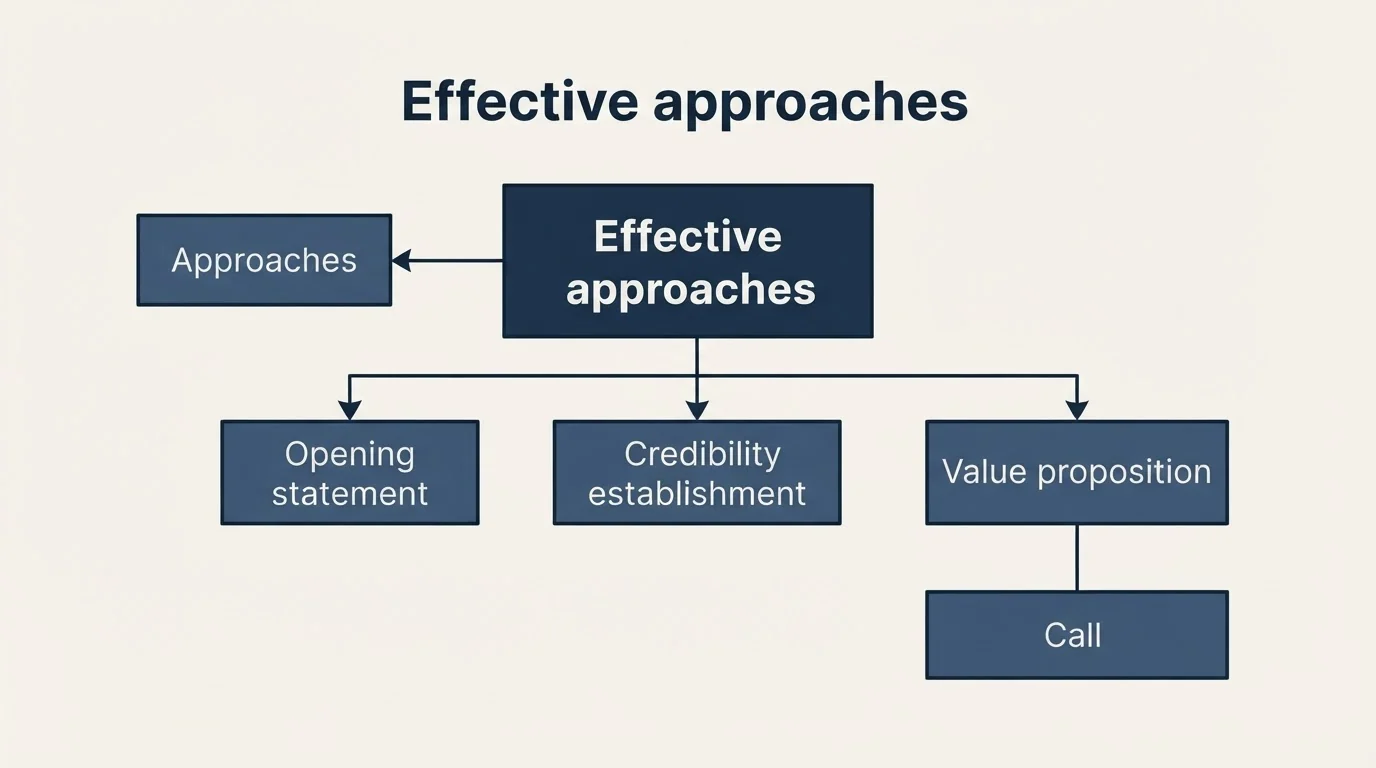
Effective cold emails for electronics companies combine technical credibility with proven email marketing principles.
Subject Lines That Get Opened
Electronics buyers receive substantial vendor outreach. Your subject line must immediately communicate relevance and technical capability.
Effective approaches:
- Reference specific capabilities: "Fine-pitch SMT assembly, 01005 capable, automotive certified"
- Highlight certifications: "IATF 16949 certified PCB assembly, North American capacity"
- Address supply chain concerns: "Domestic EMS capacity, component supply chain management"
- Mention application areas: "RF module assembly for IoT applications"
Approaches to avoid:
- Generic claims: "Quality electronics manufacturing"
- Price-focused openers: "Lowest cost EMS"
- Vague capabilities: "Full-service electronics partner"
- Irrelevant technical details
Email Copy That Converts
The body of your cold email must quickly establish technical credibility and provide a clear path to detailed evaluation.
Opening statement: Lead with a specific, relevant hook demonstrating understanding of the prospect's technology or market needs.
Credibility establishment: Within the first sentences, establish certifications, capabilities, and experience that merit serious consideration.
Value proposition: State what you offer in application-focused terms. Emphasize outcomes (design support, quality consistency, supply reliability) rather than equipment lists.
Call to action: Request an appropriate next step. For electronics, this often means discussing specific applications, providing capabilities presentations, or connecting engineering teams.
Signature: Include relevant certifications, capability summaries, and contact information.
Sample Cold Emails for Electronics Companies
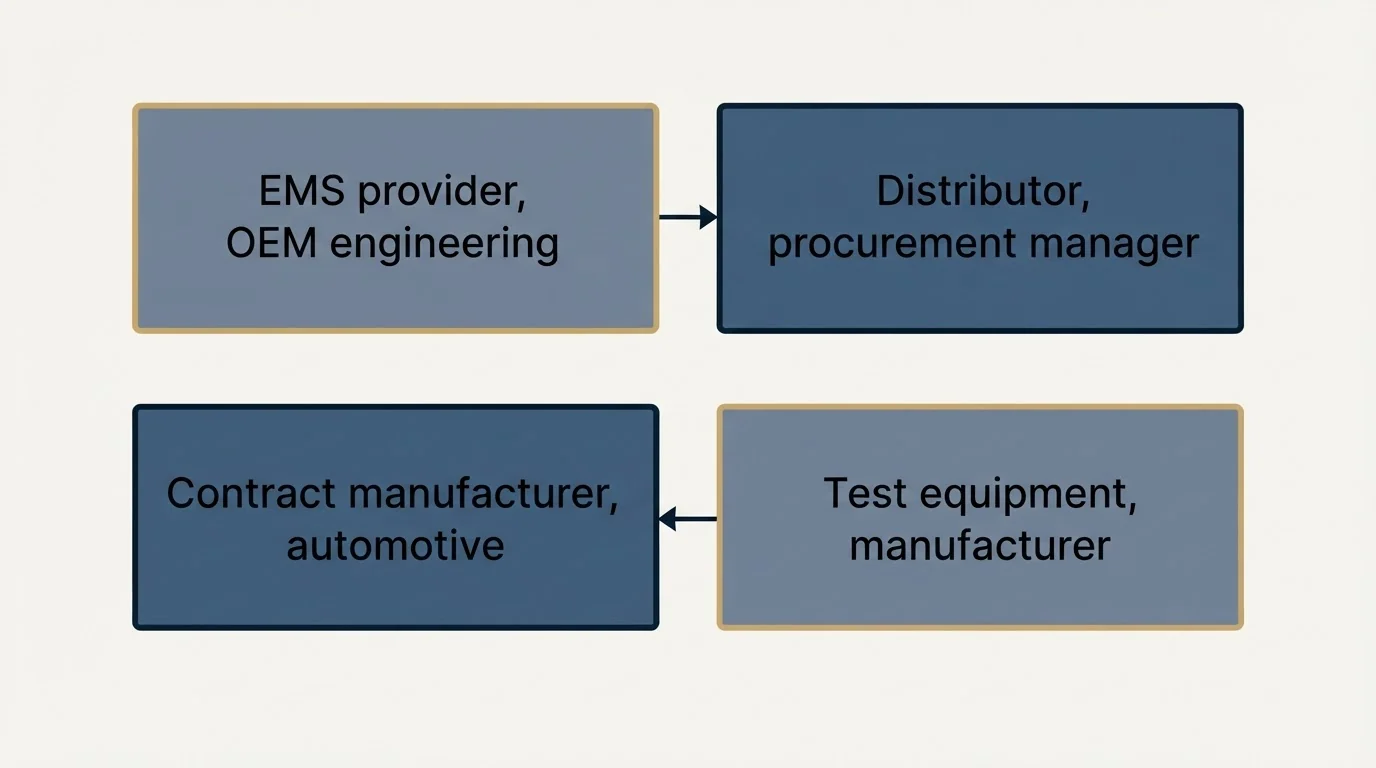
The following examples demonstrate effective cold email approaches for different electronics scenarios.
Example 1: EMS Provider to OEM Engineering Manager
Subject: High-mix PCB assembly, prototype through production in one facility
Body:
Engineering teams developing complex electronic products need manufacturing partners who support the full product lifecycle from prototype through volume production. Finding EMS providers with both prototype flexibility and production scalability in a single facility simplifies the transition from development to market.
At [Your Company], we provide PCB assembly services from prototype quantities through medium-volume production in our ISO 9001 certified facility. Our capabilities include fine-pitch assembly (0.4mm pitch BGA, 01005 passives), complex mixed-technology boards, and complete box build assembly.
Our engineering team provides DFM analysis and works directly with customer engineering during prototype development to optimize designs for manufacturing.
Would a capabilities discussion be helpful for your current or upcoming programs? I can provide our technical capabilities presentation and arrange an engineering introduction.
Best regards, [Name] [Title] [Company] ISO 9001:2015 | IPC Class 3 Certified | ITAR Registered
Example 2: Component Distributor to Procurement Manager
Subject: Authorized distribution, supply chain integrity program
Body:
Procurement teams managing electronic component supply face increasing concerns about counterfeit risk and supply chain disruption. Finding distribution partners with authentic products, supply chain visibility, and the flexibility to support changing demand proves challenging.
[Your Company] is an authorized distributor for [manufacturer categories, e.g., "leading passive, connector, and semiconductor manufacturers"] with AS6081-compliant counterfeit prevention processes. We provide complete traceability documentation and maintain inventory programs that buffer against manufacturer lead time variability.
Our services include component engineering support, demand planning, and flexible logistics including VMI and consignment arrangements.
Would discussing your component supply requirements be valuable? I can share our line card and discuss how we might support your supply chain objectives.
Best regards, [Name] [Title] [Company] Authorized Distributor | AS6081 Certified | ISO 9001:2015
Example 3: Contract Manufacturer to Automotive Supply Chain
Subject: IATF 16949 certified electronics assembly, North American capacity
Body:
Automotive electronics suppliers seeking regional manufacturing capacity need partners with the certifications, quality systems, and production capabilities that automotive programs demand.
[Your Company] provides IATF 16949:2016 certified electronics manufacturing services including PCB assembly, functional test, and complete module assembly. Our North American facility offers capacity for automotive electronics programs with established supply chain partnerships for automotive-grade components.
We currently serve Tier 1 and Tier 2 automotive suppliers with products including [reference categories, e.g., "body electronics, ADAS modules, and powertrain controllers"].
Would a capabilities review be helpful for your production planning? I can arrange a facility tour and provide our automotive capabilities presentation.
Best regards, [Name] [Title] [Company] IATF 16949:2016 | ISO 14001 | Tier 2 Automotive Supplier
Example 4: Test Equipment Provider to Electronics Manufacturer
Subject: Automated functional test solutions for production electronics
Body:
Electronics manufacturers scaling production need test solutions that balance test coverage with throughput requirements. Finding test equipment providers who understand both the technical requirements and production economics proves challenging.
At [Your Company], we design and build automated functional test systems for production electronics manufacturing. Our solutions include custom test fixtures, automated test software, and data collection systems that integrate with manufacturing execution systems.
We currently serve contract manufacturers and OEMs with test solutions for [reference categories, e.g., "consumer electronics, industrial controls, and medical devices"].
Would discussing your test requirements be helpful? I can share case studies from similar applications and discuss your specific test challenges.
Best regards, [Name] [Title] [Company] Test Solutions Provider | LabVIEW Alliance Partner
Your Electronics Cold Email Checklist
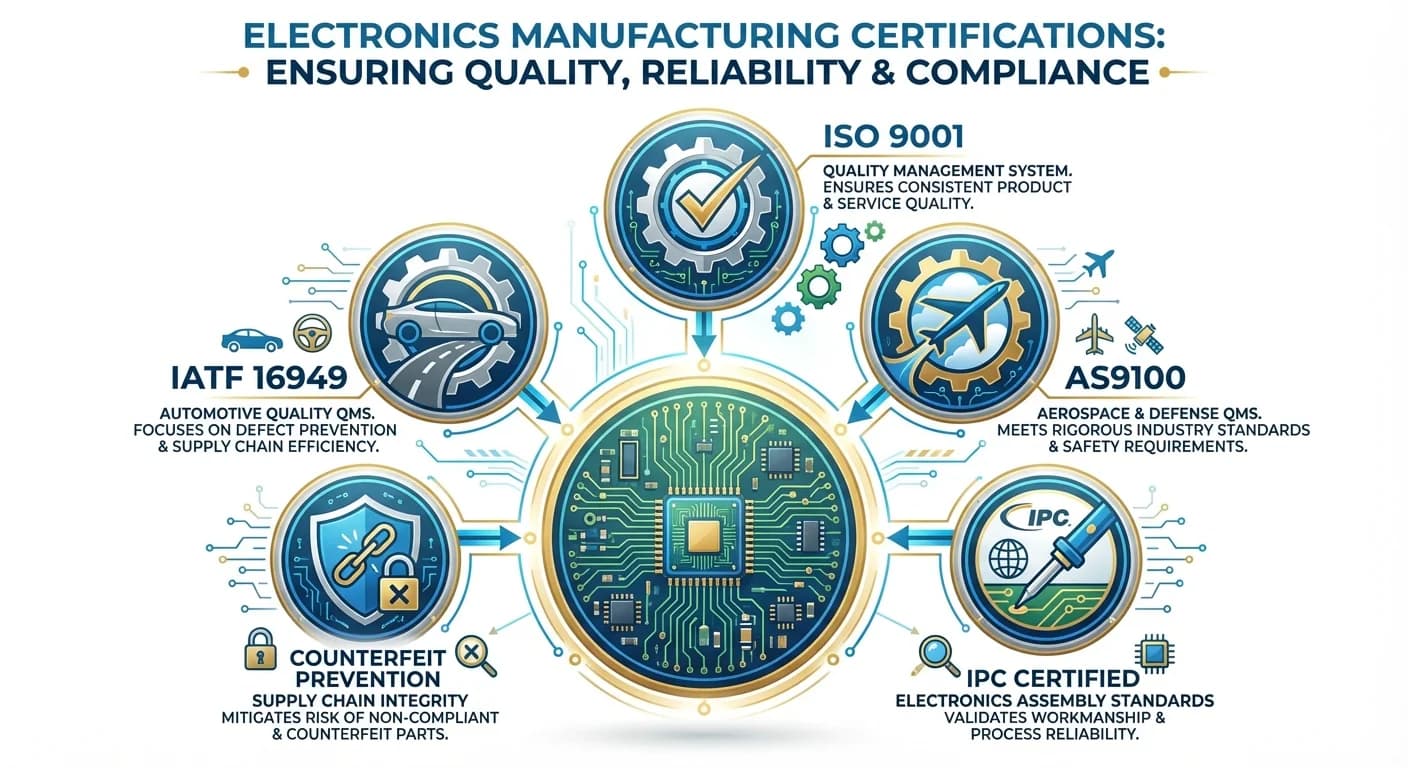
Before launching cold email campaigns for your electronics company, verify these elements.
Targeting and list quality:
- Prospect list segmented by industry or application
- Decision-maker roles identified (engineering, procurement, quality, supply chain)
- Contact information verified
- Target applications align with your technical capabilities and certifications
Email content quality:
- Subject line references specific capability or application
- Technical credibility established in opening
- Relevant certifications stated
- Call to action appropriate (engineering discussion, capabilities review)
- Signature includes relevant certifications
Qualification readiness:
- Quality certifications current
- Capability documentation prepared
- Sample/prototype process established
- Facility ready for audit requests
Follow-up strategy:
- Technical content library developed
- Engineering introduction process established
- Response handling process defined
Technical setup:
- Email deliverability verified
- Tracking and CRM configured
- Unsubscribe mechanism functional
- CAN-SPAM compliance verified
Getting Started with Electronics Cold Email
The electronics industry rewards companies that combine technical excellence with effective business development. Cold email provides a scalable channel to reach engineering, procurement, and supply chain decision-makers and initiate relationships that develop through qualification into production partnerships.
Success requires demonstrating technical capability relevant to prospect needs, maintaining patience through extended qualification processes, and building relationships that survive the competitive pressures inherent in electronics manufacturing.
If you are ready to implement cold email campaigns for your electronics company but lack internal resources for sustained execution, professional support can accelerate your results.
RevenueFlow specializes in cold email campaigns for B2B manufacturing and technology companies, including electronics manufacturers, EMS providers, and component suppliers. Our team builds campaigns that generate qualified technical opportunities.
Get your free cold email campaign and start reaching electronics industry decision-makers →
Related Reading
Frequently asked questions.
Frequently asked questions- Why does cold email work for electronics companies?
- Cold email works because new product development creates continuous supplier evaluation opportunities, supply chain resilience drives companies to qualify backup suppliers, technology evolution creates demand for advanced capabilities, and regionalization motivates geographic diversification. Each new electronics design represents a fresh evaluation where suppliers compete on technical merit, creating openings even when established relationships exist.
- Who are the main decision makers in electronics purchasing?
- Electronics purchasing involves four key stakeholder groups: design engineers who specify components based on technical requirements, procurement managers who negotiate pricing and manage supplier relationships, quality engineers who ensure certifications and process controls meet standards, and supply chain leaders who manage capacity and delivery continuity. Each group evaluates suppliers using different criteria aligned with their functional priorities.
- What do design engineers care about when evaluating electronics suppliers?
- Design engineers prioritize technical specifications, design support capabilities, component availability, documentation quality, and engineering responsiveness. They focus on whether suppliers can support their design requirements rather than primarily on cost. Engineers respond best to technical capability demonstrations including specific technologies, performance data, application support, and design resources that establish technical credibility.
- How has supply chain resilience changed electronics supplier qualification?
- Supply chain resilience has become a strategic imperative after concentrated supply chains proved fragile. OEMs now actively qualify secondary and tertiary suppliers to reduce single-source dependencies, creating opportunities for new suppliers even when primary suppliers perform adequately. This shift means electronics companies can position themselves as backup suppliers focused on risk mitigation and geographic diversification rather than solely competing on immediate cost or performance.
About the author.

Fernando Cao is CEO at RevenueFlow, which builds and operates outbound revenue engines for B2B companies. Previously at Accenture Strategy. Studied at University of Bath.
Fernando Cao · CEO
Connect on LinkedIn →Explore more.
Ready to scale your outreach?
We build GTM engines that book real meetings. See the receipts.
Related articles.
Cold Email for Maintenance Services: The Complete Guide
A comprehensive guide to cold email outreach for commercial maintenance companies, covering how to reach facility managers, property managers, and operations directors with messaging that wins preventive maintenance and repair contracts.
Cold Email for Staffing Agencies: The Complete Guide
A comprehensive guide to cold email outreach for staffing and temp agencies, covering how to reach HR directors, hiring managers, and operations leaders with messaging that wins temporary staffing, contract placement, and direct hire business.
Cold Email for Telecom: Reaching Carriers and MSPs
Telecom companies face rapid technology changes and competitive pressures. Here's how to approach cold email outreach to carriers, MSPs, and UCaaS providers.
Cold Email for Security Services: The Complete Guide
A comprehensive guide to cold email outreach for security service providers, covering how to reach facility managers, corporate security directors, and property managers with messaging that builds trust and wins contracts.
Cold Email for Cloud Services: The Complete Guide
Learn how to effectively reach decision-makers at cloud service providers and enterprises adopting cloud infrastructure. This guide covers targeting strategies, technical credibility, and email templates for the cloud services industry.
Cold Email for Event Planning: The Complete Guide
A comprehensive guide to cold email outreach for event planning companies, covering how to reach corporate event managers, HR directors, and marketing leaders with messaging that wins event contracts and planning engagements.