Cold Email for Entertainment and Media: The Complete Guide
Master cold email outreach for the entertainment and media industry with proven strategies for reaching producers, studio executives, and talent buyers.
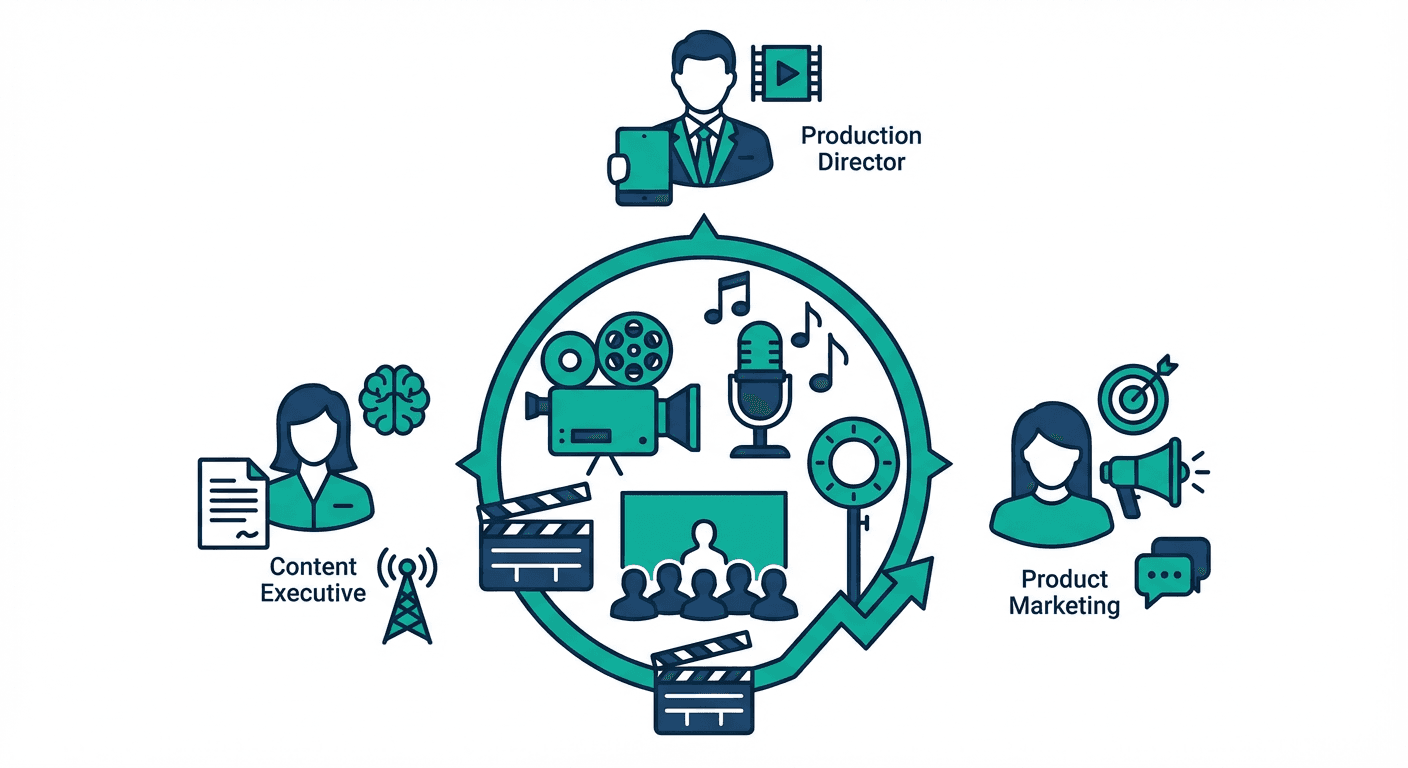
Cold email generates 4-7% response rates in entertainment when personalized to current projects, significantly higher than the 1-2% typical in other B2B sectors. Success requires targeting the right decision-maker (producers for project-specific services, VPs and above for company-wide offerings), and timing outreach to budget cycles during pilot season (January-March), upfronts (May), or development season (August-October). The project-based nature of entertainment creates constant vendor demand, and digital-first buyers like streaming platforms now prefer direct outreach over traditional agency introductions.
Key takeaways
- Entertainment executives open personalized, project-relevant emails at 18-24% rates, with response rates of 4-7% for well-crafted messages.
- A production company secured a $2.3 million streaming platform contract from 47 cold emails sent over three weeks to a VP of Content Acquisition.
- Entertainment budget decisions concentrate in three annual windows: pilot season (January-March), upfronts (May), and development season (August-October).
- Producers control vendor decisions on individual projects, while VP-level and above executives make company-wide purchasing decisions.
- Executive assistants in entertainment hold significant authority to reject outreach outright and should be approached as valuable contacts rather than obstacles.
Reviewed and updated August 28, 2026
Cold Email for Entertainment and Media: The Complete Guide
A production company in Atlanta landed a $2.3 million post-production contract with a streaming platform after sending 47 cold emails over three weeks. The deal started with a 67-word message to a VP of Content Acquisition who happened to be looking for exactly what they offered. In entertainment and media, timing and relationships drive everything, and cold email can create both when executed correctly.
The entertainment industry operates differently than traditional B2B sectors. Project-based work, creative gatekeepers, guild considerations, and notoriously protective assistants create a unique landscape for outreach. This guide breaks down exactly how to navigate cold email in entertainment and media, from identifying the right contacts to crafting messages that actually get responses from busy industry professionals.
Why Cold Email Works for Entertainment and Media
Entertainment professionals receive hundreds of pitches daily through agents, managers, publicists, and industry connections. Yet cold email remains effective for several reasons specific to the industry.
The numbers support the approach. According to industry data, entertainment executives open emails at rates between 18-24% when messages are personalized and relevant to current projects. Response rates for well-crafted entertainment emails average 4-7%, significantly higher than the 1-2% typical in other B2B sectors.
when messages are personalized and relevant to current projects
Project-based work creates constant demand. Unlike traditional businesses with fixed vendor relationships, entertainment companies staff up and down based on production schedules. A studio that had no need for your services last month might desperately need them next month when a new project greens lights. Cold email puts you in front of decision-makers at precisely the right moment.
Relationships matter, but access is the first step. The entertainment industry runs on relationships, and every relationship has to start somewhere. Cold email provides a professional, non-intrusive way to introduce your services without the awkwardness of cold calling or showing up uninvited to industry events.
Digital transformation has changed buyer behavior. The shift to streaming and digital content has brought new buyers into the market who operate more like tech companies than traditional studios. These buyers (Netflix, Amazon Studios, Apple TV+, and others) often prefer direct outreach from vendors over traditional agency introductions.
Budget cycles create predictable windows. Entertainment companies typically plan budgets quarterly and annually, with major spending decisions made during pilot season (January-March), upfronts (May), and development season (August-October). Cold email campaigns timed to these windows reach buyers when they have budget authority.
The Entertainment Buyer: Who You're Really Emailing
Understanding who makes purchasing decisions in entertainment requires knowing the industry's hierarchy. The decision-maker varies dramatically based on what you're selling and the size of the production or company.
Producers
Producers control budgets and make vendor decisions on individual projects. Line producers handle day-to-day spending, while executive producers make larger strategic decisions. For services tied to specific productions (equipment rental, post-production, location services), producers are your primary targets.
What producers care about: Budget efficiency, reliability, speed, and problem-solving ability. Producers deal with constant fires and need vendors who make their jobs easier, not harder.
How to identify them: IMDbPro lists producers by project. Production Weekly and other tracking services identify projects in development and pre-production along with attached producers.
Studio and Network Executives
For company-wide services (software platforms, agency relationships, strategic partnerships), you need studio and network executives. Titles vary by company but look for Vice President and above in relevant departments.
Common titles to target:
- VP/SVP of Production
- VP/SVP of Content Acquisition
- VP/SVP of Business Affairs
- VP/SVP of Operations
- Chief Content Officer
- Head of Development
What executives care about: Strategic value, competitive advantage, cost savings at scale, and innovation. They think in terms of portfolio impact, not single projects.
Talent Buyers and Programmers
For companies selling artist representation, booking services, or live entertainment services, talent buyers at venues, festivals, and networks are the targets. These include:
- Festival programmers and bookers
- Venue talent buyers
- Network programming executives
- Corporate event entertainment buyers
- Cruise line entertainment directors
What talent buyers care about: Audience appeal, ticket sales potential, reliability, and unique offerings that differentiate their programming.
Post-Production and Technical Decision-Makers
For technical services and equipment, you'll target:
- Post-production supervisors
- VFX supervisors
- Technical directors
- Chief Technology Officers (at larger studios)
- Head of Post-Production
What technical buyers care about: Quality, compatibility with existing workflows, support availability, and meeting delivery specifications.
The Gatekeeper Reality
Every major entertainment buyer has protective layers. Executive assistants, development coordinators, and junior executives screen communications. Understanding this hierarchy helps you craft emails that either reach the decision-maker directly or motivate gatekeepers to pass your message along.
Assistants in entertainment hold significant power. Many have authority to say no outright. The most effective approach treats assistants as valuable contacts themselves, not obstacles to overcome.
Entertainment-Specific Challenges
Cold email in entertainment faces unique obstacles that require specific strategies.
Challenge 1: The Relationship-Driven Culture
Entertainment operates on referrals and relationships more than almost any other industry. Buyers often prefer to work with people they know or who come recommended by trusted contacts. Cold outreach can feel transactional in a relationship-based world.
The solution: Lead with value and credibility signals. Mention mutual connections when they exist. Reference specific projects or content that demonstrates you understand their work. Position cold email as the start of a relationship, not a one-time sales pitch.
Challenge 2: Project-Based Timing
Entertainment buying happens in cycles tied to production schedules. A brilliant cold email sent during production (when budgets are locked) will fail. The same email sent during development or pre-production might generate immediate interest.
The solution: Research project timelines before outreach. Use tracking services to identify projects in development and pre-production phases. Time campaigns to budget planning cycles (Q4 for next year's projects, January-February for pilot season).
Challenge 3: Protective Gatekeepers
Entertainment assistants are trained to filter communications aggressively. Many executives never see cold emails because assistants delete them.
The solution: Send emails early morning (before assistants arrive) or after 6 PM (when executives often check email themselves). Use LinkedIn to identify and connect with assistants directly. Keep subject lines professional and specific to avoid spam-filter keywords.
Challenge 4: The "Everyone is Pitching" Problem
Entertainment buyers receive constant pitches from writers, directors, actors, and vendors. Email fatigue is real, and many buyers develop reflexive deletion habits.
The solution: Stand out through specificity. Generic vendor emails get deleted. Emails that reference specific projects, demonstrate industry knowledge, and offer concrete value get read. Lead with what makes you different, not what you do.
Challenge 5: Creative vs. Business Buyers
Entertainment organizations split between creative and business functions, and these groups think differently. Creative executives respond to storytelling and emotional appeals. Business executives respond to data and ROI.
The solution: Research your target's background and adjust your approach. A VP of Production with a creative background needs different messaging than a CFO. Check LinkedIn for career history and adjust tone accordingly.
What Works: Entertainment Cold Email Best Practices

Subject Lines That Get Opens
Entertainment professionals scan subject lines quickly, looking for relevance signals. Generic subject lines fail. Specific, intriguing subject lines succeed.
Effective subject line formulas:
- Project-specific: "[Project Name] post-production question"
- Mutual connection: "Sarah Chen suggested I reach out"
- Timely reference: "Congrats on the Emmy nomination"
- Value proposition: "Cut your VFX costs 30% on upcoming projects"
- Curiosity: "The [Company Name] approach to [specific challenge]"
Subject lines to avoid:
- "Quick question" (overused)
- "Touching base" (meaningless)
- "Partnership opportunity" (sounds like spam)
- "Introduction" (no value proposition)
- ALL CAPS anything (unprofessional)
Data point: Subject lines with 6-10 words see the highest open rates in entertainment outreach, with an average 23% open rate compared to 14% for longer subject lines.
Email Copy That Generates Responses
Entertainment emails should be concise. Industry professionals read email on phones between meetings, in cars, and on set. Long emails don't get read.
The ideal structure:
-
Opening line (personalized): Reference something specific about their work, company, or recent news. Avoid generic compliments.
-
Value proposition (one sentence): What you do and why it matters to them specifically.
-
Credibility signal (one sentence): A relevant client, project, or result that demonstrates capability.
-
Clear ask (one sentence): What you want them to do next.
Total length: 75-125 words maximum.
What to include:
- Specific references to their projects or company
- Quantified results when available
- A single, clear call to action
- Your contact information
What to avoid:
- Industry jargon (everyone uses it, it means nothing)
- Self-congratulatory language
- Multiple asks or options
- Attachments (send them once someone replies)
- Long company descriptions
Timing Considerations
Best days: Tuesday through Thursday. Monday brings email backlogs, Friday sees early departures.
Best times: 7:00-8:00 AM (before assistants arrive) or 6:00-8:00 PM (executives checking email after hours). Avoid mid-day (meetings) and lunch hours.
Seasonal timing:
- January-March: Pilot season, high activity for TV services
- April-May: Upfronts, good for ad-supported content vendors
- June-August: Summer production peak, good for production services
- September-October: Development season, good for creative services
- November-December: Budget planning, good for annual contracts
Compliance Considerations
Entertainment cold email involves some unique compliance factors beyond standard CAN-SPAM requirements.
Guild and Union Considerations
If you're reaching out about services that involve guild or union labor, be aware that certain communications may need to comply with guild regulations. This is particularly relevant for:
- Below-the-line services (crew, technicians)
- Talent representation
- Writing and creative services
While cold email to executives rarely triggers guild issues, if your service involves hiring guild members, ensure your company is a signatory to relevant agreements (SAG-AFTRA, DGA, WGA, IATSE) or clearly communicate your status.
Talent Agency Regulations
If you're reaching out to talent agencies or positioning services related to talent representation, be aware that talent agency operations are regulated by state laws (particularly in California, New York, and other major production states). Ensure any claims about talent-related services comply with these regulations.
Standard Email Compliance
All entertainment cold emails must comply with:
- CAN-SPAM Act: Include physical address, honor opt-out requests within 10 business days, use accurate subject lines
- Company email policies: Many studios have strict policies about vendor communications. Respect "no solicitation" requests
- GDPR (if targeting international): Entertainment is global. If emailing EU-based professionals, ensure GDPR compliance
Confidentiality Awareness
Entertainment deals involve significant confidentiality. Avoid:
- Referencing deals or projects that aren't public
- Sharing information about one client's projects with another
- Making claims about insider knowledge or connections you can't verify
Real Entertainment Cold Email Examples
Example 1: Post-Production Services to Streaming Platform
Subject: [Platform Name] delivery specs question
Body:
Hi [Name],
I noticed [Platform Name] recently updated delivery specifications for original content, and several of your current productions are approaching delivery windows.
We handle final QC and delivery for [Major Studio Client] and [Recognizable Show Name], ensuring masters meet specs on first submission. Our average rejection rate is under 2% versus the industry average of 12%.
Would a 15-minute call next week make sense to discuss how we might help with upcoming deliveries?
Best, [Your name] [Phone]
Why it works: Demonstrates specific knowledge of their technical challenges, provides credible social proof, includes a concrete metric, and makes a specific ask.
Example 2: Equipment Rental to Independent Producer
Subject: [Project Name] camera package
Body:
Hi [Name],
Congratulations on the greenlight for [Project Name]. Production Weekly mentioned you're in pre-production with a March start date.
We provided camera and grip packages for [Recent Comparable Project], keeping the production 8% under equipment budget while upgrading from their original specs.
If you haven't locked your equipment vendor, I'd welcome the chance to put together a package quote.
[Your name] [Phone]
Why it works: Timely (project just announced), specific (references exact project), value-focused (budget savings), and low-pressure ask.
Example 3: Music Licensing Platform to Advertising Agency
Subject: [Recent Campaign Name] music question
Body:
Hi [Name],
The track selection on the [Brand Name] campaign was perfect. That [Artist Name] sync must have taken significant negotiation.
We work with agencies like [Competitor Agency] and [Another Agency] to streamline music licensing for campaigns. Our catalog of 50,000+ pre-cleared tracks typically cuts licensing timelines from 3 weeks to 3 days.
Worth a conversation about your upcoming campaigns?
[Your name] [Phone]
Why it works: Opens with genuine, specific compliment showing industry knowledge. Positions offering against a real pain point (licensing timelines). Names relevant clients.
Example 4: VFX Studio to Film Producer
Subject: [Project Name] VFX breakdown
Body:
Hi [Name],
I saw the announcement about [Project Name] moving forward with a [Month/Year] release target. Based on the source material, you're likely looking at 400-600 VFX shots with significant environment work.
Our team completed similar scope on [Comparable Film] for [Studio], delivering on schedule and within the original bid. We're particularly strong on environment extensions and crowd multiplication.
Happy to walk through our approach and share the [Comparable Film] breakdown if helpful.
Best, [Your name] [Phone]
Why it works: Demonstrates ability to analyze their needs before even talking. Shows relevant experience with specific examples. Offers something valuable (breakdown) rather than just asking for time.
Your Entertainment Cold Email Checklist
Before sending any entertainment cold email, verify each item:
Research Complete:
- Target's current role and company verified on LinkedIn/IMDbPro
- Recent projects or news identified for personalization
- Project timeline researched (are they in a buying phase?)
- Decision-making authority confirmed
- Gatekeeper situation understood
Message Quality:
- Subject line is specific and under 10 words
- Opening line references something specific about their work
- Value proposition is clear in one sentence
- Credibility signal included (relevant client or result)
- Single, clear call to action
- Total length under 125 words
- No attachments (send them once someone replies)
- No industry jargon or buzzwords
Timing Optimized:
- Sending Tuesday-Thursday
- Sending early morning or after 6 PM
- Aligned with industry calendar (pilot season, upfronts, etc.)
- Project timeline makes outreach relevant
Compliance Verified:
- Physical address included
- Opt-out mechanism present
- No false or misleading subject line
- Guild/union considerations addressed if relevant
- Confidentiality respected
Re-Approach Planned:
- Any later campaign is built on a new project, season or angle, not on the last email
- Response tracking system in place
Getting Started with Entertainment Outreach
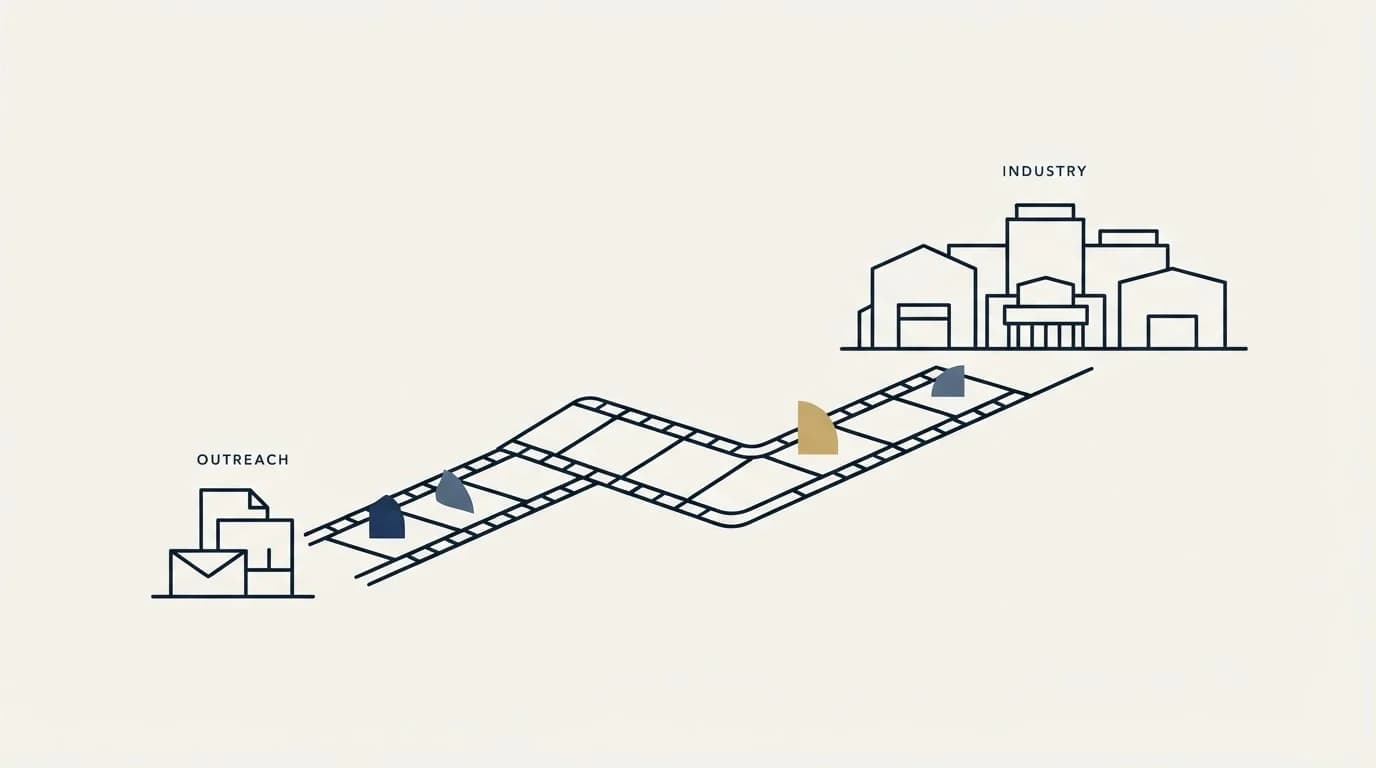
The entertainment industry rewards persistence, timing, and relationship-building. Cold email serves as the opening move in what should become an ongoing relationship. The producers and executives you email today become the network that refers you business for years.
Start with a focused list: 50-100 highly researched contacts beat 1,000 generic emails every time. Personalize genuinely, time strategically, and come back when there is a genuinely new reason to write.
Entertainment moves fast. The project that doesn't exist today might be greenlit next week with an immediate need for your services. Consistent, professional outreach ensures you're top of mind when that happens.
Related Reading
- Cold Email for Investment and Asset Management: The Complete Guide
- Cold Email for SaaS Companies: The Complete Guide to B2B Outreach
- Cold Email for Retail: The Complete Guide to B2B Outreach
Ready to launch your entertainment industry cold email campaign? Our team specializes in B2B outreach for media and entertainment companies, handling everything from list building to campaign execution. Get your free campaign analysis and see how we can help you connect with entertainment decision-makers.
Frequently asked questions.
Frequently asked questions- Does cold email work for reaching entertainment industry professionals?
- Yes, cold email generates 4-7% response rates in entertainment when messages are personalized and relevant to current projects. This significantly outperforms the 1-2% typical in other B2B sectors. Entertainment executives open relevant cold emails at 18-24% rates. The project-based nature of entertainment creates constant vendor demand, and streaming platforms like Netflix and Amazon Studios increasingly prefer direct vendor outreach over traditional agency introductions.
- Who should I target with cold emails in entertainment companies?
- Target producers for project-specific services like equipment rental or post-production, since they control individual production budgets. For company-wide services, target VP-level and above executives in relevant departments, such as VP of Production, VP of Content Acquisition, or Chief Content Officer. Technical services should target post-production supervisors, VFX supervisors, or CTOs. Always consider that executive assistants have significant screening authority and should be treated as valuable contacts themselves.
- When is the best time to send cold emails to entertainment companies?
- The best timing aligns with entertainment budget cycles: pilot season (January-March), upfronts (May), and development season (August-October). Entertainment companies plan budgets quarterly and annually, with major spending decisions concentrated during these windows. Additionally, the project-based nature means a company with no need for your services one month might urgently need them the next when a new project receives approval, making consistent outreach valuable.
- What makes entertainment cold email different from other industries?
- Entertainment operates on project-based work with protective gatekeepers, guild considerations, and relationship-driven culture. Decision-makers receive hundreds of daily pitches through agents, managers, and publicists. Unlike traditional B2B with fixed vendor relationships, entertainment companies staff up and down based on production schedules, creating unpredictable demand windows. Executive assistants hold more screening authority than in other industries, and buyers split between creative and business perspectives requiring different messaging approaches.
About the author.

Fernando Cao is CEO at RevenueFlow, which builds and operates outbound revenue engines for B2B companies. Previously at Accenture Strategy. Studied at University of Bath.
Fernando Cao · CEO
Connect on LinkedIn →Explore more.
Ready to scale your outreach?
We build GTM engines that book real meetings. See the receipts.
Related articles.
Cold Email for Architecture Firms: 2026 Strategy Guide
Architecture firms buy on project phases rather than fiscal quarters. How to build a list, time the spec window, and write cold emails principals answer.
Cold Email for Trucking and Fleet Companies: 2026 Guide
How to reach carriers, fleet operators, and safety buyers with cold email: FMCSA-driven list building, trigger timing, four templates, and compliance.
Cold Email for Cannabis Companies: 2026 Strategy Guide
The April 2026 rescheduling order split cannabis buyers into two tax realities. Here is how to segment, list-build, and write cold email for each.
Cold Email for Private Equity Firms: 2026 Strategy Guide
How to run cold email into private equity: mapping fund-level and portfolio-level buyers, list sources, four templates, and PE-specific deliverability rules.
Cold Email for Wealth Management Firms: 2026 Strategy Guide
RIAs are 16,500+ mostly small firms with public Form ADV data, small buying committees, and a compliance gate. How to run cold email into wealth management.
Cold Email for Interior Design Firms: 2026 Strategy Guide
Commercial interior designers specify products they never buy. Here is how to build cold email that wins the specification, plus four templates.