Cold Email for Licensing: Complete Strategy Guide
Learn how to use cold email to secure licensing deals for your technology, content, patents, or intellectual property with proven outreach strategies and templates.
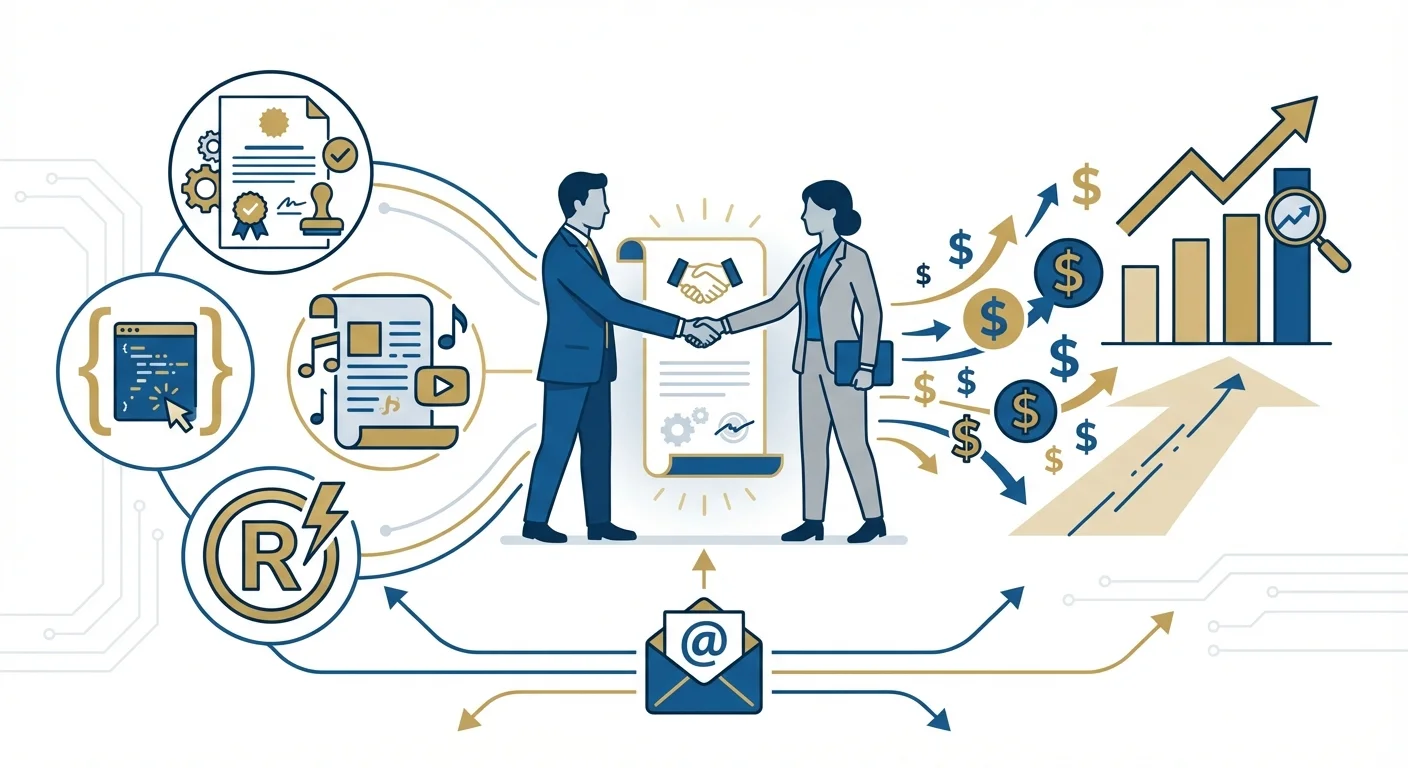
Cold email works for licensing by providing direct access to business development executives and product managers who evaluate licensing deals, allowing you to control how your intellectual property is positioned. Target companies with strategic fit, implementation capability, and strong market position in industries where your IP fills product gaps or provides competitive advantage. Keep the email under 150 words and focus it on one concrete benefit the licensee would gain.
Key takeaways
- Qualcomm generates billions annually through patent licensing, demonstrating the revenue potential of proactive licensing strategies.
- Licensing decisions involve specific executives in business development, product strategy, or corporate development roles who can be reached directly through cold email.
- Licensable IP includes patents, software code, creative content, brand trademarks, proprietary datasets, and methodologies that can be licensed under exclusive, non-exclusive, field-of-use, territorial, or hybrid arrangements.
- Qualified licensees must demonstrate strategic fit with your IP, implementation capability, strong market position, financial strength, and an existing IP strategy indicating openness to licensing.
- Patent analysis reveals potential licensees by identifying companies citing your patents, developing in adjacent areas, or potentially infringing on your intellectual property.
Reviewed and updated September 15, 2026
Cold Email for Licensing: Complete Strategy Guide
Licensing transforms intellectual property into revenue without requiring you to manufacture products, build distribution networks, or serve end customers directly. Companies like Qualcomm generate billions annually through patent licensing. Content creators license their work to publishers, platforms, and producers. Software companies license technology to partners who embed it in their own products. These licensing arrangements often begin with outreach to potential licensees who may not know your licensable assets exist.
Cold email provides direct access to the business development executives, product managers, and legal professionals who evaluate and execute licensing deals. Unlike inbound approaches that wait for licensees to find you, proactive outreach puts your licensable assets in front of companies that could benefit from them.
Why Cold Email Works for Licensing Deals
Licensing deals require educating potential partners about your intellectual property and demonstrating how it fits their needs. Cold email accomplishes this directly and efficiently.
Access to decision makers. Licensing decisions involve specific executives responsible for business development, product strategy, or corporate development. Cold email reaches these individuals directly.
Controlled positioning. When you initiate contact, you control how your intellectual property is initially presented. This allows you to highlight the aspects most relevant to each potential licensee.
Market discovery. Cold outreach to potential licensees reveals market interest in your IP. Responses and conversations provide intelligence about demand, pricing expectations, and competitive alternatives.
Proactive revenue generation. Waiting for licensees to discover your patents, technology, or content limits your revenue potential. Proactive outreach expands the pool of potential licensing partners.
Understanding Licensing Opportunities
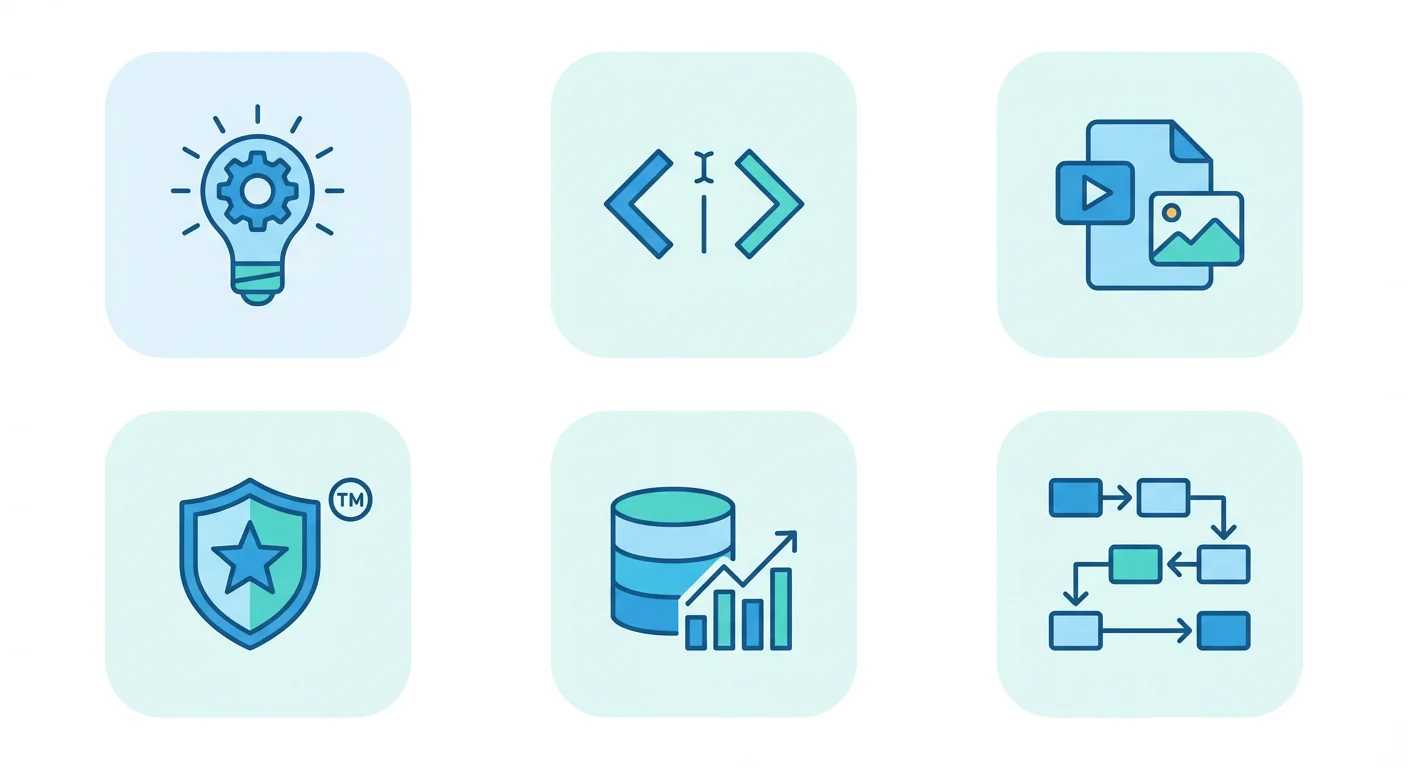
Different types of intellectual property create different licensing opportunities. Understanding your licensing landscape helps you target the right partners.
Types of Licensable IP
Patents and technology. Technical innovations protected by patents can be licensed to companies who want to use the technology in their products. This includes utility patents, design patents, and trade secrets.
Software and code. Source code, algorithms, APIs, and software components can be licensed to developers and companies who want to incorporate them into their products.
Content and creative works. Written content, images, video, music, and other creative works can be licensed to publishers, platforms, and producers.
Brand and trademarks. Company names, logos, and brand identities can be licensed to partners who want to leverage brand recognition in their products or marketing.
Data and datasets. Proprietary data, training datasets, and analytical models can be licensed to companies who need access to information for their products or research.
Expertise and methodologies. Proprietary processes, methodologies, and frameworks can be licensed to organizations who want to implement your approaches.
Types of Licensing Arrangements
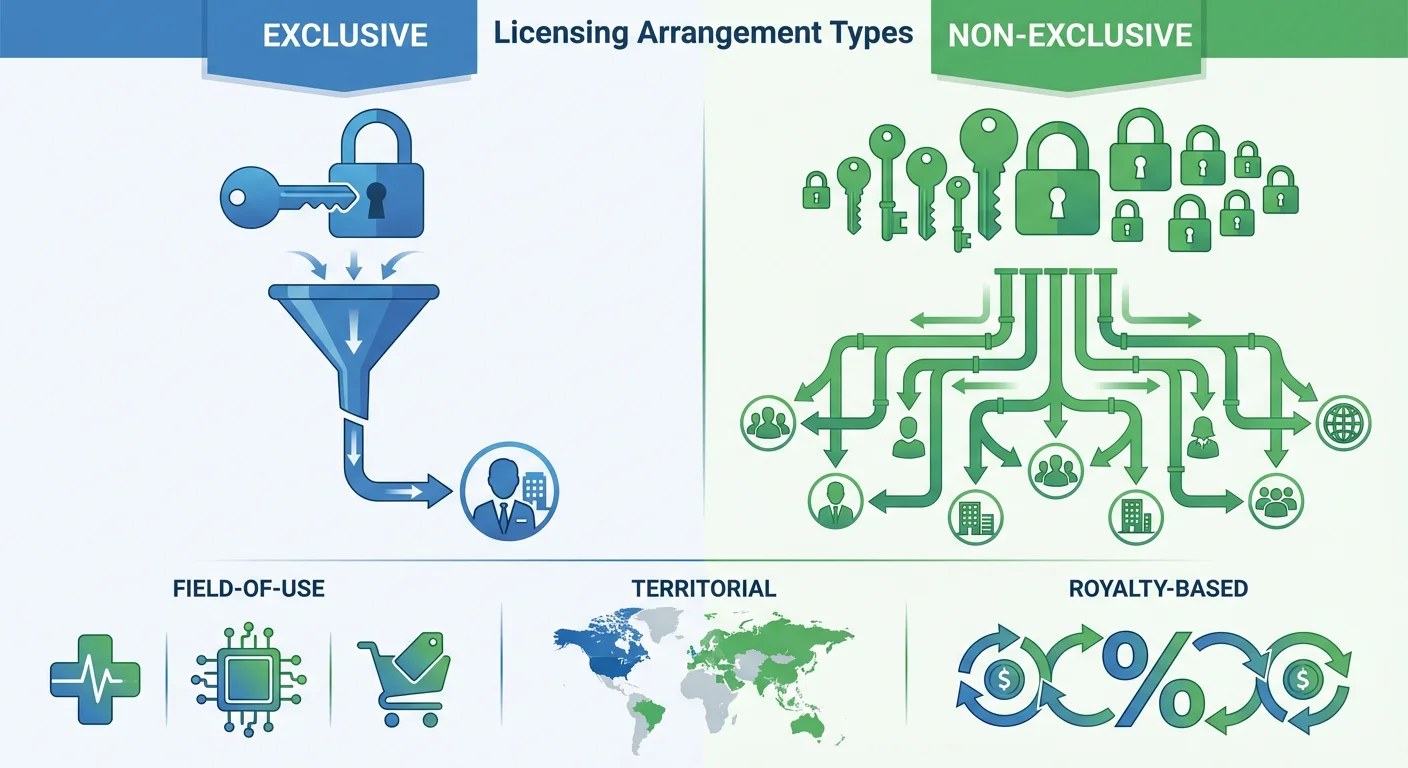
Exclusive licensing. One licensee receives exclusive rights to use the IP, often for higher fees and with specific territorial or market restrictions.
Non-exclusive licensing. Multiple licensees can use the IP simultaneously, typically at lower per-license fees but with potential for greater total revenue.
Field-of-use licensing. Licenses restricted to specific applications, industries, or use cases, allowing different licensees in different fields.
Territorial licensing. Rights granted for specific geographic regions, allowing different licensees in different markets.
Sublicensing arrangements. Licensees can grant licenses to third parties, expanding reach through partner networks.
Royalty-based licensing. Fees based on licensee revenue, unit sales, or other usage metrics rather than flat fees.
Hybrid arrangements. Combinations involving upfront payments plus ongoing royalties, milestone payments, or minimum guarantees.
Identifying Potential Licensees
Strategic targeting maximizes licensing outreach effectiveness. The right licensees have both the need for your IP and the ability to generate meaningful revenue from the license.
Qualification Criteria
Strategic fit. Does your IP address a genuine need in their product, service, or operations? Forced fits rarely work.
Implementation capability. Do they have the technical, operational, or creative ability to actually use your IP effectively?
Market position. Are they well-positioned to generate revenue using your IP? Market presence affects royalty potential.
Financial strength. Can they afford licensing fees and sustain the partnership long-term?
Existing IP strategy. Are they already licensing from others or building IP internally? This indicates openness to licensing arrangements.
Competitive situation. Would your IP provide competitive advantage they can't easily replicate?
Finding Potential Licensees
Industry analysis. Identify companies operating in markets where your IP provides value. Review their products, strategies, and gaps.
Patent analysis. For patent licensing, analyze who's citing your patents, who's developing in adjacent areas, and who might be infringing.
Product gap analysis. Look for companies whose products could benefit from capabilities your IP provides.
Competitive intelligence. Review competitors of companies already using your IP. Similar businesses often have similar needs.
Industry events. Conference attendees and exhibitors reveal companies active in your IP's application areas.
LinkedIn research. Search for titles like "Business Development," "Corporate Development," "Strategic Partnerships," or "Licensing" at target companies.
Patent databases. Review patent filings to identify companies investing in related technology areas.
Crafting Licensing Outreach Emails
Licensing emails must communicate the value of your IP while demonstrating you understand the potential licensee's business context.
Email Structure Best Practices
Lead with their benefit. Frame the licensing opportunity in terms of what the licensee gains, not what you're selling.
Be specific about the IP. Vague descriptions of "intellectual property" don't resonate. Describe specifically what you're offering.
Connect to their situation. Show you understand their business, products, or challenges and explain how your IP addresses them.
Address key concerns. Proactively mention licensing terms, exclusivity options, and support you provide.
Propose appropriate next steps. Licensing deals require evaluation and negotiation. Suggest an initial conversation rather than commitment.
Licensing Outreach Email Templates
Template 1: Technology/Patent Licensing
Subject: Licensing opportunity for [Their Product/Company]
Hi [Name],
I'm reaching out about a technology licensing opportunity that could benefit [Their Company]'s [specific product or initiative].
[Your Company] has developed [brief description of the technology or patent], which addresses [specific problem]. We've been granted [patent details if relevant] covering this approach.
Looking at [Their Product], I believe licensing this technology could help you:
- [Specific benefit 1]
- [Specific benefit 2]
- [Specific benefit 3]
We offer flexible licensing terms including [general terms structure] and provide technical support for implementation.
Would you have 20 minutes to discuss whether this technology fits [Their Company]'s roadmap?
[Your name]
Template 2: Software/API Licensing
Subject: [Technology Name] licensing for [Their Company]
Hi [Name],
I manage partnerships at [Your Company], and I wanted to explore a licensing opportunity for [Technology/API Name].
[Technology Name] provides [specific capability]. Currently, [usage metrics or notable users] rely on it for [specific use case].
I noticed [Their Company] is building [their relevant product or feature]. Licensing [Technology Name] could accelerate your development by:
- Eliminating the need to build [capability] from scratch
- Leveraging [specific advantage, like battle-tested code, performance, etc.]
- [Additional benefit]
We offer several licensing models:
- [Option 1]
- [Option 2]
- [Option 3]
Would you be interested in a technical overview to evaluate fit?
[Your name]
Template 3: Content/Creative Licensing
Subject: Licensing [Your Content] for [Their Use Case]
Hi [Name],
I came across [Their Platform/Publication] and thought [Your Content] might be valuable for your audience.
[Your Content] covers [topic/subject area] and has [performance metrics, like readership, engagement, or awards]. It's been [notable usage or recognition].
For [Their Platform], licensing this content could:
- Provide [specific value to their audience]
- [Additional benefit]
- [Additional benefit]
We're flexible on licensing structure and can discuss:
- Exclusive vs. non-exclusive rights
- Territory and duration
- Format and adaptation rights
Would you be interested in reviewing the content for potential licensing?
[Your name]
Template 4: Brand/Trademark Licensing
Subject: [Your Brand] licensing partnership
Hi [Name],
I'm exploring brand licensing opportunities for [Your Brand], and [Their Company] seems like a potential fit.
[Your Brand] is recognized for [brand attributes or market position]. Our brand reaches [audience metrics or market penetration].
I see potential alignment with [Their Company]'s [relevant product line or initiative]. A brand licensing partnership could provide:
- Instant recognition and credibility in [market]
- Association with [brand attribute]
- Marketing support and brand guidelines
We've successfully licensed to [existing licensees if relevant] and provide comprehensive brand support to ensure consistent, quality representation.
Would you be open to exploring a licensing partnership?
[Your name]
Template 5: Data/Dataset Licensing
Subject: Data licensing for [Their Use Case]
Hi [Name],
I manage data partnerships at [Your Company], and I wanted to introduce a dataset that could enhance [Their Product/Research].
Our [Dataset Name] includes [description of data contents]. It covers [scope, timeframe, or geographic coverage] and contains [volume metrics].
Based on [Their Company]'s focus on [relevant area], this data could enable:
- [Specific capability or insight]
- [Additional benefit]
- [Additional benefit]
We offer data licensing through several models:
- One-time license with updates
- Subscription access
- Custom data feeds
Would you have time to discuss your data needs and how we might support them?
[Your name]
Template 6: Methodology/Framework Licensing
Subject: Licensing [Your Methodology] for [Their Industry/Use]
Hi [Name],
I wanted to introduce [Your Methodology/Framework] as a potential licensing opportunity for [Their Company].
[Your Methodology] helps organizations [achieve specific outcome]. We developed it through [background that establishes credibility], and it's been implemented by [notable users or results].
For [Their Company]'s work in [relevant area], licensing this methodology could:
- Accelerate [specific outcome]
- Provide a proven framework rather than building from scratch
- [Additional benefit]
We support licensees with training, certification, and ongoing methodology updates.
Would you be interested in learning more about licensing [Your Methodology]?
[Your name]
Where we differ from standard practice
Much of the advice on this page reflects how outbound is commonly run. We run it differently, and since this page sits on our site it is worth saying where the difference is and what it costs us.
- A sequence of messages to each prospect over several weeks
- Later messages often land in the same email thread
- Every contact is reached more than once, so a distracted reader gets another chance
- The later messages go only to people who did not answer the first
- Reputation cost accrues on the sending domain across everything else it sends
- One message, then that campaign is finished for that contact
- No thread replies and no bumps
- A non-responding audience becomes a new campaign with a genuinely different premise, not a reminder
- More of the work moves into targeting and into the one message
- We reach each contact less often, and that is the cost we accept
The reasoning is mechanical rather than moral. A follow-up arrives underneath a message the recipient has already seen and chosen not to answer, so it is delivered to the population most likely to mark it as spam, and the reputation cost of that lands on the sending domain across every campaign running on it. We set that cost against the replies a sequence recovers and decided the trade was not worth it. The full argument, with the numbers from our own campaigns, is in why we stopped using follow-ups.
Follow-Up Strategies
Licensing decisions involve multiple stakeholders and extended evaluation periods. Persistent follow-up maintains presence during decision cycles.
Follow-Up Sequence
First follow-up (6-7 days after initial email):
Subject: Re: Licensing opportunity for [Their Company]
Hi [Name],
I wanted to follow up on my note about licensing [Your IP]. I understand you're likely evaluating many priorities.
Quick summary: [Your IP] could help [Their Company] with [specific benefit]. I'm happy to provide a technical overview, sample materials, or detailed licensing terms.
Worth a brief conversation to explore fit?
[Your name]
Second follow-up (8-10 days after first follow-up):
Subject: Following up on [Your IP] licensing
Hi [Name],
I'll keep this brief. I still believe there's potential value in [Your IP] for [Their Company], but I understand if the timing or fit isn't right.
If you're interested but have questions first, I'm happy to address them by email. If someone else on your team handles licensing evaluation, I'd appreciate a point in the right direction.
[Your name]
Third follow-up (3-4 weeks after second follow-up):
Subject: Circling back on licensing
Hi [Name],
I wanted to circle back on our previous conversation about licensing [Your IP]. We've recently [relevant update, like new patent grant, new licensee, or product enhancement].
Does this change the fit for [Their Company], or is there a better time to reconnect?
[Your name]
Providing Value Between Outreach
Share relevant research. Send industry research or analysis related to your IP's application area.
Reference their developments. Congratulate them on relevant announcements that connect to your IP opportunity.
Offer introductions. Connect them with existing licensees (with permission) who can share their experience.
Negotiating Licensing Terms
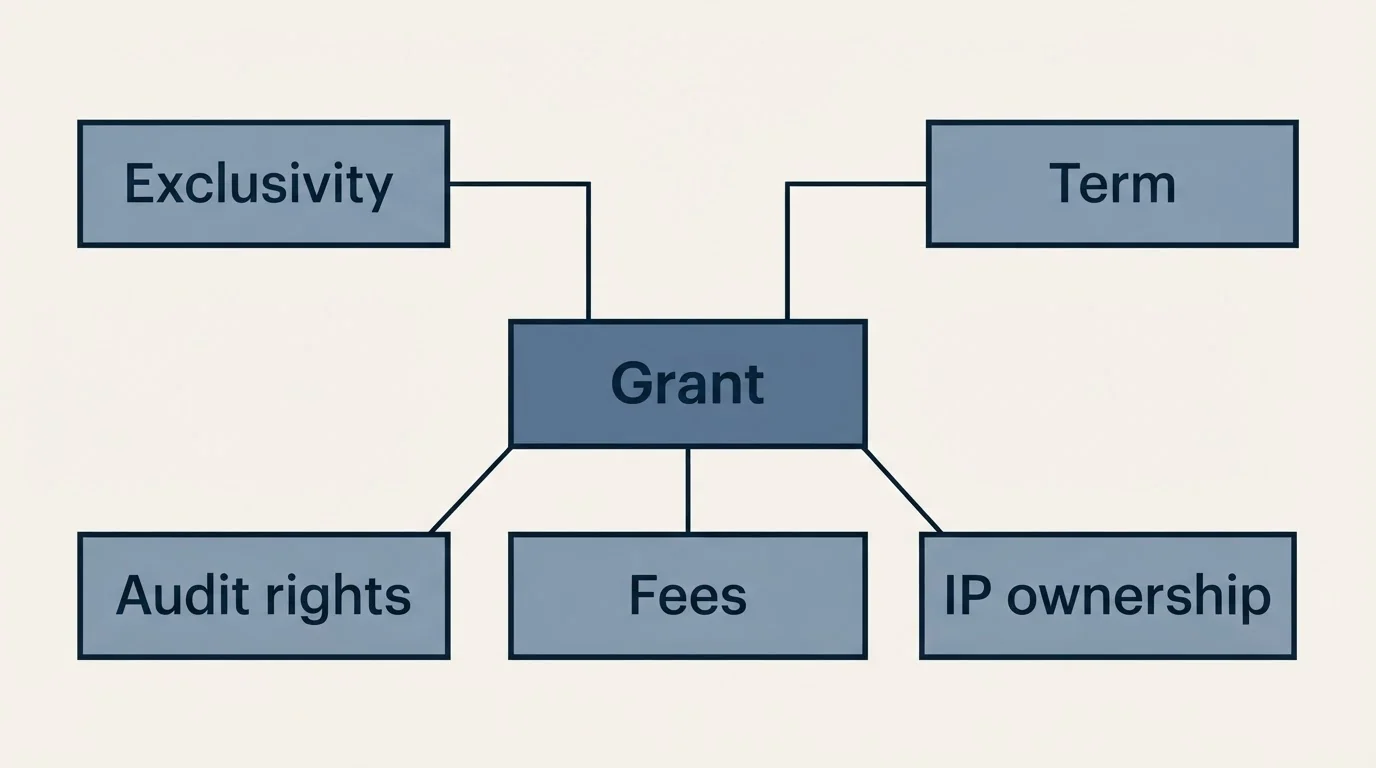
Once conversations begin, successful licensing requires navigating complex commercial and legal negotiations.
Key Terms to Address
Grant of rights. What exactly is being licensed? Be specific about scope, including what's included and excluded.
Exclusivity. Is the license exclusive or non-exclusive? Are there field-of-use or territorial restrictions?
Term and termination. How long does the license last? What conditions allow termination?
Fees and payment. What's the fee structure? Consider upfront payments, royalties, minimums, and milestone payments.
Audit rights. For royalty-based licenses, what rights do you have to verify licensee reporting?
IP ownership. Who owns improvements or derivatives created by the licensee?
Warranties and indemnification. What do you warrant about the IP? What liabilities do each party assume?
Support and maintenance. What ongoing support do you provide? Is training included?
Negotiation Principles
Understand their needs. Different licensees have different priorities around exclusivity, territory, pricing, and support.
Know your IP's value. Research comparable licensing deals and understand what your IP is worth in the market.
Create options. Offer multiple licensing structures (exclusive vs. non-exclusive, royalty vs. flat fee) to find arrangements that work.
Protect your interests. Ensure contracts protect your core interests around IP ownership, payment, and appropriate use.
Build long-term relationships. Licensing works best as ongoing partnerships. Negotiate fairly and maintain relationships even when terms are disputed.
Managing Licensing Relationships
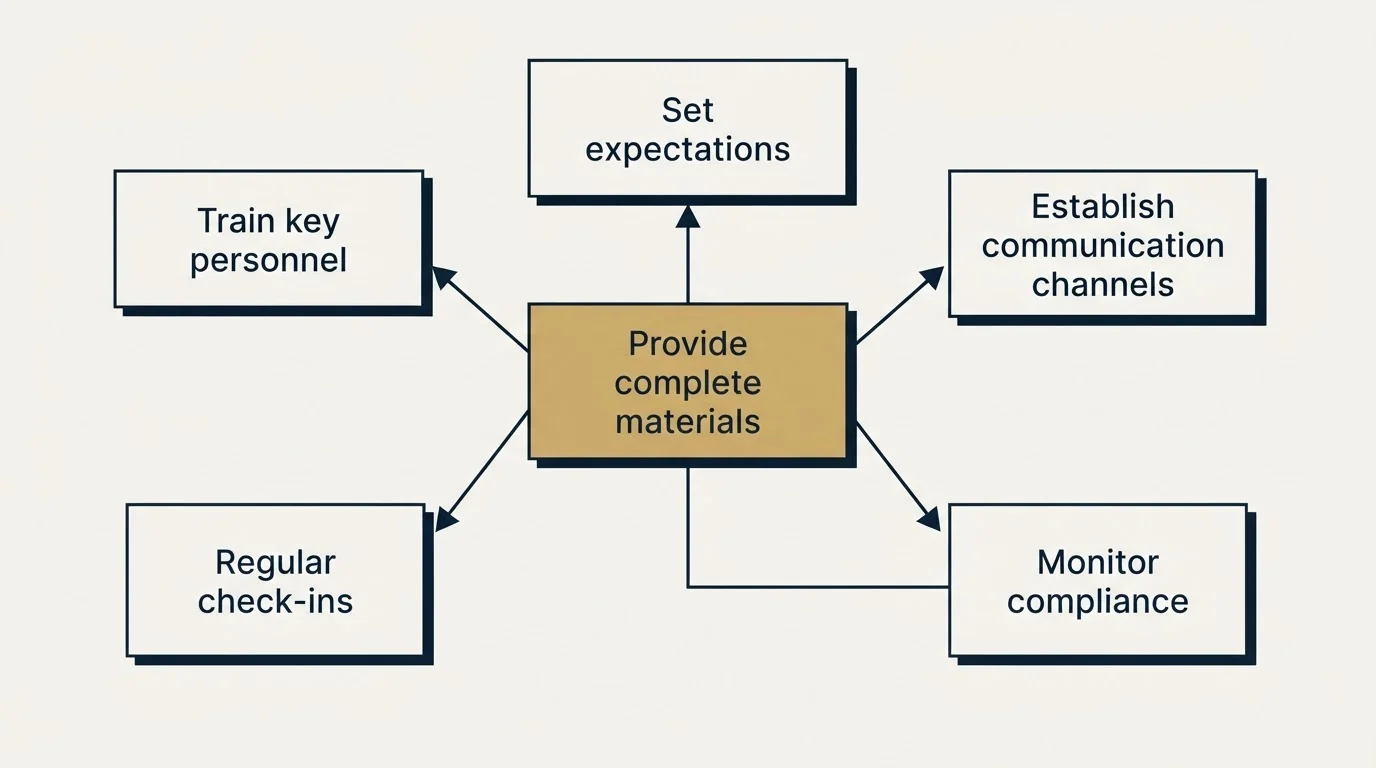
Signed agreements mark the beginning of licensing relationships that require ongoing management.
Onboarding Licensees
Provide complete materials. Ensure licensees have everything needed to use the IP effectively.
Train key personnel. For technical IP, train licensee teams on implementation and best practices.
Establish communication channels. Define who contacts whom for different types of questions or issues.
Set expectations. Clarify reporting requirements, quality standards, and relationship norms.
Ongoing Management
Regular check-ins. Schedule periodic calls to discuss performance, challenges, and opportunities.
Monitor compliance. Verify licensees are using IP within agreement terms.
Track royalty reporting. For royalty-based licenses, ensure timely and accurate reporting.
Share updates. Keep licensees informed about IP improvements, new developments, or changes.
Address issues promptly. Resolve disputes or problems before they damage the relationship.
Renewal and Expansion
Track term dates. Know when agreements expire and initiate renewal discussions in advance.
Identify expansion opportunities. Are there additional territories, fields, or IP assets the licensee could benefit from?
Gather feedback. Understand what's working and what could improve for renewal negotiations.
Negotiate fairly. Consider market changes, relationship history, and mutual value when discussing renewals.
Measuring Licensing Outreach Success
Track metrics that indicate whether your licensing development efforts are working.
Outreach Metrics
Response rate. What percentage of potential licensees respond to outreach? Meeting conversion. What percentage of responses convert to substantive discussions? Proposal rate. How many discussions result in term sheet negotiations? Close rate. What percentage of negotiations result in signed agreements?
Licensing Program Metrics
Revenue by license. How much does each licensing arrangement generate? Total licensing revenue. What's the aggregate revenue across all licenses? Royalty performance. Are royalty-based licenses meeting minimum expectations? Renewal rate. What percentage of licenses renew when terms expire?
Portfolio Metrics
IP coverage. What percentage of your IP portfolio is generating licensing revenue? Market penetration. Are your licenses reaching the markets and applications you target? Competitive position. How does your licensing program compare to alternatives?
Common Licensing Outreach Mistakes
Avoid these errors that undermine licensing development efforts.
Overvaluing Your IP
Unrealistic expectations about IP value lead to failed negotiations and damaged relationships. Research market rates and comparable deals.
Undervaluing Your IP
Accepting terms far below market value leaves money on the table and may signal low quality to potential licensees.
Inadequate IP Protection
Attempting to license IP without proper legal protection exposes you to risk and reduces licensee confidence.
Generic Outreach
Licensing opportunities require specific connections between your IP and licensee needs. Generic "we have patents" messages don't resonate.
Poor Due Diligence on Licensees
Licensing to unqualified partners wastes time and can damage your IP's market position.
Neglecting Relationship Management
Licenses that lack ongoing management underperform. Active engagement ensures licensees maximize value and renew agreements.
Licensing Outreach Checklist
Use this checklist to ensure your licensing outreach succeeds.
Before Starting:
- IP properly protected (patents filed, copyrights registered, etc.)
- Licensing terms framework developed
- Target licensee profiles defined
- Supporting materials prepared
Prospect Identification:
- Target licensee list built
- Decision makers identified
- Qualification criteria applied
- Research completed on each prospect
Outreach:
- Personalized emails drafted
- Supporting materials ready
- Response handling process established
Negotiation Preparation:
- Term parameters defined
- Flexibility zones identified
- Legal counsel engaged
- Agreement templates ready
Building Your Licensing Revenue Stream
Licensing creates revenue from intellectual property without requiring you to productize, market, or deliver directly to end customers. The key is connecting your IP with organizations who can generate value from it.
Cold email provides direct access to the executives who evaluate and execute licensing deals. By demonstrating clear connections between your IP and their needs, you can open conversations that lead to significant licensing arrangements.
Start by clearly defining what IP you have available for licensing. Identify the types of companies that could benefit from that IP. Research specific organizations and decision makers within them. Craft outreach that speaks to their specific situations. Follow up persistently through extended evaluation cycles. Negotiate terms that create mutual value. Manage relationships actively to maximize long-term results.
Ready to generate licensing revenue from your intellectual property? Our team specializes in outreach campaigns that connect IP owners with potential licensees. Request your free custom campaign and let us help you turn your intellectual property into licensing revenue.
Related Reading
Frequently asked questions.
Frequently asked questions- Why is cold email effective for licensing deals?
- Cold email provides direct access to the business development executives, product managers, and legal professionals who evaluate licensing deals. It allows you to control how your intellectual property is initially presented, highlighting aspects most relevant to each potential licensee. Proactive outreach also reveals market interest in your IP through responses and conversations, providing intelligence about demand, pricing expectations, and competitive alternatives rather than waiting for licensees to discover your assets.
- What types of intellectual property can be licensed through cold email outreach?
- Six main categories of IP can be licensed: patents and technology protected by utility or design patents; software including source code, algorithms, and APIs; content such as written work, images, video, and music; brand names, logos, and trademarks; proprietary data, training datasets, and analytical models; and expertise including proprietary processes, methodologies, and frameworks. Each type creates different licensing opportunities depending on how potential licensees could incorporate the IP into their products or operations.
- How do I identify the right companies to target for licensing deals?
- Qualified licensees meet several criteria: strategic fit where your IP addresses a genuine need in their product or operations, implementation capability to use your IP effectively, strong market position to generate meaningful revenue, financial strength to afford fees and sustain long-term partnership, and an existing IP strategy indicating openness to licensing. Find prospects through industry analysis of companies in relevant markets, patent analysis to identify who's citing your patents or developing in adjacent areas, and product gap analysis to locate companies whose offerings could benefit from your IP's capabilities.
- What are the main types of licensing arrangements?
- Seven primary licensing arrangements exist: exclusive licensing where one licensee receives sole rights for higher fees; non-exclusive licensing allowing multiple licensees simultaneously; field-of-use licensing restricted to specific applications or industries; territorial licensing granting rights for specific geographic regions; sublicensing arrangements where licensees can grant licenses to third parties; royalty-based licensing with fees tied to revenue or usage; and hybrid arrangements combining upfront payments with ongoing royalties, milestone payments, or minimum guarantees.
- How does cold email outreach help discover market demand for my intellectual property?
- Cold outreach to potential licensees reveals market interest through responses and conversations that provide intelligence about demand levels, pricing expectations, and competitive alternatives. When you initiate contact with multiple qualified prospects, their reactions indicate whether your IP addresses real market needs and what value proposition resonates most strongly. This market discovery process transforms outreach from simply seeking deals into a research activity that informs your entire licensing strategy and positioning.
About the author.

Ben Carden is CRO at RevenueFlow, which builds and operates outbound revenue engines for B2B companies. Previously at Gartner Enterprise. Studied at London School of Economics.
Ben Carden · CRO
Connect on LinkedIn →Explore more.
Ready to scale your outreach?
We build GTM engines that book real meetings. See the receipts.
Related articles.
Cold Email for Affiliate Recruitment: Strategy Guide
Master cold email outreach to recruit high-performing affiliates who can drive significant revenue for your business with proven templates and strategies.
Cold Email for Reseller Partnerships: Strategy Guide
Learn how to use cold email to recruit resellers and channel partners who can expand your market reach and drive revenue through their existing customer relationships.