Cold Email for Link Building: How to Get Quality Backlinks
Learn how to use cold email outreach to build high-quality backlinks that improve your SEO rankings, with proven templates and strategies that get responses.
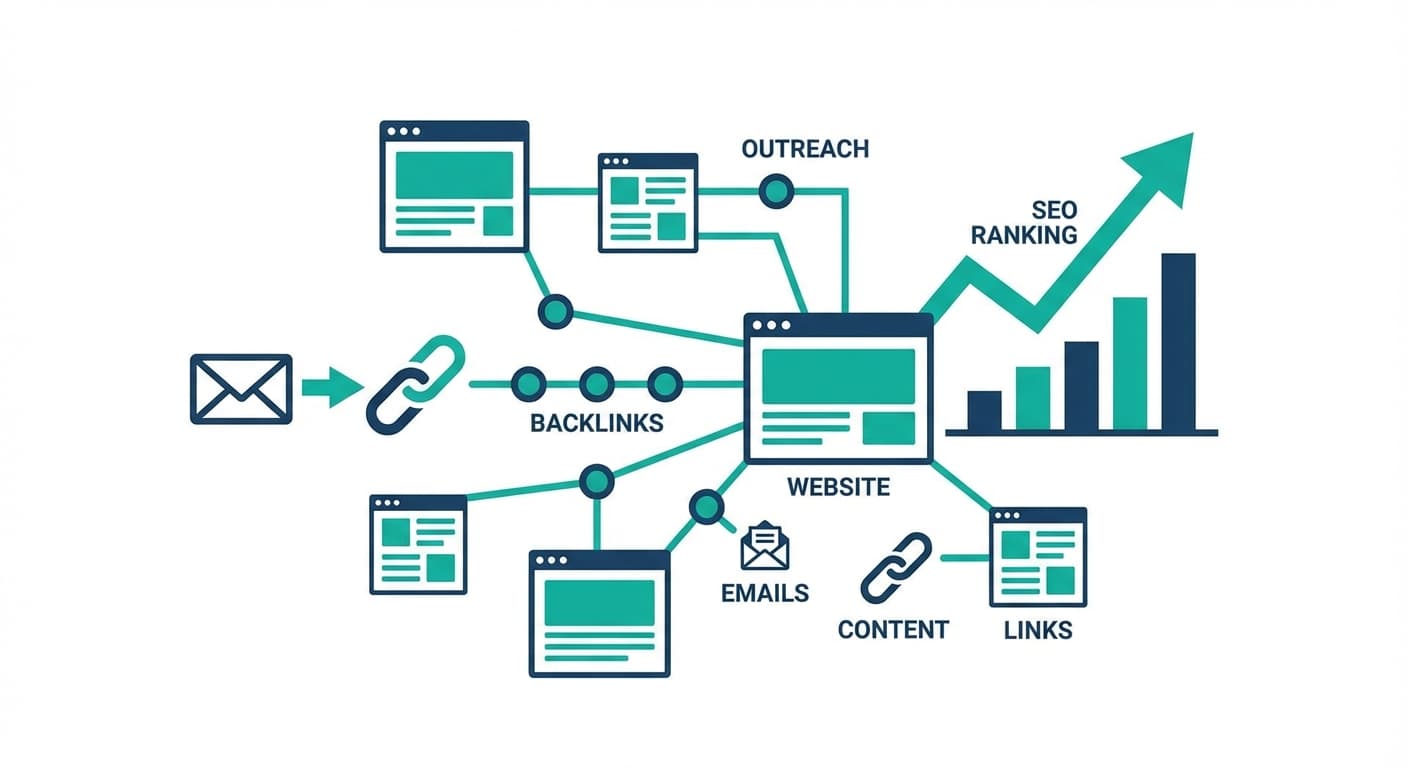
Cold email link building works by contacting website owners and editors directly to propose mutually beneficial link placements. You identify opportunities through competitor backlink analysis, broken link checking, or search operators like 'write for us' + your niche. Effective outreach leads with value, demonstrates familiarity with the target site, and makes specific requests, such as guest post placements, broken link replacements, or resource page inclusion. Response rates improve significantly when you provide social proof and make the action easy for the recipient.
Key takeaways
- Most link building campaigns fail with response rates below 5%, but strategic cold email outreach can move pages from position 15 to position 3 in Google search results.
- Six primary link building outreach types exist: guest post outreach, resource page link building, broken link building, skyscraper technique outreach, unlinked brand mention conversion, and expert roundup contributions.
- Broken link building typically achieves higher response rates than other methods because you're solving an existing problem for webmasters rather than asking for favors.
- Effective prospect qualification requires evaluating domain authority, topical relevance, actual traffic levels, editorial standards, and link placement quality before outreach.
- Cold email link building provides direct access to decision-makers at scale while remaining cost-effective compared to paid link placements or agency fees.
Reviewed and updated October 1, 2026
Cold Email for Link Building: How to Get Quality Backlinks
A single backlink from a high-authority website can move your page from position 15 to position 3 in Google search results. Yet most link building campaigns fail before they start, with response rates hovering below 5%. The difference between successful link builders and those who struggle comes down to one factor: the quality of their outreach emails.
Cold email remains one of the most effective channels for acquiring backlinks at scale. Unlike hoping for organic links or paying for placements (which Google penalizes), strategic outreach puts you in direct contact with website owners and editors who control the links you need.
This guide covers everything you need to know about using cold email for link building, from finding the right opportunities to crafting emails that actually get responses.
Everything below applies to a link building outreach email whichever campaign type it belongs to, because the ask, the relevance and the single next step do not change between them.
Why Cold Email Works for Link Building
Link building through cold email offers several advantages over other methods:
Direct access to decision-makers. When you email a blog editor or webmaster, you're reaching the person who can actually add your link. There's no algorithm to game, no waiting for someone to discover your content organically.
Scalable with personalization. Unlike one-off relationship building, cold email lets you reach hundreds of prospects while still maintaining personal touches that increase response rates.
Trackable and improvable. You can measure open rates, response rates, and conversion rates, then optimize your approach based on real data.
Cost-effective. Compared to paid link placements or agency fees, cold email outreach has minimal hard costs. Your main investment is time and strategy.
Builds real relationships. Many of the best link building partnerships start with a cold email and evolve into ongoing collaborations, guest posting opportunities, and mutual promotion.
The key is approaching link building outreach differently than typical sales emails. You're not asking someone to buy something. You're proposing a mutually beneficial arrangement where both parties gain value.
Types of Link Building Outreach
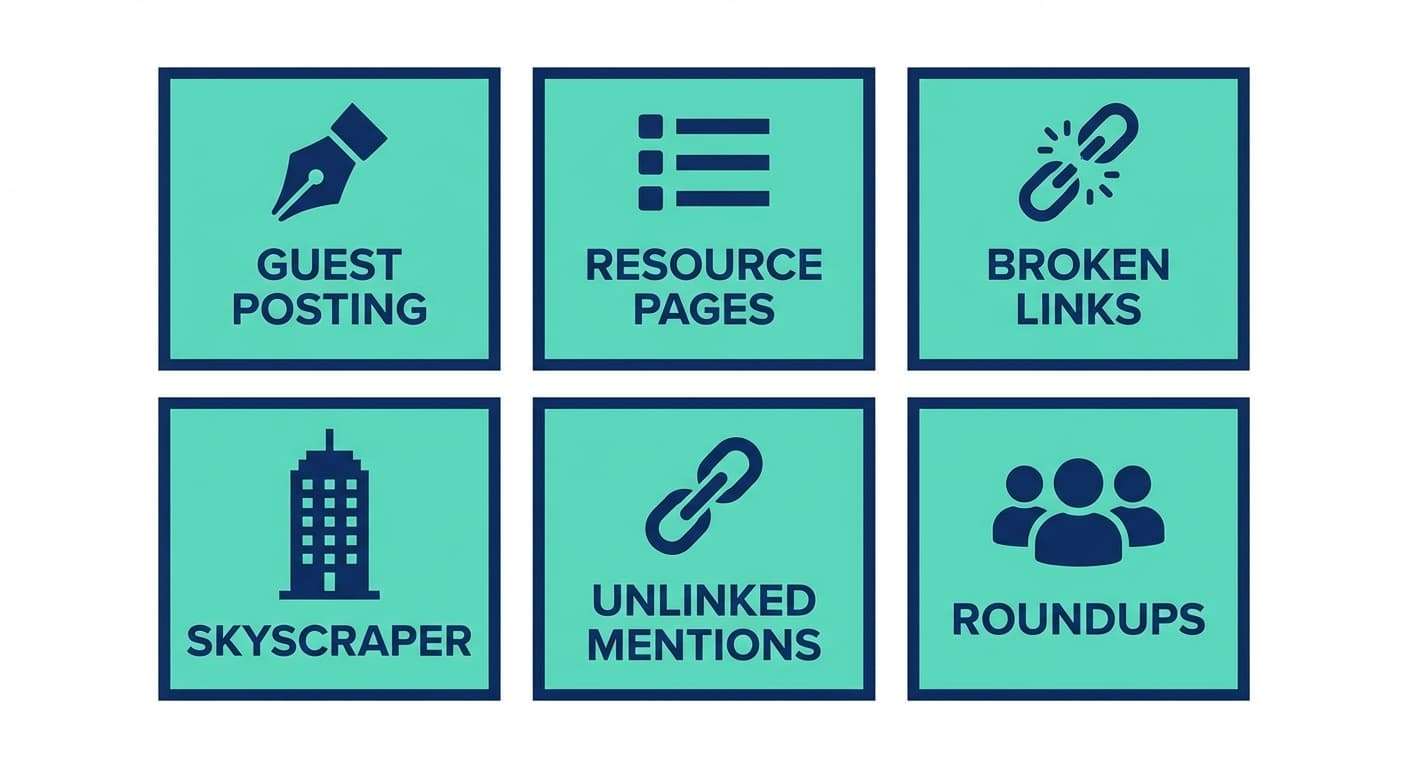
Different link building tactics require different outreach approaches. Understanding these categories helps you craft more targeted, effective emails.
Guest Post Outreach
Guest posting involves writing original content for another website in exchange for a link back to your site (usually in the author bio or within the content). This remains one of the highest-quality link building methods because:
- You're providing genuine value to the host site
- The link appears in a contextually relevant article
- You build relationships with editors in your industry
Guest post outreach requires demonstrating your writing ability and proposing topics that fit the target site's audience.
Resource Page Link Building
Many websites maintain resource pages, link roundups, or "best of" lists in their niche. Getting included on these pages provides contextually relevant links from sites that actively curate content.
This outreach focuses on demonstrating why your resource deserves inclusion and how it benefits the page's readers.
Broken Link Building
When websites link to pages that no longer exist (404 errors), you have an opportunity. By finding broken links on relevant sites and offering your content as a replacement, you're helping webmasters fix a problem while earning a link.
This approach has naturally high response rates because you're providing a clear solution to an existing issue.
Skyscraper Technique Outreach
The skyscraper technique involves finding popular content with many backlinks, creating something substantially better, and reaching out to sites that linked to the original. Your pitch focuses on why your improved resource deserves the link instead.
Unlinked Brand Mentions
When websites mention your brand, product, or content without linking to you, a simple outreach email can often convert these mentions into links. Since they've already referenced you positively, the ask is straightforward.
Expert Roundup Contributions
Many blogs create expert roundup posts where they gather insights from multiple industry voices. Proactively reaching out to offer your expertise can earn links while building your authority.
Finding Link Opportunities
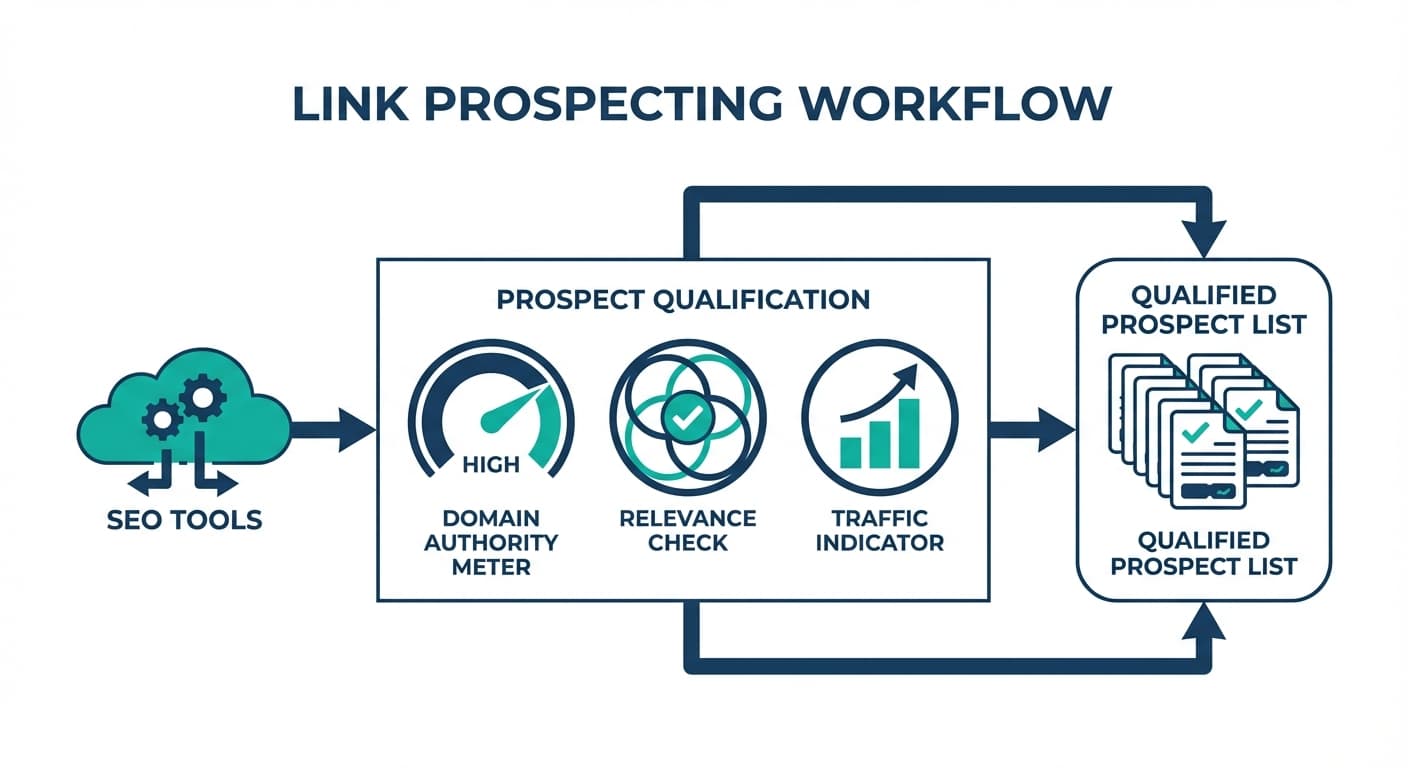
Before you can send effective outreach emails, you need to identify the right prospects. Quality matters more than quantity in link building.
Using SEO Tools for Prospecting
Tools like Ahrefs, Moz, and SEMrush help you find link opportunities through:
- Competitor backlink analysis: See who links to your competitors and reach out to those same sites
- Content explorer searches: Find articles in your niche that accept guest contributions or maintain resource lists
- Broken link checking: Identify dead links on relevant sites where your content could serve as a replacement
Manual Prospecting Techniques
Beyond tools, effective prospectors use search operators like:
- "write for us" + [your niche]
- "guest post guidelines" + [your industry]
- "resources" + [your topic]
- "best [topic] blogs" or "top [industry] tools"
Qualifying Prospects
Not every link opportunity is worth pursuing. Evaluate prospects based on:
- Domain authority: Higher DA sites pass more link equity
- Relevance: Links from topically related sites carry more weight
- Traffic: Sites with actual readers provide referral traffic beyond SEO value
- Editorial standards: Sites that accept anything often have low-quality link profiles
- Link placement: Editorial links within content beat footer or sidebar links
Building Your Prospect List
Organize prospects in a spreadsheet with:
- Website URL
- Contact name and email
- Domain authority score
- Outreach type (guest post, resource page, etc.)
- Personalization notes
- Status tracking columns
A well-organized prospect list makes personalization easier and prevents duplicate outreach.
What Works: Link Building Email Best Practices
Link building emails differ from sales emails in important ways. These best practices improve your chances of getting responses.
Lead with Value
Your email should immediately communicate what the recipient gains. Whether you're offering to write free content, fix a broken link, or share a better resource, the value proposition should be clear in the first few sentences.
Be Specific About What You Want
Vague requests get ignored. Clearly state whether you want to:
- Write a guest post on a specific topic
- Be included on a particular resource page
- Have your content considered as a broken link replacement
Demonstrate Familiarity
Generic emails that could apply to any website get deleted. Reference specific articles, mention what you like about their content, or comment on recent posts. This shows you've done your homework.
Keep It Short
Editors and webmasters are busy. Get to the point quickly. Aim for emails under 150 words that cover: who you are, what you're offering, and what you're asking for.
Provide Social Proof
Include links to previous guest posts, mention other sites you've contributed to, or highlight relevant credentials. This builds credibility without bragging.
Make It Easy to Say Yes
Include everything the recipient needs to make a decision:
- Topic ideas (for guest posts)
- Links to your suggested resource (for resource pages)
- The specific broken link and your replacement URL (for broken link building)
Use a Professional Email Address
Send from a branded email domain, not Gmail or Yahoo. This increases trust and deliverability.
Where we differ from standard practice
Much of the advice on this page reflects how outbound is commonly run. We run it differently, and since this page sits on our site it is worth saying where the difference is and what it costs us.
- A sequence of messages to each prospect over several weeks
- Later messages often land in the same email thread
- Every contact is reached more than once, so a distracted reader gets another chance
- The later messages go only to people who did not answer the first
- Reputation cost accrues on the sending domain across everything else it sends
- One message, then that campaign is finished for that contact
- No thread replies and no bumps
- More of the work moves into targeting and into the one message
- We reach each contact less often, and that is the cost we accept
The reasoning is mechanical rather than moral. A follow-up arrives underneath a message the recipient has already seen and chosen not to answer, so it is delivered to the population most likely to mark it as spam, and the reputation cost of that lands on the sending domain across every campaign running on it. We set that cost against the replies a sequence recovers and decided the trade was not worth it. The full argument, with the numbers from our own campaigns, is in why we stopped using follow-ups.
Follow Up Strategically
Most link builders follow up: wait five to seven days, cap at two to three follow-ups, add new value in each. We do not, and the links a follow-up would have recovered are the cost we accept.
Real Link Building Email Examples
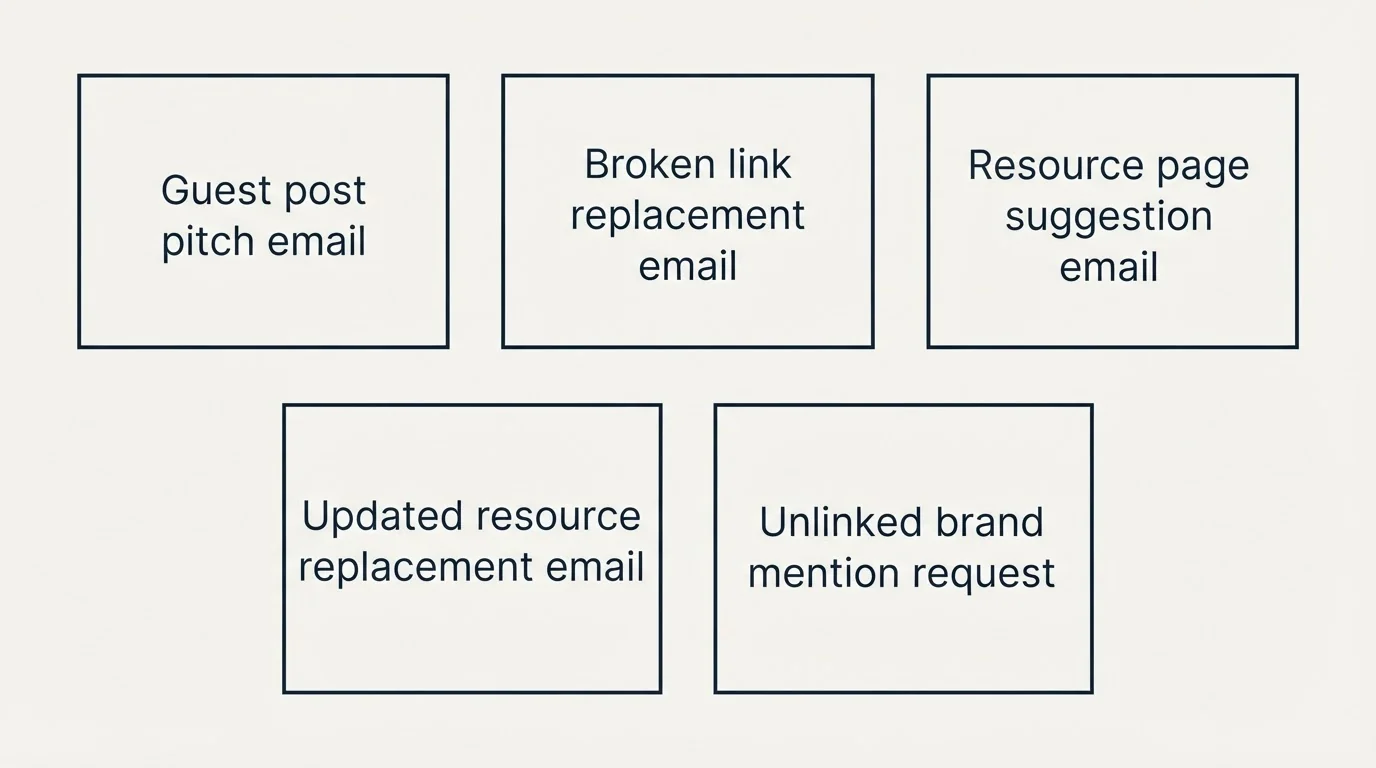
These templates demonstrate effective outreach for different link building tactics. Customize them with genuine personalization for each prospect.
Guest Post Outreach Email
Subject: Guest post idea for [Website Name]
Hi [Name],
I've been reading [Website Name] for a while and particularly enjoyed your recent article on [specific topic]. The section about [specific point] matched what I've seen in my own work with [relevant experience].
I'd love to contribute a guest post to your site. Based on what resonates with your audience, I think one of these topics could work well:
- [Topic idea 1 with specific angle]
- [Topic idea 2 with specific angle]
- [Topic idea 3 with specific angle]
For context, I've written for [publication 1], [publication 2], and [publication 3]. You can see my writing style here: [link to sample].
Would any of these topics interest you? I'm happy to send an outline or adjust the angle based on your feedback.
Best, [Your name] [Your website]
Broken Link Building Email
Subject: Found a broken link on [page name]
Hi [Name],
I was reading your [specific page title] and noticed that the link to [original resource name] in the [section name] section is returning a 404 error.
I recently published a comprehensive guide on [topic] that covers similar ground: [your URL]. It includes [specific elements that make it valuable, such as updated statistics, step-by-step instructions, or downloadable templates].
If you think it would be helpful for your readers, feel free to use it as a replacement. Either way, wanted to give you a heads up about the broken link.
Thanks for maintaining such a useful resource page.
[Your name]
Resource Page Inclusion Email
Subject: Resource suggestion for your [page name]
Hi [Name],
I found your [specific resource page title] while researching [topic]. Great collection of tools and guides, especially [specific resource you genuinely found useful].
I wanted to suggest a resource that might fit well in your [specific section] section. We created [resource name], which [brief description of what it does and why it's valuable]. It's been referenced by [social proof like publications, downloads, or user count].
Here's the link if you'd like to take a look: [URL]
No pressure either way. Just thought your readers might find it useful alongside the other resources you've curated.
Best, [Your name]
Skyscraper Technique Email
Subject: Updated resource on [topic]
Hi [Name],
I noticed you linked to [original resource name] in your article about [article topic]. That piece has helped a lot of people understand [subject], though some of the information is now outdated.
We just published an updated guide on the same topic: [your URL]. It includes [specific improvements such as 2024 data, new case studies, additional techniques, or interactive elements].
If you get a chance to review it and think it would serve your readers better, I'd appreciate you considering it as a replacement for the current link. Happy to answer any questions about the content.
Thanks for writing about [topic]. Your article on [specific article] was particularly helpful when I was researching [related subject].
[Your name]
Unlinked Brand Mention Email
Subject: Thanks for mentioning [your brand]
Hi [Name],
Just wanted to say thanks for including [your brand/product] in your article about [article topic]. We were excited to see [specific quote or context of the mention].
I noticed the mention doesn't currently link to our site. Would you be open to adding a link so your readers can easily find more information? Our main page is [URL], or [alternative URL] might be more relevant given the context of your article.
Either way, we appreciate the mention and enjoyed your take on [specific aspect of their article].
Best, [Your name]
Common Mistakes to Avoid
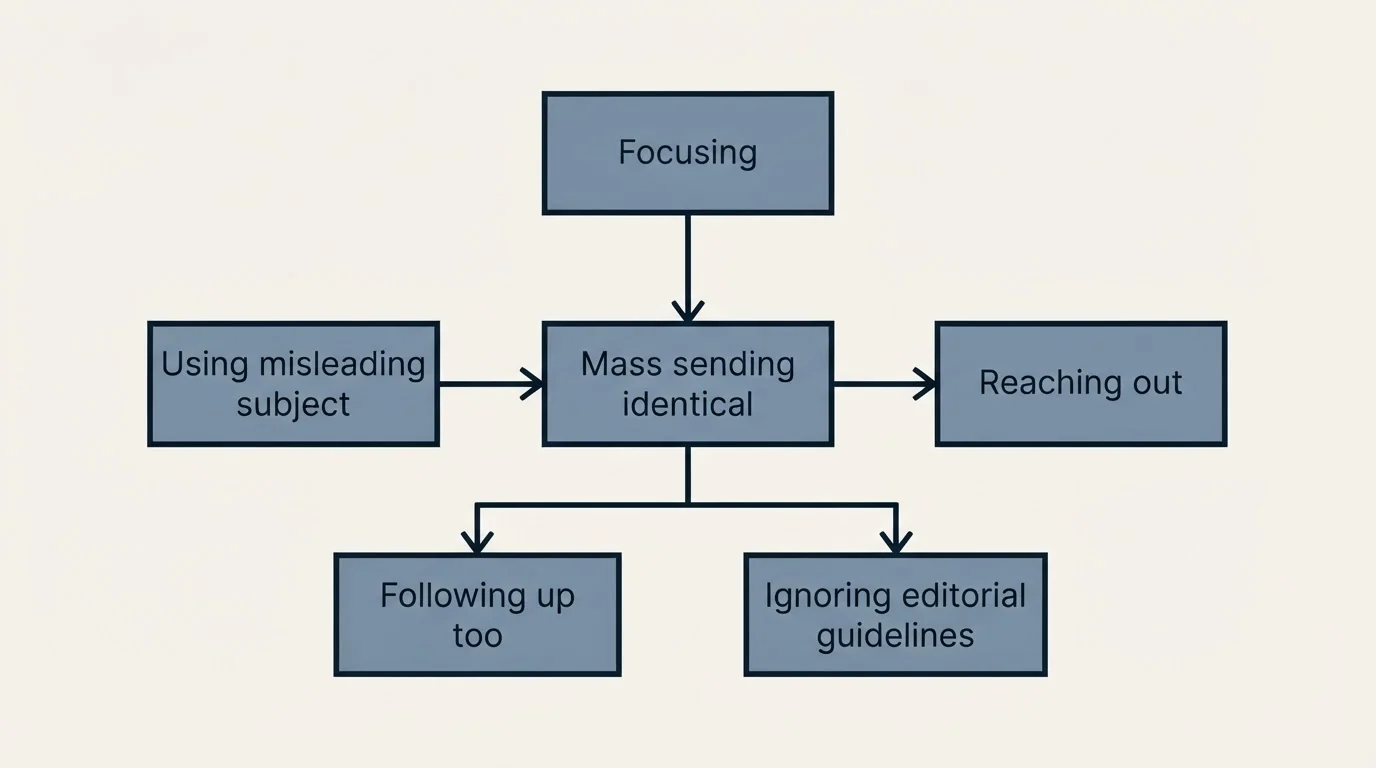
Even well-intentioned link building outreach fails when it includes these common errors:
Mass sending identical emails. Email providers and recipients can spot template emails. Generic outreach signals that you haven't invested effort, so why should they?
Focusing on your needs. Emails that emphasize how much you need a link or how it will help your SEO get ignored. Focus on the value you provide to the recipient and their audience.
Reaching out to irrelevant sites. A link from an unrelated website provides minimal SEO value and makes your pitch harder. Stick to topically relevant prospects.
Ignoring editorial guidelines. Many sites publish guest post requirements. Sending pitches that violate these guidelines wastes everyone's time and burns potential relationships.
Following up too aggressively. Where follow-ups are used at all, three over two weeks is the common ceiling. Daily emails or persistent messaging after a "no" damages your reputation.
Using misleading subject lines. Clickbait subjects might get opens but destroy trust. Be honest about the email's purpose.
Offering low-quality content. If you're pitching guest posts, your writing samples need to be excellent. Weak content reflects poorly on both you and the potential host site.
Forgetting to track results. Without measuring what works, you can't improve. Track opens, responses, and successful links by template and prospect type.
Skipping the relationship. The best link builders think long-term. A "no" today could become a "yes" later if you maintain a professional relationship.
Your Link Building Outreach Checklist
Use this checklist before launching any link building email campaign:
Prospect Research
- Identified relevant websites with sufficient domain authority
- Found the correct contact person and email address
- Verified the site accepts the type of outreach you're sending
- Noted personalization details for each prospect
- Checked that your content is genuinely relevant to their audience
Email Preparation
- Written a clear, honest subject line
- Opened with something specific to the recipient
- Clearly stated the value you're offering
- Made a specific, actionable request
- Included relevant social proof or credentials
- Kept the email under 150 words
- Proofread for errors and personalization accuracy
Technical Setup
- Sending from a professional, branded email address
- Email deliverability verified (SPF, DKIM, DMARC)
- Tracking system in place for opens and responses
- Spreadsheet ready for tracking outcomes
Content Readiness
- Link-worthy content or resource completed and published
- Writing samples available (for guest post pitches)
- Topic ideas prepared (for guest post pitches)
- Replacement content ready (for broken link pitches)
Getting Started with Link Building Outreach
Successful link building through cold email requires patience, persistence, and continuous improvement. Start with a small batch of highly targeted prospects, refine your approach based on results, and scale what works.
The templates and strategies in this guide provide a foundation, but your best results will come from genuine personalization and providing real value to the sites you reach out to.
If you want to apply these same principles to B2B lead generation, RevenueFlow can help. We run done-for-you cold email campaigns that generate qualified sales meetings using the same personalization and value-first approach that works for link building.
See how our cold email campaigns work and get a free custom campaign built for your business.
Related Reading
Frequently asked questions.
Frequently asked questions- Why does cold email work better than other link building methods?
- Cold email gives you direct access to the website owners and editors who control link placements, eliminating the need to game algorithms or wait for organic discovery. It's scalable while allowing personalization, trackable so you can optimize based on data, and cost-effective since your main investment is time rather than agency fees. Unlike paid placements that Google penalizes, strategic outreach builds genuine relationships that often evolve into ongoing collaborations and mutual promotion opportunities.
- What is broken link building and why does it have high response rates?
- Broken link building involves finding links on relevant websites that point to pages that no longer exist (404 errors), then offering your content as a replacement. This approach achieves naturally high response rates because you're helping webmasters fix an existing problem on their site rather than simply asking for a favor. You provide a clear solution while earning a contextually relevant link in return.
- How do I find websites to target for link building outreach?
- Use SEO tools like Ahrefs, Moz, or SEMrush to analyze competitor backlinks, search content explorers for articles in your niche, and check for broken links on relevant sites. Manual prospecting works through search operators like 'write for us' + your niche or 'resources' + your topic. Qualify prospects based on domain authority, topical relevance, actual traffic, editorial standards, and link placement quality before adding them to your outreach list.
- What makes a link building email effective?
- Effective link building emails lead with value rather than making immediate asks, demonstrate familiarity with the target website, and make specific requests about what you want. Keep emails short, provide social proof of your credibility, make it easy for recipients to say yes by minimizing their effort, and use a professional email address. Focus on proposing mutually beneficial arrangements rather than one-sided requests.
- What's the skyscraper technique for link building?
- The skyscraper technique involves finding popular content in your niche that has earned many backlinks, creating something substantially better or more comprehensive, then reaching out to websites that linked to the original piece. Your outreach pitch focuses on explaining why your improved resource deserves the link instead of the original. This works because you're offering genuinely superior content to sites that have already demonstrated interest in the topic.
About the author.

Ben Carden is CRO at RevenueFlow, which builds and operates outbound revenue engines for B2B companies. Previously at Gartner Enterprise. Studied at London School of Economics.
Ben Carden · CRO
Connect on LinkedIn →Explore more.
Ready to scale your outreach?
We build GTM engines that book real meetings. See the receipts.
Related articles.
Cold Email for Influencer Outreach: Partner with Creators
Learn how to use cold email to build authentic influencer partnerships that drive real results for your brand, with proven templates and strategies.
Cold Email for Product Feedback: Complete Strategy Guide
Learn how to use cold email to gather valuable product feedback from users and prospects. Includes proven templates, feedback frameworks, and response optimization techniques.
Cold Email for PR: How to Pitch Journalists and Get Coverage
Learn how to craft cold emails that get journalists to open, read, and respond to your pitches. Includes real templates, timing strategies, and a complete PR outreach checklist.
Cold Email for Reviews: Complete Strategy Guide
Learn how to use cold email to generate authentic product reviews on G2, Capterra, and other platforms. Includes proven templates, compliance guidelines, and review generation frameworks.
Cold Email for Focus Groups: Complete Strategy Guide
Learn how to use cold email to recruit qualified participants for focus groups. Includes proven templates, screening strategies, and group composition frameworks.
Cold Email for Awards Nominations: Complete Strategy Guide
Learn how to use cold email to secure industry awards and recognitions. Includes proven templates, submission strategies, and best practices for awards outreach that gets results.