Cold Email for Logistics: Reaching Supply Chain Leaders
Logistics companies deal with complex supply chains and multiple stakeholders. Here's how to approach cold email outreach to shippers, carriers, and supply chain executives.
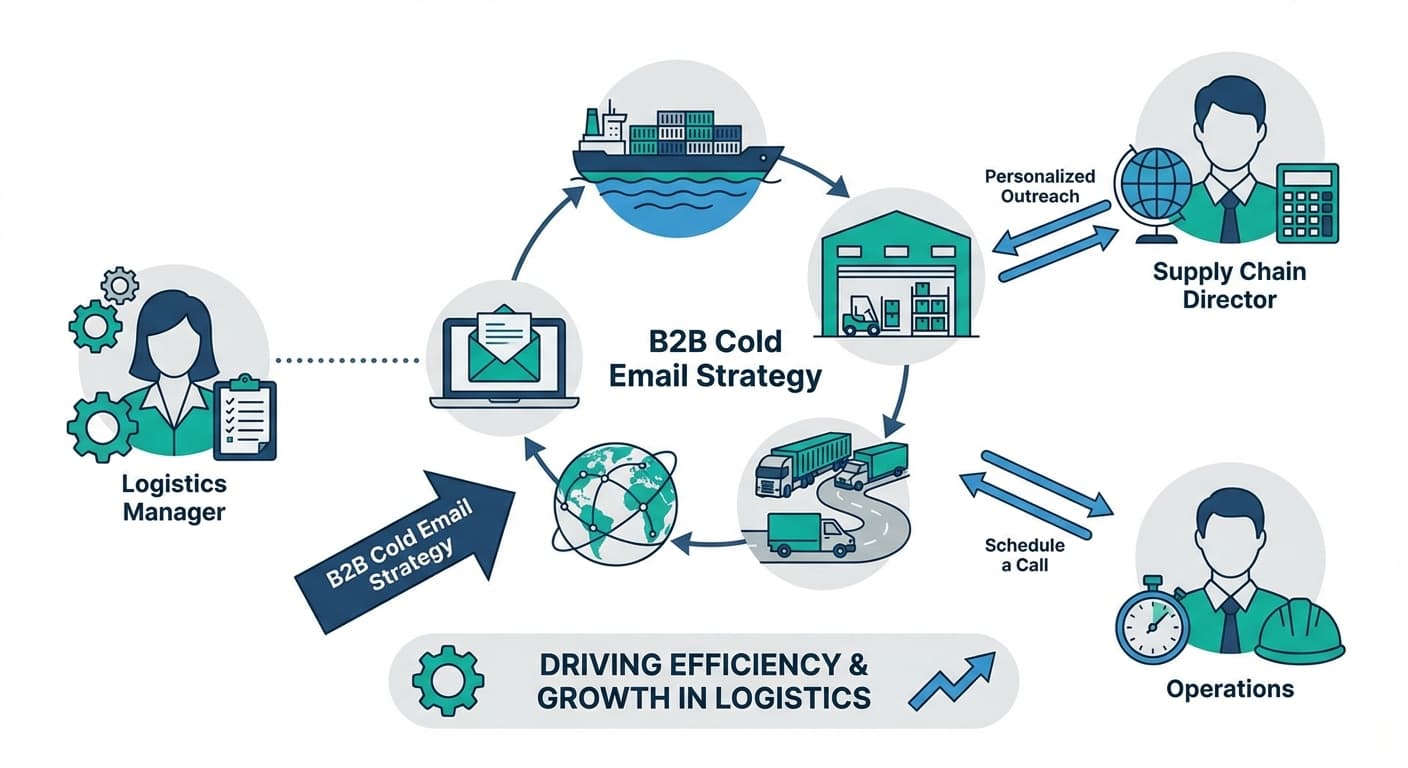
Cold email outreach to logistics companies succeeds when you understand their operational urgency, 3-8% profit margins, and relationship-driven purchasing culture. Segment prospects by company type (shippers, carriers, 3PLs, brokers), reference specific operational pain points, and lead with quantifiable value like cost reduction percentages or time savings. Time outreach around peak season preparation (July-September) and contract season (Q1-Q2) when buying decisions concentrate. Avoid generic B2B language and demonstrate genuine understanding of their real-time operational realities.
Key takeaways
- Logistics companies operate on thin margins of 3-8% for most transportation and warehousing operations, making them highly sensitive to ROI and requiring specific quantifiable claims rather than vague efficiency promises.
- Peak season preparation from July-September and contract season during Q1-Q2 represent critical timing windows when logistics decision makers actively evaluate new solutions.
- The logistics industry includes hundreds of thousands of fragmented companies from owner-operators to global networks, requiring precise segmentation by company type and service offering rather than industry-wide messaging.
- Logistics buyers prioritize operational urgency and relationship-driven purchasing, meaning cold email works best as the first step in building trust rather than attempting immediate closes.
- Decision makers filter ruthlessly due to constant operational pressure and prefer emails addressing pressing challenges with specific metrics over interruptions with irrelevant pitches.
Reviewed and updated September 15, 2026
Cold Email for Logistics: Reaching Supply Chain Leaders and Transportation Buyers
The logistics and supply chain industry forms the backbone of global commerce. From freight forwarding and trucking to warehousing and last-mile delivery, logistics companies enable the movement of goods that keeps economies running. For vendors selling into this space, whether you offer transportation management systems, fleet solutions, warehouse equipment, or consulting services, cold email outreach requires understanding the unique dynamics of this fast-paced, margin-sensitive industry.
Logistics decision makers operate under constant pressure. Shipments need to move on time, costs need to stay competitive, and disruptions need to be managed quickly. They receive countless sales pitches and have learned to filter ruthlessly. Breaking through requires demonstrating genuine understanding of their operational realities and offering solutions that address specific pain points.
This guide covers the principles, targeting strategies, and specific tactics that make cold email effective for reaching logistics and supply chain companies.
Understanding the Logistics Buying Environment
Before crafting your outreach, you need to understand how logistics companies evaluate and purchase new solutions. The industry operates differently from other B2B sectors in several important ways.
Operational Urgency and Time Sensitivity
Logistics is a real-time business. Trucks need to be on the road, shipments need to clear customs, and warehouses need to fulfill orders. Decision makers often have limited bandwidth for evaluating new solutions because they are managing immediate operational demands.
This urgency creates both challenges and opportunities. Cold emails that interrupt with irrelevant pitches will be ignored. But emails that address pressing operational challenges can receive immediate attention because logistics professionals are always looking for ways to improve efficiency and reduce problems.
Margin Pressure and Cost Sensitivity
The logistics industry operates on thin margins, typically 3-8% for most transportation and warehousing operations. This margin pressure makes decision makers highly sensitive to costs and ROI. Every purchase needs to demonstrate clear financial benefit.
Your outreach must lead with quantifiable value. Vague promises of "improved efficiency" fall flat. Specific claims like "customers reduce fuel costs by 12-15%" or "average 4-hour reduction in dock-to-stock time" resonate because they translate directly to margin impact.
Fragmented Industry Structure
The logistics industry includes hundreds of thousands of companies ranging from owner-operators to global freight networks. This fragmentation means your targeting strategy matters enormously. The challenges facing a regional LTL carrier differ significantly from those of a global freight forwarder or a 3PL serving e-commerce customers.
Effective outreach requires segmenting your prospects by company type, size, and service offering. Generic messaging that tries to address the entire industry will underperform targeted messaging crafted for specific segments.
Technology Adoption Patterns
Logistics has traditionally been a technology laggard, but digital transformation is accelerating rapidly. Companies are investing in TMS platforms, visibility tools, automation, and data analytics. However, many organizations still run on legacy systems, manual processes, and spreadsheets.
This creates opportunities for technology vendors but also challenges. Decision makers may be skeptical of technology promises based on past implementation failures. They want to see proven solutions that integrate with existing systems and can be deployed without disrupting operations.
Relationship-Driven Purchasing
Despite increasing technology adoption, logistics remains a relationship-driven industry. Personal connections, reputation, and trust heavily influence purchasing decisions. Referrals and recommendations carry significant weight.
Cold email outreach works best as the first step in building a relationship, not as a vehicle for closing deals. Your goal is to start conversations that lead to trust and eventual partnership.
Key Stakeholder Types in Logistics
Logistics companies have distinct roles with different priorities and pain points. Understanding these stakeholders helps you craft targeted messaging and identify the right entry points.
Shippers (Beneficial Cargo Owners)
Shippers are the companies that need to move goods. They may be manufacturers, retailers, distributors, or e-commerce companies. They are buyers of logistics services and often purchase technology to manage their supply chains.
What they care about:
- Reducing transportation costs while maintaining service levels
- Visibility into shipment status and ETA accuracy
- Managing carrier relationships and performance
- Optimizing inventory and reducing carrying costs
- Meeting customer delivery expectations
- Sustainability and emissions reduction goals
How to reach them:
- Lead with cost reduction and service improvement metrics
- Reference challenges specific to their industry vertical
- Demonstrate experience with similar shippers
- Focus on outcomes they can communicate to their customers
- Offer benchmark data comparing their performance to peers
Carriers and Transportation Providers
Carriers operate the trucks, ships, planes, and trains that move freight. They range from owner-operators to major transportation companies. Their business model centers on maximizing asset utilization while controlling costs.
What they care about:
- Maximizing revenue per mile or per asset
- Reducing empty miles and deadhead
- Driver recruitment, retention, and satisfaction
- Fuel efficiency and cost management
- Compliance with regulations (ELD, HOS, FMCSA)
- Maintenance and asset longevity
- Load planning and route optimization
How to reach them:
- Lead with revenue and efficiency improvements
- Speak the language of transportation operations
- Reference specific fleet sizes and operation types
- Demonstrate understanding of regulatory requirements
- Focus on solutions that make drivers' lives easier
Third-Party Logistics Providers (3PLs)
3PLs manage logistics operations on behalf of shippers. They may provide transportation management, warehousing, fulfillment, or comprehensive supply chain services. Their success depends on serving customers efficiently while maintaining margins.
What they care about:
- Winning and retaining customer business
- Operational efficiency and cost control
- Technology capabilities that differentiate their services
- Scalability to handle volume fluctuations
- Visibility and reporting for customers
- Multi-client warehouse and transportation management
How to reach them:
- Lead with capabilities that help them serve customers better
- Reference experience with similar 3PL operations
- Focus on scalability and multi-tenant capabilities
- Demonstrate integration with common shipper systems
- Highlight competitive advantages your solution provides
Freight Brokers and Forwarders
Brokers and forwarders act as intermediaries, connecting shippers with carriers and managing the complexities of domestic and international freight movement.
What they care about:
- Finding capacity at competitive rates
- Building and maintaining carrier networks
- Transaction speed and operational efficiency
- Margin management on each shipment
- Customer service and communication
- Compliance and documentation (especially for international)
How to reach them:
- Lead with efficiency and margin improvement
- Reference transaction volumes and scalability
- Focus on carrier network management capabilities
- Demonstrate understanding of brokerage economics
- Highlight speed and ease of use
Supply Chain and Operations Executives
At larger organizations, supply chain executives oversee end-to-end operations and make strategic decisions about technology, partners, and processes.
What they care about:
- Total supply chain cost optimization
- Risk management and resilience
- Strategic supplier and carrier relationships
- Technology roadmap and digital transformation
- Sustainability and ESG requirements
- Talent and organizational development
How to reach them:
- Lead with strategic outcomes and competitive positioning
- Reference enterprise implementations and case studies
- Focus on long-term value rather than quick wins
- Demonstrate thought leadership and industry expertise
- Offer executive briefings and strategic conversations
Seasonal Patterns and Timing in Logistics
The logistics industry has pronounced seasonal patterns that affect both operations and buying behavior. Understanding these patterns helps you time your outreach for maximum effectiveness.
Peak Season Preparation (July-September)
Logistics companies spend the summer preparing for peak season (Q4 holiday shipping). This period involves capacity planning, carrier negotiations, and technology testing. Decision makers may be more receptive to solutions that help them prepare.
Outreach opportunity: Position your solution as helping them handle peak season challenges. Focus on scalability, capacity management, and performance under stress.
Peak Season (October-December)
During peak season, logistics professionals are fully consumed by operations. Response rates to cold outreach typically drop as everyone focuses on execution.
Outreach approach: Keep touchpoints minimal and relevant. Follow up on earlier conversations but avoid heavy prospecting. Offer to reconnect after peak.
Post-Peak Review (January-February)
After peak season, companies assess performance and identify areas for improvement. Budget planning for the new year is often underway. This is often the best time for strategic conversations.
Outreach opportunity: Reference peak season challenges and offer to discuss solutions for the coming year. Share benchmark data and best practices.
Contract Season (Q1-Q2)
Many transportation contracts are negotiated in the first half of the year. Shippers review carrier performance and make changes. Technology purchases may align with contract cycles.
Outreach approach: Time outreach to align with contract renewal cycles. Offer solutions that support better carrier management or procurement.
Produce and Refrigerated Seasons
For cold chain logistics, produce seasons create specific demand patterns. Spring through fall sees heavy refrigerated freight movement.
Outreach opportunity: Target cold chain specialists with seasonal relevance.
Crafting Effective Cold Emails for Logistics
Logistics professionals respond to practical, operationally-focused communication. They want to know what you do, why it matters to them, and what the next step looks like.
The Operational Pain Point Approach
Lead with a specific operational challenge that your target audience experiences. Demonstrate understanding of their reality.
Structure:
- Reference a specific operational challenge
- Connect that challenge to business impact
- Briefly explain how you address it
- Provide a credibility marker (customer result or experience)
- Propose a low-friction next step
The Industry Benchmark Approach
Logistics companies are competitive and interested in how they compare to peers. Benchmark data gets attention.
Structure:
- Lead with an industry benchmark or data point
- Explain why this metric matters
- Reference how top performers achieve results
- Position your solution as enabling similar outcomes
- Offer to discuss applicability to their operation
The Trigger Event Approach
Logistics companies experience events that create opportunities: new customer wins, facility openings, service expansions, leadership changes, or public challenges. Timing outreach to these triggers improves response rates.
Structure:
- Reference the specific trigger event
- Connect it to likely operational challenges
- Explain relevant experience with similar situations
- Offer to share insights or discuss needs
- Propose a brief conversation
Example Emails for Logistics and Supply Chain
Example 1: TMS Software to Director of Transportation (Shipper)
Subject: Reducing freight spend at [Company]
Hi [First Name],
Shippers in [industry] typically overspend on freight by 8-12% due to limited visibility into carrier performance and rate compliance. The gap between contracted rates and actual invoices, combined with accessorial charges, adds up quickly.
We help transportation teams gain full visibility into freight spend and automate the audit process. Our customers typically recover 5-8% of freight costs within the first year while reducing the time spent on carrier management.
Would a 15-minute call be useful to discuss how you currently manage rate compliance and whether our approach might be relevant?
Best, [Your name]
Example 2: Fleet Management to VP Operations (Carrier)
Subject: Fuel cost reduction for [Company]'s fleet
Hi [First Name],
I noticed [Company] operates [X] trucks across [region]. For fleets your size, fuel typically represents 25-30% of operating costs. Even small improvements in fuel efficiency translate to significant margin gains.
We work with regional carriers to reduce fuel costs through a combination of route optimization, driver coaching, and idle management. Our customers average 12-15% fuel cost reduction within six months.
Would it be valuable to see how carriers with similar operations have approached fuel cost management? I can share a brief case study or schedule a quick call.
Best, [Your name]
Example 3: WMS Platform to VP Fulfillment (3PL)
Subject: Multi-client warehouse visibility at [Company]
Hi [First Name],
3PLs managing multiple clients often struggle with reporting and visibility. Each customer wants different metrics, formats, and access levels. Manual report generation consumes hours that could be spent on operations.
Our WMS platform includes configurable customer portals that provide real-time inventory and order visibility. Customers can access the information they need without tying up your operations team.
Would a 15-minute conversation be useful to discuss how you currently handle customer reporting and whether our approach might help?
Best, [Your name]
Example 4: Load Board to Freight Broker Owner
Subject: Finding capacity for [Company]
Hi [First Name],
Brokers tell us their biggest challenge is finding reliable capacity at rates that preserve margin, especially for lanes outside their core network. Traditional load boards provide volume but the quality of carriers varies widely.
We operate a vetted carrier marketplace where brokers can find pre-qualified capacity with performance ratings, insurance verification, and historical reliability data. Our customers report 40% less time spent on carrier qualification.
Would it be useful to see how other brokerages in [region] use our platform? I can share a demo or connect you with a peer reference.
Best, [Your name]
Example 5: Consulting Services to Chief Supply Chain Officer
Subject: Supply chain resilience at [Company]
Hi [First Name],
Supply chain leaders are increasingly focused on resilience after recent disruptions exposed vulnerabilities in global networks. Companies with diversified supplier bases and flexible logistics strategies weathered recent challenges significantly better than those optimized purely for cost.
We help supply chain organizations assess and improve resilience without sacrificing efficiency. Our assessments typically identify 15-20% of supply chain risk that can be mitigated through strategic changes.
Would an executive briefing on supply chain resilience frameworks be valuable? I can share perspectives from similar organizations and discuss applicability to your situation.
Best, [Your name]
Multi-Threading in Logistics Organizations
Logistics purchases often involve multiple stakeholders. Reaching only one person limits your success. Multi-threading across roles improves your odds of finding active opportunities and building internal consensus.
Mapping the Decision Process
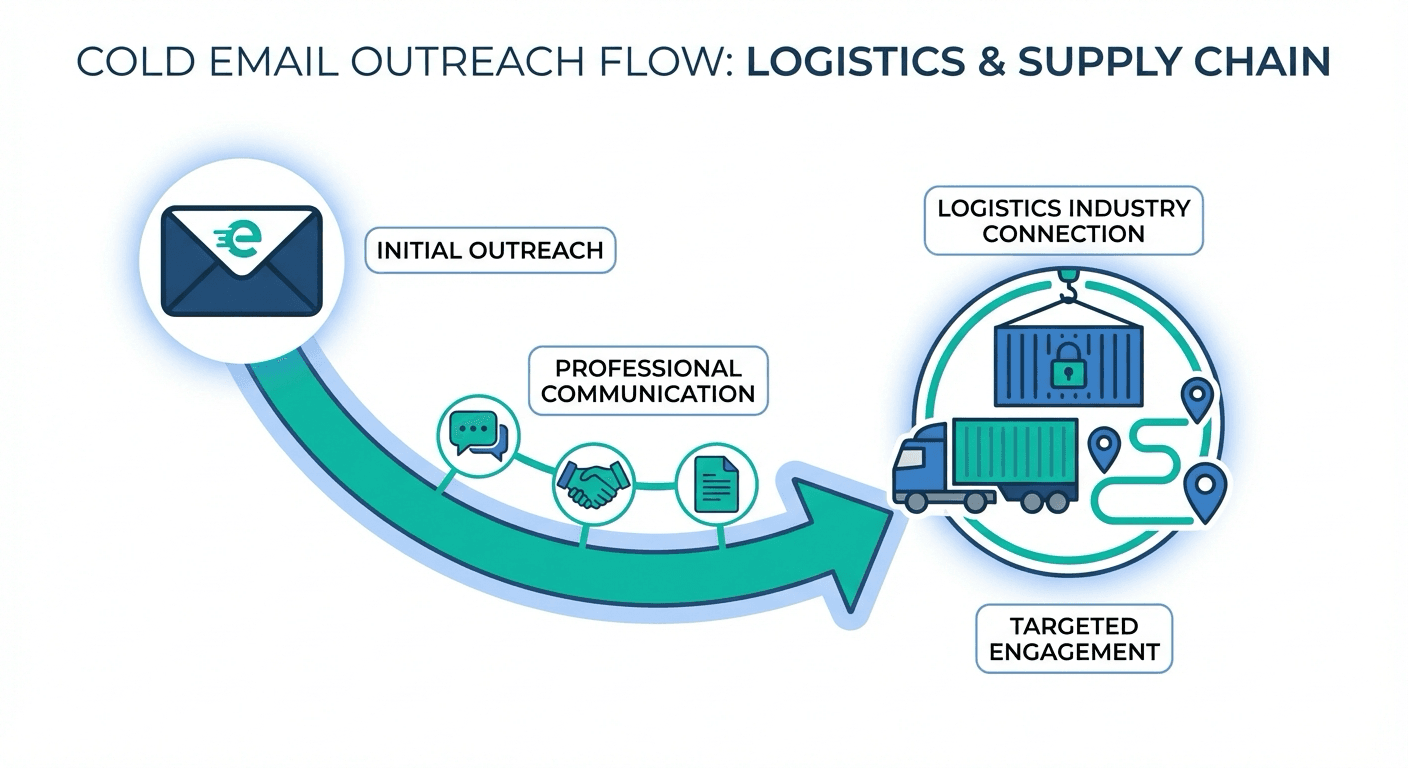
Before launching outreach, understand who is typically involved in purchasing decisions for your solution:
- Operations leaders who will use the solution daily
- IT teams who evaluate technical requirements and integrations
- Finance who approves budgets and evaluates ROI
- Procurement who manages the vendor process
- Executive sponsors who provide strategic support
Coordinating Your Approach
When reaching multiple stakeholders, coordinate your messaging:
- Use consistent value propositions but tailor emphasis by role
- Reference conversations with other stakeholders appropriately
- Avoid creating confusion or appearing disorganized
- Track all touchpoints in your CRM
Role-Specific Messaging Focus
- Operations: Efficiency, usability, daily workflow improvement
- IT: Integration, security, implementation complexity
- Finance: ROI, total cost of ownership, payback period
- Procurement: Vendor qualification, contract terms, references
- Executive: Strategic value, competitive advantage, risk mitigation
Addressing Common Objections in Logistics
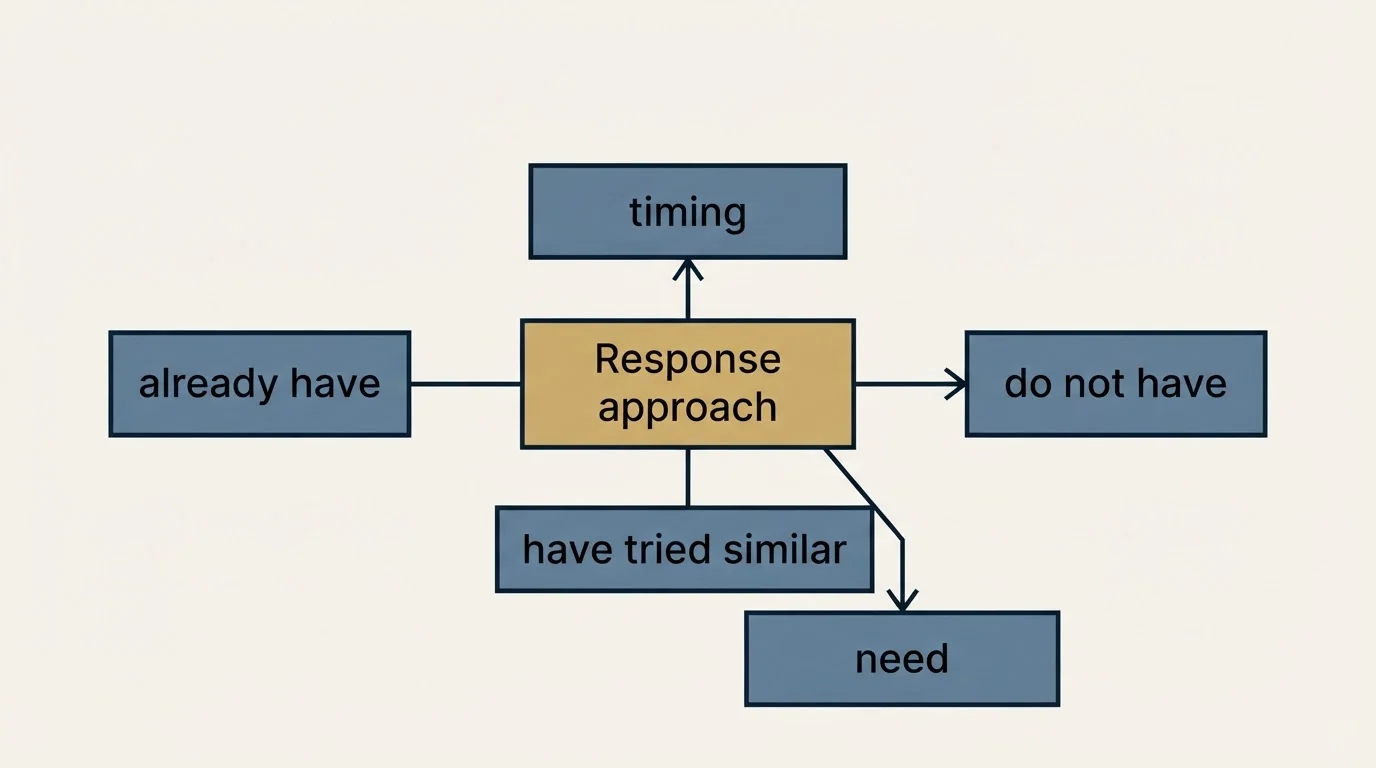
Logistics prospects raise predictable objections. Preparing responses helps you maintain momentum in conversations.
"We already have a system/solution"
Most logistics companies have existing tools and processes. Displacement requires demonstrating significant incremental value.
Response approach:
- Acknowledge their current approach and ask what works well
- Identify gaps or pain points with the existing solution
- Position as a complement or upgrade rather than replacement
- Offer comparison data from similar transitions
- Propose a pilot to demonstrate improvement
"We do not have budget for new technology"
Logistics operates on thin margins and budget constraints are real.
Response approach:
- Shift conversation to ROI and payback period
- Quantify the cost of current inefficiencies
- Offer flexible pricing or phased implementation
- Reference customers who achieved fast payback
- Discuss financing or subscription options if available
"We have tried similar solutions before"
Past negative experiences create skepticism that must be addressed.
Response approach:
- Ask what went wrong with previous attempts
- Explain how your solution or approach differs
- Offer references from customers who switched successfully
- Propose a low-risk pilot or proof of concept
- Demonstrate implementation and support capabilities
"The timing is not right"
Operational demands and seasonal pressures affect timing.
Response approach:
- Ask about their timeline and planning cycles
- Offer to provide information for future evaluation
- Request permission to follow up at the appropriate time
- Provide value in the interim through content and insights
"We need to see results from companies like us"
Logistics professionals want proof from comparable operations.
Response approach:
- Provide case studies from similar company types
- Offer reference calls with relevant customers
- Share operational data and metrics from comparable implementations
- Propose a pilot in their environment
Where we differ from standard practice
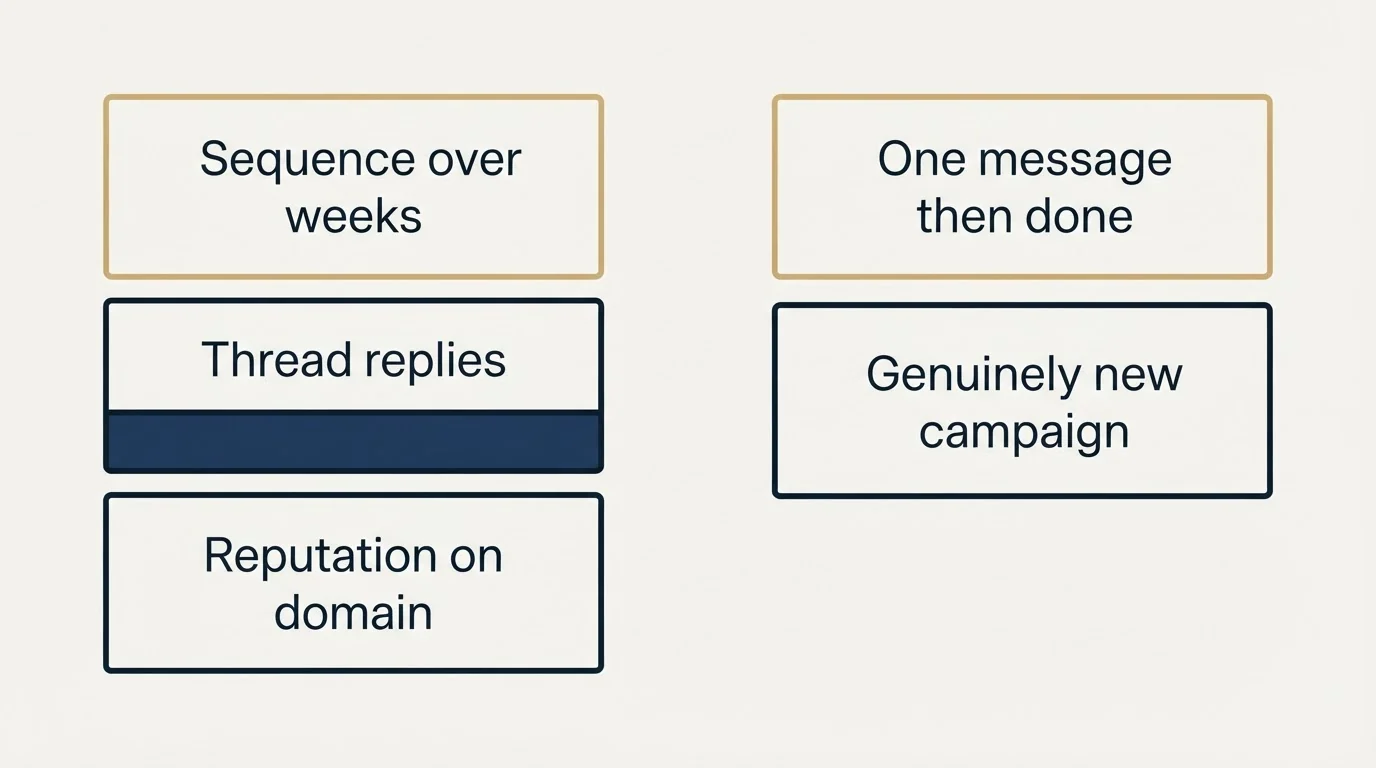
Much of the advice on this page reflects how outbound is commonly run. We run it differently, and since this page sits on our site it is worth saying where the difference is and what it costs us.
- A sequence of messages to each prospect over several weeks
- Later messages often land in the same email thread
- Every contact is reached more than once, so a distracted reader gets another chance
- The later messages go only to people who did not answer the first
- Reputation cost accrues on the sending domain across everything else it sends
- One message, then that campaign is finished for that contact
- No thread replies and no bumps
- A non-responding audience becomes a new campaign with a genuinely different premise, not a reminder
- More of the work moves into targeting and into the one message
- We reach each contact less often, and that is the cost we accept
The reasoning is mechanical rather than moral. A follow-up arrives underneath a message the recipient has already seen and chosen not to answer, so it is delivered to the population most likely to mark it as spam, and the reputation cost of that lands on the sending domain across every campaign running on it. We set that cost against the replies a sequence recovers and decided the trade was not worth it. The full argument, with the numbers from our own campaigns, is in why we stopped using follow-ups.
Follow-Up Strategies for Logistics Outreach
Consistent, value-adding follow-up separates successful outreach from wasted effort. Logistics decision makers are busy, and initial non-response rarely indicates lack of interest.
Adding Value in Every Touchpoint
Each follow-up should provide something useful:
- Share relevant industry news or regulatory updates
- Provide benchmark data or research findings
- Offer invitations to webinars or events
- Send case studies from similar operations
- Reference news about their company or competitors
Timing Considerations
Logistics professionals work demanding schedules. Timing your outreach appropriately shows respect:
- Avoid peak season (October through December) for heavy prospecting
- Early mornings often work well (before operational chaos begins)
- Mid-week typically outperforms Mondays and Fridays
- Post-peak season (January and February) is often the best time for strategic conversations
Maintaining Long-Term Engagement
For prospects who are not ready now, maintain engagement without overwhelming:
- Monthly touchpoints for warm prospects
- Quarterly check-ins for longer-term opportunities
- Add to relevant newsletters with permission
- Connect on LinkedIn and engage with their content
- Track trigger events that might accelerate timing
Integrating Cold Email with Other Channels
Cold email works best as part of a broader engagement strategy. Logistics professionals consume information through multiple channels.
Industry Events and Trade Shows
Logistics has a robust trade show calendar. Coordinate outreach with event schedules:
- Pre-show outreach to schedule meetings
- Post-show follow-up within 48 hours
- Reference show conversations in your messaging
- Use show content in follow-up sequences
LinkedIn Engagement
Many logistics professionals are active on LinkedIn:
- Connect before or after email outreach
- Engage with their content before reaching out
- Share relevant industry perspectives
- Use LinkedIn for additional sequence touchpoints
Phone Follow-Up
Phone calls remain effective in logistics, particularly for operations-focused roles:
- Use phone as follow-up to email sequences
- Time calls appropriately for their work schedules
- Keep initial calls brief and focused on scheduling longer conversations
- Reference your email outreach in voicemails
Industry Content
Logistics professionals consume industry content during research:
- White papers on operational topics
- Case studies with detailed metrics
- Webinars featuring customer presentations
- Blog posts addressing current challenges
Reference this content in outreach and offer it as value-add in follow-ups.
Common Mistakes in Logistics Cold Email
Using Generic B2B Language
Logistics professionals respond to industry-specific language. Generic marketing speak signals that you do not understand their business.
Avoid: "Streamline your operations with our innovative platform" Instead: "Reduce detention time by 35% through automated appointment scheduling"
Ignoring Industry Segmentation
The logistics industry is diverse. Messaging that tries to address all segments fails to resonate with any.
Solution: Segment your outreach by company type (shipper, carrier, 3PL, broker) and tailor messaging accordingly.
Overlooking Operational Realities
Logistics professionals live in a world of immediate operational demands. Pitches that ignore these realities feel disconnected.
Solution: Demonstrate understanding of their daily challenges and position your solution within their operational context.
Failing to Quantify Value
Logistics operates on thin margins. Vague value propositions do not motivate action.
Solution: Lead with specific, quantifiable benefits. Reference customer results with real numbers.
Giving Up After Initial Non-Response
Logistics decision makers are extremely busy. Initial non-response often reflects priorities rather than lack of interest.
Solution: Persist with value-adding follow-up over time. Many deals close months after initial outreach.
Measuring Success in Logistics Outreach
Track the right metrics to optimize your approach over time.
Email Performance Metrics
- Open rates: Aim for 35-45% for well-targeted logistics lists
- Reply rates: 5-10% is strong for cold outreach
- Positive reply rates: Track genuine interest versus rejections
- Meeting booking rate: Percentage of positive replies that convert to calls
Pipeline Metrics
- Opportunities created: Number of qualified opportunities from outreach
- Average deal size: Compare outreach-generated deals to other sources
- Sales cycle length: Track timing from first touch to close
- Win rate: Compare close rates for outreach opportunities versus other lead sources
Segment Analysis
- Performance by segment: Which company types respond best
- Role response rates: Which stakeholders engage most
- Subject line performance: Which approaches get opened
- Message effectiveness: Which value propositions resonate
Final Thoughts
Cold email for logistics and supply chain requires understanding the operational realities, margin pressures, and time constraints that define this industry. Decision makers are practical people focused on moving goods efficiently and cost-effectively. They respond to outreach that demonstrates genuine industry understanding and offers quantifiable value.
Success in logistics outreach comes from specificity. Generic pitches fail while targeted messaging that addresses real operational challenges succeeds. Take the time to understand your target segment, craft relevant messaging, and persist through long sales cycles.
The logistics industry is relationship-driven, and cold email is simply the beginning of building those relationships. Your goal is to start conversations, demonstrate expertise, and earn the opportunity to become a trusted partner. With patience, persistence, and genuine value creation, cold email becomes an effective channel for reaching supply chain leaders and transportation buyers.
Related Reading
- Cold Email for Retail: The Complete Guide to B2B Outreach
- Cold Email for SaaS Companies: The Complete Guide to B2B Outreach
If you would rather have this run for you, RevenueFlow books qualified meetings on a pay-per-meeting basis and publishes client results.
The examples and approaches in this guide represent general best practices for logistics outreach. Your specific approach should be tailored to your product category, target market segment, and company positioning.
Frequently asked questions.
Frequently asked questions- What profit margins do logistics companies typically operate on?
- Most logistics companies operate on thin margins of 3-8% for transportation and warehousing operations. This margin pressure makes decision makers highly cost-sensitive and focused on ROI. Your outreach must lead with quantifiable value like specific percentage improvements in fuel costs or measurable time reductions, since vague efficiency promises don't translate to the margin impact these buyers need to justify purchases.
- When is the best time to reach out to logistics companies?
- Peak season preparation from July-September and contract season during Q1-Q2 represent the most receptive periods. During peak season preparation, companies actively evaluate solutions before the busy October-December period. Contract season sees concentrated buying decisions for annual agreements. Avoid outreach during actual peak season (October-December) when operations teams have minimal bandwidth for evaluating new vendors.
- Who are the main decision makers in logistics companies?
- Key stakeholders include shippers who need to move goods and prioritize cost reduction and visibility, carriers who operate transportation assets and focus on revenue per mile and driver retention, third-party logistics providers (3PLs) who manage logistics for clients, freight brokers who match shippers with carriers, and supply chain executives who oversee strategic operations. Each role has distinct priorities requiring targeted messaging rather than generic approaches.
- Why do generic cold emails fail with logistics buyers?
- Logistics decision makers operate under constant operational pressure managing real-time shipments, costs, and disruptions, leaving limited bandwidth for sales pitches. They've learned to filter ruthlessly and ignore generic B2B language that doesn't demonstrate understanding of their specific operational realities. The industry's fragmentation means challenges facing a regional carrier differ significantly from a global forwarder, so messaging that tries to address the entire industry underperforms targeted, segment-specific outreach.
- Should cold email alone be used to sell to logistics companies?
- No, logistics remains a relationship-driven industry where personal connections, reputation, and trust heavily influence purchasing decisions. Cold email works best as the first step in building relationships, not as a vehicle for closing deals. Integrate email with other channels including industry trade shows, LinkedIn engagement, and industry-specific content to establish the credibility and trust that logistics buyers require before making purchasing commitments.
About the author.

Fernando Cao is CEO at RevenueFlow, which builds and operates outbound revenue engines for B2B companies. Previously at Accenture Strategy. Studied at University of Bath.
Fernando Cao · CEO
Connect on LinkedIn →Explore more.
Ready to scale your outreach?
We build GTM engines that book real meetings. See the receipts.
Related articles.
Cold Email for Telecom: Reaching Carriers and MSPs
Telecom companies face rapid technology changes and competitive pressures. Here's how to approach cold email outreach to carriers, MSPs, and UCaaS providers.
Cold Email for Architecture Firms: 2026 Strategy Guide
Architecture firms buy on project phases rather than fiscal quarters. How to build a list, time the spec window, and write cold emails principals answer.
Cold Email for Trucking and Fleet Companies: 2026 Guide
How to reach carriers, fleet operators, and safety buyers with cold email: FMCSA-driven list building, trigger timing, four templates, and compliance.
Cold Email for Cannabis Companies: 2026 Strategy Guide
The April 2026 rescheduling order split cannabis buyers into two tax realities. Here is how to segment, list-build, and write cold email for each.
Cold Email for Private Equity Firms: 2026 Strategy Guide
How to run cold email into private equity: mapping fund-level and portfolio-level buyers, list sources, four templates, and PE-specific deliverability rules.
Cold Email for Wealth Management Firms: 2026 Strategy Guide
RIAs are 16,500+ mostly small firms with public Form ADV data, small buying committees, and a compliance gate. How to run cold email into wealth management.