Cold Email for PR: How to Pitch Journalists and Get Coverage
Learn how to craft cold emails that get journalists to open, read, and respond to your pitches. Includes real templates, timing strategies, and a complete PR outreach checklist.
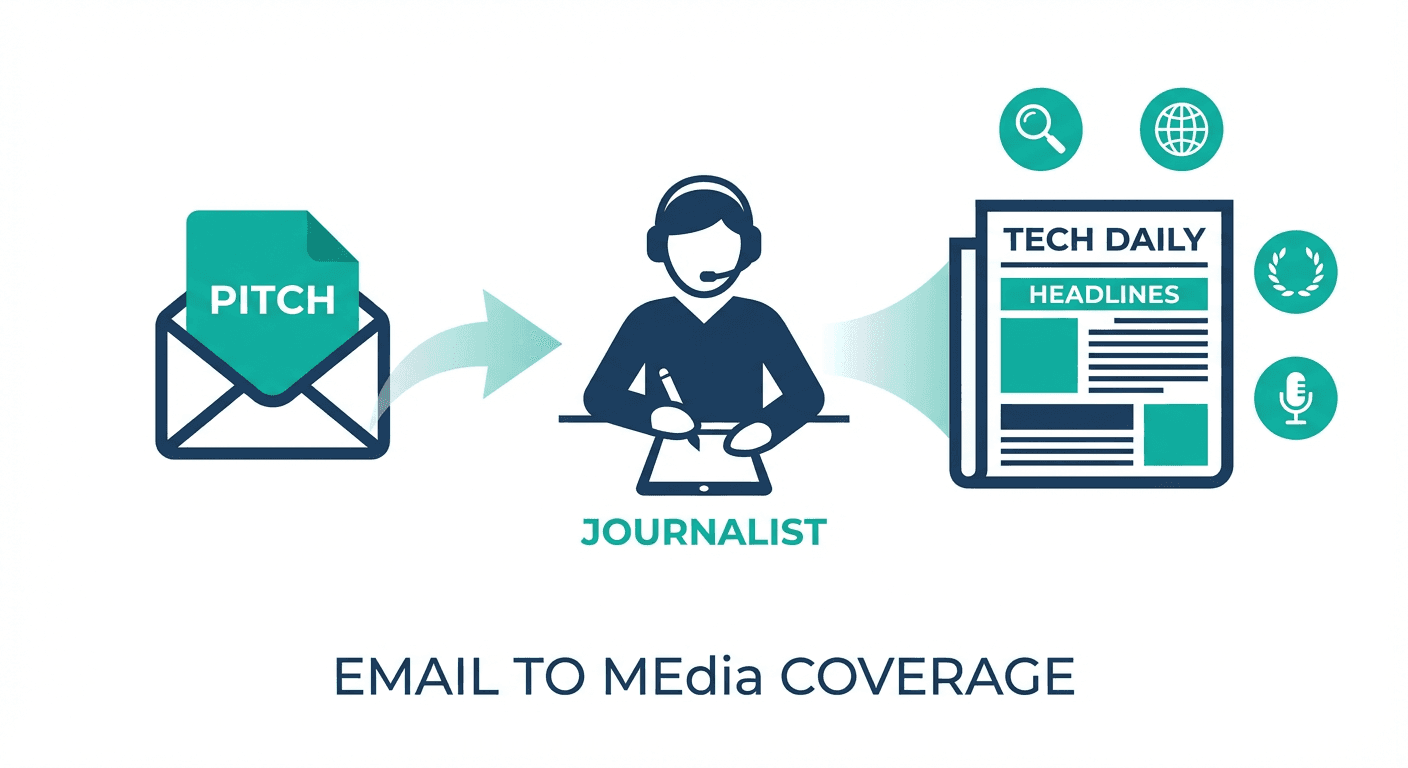
Cold email gives companies direct access to journalists without PR agency costs, typically $5,000-$25,000 monthly. Success requires targeting 50-75 relevant journalists who cover your beat, sending personalized pitches Tuesday-Thursday at 9-10 AM in their timezone, and offering newsworthy stories rather than promotional content. Open rates average 20-25%, but targeted pitches to beat reporters, freelancers, and podcast hosts who actively need sources achieve significantly higher response rates.
Key takeaways
- PR agencies typically charge $5,000-$25,000 monthly, while cold email outreach requires minimal investment for comparable results on targeted campaigns.
- The average open rate for PR emails hovers around 20-25%, with journalists at major outlets receiving hundreds of emails daily.
- A targeted media list of 50-75 highly relevant journalists will outperform a generic list of 500+ names.
- Tuesday through Thursday with send times of 9:00-10:00 AM in the journalist's local time zone yields the highest response rates.
- Target publications should include beat reporters, freelance journalists, podcast hosts, newsletter curators, and independent publishers who cover your specific industry.
Reviewed and updated September 15, 2026
Cold Email for PR: How to Pitch Journalists and Get Coverage
A single piece of coverage in the right publication can drive more credibility and traffic than months of paid advertising. Yet most PR pitches never get read. Journalists at major outlets receive hundreds of emails daily, and the average open rate for PR emails hovers around 20-25%. The companies that consistently earn media coverage understand something crucial: pitching journalists requires a fundamentally different approach than traditional cold email outreach.
Cold email remains one of the most effective channels for earning media coverage, especially for companies without established PR relationships or agency budgets. When done correctly, a well-crafted pitch can land you features in industry publications, podcast interviews, and mainstream media coverage that builds lasting credibility.
This guide breaks down exactly how to use cold email for PR outreach, from building your media list to crafting pitches that journalists actually want to read.
Why Cold Email Works for PR Outreach
Traditional PR relies heavily on existing relationships and agency connections. Cold email levels the playing field, giving any company direct access to journalists and editors. Here's why it works:
Direct access to decision-makers. Unlike press release distribution services that blast your news to thousands of irrelevant contacts, cold email lets you reach specific journalists who cover your industry, beat, or story angle.
Where journalists are the targets for media outreach, sales teams often apply the same direct outreach logic to prospects, as explored in this sales tool comparison guide.
Personalization at scale. Modern email tools allow you to research each journalist's recent work and tailor your pitch accordingly. This personalized approach dramatically outperforms generic press releases.
Timing control. You can time your outreach around news cycles, product launches, or industry events when journalists are actively looking for stories in your space.
Measurable results. Email tracking shows you exactly who opened your pitch, clicked your links, and engaged with your content. This data helps you refine your approach and follow up strategically.
Choosing the right outreach tool matters once your pitch volume grows, and this comparison of cold email versus sales engagement platforms breaks down which fits different workflow bottlenecks.
Cost efficiency. Compared to PR agencies (which typically charge $5,000-$25,000+ monthly), cold email outreach requires minimal investment while delivering comparable results for targeted campaigns.
The key difference between PR cold email and sales cold email lies in the value exchange. Sales emails offer a product or service. PR emails offer a story that helps journalists do their jobs better.
Choosing the right sales stack matters just as much as pitch quality, and how Adapt.io and Outreach fit together shows why enrichment and outreach orchestration work best combined.
Who to Target: Building Your Media List
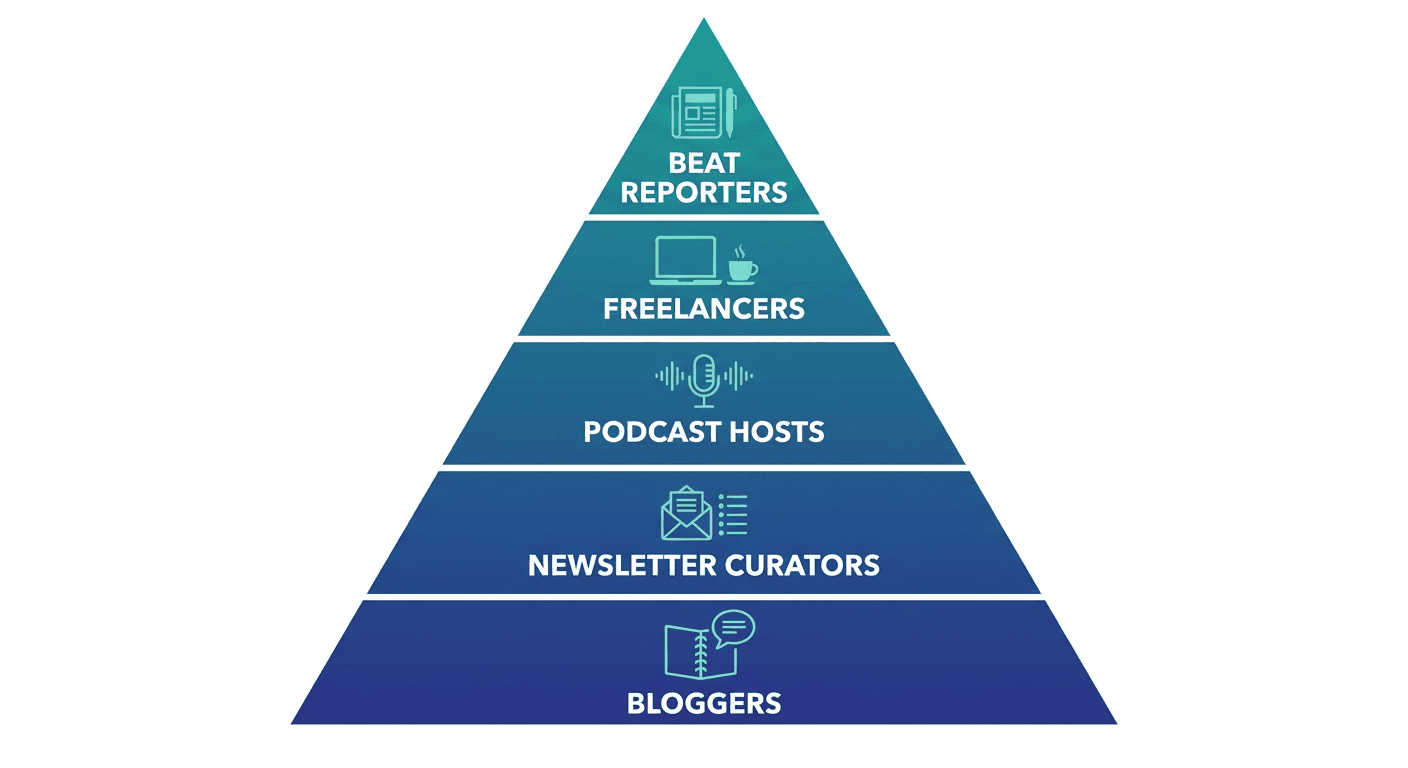
Successful PR outreach starts with identifying the right journalists, editors, and content creators. Your media list quality directly determines your results.
Building that contact list often means enriching lead data, and this comparison of data enrichment and sales tools explains how the two workflows differ.
Beat Reporters and Staff Writers
These journalists cover specific topics consistently. They're always looking for sources, data, and story ideas within their beat. Find them by:
- Reading publications in your industry and noting bylines
- Searching publication staff pages for relevant beats
- Using media databases like Muck Rack, Cision, or HARO
- Following hashtags like #JournoRequest on Twitter/X
Freelance Journalists
Freelancers often write for multiple publications and have more flexibility in the stories they pursue. They're frequently more responsive to cold pitches because they're actively seeking new story opportunities.
Podcast Hosts and Producers
B2B podcasts constantly need guests and topics. Podcast outreach often has higher response rates than traditional media outreach because hosts record multiple episodes per week.
Newsletter Curators
Industry newsletters with substantial subscriber bases can drive significant traffic and credibility. Many newsletter operators are looking for exclusive content, data, or perspectives to share.
Bloggers and Independent Publishers
Niche blogs and independent publications often have highly engaged audiences. While their reach may be smaller, their readers tend to be more targeted and engaged.
Building Your List: Practical Steps
- Identify 10-15 target publications where coverage would genuinely impact your business
- Find 3-5 relevant journalists at each publication using staff pages, LinkedIn, and byline searches
- Verify email addresses using tools like Hunter.io, RocketReach, or manual verification
- Research recent work by reading their last 5-10 articles to understand their angles and interests
- Note any personal details such as topics they're passionate about, awards they've won, or projects they've mentioned
A targeted list of 50-75 highly relevant journalists will outperform a generic list of 500+ names every time.
Timing Your Pitches: News Cycles and Embargoes
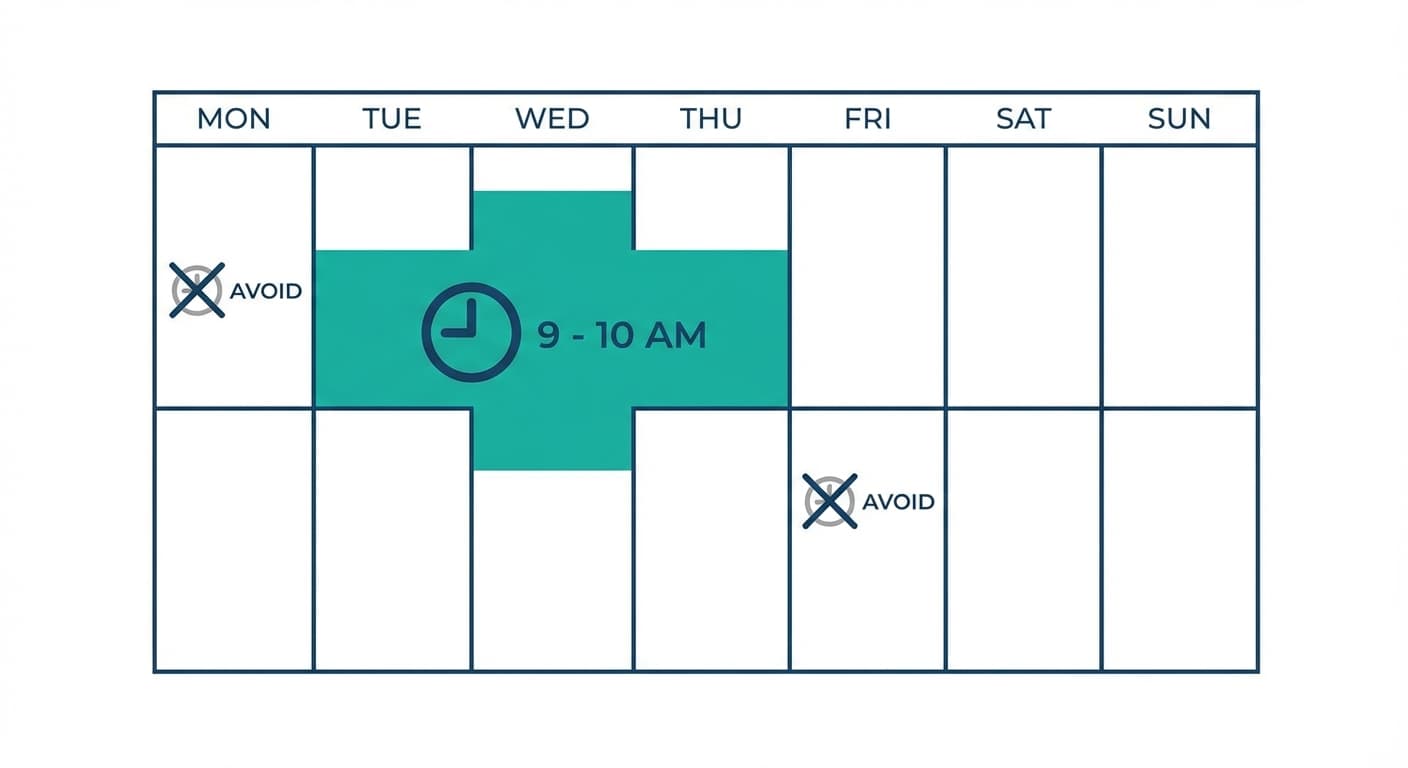
When you send your pitch matters almost as much as what you send. Understanding news cycles and journalist schedules dramatically improves your response rates.
Best Days and Times
Based on industry data and journalist feedback:
- Tuesday through Thursday typically yields the highest response rates
- 9:00-10:00 AM in the journalist's local time zone catches them as they plan their day
- Avoid Mondays when journalists are catching up from the weekend
- Avoid Fridays unless you're pitching weekend or lifestyle content
- Avoid end-of-month for business publications focused on earnings and market coverage
News Cycle Awareness
Tie your pitch to current events. If your expertise relates to a trending story, reach out immediately. Journalists working on breaking stories need sources fast.
Avoid competing with major news days. Major product launches from tech giants, earnings seasons, and breaking news will bury your pitch. Monitor the news calendar and adjust timing accordingly.
Respect editorial calendars. Many publications plan themed issues or sections months in advance. Research whether your target outlets have editorial calendars available (many post them publicly for advertisers).
Working with Embargoes
Embargoes allow you to share news under agreement that journalists won't publish until a specific date/time. They work well for:
- Product launches requiring coordinated coverage
- Research or data releases
- Funding announcements
- Major company news
When offering an embargo:
- Only offer to journalists you trust
- Make the embargo terms crystal clear
- Provide enough lead time for thorough coverage (minimum 48 hours, ideally a week)
- Send a reminder 24 hours before the embargo lifts
Seasonal Considerations
- January: Publications focus on trends and predictions content
- Summer months: Slower news periods can mean less competition for coverage
- Q4: Holiday content dominates, but industry publications still need regular content
- Year-end: Roundups and "best of" lists create opportunities for inclusion
What Works: PR Email Best Practices
Journalist inboxes differ from prospect inboxes. The best practices that work for sales outreach can actually hurt your PR efforts.
will outperform a generic list of 500+ names
Subject Lines That Get Opened
Journalists scan subject lines quickly. Effective PR subject lines are:
- Specific: "Data: 73% of CFOs plan AI investments in 2026" beats "Interesting AI research"
- Relevant to their beat: Reference the topics they actually cover
- Free of hype: Skip words like "revolutionary," "game-changing," or "unprecedented"
- Short: 6-10 words performs best for PR pitches
Examples that work:
- "Quick source for your fintech regulation piece"
- "Exclusive data: B2B buyer behavior shifts in 2026"
- "Story idea: The hidden cost of [specific industry problem]"
- "Expert comment on [current news story]"
Email Structure
Keep it short. Your entire pitch should be readable in 30 seconds or less. Aim for 150 words maximum in your initial outreach.
Lead with the story, not yourself. Journalists care about what's newsworthy, not your company's background.
Make the ask clear. Are you offering an interview, data, or a story idea? State it explicitly.
Include everything they need. Link to relevant resources, include your contact information, and make responding easy.
The Pitch Framework
A strong PR pitch follows this structure:
- Hook (1-2 sentences): Why this matters now, ideally tied to something they've written or a current trend
- Story angle (2-3 sentences): The specific story you're offering and why it's newsworthy
- Credibility (1 sentence): Brief context on why you or your company can speak to this topic
- Ask (1 sentence): Clear next step, such as an interview or additional materials
- Sign-off: Your name, title, and contact information
What Makes Something Newsworthy
Before pitching, evaluate whether your story meets newsworthiness criteria:
- Timeliness: Is it connected to current events or trends?
- Impact: How many people does it affect?
- Novelty: Is this genuinely new information or perspective?
- Conflict: Does it challenge conventional wisdom or reveal tension?
- Human interest: Is there a compelling human story within the larger topic?
If you can't identify at least two of these elements, consider strengthening your angle before pitching.
Real PR Cold Email Examples
These templates demonstrate effective PR outreach for different scenarios. Customize them based on your specific situation and the journalist's recent work.
Example 1: Offering Expert Commentary
Subject: Quick source on [current industry topic]
Hi [First Name],
I noticed your recent piece on [specific article topic]. The point about [specific detail from their article] resonated with several conversations I've been having with [relevant stakeholders].
[Your name], CEO of [Company], has been tracking [related trend] for the past [timeframe] and has data showing [specific, interesting finding]. We'd be happy to share these insights for any follow-up coverage you're planning.
[Your name] is available for a quick call this week or can provide written comments if that's easier.
Best, [Your name] [Title, Company] [Phone number]
Example 2: Pitching Original Research
Subject: Exclusive data: [Compelling finding from research]
Hi [First Name],
[Company] just completed a survey of [number] [demographic] about [topic], and the findings challenge some common assumptions about [specific area].
Key findings include:
- [Statistic 1 with context]
- [Statistic 2 with context]
- [Statistic 3 with context]
We're offering [Publication name] exclusive access to the full report before public release on [date]. Would you be interested in reviewing the data?
Best, [Your name] [Title, Company] [Phone number]
Example 3: Founder Story Pitch
Subject: Story idea: [Unique angle about your journey]
Hi [First Name],
After reading your profile on [previous founder they covered], I thought you might be interested in a different take on [relevant theme].
Before starting [Company], I spent [X years] at [Notable company/role] where I saw [specific problem] firsthand. That experience led me to [brief company origin story with interesting detail].
We've since [key traction metric], and I'd love to share what we've learned about [broader industry lesson] that applies beyond our specific space.
Would you be open to a 20-minute conversation?
Best, [Your name] [Title, Company] [Phone number]
Example 4: Trend Commentary Pitch
Subject: [Industry] trend you might want to cover
Hi [First Name],
Given your coverage of [their beat], I wanted to flag something we're seeing across our [customer base/network/industry]: [specific trend observation with data if available].
This seems connected to [broader industry shift or current news], and the implications for [specific stakeholder group] could be significant.
Our [CEO/Head of Research/relevant expert] has been analyzing this trend for [timeframe] and would be happy to provide context or commentary for any piece you're working on.
Would written comments or a quick call work better for your timeline?
Best, [Your name] [Title, Company] [Phone number]
Common Mistakes to Avoid
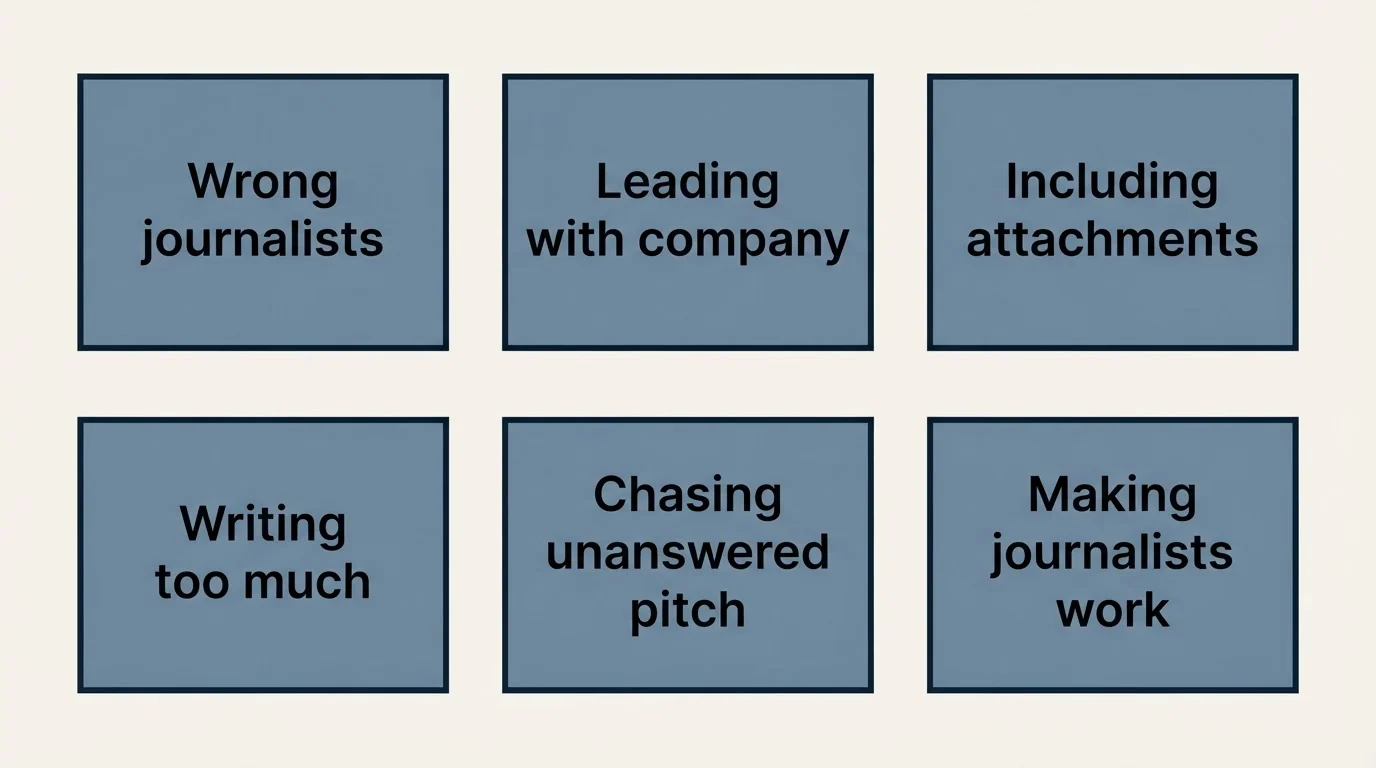
PR outreach fails for predictable reasons. Avoid these common errors:
Pitching the Wrong Journalists
Sending a fintech story to a healthcare reporter wastes everyone's time and damages your reputation. Research each journalist's actual beat before reaching out.
Leading with Your Company
"[Company] is an innovative leader in..." immediately signals a promotional pitch. Lead with the story value instead.
Including Attachments
Attachments trigger spam filters and many journalists won't open them from unknown senders. Link to hosted resources instead.
Writing Too Much
Long pitches don't get read. If your pitch requires scrolling, it's too long. Save the details for follow-up conversations.
Chasing An Unanswered Pitch
Chasing a pitch a journalist did not answer burns bridges permanently. If the story still stands up, pitch it again later as a genuinely new story, tied to a fresh news hook.
Making Journalists Work
Don't make journalists hunt for information. Include links to your newsroom, founder bios, and relevant resources directly in your pitch.
Ignoring Their Work
Generic pitches that could go to anyone signal you haven't done your research. Reference their specific articles and interests.
Pitching Non-Stories
"We just raised funding" or "We launched a new feature" isn't inherently newsworthy. Find the story angle that makes it relevant to their audience.
Forgetting the Ask
End every pitch with a clear next step. Do you want to schedule a call? Send more information? Provide written comments? Make it explicit.
Your PR Outreach Checklist
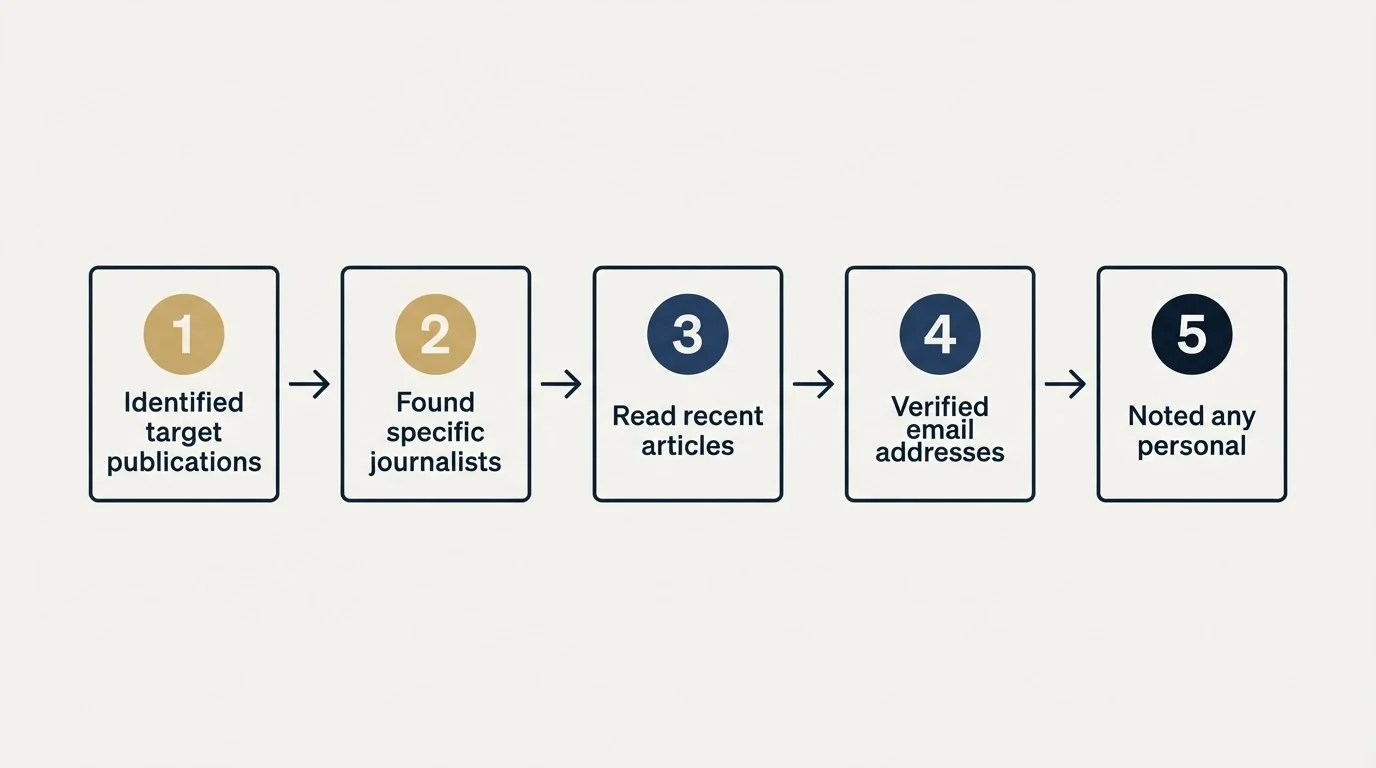
Before sending any PR pitch, verify you've completed each step:
Research Phase
- Identified target publications relevant to your story
- Found specific journalists covering your beat/topic
- Read their recent articles (minimum 3-5 per journalist)
- Verified email addresses
- Noted any personal angles or interests
Story Development
- Confirmed your story meets newsworthiness criteria
- Identified a specific angle (not just "our company exists")
- Gathered supporting data or examples
- Prepared additional resources (images, data, interview availability)
Pitch Creation
- Subject line is specific and under 10 words
- Email body is under 150 words
- Led with the story value, not company background
- Included a reference to their work (if natural)
- Made the ask clear and specific
- Included contact information
Timing and Sending
- Sending Tuesday-Thursday, morning hours in their timezone
- Checked for competing major news events
- Next pitch to this journalist planned around a new hook, not a reminder of this one
Follow-up
- No chase on an unanswered pitch
- Follow-up adds value (new angle, updated data, timeliness hook)
- Tracked responses and built relationship notes
Turn PR Success into Sustained Pipeline
Earned media coverage builds credibility that compounds over time. Each piece of coverage becomes an asset you can leverage in sales conversations, on your website, and in future pitches to other journalists.
But media coverage alone doesn't fill your pipeline. The most effective B2B companies combine PR wins with consistent outbound outreach that converts attention into revenue.
If you're ready to build a systematic approach to cold email outreach, whether for PR, sales, or both, we can help. Our done-for-you campaigns handle list building, copy creation, and ongoing optimization while you focus on growing your business.
Get your free campaign audit and see how targeted cold email can accelerate your growth.
Related Reading
Frequently asked questions.
Frequently asked questions- Does cold email actually work for getting media coverage?
- Yes, cold email works for PR when done correctly. It provides direct access to journalists who cover your industry without requiring agency relationships or PR budgets. The key difference from sales cold email is offering journalists a newsworthy story that helps them do their job, rather than promoting your product. Companies that personalize pitches to specific journalists and time outreach around news cycles consistently earn media coverage through cold email.
- When is the best time to send a PR pitch to journalists?
- Send PR pitches Tuesday through Thursday between 9:00-10:00 AM in the journalist's local time zone. Avoid Mondays when journalists are catching up from the weekend, and Fridays unless pitching weekend or lifestyle content. Also avoid end-of-month for business publications focused on earnings coverage, and days with major competing news events that will bury your pitch.
- How many journalists should I include in my media list?
- Build a targeted list of 50-75 highly relevant journalists rather than a generic list of 500+ names. Start by identifying 10-15 target publications where coverage would genuinely impact your business, then find 3-5 relevant journalists at each publication. Research their recent work to understand their angles and interests before reaching out.
- Who should I pitch for PR coverage?
- Target beat reporters and staff writers who cover your topic consistently, freelance journalists who write for multiple publications, podcast hosts and producers who need regular guests, newsletter curators with substantial subscriber bases, and bloggers or independent publishers in your niche. Beat reporters and freelancers are often most responsive because they actively seek sources and story ideas within their coverage area.
About the author.

Ben Carden is CRO at RevenueFlow, which builds and operates outbound revenue engines for B2B companies. Previously at Gartner Enterprise. Studied at London School of Economics.
Ben Carden · CRO
Connect on LinkedIn →Explore more.
Ready to scale your outreach?
We build GTM engines that book real meetings. See the receipts.
Related articles.
Cold Email for Awards Nominations: Complete Strategy Guide
Learn how to use cold email to secure industry awards and recognitions. Includes proven templates, submission strategies, and best practices for awards outreach that gets results.
Cold Email for Influencer Outreach: Partner with Creators
Learn how to use cold email to build authentic influencer partnerships that drive real results for your brand, with proven templates and strategies.
Cold Email for Product Feedback: Complete Strategy Guide
Learn how to use cold email to gather valuable product feedback from users and prospects. Includes proven templates, feedback frameworks, and response optimization techniques.
Cold Email for Reviews: Complete Strategy Guide
Learn how to use cold email to generate authentic product reviews on G2, Capterra, and other platforms. Includes proven templates, compliance guidelines, and review generation frameworks.
Cold Email for Link Building: How to Get Quality Backlinks
Learn how to use cold email outreach to build high-quality backlinks that improve your SEO rankings, with proven templates and strategies that get responses.
Cold Email for Focus Groups: Complete Strategy Guide
Learn how to use cold email to recruit qualified participants for focus groups. Includes proven templates, screening strategies, and group composition frameworks.