Cold Email for Real Estate: Generating Leads
Real estate professionals can use cold email to reach property owners, investors, and commercial clients. Here's how to approach real estate outreach effectively.
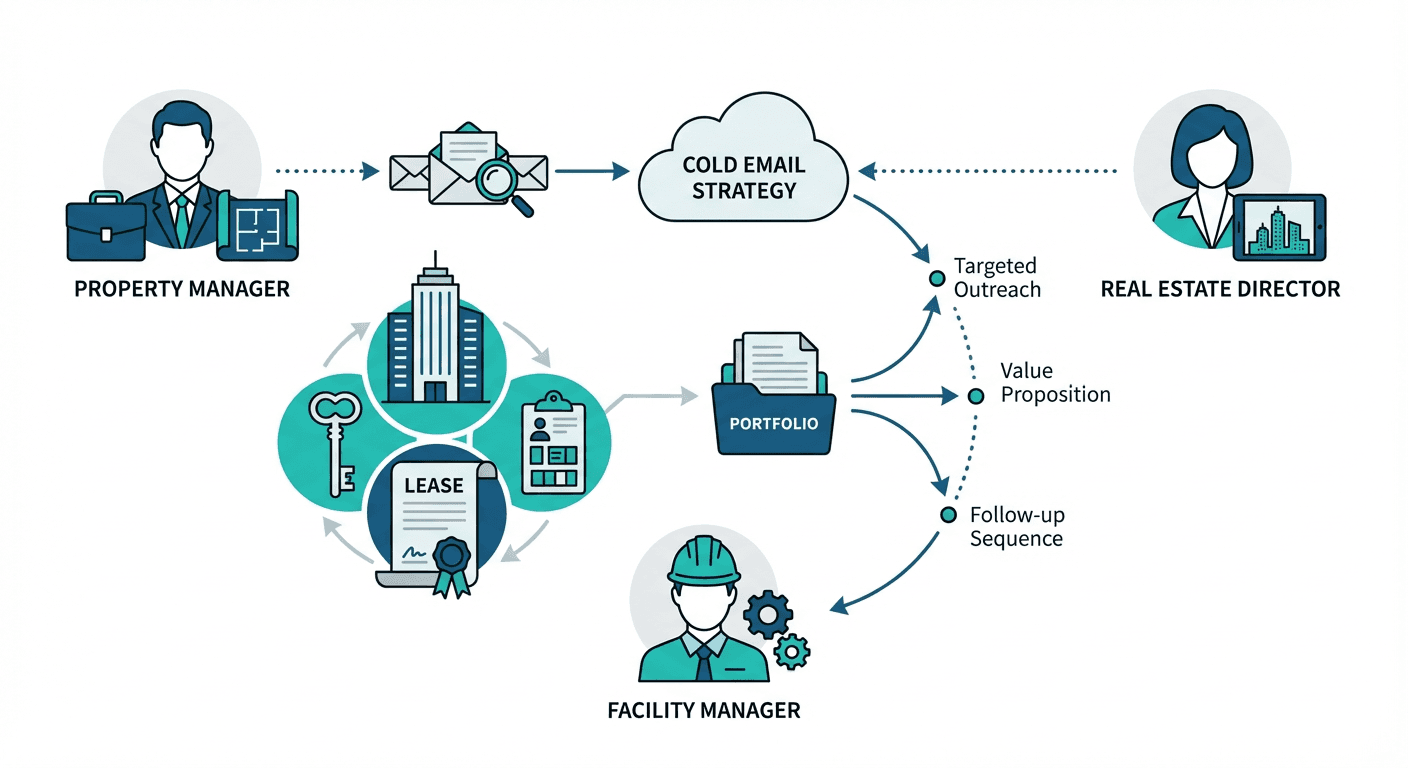
Cold email generates real estate leads by targeting property owners, investors, and commercial clients using public property records and commercial databases. Success depends on local market knowledge, clear segmentation by property type and ownership structure, and timing outreach to lease expirations or market shifts. High transaction values justify personalized outreach, and compliance with CAN-SPAM and real estate regulations is mandatory.
Key takeaways
- Property ownership data is public record, making list building more straightforward than in most B2B contexts and enabling precise targeting by property type and owner characteristics.
- Single real estate transactions can generate tens of thousands in commissions for agents or hundreds of thousands in profit for investors, justifying time investment in personalized cold email campaigns.
- Real estate cold email works across five distinct use cases: commercial brokers reaching building owners, residential agents targeting FSBO sellers and expired listings, investors seeking off-market deals, property managers contacting landlords, and mortgage professionals building agent referral networks.
- Effective segmentation separates prospects by property type, ownership structure, property characteristics, timing indicators like lease expirations, and geographic focus rather than sending generic messages.
- Localization and demonstrated market knowledge create immediate credibility and differentiate real estate cold email from generic outreach in an inherently local business.
Reviewed and updated October 1, 2026
Cold Email for Real Estate: Generating Leads for Agents, Brokers, and Investors
Cold email can be a powerful lead generation channel for real estate professionals. Unlike other industries where the target audience might be harder to define, real estate has clear categories of prospects: property owners, investors, developers, commercial tenants, and other professionals in adjacent spaces.
This guide covers how real estate agents, brokers, and investors can use cold email to generate leads while staying compliant with regulations and building genuine relationships.
Why Cold Email Works for Real Estate
Real estate is fundamentally a relationship business. Most transactions involve significant trust, local expertise, and personal connection. Cold email, when done correctly, can initiate these relationships at scale.
Several characteristics make real estate well-suited for cold outreach:
Clear target identification. Property ownership is public record. Commercial real estate databases contain detailed information about building owners, lease expirations, and property characteristics. This makes building targeted lists more straightforward than in many B2B contexts.
High transaction values. A single closed deal in real estate can be worth tens of thousands in commissions (for agents) or hundreds of thousands in profit (for investors). This high value justifies the time investment in personalized outreach.
Local expertise matters. Real estate is inherently local. Demonstrating market knowledge in your emails creates immediate credibility and differentiation from generic outreach.
Timing sensitivity. Property owners have specific moments when they become more receptive to outreach: lease expirations, market shifts, life changes, portfolio rebalancing. Cold email allows you to reach prospects during these windows.
Real Estate Use Cases for Cold Email
Commercial Real Estate Brokers
Commercial brokers can use cold email to reach:
- Property owners with upcoming lease expirations
- Building owners in specific submarkets
- Investors looking to acquire in target areas
- Business owners who might need commercial space
- Landlords with vacant properties
Commercial real estate involves longer sales cycles and more sophisticated buyers. Emails should demonstrate market knowledge and specific value propositions.
Residential Real Estate Agents
Residential agents can target:
- Homeowners in specific neighborhoods (for listing opportunities)
- Expired listing owners whose properties did not sell
- FSBO (For Sale By Owner) sellers who might benefit from representation
- Landlords with rental properties
- Investors building residential portfolios
Residential outreach requires more care around compliance (covered below) and typically works best when combined with other marketing channels.
Real Estate Investors
Investors use cold email to:
- Reach property owners directly (off-market acquisitions)
- Connect with wholesalers and other deal sources
- Build relationships with brokers in target markets
- Network with private lenders and capital partners
- Find property managers and service providers
For investors, cold email is often about deal flow: finding properties before they hit the market or building a network that surfaces opportunities.
Property Management Companies
Property managers can reach:
- Landlords with self-managed properties
- Out-of-state property owners
- Small portfolio investors
- HOAs and community associations
- Commercial property owners
Mortgage and Title Professionals
Adjacent real estate professionals can target:
- Real estate agents and brokers (for referral partnerships)
- Investors and developers (for lending relationships)
- Property owners (for refinancing opportunities)
Building Your Target List
The quality of your outreach depends entirely on the quality of your list. Real estate has several advantages here due to the public nature of property records.
Data Sources for Real Estate Lists
Property records. County assessor databases contain ownership information, sale history, assessed values, and property characteristics. Many data providers aggregate and normalize this information across counties.
Commercial real estate databases. Platforms like CoStar, Reonomy, and Crexi provide detailed information on commercial properties, including ownership, tenant information, and lease expirations.
LinkedIn and professional networks. For reaching real estate professionals and investors, LinkedIn provides targeting by job title, company, and location.
Public filings. LLCs and corporations that own property have registered agents and business addresses that can be researched through state business registrations.
MLS data. Expired listings, days on market, and price history can help identify motivated sellers (though MLS data usage has restrictions that vary by market).
Segmentation Strategies
Rather than blasting a generic message to all property owners, segment your list based on:
Property type. Multifamily owners have different concerns than retail property owners. Tailor your message to their specific situation.
Ownership structure. Individual owners, LLCs, and institutional investors respond to different messaging. A mom-and-pop landlord needs different information than a REIT.
Property characteristics. Building age, size, condition, and location all create different opportunities and pain points.
Timing indicators. Upcoming loan maturities, lease expirations, or long hold periods can indicate higher receptivity to outreach.
Geographic focus. Hyperlocal expertise is valuable. Focus on neighborhoods or submarkets where you have deep knowledge.
Localization and Market Knowledge
Generic real estate emails get ignored. The key differentiator in real estate outreach is demonstrating that you understand the prospect's specific market.
What Localization Looks Like
Reference specific market conditions. Mention current cap rates, vacancy trends, or recent comparable sales in their submarket.
Acknowledge local factors. Zoning changes, new developments, infrastructure projects, and economic shifts all affect property values and owner decisions.
Demonstrate transaction experience. Reference relevant deals (without violating confidentiality) that show you operate in their market.
Understand local terminology. Different markets have different conventions. Using the right terminology signals insider knowledge.
Example: Generic vs. Localized Approach
Generic (weak): "I work with property owners to maximize value..."
Localized (stronger): "I noticed you own the 12-unit building on Oak Street. With the new transit station opening next year and rents in Midtown up 15% over the past 18 months, several owners in your area have been evaluating their options..."
The localized version demonstrates specific knowledge of the property, the market, and relevant timing factors.
Timing Your Outreach
Real estate is cyclical, and timing your outreach to align with natural decision points improves response rates.
Market Cycle Timing
Interest rate shifts. When rates drop, refinancing and acquisition activity increases. When rates rise, some owners become more motivated to sell before values adjust.
Seasonal patterns. Residential real estate has strong seasonality (spring and fall are typically busier). Commercial real estate is less seasonal but still affected by budget cycles and year-end decisions.
Tax deadlines. 1031 exchange timelines, depreciation recapture considerations, and tax planning all create decision windows.
Lease cycles. Commercial properties have lease expiration schedules that create natural evaluation points for owners.
Property-Specific Timing
Hold period. Properties owned for 7-10+ years may have owners considering disposition for portfolio rebalancing or lifestyle reasons.
Loan maturity. Upcoming loan maturities force owners to make decisions about refinancing, selling, or recapitalizing.
Major expenses. Properties facing significant capital expenditures (new roof, HVAC replacement, etc.) may have more motivated owners.
Vacancy changes. Recent vacancies or upcoming lease expirations create decision points.
Compliance Considerations
Real estate cold email has several compliance considerations that differ from typical B2B outreach.
CAN-SPAM Requirements
All commercial email in the United States must comply with CAN-SPAM:
- Include your physical mailing address
- Provide a clear unsubscribe mechanism
- Honor opt-out requests within 10 business days
- Use accurate "From" and "Subject" lines
- Identify the message as an advertisement (when applicable)
Do Not Call List Considerations
While cold email is separate from phone calls, many real estate professionals combine email with phone outreach. If you plan to call prospects:
- Check the National Do Not Call Registry
- Maintain your own internal suppression list
- Be aware of state-specific regulations that may be stricter than federal requirements
Real Estate-Specific Regulations
Some states have additional regulations affecting real estate solicitation:
- Certain states restrict solicitation of property owners who have filed homestead exemptions
- Some jurisdictions have "do not solicit" registries for homeowners
- Probate and estate situations may have specific restrictions
Important: This guide provides general information, not legal advice. Consult with an attorney familiar with real estate regulations in your market before launching outreach campaigns.
GDPR and International Considerations
If you target property owners in the European Union or other jurisdictions with stricter privacy laws, additional requirements apply. B2B outreach generally has more flexibility than B2C, but legitimate interest must be demonstrated.
Email Structure for Real Estate
Real estate cold emails should be brief, specific, and value-focused. Here are the key elements:
Subject Lines
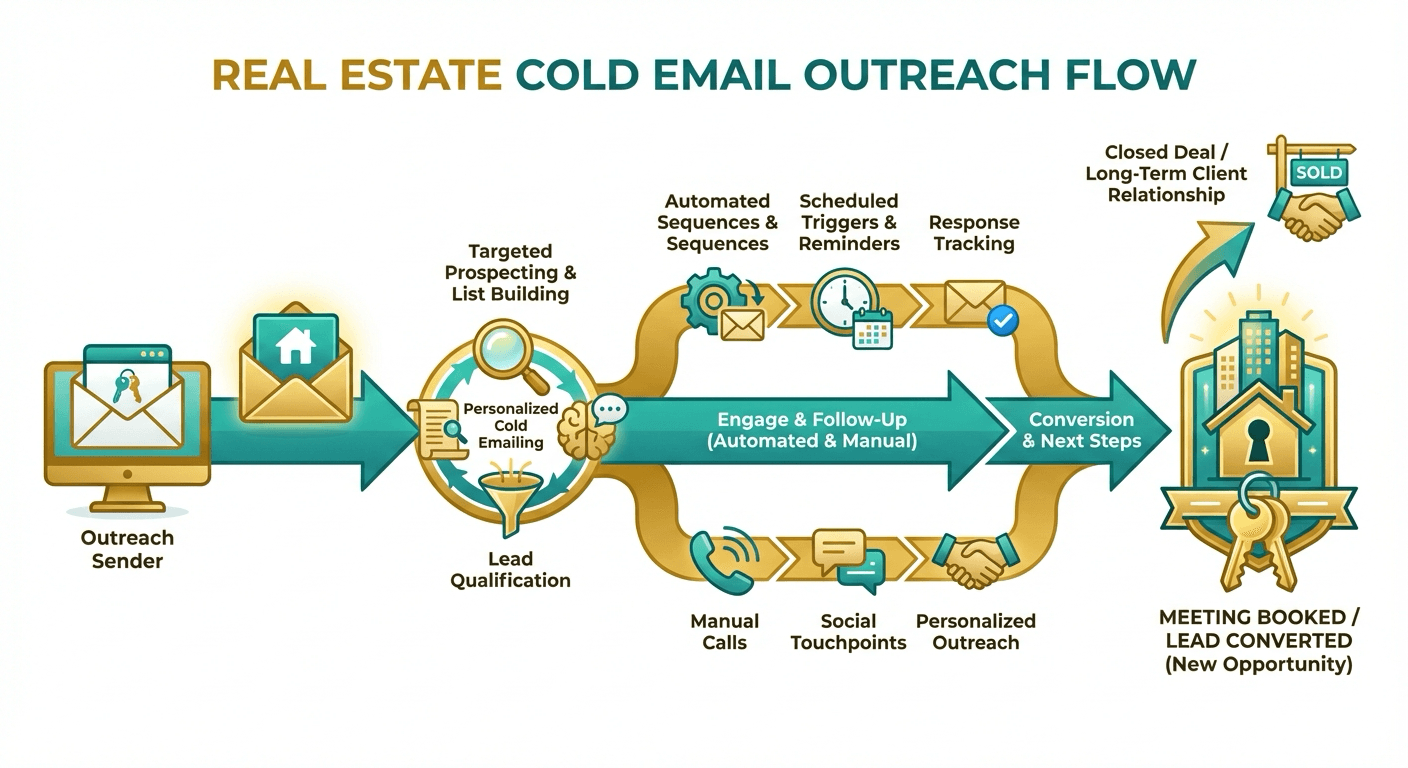
Keep subject lines short and relevant. Reference specific properties, locations, or timing factors when possible.
Examples:
- "Oak Street property - quick question"
- "Multifamily question for [Neighborhood] owner"
- "Following up on [Address]"
- "Re: your [City] portfolio"
Avoid salesy language, all caps, or misleading subject lines.
Opening Lines
Start with relevance. Explain why you are reaching out to this specific person.
- Reference their property or portfolio
- Mention a specific market factor affecting them
- Note a timing element (lease expiration, market shift, etc.)
Value Proposition
What can you offer that matters to them? Be specific:
- Market information they might not have
- Buyer demand for their property type
- Solutions to problems they likely face
- Opportunities relevant to their situation
Call to Action
Keep the ask simple and low-commitment:
- A brief phone call to share market information
- Sending a market report or analysis
- Answering a specific question
Avoid asking for big commitments (meetings, listings, etc.) in the first email.
Sample Email Templates
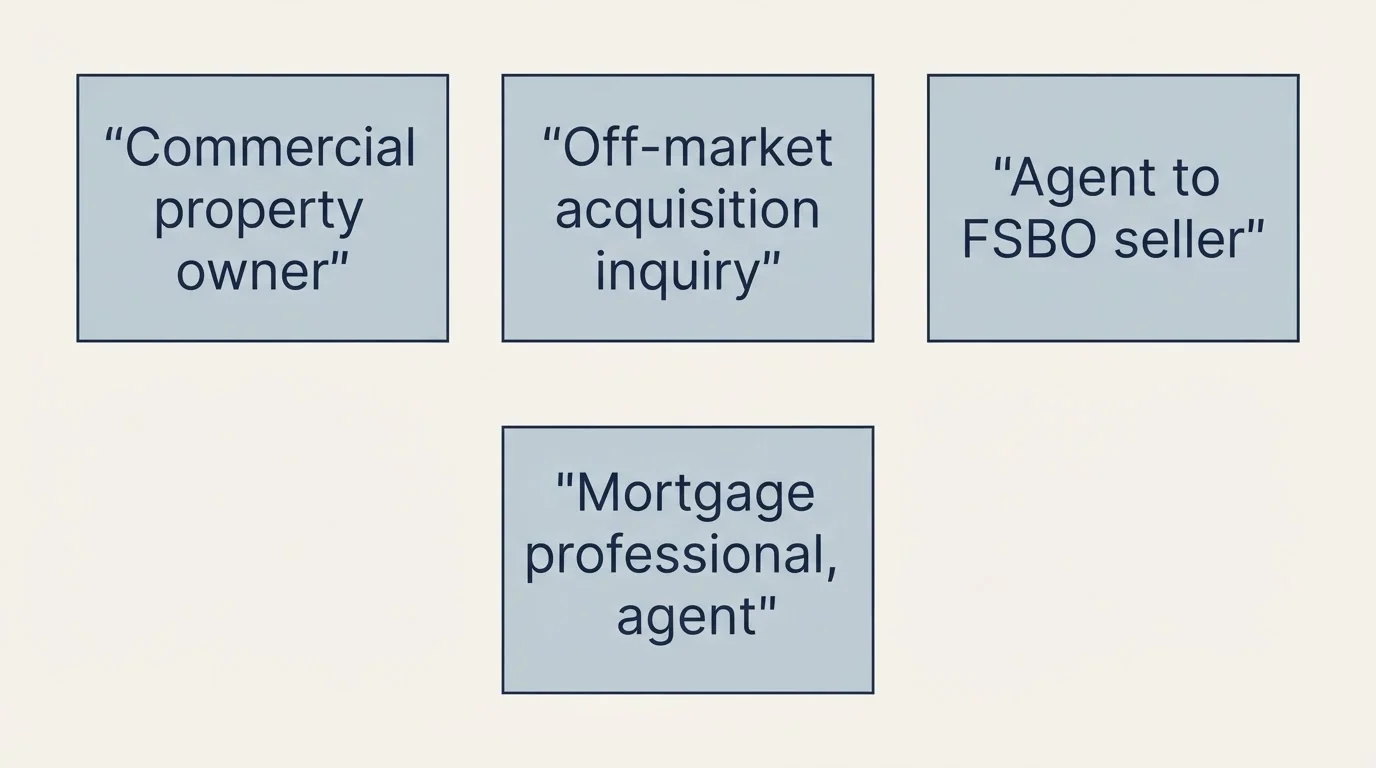
Template 1: Commercial Property Owner Outreach
Subject: Quick question about [Property Address]
Hi [First Name],
I noticed you own the retail property at [Address] in [Neighborhood]. With the recent lease activity on [nearby street] and [specific development/change], I wanted to reach out.
I work with commercial property owners in [Area] and have been tracking how these changes are affecting values and demand. Several owners I work with have been evaluating whether this is the right time to hold, refinance, or consider other options.
Would you be open to a brief call to share what I am seeing in the market? No pitch, just market information that might be useful as you think about your property.
Best, [Name] [Company] [Phone]
Template 2: Off-Market Acquisition Inquiry
Subject: Your [Property Type] on [Street Name]
[First Name],
I am an investor actively acquiring [property type] in [City/Neighborhood]. Your property at [Address] came up in my research, and I wanted to reach out directly.
I am looking for properties in the [specific criteria: unit count, location, condition], and your building fits what I am seeking. If you have ever considered selling, I would be interested in discussing a potential off-market transaction.
Off-market deals can offer benefits: no listing fees, faster timeline, and less disruption to tenants. That said, I understand many owners are not looking to sell, and I respect that.
If you would be open to a conversation, let me know. If the timing is not right, no worries at all.
Regards, [Name] [Phone] [Email]
Template 3: Residential Agent to FSBO Seller
Subject: Your [Street Name] listing
Hi [First Name],
I saw that you are selling your home at [Address] on your own. I work with buyers and sellers in [Neighborhood], and I wanted to offer some information that might be helpful.
The [Neighborhood] market has seen [specific recent trend or data point]. Homes similar to yours have been [selling quickly/sitting longer/achieving X price range] depending on [factor].
I am happy to share a current market analysis for your property with no obligation. Sometimes it is useful to have a second perspective on pricing and positioning, even if you continue selling on your own.
Would you like me to send that over?
[Name] [Brokerage] [Phone]
Template 4: Mortgage Professional to Real Estate Agent
Subject: Working together in [Market]?
Hi [First Name],
I came across your profile and saw you specialize in [property type or neighborhood]. I am a mortgage advisor at [Company] focusing on [loan type: jumbo, investment property, first-time buyer, etc.] in [Market].
I am always looking to connect with agents who prioritize smooth closings and clear communication. My approach is [brief description of working style or specialty].
Would you be open to a quick call to see if there might be opportunities to work together? I am happy to share what I am seeing in the lending market and learn more about what you need from a mortgage partner.
Thanks, [Name] [Company] [Phone] [NMLS#]
Where we differ from standard practice
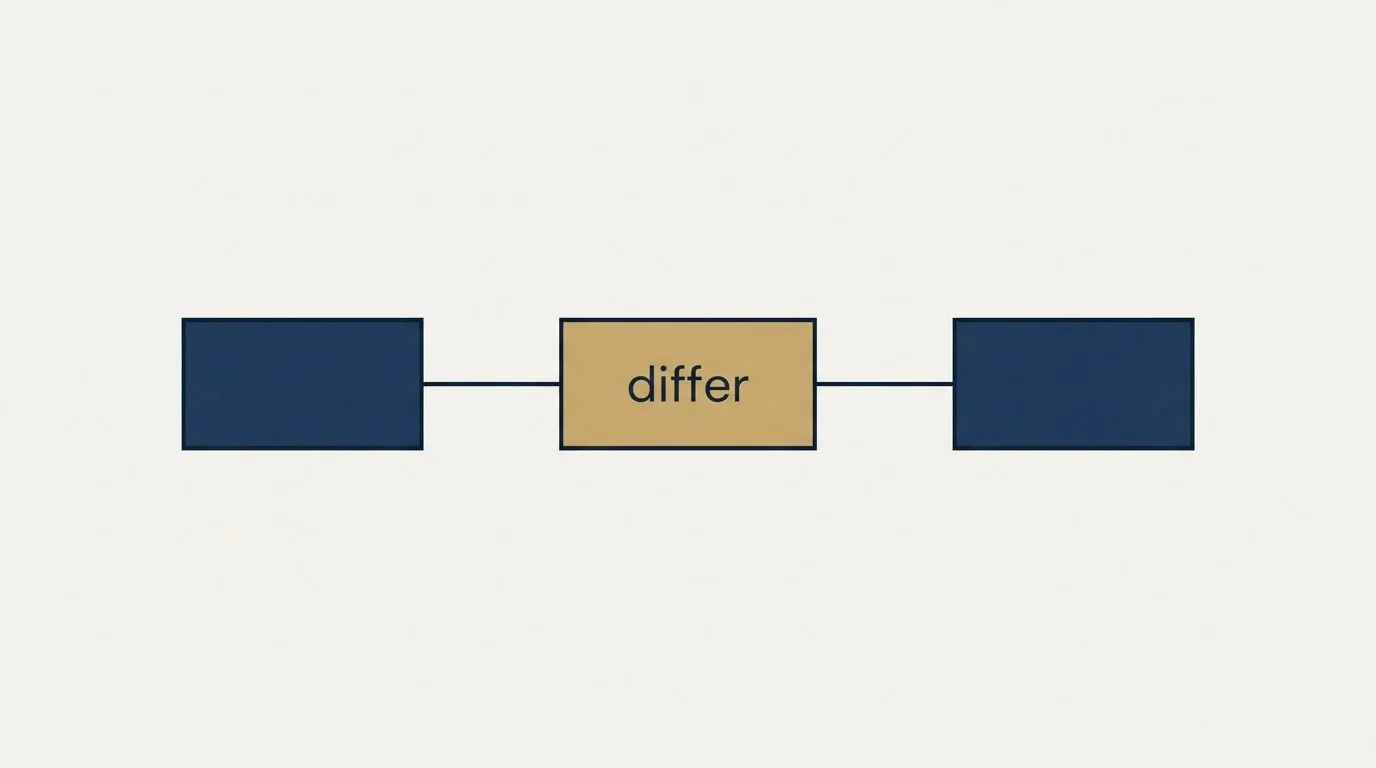
Much of the advice on this page reflects how outbound is commonly run. We run it differently, and since this page sits on our site it is worth saying where the difference is and what it costs us.
- A sequence of messages to each prospect over several weeks
- Later messages often land in the same email thread
- Every contact is reached more than once, so a distracted reader gets another chance
- The later messages go only to people who did not answer the first
- Reputation cost accrues on the sending domain across everything else it sends
- One message, then that campaign is finished for that contact
- No thread replies and no bumps
- More of the work moves into targeting and into the one message
- We reach each contact less often, and that is the cost we accept
The reasoning is mechanical rather than moral. A follow-up arrives underneath a message the recipient has already seen and chosen not to answer, so it is delivered to the population most likely to mark it as spam, and the reputation cost of that lands on the sending domain across every campaign running on it. We set that cost against the replies a sequence recovers and decided the trade was not worth it. The full argument, with the numbers from our own campaigns, is in why we stopped using follow-ups.
Follow-Up Strategy
Most responses come from follow-up emails, not the initial outreach. Plan a sequence of 3-4 touches over 2-3 weeks.
Follow-Up Timing
- Email 2: 3-4 days after initial email
- Email 3: 5-7 days after Email 2
- Email 4: 7-10 days after Email 3 (optional, brief)
Follow-Up Content
Each follow-up should add value or provide a new angle:
- Share a relevant market update or news item
- Reference a comparable sale or transaction
- Ask a different question
- Provide a resource (market report, article, analysis)
Avoid follow-ups that just say "checking in" or "bumping this up." Each touch should give the recipient a reason to respond.
Example Follow-Up Sequence
Follow-up 1 (Day 4): "[First Name], wanted to follow up on my note about your [Property]. I came across [relevant news/data/comp] that might be relevant to your situation. Happy to share more context if helpful."
Follow-up 2 (Day 11): "[First Name], one more thought: I put together a quick analysis of recent sales in [Area] that might be useful as a reference point. Want me to send it over?"
Follow-up 3 (Day 21): "[First Name], I will assume the timing is not right and will not keep following up. If your situation changes or you want to discuss [market/property/opportunity] in the future, feel free to reach out."
Measuring Results
Track these metrics to evaluate and improve your real estate cold email campaigns:
Open rate. Target 40-60% for well-targeted real estate lists. Lower rates suggest subject line issues or deliverability problems.
Reply rate. Expect 3-10% reply rates for quality outreach. Both positive and negative replies count. Even "not interested" replies indicate your emails are reaching real people.
Meeting/call rate. Track how many conversations result from your outreach. This is the most meaningful metric for real estate professionals.
Deal attribution. Over time, track which deals originate from cold email. This helps calculate ROI and justify continued investment in outreach.
Common Issues and Fixes
Low open rates: Test subject lines, verify your sending reputation, ensure your list has accurate email addresses.
Opens but no replies: Your email is not compelling enough. Test different value propositions and calls to action.
Replies but no meetings: Your follow-up or conversation-starting skills need work. The email got their attention, but something in the next step is not converting.
Meetings but no deals: This is likely a sales or service issue, not an email issue. Focus on your pitch and qualification process.
Integrating Cold Email with Other Channels
Cold email works best as part of a multi-channel approach.
Email + Phone
Following up a cold email with a phone call (where permitted) can increase response rates. Reference your email in the call: "I sent you a note earlier this week about your property on Oak Street..."
Email + LinkedIn
Connect on LinkedIn before or after email outreach. A LinkedIn profile adds credibility and gives prospects another way to learn about you.
Email + Direct Mail
For high-value targets (large property owners, developers, institutional investors), combining email with well-designed direct mail can differentiate your outreach from the digital noise.
Email + Content
Sharing genuinely useful content (market reports, investment analyses, neighborhood guides) in your emails adds value and positions you as a resource.
Getting Started
If you are new to cold email for real estate, here is a practical starting point:
Week 1: List Building
- Define your ideal target (property type, location, ownership type)
- Build a list of 200-500 prospects using available data sources
- Verify email addresses using an email verification service
Once your prospect list is verified and ready, warming up your sending domain matters just as much, so review these top tools for warming up email accounts before launching outreach.
Week 2: Email Setup
- Set up a separate sending domain (not your main business domain)
- Create 2-3 email accounts on the new domain
- Begin warming up the accounts (2+ weeks before sending)
Week 3-4: Campaign Preparation
- Write your initial email and 2-3 follow-ups
- Set up tracking for opens and replies
- Configure your sending schedule (spread throughout business hours)
Week 5: Launch
- Start with small daily volume (20-30 emails per account)
- Monitor deliverability and response rates
- Adjust messaging based on initial results
Ongoing:
- Add new prospects to your list regularly
- Test different subject lines and value propositions
- Track which approaches generate the best response rates
- Follow up consistently and promptly on replies
Final Thoughts
Cold email for real estate is about starting conversations with people who own or invest in property. The fundamentals remain the same across all cold outreach: reach the right people, at the right time, with a relevant message that offers genuine value.
Real estate professionals have advantages in cold outreach due to the availability of property data and the high value of each relationship. The key is approaching outreach as relationship-building, demonstrating local expertise, and respecting the prospect's time and preferences.
Start with a focused niche, build a quality list, write emails that demonstrate specific value, and follow up consistently. Measure results, iterate on what works, and scale what proves effective.
Related Reading
- Cold Email for Property Management Companies: 2026 Strategy Guide
- Cold Email for Insurance: Reaching Carriers, Brokers, and Insurtech Companies
If you would rather have this run for you, RevenueFlow books qualified meetings on a pay-per-meeting basis and publishes client results.
This guide provides general information about cold email practices for real estate professionals. Consult with legal counsel regarding compliance requirements in your specific market and situation.
Frequently asked questions.
Frequently asked questions- Why does cold email work well for real estate professionals?
- Cold email works for real estate because property ownership is public record, making precise targeting possible. High transaction values justify personalized outreach investment, with agents earning tens of thousands per deal and investors making hundreds of thousands. Real estate is timing-sensitive and local, so emails demonstrating market knowledge during key windows like lease expirations or market shifts create credible relationship starting points at scale.
- What types of real estate professionals can use cold email effectively?
- Five categories benefit from cold email: commercial brokers targeting property owners and investors, residential agents reaching FSBO sellers and expired listings, investors seeking off-market acquisitions and deal sources, property managers contacting landlords with self-managed properties, and mortgage or title professionals building referral partnerships with agents. Each use case requires different messaging tailored to the recipient's specific situation and concerns.
- Where do real estate professionals get prospect data for cold email?
- Real estate list sources include county assessor property records with ownership and sale history, commercial databases like CoStar and Reonomy for detailed building information including lease expirations, LinkedIn for targeting professionals by job title and location, state business filings for LLC ownership structures, and MLS data for expired listings. Property records provide advantages over other industries because ownership information is public.
- How should real estate professionals segment their cold email lists?
- Effective segmentation separates prospects by property type since multifamily owners have different concerns than retail property owners, ownership structure because individual owners respond differently than institutional investors, property characteristics like age and condition, timing indicators such as loan maturities or lease expirations, and geographic focus to leverage hyperlocal market expertise rather than sending one generic message to all property owners.
About the author.

Fernando Cao is CEO at RevenueFlow, which builds and operates outbound revenue engines for B2B companies. Previously at Accenture Strategy. Studied at University of Bath.
Fernando Cao · CEO
Connect on LinkedIn →Explore more.
Ready to scale your outreach?
We build GTM engines that book real meetings. See the receipts.
Related articles.
Cold Email for Telecom: Reaching Carriers and MSPs
Telecom companies face rapid technology changes and competitive pressures. Here's how to approach cold email outreach to carriers, MSPs, and UCaaS providers.
Cold Email for Architecture Firms: 2026 Strategy Guide
Architecture firms buy on project phases rather than fiscal quarters. How to build a list, time the spec window, and write cold emails principals answer.
Cold Email for Trucking and Fleet Companies: 2026 Guide
How to reach carriers, fleet operators, and safety buyers with cold email: FMCSA-driven list building, trigger timing, four templates, and compliance.
Cold Email for Cannabis Companies: 2026 Strategy Guide
The April 2026 rescheduling order split cannabis buyers into two tax realities. Here is how to segment, list-build, and write cold email for each.
Cold Email for Private Equity Firms: 2026 Strategy Guide
How to run cold email into private equity: mapping fund-level and portfolio-level buyers, list sources, four templates, and PE-specific deliverability rules.
Cold Email for Wealth Management Firms: 2026 Strategy Guide
RIAs are 16,500+ mostly small firms with public Form ADV data, small buying committees, and a compliance gate. How to run cold email into wealth management.