Cold Email for Security Services: The Complete Guide
A comprehensive guide to cold email outreach for security service providers, covering how to reach facility managers, corporate security directors, and property managers with messaging that builds trust and wins contracts.
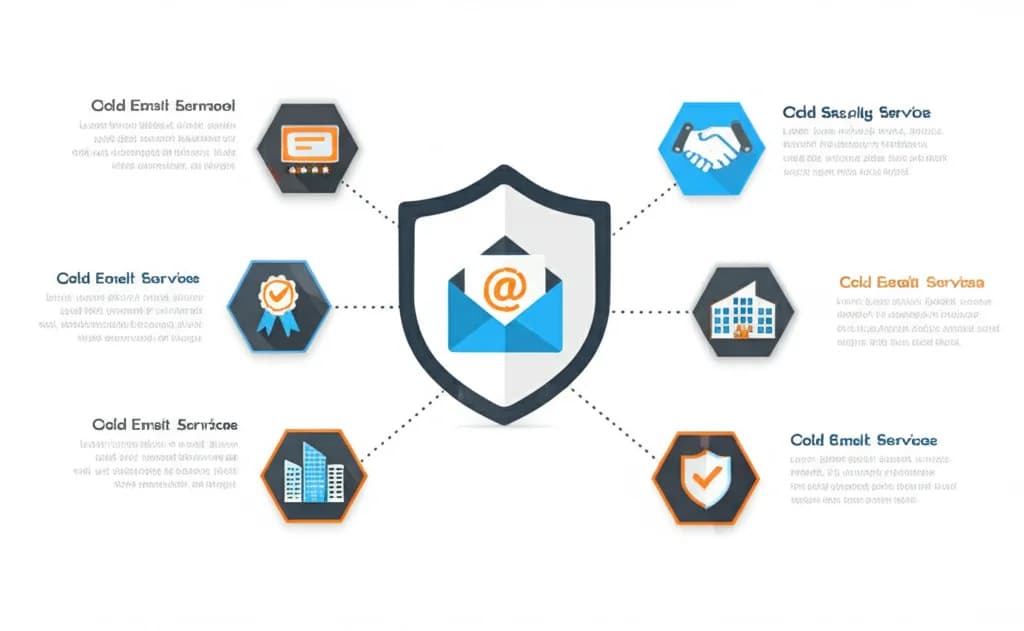
Cold email works for security services because decision-makers like facility managers and corporate security directors are easily identifiable, security needs are universal across organizations, and contracts are typically substantial and long-term. The security services industry generates over $50 billion annually in the United States, yet many firms rely primarily on referrals, leaving significant opportunities for proactive outreach that demonstrates professionalism and addresses specific pain points like guard reliability, compliance requirements, and risk mitigation.
Key takeaways
- The security services industry in the United States generates over $50 billion annually, encompassing guard services, executive protection, alarm monitoring, and cybersecurity consulting.
- Security service agreements often span multiple years and represent significant ongoing revenue, justifying the effort required for thoughtful, personalized cold email outreach.
- Facility managers prioritize reliability, responsiveness, and professionalism of security personnel, wanting partners who handle problems without creating additional workload.
- Corporate security directors evaluate vendors based on industry knowledge, specific certifications, training programs, technology capabilities, and expertise in risk mitigation and compliance.
- Property managers assess security services through the lens of tenant safety and satisfaction, liability reduction, and how professional security personnel affect property value and tenant retention.
Reviewed and updated August 28, 2026
Cold Email for Security Services: The Complete Guide
Security service providers face a unique challenge in business development. You are asking prospects to trust you with their safety, their assets, and often their most sensitive operations. Building that trust through cold outreach requires a different approach than selling most B2B services. Done correctly, cold email becomes a powerful tool for security companies to demonstrate professionalism, reliability, and competence before the first conversation ever takes place.
The security services industry in the United States generates over $50 billion annually, encompassing everything from uniformed guard services to executive protection, alarm monitoring to cybersecurity consulting. Despite this massive market, many security firms rely primarily on referrals and RFP responses, leaving significant opportunities untapped. Cold email allows security providers to proactively reach decision-makers at organizations that may not even realize they need better security solutions.
This guide covers everything security service providers need to know about cold email outreach, from identifying the right prospects to crafting messages that convert, while maintaining the professional standards the industry demands.
Why Cold Email Works for Security Services
Security is fundamentally about trust. Organizations hire security providers because they need to believe those providers will protect what matters most to them. This might seem like an obstacle for cold outreach, but it actually creates an opportunity. Most security buying decisions happen reactively, often after an incident or close call. Proactive outreach allows you to start conversations before prospects are in crisis mode.
Cold email works for security services because of several industry-specific factors:
Decision-makers are identifiable. Facility managers, corporate security directors, property managers, and business owners are relatively easy to identify through LinkedIn, company websites, and industry databases. Unlike consumer marketing, B2B security sales targets a defined universe of prospects.
Security needs are universal. Every organization with physical assets, employees, or sensitive information has security requirements. The question is whether they are addressing those requirements adequately. Your cold email can raise awareness of gaps they may not have considered.
Teams that still doubt cold outreach works outside their own niche will find cold email strategies for food and beverage suppliers a useful comparison of how universal buyer needs shape effective prospecting.
Contracts are substantial and long-term. Security service agreements often span multiple years and represent significant ongoing revenue. The economics justify the effort required for thoughtful, personalized outreach.
Switching costs create urgency for quality. Organizations that have experienced problems with their current security provider are actively seeking alternatives. Your outreach can arrive at exactly the right moment.
Compliance requirements drive action. Many industries have specific security requirements mandated by regulations, insurance policies, or contractual obligations. Referencing these requirements in your outreach creates legitimate urgency.
Compliance driven urgency also shapes outreach in emerging technology sectors, where security providers can study blockchain outreach strategies to see how regulatory timing sharpens messaging.
Understanding the Security Services Buyer
Success in security cold email requires understanding the different types of buyers and what motivates their decisions. Security services are purchased by various roles, each with distinct priorities and concerns.
Which of those buyers a guard, patrol or integration company should book a meeting with, and what the first message has to carry, is covered in appointment setting for security companies.
Facility Managers
Facility managers oversee the physical operations of buildings and campuses. Security is one of many responsibilities they juggle, alongside maintenance, space planning, and vendor management.
What they care about: Reliability, responsiveness, professionalism of personnel, clear communication, and solutions that reduce their workload rather than add to it. Facility managers want security partners who handle problems without creating new ones.
How to reach them: Facility managers respond to emails that acknowledge their broad responsibilities and position security as one fewer thing they need to worry about. Emphasize your reporting systems, communication protocols, and ability to integrate with their existing operations.
Pain points to address: Guard no-shows, inconsistent service quality, communication gaps, incident documentation problems, and vendor management overhead.
Corporate Security Directors
Security directors are specialists responsible for developing and implementing security programs. They typically report to executives and have significant influence over vendor selection.
What they care about: Risk mitigation, program effectiveness, compliance with regulations, technology integration, and professional development of security personnel. Security directors evaluate vendors based on expertise and capability.
How to reach them: Security directors respond to emails that demonstrate industry knowledge and security expertise. Reference specific certifications, training programs, and technology capabilities. Show that you understand their challenges at a professional level.
Pain points to address: Evolving threat landscapes, integration of physical and cyber security, workforce quality and retention, regulatory compliance, and demonstrating ROI to executives.
Property Managers
Property managers are responsible for commercial, retail, or residential properties where security directly impacts tenant satisfaction and property value.
What they care about: Tenant safety and satisfaction, liability reduction, property protection, cost management, and professional appearance of security personnel. Property managers evaluate security through the lens of how it affects their tenants and owners.
How to reach them: Property managers respond to emails that connect security to property value and tenant retention. Emphasize the visible professionalism of your personnel and your track record with similar properties.
Pain points to address: Tenant complaints, parking lot issues, after-hours incidents, homeless and trespassing problems, and liability concerns.
Business Owners and Executives
For smaller organizations, the owner or a senior executive often makes security decisions directly, often without specialized security expertise.
What they care about: Protecting their business, employees, and customers without security becoming a major distraction or expense. They want simple, reliable solutions from trustworthy providers.
How to reach them: Business owners respond to emails that speak to their broader concerns about protecting what they have built. Avoid jargon and focus on outcomes: safe employees, protected assets, peace of mind.
Pain points to address: After-hours vulnerability, employee safety concerns, theft and vandalism, liability exposure, and uncertainty about what level of security they actually need.
Security Industry Challenges in Cold Outreach
Cold email for security services faces specific challenges that require thoughtful navigation.
Challenge 1: Demonstrating Trustworthiness
Security buyers must trust providers before they will even consider engagement. Your cold email must quickly establish credibility and professionalism.
Strategic response: Lead with credentials that validate your trustworthiness. State licensing, insurance coverage, industry certifications (like ASIS membership), years in business, and relevant experience. Your email itself demonstrates your professionalism through its clarity and attention to detail.
Practical application: Include your state license number in your signature block. Reference your bonding and insurance. Mention any background screening processes for your personnel. These details signal that you operate professionally.
Challenge 2: Commoditization and Price Pressure
Many buyers view security services as commodities, choosing providers based primarily on hourly rates. This creates a race to the bottom that harms service quality.
Strategic response: Differentiate on value, not price. Your cold email should focus on outcomes (reduced incidents, lower liability exposure, better tenant satisfaction) rather than features (guards, patrols, technology). Help prospects understand the true cost of inadequate security.
Practical application: Include specific metrics or case studies that demonstrate ROI. For example: "After implementing our security program, [Client Type] saw a 60% reduction in after-hours incidents and eliminated theft-related losses entirely."
Challenge 3: Incumbent Relationships
Many organizations have existing security providers, and switching involves effort, risk, and the discomfort of changing familiar relationships.
Strategic response: Position yourself as a better option without directly attacking competitors. Focus on capabilities or approaches that may be missing from their current program. Offer assessments or audits that can reveal gaps without requiring commitment.
Practical application: Offer a complimentary security assessment that can identify vulnerabilities. This provides value whether or not they switch providers and opens the door to deeper conversations.
Challenge 4: Budget Constraints
Security is often viewed as a cost center rather than a value driver, making budgets a constant challenge.
Strategic response: Frame security investment in terms of risk reduction and potential loss prevention. Connect your services to specific risks that would be far more costly if they materialized.
Practical application: Reference industry statistics about security incidents and their costs. Help prospects understand that security spending is insurance against potentially catastrophic losses.
What Works: Security Services Cold Email Best Practices
Effective security services cold emails combine industry credibility with clear value propositions and professional presentation.
Subject Lines That Build Trust
Security decision-makers are skeptical by nature. Your subject line must establish relevance without triggering the suspicion that marks their professional approach.
Effective approaches:
- Reference their industry or property type: "Security staffing for healthcare facilities in [City]"
- Highlight credentials: "Licensed, bonded security services for commercial properties"
- Connect to specific needs: "After-hours security coverage for retail locations"
- Offer value: "Complimentary security assessment for [Company Type]"
Approaches to avoid:
- Fear-based messaging: "Is your business vulnerable?" or "What would a security breach cost you?"
- Vague claims: "Better security solutions" or "Upgrade your protection"
- Hard sells: "Act now for special rates" or "Limited time offer"
- Questions that feel manipulative: "Concerned about your current security?"
Email Copy That Converts
Security email copy must quickly establish credibility while communicating specific value.
Opening: Lead with a relevant hook that demonstrates understanding of their situation. Reference their industry, property type, or a specific challenge they likely face.
Credentials: Early in the email, establish your qualifications. State your license, mention years of experience, reference relevant certifications or associations.
Value proposition: Focus on outcomes rather than services. What results can you deliver? Reduced incidents, professional representation, peace of mind, compliance assurance?
Social proof: If possible, reference similar clients or relevant experience. Specificity adds credibility.
Call to action: Offer a low-commitment next step. A phone call to discuss their needs, a complimentary assessment, or a brief meeting to introduce your capabilities.
- Step 1Opening
Lead with a relevant hook that demonstrates understanding of their situation: their industry, property type, or a specific challenge they likely face.
- Step 2Credentials
Establish qualifications early. State your license, mention years of experience, reference relevant certifications or associations.
- Step 3Value proposition
Focus on outcomes: reduced incidents, professional representation, peace of mind, compliance assurance.
- Step 4Social proof
Reference similar clients or relevant experience. Specificity adds credibility.
- Step 5Call to action
Offer a low-commitment next step: a phone call to discuss their needs, a complimentary assessment, or a brief meeting.
Email Template: Guard Services to Property Manager
Subject: Licensed security staffing for [Property Name/Type]
Body:
Managing security across commercial properties requires reliable partners who understand the unique challenges of property management, from tenant expectations to after-hours coverage to professional representation of your property.
[Your Company] provides uniformed guard services for commercial properties throughout [Region]. We are fully licensed and insured, with all officers background-screened, uniformed, and trained in customer service as well as security protocols.
Our current portfolio includes [X] commercial properties totaling over [X] million square feet. Property managers work with us because we handle security so they can focus on their core responsibilities.
I would welcome the opportunity to learn about your security needs and share how we support similar properties. Would a brief call this week make sense?
Best regards, [Name] [Title] [Company] License #[Number] | Bonded and Insured
Email Template: Executive Protection to Corporate Security Director
Subject: Executive protection capabilities for [Company Name]
Body:
As [Company Name] continues to grow, your executives face increasing visibility and potential security concerns. Many corporate security programs are evaluating how to better protect leadership while maintaining the low-profile approach executives prefer.
[Your Company] specializes in executive protection for corporate clients. Our protection specialists come from law enforcement and military backgrounds, with extensive training in threat assessment, secure transportation, and advance work. We emphasize discretion and professionalism, protecting executives without disrupting their work or personal lives.
We currently provide executive protection for [general description of client types], and I would welcome the opportunity to discuss how our capabilities might support your program.
Would you be open to a brief conversation about your executive protection requirements?
Best regards, [Name] [Title], [Relevant Credentials] [Company]
Email Template: Security Consulting to Business Owner
Subject: Security assessment for [Business Type] in [Area]
Body:
Running a [business type] means you are responsible for protecting your employees, customers, and assets, often without the security expertise that larger organizations have in-house.
[Your Company] helps small and mid-sized businesses develop practical security programs that address real risks without unnecessary expense. We start with a complimentary security assessment that identifies vulnerabilities and provides actionable recommendations, with no obligation.
After 15 years working with businesses throughout [Region], I have found that most owners are either over-investing in security measures that do not address their actual risks, or under-investing in areas that leave them genuinely vulnerable.
Would a complimentary assessment be helpful as you think about your security program?
Best regards, [Name] [Title] [Company] [Credentials/Associations]
Compliance and Professional Standards

Security services cold email must reflect the professional standards of the industry.
Licensing and Regulatory Compliance
Security providers are regulated at the state level, with licensing requirements varying by jurisdiction and service type. Your cold email should reflect your compliance with all applicable regulations.
Best practices:
- Include your license number in your email signature
- Only offer services you are licensed to provide
- Be accurate about the scope of your capabilities
- Never misrepresent credentials or experience
Industry Association Standards
Professional associations like ASIS International establish standards for security industry practices. Membership and certifications from these organizations add credibility to your outreach.
Best practices:
- Reference relevant certifications (CPP, PSP, PCI)
- Mention association memberships that demonstrate professional commitment
- Align your messaging with industry best practices
Insurance and Bonding
Security clients need assurance that you carry appropriate insurance and bonding. This protects them from liability and demonstrates your professional standing.
Best practices:
- State that you are bonded and insured
- Be prepared to provide certificates of insurance
- Carry coverage appropriate for the services you offer
- Include your license number in your email signature
- Only offer services you are licensed to provide
- Be accurate about the scope of your capabilities
- Never misrepresent credentials or experience
- Reference relevant certifications (CPP, PSP, PCI)
- Mention association memberships that demonstrate professional commitment
- Align your messaging with industry best practices
- State that you are bonded and insured
- Be prepared to provide certificates of insurance
- Carry coverage appropriate for the services you offer
Your Security Services Cold Email Checklist
Before launching any cold email campaign, verify the following:
Credibility elements:
- License number included in signature
- Insurance and bonding status mentioned
- Relevant certifications and associations referenced
- Years of experience stated
- Professional email domain used
Targeting:
- Recipient role identified (facility manager, security director, property manager, owner)
- Industry or property type researched
- Email content tailored to recipient's specific concerns
- Geographic relevance confirmed (you serve their area)
Content quality:
- Subject line establishes relevance and credibility
- Opening demonstrates understanding of their situation
- Value proposition focuses on outcomes
- Call to action is specific and low-commitment
- Professional tone throughout
Technical execution:
- Email deliverability verified
- No large attachments in initial outreach
- Response handling process established
Getting Started with Security Services Cold Email
Security services business development rewards providers who can demonstrate professionalism, expertise, and trustworthiness before the first conversation. Cold email, when executed correctly, allows you to showcase these qualities at scale while building a pipeline of qualified opportunities.
Success requires understanding your target buyers, addressing their specific concerns, and presenting yourself as a credible, professional partner. The effort invested in crafting thoughtful, personalized outreach pays dividends in contract wins and long-term client relationships.
If you are ready to implement a cold email strategy for your security services business but lack the time or expertise to execute it effectively, professional support can accelerate your results while ensuring your outreach reflects the high standards your industry demands.
RevenueFlow specializes in cold email campaigns for service businesses, including security providers. Our team understands the trust-building requirements, buyer personas, and professional standards that drive success in this sector.
Get your free cold email campaign and start reaching security decision-makers →
Related Reading
Frequently asked questions.
Frequently asked questions- Why does cold email work for security services companies?
- Cold email works for security services because decision-makers are easily identifiable through LinkedIn and company databases, security needs are universal across organizations with physical assets or employees, and service contracts are substantial and long-term. Additionally, many security buying decisions happen reactively after incidents, so proactive outreach allows you to start conversations before prospects are in crisis mode, while compliance requirements in many industries create legitimate urgency for security solutions.
- Who are the main buyers of security services that I should target with cold email?
- The primary buyers include facility managers who oversee building operations and want reliable vendors, corporate security directors who are specialists focused on risk mitigation and compliance, property managers responsible for tenant safety and property value, and business owners or executives. Each role has distinct priorities: facility managers prioritize reliability and reduced workload, security directors value expertise and certifications, while property managers focus on tenant satisfaction and professional appearance of security personnel.
- What pain points should I address when cold emailing facility managers about security services?
- Facility managers struggle with guard no-shows, inconsistent service quality, communication gaps with vendors, incident documentation problems, and vendor management overhead. They want security partners who handle problems without creating new ones and reduce their workload. Your cold emails should emphasize reporting systems, communication protocols, and ability to integrate smoothly with their existing operations, positioning security as one fewer thing they need to worry about alongside their many other responsibilities.
- How much revenue does the security services industry generate in the United States?
- The security services industry in the United States generates over $50 billion annually. This encompasses a wide range of services including uniformed guard services, executive protection, alarm monitoring, and cybersecurity consulting. Despite this massive market size, many security firms still rely primarily on referrals and RFP responses rather than proactive outreach, leaving significant business development opportunities untapped for companies willing to implement strategic cold email campaigns.
About the author.

Fernando Cao is CEO at RevenueFlow, which builds and operates outbound revenue engines for B2B companies. Previously at Accenture Strategy. Studied at University of Bath.
Fernando Cao · CEO
Connect on LinkedIn →Explore more.
Ready to scale your outreach?
We build GTM engines that book real meetings. See the receipts.
Related articles.
Cold Email for Maintenance Services: The Complete Guide
A comprehensive guide to cold email outreach for commercial maintenance companies, covering how to reach facility managers, property managers, and operations directors with messaging that wins preventive maintenance and repair contracts.
Cold Email for Staffing Agencies: The Complete Guide
A comprehensive guide to cold email outreach for staffing and temp agencies, covering how to reach HR directors, hiring managers, and operations leaders with messaging that wins temporary staffing, contract placement, and direct hire business.
Cold Email for Telecom: Reaching Carriers and MSPs
Telecom companies face rapid technology changes and competitive pressures. Here's how to approach cold email outreach to carriers, MSPs, and UCaaS providers.
Cold Email for Electronics Companies: The Complete Guide
A comprehensive guide to cold email outreach for electronics manufacturers, component suppliers, and EMS providers, covering buyer personas, OEM relationships, contract manufacturing, and proven strategies for reaching engineers, procurement managers, and supply chain leaders.
Cold Email for Cloud Services: The Complete Guide
Learn how to effectively reach decision-makers at cloud service providers and enterprises adopting cloud infrastructure. This guide covers targeting strategies, technical credibility, and email templates for the cloud services industry.
Cold Email for Event Planning: The Complete Guide
A comprehensive guide to cold email outreach for event planning companies, covering how to reach corporate event managers, HR directors, and marketing leaders with messaging that wins event contracts and planning engagements.