Healthcare Cold Email Benchmarks: 2026 Performance Data
Industry benchmark data for healthcare cold email campaigns, including open rates, reply rates, and conversion metrics for companies selling to hospitals, health systems, medical practices, and healthcare organizations.
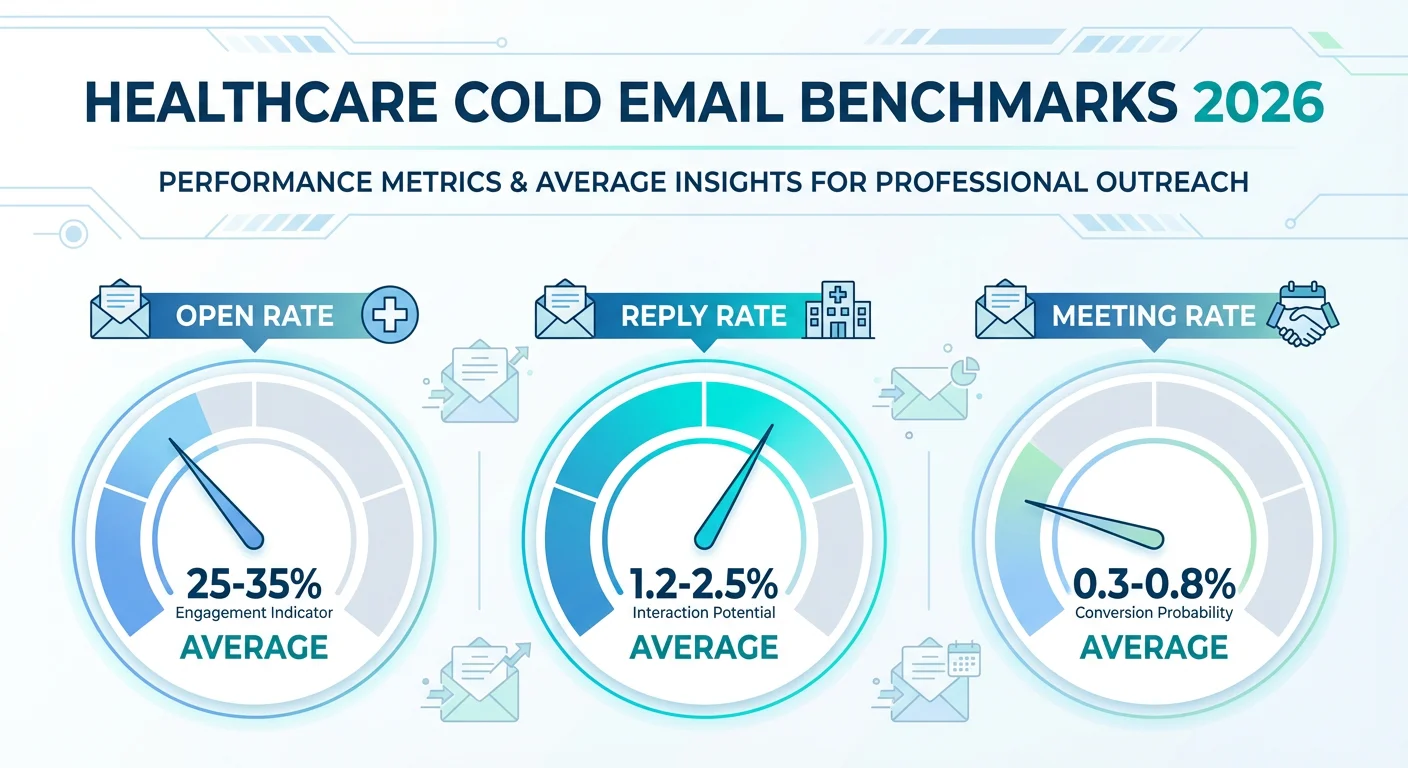
Healthcare cold email benchmarks for 2026 show average open rates of 25-35%, reply rates of 1.2-2.5%, and meeting booking rates of 0.3-0.8%. Independent practices significantly outperform large health systems, with open rates of 38-52% versus 22-35% and meeting rates of 0.8-2% versus 0.2-0.5%. Revenue cycle management solutions achieve the strongest engagement with reply rates of 2.2-4%.
Key takeaways
- Independent practices achieve open rates of 38-52% compared to 22-35% for large integrated health systems due to less sophisticated email filtering and more accessible decision-makers.
- Revenue cycle management solutions generate reply rates of 2.2-4%, outperforming other healthcare product categories because revenue impact messaging resonates with financial leaders facing reimbursement pressures.
- Healthcare meeting booking rates average 0.3-0.8%, significantly lower than other industries due to clinical schedules, committee calendars, and formal vendor engagement processes.
- EHR and clinical software companies see open rates of 25-38% and meeting rates of only 0.3-0.8% because of extended sales cycles and significant switching costs.
- Positive reply rates in healthcare range from 0.6-1.5%, with referrals to procurement or IT security counting as positive engagement indicating organizational interest.
Reviewed and updated September 15, 2026
Healthcare represents one of the most regulated and relationship-driven industries for B2B sales. Cold email campaigns targeting hospitals, health systems, medical practices, and healthcare technology buyers face unique challenges around compliance, security requirements, and complex procurement processes.
This benchmark report provides healthcare-specific data to help companies evaluate their cold email performance when selling into the healthcare vertical. The metrics presented represent typical performance ranges observed across healthcare technology, medical device, and healthcare services companies.
Methodology Note
Healthcare encompasses diverse segments from large integrated health systems to independent physician practices, each with distinct characteristics and buying behaviors. The benchmarks in this report are compiled from industry research and commonly observed performance ranges. Your results will vary based on your specific product, target segment, and competitive landscape.
Key Healthcare Cold Email Metrics
Healthcare buyers exhibit conservative purchasing behaviors driven by patient safety concerns, regulatory compliance, and extensive stakeholder involvement in purchasing decisions.
Average
Average
Average
Average
Bar widths are equal here because these stage values are not a single comparable measure.
Open Rates

Open rates in healthcare tend to be moderate, with significant variation based on institution type and the recipient's role.
Healthcare Industry Benchmarks:
- Below average: Under 25%
- Average: 25-35%
- Good: 35-45%
- Excellent: 45%+
By Healthcare Organization Type:
| Organization Type | Typical Open Rate Range |
|---|---|
| Independent Practices | 38-52% |
| Ambulatory Surgery Centers | 35-48% |
| Community Hospitals | 30-42% |
| Regional Health Systems | 28-40% |
| Academic Medical Centers | 25-38% |
| Large Integrated Health Systems | 22-35% |
Smaller organizations typically show higher open rates due to less sophisticated email filtering and more accessible decision-makers. Large health systems maintain strict email security protocols and multiple layers of gatekeeping.
Reply Rates
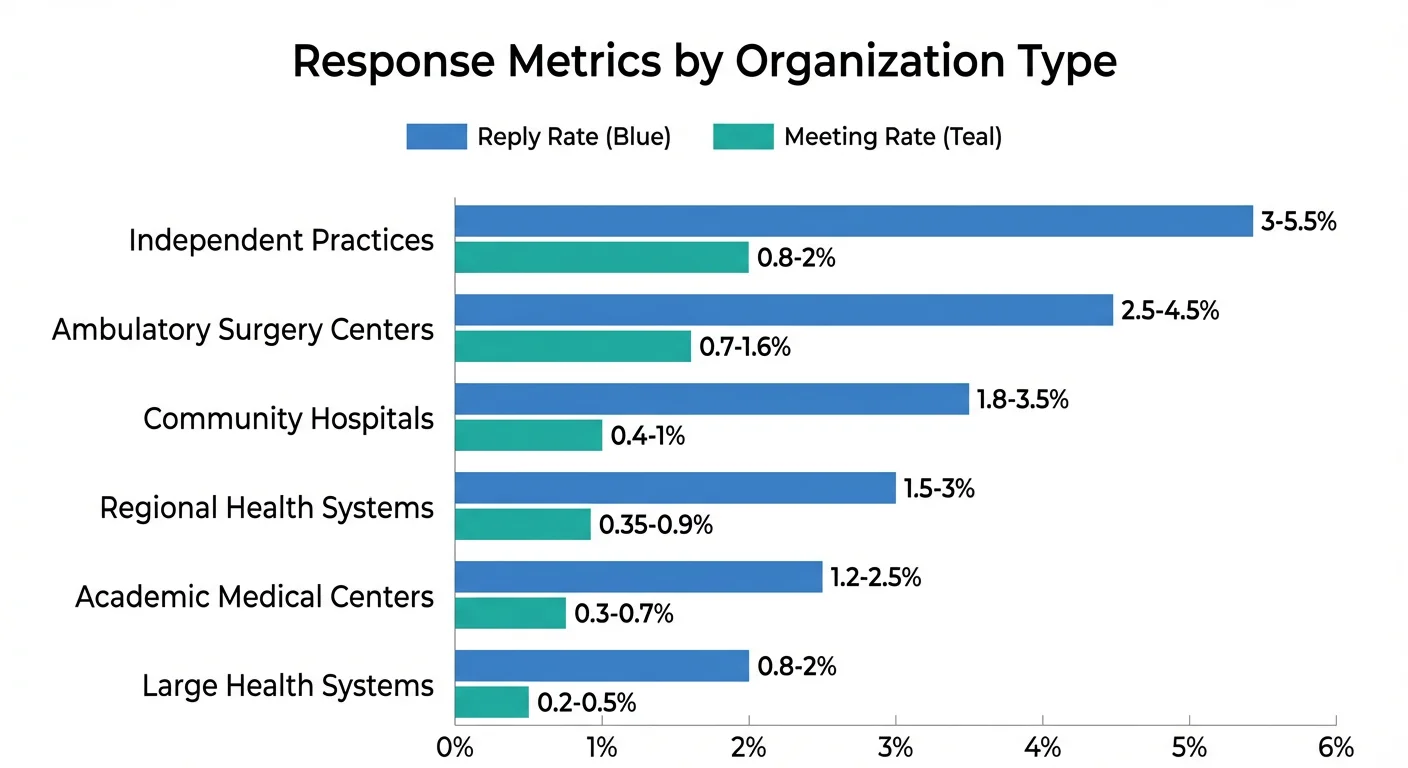
Reply rates in healthcare are influenced by the busy schedules of clinical and administrative leaders, as well as formal procurement processes that discourage direct vendor engagement.
Healthcare Industry Benchmarks:
- Below average: Under 1.2%
- Average: 1.2-2.5%
- Good: 2.5-4%
- Excellent: 4%+
By Healthcare Organization Type:
| Organization Type | Typical Reply Rate Range |
|---|---|
| Independent Practices | 3-5.5% |
| Ambulatory Surgery Centers | 2.5-4.5% |
| Community Hospitals | 1.8-3.5% |
| Regional Health Systems | 1.5-3% |
| Academic Medical Centers | 1.2-2.5% |
| Large Integrated Health Systems | 0.8-2% |
Independent practices demonstrate the highest reply rates because practice owners and managers often handle vendor communications directly, without formal procurement gatekeeping.
Positive Reply Rates
Positive engagement in healthcare often includes requests for compliance documentation, security assessments, or referrals to procurement departments.
Healthcare Industry Benchmarks:
- Below average: Under 0.6%
- Average: 0.6-1.5%
- Good: 1.5-2.5%
- Excellent: 2.5%+
Being directed to procurement or IT security should be treated as positive engagement in healthcare, as it indicates organizational interest.
Meeting Booking Rates
Converting healthcare interest to scheduled meetings requires navigating clinical schedules, committee calendars, and formal vendor engagement processes.
Healthcare Industry Benchmarks:
- Below average: Under 0.3%
- Average: 0.3-0.8%
- Good: 0.8-1.5%
- Excellent: 1.5%+
By Healthcare Organization Type:
| Organization Type | Typical Meeting Rate Range |
|---|---|
| Independent Practices | 0.8-2% |
| Ambulatory Surgery Centers | 0.7-1.6% |
| Community Hospitals | 0.4-1% |
| Regional Health Systems | 0.35-0.9% |
| Academic Medical Centers | 0.3-0.7% |
| Large Integrated Health Systems | 0.2-0.5% |
Benchmarks by Healthcare Product Category
Performance varies significantly based on your product type and its position within clinical workflows.
Electronic Health Records and Clinical Software
EHR and clinical software companies face extended sales cycles and significant switching costs that affect engagement patterns.
Typical Performance Ranges:
- Open rates: 25-38%
- Reply rates: 1.2-2.5%
- Positive reply rates: 0.6-1.5%
- Meeting booking rates: 0.3-0.8%
EHR decisions are highly complex with multi-year evaluation processes. Cold email serves best for initial awareness and long-term nurturing rather than immediate conversion.
Revenue Cycle Management
RCM solutions addressing billing, coding, and collections see relatively strong engagement due to clear ROI metrics.
Typical Performance Ranges:
- Open rates: 32-45%
- Reply rates: 2.2-4%
- Positive reply rates: 1.1-2.5%
- Meeting booking rates: 0.6-1.5%
Revenue impact messaging resonates strongly with healthcare financial leaders facing reimbursement pressures.
Patient Engagement and Experience
Patient communication, scheduling, and engagement platforms.
Typical Performance Ranges:
- Open rates: 30-42%
- Reply rates: 2-3.8%
- Positive reply rates: 1-2.2%
- Meeting booking rates: 0.5-1.3%
Medical Devices and Equipment
Medical device sales through cold email supplement relationship-based selling and clinical evaluations.
Typical Performance Ranges:
- Open rates: 28-40%
- Reply rates: 1.5-3%
- Positive reply rates: 0.8-1.8%
- Meeting booking rates: 0.4-1%
Device decisions require clinical champion engagement, making cold email most effective for identifying and nurturing potential champions.
Healthcare IT Infrastructure and Security
Cybersecurity, infrastructure, and IT services for healthcare organizations.
Typical Performance Ranges:
- Open rates: 30-42%
- Reply rates: 2-4%
- Positive reply rates: 1-2.5%
- Meeting booking rates: 0.5-1.2%
Growing cybersecurity concerns in healthcare drive increased receptivity to security-focused outreach.
Staffing and Workforce Solutions
Clinical staffing, workforce management, and credentialing solutions.
Typical Performance Ranges:
- Open rates: 35-48%
- Reply rates: 2.5-4.5%
- Positive reply rates: 1.3-2.8%
- Meeting booking rates: 0.7-1.6%
Persistent staffing challenges in healthcare create ongoing demand and receptivity to workforce solutions.
Benchmarks by Target Persona
Healthcare organizations involve numerous stakeholders in purchasing decisions. Performance varies significantly by target role.
Clinical Leadership (CMO, CNO, Medical Directors)
Typical Performance Ranges:
- Open rates: 22-35%
- Reply rates: 0.8-2%
- Positive reply rates: 0.4-1.2%
- Meeting booking rates: 0.2-0.6%
Clinical leaders are extremely time-constrained and often delegate vendor communications. When engaged, they carry significant influence over purchasing decisions.
Administrative Leadership (CEO, COO, Practice Managers)
Typical Performance Ranges:
- Open rates: 30-42%
- Reply rates: 1.8-3.5%
- Positive reply rates: 0.9-2%
- Meeting booking rates: 0.5-1.2%
Administrative leaders are more accessible and often drive operational improvement initiatives.
Financial Leadership (CFO, Revenue Cycle Directors)
Typical Performance Ranges:
- Open rates: 32-45%
- Reply rates: 2-4%
- Positive reply rates: 1-2.5%
- Meeting booking rates: 0.5-1.3%
Financial leaders respond well to clear ROI messaging and cost reduction opportunities.
IT Leadership (CIO, CISO, IT Directors)
Typical Performance Ranges:
- Open rates: 28-40%
- Reply rates: 1.5-3%
- Positive reply rates: 0.8-1.8%
- Meeting booking rates: 0.4-1%
Healthcare IT leaders face unique challenges around interoperability, security, and legacy system integration.
Department Heads and Service Line Leaders
Typical Performance Ranges:
- Open rates: 35-48%
- Reply rates: 2.5-4.5%
- Positive reply rates: 1.2-2.8%
- Meeting booking rates: 0.6-1.5%
Department-level leaders often have more flexibility in evaluating solutions specific to their areas.
Seasonal Patterns in Healthcare Outreach
Healthcare cold email performance follows distinct seasonal patterns tied to industry calendars.
Optimal Timing Windows
Best Performing Periods:
- January-March: New fiscal year budget availability
- August-September: Budget planning for next fiscal year
- Post-conference periods following major industry events (HIMSS, HFMA, etc.)
Challenging Periods:
- November-December: Holiday schedules and budget constraints
- June-July: Summer vacation schedules, particularly for academic medical centers
- Flu season peaks: Clinical staff are focused on patient care
Day and Time Considerations
Typical Best Performing Times:
- Tuesday through Thursday outperform other days
- Early morning sends (7-9 AM) before clinical duties begin
- Early evening sends (5-7 PM) after patient care hours
- Avoid sending during typical rounding hours (8-11 AM)
What Top Performers Do Differently

Healthcare companies achieving top-quartile performance share common characteristics.
Deep Understanding of Healthcare Operations
Top performers demonstrate knowledge of clinical workflows, regulatory requirements, and the specific challenges facing their target organizations. Generic B2B messaging significantly underperforms industry-specific content.
Compliance-First Positioning
Leading companies address HIPAA, security, and compliance considerations upfront rather than treating them as objections. Certifications, BAA availability, and security credentials are highlighted prominently.
Clinical Evidence and Outcomes Data
Healthcare buyers respond to clinical evidence and outcomes data. References to peer-reviewed studies, clinical validation, and measurable patient outcomes strengthen engagement.
Multi-Stakeholder Engagement
Given committee-based purchasing in healthcare, top performers engage multiple stakeholders simultaneously, including clinical champions, administrative sponsors, IT evaluators, and procurement contacts.
Peer Reference Availability
Healthcare buyers heavily rely on peer recommendations. Top performers proactively offer references to similar organizations rather than waiting for requests.
- Yes: Deep Understanding of Healthcare Operations
- Yes: Compliance-First Positioning
- Yes: Clinical Evidence and Outcomes Data
- Yes: Multi-Stakeholder Engagement
- Yes: Peer Reference Availability
Improving Your Healthcare Cold Email Performance
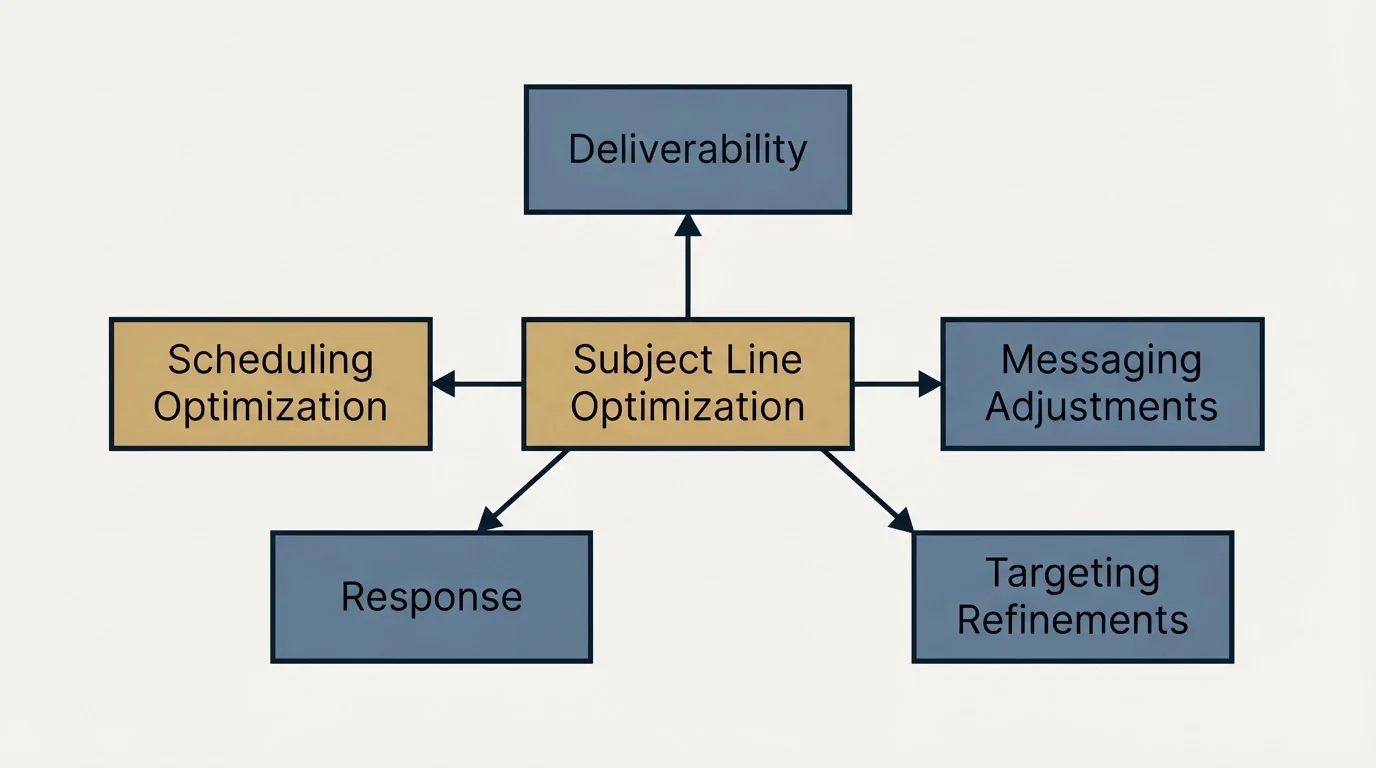
If your metrics fall below these benchmarks, focus on these high-impact areas.
For Below-Average Open Rates
Subject Line Optimization for Healthcare:
- Reference specific clinical or operational challenges
- Include relevant regulatory or industry developments
- Use role-specific language that resonates with your target persona
- Avoid promotional language that triggers healthcare spam filters
Deliverability in Healthcare:
- Healthcare organizations use strict email filtering
- Domain authentication (SPF, DKIM, DMARC) is essential
- Volume ramping must be gradual
- Monitor deliverability to health system domains specifically
For Below-Average Reply Rates
Messaging Adjustments:
- Lead with patient outcomes or operational efficiency impact
- Reference specific challenges facing their organization type
- Include relevant certifications and compliance credentials
- Address the "why now" question with urgency drivers
Targeting Refinements:
- Segment by organization type and size
- Prioritize organizations showing expansion or transformation signals
- Consider regional variations in healthcare markets
- Align with regulatory change timelines and industry trends
For Below-Average Meeting Rates
Response Handling:
- Acknowledge complex approval processes in follow-up
- Provide materials designed for internal circulation
- Offer flexible meeting formats (brief intro vs. full demonstration)
- Include relevant case studies from similar organization types
Scheduling Optimization:
- Offer specific times that accommodate clinical schedules
- Provide meeting agendas addressing compliance concerns
- Allow for asynchronous information sharing
- Be prepared for committee presentations rather than individual meetings
Compliance Considerations for Healthcare Outreach
Cold email to healthcare organizations requires attention to regulatory requirements.
HIPAA Considerations
While cold email itself does not typically involve Protected Health Information, your messaging and data handling practices should reflect HIPAA awareness:
- Never request patient information in cold outreach
- Ensure your own systems are HIPAA compliant if you will handle PHI
- Be prepared to execute Business Associate Agreements
Anti-Kickback and Stark Law Awareness
For certain healthcare products and services, messaging should be reviewed for compliance with anti-kickback statute and Stark Law implications. Consult with legal counsel for guidance specific to your product category.
State-Specific Regulations
Healthcare marketing and vendor relations are subject to various state-level regulations. Be aware of requirements specific to the states you are targeting.
Benchmarking Your Performance
To effectively benchmark your healthcare cold email campaigns:
Segment Your Data
Break down performance by:
- Organization type (health systems, hospitals, practices, etc.)
- Organization size (bed count, patient volume, revenue)
- Target persona (clinical, administrative, IT, financial)
- Geographic region and market characteristics
- Product category if you offer multiple solutions
Track Full Funnel Metrics
Beyond initial response rates, track:
- Time from first reply to committee presentation
- Number of stakeholders engaged per opportunity
- Security and compliance review timelines
- Pipeline value generated per campaign
- Conversion rate through evaluation process
Account for Extended Sales Cycles
Healthcare sales cycles typically range from 12-24 months for significant technology decisions. Evaluate cold email performance within the context of long-term pipeline development rather than immediate conversion only.
The Path Forward
Achieving strong performance in healthcare cold email requires specialized knowledge of healthcare operations, regulatory requirements, and buying processes. The combination of clinical priorities, compliance requirements, and committee-based decision-making makes healthcare one of the more challenging verticals for cold outreach.
However, healthcare technology companies that master cold email benefit from long customer relationships, high contract values, and significant switching costs that protect established accounts.
If your current performance falls below these benchmarks, consider whether your team has the healthcare-specific expertise to drive improvement. Our done-for-you cold email campaigns combine deep healthcare industry knowledge with proven outreach methodologies to help healthcare technology companies achieve above-benchmark results.
Get your free campaign strategy to see how your healthcare cold email metrics compare to industry benchmarks and identify specific opportunities for improvement.
Related Reading
Frequently asked questions.
Frequently asked questions- What is a good cold email reply rate for healthcare companies?
- A good reply rate for healthcare cold email is 2.5-4%, with rates above 4% considered excellent. Average performance ranges from 1.2-2.5%, while anything below 1.2% is below average. Independent practices typically achieve higher reply rates (3-5.5%) compared to large health systems (0.8-2%) due to more direct access to decision-makers and less formal procurement gatekeeping.
- Why do independent practices have higher cold email open rates than large hospitals?
- Independent practices achieve open rates of 38-52% compared to 22-35% for large integrated health systems because they maintain less sophisticated email filtering and have more accessible decision-makers. Large health systems implement strict email security protocols and multiple layers of gatekeeping that reduce email deliverability and open rates. Practice owners and managers at independent practices often handle vendor communications directly without formal procurement barriers.
- What healthcare product category gets the best cold email response rates?
- Revenue cycle management solutions achieve the strongest cold email engagement in healthcare, with reply rates of 2.2-4% and meeting booking rates of 0.6-1.5%. These solutions outperform other categories because revenue impact messaging resonates strongly with healthcare financial leaders facing reimbursement pressures. The clear ROI metrics associated with RCM solutions make them more compelling than products with less quantifiable value propositions.
- What meeting booking rate should I expect from healthcare cold email campaigns?
- Healthcare cold email meeting booking rates average 0.3-0.8%, with rates above 1.5% considered excellent. Independent practices deliver the highest meeting rates at 0.8-2%, while large integrated health systems typically see 0.2-0.5%. These lower rates compared to other industries reflect the challenge of navigating clinical schedules, committee calendars, and formal vendor engagement processes that characterize healthcare procurement.
- How do healthcare cold email open rates compare across different organization types?
- Healthcare open rates vary significantly by organization type, ranging from 38-52% for independent practices down to 22-35% for large integrated health systems. Ambulatory surgery centers achieve 35-48%, community hospitals 30-42%, regional health systems 28-40%, and academic medical centers 25-38%. Smaller organizations consistently outperform larger ones due to fewer email security layers and more direct access to decision-makers.
About the author.

Hosun Chung is COO at RevenueFlow, which builds and operates outbound revenue engines for B2B companies. Previously at Gleacher Shacklock LLP. Studied at London School of Economics.
Hosun Chung · COO
Connect on LinkedIn →Explore more.
Ready to scale your outreach?
We build GTM engines that book real meetings. See the receipts.
Related articles.
Cold Email Conversion Benchmarks: 2026 Performance Data
Complete benchmark data for cold email conversion rates from reply to meeting to opportunity. Learn what drives conversions and how to optimize your full funnel.
Education Cold Email Benchmarks: 2026 Performance Data
Industry benchmark data for education cold email campaigns, including open rates, reply rates, and conversion metrics for companies targeting K-12 schools, higher education, and corporate training organizations.
Automotive Cold Email Benchmarks: 2026 Performance Data
Industry benchmark data for automotive sector cold email campaigns, covering OEMs, suppliers, dealerships, and automotive technology with performance metrics by segment and buyer role.
Real Estate Cold Email Benchmarks: 2026 Performance Data
Comprehensive benchmark data for real estate cold email campaigns, including open rates, reply rates, and conversion metrics for companies targeting brokerages, property managers, developers, and real estate investors.
Fintech Cold Email Benchmarks: 2026 Performance Data
Comprehensive benchmark data for fintech cold email campaigns, including open rates, reply rates, and conversion metrics specific to financial technology companies targeting banks, financial institutions, and businesses.
Media Cold Email Benchmarks: 2026 Performance Data
Comprehensive benchmark data for media and entertainment industry cold email campaigns, covering publishers, streaming platforms, advertising, and content creators.