8 Sales Pitch Email Templates That Convert
A good sales pitch email focuses on the prospect, not your product. Here are templates that lead with value and earn responses.
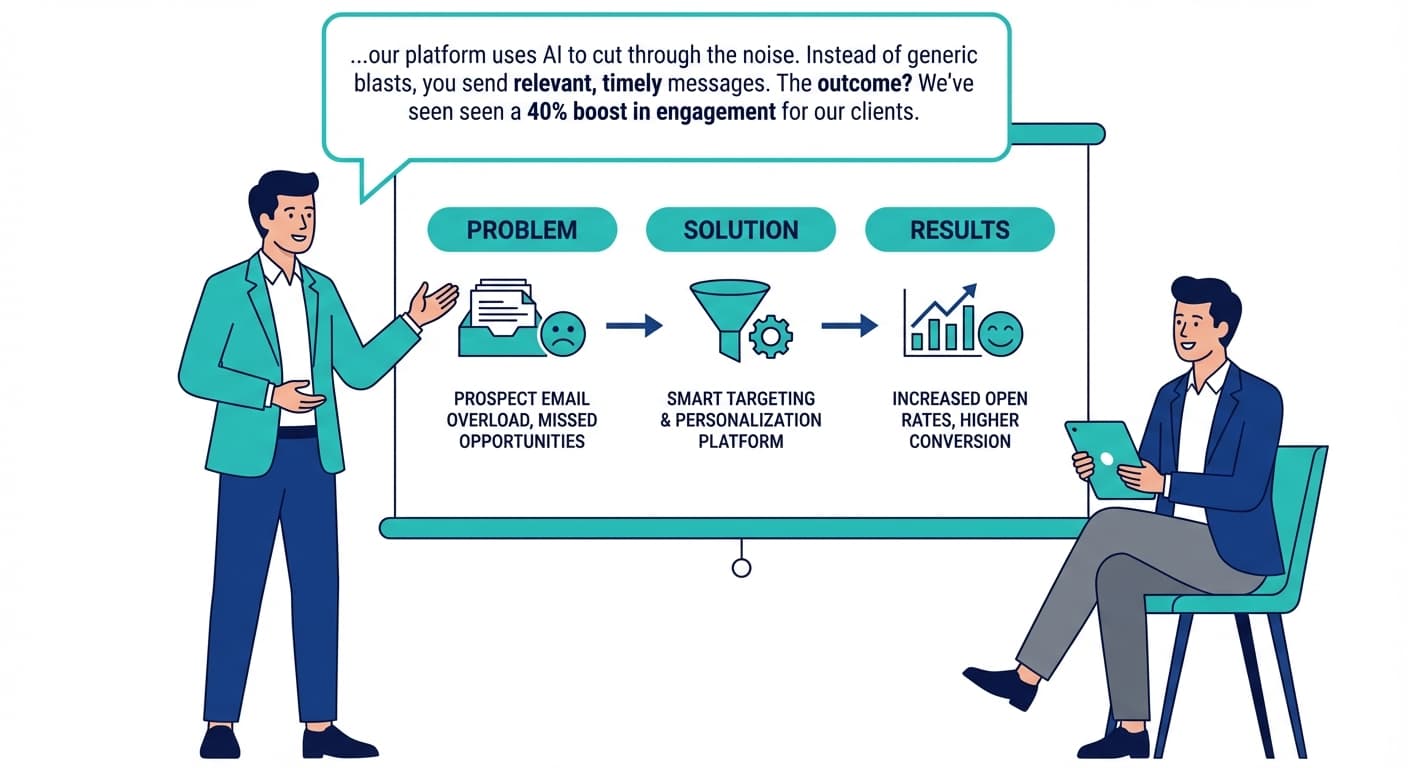
Effective sales pitch emails lead with the prospect's challenges rather than product features, focus on concrete outcomes instead of capabilities, stay under 125 words for initial outreach, and include specific low-commitment calls to action like a 15-minute call. Eight templates cover different approaches: problem-solution, before-after transformation, social proof, case study mention, ROI focus, competitive advantage, timing/urgency, and personalized pitch.
Key takeaways
- Sales pitch emails should be scannable in under 30 seconds, keeping initial outreach under 125 words.
- The problem-solution template works by identifying a specific challenge the prospect likely faces and connecting it to a concrete outcome with proof from similar companies.
- The before-after approach contrasts current frustrating workflows with improved outcomes, such as reducing an 8-hour weekly task to real-time automated results.
- Effective calls to action are specific and low-commitment, like requesting a 15-minute call rather than vague phrases like 'let me know if you're interested.'
- Leading with relevance by demonstrating research into the prospect's role, company situation, or industry trends earns the right to their attention.
Reviewed and updated September 15, 2026
8 Sales Pitch Email Templates That Convert
Most sales pitch emails fail because they lead with the wrong thing.
They open with company history. They list product features. They talk about awards and accolades. And they wonder why prospects hit delete without reading past the first line.
The sales pitch emails that actually work flip the script entirely. They start with the prospect's world. They acknowledge real challenges. They present solutions in terms of outcomes the prospect cares about. And they make responding feel like the obvious next step.
This guide provides eight sales pitch email templates, each designed for a different approach. Use them as starting points, not scripts to copy verbatim. The best sales emails always incorporate genuine personalization specific to each recipient.
An email template for selling a product is one of these eight rather than a shape of its own, and which one to reach for depends on whether the reader already feels the problem, already owns something similar, or has never met the category at all.
...whether you are pitching email to a journalist or to a buyer, the opening line has to earn the second one.
Anyone searching for a sales rep email template is usually after this exact set: the messages a rep sends across a deal rather than one opener, which is what follows.
Anybody hunting for sales pitch ideas is really after this list of structures rather than a list of gimmicks, because an idea that is not attached to a reason this particular reader should care is a subject line looking for a company.
What Makes a Sales Pitch Email Work
The structure below is what carries across any product, because the parts that change between a software subscription and a service retainer are the specifics inside each section rather than the sections themselves.
Before diving into templates, let's establish what separates effective sales pitch emails from the ones that get ignored.
- Yes: Lead With Relevance
- Yes: Focus on Outcomes
- Yes: Keep It Short
- Yes: Make the Next Step Obvious
Lead With Relevance
Your prospect receives dozens of sales emails every week. The only ones that get read are the ones that immediately signal relevance.
Relevance means understanding their situation before you start pitching. What challenges does someone in their role typically face? What's happening at their company right now? What industry trends are affecting their business?
That is also what a sales email template for new clients has to carry, since a first approach to a company you have never sold to stands or falls on whether its opening line could have been written about anybody else.
When you demonstrate that you've done your homework, you earn the right to their attention. When you lead with generic claims about your product, you get deleted.
Focus on Outcomes
Features tell, outcomes sell.
Your prospect doesn't care that your software has "AI-powered automation" or "enterprise-grade security." They care about what those things mean for their day-to-day work.
Will they save time? Reduce errors? Hit their targets more consistently? Those are outcomes. Translate every feature into its practical impact on the prospect's work.
Keep It Short
Sales pitch emails should be scannable in under 30 seconds. That means keeping your email under 125 words for initial outreach.
When the whole pitch has to fit in one sentence rather than one email, 12 sales pitch one-liners and the structure behind them works through the three slots that make a single line land.
Every sentence needs to earn its place. If a sentence doesn't establish relevance, communicate value, or move toward a clear next step, cut it.
Those three jobs recur across every format, and seven pitch scripts written out by situation show the same three slots working in an elevator pitch and a champion handoff.
Make the Next Step Obvious
Vague calls to action produce vague results. "Let me know if you're interested" is too passive. "Would you be available for a 30-45 minute comprehensive discovery session?" is too demanding for a cold email.
The best CTAs are specific, low-commitment, and easy to say yes to. A 15-minute call. A brief reply sharing their current approach. A simple yes or no.
Template 1: The Problem-Solution Approach
This template works when you're confident the prospect faces a specific challenge that your product addresses. It acknowledges the problem, positions your solution, and offers to help.
Best for: Prospects who are likely experiencing a known pain point in their role or industry.
Subject line options:
- "[Specific problem] at [Company]?"
- "Solving [challenge] for [their role type]"
- "[Company]'s [process/challenge]"
Template:
Hi [Name],
[Role type] at growing companies often struggle with [specific problem]. [One sentence about why this problem exists or why it's hard to solve.]
[Your product/service] helps teams like yours [specific outcome]. [One sentence of proof: similar company name, specific result, or relevant metric.]
Worth a quick 15-minute call to see if this could help [Company]?
[Your name]
Example using this template:
Hi Sarah,
Marketing directors at fast-growing SaaS companies often struggle with maintaining consistent brand voice across their expanding content operation. As the team grows, keeping everyone aligned on messaging becomes increasingly difficult.
Our content management platform helps marketing teams like yours maintain brand consistency while scaling content production. The marketing team at Acme Corp reduced their content revision cycles by half after implementing our brand guidelines automation.
Worth a quick 15-minute call to see if this could help TechStart maintain brand consistency as you scale?
Marcus
Why it works: The email identifies a specific, relatable challenge without being presumptuous. It connects the solution to a concrete outcome and provides proof from a similar company. The CTA is specific and low-commitment.
Template 2: The Before-After Approach
This template paints a picture of transformation. It contrasts where the prospect likely is now with where they could be, making the value proposition vivid and tangible.
Best for: Prospects who may not realize how much better things could be, or who have accepted a suboptimal status quo.
Subject line options:
- "From [current state] to [better state]"
- "[Company]'s [process] in half the time"
- "What if [positive outcome]?"
Template:
Hi [Name],
Most [role types] I talk to spend [X hours/effort] on [frustrating task]. They've accepted it as part of the job.
But it doesn't have to be that way.
[Company example] went from [before state: time, effort, or frustration] to [after state: specific improvement]. [Your product/service] handled [specific aspect], freeing their team to focus on [higher-value work].
Curious whether this could work for [Company]?
[Your name]
Example using this template:
Hi David,
Most operations managers I talk to spend their Monday mornings reconciling inventory data from three different systems. They've accepted it as part of the job.
But it doesn't have to be that way.
RetailCo went from spending 8 hours weekly on manual reconciliation to having accurate, unified inventory data in real time. Our integration platform handled the data syncing automatically, freeing their ops team to focus on supply chain optimization.
Curious whether this could work for ShopMax?
Jennifer
Why it works: This template creates contrast that makes the value proposition concrete. The "before" state validates the prospect's current frustration. The "after" state shows what's possible. The specific example provides credibility.
Template 3: The Social Proof Approach
This template leads with credibility. When you've worked with companies similar to your prospect, their success becomes your strongest selling point.
Best for: Prospects at companies similar to your existing customers, or in industries where peer validation matters.
Subject line options:
- "How [Similar Company] solved [problem]"
- "[Similar Company 1] and [Similar Company 2] both use this"
- "What [their industry] leaders are doing about [challenge]"
Template:
Hi [Name],
[Similar Company] faced the same [challenge] that most [industry] companies deal with. [One sentence about their situation before.]
After implementing [your solution], they [specific measurable outcome]. [Second similar company] saw similar results: [their specific outcome].
I'd be happy to share exactly how they set things up if that would be useful for [Company].
[Your name]
Example using this template:
Hi Rachel,
Greenfield Financial faced the same compliance reporting challenge that most regional banks deal with. Their team spent the last week of every quarter scrambling to compile regulatory reports from siloed data sources.
After implementing our compliance automation platform, they reduced report generation time from 5 days to 4 hours. Coastal Credit Union saw similar results: their compliance team now handles quarterly reporting in a single morning.
I'd be happy to share exactly how they set things up if that would be useful for Valley Bank.
Michael
Why it works: Peer proof is powerful, especially in industries where companies face similar challenges. Leading with specific, named examples immediately establishes credibility. Offering to share implementation details positions you as helpful rather than pushy.
Template 4: The Case Study Mention
Similar to social proof, but more narrative-driven. This template references a specific success story in more detail, inviting the prospect to learn from a peer's experience.
Best for: Prospects who appreciate detailed examples and want to understand the full picture before engaging.
Subject line options:
- "[Case study company]'s [impressive result]"
- "How [Company] achieved [outcome]"
- "[Industry] case study: [result]"
Template:
Hi [Name],
We recently helped [Case Study Company] tackle [specific challenge]. Here's what happened:
Before: [Their situation/problem in one sentence] After: [Their results in one sentence] How: [Brief explanation of what changed]
I put together a short case study on their approach. Would it be helpful if I sent it over?
[Your name]
Example using this template:
Hi Thomas,
We recently helped Velocity Logistics tackle their driver scheduling inefficiencies. Here's what happened:
Before: Dispatchers spent 3 hours daily manually optimizing routes, and drivers were averaging 15% deadhead miles. After: Route optimization is now automated, and deadhead miles dropped to 8%. How: Our platform analyzes delivery windows, traffic patterns, and driver availability to generate optimal routes in minutes.
I put together a short case study on their approach. Would it be helpful if I sent it over?
Lisa
Why it works: The before/after/how structure tells a complete story in minimal space. Offering to send the case study is a soft CTA that provides value and opens dialogue without asking for much commitment.
Template 5: The ROI Focus
This template cuts straight to the financial impact. When your solution has clear, quantifiable benefits, leading with ROI speaks directly to business priorities.
Best for: Financial decision makers, budget-conscious buyers, or solutions with clear monetary impact.
Subject line options:
- "Saving [Company] $[amount] on [expense]"
- "ROI question for [Company]"
- "[Process] is costing [Company] more than it should"
Template:
Hi [Name],
Companies like [Company] typically spend [estimated amount/time] on [process or challenge]. Most accept it as a cost of doing business.
[Your solution] has helped similar companies reduce that by [percentage or amount]. [Example company] saved [specific figure] in their first [time period].
If those numbers are in the ballpark for [Company], it might be worth a quick conversation to see if we could help.
[Your name]
Example using this template:
Hi Karen,
Companies like DataFlow typically spend $40,000-60,000 annually on manual data entry and validation. Most accept it as a cost of doing business.
Our automation platform has helped similar companies reduce that expense by 70%. Streamline Inc saved $48,000 in their first year while eliminating data entry errors entirely.
If those numbers are in the ballpark for DataFlow, it might be worth a quick conversation to see if we could help.
Brian
Why it works: This template respects the recipient's focus on bottom-line impact. The specific numbers create credibility. The conditional phrasing ("if those numbers are in the ballpark") avoids being presumptuous while inviting engagement.
Template 6: The Competitive Advantage
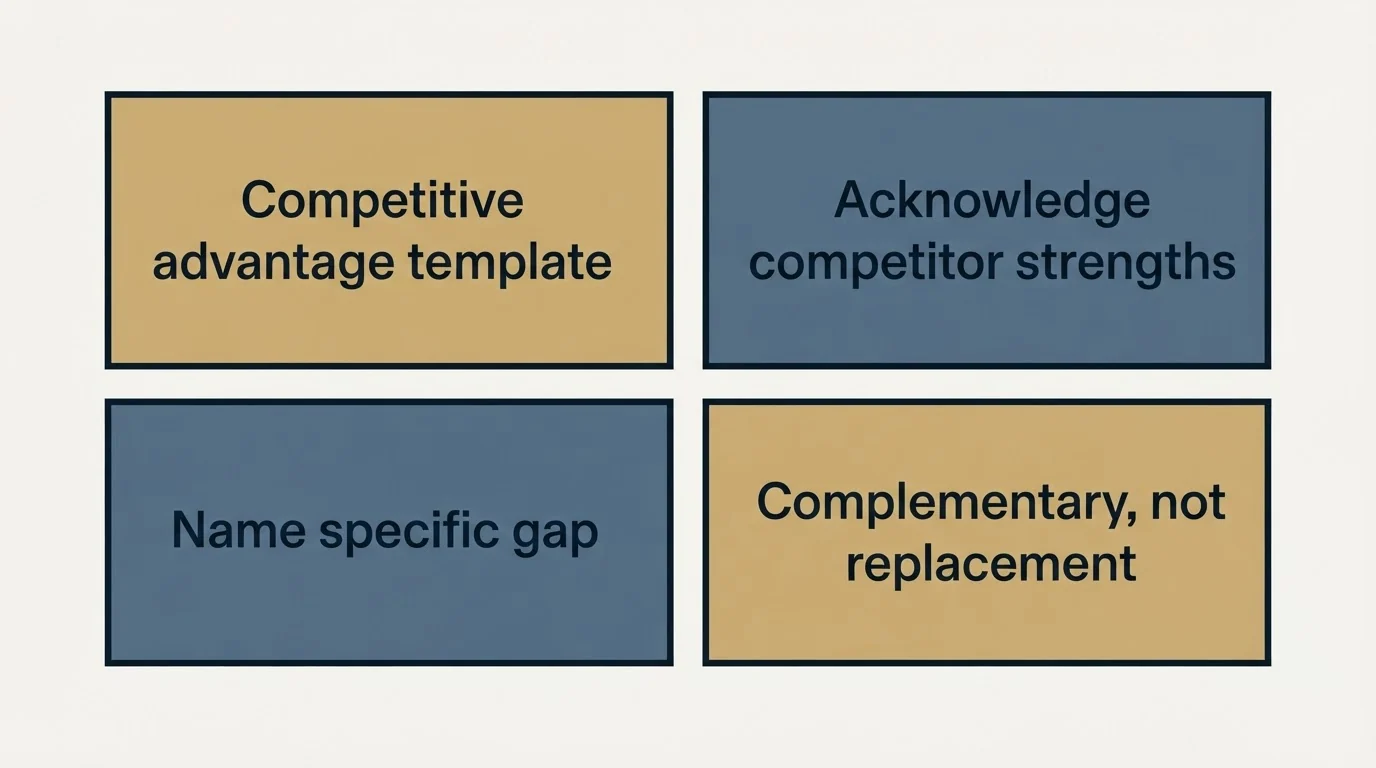
This template works when you know the prospect uses a competitor's product or is evaluating alternatives. It positions your solution as the better choice without disparaging the competition.
Best for: Prospects who are already using a competing solution or actively evaluating options.
Subject line options:
- "[Your product] + [their current tool]"
- "Alternative to [competitor] for [their use case]"
- "If you're evaluating [category] options"
Template:
Hi [Name],
I noticed [Company] is using [competitor/current solution]. It's a solid tool for [what it does well].
Where teams often find limitations is [specific gap or challenge]. That's exactly why [Example Company] added [your solution] alongside it, and they've since [specific outcome].
If you're open to exploring whether this could complement your current setup, I'd be happy to share how similar teams have approached it.
[Your name]
Example using this template:
Hi Daniel,
I noticed FastGrow is using HubSpot for marketing automation. It's a solid tool for email campaigns and lead tracking.
Where teams often find limitations is in advanced analytics and attribution modeling. That's exactly why ScaleUp Marketing added our analytics platform alongside HubSpot, and they've since improved their campaign ROI measurement accuracy significantly.
If you're open to exploring whether this could complement your current setup, I'd be happy to share how similar teams have approached it.
Amanda
Why it works: Acknowledging the competitor's strengths shows maturity and builds trust. Identifying a specific gap demonstrates understanding. Positioning as complementary (rather than replacement) lowers resistance to the conversation.
Template 7: The Timing and Urgency Approach
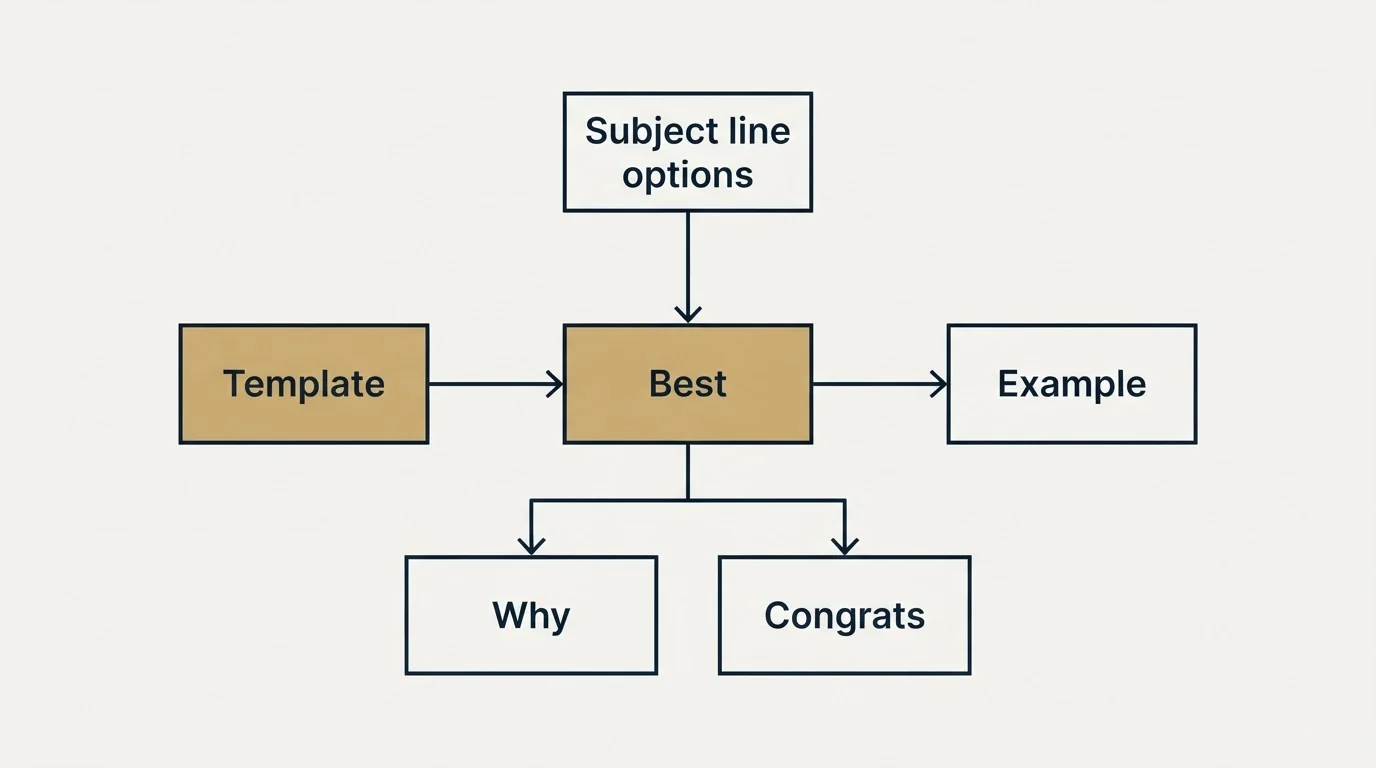
This template creates relevance through timeliness. It connects your outreach to something happening now, whether that's a trigger event, a seasonal pattern, or an approaching deadline.
Best for: Prospects experiencing a timely trigger (funding, hiring, expansion) or facing a deadline (budget cycles, compliance dates, planning periods).
Subject line options:
- "Congrats on [recent news/trigger]"
- "[Upcoming deadline] preparation"
- "Before [Q4/budget season/planning cycle]"
Template:
Hi [Name],
Saw [Company] just [trigger event: raised funding, announced expansion, made key hire, etc.]. Congrats!
That usually means [related challenge or opportunity] is on the radar. [Your solution] has helped teams in similar growth phases [specific outcome].
If [challenge] is something you're thinking about right now, happy to share what's worked for similar companies.
[Your name]
Example using this template:
Hi Michelle,
Saw CloudTech just closed your Series B. Congrats!
That usually means scaling the engineering team is on the radar. Our developer productivity platform has helped teams in similar growth phases maintain velocity while onboarding new engineers quickly. NovaSoft doubled their engineering headcount last year while actually improving their deployment frequency.
If scaling engineering is something you're thinking about right now, happy to share what's worked for similar companies.
Alex
Why it works: Trigger-based emails demonstrate that you're reaching out for a specific, timely reason. Connecting the trigger to a relevant challenge shows you understand their situation. The congratulations opens on a positive note.
Template 8: The Personalized Pitch
This template goes deeper on personalization. It references something specific you learned about the prospect or their company, making the email feel genuinely tailored rather than mass-produced.
Best for: High-value prospects worth the extra research time, or when you have genuine insights to share.
Subject line options:
- "Your [blog post/talk/LinkedIn post] on [topic]"
- "Regarding [specific company initiative]"
- "[Specific observation about their company]"
Template:
Hi [Name],
[Reference something specific: their content, their company's recent announcement, something from their LinkedIn, etc.]. [One sentence connecting it to a relevant insight or your perspective.]
This connects to something I've been thinking about: [challenge or opportunity related to what you referenced]. [Your solution] helps with exactly this, helping teams [specific outcome].
Would you be open to continuing this conversation? I'd enjoy discussing [topic] and sharing what we've learned from working with similar teams.
[Your name]
Example using this template:
Hi James,
Your recent blog post on the challenges of building a data-driven culture really resonated. Especially the point about how most companies have data but struggle to make it accessible to non-technical stakeholders.
This connects to something I've been thinking about: the gap between having analytics tools and actually enabling teams to self-serve insights. Our platform helps with exactly this, helping teams democratize data access without overwhelming non-technical users.
Would you be open to continuing this conversation? I'd enjoy discussing data democratization and sharing what we've learned from working with similar teams.
Caroline
Why it works: Genuine personalization stands out. Referencing their content shows you've actually engaged with their thinking. Framing your solution in terms of their stated interests creates natural relevance.
Making These Templates Work for You
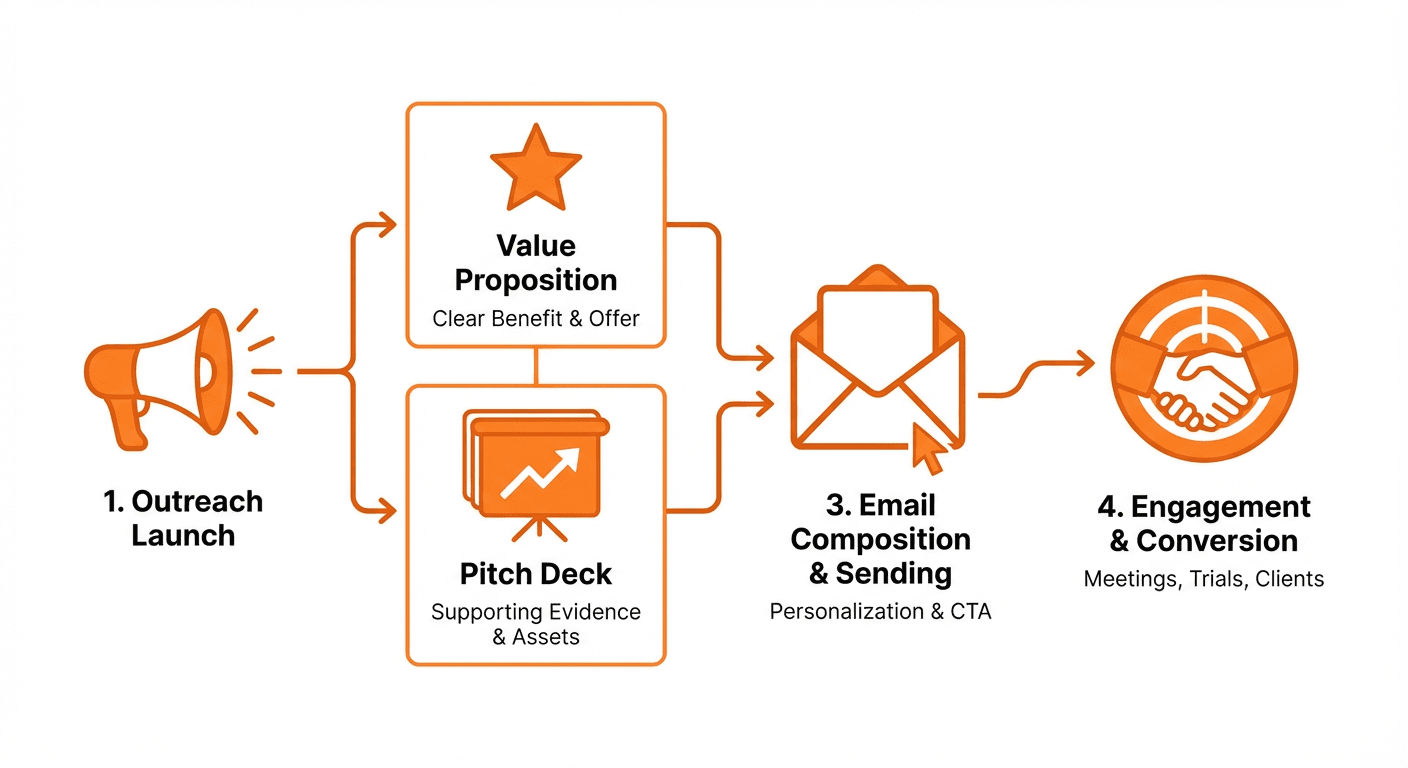
These templates are starting points. Here's how to adapt them effectively for your specific situation.
Add Genuine Personalization
The brackets in each template indicate where personalization should go. But real personalization goes beyond filling in blanks.
Research each prospect before sending. Look at their LinkedIn activity, their company's recent news, their industry's current challenges. Find one specific detail that makes your email feel individually crafted.
The difference between "I help marketing teams" and "I noticed you're hiring three new content writers, which usually means scaling content is a priority" is the difference between delete and reply.
Match Template to Situation
Different situations call for different approaches:
- Problem-Solution: When you're confident about their pain points
- Before-After: When status quo isn't obviously broken but could be better
- Social Proof: When peer validation matters in their industry
- Case Study: When they appreciate detailed examples
- ROI Focus: When speaking to financial decision makers
- Competitive: When they're using an alternative solution
- Timing: When a trigger event creates urgency
- Personalized: When the account justifies extra research time
Test and Iterate
No template works universally. Your specific audience, industry, and offering will determine what resonates.
Start with the template that feels most relevant to your situation. Track response rates. Pay attention to which elements get mentioned in replies. Iterate based on what you learn.
The sales funnel template guide explains how to define exit criteria for each stage so your tracked response rates translate into comparable, meaningful progress.
The templates that work best are the ones you've refined through actual sending and real feedback.
Maintain Your Voice
These templates should sound like you, not like a sales robot. Adjust the language to match your natural communication style. If a phrase feels awkward to say out loud, rewrite it.
Authenticity comes through even in written communication. Prospects can sense when an email was mass-produced versus genuinely composed.
Common Mistakes to Avoid
Even good templates fail when used poorly. Watch out for these common pitfalls.
- No: Over-Personalizing in a Fake Way
- No: Burying the Value
- No: Being Vague About Proof
- No: Aggressive CTAs
- No: Excessive Follow-Ups
Over-Personalizing in a Fake Way
Genuine personalization helps. Fake personalization hurts.
Don't pretend you read their blog post if you didn't. Don't reference a trigger event without understanding its implications. Prospects can tell when personalization is surface-level, and it feels manipulative.
Better to send a straightforward email than one with forced personalization.
Burying the Value
If your prospect has to read three paragraphs to understand why they should care, you've lost them.
Get to the point quickly. The value proposition should be clear within the first few sentences. Everything else supports it.
Being Vague About Proof
"Many companies have seen great results" means nothing. "Acme Corp reduced support tickets by 40% in three months" means something.
Specific proof builds credibility. Vague claims sound like marketing fluff. Use real company names, real numbers, and real outcomes whenever possible.
Aggressive CTAs
"Are you available for a 45-minute demo this Thursday at 2 PM?" is too aggressive for a cold email.
Start with low-commitment asks. A 15-minute call. A brief reply. An offer to send more information. You can escalate commitment as the relationship develops.
Excessive Follow-Ups
We send none. One message per campaign, no reply in the same thread, and a prospect who did not answer is approached again later with a new single-message campaign and a different premise, never with a reminder under the message they already saw.
If someone doesn't respond to your initial email, they're either not interested, not the right contact, or not in the market yet. Move on. Repeatedly emailing unresponsive prospects damages your sender reputation and wastes your time.
Deciding to stop approaching a whole segment is a periodic call rather than a per-prospect one, and the monthly review that changes the list is where it belongs.
Putting It All Together
Effective sales pitch emails share common characteristics regardless of which template they follow.
They lead with relevance, demonstrating understanding of the prospect's situation before pitching anything.
They focus on outcomes, translating features into practical benefits that matter to the reader.
They provide proof, using specific examples and concrete results to build credibility.
They respect the reader's time, keeping messages concise and scannable.
They make responding easy, with clear, low-commitment calls to action.
Use these templates as frameworks, not scripts. Combine elements from different templates when appropriate. Adapt language to your voice and your audience. Test what works and refine continuously.
The best sales pitch email is one that doesn't feel like a sales pitch at all. It feels like a relevant, helpful message from someone who understands your situation and might have something valuable to offer.
That's the standard to aim for.
Related Reading
- 15 Free Trial Email Templates That Convert Prospects
- 10 Referral Request Email Templates for B2B Sales
- 10 Thank You Email Templates for Business and Sales
If you would rather have this run for you, RevenueFlow books qualified meetings on a pay-per-meeting basis and publishes client results.
Ready to Improve Your Sales Outreach?
Crafting effective sales pitch emails is one part of successful outbound. You also need the right targeting, proper infrastructure, and consistent execution.
If you're looking to generate more qualified leads through cold email, we can help. Our done-for-you service handles everything from list building to campaign optimization.
Schedule a free strategy call to discuss your outreach goals and see if we're a good fit.
Frequently asked questions.
Frequently asked questions- How long should a sales pitch email be?
- Sales pitch emails should be under 125 words for initial outreach and scannable in under 30 seconds. Every sentence must establish relevance, communicate value, or move toward a clear next step. Longer emails get ignored because prospects receive dozens of sales emails weekly and only read those that immediately signal relevance and respect their time.
- What makes a good call to action in a sales pitch email?
- The best CTAs are specific, low-commitment, and easy to say yes to, such as requesting a 15-minute call or asking for a brief reply about their current approach. Avoid vague CTAs like 'let me know if you're interested' which are too passive, and overly demanding requests like comprehensive discovery sessions which are too much to ask in cold outreach.
- Should I focus on product features or outcomes in my sales pitch?
- Focus on outcomes rather than features. Prospects don't care about technical capabilities like 'AI-powered automation' or 'enterprise-grade security.' They care about practical impact: saving time, reducing errors, or hitting targets more consistently. Translate every feature into its concrete effect on the prospect's day-to-day work to make your pitch relevant and compelling.
- When should I use the problem-solution email template?
- Use the problem-solution template when you're confident the prospect faces a specific challenge that your product addresses. It works best for prospects likely experiencing a known pain point in their role or industry. The template acknowledges the problem, positions your solution with proof from similar companies, and offers a low-commitment next step like a 15-minute call.
About the author.

Ben Carden is CRO at RevenueFlow, which builds and operates outbound revenue engines for B2B companies. Previously at Gartner Enterprise. Studied at London School of Economics.
Ben Carden · CRO
Connect on LinkedIn →Explore more.
Ready to scale your outreach?
We build GTM engines that book real meetings. See the receipts.
Related articles.
10 B2B Cold Email Templates for One-Message Sends
Ten B2B cold email templates written for a single send, with the four slot structure underneath them and the test that separates a good example from a bad one.
Cold Email Templates for Customer Success Managers
Eleven cold email templates for customer success managers, covering champion change, expansion, renewal rescue, and win-back, with subject lines and timing.
14 Renewal Email Templates That Retain Customers
Master subscription and contract renewals with 14 proven email templates. Reduce churn, lock in renewals early, and maintain customer relationships.
13 Case Study Request Email Templates That Get Results
Get proven email templates for requesting case studies, video testimonials, and written reviews from your happiest customers. Includes templates for every stage from initial ask to final approval.
Email Subject Line Capitalization: What the Guides Say
What the style authorities actually rule on subject line case, what the published tests measured, and the default for a one to one sales email.
Follow-Up Call Scripts: Nine Calls Into a Live Conversation
Nine follow-up call scripts, each tied to the event that earns the call, from a demo to a renewal, plus the four moves they share and how each call should end.