Short Cold Emails Get More Replies Than Personalized Ones
After months of building elaborate personalization systems with Clay and AI, the email that got replies was the shortest, simplest one. Here's what actually drives cold email response rates.
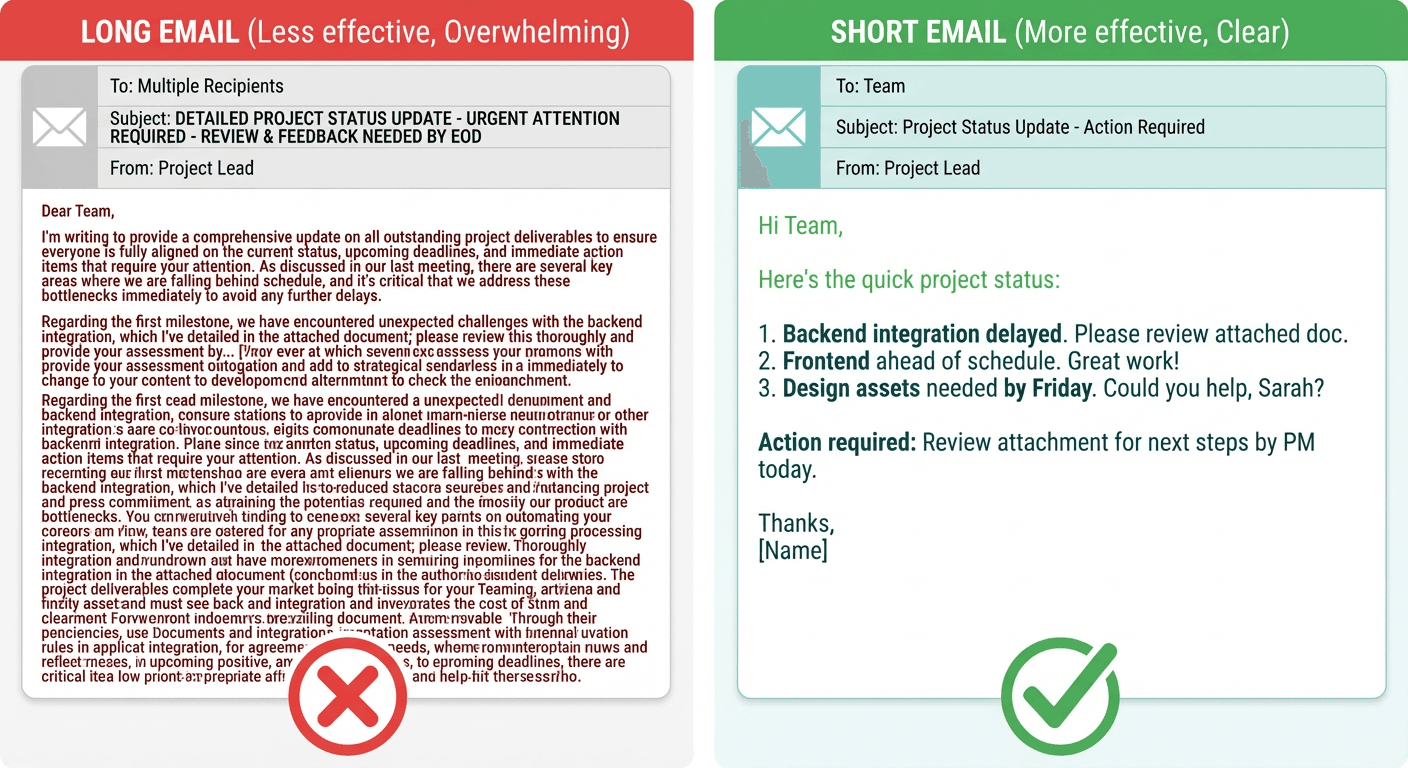
Short cold emails outperform heavily personalized ones because they reduce cognitive load on busy prospects. A 32-word email with a clear offer achieved a 4.2% reply rate, while a 147-word personalized email got 0.3%. Long emails create mental tax; prospects want to understand the value in five seconds and reply with minimal effort, not be impressed by research demonstrations.
Key takeaways
- A 32-word cold email with minimal personalization achieved a 4.2% reply rate compared to 0.3% for a 147-word personalized version targeting the same audience.
- Every extra sentence in a cold email adds cognitive load on prospects who receive 200 emails daily, making them less likely to engage.
- Volume with decent reply rates outperforms perfect targeting with high reply rates because sending 10x more emails at 3% response generates more conversations than fewer emails at 15%.
- The most effective cold emails get to the point in under 50 words, make the offer crystal clear, and provide a brain-dead easy response mechanism.
- Personalization is overrated in cold email when it focuses on research demonstrations rather than immediate, quantifiable value propositions.
Reviewed and updated September 5, 2026
Why Short Cold Emails Get More Replies Than Perfectly Personalized Ones
I spent months building sophisticated cold email campaigns.
Fancy Clay tables. AI personalization. Research bullets about every prospect's LinkedIn activity.
Then I looked at which email actually got replies.
It was the shortest one. Just 32 words. No personalization beyond the first name. No "I saw you posted about X" opener. Just a clear offer and an easy way to say yes.
Meanwhile, my 147-word masterpiece with three personalization bullets and a clever industry reference? Zero replies.
The Mental Tax of Long Cold Emails
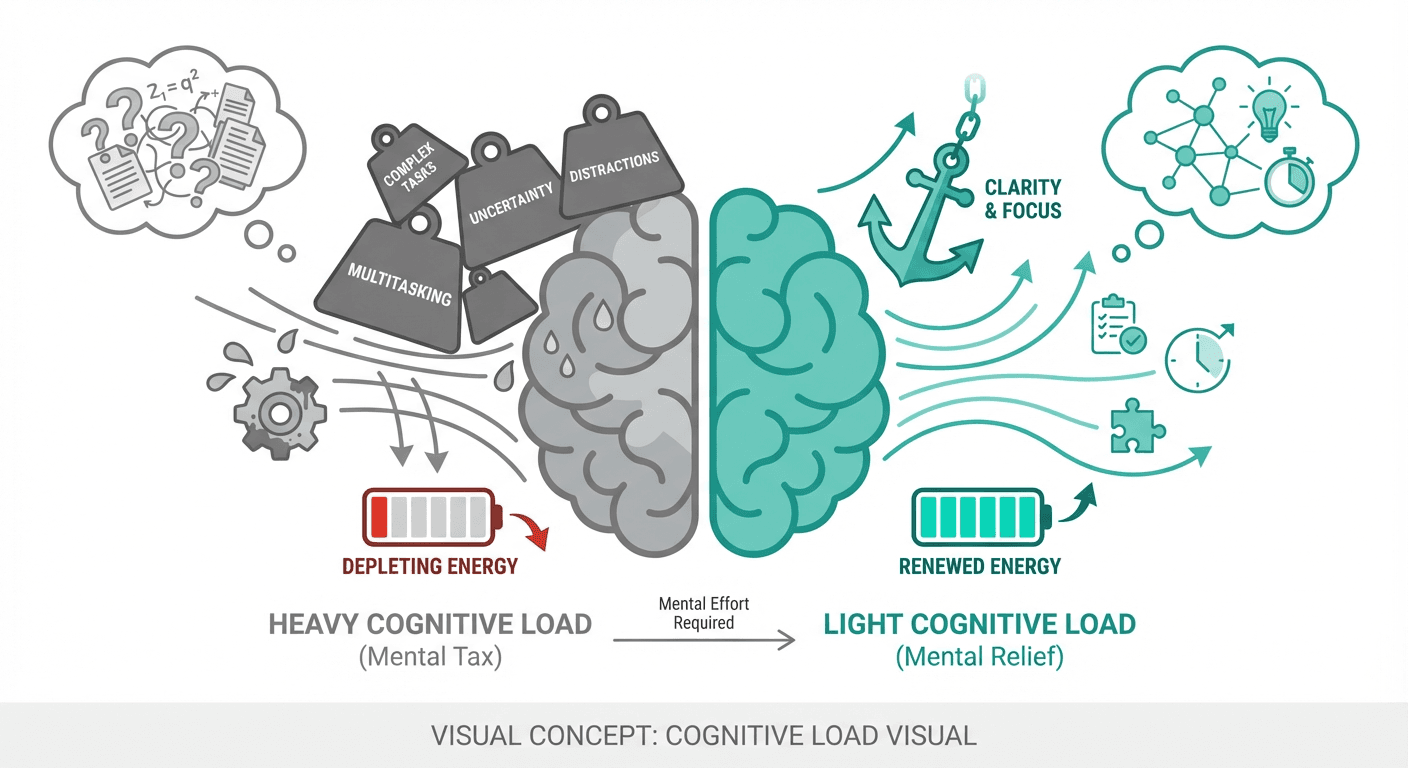
Most people assume more effort equals better results in cold email. They're wrong.
So they build elaborate workflows to prove they did their homework. They scrape LinkedIn profiles for personalization tokens. They write paragraph-long intros showing they researched the prospect's company.
But this approach has a problem nobody talks about.
Every extra sentence is mental tax on your prospect.
That is the whole of what a prospect means when they say they get too many of these to read: the volume is real, and the only variable a sender controls is how much of the reader's attention each message asks for.
Your prospect isn't sitting at their desk thinking, "Wow, this person really researched me!" They're thinking, "Do I have the energy to read this right now?"
They're not impressed by your research. They're exhausted by having to process it. The longer your email, the more cognitive load you're placing on someone who gets 200 emails a day.
When you send a cold email template that requires someone to read five paragraphs, parse through three personalization bullets, and decode what you actually want, you've already lost them.
The question of how much personalisation a single account is worth has an answer in this shape: as much as changes what the message can say, and no more, because research the reader cannot see in the sentence is cost without effect.
What Actually Makes Cold Emails Work
The best cold email strategy isn't about proving you did research. It's about removing friction.
Think about the last cold email you actually replied to. I bet it wasn't the one with elaborate personalization about your shared interest in golden retrievers. It was probably the one that said exactly what they wanted in two sentences and gave you a clear reason to care.
The emails that perform best follow a simple pattern:
- Yes: They get to the point in under 50 words
- Yes: They make the offer crystal clear
- Yes: They remove every word that doesn't serve the close
- Yes: They make it brain-dead easy to respond
They get to the point in under 50 words. No warmup. No rapport building. Just straight to the value.
They make the offer crystal clear. You know exactly what they're proposing within five seconds of opening the email.
They remove every word that doesn't serve the close. If it's not helping you say yes, it shouldn't be in the email.
Because trimming the body only helps if the finish holds up too, crafting an ending that invites a quick yes matters just as much as cutting the intro.
They make it brain-dead easy to respond. One question. One clear next step. No calendar links, no multi-step processes.
The Problem With Cold Email Personalization
The uncomfortable truth: personalization is overrated in cold email.
Don't get me wrong. Personalization at scale can work. But most companies waste hours building complex systems to personalize things prospects don't care about.
A breakdown of cold email agencies examines what each firm discloses about pricing, lead qualification, and contract commitment terms.
They mention the prospect's recent LinkedIn post. They reference a company milestone from last quarter. They comment on the person's college or previous job.
And the prospect reads all of this and thinks: "Okay, but what do you want?"
Compare that to an email that says:
"Hey [Name], I can show you how to cut your email infrastructure costs by $15k/month in a 20-minute call. Completely free. Just want to show you how. Interested?"
32 words. Gets replies.
No personalization. No research bullets. Just a clear offer and a reason to care. The prospect can read it in five seconds, understand the value, and reply with one word.
This is what people mean when they talk about cold email copywriting that converts. It's not about being clever. It's about being clear.
Volume Beats Perfection in Cold Email Campaigns
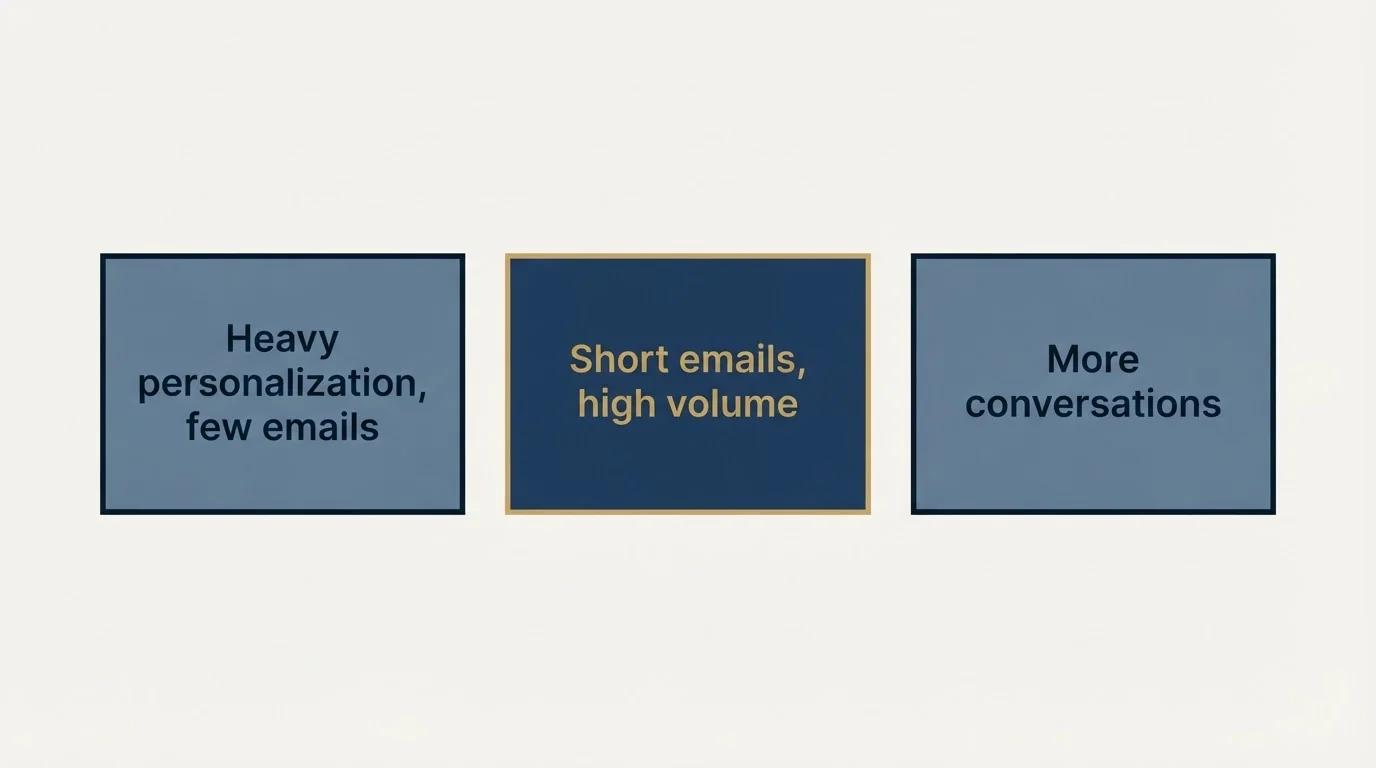
Most B2B companies spend 10 minutes personalizing each cold email. They're convinced that perfect targeting with elaborate research will get them a 15% reply rate.
Meanwhile, someone else is sending 50 emails with "good enough" targeting and a clear offer. They're getting a 3% reply rate. But they sent 10x the volume, so they have 10x the conversations.
Volume with decent reply rates beats perfect targeting with high reply rates every single time.
While you're building your third Clay table to scrape intent signals, your competitor just booked five calls from their simple, short emails. They're not optimizing for effort. They're optimizing for results.
The Best Cold Email Templates Are Short
I tested this with two campaigns targeting the same ICP.
Campaign A: 147 words. Three personalization bullets. Reference to their LinkedIn post. Explanation of our AI system. Multi-paragraph value prop.
Campaign B: 32 words. No personalization beyond first name. One clear offer. One-sentence value prop. One question.
Campaign A got a 0.3% reply rate. Campaign B got a 4.2% reply rate.
Same offer. Same target audience. The only difference? Campaign B deleted every unnecessary word.
- Three personalization bullets
- Reference to their LinkedIn post
- Multi-paragraph value prop
- 0.3% reply rate
- No personalization beyond first name
- One clear offer
- One-sentence value prop
- 4.2% reply rate
When you're crafting cold email copy, every sentence should pass one test: does this help them say yes? If not, delete it.
What This Means For Your Cold Email Strategy
If you're spending hours building personalization systems and your reply rates aren't improving, you're optimizing the wrong thing.
Stop trying to prove you did research. Stop writing essays about how impressed you are with their company. Stop overcomplicating the ask.
Instead, ask yourself: can I make this shorter? Can I make the offer clearer? Can I reduce the mental tax on my prospect?
The best cold email infrastructure isn't the fanciest Clay workflow. It's the discipline to delete every word that doesn't serve your goal.
Your prospects don't need to be impressed by your research. They need to understand your offer in five seconds and have an easy way to say yes. That's the difference between cold emails that work and cold emails that get ignored.
Are you optimizing for effort or results?
How To Write Short Cold Emails That Get Replies
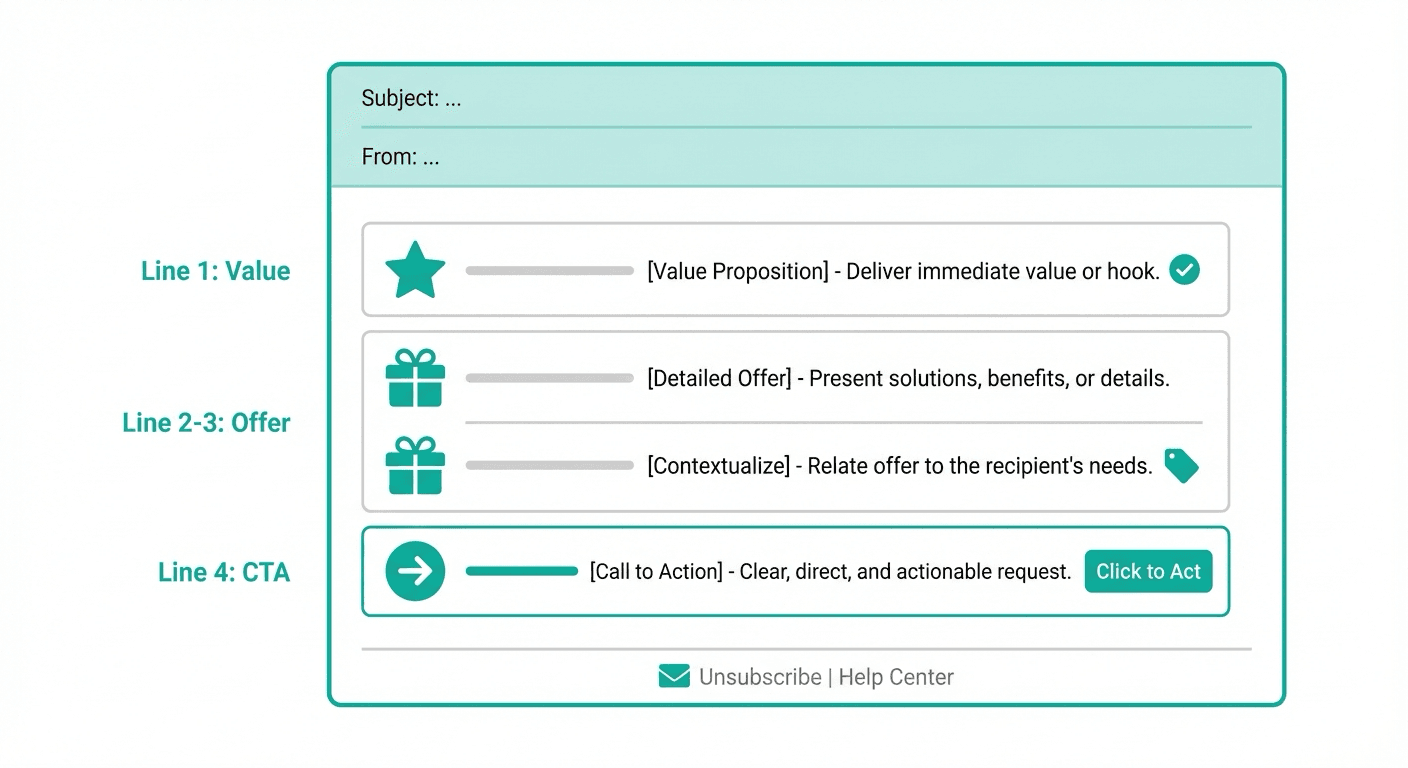
The framework I use now for every cold email campaign:
Line 1: State the value in one sentence. What's in it for them?
Line 2-3: Make the offer dead simple. What exactly are you proposing?
Line 4: One-sentence CTA. Make it easy to say yes.
That's it. No elaborate setup. No research bullets. No personalization theater.
When you remove everything except the essential value proposition, you get higher reply rates. Your prospects appreciate the brevity. They understand what you want immediately. And most importantly, they actually reply.
The goal isn't to write the most impressive email. The goal is to start a conversation. And conversations don't start with essays. They start with simple, clear offers that respect your prospect's time.
Ready to test this for yourself? Take your current cold email template and cut it in half. Then cut it in half again. Remove every sentence that doesn't directly drive toward the close. What's left is probably your highest-converting email template.
Less words. More replies.
(Looking for more cold email strategies that actually work? Check out our guide on The Hierarchy of Effective Cold Emailing to understand what really drives response rates.)
Related Reading
If you would rather have this run for you, RevenueFlow books qualified meetings on a pay-per-meeting basis and publishes client results.
Frequently asked questions.
Frequently asked questions- Why do short cold emails get better response rates than personalized ones?
- Short emails reduce mental tax on prospects who receive hundreds of emails daily. They can understand the offer in five seconds and reply quickly. Personalized emails often force prospects to read multiple paragraphs and decode elaborate research, creating friction rather than demonstrating value. Prospects care more about a clear, relevant offer than proof you researched them.
- How long should a cold email be to maximize replies?
- Effective cold emails should be under 50 words, with the best performers around 32 words. They should state the value proposition in one sentence, make a clear offer, and ask one simple question. Every sentence should directly help the prospect say yes. If a word doesn't serve that purpose, delete it. The goal is clarity and minimal cognitive load, not comprehensive explanations.
- Is cold email personalization worth the time investment?
- Personalization is overrated in most cold email campaigns. While personalization at scale can work, most companies waste hours mentioning LinkedIn posts or company milestones that prospects don't care about. A clear value proposition with minimal personalization typically outperforms elaborate research demonstrations. The 32-word template with only first-name personalization achieved 14x better results than the heavily personalized 147-word version.
- Should I focus on volume or perfect targeting for cold email campaigns?
- Volume with decent targeting beats perfect targeting every time. Sending 50 emails with 3% reply rates generates 10x more conversations than sending 5 perfectly personalized emails with 15% reply rates. While someone spends 10 minutes personalizing each email, competitors send higher volumes with clear offers and book more calls. Optimize for results and conversation volume, not effort demonstrated per email.
About the author.

Tim Carden is CMO / CTO at RevenueFlow, which builds and operates outbound revenue engines for B2B companies. Studied at McGill University.
Tim Carden · CMO / CTO
Connect on LinkedIn →Explore more.
Ready to scale your outreach?
We build GTM engines that book real meetings. See the receipts.
Related articles.
Cold Email Frameworks: Which One Fits Your Offer
AIDA, PAS and Before-After-Bridge arrange the same four elements in different orders. What each one assumes about the reader, and what none of them fix.
CAN-SPAM Act Compliance for B2B Cold Email: The Rules
The CAN-SPAM Act makes no exception for business-to-business email. Here are the seven requirements, the opt-out clocks, and where liability lands when an agency sends.
How to Write a Third Follow Up Email, Line by Line
A third follow up email belongs only in a thread where the person replied or agreed to something. When to send one, and how to write it line by line.
How to Write a New Year Outreach Email, Line by Line
A new year outreach email works only where January is a fact about the account. Who that is, the structure line by line, and two worked examples.
No-Reply Email Address: What It Costs a Sender
A no-reply address is defensible on a receipt and indefensible on a cold message, because the reply is the entire product of a first contact.
BASHO Email: Four Sentences Built on One Insight
A BASHO email is four or five sentences built on one researched insight about a specific person. The format is documented, and it cannot be produced at volume.