Copper vs SalesQL: CRM Platform vs Data Enrichment Tool Comparison
Compare Copper (CRM platform) and SalesQL (data enrichment tool) side by side. See pricing, features, and integrations to decide which one, or both, your stack needs.
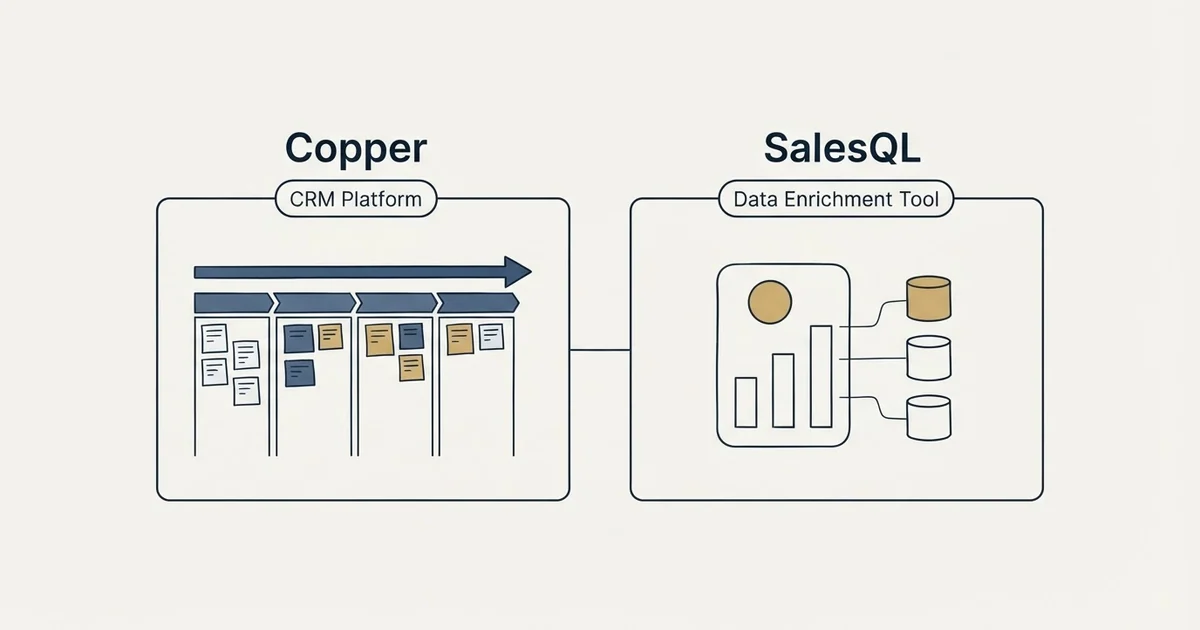
Compare Copper (CRM platform) and SalesQL (data enrichment tool) side by side. See pricing, features, and integrations to decide which one, or both, your stack needs.
Reviewed and updated September 4, 2026
Copper vs SalesQL: CRM Platform vs Data Enrichment Tool Comparison
Copper is a CRM platform; SalesQL is a data enrichment tool. Whether you need one, the other, or both depends on which part of the workflow you are buying for: customer relationship management and sales pipeline tracking on one side, B2B lead data and contact enrichment on the other. This guide lays out what each vendor publishes.
The Quick Answer
Copper is a CRM platform for customer relationship management and sales pipeline tracking; SalesQL is a data enrichment tool for B2B lead data and contact enrichment. By each vendor's own wording, Copper lists native google workspace integration and automatic contact and activity capture from gmail, and SalesQL lists ai search over a contact database and verified email addresses.
SalesQL offers a lower entry point at $0/mo compared to Copper at $29/mo.
If your priority is organizing contacts, tracking deals, and forecasting revenue, Copper is the one built for it; for finding accurate contact data for target accounts, that is SalesQL. Many teams run one of each.
Understanding the Core Difference
Copper is A CRM built specifically for Google Workspace users, offering deep integration with Gmail, Google Calendar, and Google Drive. Copper automatically captures and organizes contacts and activities from Google apps, minimizing manual data entry and providing a familiar interface.
SalesQL is SalesQL is a LinkedIn email finder and AI prospecting tool that returns real-time verified emails and phone numbers, enriches contact data and automates outreach. Plans are priced by monthly data credits with an email verifier included.
The two platforms take different approaches to solving the same core challenge.
Pricing Comparison
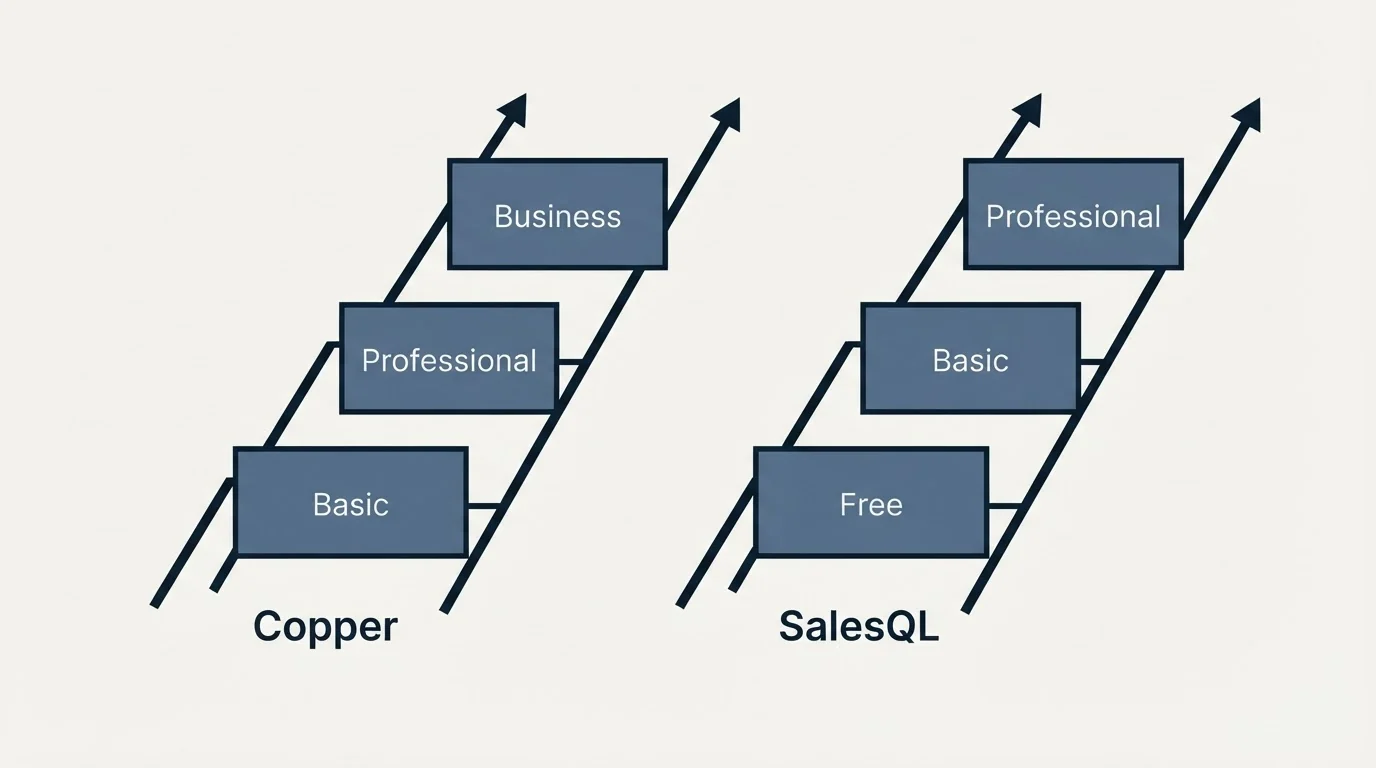
Basic
Free
Copper Pricing (as of September 2026)
| Plan | Price |
|---|---|
| Basic | $29/mo |
| Professional | $69/mo |
| Business | $134/mo |
Source: Copper Pricing
SalesQL Pricing (as of September 2026)
| Plan | Price | Contacts | Emails |
|---|---|---|---|
| Free | Free | 50 credits / month | Email verifier credits 100 |
| Basic | $39/mo | 2,000 credits / month | Email verifier (5,000 credits) |
| Professional | $79/mo | 5,000 credits / month | Email verifier (10,000 credits) |
| Organization | $119/mo | 12,000 credits / month | Email verifier (20,000 credits) |
Source: SalesQL Pricing
Pricing Analysis
SalesQL offers the lower entry point ($0/mo vs $29/mo). Teams watching their budget will appreciate the savings, especially when starting out.
SalesQL offers 4 pricing tiers compared to Copper's 3, giving you more granularity as you scale.
SalesQL includes a free tier, which is helpful for evaluating the platform without upfront cost.
Features Breakdown
- Native Google Workspace integration
- Automatic contact and activity capture from Gmail
- Visual pipeline management
- Task automation and workflow builder
- Contact enrichment
- Bulk email and email templates
- and 2 more listed below
- AI search over a contact database
- Verified email addresses
- Phone numbers
- LinkedIn prospecting
- CSV enrichment
- Email verifier and bulk email verifier
- and 2 more listed below
Copper Key Features
- Native Google Workspace integration
- Automatic contact and activity capture from Gmail
- Visual pipeline management
- Task automation and workflow builder
- Contact enrichment
- Bulk email and email templates
- Custom reporting and dashboards
- Project management and collaboration
SalesQL Key Features
- AI search over a contact database
- Verified email addresses
- Phone numbers
- LinkedIn prospecting
- CSV enrichment
- Email verifier and bulk email verifier
- API
- Unlimited exports
The two lists below are a diff of each vendor's own feature list by exact wording, so a capability both tools offer can appear on either side under a different name.
Listed only by Copper
- Native Google Workspace integration
- Automatic contact and activity capture from Gmail
- Visual pipeline management
- Task automation and workflow builder
- Contact enrichment
- Bulk email and email templates
- Custom reporting and dashboards
- Project management and collaboration
Listed only by SalesQL
- AI search over a contact database
- Verified email addresses
- Phone numbers
- LinkedIn prospecting
- CSV enrichment
- Email verifier and bulk email verifier
- API
- Unlimited exports
Integration Ecosystem

Copper Integrations
Copper connects with: Google Workspace, Gmail, Google Calendar, Google Drive, Slack, Zapier, Mailchimp, Zendesk.
SalesQL Integrations
SalesQL connects with: HubSpot, Zoho CRM, Pipedrive, Salesforce, Salesloft, Outreach, Gmail, Mailchimp, Zapier.
Shared Integrations
Both tools integrate with: Gmail, Zapier, Mailchimp.
Integrations listed only by Copper: Google Workspace, Google Calendar, Google Drive, Slack, Zendesk.
Integrations listed only by SalesQL: HubSpot, Zoho CRM, Pipedrive, Salesforce, Salesloft, Outreach.
Use Case Recommendations
Best Fit for Copper
- Budget-conscious teams looking for an affordable CRM platform
- Sales teams tracking deals from first touch to close
- Managers who need pipeline visibility and forecasting
- Growing teams that need scalable contact management
Best Fit for SalesQL
- Budget-conscious teams looking for an affordable data enrichment tool
- Organizations with complex tech stacks needing broad integration support (9 integrations)
- Teams that want to start free and scale up as needs grow
Feature Comparison Summary
| Feature | Copper | SalesQL |
|---|---|---|
| Starting Price | $29/mo | Free |
| Top Tier Price | $134/mo | $119/mo |
| Total Features Listed | 8 | 8 |
| Integrations | 8 | 9 |
| Founded | 2013 | N/A |
Getting Started Checklist
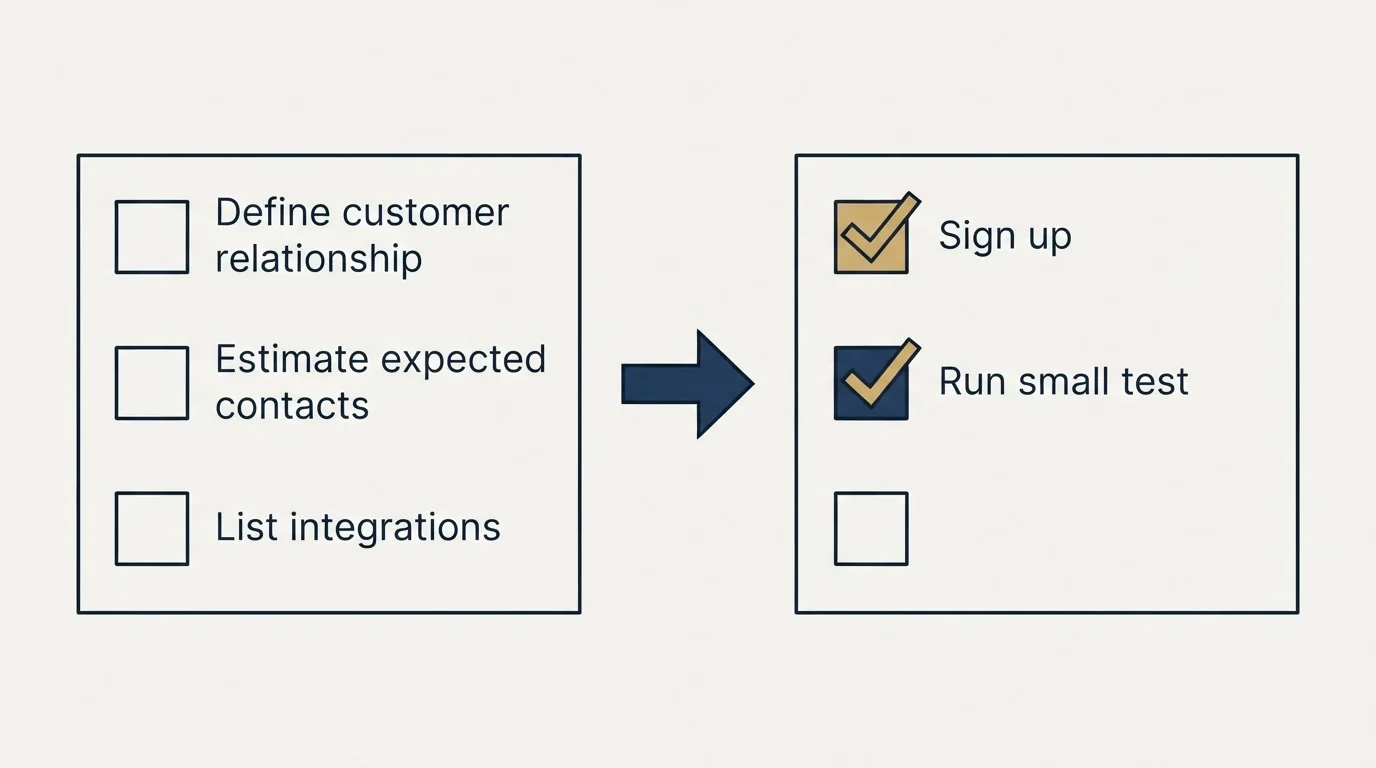
- Define your customer relationship management and sales pipeline tracking and B2B lead data and contact enrichment requirements and monthly budget
- Estimate your expected contacts and deals and data credits or contact lookups to find the right tier
- List the integrations your team currently relies on
- Sign up for free trials or demos of both platforms
- Run a small test with each tool before making a commitment
- Evaluate the onboarding experience and support quality
Final Thoughts
Copper serves the customer relationship management and sales pipeline tracking side of an outbound stack and SalesQL the B2B lead data and contact enrichment side. SalesQL offers a more accessible entry point, while Copper starts at $29/mo. Your decision should weigh pricing against the specific features that matter most for your workflow.
Start with a trial of each to see which platform fits your team's daily process. The best tool is the one your team actually uses consistently.
Pricing and features verified as of September 2026. Visit Copper and SalesQL for current information.
About the author.

Tim Carden is CMO / CTO at RevenueFlow, which builds and operates outbound revenue engines for B2B companies. Studied at McGill University.
Tim Carden · CMO / CTO
Connect on LinkedIn →Explore more.
Ready to scale your outreach?
We build GTM engines that book real meetings. See the receipts.
Related articles.
AroundDeal vs Salesflare: Data Enrichment Tool vs CRM Platform Comparison
Compare AroundDeal (data enrichment tool) and Salesflare (CRM platform) side by side. See pricing, features, and integrations to decide which one, or both, your stack needs.
Evaboot vs Microsoft Dynamics 365 Sales: Data Enrichment Tool vs CRM Platform Comparison
Compare Evaboot (data enrichment tool) and Microsoft Dynamics 365 Sales (CRM platform) side by side. See pricing, features, and integrations to decide which one, or both, your stack needs.
Agile CRM vs LeadIQ: CRM Platform vs Data Enrichment Tool Comparison
Compare Agile CRM (CRM platform) and LeadIQ (data enrichment tool) side by side. See pricing, features, and integrations to decide which one, or both, your stack needs.
Anymail Finder vs Pipeline CRM: Data Enrichment Tool vs CRM Platform Comparison
Compare Anymail Finder (data enrichment tool) and Pipeline CRM (CRM platform) side by side. See pricing, features, and integrations to decide which one, or both, your stack needs.
AroundDeal vs Maximizer: Data Enrichment Tool vs CRM Platform Comparison
Compare AroundDeal (data enrichment tool) and Maximizer (CRM platform) side by side. See pricing, features, and integrations to decide which one, or both, your stack needs.
Breakcold vs Bulk Email Checker: CRM Platform vs Data Enrichment Tool Comparison
Compare Breakcold (CRM platform) and Bulk Email Checker (data enrichment tool) side by side. See pricing, features, and integrations to decide which one, or both, your stack needs.