DeBounce vs Salesforce: Data Enrichment Tool vs CRM Platform Comparison
Compare DeBounce (data enrichment tool) and Salesforce (CRM platform) side by side. See pricing, features, and integrations to decide which one, or both, your stack needs.

DeBounce is a data enrichment and email validation tool that starts free at $0 per month, while Salesforce is a CRM platform that starts at $25 per month with its Starter Suite plan. DeBounce cleans and enriches contact data for outbound lists, while Salesforce organizes contacts, tracks deals, and forecasts revenue, so many teams run both tools together.
Key takeaways
- DeBounce's entry plan is free at $0 per month, while Salesforce's Starter Suite plan costs $25 per month.
- DeBounce's free plan includes 100 free credits, and its Pay-As-You-Go tiers offer 5,000 or 500,000 credits.
- Salesforce's paid plans range from $25 per month for Starter Suite up to $350 per month for the Unlimited plan.
- DeBounce lists 24 integrations including WordPress, HubSpot, and Klaviyo, while Salesforce lists 8 integrations including Slack, DocuSign, and Tableau.
- Zapier and Mailchimp are the only integrations shared between DeBounce and Salesforce.
Reviewed and updated September 4, 2026
DeBounce vs Salesforce: Data Enrichment Tool vs CRM Platform Comparison
Sales teams building an outbound stack often weigh DeBounce, a data enrichment tool for B2B lead data and contact enrichment, against Salesforce, a CRM platform for customer relationship management and sales pipeline tracking. They cover different parts of the workflow, so this comparison covers what each one does, what each one costs, and where they overlap.
The Quick Answer
DeBounce is a data enrichment tool for B2B lead data and contact enrichment; Salesforce is a CRM platform for customer relationship management and sales pipeline tracking. By each vendor's own wording, DeBounce lists email list validation and email validation api, and Salesforce lists lead, account, and contact management and opportunity and pipeline tracking.
DeBounce offers a lower entry point at $0/mo compared to Salesforce at $25/mo.
If your priority is finding accurate contact data for target accounts, DeBounce is the one built for it; for organizing contacts, tracking deals, and forecasting revenue, that is Salesforce. Many teams run one of each.
Understanding the Core Difference
DeBounce is DeBounce is an email validation and verification tool that cleans email lists before you send, blocks bad signups in real time through an API and widget, and identifies catch-all domains. It also offers list monitoring, data enrichment and an email finder on the same credit balance.
Salesforce is The world's leading CRM platform offering a comprehensive suite of sales, service, marketing, and commerce tools. Known for extensive customization, AI-powered insights via Einstein, and a vast ecosystem of third-party integrations through AppExchange.
The two platforms take different approaches to solving the same core challenge.
Pricing Comparison

Free
Starter Suite
DeBounce Pricing (as of September 2026)
| Plan | Price | Emails |
|---|---|---|
| Free | Free | 100 free credits |
| Pay-As-You-Go 5K | Usage-based | 5,000 credits |
| Pay-As-You-Go 500K | Usage-based | 500,000 credits |
| Monthly | Contact Sales | - |
Source: DeBounce Pricing
Salesforce Pricing (as of September 2026)
| Plan | Price |
|---|---|
| Starter Suite | $25/mo |
| Pro Suite | $100/mo |
| Enterprise | $175/mo |
| Unlimited | $350/mo |
Source: Salesforce Pricing
Pricing Analysis
DeBounce is more affordable at the entry level ($0/mo vs $25/mo). For teams with tight budgets or those just getting started with B2B lead data and contact enrichment and customer relationship management and sales pipeline tracking, this price difference matters.
DeBounce includes a free tier, letting you test the platform before committing financially.
Features Breakdown
- Email list validation
- Email validation API
- Real-time validation widget
- Catch-all validator
- Email list monitoring
- Data enrichment
- and 2 more listed below
- Lead, account, and contact management
- Opportunity and pipeline tracking
- Einstein AI-powered analytics and predictions
- Sales forecasting and territory management
- Workflow automation and approval processes
- Customizable dashboards and reports
- and 2 more listed below
DeBounce Key Features
- Email list validation
- Email validation API
- Real-time validation widget
- Catch-all validator
- Email list monitoring
- Data enrichment
- Email finder
- Free deduplication
Salesforce Key Features
- Lead, account, and contact management
- Opportunity and pipeline tracking
- Einstein AI-powered analytics and predictions
- Sales forecasting and territory management
- Workflow automation and approval processes
- Customizable dashboards and reports
- AppExchange marketplace
- Mobile CRM app for iOS and Android
The two lists below are a diff of each vendor's own feature list by exact wording, so a capability both tools offer can appear on either side under a different name.
Listed only by DeBounce
- Email list validation
- Email validation API
- Real-time validation widget
- Catch-all validator
- Email list monitoring
- Data enrichment
- Email finder
- Free deduplication
Listed only by Salesforce
- Lead, account, and contact management
- Opportunity and pipeline tracking
- Einstein AI-powered analytics and predictions
- Sales forecasting and territory management
- Workflow automation and approval processes
- Customizable dashboards and reports
- AppExchange marketplace
- Mobile CRM app for iOS and Android
Integration Ecosystem

DeBounce Integrations
DeBounce connects with: WordPress, Zapier, HubSpot, Google Sheets, Mailchimp, ActiveCampaign, Mailjet, Mautic, ConvertKit, MailerLite, Klaviyo, Brevo, Mailgun, SendGrid, Apollo, Drip, lemlist, Moosend, SparkPost, Drupal, Ontraport, Leadpages, Unbounce, ClickFunnels.
Salesforce Integrations
Salesforce connects with: Slack, Google Workspace, Microsoft Outlook, Mailchimp, DocuSign, Zapier, Tableau, MuleSoft.
Shared Integrations
Both tools integrate with: Zapier, Mailchimp.
Integrations listed only by DeBounce: WordPress, HubSpot, Google Sheets, ActiveCampaign, Mailjet, Mautic, ConvertKit, MailerLite, Klaviyo, Brevo, Mailgun, SendGrid, Apollo, Drip, lemlist, Moosend, SparkPost, Drupal, Ontraport, Leadpages, Unbounce, ClickFunnels.
Integrations listed only by Salesforce: Slack, Google Workspace, Microsoft Outlook, DocuSign, Tableau, MuleSoft.
Use Case Recommendations
Best Fit for DeBounce
- Budget-conscious teams looking for an affordable data enrichment tool
- Organizations with complex tech stacks needing broad integration support (24 integrations)
- Teams that want to start free and scale up as needs grow
- Enterprise buyers who prefer custom pricing and dedicated support
Best Fit for Salesforce
- Budget-conscious teams looking for an affordable CRM platform
- Sales teams tracking deals from first touch to close
- Managers who need pipeline visibility and forecasting
- Growing teams that need scalable contact management
Feature Comparison Summary
| Feature | DeBounce | Salesforce |
|---|---|---|
| Starting Price | Free | $25/mo |
| Top Tier Price | Contact Sales | $350/mo |
| Total Features Listed | 8 | 8 |
| Integrations | 24 | 8 |
| Founded | N/A | 1999 |
Getting Started Checklist
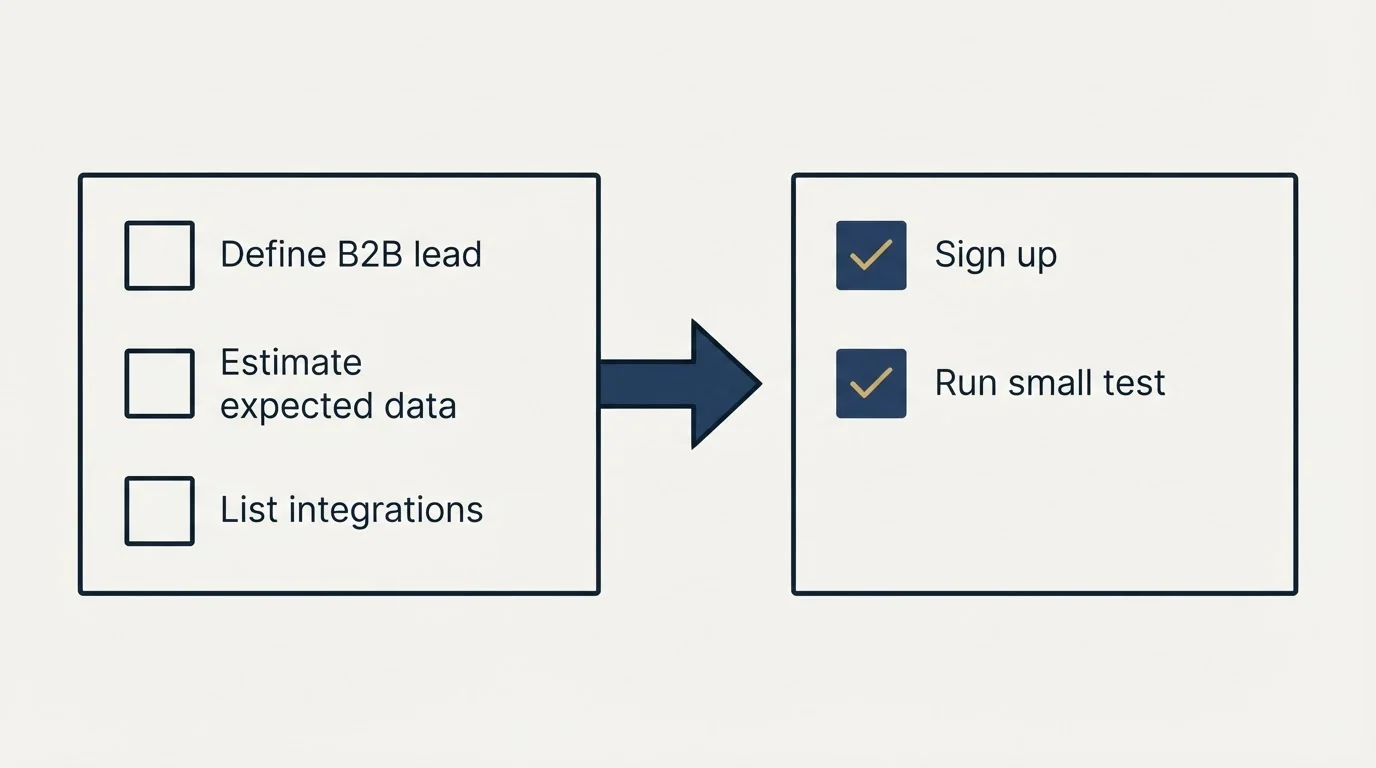
- Define your B2B lead data and contact enrichment and customer relationship management and sales pipeline tracking requirements and monthly budget
- Estimate your expected data credits or contact lookups and contacts and deals to find the right tier
- List the integrations your team currently relies on
- Sign up for free trials or demos of both platforms
- Run a small test with each tool before making a commitment
- Evaluate the onboarding experience and support quality
Final Thoughts
DeBounce serves the B2B lead data and contact enrichment side of an outbound stack and Salesforce the customer relationship management and sales pipeline tracking side. DeBounce offers a more accessible entry point, while Salesforce starts at $25/mo. Your decision should weigh pricing against the specific features that matter most for your workflow.
Start with a trial of each to see which platform fits your team's daily process. The best tool is the one your team actually uses consistently.
Pricing and features verified as of September 2026. Visit DeBounce and Salesforce for current information.
Frequently asked questions.
Frequently asked questions- What's the main difference between DeBounce and Salesforce?
- DeBounce is a data enrichment tool focused on B2B lead data and contact enrichment, including email list validation and an email validation API. Salesforce is a CRM platform focused on customer relationship management and sales pipeline tracking, including lead and account management and opportunity tracking. They cover different parts of the sales workflow.
- Which is cheaper, DeBounce or Salesforce?
- DeBounce is cheaper at the entry level, offering a free plan with 100 free credits, while Salesforce's cheapest plan, Starter Suite, costs $25 per month. DeBounce also offers usage-based Pay-As-You-Go tiers for 5,000 or 500,000 credits, while Salesforce's paid plans go up to $350 per month for Unlimited.
- Can DeBounce and Salesforce be used together?
- Yes, the two tools serve different purposes, so many teams run both. DeBounce cleans and enriches contact data before it enters a sales workflow, while Salesforce organizes that data, tracks deals, and forecasts revenue. Both tools also share integrations with Zapier and Mailchimp, which can help connect them.
- What integrations does DeBounce support?
- DeBounce lists 24 integrations, including WordPress, Zapier, HubSpot, Google Sheets, Mailchimp, ActiveCampaign, Mailjet, Mautic, ConvertKit, MailerLite, Klaviyo, Brevo, Mailgun, SendGrid, Apollo, Drip, lemlist, Moosend, SparkPost, Drupal, Ontraport, Leadpages, Unbounce, and ClickFunnels. Of these, Zapier and Mailchimp are the ones it shares with Salesforce.
- What does Salesforce's Starter Suite plan cost?
- Salesforce's Starter Suite plan costs $25 per month and is the entry-level tier of its pricing structure. Above it sit the Pro Suite at $100 per month, Enterprise at $175 per month, and Unlimited at $350 per month, according to Salesforce's own pricing page as of September 2026.
About the author.

Tim Carden is CMO / CTO at RevenueFlow, which builds and operates outbound revenue engines for B2B companies. Studied at McGill University.
Tim Carden · CMO / CTO
Connect on LinkedIn →Explore more.
Ready to scale your outreach?
We build GTM engines that book real meetings. See the receipts.
Related articles.
AroundDeal vs Salesflare: Data Enrichment Tool vs CRM Platform Comparison
Compare AroundDeal (data enrichment tool) and Salesflare (CRM platform) side by side. See pricing, features, and integrations to decide which one, or both, your stack needs.
Evaboot vs Microsoft Dynamics 365 Sales: Data Enrichment Tool vs CRM Platform Comparison
Compare Evaboot (data enrichment tool) and Microsoft Dynamics 365 Sales (CRM platform) side by side. See pricing, features, and integrations to decide which one, or both, your stack needs.
Agile CRM vs LeadIQ: CRM Platform vs Data Enrichment Tool Comparison
Compare Agile CRM (CRM platform) and LeadIQ (data enrichment tool) side by side. See pricing, features, and integrations to decide which one, or both, your stack needs.
Anymail Finder vs Pipeline CRM: Data Enrichment Tool vs CRM Platform Comparison
Compare Anymail Finder (data enrichment tool) and Pipeline CRM (CRM platform) side by side. See pricing, features, and integrations to decide which one, or both, your stack needs.
AroundDeal vs Maximizer: Data Enrichment Tool vs CRM Platform Comparison
Compare AroundDeal (data enrichment tool) and Maximizer (CRM platform) side by side. See pricing, features, and integrations to decide which one, or both, your stack needs.
Breakcold vs Bulk Email Checker: CRM Platform vs Data Enrichment Tool Comparison
Compare Breakcold (CRM platform) and Bulk Email Checker (data enrichment tool) side by side. See pricing, features, and integrations to decide which one, or both, your stack needs.