One Personalization Tactic Delivered 6x Better Results
We analyzed 2,508 cold emails across 4 different opener types. One personalization tactic delivered a 600% better conversion rate than the rest. Here's what the data revealed.
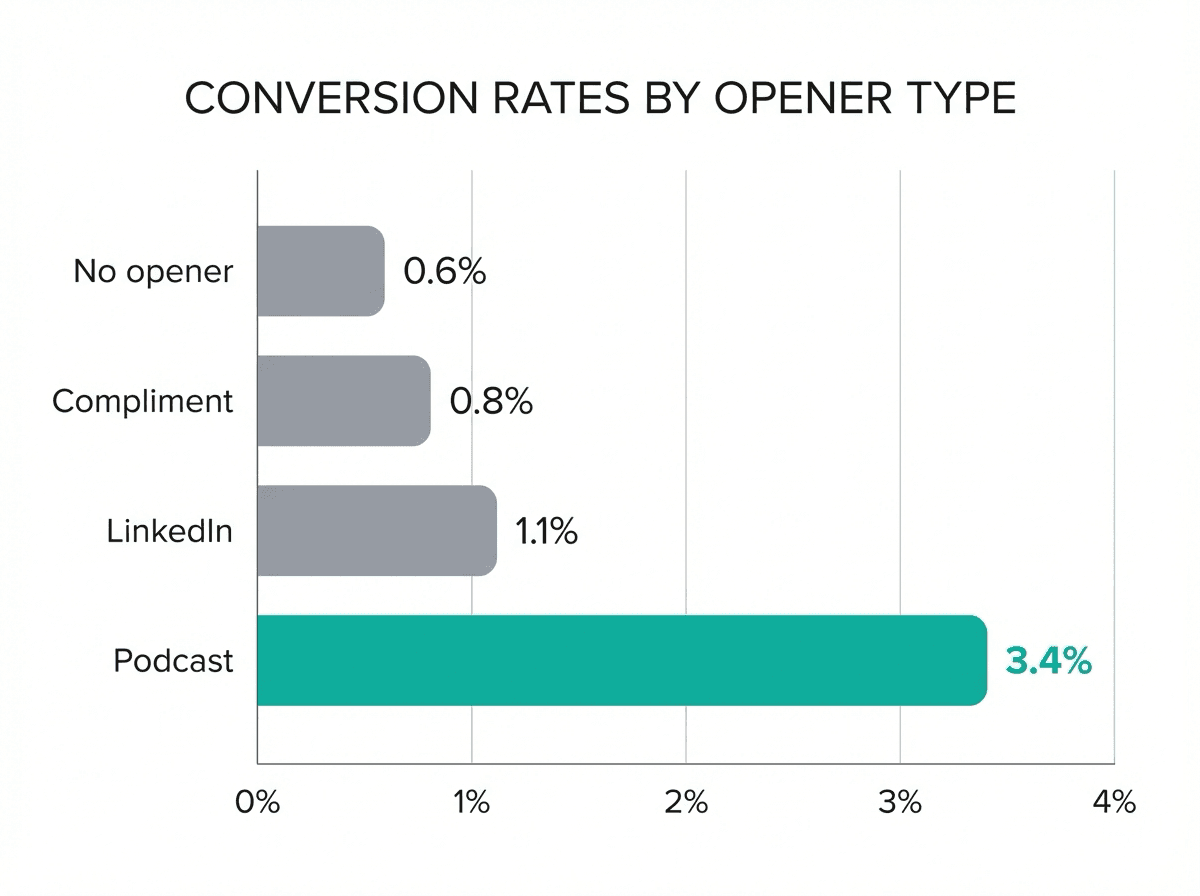
Mentioning a prospect's podcast appearance in cold emails delivered a 3.4% meeting booking rate compared to 0.6% with no personalization: a 6x improvement. Analysis of 2,508 cold emails revealed podcast mentions outperformed generic compliments (0.8%) and LinkedIn post references (1.1%) because they're difficult to automate and signal genuine investment in understanding the prospect.
Key takeaways
- Podcast mentions in cold email openers achieved a 3.4% meeting rate compared to 0.6% with no personalization across 2,508 emails analyzed.
- Generic company compliments delivered only 0.8% meeting rates, barely outperforming emails with no opener at all.
- LinkedIn post and article mentions achieved 1.1% meeting rates, roughly double the no-opener baseline but still easily automated.
- Effective personalization requires signals that are both rare and meaningful: hard for competitors to automate and genuinely valuable to prospects.
- No centralized database exists for filtering podcast guests by ideal customer profile, making this data genuinely difficult to scale.
Reviewed and updated September 5, 2026
One Personalization Tactic Delivered 6x Better Results Than Everything Else
We analyzed every meeting we've booked from cold email this year.
One personalization tactic delivered 600% better results than the rest.
What actually moves the needle.
The Data Behind the Results
We compared 4 different opener types across 2,508 cold email sends.
The results weren't even close:
- No opener: 0.6% meeting rate (7 meetings from 1,246 sends)
- Generic compliment: 0.8% meeting rate (6 meetings from 798 sends)
- LinkedIn post/article mention: 1.1% meeting rate (3 meetings from 261 sends)
- Podcast mention: 3.4% meeting rate (7 meetings from 203 sends)
Same offer. Same list. Same everything.
Just a different first line.
Why Generic Compliments Barely Work
Generic company compliments barely outperformed no opener at all.
0.8% meeting rate vs 0.6% with no personalization.
That's an increase, but hardly worth the effort.
When you tell someone "Love what you're building at [Company]," they know you could have said that to anyone. It's surface-level research that feels automated because it is.
LinkedIn Posts and Articles Did Better
Mentioning a LinkedIn post or article delivered roughly double the no-opener baseline at 1.1% meeting rate.
Still not game-changing, but at least it's moving in the right direction.
This works better because you're referencing something specific they created. But it's still relatively easy to scrape and automate, so prospects are starting to see through it.
Research about the person rather than the company is the whole premise of the BASHO email format, which reduces the message to one insight, one connection and one clear ask.
The Goldmine: Podcast Mentions
Then we hit the goldmine.
Mentioning someone's podcast appearance delivered a 6x higher meeting booking rate compared to no opener.
3.4% conversion rate vs 0.6% with no personalization.
That's not a marginal improvement. That's a complete game-changer.
Why Podcast Mentions Work So Well
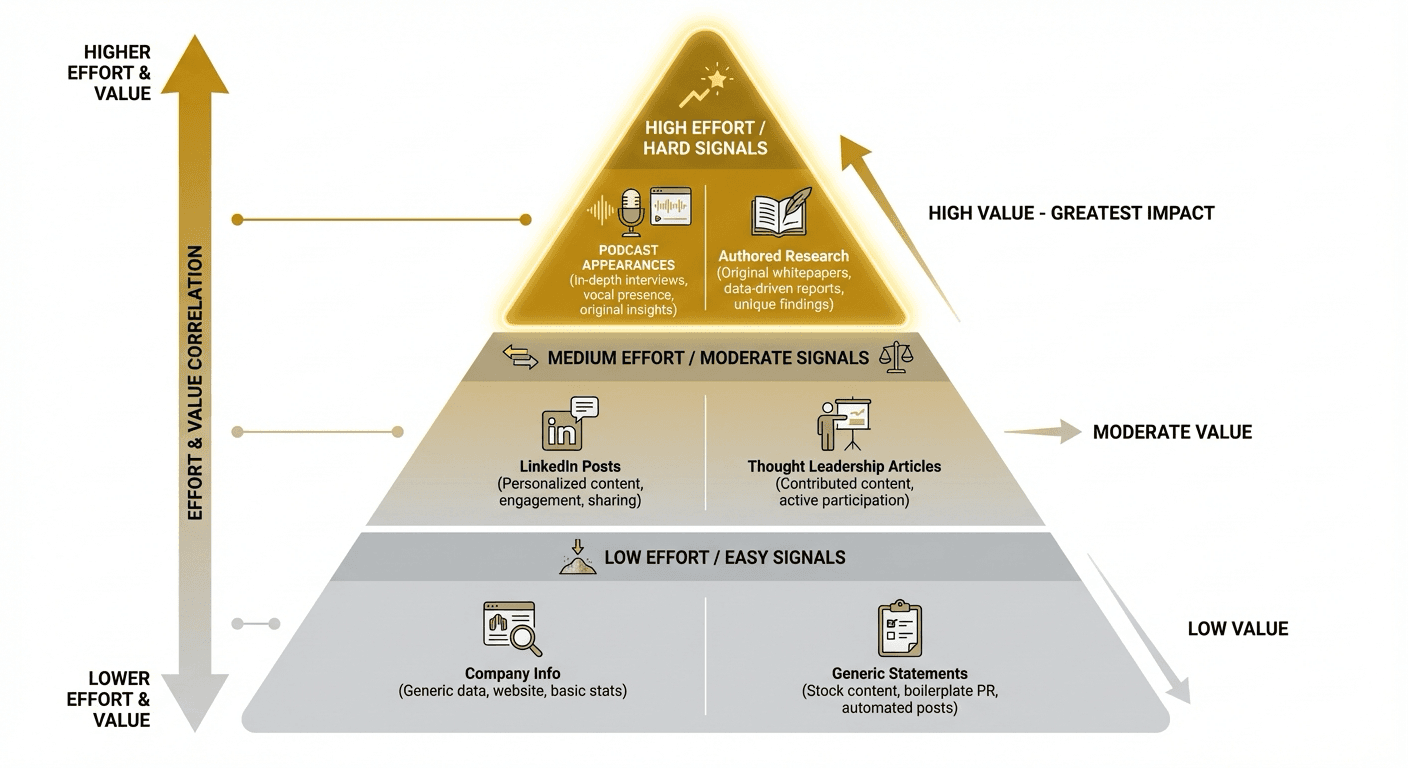
Two reasons this personalization tactic crushes everything else:
1. Podcast Mentions Are Rare
The data is genuinely hard to scrape.
No database exists that lets you filter recent podcast guests by ICP.
You can't just pull this from Apollo or ZoomInfo like you can with LinkedIn posts.
Most agencies and sales teams skip podcast mentions entirely because finding this data requires actual effort.
Which means when you do mention it, you immediately stand out.
2. It Signals Genuine Interest
You spent an hour listening to them speak, not 10 seconds skimming their LinkedIn.
That's a fundamentally different level of investment.
Prospects can feel the difference between surface-level research and genuine interest.
I Experienced This Myself
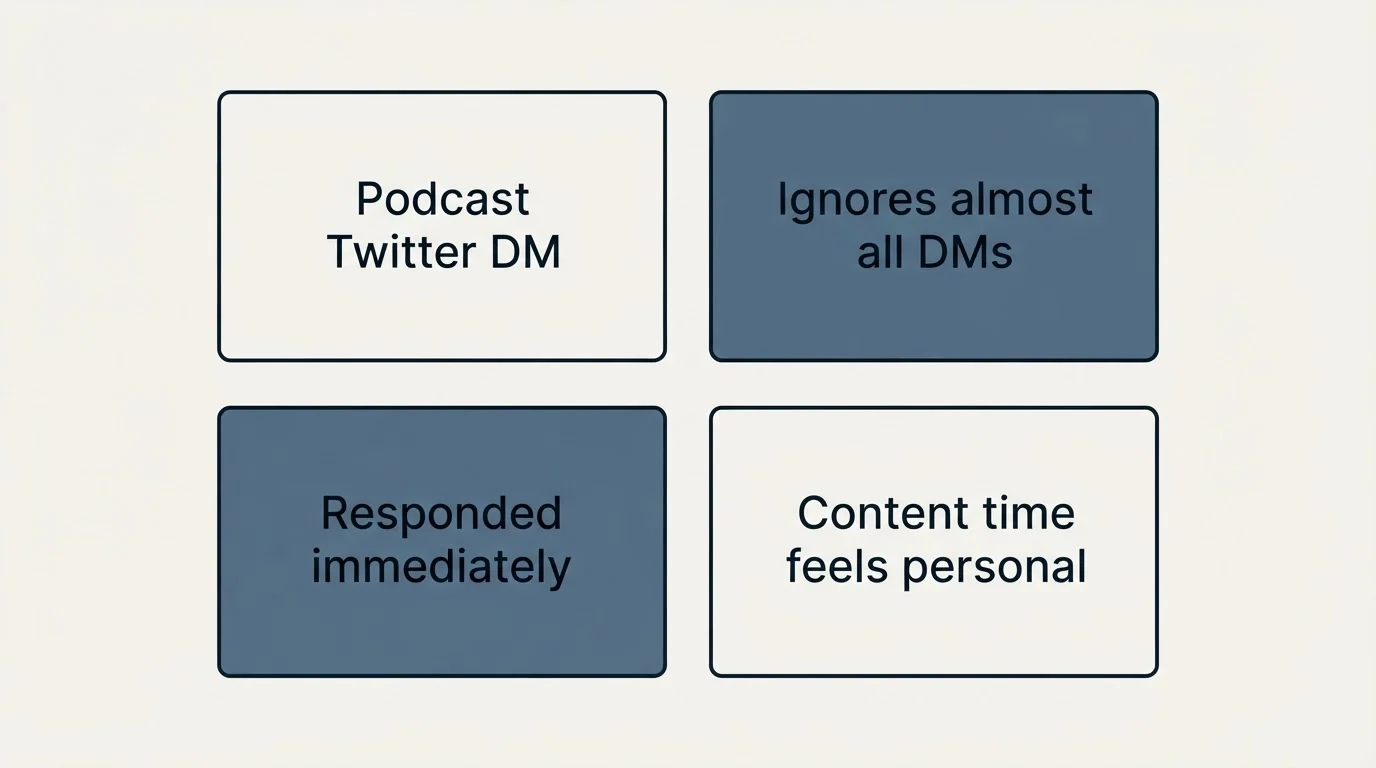
Two years ago, someone DM'd me on Twitter saying they loved a podcast I'd done.
I respond to almost zero Twitter DMs.
But I responded to that one immediately.
There's something about knowing someone invested time in your content that hits different.
It feels personal. It feels genuine. Because it actually is.
The Real Lesson: Find High-Effort Signals
The big lesson here isn't "go mention podcasts."
It's about finding personalization angles that are both rare and meaningful.
Things your competitors can't easily automate.
Things that make prospects feel genuinely seen, not just surface-level research.
Our Approach to Personalization Priority

In our Clay tables, we prioritize personalization lines in this exact order:
- Podcast mentions (highest priority, highest conversion)
- LinkedIn posts/articles (medium effort, medium conversion)
- Generic compliments (low effort, marginal improvement)
We always check for podcast appearances first. If we don't find that, we look for LinkedIn content. Only then do we fall back to company compliments.
Beyond the opening signal, the ending matters just as much, and closing advice for outreach emails explains how to close with a single small ask a stranger can answer easily.
This prioritization was based on intuition initially, but the data proved it was the right call.
How to Find Podcast Data
Since there's no centralized database, here's what actually works:
We use AI research agents in Clay to search for podcast appearances.
We first build the lead list, then try to find personalization angles for those specific leads.
This ABM-style approach means we're not limited by what data exists in traditional databases.
We can find virtually any public information about a prospect if we know who we're looking for.
What to Look For Next
We're now hunting for more data points like this.
High-effort signals that show real interest, not just surface-level research.
The criteria:
- Hard to scrape (so competitors aren't doing it)
- Meaningful to the prospect (actually valuable, not just flattery)
- Prevalent enough (a decent percentage of your ICP should have this signal)
If you can find data points that meet all three criteria, the ROI is undeniable.
The Bottom Line
Personalization works, but only if it's the right kind of personalization.
Generic compliments are barely better than nothing.
Podcast mentions deliver 6x the results.
When you find high-effort, rare signals that show genuine interest, your conversion rates don't improve by 10% or 20%.
They improve by 600%.
What personalization tactics have actually moved the needle for your campaigns?
Related Reading
- Why Drug Dealers Understand Conversion Better Than Most B2B Marketers
- Advanced Email Personalization: Injecting AI Variables into Proven Copy
- Why We Buy 3x More Email Infrastructure Than We Need
If you would rather have this run for you, RevenueFlow books qualified meetings on a pay-per-meeting basis and publishes client results.
Beyond running personalization yourself, comparing what various cold email agencies publish about pricing reveals how commitment terms and lead definitions vary widely.
Frequently asked questions.
Frequently asked questions- Why do podcast mentions in cold emails work better than other personalization tactics?
- Podcast mentions work because they're rare and signal genuine interest. The data is difficult to scrape since no database filters recent podcast guests by ICP, so most sales teams skip it entirely. When you mention a podcast appearance, it shows you invested an hour listening rather than 10 seconds skimming LinkedIn, creating a fundamentally different level of engagement that prospects immediately notice.
- How much better do personalized cold email openers actually perform?
- Podcast mentions delivered a 3.4% meeting rate versus 0.6% with no opener: a 6x improvement. LinkedIn post mentions achieved 1.1% (roughly 2x baseline), while generic compliments only reached 0.8%. This data came from analyzing 2,508 cold email sends across four opener types with the same offer and list, showing personalization quality matters far more than simply including any personalization.
- How do you find podcast appearance data for cold email personalization?
- Since no centralized database exists for podcast guests, the most effective approach uses AI research agents in Clay to search for podcast appearances. Build your lead list first using an ABM-style approach, then search for personalization angles for those specific prospects. This method isn't limited by traditional database constraints and can find virtually any public information about targeted prospects.
- What makes a personalization tactic worth the effort in cold email?
- Effective personalization tactics meet three criteria: hard to scrape so competitors aren't doing it, meaningful to the prospect beyond surface flattery, and prevalent enough that a decent percentage of your ICP has this signal. High-effort signals that show genuine interest rather than automated research deliver exponential improvements: the data showed 600% better conversion rates, not marginal 10-20% gains.
About the author.

Tim Carden is CMO / CTO at RevenueFlow, which builds and operates outbound revenue engines for B2B companies. Studied at McGill University.
Tim Carden · CMO / CTO
Connect on LinkedIn →Explore more.
Ready to scale your outreach?
We build GTM engines that book real meetings. See the receipts.
Related articles.
BASHO Email: Four Sentences Built on One Insight
A BASHO email is four or five sentences built on one researched insight about a specific person. The format is documented, and it cannot be produced at volume.
Cold Email Frameworks: Which One Fits Your Offer
AIDA, PAS and Before-After-Bridge arrange the same four elements in different orders. What each one assumes about the reader, and what none of them fix.
Can Buyers Tell an Email Was Written by AI?
Buyers are not running a classifier on your cold email. What they react to is a message containing nothing only somebody who looked could have written.
CAN-SPAM Act Compliance for B2B Cold Email: The Rules
The CAN-SPAM Act makes no exception for business-to-business email. Here are the seven requirements, the opt-out clocks, and where liability lands when an agency sends.
ABM Personalization at Scale: Automated vs Manual
Retrieval automates well and judgement does not. The three tiers of personalization, what we automate in every build, and the failure modes worth designing against.
How to Write a New Year Outreach Email, Line by Line
A new year outreach email works only where January is a fact about the account. Who that is, the structure line by line, and two worked examples.