How to Cold Email Procurement Managers: What Gets a Reply
Procurement managers sort vendor email by one question: does it help the savings number? Here are the angles, templates, and send windows that get replies.
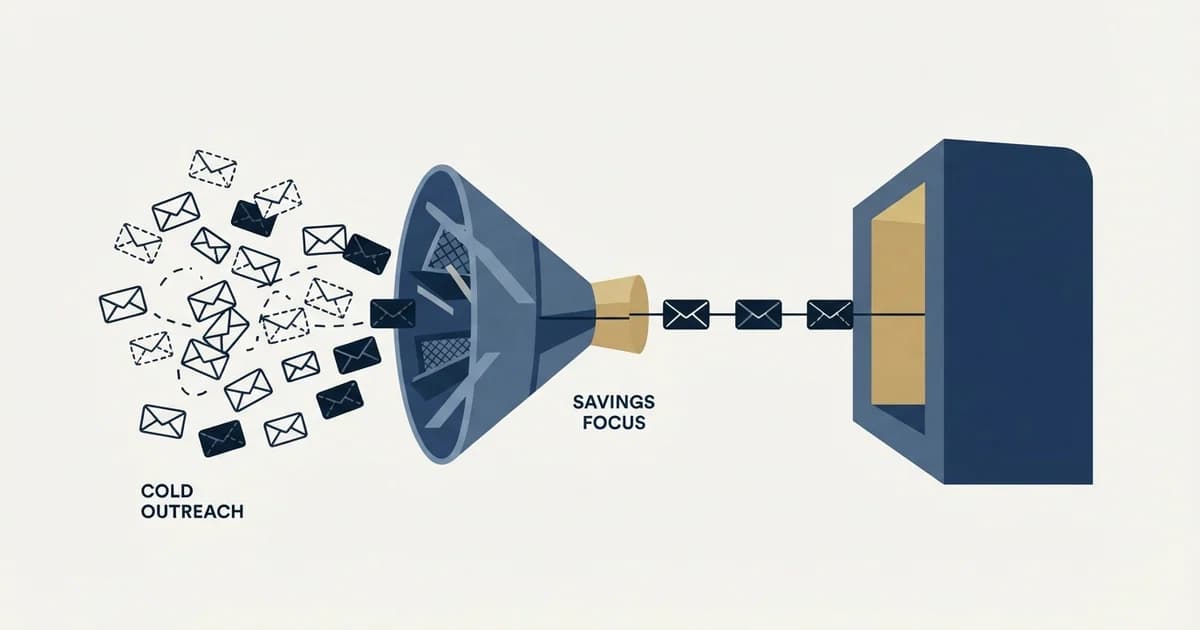
Cold emails to procurement managers work when they tie directly to the metrics that role is graded on: hard savings, supplier risk, spend under management, and cycle time. Reference the category and incumbent supplier by name, time the send to a contract renewal or sourcing calendar, and make the first ask a document or qualification step rather than a call.
Key takeaways
- Cost reduction is still procurement's headline objective: 72% of CPOs named improving margins via cost reduction their top priority in Deloitte's 2025 Global CPO Survey.
- Decide first whether the procurement manager owns the category (buyer) or executes sourcing for a business stakeholder (gatekeeper); the wrong assumption kills most procurement outreach.
- Write to a scorecard metric: hard savings, cost avoidance, spend under management, maverick spend, OTIF, requisition-to-PO cycle time, DPO, supplier risk, or diverse spend.
- The strongest timing trigger is a contract renewal four to six months out, when the sourcing calendar is being built and alternatives are actively wanted.
- Make the first ask a rate card, qualification packet, or bid-list placement instead of a 30-minute call; documents cost procurement nothing to accept.
- Send Tuesday through Thursday between 7 and 9 a.m. local time, and avoid quarter-end close and budget-submission weeks entirely.
Reviewed and updated September 1, 2026
How to Cold Email Procurement Managers: What Actually Gets a Reply
A procurement manager running indirect spend at a 3,000-person manufacturer has a number taped to the top of her quarterly review deck: a savings target, usually expressed as a percentage of addressable spend. Everything else in her job (supplier consolidation, contract renewals, risk reviews, the endless requisition queue) exists to serve that number or to keep it from blowing up. When your cold email lands in her inbox, it gets sorted in about two seconds into one of three piles: helps the number, threatens the number, irrelevant.
Most cold emails aimed at procurement land in pile three. They open with a product description, ask for thirty minutes, and say nothing about cost, risk, or cycle time. Procurement people are professional evaluators of vendor claims. They have seen every framing you are about to use, and they have a genuine incentive to ignore anything that looks like a sales pitch, because engaging with an unqualified supplier costs them time they do not have.
Procurement is one of the few B2B personas whose scorecard is essentially public knowledge. You can look up what they are measured on, write directly to it, and be right most of the time.
What Procurement Managers Are Actually Measured On
Every procurement organization runs on a similar set of KPIs. The weightings differ by company and category, but the list is remarkably consistent.
| Metric | What it means | Why it matters to your email |
|---|---|---|
| Hard savings | Year-over-year unit price reductions that hit the P&L | The headline number. Quantified savings claims get read. |
| Cost avoidance | Negotiated-away increases, budgeted spend not incurred | Softer currency, but still counts in most scorecards |
| Savings realization | Percentage of negotiated savings that actually materialize | Explains why they distrust vendor projections |
| Spend under management | Share of company spend flowing through contracted suppliers | Consolidation and tail spend pitches ladder into this |
| Maverick spend | Purchases made outside approved contracts | A pain point you can solve, not create |
| Supplier OTIF | On-time in-full delivery performance | Direct-spend and logistics categories live here |
| Requisition-to-PO cycle time | How fast the buying process moves | Internal stakeholders complain about this constantly |
| Payment terms / DPO | Days payable outstanding | Offering Net 60 or Net 90 is a real concession |
| Supplier risk incidents | Single-source dependencies, financial or compliance failures | Rising priority since 2020 supply disruptions |
| Diverse and sustainable spend | Percentage of spend with certified diverse or ESG-qualified suppliers | Often a hard target with board visibility |
Cost reduction remains the top-line priority for procurement leadership. In Deloitte's 2025 Global Chief Procurement Officer Survey, 72% of CPOs named improving margins via cost reduction as their top objective. Source: Deloitte 2025 Global Chief Procurement Officer Survey
That does not mean "we are cheaper" wins. Procurement managers hear that from everyone. What wins is a specific, plausible mechanism for how the savings or risk reduction happens, tied to a category they own.
What Their Inbox Actually Looks Like
Procurement inboxes have a distinct texture that changes how you should write.
They receive high volumes of unsolicited supplier email, more than most B2B personas, because every vendor in every category eventually decides that procurement is the door. Much of that mail is templated, poorly targeted, and asks for a discovery call. The result is aggressive triage. Subject lines get scanned, senders get pattern-matched against known suppliers, and anything reading like a mass sequence gets archived without opening.
They also live inside systems. Coupa, Ariba, Jaggaer, Ivalua, and Oracle Fusion are where their real work happens. Email is the interruption layer, competing with approval queues, stakeholder escalations, and supplier disputes.
Their internal mail is dominated by business stakeholders who want a supplier approved yesterday. Procurement managers are usually reacting to demand created elsewhere in the company, so an email that helps them look prepared for demand that is coming outperforms one that creates new work.
They are also compliance-aware. They know what a legitimate supplier introduction looks like because they write the rules for supplier onboarding. Sloppy sender infrastructure, misspelled company names, and vague claims read as risk signals.
The Two Doors: Buyer or Gatekeeper
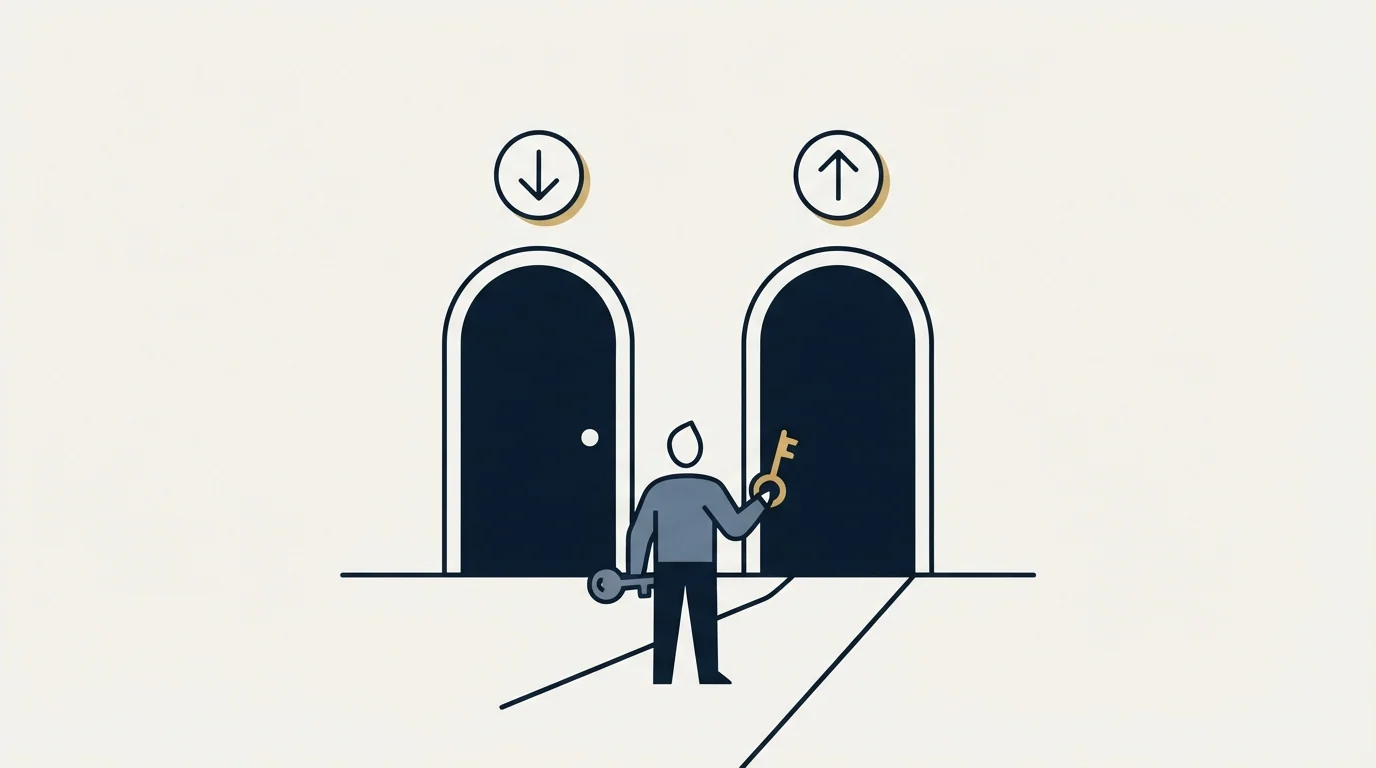
Before you write a word, decide which procurement manager you are emailing.
Procurement as buyer. For categories they own directly (facilities, MRO, packaging, logistics, IT hardware, contingent labor, professional services), the procurement manager is the economic buyer or close to it. They run the sourcing event, they hold the supplier relationship, and they can initiate an RFI on their own authority. Here you write a direct commercial pitch built on category economics.
Procurement as gatekeeper. For software, marketing services, and most specialized solutions, the requirement originates with a business owner and procurement executes the sourcing and negotiation. Cold emailing procurement first in this scenario usually fails, because they have no mandate to create demand. The exception is getting onto an approved supplier list or a bid list ahead of a known event, which is a legitimate and welcome ask.
Getting this wrong is the most common reason procurement outreach dies. Pitching software features to a procurement manager who does not own the requirement leaves them nothing to do except delete it.
Angles That Resonate
- Contract renewal timing
- Tail spend consolidation
- Second-source and risk mitigation
- Total cost of ownership, not unit price
- Payment and commercial terms
- Supplier diversity and sustainability credentials
- Pitches built entirely on product features, with no cost, risk, or process framing
- Innovative and game-changing applied to a commodity category
- Requests for thirty minutes to learn about your priorities
Contract renewal timing. Multi-year agreements expire on schedules that are often discoverable through public filings, government contract databases, press releases, or the supplier's own announcements. An email that arrives four to six months before a renewal, when the sourcing calendar is being built, is timed to the exact moment procurement is looking for alternatives.
Tail spend consolidation. Most organizations have a long tail of low-volume suppliers that consume disproportionate administrative effort. If your offer replaces five vendors with one, that is a spend-under-management story and an admin-cost story at the same time.
Second-source and risk mitigation. Procurement teams carry explicit mandates to reduce single-source exposure. Positioning yourself as a qualified alternate supplier is a low-threat ask. You are not asking them to switch, you are asking to be qualified.
Total cost of ownership, not unit price. Freight, scrap, rework, implementation, and support costs are where category managers find real savings. If you can name a TCO line item their current supplier is quietly costing them, you are speaking their language.
Payment and commercial terms. Extended terms, consolidated invoicing, consumption-based pricing, and volume-tier structures are concessions procurement values and can defend internally.
Supplier diversity and sustainability credentials. If you hold certifications (minority-owned, woman-owned, veteran-owned, B Corp, ISO 14001), lead with them when the buyer has a diverse-spend target. This is one of the few cases where a credential alone justifies a reply.
Angles That Get Deleted Instantly

Pitches built entirely on product features, with no cost, risk, or process framing. "Innovative" and "game-changing" applied to a commodity category. Requests for thirty minutes to "learn about your priorities," which reads as asking them to do your research. References to conversations with their internal stakeholders that sound like an end run around procurement. Vague savings claims with no mechanism, such as "companies like yours save 30%." Scarcity and discount deadlines, which procurement reads as a negotiating tactic and will happily wait out. And the flattery opener, since procurement managers are not the audience for "I was really impressed by your company's recent growth."
Four Cold Emails That Work on Procurement Managers
Template 1: Contract renewal window
Subject: {{category}} contract renewal at {{company}}

Hi {{first_name}},

Your {{category}} agreement with {{incumbent_supplier}} looks like it
comes up in {{renewal_month}}. If you're building the sourcing calendar
now, worth having a second quote in the file.

We supply {{category}} to {{peer_company_1}} and {{peer_company_2}} at
comparable volumes. The two line items that usually move on a rebid are
{{cost_driver_1}} and {{cost_driver_2}}, which are typically 8 to 12
percent of landed cost in this category.

Happy to send our standard rate card and lead times so you have a
benchmark, no call required. Want me to send it over?

{{sender_name}}
{{title}} | {{company}}
Why this works: It arrives at the moment procurement is actively looking for alternatives, references the incumbent by name (proving research), names specific cost drivers instead of promising generic savings, and the ask is a document rather than a meeting. A rate card costs them nothing to accept and puts you in the file.
Template 2: Second-source qualification
Subject: second source for {{category}}

{{first_name}},

Quick one. Most {{industry}} buyers I talk to are still single-sourced on
{{category}} and carry that as an open item in their risk register.

We're a qualified alternate for {{peer_company}} in the same category.
{{certification_or_capability}}, {{lead_time}} lead times, and we can run
a small qualification order without touching your primary contract.

If second-sourcing {{category}} is on your list this year, I can send our
qualification packet (capacity, certs, financials). Useful?

{{sender_name}}
Why this works: The ask is qualification, not displacement, which removes the threat to an existing supplier relationship and to the procurement manager's own negotiated agreement. It maps to an explicit KPI (supplier risk), and the qualification packet is exactly the artifact their process requires.
Template 3: Tail spend consolidation
Subject: {{number}} suppliers in {{category}}?

Hi {{first_name}},

Companies at {{company}}'s size usually run somewhere between 15 and 40
active suppliers in {{category}}, most of them under {{threshold}} in
annual spend. Each one carries onboarding, insurance verification, and AP
processing overhead that never shows up in the unit price.

We consolidate that tail into a single contract and a single invoice.
{{peer_company}} went from {{before_count}} suppliers to one, which took
{{admin_outcome}} out of their AP and sourcing workload.

Would a one-page breakdown of how the consolidation actually gets
sequenced be useful? Takes you two minutes to read.

{{sender_name}}
Why this works: It names an administrative cost procurement genuinely feels and rarely gets credit for solving, ties directly to spend under management, and quantifies the outcome in workload rather than a suspicious savings percentage. The offer is a short document with a stated reading time.
Template 4: Getting on the bid list
Subject: bid list for {{category}}

{{first_name}},

Not asking for a meeting. I'd like to be on the invite list the next time
{{company}} runs a sourcing event for {{category}}.

Relevant details: {{years_in_category}} years in {{category}},
{{certifications}}, current customers include {{peer_company_1}} and
{{peer_company_2}}, {{differentiator_in_one_line}}.

If you'd rather I go through {{supplier_portal_name}}, tell me and I'll
register there instead. Otherwise, is there someone specific who owns
this category?

{{sender_name}}
Why this works: It respects the process instead of trying to bypass it, states the ask in the first line, delivers qualification information in a scannable format, and offers a routing question that is easy to answer even for a busy recipient. The portal reference signals you understand how supplier onboarding actually works.
Send Windows and Timing

Procurement managers start early because they work across time zones with suppliers and plants. Tuesday through Thursday between 7:00 and 9:00 a.m. in the recipient's local time is the strongest general window. Monday is consumed by weekend escalations and the requisition backlog. Friday afternoon is dead.
Calendar timing matters more than time of day. The productive windows are the two to three months before a fiscal year end, when next-year sourcing calendars and savings targets are being set, and the four to six months before a known contract expiry. The dead windows are quarter-end and month-end closes, when procurement is buried in accruals and PO cleanup, and the two weeks around annual budget submission.
Most programmes answer procurement's slow clock by spacing messages five to seven business days apart and capping at four. We send one message per campaign and come back as a new campaign instead. What survives from that argument is the standard it sets: every approach carries a real artifact (rate card, qualification packet, category benchmark, reference list) rather than a check-in, because procurement managers respond to a supplier building a file and not to a rep chasing a quota.
Referencing Their Metrics Without Sounding Like a Consultant
Use their vocabulary sparingly and precisely. One correctly used term (landed cost, PPV, OTIF, spend under management, maverick spend, DPO) establishes that you work in their world. Three or four in a row reads as keyword stuffing.
Anchor every claim to a mechanism. "We reduce your PPV" is noise. "Our pricing is indexed quarterly to the resin index rather than annually, which removes the true-up spike you take every January" is a claim they can evaluate. Precision is the credibility signal that matters to someone who evaluates supplier claims for a living.
Never quantify savings you cannot defend in a rebid. Savings realization rate is one of the metrics they are graded on, so an unsupportable number in a cold email is a reason to never invite you to a sourcing event.
Your Procurement Outreach Checklist
- Confirmed whether this person owns the category or gatekeeps it
- Identified the category name as they would write it internally
- Found a timing trigger (renewal, expansion, new facility, supplier disruption, leadership change)
- Named the incumbent supplier or the current process, correctly spelled
- Tied the offer to at least one scorecard metric
- Stated a mechanism, not just an outcome
- Made the first ask a document or a qualification step, not a 30-minute call
- Included certifications, terms, and lead times where relevant
- Offered the supplier portal route as an alternative
- Scheduled sends for Tuesday to Thursday, early, in their time zone
- Avoided quarter-end and budget-submission weeks
Procurement is a persona that rewards preparation more than persuasion. The teams that win here treat a cold email as the first document in a supplier file rather than as a pitch, and they write it knowing that the recipient will evaluate it exactly the way they evaluate every other supplier claim that crosses their desk.
If you would rather have this built and run for you, RevenueFlow builds done-for-you cold email campaigns targeted at procurement and sourcing decision-makers, including list building, category research, and sequence management. Book a strategy call and we will map the categories, triggers, and messaging for your specific offer.
Related Reading
- How to Cold Email CTOs: What Actually Gets a Reply
- How to Cold Email CMOs: What Actually Gets a Reply
- Why B2B Companies Should Focus on Reply Volume Over Reply Rates
If you would rather have this run for you, RevenueFlow books qualified meetings on a pay-per-meeting basis and publishes client results.
Frequently asked questions.
Frequently asked questions- Should I email procurement first or go to the business stakeholder?
- It depends on who owns the category. For facilities, MRO, packaging, logistics, IT hardware, and contingent labor, procurement is usually the buyer and should be your first contact. For software and specialized services, the requirement originates with a business owner, so emailing procurement cold gives them nothing to act on. The exception is asking to join an approved supplier list or bid list.
- What subject lines work on procurement managers?
- Short, specific, and administrative. Naming the category and the event works best: "{category} contract renewal at {company}", "second source for {category}", or "bid list for {category}". Avoid benefit claims, urgency, and anything that reads like marketing. Procurement scans senders and subject lines for whether the message concerns a category they actually own.
- When is the best time to cold email a procurement manager?
- Tuesday through Thursday between 7:00 and 9:00 a.m. in the recipient's local time, since procurement teams start early to work across supplier time zones. Calendar timing matters more than time of day: target the two to three months before fiscal year end when sourcing calendars are set, and four to six months before a known contract expiry.
- What should a cold email to procurement actually contain?
- A new artifact rather than a request for attention: a rate card, qualification packet, category benchmark, or reference list. Procurement treats inbound supplier mail as a file being built rather than a conversation, so a message carrying a document earns a place in that file while a check-in with no new information does not. Send it once, tied to a live contract renewal or sourcing window, and let the sourcing calendar decide when there is a genuine reason to write again.
- Can I include a savings percentage in a cold email to procurement?
- Only if you can defend it in a competitive rebid and can explain the mechanism behind it. Procurement managers are measured on savings realization rate, meaning how much negotiated savings actually materialize, so they discount unsupported vendor projections automatically. Naming a specific cost driver is far more credible than a headline percentage.
About the author.

Ben Carden is CRO at RevenueFlow, which builds and operates outbound revenue engines for B2B companies. Previously at Gartner Enterprise. Studied at London School of Economics.
Ben Carden · CRO
Connect on LinkedIn →Explore more.
Ready to scale your outreach?
We build GTM engines that book real meetings. See the receipts.
Related articles.
Cold Email Frameworks: Which One Fits Your Offer
AIDA, PAS and Before-After-Bridge arrange the same four elements in different orders. What each one assumes about the reader, and what none of them fix.
CAN-SPAM Act Compliance for B2B Cold Email: The Rules
The CAN-SPAM Act makes no exception for business-to-business email. Here are the seven requirements, the opt-out clocks, and where liability lands when an agency sends.
BASHO Email: Four Sentences Built on One Insight
A BASHO email is four or five sentences built on one researched insight about a specific person. The format is documented, and it cannot be produced at volume.
CEO Email Addresses: Finding One That Resolves
Seniority is the thinnest coverage band in every contact database. How an executive address is resolved, why verification is a separate purchase, and when to stop.
Email Tracking Software: Six Tools, Priced and Capped
Streak, Mailsuite, Right Inbox, Mixmax, Yesware and HubSpot compared on free-tier caps and published prices, plus what an open event still proves.
No-Reply Email Address: What It Costs a Sender
A no-reply address is defensible on a receipt and indefensible on a cold message, because the reply is the entire product of a first contact.