Cold Email Frameworks: Which One Fits Your Offer
AIDA, PAS and Before-After-Bridge arrange the same four elements in different orders. What each one assumes about the reader, and what none of them fix.
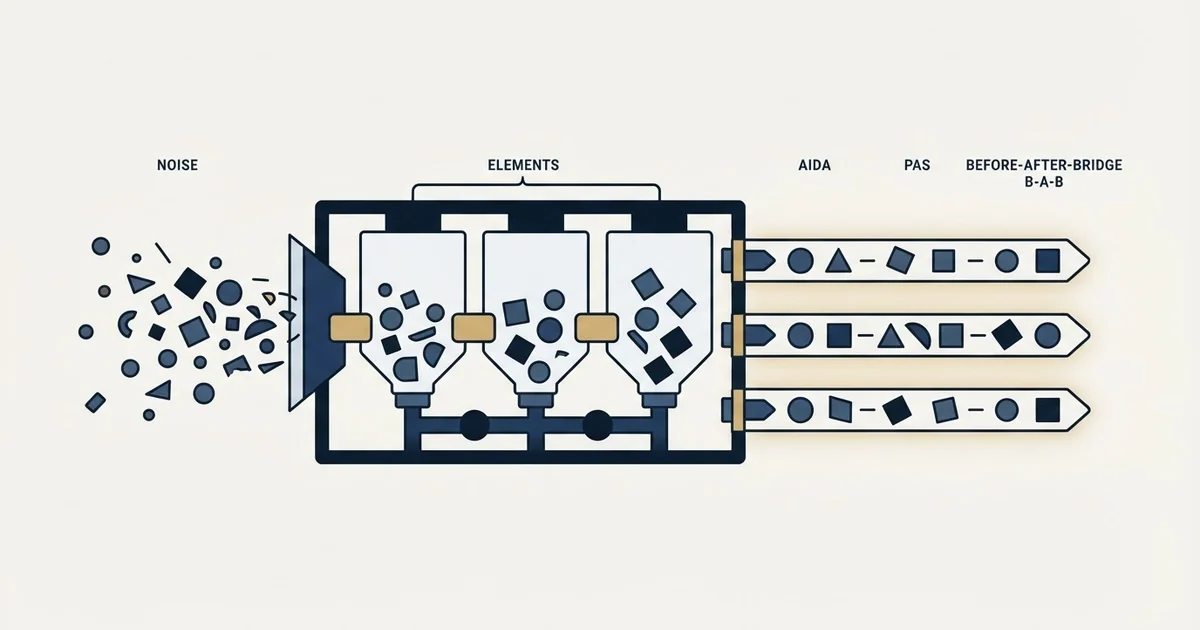
A cold email framework arranges four elements: why the message arrived, one claim, evidence, and one ask. AIDA, PAS, Before-After-Bridge and plain problem-solution differ in order and in how much space the setup gets. Choose from how aware the reader already is of the problem and how much specific evidence you hold.
Key takeaways
- Every published framework arranges the same four elements, so the choice is about order and space rather than about substance.
- Reader awareness decides the arrangement: an unaware reader needs the setup, and an aware reader experiences the same sentences as delay.
- One message per campaign rules out any arrangement that opens a loop for a later touch to close, including the multi-step sequences sold as frameworks.
- A list nobody can justify, an ask that transfers work, and a message that never arrives all survive every framework, and all three outrank arrangement.
Reviewed and updated October 1, 2026
A rep reads a post about the PAS framework on Monday and rewrites the campaign around problem, agitation and solution. Reply rate does not move. On Thursday they read a post about Before-After-Bridge and rewrite it again. Reply rate does not move. Both rewrites were competent and both were aimed at the wrong variable.
Frameworks are naming schemes for the parts of a message. They are genuinely useful, and what they are useful for is narrower than the category suggests: a framework forces a decision about order and length, and it forces the message down to one claim. It cannot tell you whether the claim is worth making, and that is the thing that decides whether anybody answers.
This page sets out the frameworks people actually mean when they use the word, what each one assumes about the reader, which offer shape each one suits, and the two constraints that sit above all of them.
What a framework is doing
Strip the acronyms and every published cold email framework is arranging the same four elements: a reason the message arrived, a claim, evidence for the claim, and an ask.
The frameworks differ in the order of those elements and in how much space each one gets. That is not a small difference. Order decides what the reader has already accepted by the time they reach the ask, and space decides how much of the message survives the first screen on a phone. But it is a difference of arrangement rather than of substance, and it is worth being clear about that before choosing one, because the choice is smaller than it feels.
This site works through the parts themselves, in the order a recipient meets them, in cold email format. This page is about the arrangements.
- The order the four elements appear in
- How much space each one gets
- Where the ask sits relative to the evidence
- Whether tension is built before the resolution
- How the first sentence earns the second
- Whether the list is the right list
- Whether the offer is worth a reply
- Whether the claim is specific to this reader
- Whether the ask is answerable in one line
- Whether the message arrives at all
The frameworks people mean
Four arrangements account for most of what is published under this word. All four are public sales and copywriting frameworks in general circulation, which is why they can be named plainly here without an origin story attached to any of them.
AIDA: attention, interest, desire, action. The oldest arrangement and the broadest. It opens by earning notice, builds interest in a subject, converts that into wanting something specific, and closes with the step that gets it. In a cold email it produces a message that spends its first half on the reader's situation and its second half on the resolution.
PAS: problem, agitation, solution. A tighter arrangement built around one difficulty. It names a problem the reader has, makes the cost of that problem concrete, and then presents the resolution. The agitation step is the one that goes wrong most often in cold email, because a stranger telling somebody their situation is worse than they realise reads as presumption rather than insight.
Before-After-Bridge. The reader's situation now, the situation they would prefer, and the thing that connects the two. It carries less risk of condescension than PAS because the contrast is described rather than pressed, and it needs a clear picture of the after state to work at all.
Problem and solution, with no agitation step. The plainest arrangement and the most underrated. It states what appears to be true about the reader's situation, states what can be done about it, and asks. It suits a reader who already knows they have the problem, where anything spent on establishing the problem is spent on something the reader already agreed with.
- Step 1AIDA
Broadest setup. Earns notice first, and reaches the ask last
- Step 2PAS
Names one problem and presses on its cost before resolving it
- Step 3Before-After-Bridge
Contrasts two states and connects them, without pressing
- Step 4Problem and solution
Assumes the problem is already felt and moves straight to the claim
Choosing one from the offer, not from the article
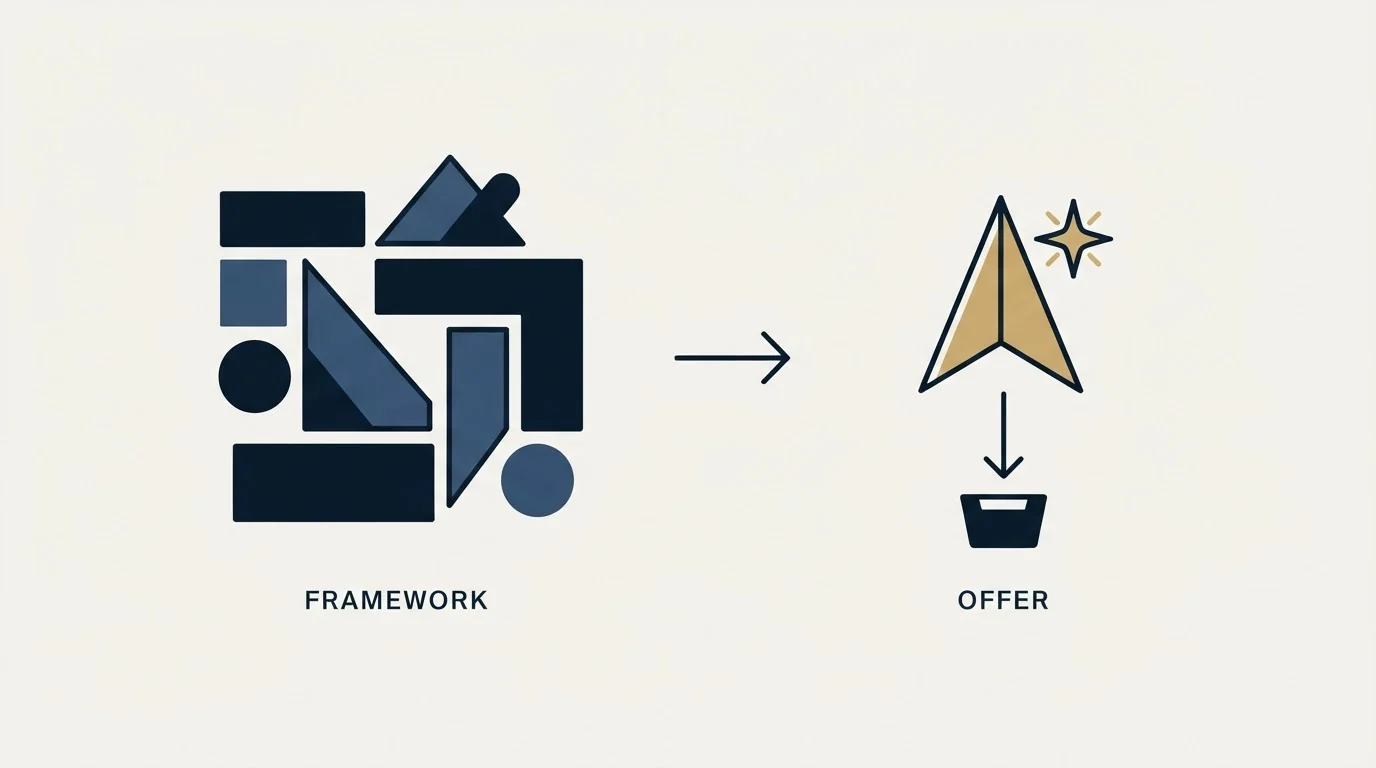
The choice is decided by two things about your situation, and neither of them is a preference.
How aware is this reader that they have the problem? If the problem is something they think about weekly, an arrangement that spends four sentences establishing it is spending them on agreement you already had. If the problem is real but invisible, something the reader is paying for without having named it, the setup is the whole job and a plain problem-solution message will read as a claim about somebody else.
How much proof do you have? An arrangement that builds desire before the ask needs something to build it with. Where the evidence is a single specific fact about the reader's own situation, the message is better plain than staged, because a staged build with nothing behind it reads as a template.
There is a third input that is not about arrangement at all. If the offer is weak, no arrangement rescues it, and this site makes that argument at length in the offer beats the copy. The order of variables that actually move a campaign is the list, then the offer, then the arrangement, then the wording. Teams reach for frameworks because arrangement is the variable that can be changed in an afternoon.
What one message per campaign does to all of them
Every published framework quietly assumes a sequence. AIDA in particular is drawn from arrangements that had several exposures to work with, and a great deal of cold email advice built on it treats the first message as an opener that a later touch will close.
We send one message per campaign. No bumps, no thread replies, and no follow-up timetable. The reasoning, including what the position costs, is in why we stopped using follow-ups.
That constraint changes how an arrangement has to be used, and the change is concrete. Every element has to be present in the one message. An arrangement cannot open a loop and defer the proof to a second touch, because there is no second touch. In practice this rules out the versions of AIDA that spend the whole first message on attention and interest, and it favours the arrangements that reach a claim and an ask inside one screen.
It also removes an entire category of framework advice: the multi-step sequences published as frameworks, where each numbered email has an assigned job. Those describe a different motion and they cannot be evaluated inside this one.
A worked pair, entirely invented
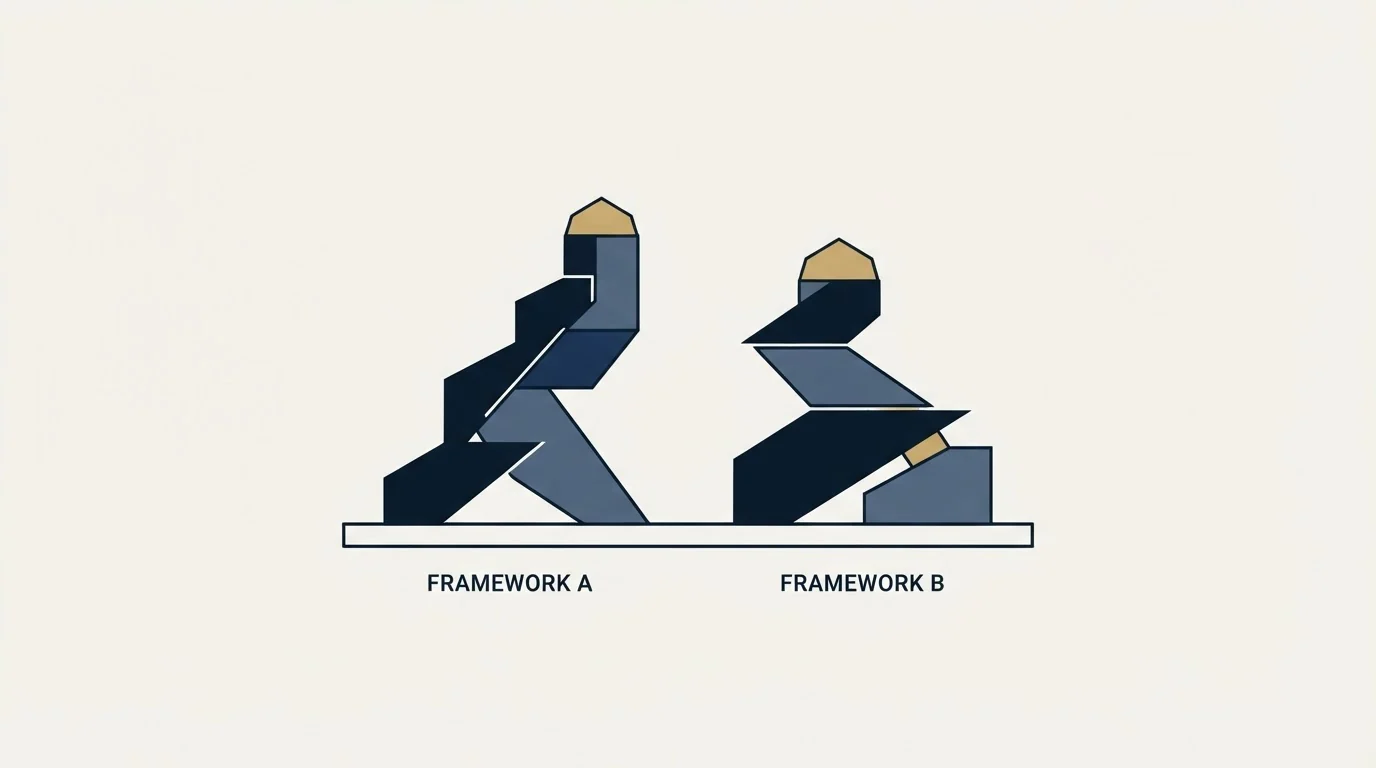
Both examples below are invented. The company, the person, the numbers and the situation do not exist, and no client of ours is described.
Take an invented recipient: a head of operations at a mid-sized logistics business that has just posted three job openings for dispatch coordinators.
Problem and solution, plain. "You have three dispatch coordinator roles open. Covering that gap with overtime costs more than the salaries and stops scaling after a few weeks. A routing layer makes the same decisions automatically, so the existing team absorbs the volume. Worth fifteen minutes on Thursday?"
Before-After-Bridge. "Right now three dispatch coordinator seats are empty and the existing team is absorbing the routing decisions by hand. The version of that team you are hiring toward makes the same decisions without touching a spreadsheet. The thing in between is a routing layer that reads your existing dispatch data. Worth fifteen minutes on Thursday?"
The second is longer and reads more considered. The first is faster to read and asks for the same thing. Which performs is a question about that market rather than about the arrangements, and it is answerable only by running one arrangement per campaign against the same segment. Varying the arrangement inside a single send leaves you unable to attribute anything.
What no arrangement can fix
Four failures survive every framework, and it is worth naming them because a rewrite is the reflex response to all four.
A list that cannot support relevance. If you cannot say in one sentence why each company is on the list, no arrangement has anything to arrange. The upstream fix is in building an ideal customer profile.
An ask that transfers work. "Worth a chat?" and "open to learning more?" produce replies that feel like progress and do not become meetings. The ask has to name a specific next action answerable in one line, whatever arrangement surrounds it.
A message that could be sent to the competitor unchanged. The test for the opening line is to imagine it arriving at the reader's nearest competitor. If it survives the swap, it is a category statement wearing a personalisation costume.
A message that does not arrive. Authentication, sending domain and list quality decide whether any of the writing is read. A framework applied to a message landing in spam is a rewrite of something nobody sees.
- Yes: Every company on the list has a stated reason for being there
- Yes: The offer is something a stranger would plausibly want
- Yes: You know whether this reader already names the problem
- Yes: The whole message fits one phone screen
- Yes: The ask names one action answerable in a line
- No: The arrangement varies between leads inside one campaign
- No: The first message opens a loop a later touch is meant to close
Testing an arrangement honestly
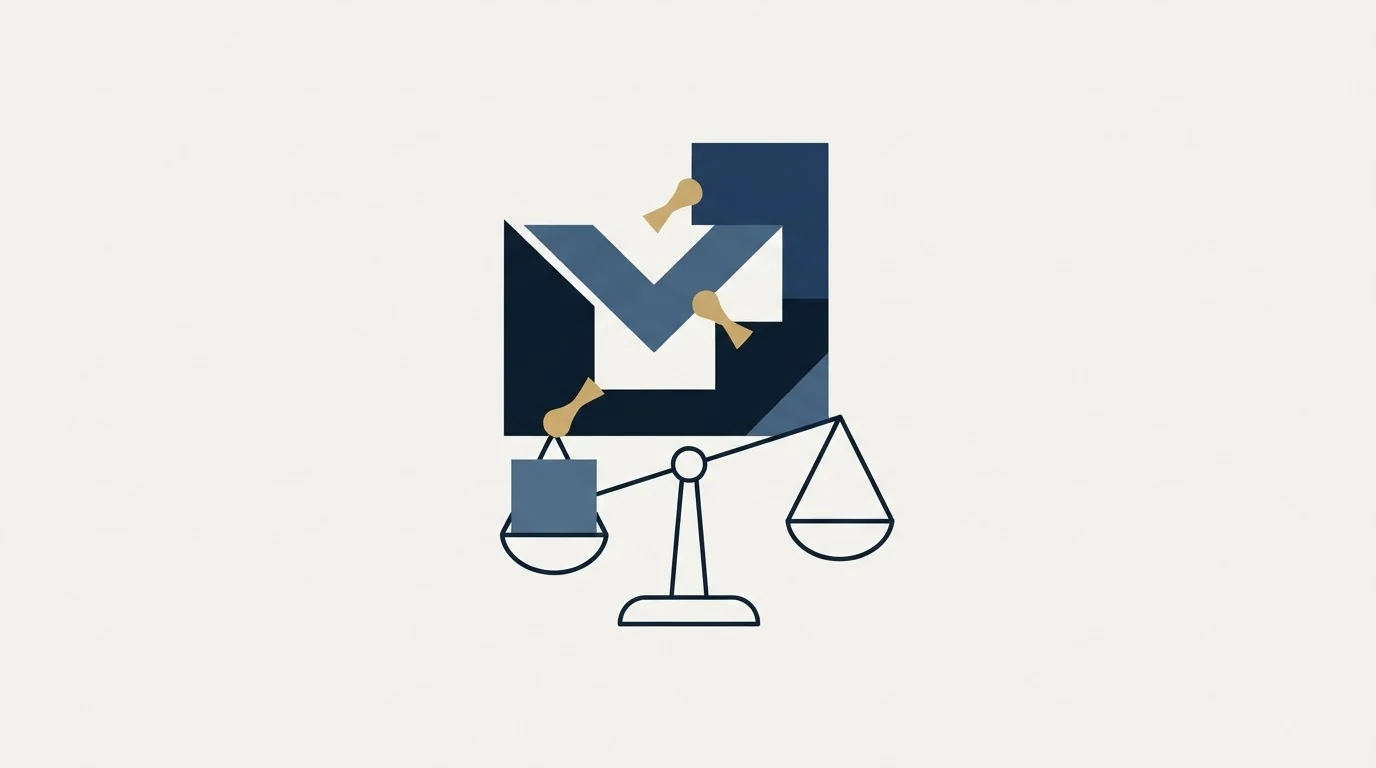
An arrangement is testable, and it is commonly tested in a way that cannot produce an answer.
Hold everything except the arrangement still. Same segment, same offer, same ask, same sending infrastructure, one arrangement per campaign. Varying arrangement per lead inside a single send makes attribution impossible, because every other variable is moving underneath it.
Give it enough volume that the result is not noise, and read replies rather than opens. Open rate is a weak instrument, because image proxies register opens with no human involved.
And expect the effect to be smaller than the category promises. Where an arrangement change produces a large movement, the usual explanation is that the new arrangement forced a different claim, or forced the message shorter, and the claim or the length was the thing that moved. What the arrangement is arranging, and how a single-message format has to carry every element at once, is covered in what a cold email is.
The short version
Cold email frameworks are arrangements of the same four elements: why the message arrived, one claim, evidence, and one ask. AIDA, PAS, Before-After-Bridge and plain problem-solution differ in the order of those elements and in how much space the setup gets.
Choose from two facts about the reader rather than from a preference: how aware they already are of the problem, and how much specific evidence you hold. An unaware reader needs the setup. An aware reader experiences it as delay.
One message per campaign rules out any arrangement that defers proof to a later touch, and rules out the multi-step sequences published under the same word. Everything has to be present once.
No arrangement survives a list nobody can justify, an ask that transfers work, an opening line that would suit the competitor, or a message that never arrives. Test one arrangement per campaign, hold everything else still, and read replies rather than opens. If the harder problem is that the offer itself is not landing, see what a campaign built around a specific offer looks like against your market.
Frequently asked questions.
Frequently asked questions- Which cold email framework works best?
- The question has no general answer, because the frameworks arrange the same elements and the arrangement is the third most powerful variable in a campaign. Pick from two facts: whether the reader already names the problem, and how much specific evidence you hold about their situation. An aware reader with one strong fact needs the plainest arrangement available.
- What is the difference between AIDA and PAS in a cold email?
- AIDA spends its opening earning notice and building interest before it reaches an ask, so more of the message goes on setup. PAS commits to one named problem and makes its cost concrete before resolving it. In cold email the agitation step is the riskier of the two, because a stranger pressing on somebody's difficulty reads as presumption.
- Should a cold email framework span several messages?
- Not in this model. We send one message per campaign, with no bumps and no thread replies, so every element has to be present in the first message. That rules out arrangements that defer proof to a later touch, and it rules out the numbered multi-step sequences published as frameworks, which describe a different motion entirely.
- How do I test whether a framework is working?
- Hold the segment, the offer, the ask and the sending infrastructure still, and run one arrangement per campaign rather than varying it between leads inside one send. Give each enough volume that the result is not noise, and read replies rather than opens, because image proxies register opens with no human reading anything.
About the author.

Ben Carden is CRO at RevenueFlow, which builds and operates outbound revenue engines for B2B companies. Previously at Gartner Enterprise. Studied at London School of Economics.
Ben Carden · CRO
Connect on LinkedIn →Explore more.
Ready to scale your outreach?
We build GTM engines that book real meetings. See the receipts.
Related articles.
Can Buyers Tell an Email Was Written by AI?
Buyers are not running a classifier on your cold email. What they react to is a message containing nothing only somebody who looked could have written.
BASHO Email: Four Sentences Built on One Insight
A BASHO email is four or five sentences built on one researched insight about a specific person. The format is documented, and it cannot be produced at volume.
What a Cold Email Is, and What Separates It From Spam
A cold email is a first business email to somebody with no prior relationship with you. What that one condition rules in, rules out, and demands technically.
The Cold Email Signature Is an Identity Claim
A recipient who is mildly interested and mildly suspicious checks that you exist before replying. The signature is where that check either resolves or does not.
CAN-SPAM Act Compliance for B2B Cold Email: The Rules
The CAN-SPAM Act makes no exception for business-to-business email. Here are the seven requirements, the opt-out clocks, and where liability lands when an agency sends.
ABM Personalization at Scale: Automated vs Manual
Retrieval automates well and judgement does not. The three tiers of personalization, what we automate in every build, and the failure modes worth designing against.