The Cold Email Signature Is an Identity Claim
A recipient who is mildly interested and mildly suspicious checks that you exist before replying. The signature is where that check either resolves or does not.
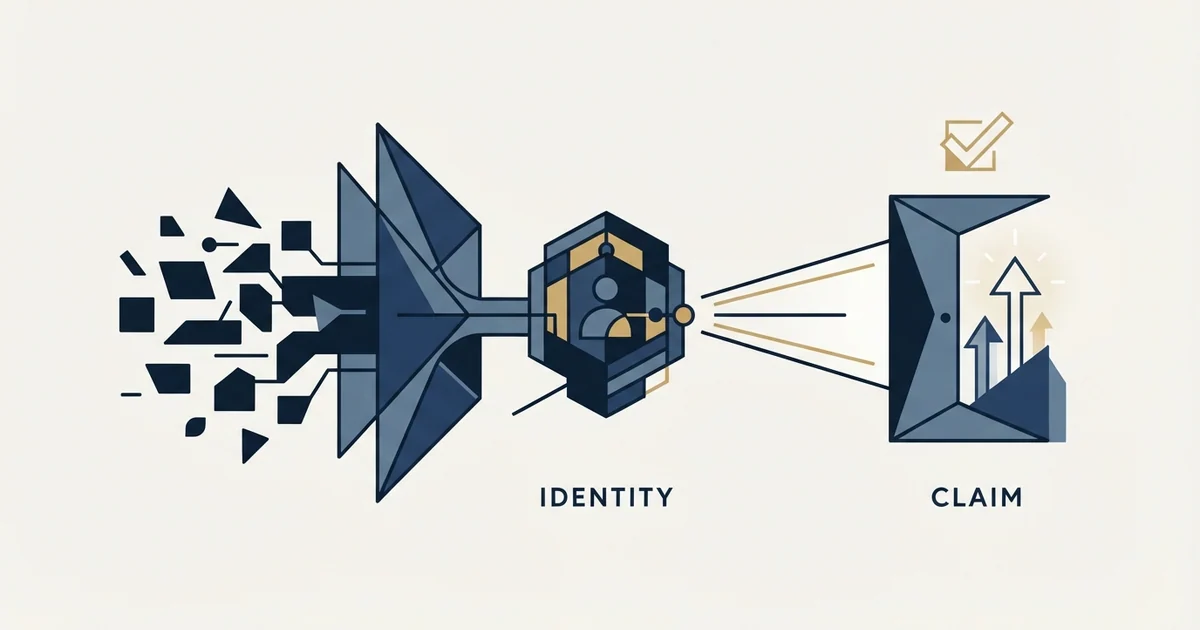
A cold email signature exists so a stranger can confirm that a real person at a real company wrote the message. Four things earn their place: a name matching the from name, a role explaining why you are writing, the company in searchable form, and one link resolving to a findable human. Everything beyond that competes with the ask.
Key takeaways
- The signature answers whether the sender is real, not who the brand is, so a marketing signature ported into cold outbound is optimised for a different reader entirely.
- One verifiable link is the number, because a second link does not double the proof and instead turns the block into a menu competing with the ask directly above it.
- Anything carried only inside an image is information you may not be delivering, since email clients differ on whether they show remote images without the reader asking.
- Read the rendered signature on a phone and with images off before it ships, because it is the part of the message most likely to arrive as fragments.
Reviewed and updated October 1, 2026
A prospect reads four lines they find mildly interesting, gets to the bottom of the message, and meets a logo, a job title, two phone numbers, a booking link, an awards banner, five social icons and a legal disclaimer in grey six point type. Nothing in that block is untrue. All of it together answers a question they were not asking and fails to answer the one they were, which is whether the person who wrote this is real.
A cold email signature is an identity claim. It exists so a stranger can establish that you are a findable human at a findable company, and everything it does beyond that is decoration competing with the ask directly above it.
The job the signature is actually doing
A recipient who is mildly interested and mildly suspicious does one thing before replying: they check that you exist. They look at the sender name, the domain the message came from, and the signature, and they see whether those three agree with each other and with whatever a search returns.
That check either resolves in your favour in about four seconds or it does not resolve at all, and a message that fails it reads as fabricated however good the copy above was. The anatomy of a cold email that survives contact with a real inbox makes the same point from the sender identity end: the from name, the signature, the domain and a public profile all have to agree, because the reader is checking them against each other rather than reading them individually.
This is why the marketing instinct is the wrong one here. A marketing email signature is a brand surface with conversion elements in it, sent to people who subscribed. A cold email signature is evidence, sent to somebody deciding whether to trust an unrequested message. The two are optimising for different readers and they look different as a result.
It is also why the sales email signature examples circulating as templates read as brand surfaces rather than as evidence, since almost all of them were designed for a list that opted in.
There is a second job in some jurisdictions, and it is a floor rather than a design goal. The recipient has to be able to tell who sent the message and how to reach that sender, which is one of the two requirements that separate a cold email from the thing in the third column of what a cold email is. What each regime actually requires, and the single standard that satisfies all of them at once, is set out in is cold email legal. The relevant point for the signature is that the identifying information belongs in the message, not that it belongs in a particular font.
The four things that earn their place
- A full name that matches the from name
- A role specific enough to explain why you are writing
- The company, spelled the way a search engine knows it
- One link that resolves to a findable person or company
- Plain text, in the body's own typeface
- A logo lockup and brand colours
- Social icons for every network
- An awards or certification banner
- A booking link, a demo link and a resources link
- A legal disclaimer inherited from corporate template policy
The name, matching the from name exactly. A message from Dan that signs off as Daniel is a small inconsistency, and small inconsistencies are what a suspicious reader is scanning for. If the mailbox says one thing and the signature says another, fix the mailbox.
A role, specific enough to explain the message. Not a title inflated for the occasion and not a department. The role is doing work in the reader's head: it answers why this particular person is writing about this particular thing, which is the question the opening line is also answering.
The company, in the form that is searchable. The legal entity name is frequently not the name anybody knows, and a reader who searches the legal entity finds a filing rather than a company. Use the name on the website.
One link that proves a person exists. A LinkedIn profile does this better than a homepage, because the reader is verifying a human rather than a business, and a profile with a history on it is harder to fabricate than a landing page. One is the number. A second link does not double the proof; it changes the block from evidence into a menu.
That is the whole list. A phone number is optional and worth including only where you would genuinely answer it, since a number nobody picks up is a claim that fails on the one occasion it is tested.
What to leave out, and the reason in each case
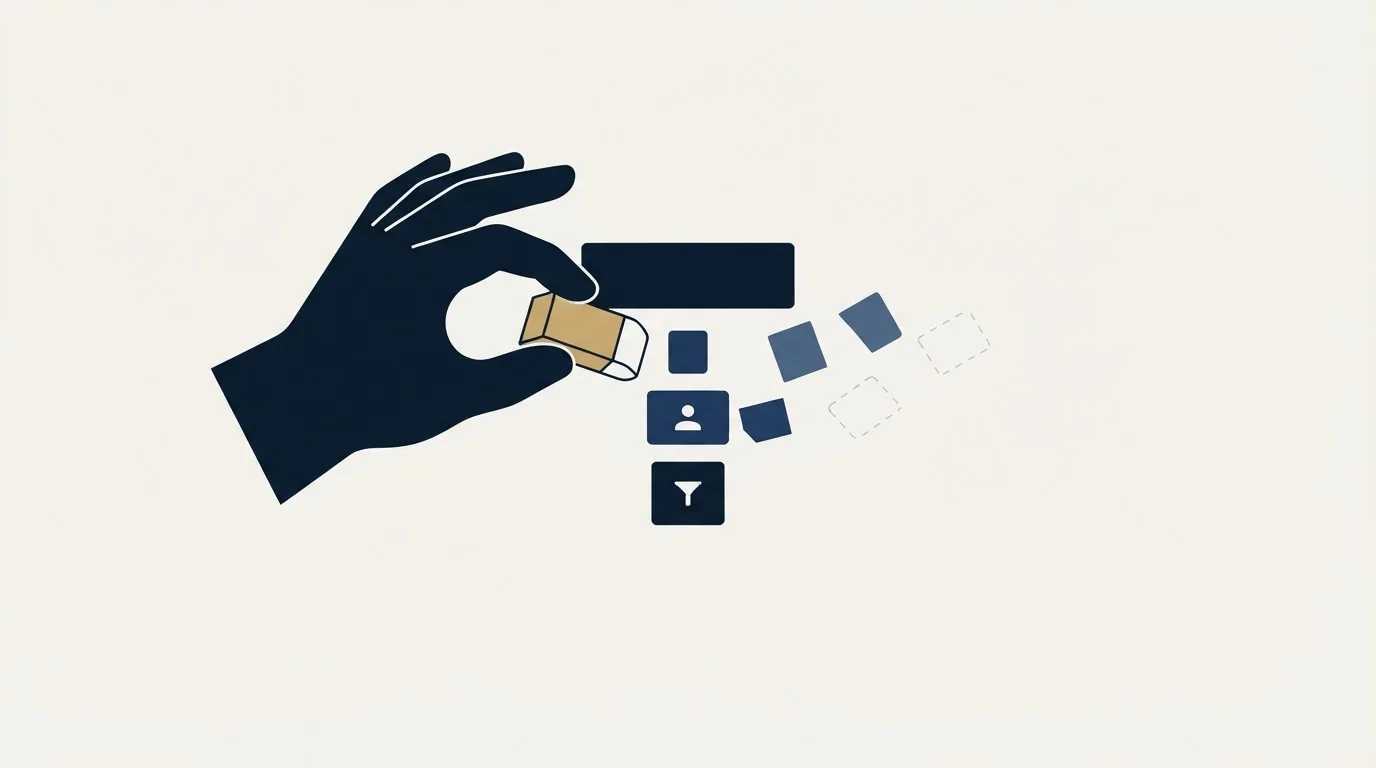
- Yes: Full name matching the from name
- Yes: Role and company, in searchable form
- Yes: One verifiable link to a person
- No: Logo, banner or any image carrying information
- No: Social icon rows and multiple calls to action
- No: An inherited corporate legal disclaimer
- Depends: A phone number you would actually answer
- Depends: A physical address, where your jurisdiction requires one
Images, including the logo. Email clients differ on whether they display remote images without the reader asking, so anything that exists only inside an image is information you may or may not be delivering. A signature whose company name is a logo file is a signature that sometimes has no company name in it. Write the company name as text and the question disappears.
The second, third and fourth link. Each additional link is a thing the reader can click instead of replying, and the ask directly above the signature is competing with all of them. A block containing a calendar link, a case study link and a website link has three calls to action in it, which is the same problem as two asks in the body and it is arriving after the reader has already decided.
The awards banner and the certification row. These are credibility claims aimed at somebody comparing vendors. A first message to a stranger is not a comparison, and a badge that means something inside your category means nothing to a person who has not yet accepted that your category is relevant to them.
The inherited legal disclaimer. Long confidentiality boilerplate on an unrequested message to somebody you have never met is the clearest signal available that the message came out of a system rather than from a person. If your organisation mandates one, that is a constraint to work within rather than a design choice, and it is worth asking whether the mandate was written with cold outbound in mind.
The rendering problem nobody checks
A signature is the part of a message most likely to render badly, because it is the part carrying the most formatting.
Read yours on a phone before shipping it. A four column table with a logo cell wraps into a vertical stack of fragments on a narrow screen, and the fragments arrive in an order nobody designed. Read it with images off, which is the state some readers see by default and all readers see on a slow connection. Read it in a dark colour scheme, where a signature built from a dark logo on an assumed white background becomes a dark shape on a dark field.
None of that requires tooling. It requires sending the message to yourself on two devices, which takes four minutes and is skipped roughly always.
- Step 1Send it to yourself
To a real mailbox on a different provider from the one you send from, not to a preview pane in the sending tool.
- Step 2Read it on a phone
Check that nothing wrapped into fragments and that the whole block still occupies a few lines rather than a screen.
- Step 3Turn images off
Anything that disappears was information you were not reliably delivering. Move it into text or drop it.
- Step 4Search your own name and company
Do what the recipient does. If the first page of results does not confirm the claim your signature makes, the signature is not the thing to fix.
Why this matters more on a single message than on a sequence
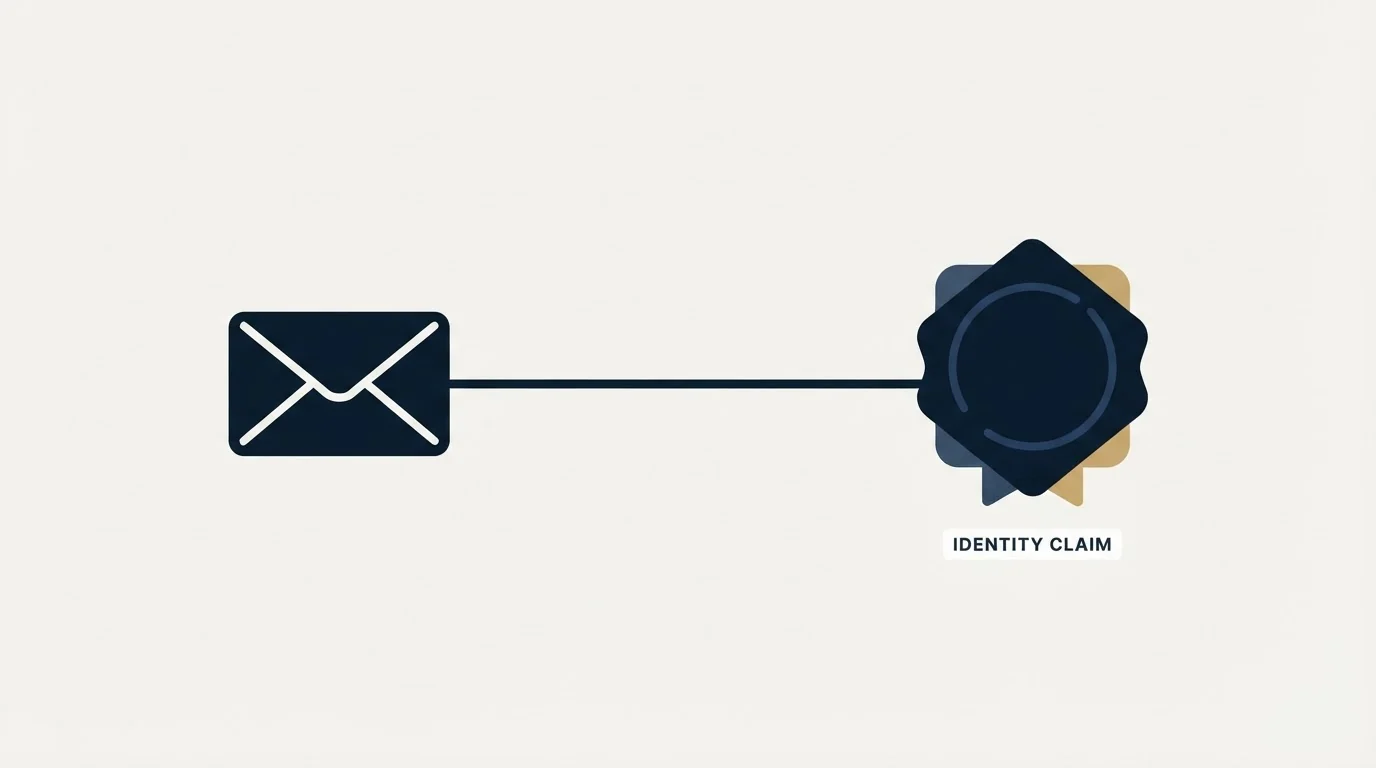
Our own outbound sends one message per campaign, built on one premise, with no bumps and no thread replies.
That constraint changes the signature's weight. In a five step sequence, a reader who is unsure about the sender has four more chances to resolve it, and the signature is one of several places the identity accumulates. In a single message, the signature is the only place a stranger can check who is writing, and it is being read at the exact moment they are deciding whether the message is worth a reply. How to end a cold email when there is no second one covers the other three decisions in the same few lines: the closing line, the ask and the sign-off, of which only the ask is compulsory.
There is a related reason to keep the block plain that has nothing to do with taste. Everything in a cold email is being read as evidence of how it was produced, and a signature is the highest concentration of production signal in the message. Four lines of text reads as somebody writing to you. A rendered block with a logo and a banner reads as a system writing to a list, and it reads that way even when the words above it were written by hand for you specifically.
What a signature cannot do
It cannot rescue a message with a weak premise, and it is regularly asked to. If a draft keeps stalling at the bottom, the problem is usually several paragraphs higher up, which is the territory of writing the message when it is the only one you send.
It cannot substitute for a sending setup that resolves. A signature claiming a company at a domain that fails authentication is making a claim the receiving infrastructure has already declined to believe, and the reader may never see either. That layer is a different subject with its own mechanics, covered in the cold email deliverability guide.
And it cannot carry the opt-out on its own. A way to stop the messages is a requirement rather than a courtesy, and burying it inside a decorative block is a way of technically providing something the reader cannot find. Keep it plain, keep it separate from the ask, and treat the header mechanism as the different thing it is, which is set out in one-click unsubscribe.
The short version
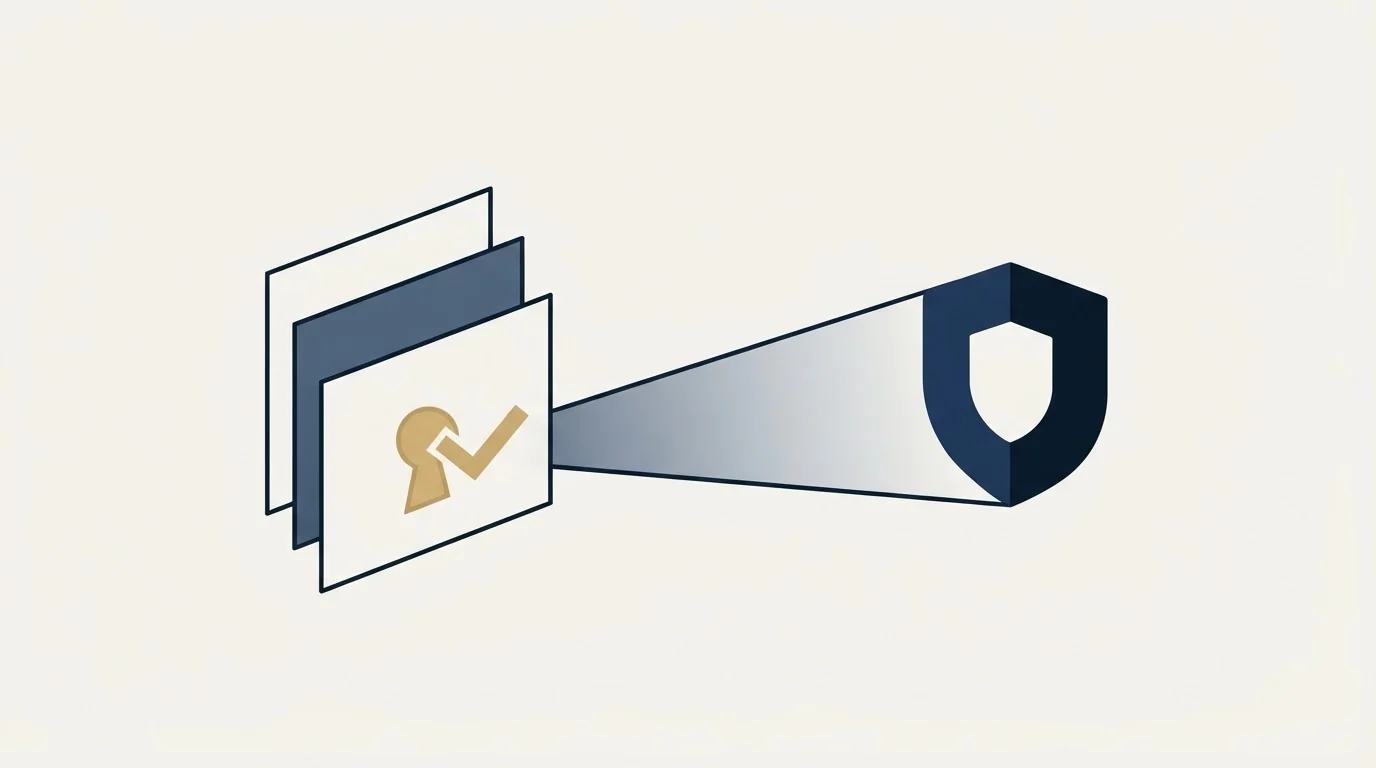
The signature is evidence, not branding. Its job is to let a stranger confirm in four seconds that a real person at a real company wrote this, so it needs a name matching the from name, a role that explains the message, a searchable company name and exactly one link that resolves to a findable human.
Everything else costs something. Images may not render, extra links compete with the ask, badges answer a comparison the reader has not started, and inherited disclaimers announce that a system sent this. Read the block on a phone with images off before it ships, because it is the part of the message most likely to arrive as fragments.
If the harder half is the message above the signature, and the constraint is that one message has to work on its own, that is what we run, on criteria agreed in writing before anything sends. See what a first campaign looks like.
Frequently asked questions.
Frequently asked questions- What should a cold email signature include?
- A full name that matches the from name exactly, a role specific enough to explain why this person is writing, the company name in the form a search engine knows rather than the legal entity, and one link that resolves to a findable human. A phone number is optional and worth adding only where somebody would genuinely answer it.
- Should a cold email signature have a logo?
- No. A logo is an image, email clients differ on whether they render remote images without the reader asking, and a signature whose company name exists only inside an image sometimes contains no company name at all. Writing the company as text removes the question and costs nothing that mattered.
- Is a signature required on a cold email?
- Being identifiable is. In several jurisdictions the recipient has to be able to tell who sent a message and how to reach that sender, which is one of the requirements separating cold email from spam. Where that information sits is a design decision. Whether it is present is not, and burying it inside decoration is a way of technically providing it.
- Does a long signature hurt deliverability?
- Treat that as unproven and decide on the reader instead. What is observable is that every extra link is something a person can click instead of replying, and that a heavily formatted block is the highest concentration of production signal in the message. Four lines of text reads as a person writing. A rendered block reads as a system.
About the author.

Ben Carden is CRO at RevenueFlow, which builds and operates outbound revenue engines for B2B companies. Previously at Gartner Enterprise. Studied at London School of Economics.
Ben Carden · CRO
Connect on LinkedIn →Explore more.
Ready to scale your outreach?
We build GTM engines that book real meetings. See the receipts.
Related articles.
What a Cold Email Is, and What Separates It From Spam
A cold email is a first business email to somebody with no prior relationship with you. What that one condition rules in, rules out, and demands technically.
BASHO Email: Four Sentences Built on One Insight
A BASHO email is four or five sentences built on one researched insight about a specific person. The format is documented, and it cannot be produced at volume.
Cold Email Frameworks: Which One Fits Your Offer
AIDA, PAS and Before-After-Bridge arrange the same four elements in different orders. What each one assumes about the reader, and what none of them fix.
Cold Email Sender Name: Whose Name Goes On It
The from field is read before the subject line and is the only part of a cold email a recipient can independently verify. What has to agree, and what breaks it.
Can Buyers Tell an Email Was Written by AI?
Buyers are not running a classifier on your cold email. What they react to is a message containing nothing only somebody who looked could have written.
GMass Mail Merge: Sending Inside Gmail, and What It Costs
GMass runs the merge inside Gmail, which removes every setup step and hands your sending ceiling and your reputation to Google in the same move.