What a Cold Email Is, and What Separates It From Spam
A cold email is a first business email to somebody with no prior relationship with you. What that one condition rules in, rules out, and demands technically.
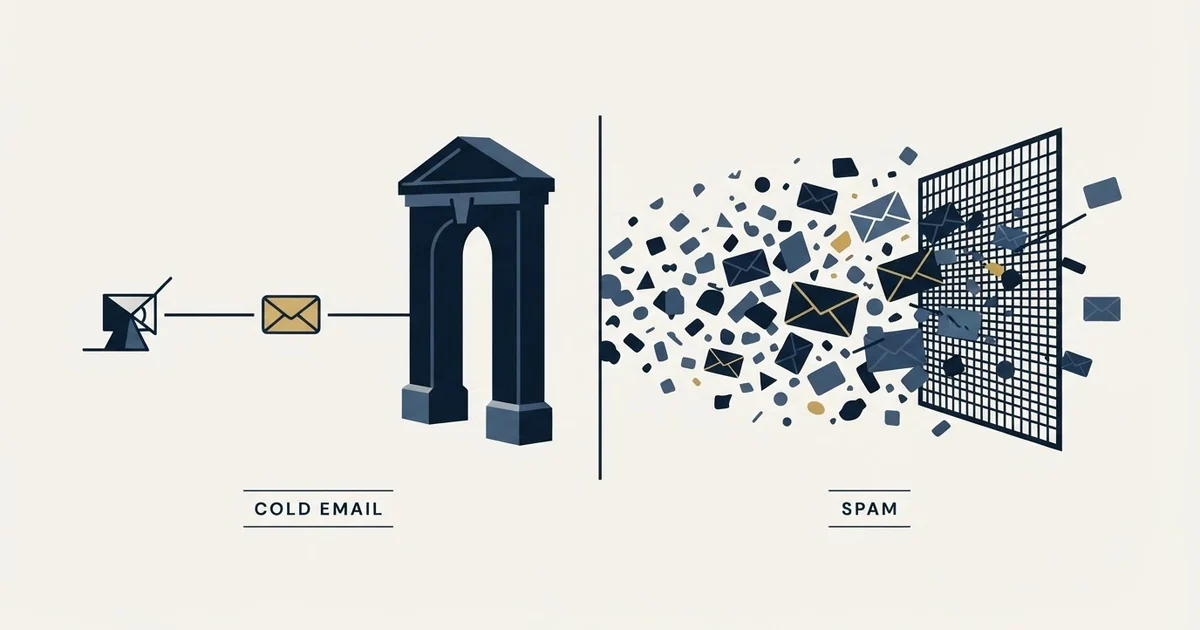
A cold email is a first business email sent to someone with no prior relationship with you or your company, chosen for a reason you can state. It differs from marketing email by permission and volume, and from spam by whether the sender can answer why this recipient. It is lawful in major B2B markets on published conditions.
Key takeaways
- The only strict condition is that the recipient did not ask to hear from you; everything else in the practice follows from it.
- A cold email is separated from spam by whether the sender can answer why this recipient and not another, which is testable.
- Being unrequested makes delivery an open question, so the technical half decides whether the message is ever read.
- Reply rates fall as campaigns get larger, so a narrow list you can describe precisely beats a wide one you cannot.
Reviewed and updated October 1, 2026
A message arrives from someone you have never heard of, at a company you have never bought from, and it opens by naming a hiring post you published last week. Nobody asked for it. It is also not spam, and the difference between those two facts is where an understanding of cold email starts.
A cold email is a first business email sent to a person who has no prior relationship with you or your company, written because you have a specific reason to think the conversation is worth their time. The recipient did not sign up, did not download anything, and did not raise a hand. That is what the word cold is carrying.
Everything else about the practice follows from that one condition, including the parts that look arbitrary.
The three things the definition rules out
Being unrequested is the only strict requirement, so the useful way to fix the term is by what it excludes.
It is not a reply to interest. An email to somebody who filled in a form, attended a webinar or downloaded a report is a follow-up on a signal they sent you. The tone, the permission and the legal position are all different. Our own working entry on the inbound lead side of that boundary is a separate discipline with separate rules.
It is not bulk marketing mail. A newsletter goes to a list that subscribed, arrives at high volume from one identity, and is measured in opens and clicks. Cold outbound goes to people who did not subscribe, arrives at low volume from many identities, and is measured in replies. The two motions want opposite infrastructure, which is why mixing them on one domain damages both.
It is not spam, and the separation is testable. Spam is indiscriminate by construction. The sender does not know who the recipient is, has no reason for choosing them, and is playing a volume game where relevance costs more than it returns. A cold email that cannot survive the question "why this person" is failing the same test, whatever the sender calls it.
- Recipient chosen for a stated reason
- Sent from an identifiable person at an identifiable company
- Carries a working way to be left alone
- Judged on replies from real people
- Recipient subscribed
- One brand identity, high volume
- Opt-out required and expected
- Judged on opens, clicks and unsubscribes
- Recipient chosen by nothing in particular
- Sender identity obscured or forged
- Opt-out absent, broken or a trap
- Judged on volume alone
Whether it is legal is a separate question, and it has an answer
The word cold makes people assume the practice sits in a grey area. It does not, and the position is jurisdictional rather than mysterious. Business-to-business outbound is lawful in the United States, the European Union, the United Kingdom and Canada, on different conditions in each, and the conditions are specific enough to build an operating standard around. What each regime actually requires, and the one standard that satisfies all of them at once, is set out in is cold email legal.
Two requirements recur everywhere and are worth stating here because they belong to the definition rather than to compliance paperwork. The recipient has to be able to tell who sent the message and how to reach that sender. And the recipient has to be able to stop the messages with one instruction that is honoured.
A message missing either of those has left the category described here and joined the one in the third column above.
The part the definition hides: the message has to arrive
The uncomfortable part of cold email is that being unrequested makes delivery itself an open question. A subscribed recipient has told their provider they want your mail. A cold recipient has told it nothing, so every filter between you and them is deciding on inference: how old the sending domain is, whether it authenticates, whether anybody engages with mail from it, whether the volume curve looks like a business or like a ramp.
This is why the practice has a large technical surface that looks unrelated to writing. Sending domains separated from the company's real domain, authentication records that resolve, mailboxes sending modest daily volumes rather than pushing a ceiling, and lists verified before a send rather than after a bounce spike. None of that improves the message. All of it decides whether the message is read. The full picture is in the cold email deliverability guide.
A related limitation appears in the tools themselves, since GMass pricing and trial limits explains why the platform behind a send is never actually free.
The practical consequence for anyone new to the term: a cold email campaign that gets no replies has two candidate explanations, and they need separating before either is fixed. The message may have been wrong. The message may also never have been seen.
What a cold email is made of
Four parts do the work, and they are judged in order by a person deciding in a few seconds whether to keep reading.
The sender identity is read first, before the subject, and a name and address that look like a real person at a real company survive that reading. The subject line acts as a routing label rather than a sales line. The opening has to prove the message was aimed at this recipient specifically, which is the sentence carrying the whole why-this-person test. The ask is the part that fails most often, usually by asking for more than a stranger will give.
The anatomy is worked through part by part in cold email format, and the writing process that produces one is in how to write a cold email.
- Yes: The recipient did not ask to hear from you
- Yes: You can state why you chose this recipient and not another
- Yes: The sender is identifiable and reachable
- Yes: A single instruction stops the messages, and it works
- Depends: The message carries one claim and one ask
- Depends: The subject describes the message rather than selling it
Does it still work
A spray and pray approach is the same trade taken to its end, and its results follow the same rule: the wider the list, the less true any single premise is of the people on it.
The honest answer is that it works and the numbers have moved, which is a different statement from either side of the argument people usually have about it.
Two structural changes are behind the movement. Sending volume rose faster than attention did, so the same message competes against more messages. And the receiving side got stricter in ways that are documented rather than mysterious, with bulk-sender requirements at the large mailbox providers turning what used to be good practice into a condition of delivery.
What that adds up to for a specific market is a question with a measurable answer rather than an opinion, and the answer varies by industry more than most people expect. The B2B cold email benchmarks report publishes the reading by industry, by company size and by seniority, with a year-over-year comparison beside it. Read a rate against your own industry and your own campaign size before adopting anybody's number as a target.
One pattern in that report is worth naming because it runs against intuition. Reply rates fall as campaigns get larger, because a bigger campaign reaches further down a list into companies that fit less well. Volume is a lever with a price attached, and the price is paid in relevance.
The practical reading for somebody deciding whether to start: the channel rewards a narrow list and punishes a wide one, so the first decision that matters is how small a segment you are willing to work. A campaign that names two thousand companies you can describe precisely will outperform one that names twenty thousand you cannot.
Where we differ from the standard description
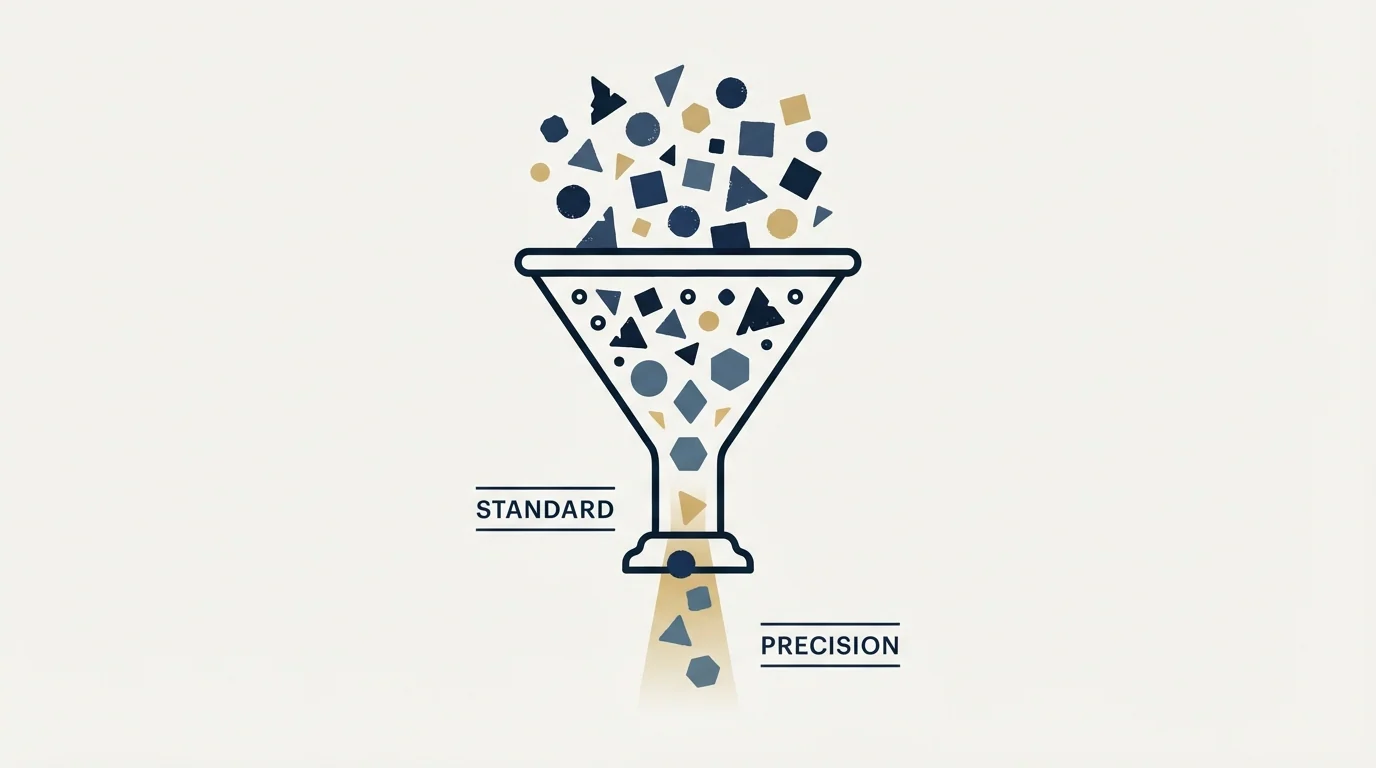
Definitions of cold email usually describe a sequence: a first message, then a follow-up, then another, on a schedule. That is the category standard and it is what the tools default to.
We run one message per campaign and send it once. The reason is diagnostic rather than etiquette. A sequence changes several things at once, so when it fails you cannot tell whether the premise was wrong or the recipient simply had not seen the message yet, and a follow-up whose only content is that you sent an earlier message adds nothing the recipient wanted.
Meetings that come out of the motion are qualified against criteria agreed in writing before a campaign launches, which keeps the argument about whether a conversation counted from happening after the fact.
- Step 1Decide who
A segment narrow enough that one premise is true for everybody in it
- Step 2Find the reason
One checkable fact about each company that makes the message aimed
- Step 3Build the sending side
Separate domains, authentication, verified addresses, modest volumes
- Step 4Write one message
One claim, one ask, sent once
Cold email against the other cold channels
The term belongs to a family. Cold calling reaches the same people through a channel that interrupts, gets an answer faster and scales with headcount rather than with infrastructure. Cold outreach on LinkedIn reaches them in a thread they can scroll back through, which changes what a second message means: a follow-up lands directly under the one they ignored and reads as a nudge whatever the campaign structure says. We run email and LinkedIn, and we do not send that second LinkedIn message.
The channel choice is usually decided by the market rather than by preference. A list of two hundred companies worldwide is the wrong shape for volume email and the right shape for a named-account approach, where burning the market with a generic message costs you the whole addressable set. A list of twenty thousand comparable companies is the case volume email was built for.
Named-account work runs into a data limit early, and why executive addresses resolve least often comes down to seniority being the weakest coverage band in every database.
What the term does not promise
Whether cold email works without webinars, or without whatever else an industry conventionally runs, is the same question narrowed: the channel needs a segment and a premise, and it does not need the rest of a marketing calendar to be present first.
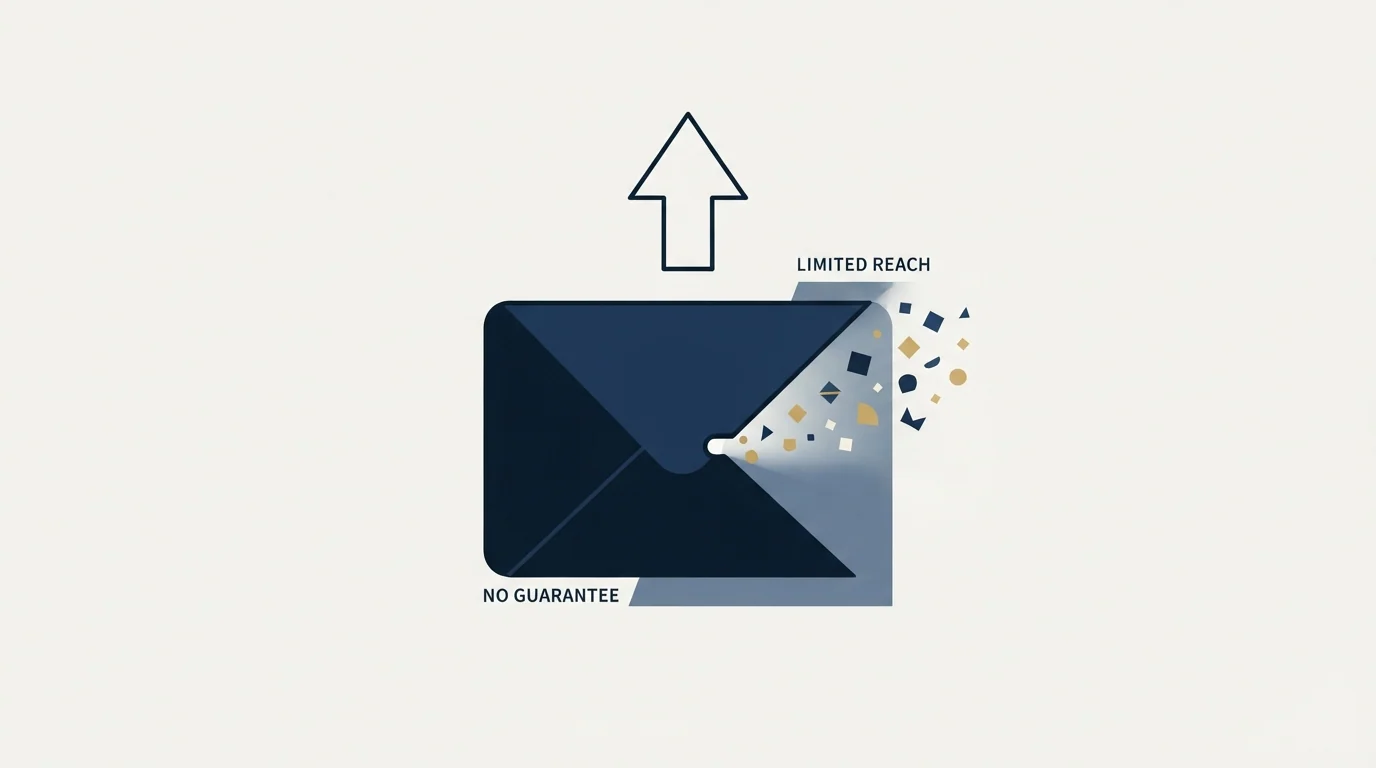
Cold email is a way to start a conversation with somebody who has not heard of you. It is not a way to sell to somebody who does not want what you sell, it does not improve an offer that nobody wants, and it does not compensate for a market that is too small to work through at volume.
That is worth stating because the failure most often blamed on cold email is an offer failure wearing a channel's clothes. When a campaign to a well-chosen list from healthy infrastructure gets no replies, the message is usually reporting something true about the offer.
That is the same observation buyers make from the other side when they say only a genuinely valuable offer earns their attention: the offer is the variable, and the channel is mostly reporting on it.
The short version
A cold email is a first business email to somebody with no prior relationship with you, sent for a reason you can state. It is lawful in the major B2B markets on conditions each one publishes. It is separated from spam by whether the sender can answer why this recipient, and separated from marketing email by permission, volume and how it is measured. The practice carries a technical half that decides whether the message arrives at all, and a writing half that decides whether it earns a reply.
If you want the whole motion built rather than described, get a free campaign plan and we will show you the list, the infrastructure and the one message it sends.
Frequently asked questions.
Frequently asked questions- Is a cold email the same thing as spam?
- No. Spam is indiscriminate by construction: the sender does not know who the recipient is and has no reason for choosing them. A cold email is unrequested and specific, sent to a named person for a stated reason, from an identifiable sender, with a working way to be left alone. A message that fails the why-this-person test has joined the other category whatever the sender calls it.
- Is cold email legal?
- Business-to-business cold email is lawful in the United States, the European Union, the United Kingdom and Canada, on different conditions in each. Two requirements recur everywhere: the recipient can tell who sent the message and how to reach them, and one instruction stops the messages and is honoured. The regime-by-regime detail is in our guide to whether cold email is legal.
- What is the difference between cold email and a newsletter?
- Permission, volume and measurement. A newsletter goes to people who subscribed, arrives at high volume from one brand identity, and is read on opens and clicks. Cold outbound goes to people who did not subscribe, arrives at low volume from several sending identities, and is read on replies. The two want opposite infrastructure, so mixing them on one domain damages both.
- How many follow-ups should a cold email have?
- We send one message per campaign and send it once. The reason is diagnostic: a sequence changes several things at once, so a failure cannot be attributed, and a follow-up whose only content is that you sent an earlier message adds nothing the recipient wanted.
About the author.

Ben Carden is CRO at RevenueFlow, which builds and operates outbound revenue engines for B2B companies. Previously at Gartner Enterprise. Studied at London School of Economics.
Ben Carden · CRO
Connect on LinkedIn →Explore more.
Ready to scale your outreach?
We build GTM engines that book real meetings. See the receipts.
Related articles.
Cold Email Sender Name: Whose Name Goes On It
The from field is read before the subject line and is the only part of a cold email a recipient can independently verify. What has to agree, and what breaks it.
The Cold Email Signature Is an Identity Claim
A recipient who is mildly interested and mildly suspicious checks that you exist before replying. The signature is where that check either resolves or does not.
BASHO Email: Four Sentences Built on One Insight
A BASHO email is four or five sentences built on one researched insight about a specific person. The format is documented, and it cannot be produced at volume.
Cold Email Frameworks: Which One Fits Your Offer
AIDA, PAS and Before-After-Bridge arrange the same four elements in different orders. What each one assumes about the reader, and what none of them fix.
Can Buyers Tell an Email Was Written by AI?
Buyers are not running a classifier on your cold email. What they react to is a message containing nothing only somebody who looked could have written.
GMass Mail Merge: Sending Inside Gmail, and What It Costs
GMass runs the merge inside Gmail, which removes every setup step and hands your sending ceiling and your reputation to Google in the same move.