Inbound Lead: The Person Who Raised Their Hand, and What That Does Not Tell You
Inbound leads are people who contacted your company first, through a demo or pricing request, a trial signup, a content download, an event registration or a reply, and left a way to reach them. The label proves awareness, a recent prompt and a willingness to be identified, and nothing about fit, budget or seniority.
Key takeaways
- An inbound lead initiated contact, so the label proves awareness, a recent prompt and a willingness to be identified, and says nothing about fit, budget or seniority.
- Demo requests, trial signups, content downloads, event registrations and newsletter replies behave very differently, and one reported total hides which of them the channel is producing.
- Most inbound value is lost in the seam between the marketing system and the sales process, and the number that exposes it is the median time from submission to a human reply.
- Read as a data point about a company rather than a contact, an inbound enquiry shows which segment finds you relevant and belongs in ideal customer profile work.
An inbound lead is a person who initiated contact with your company rather than being contacted first. They found you through search, a recommendation, an event, a piece of content or a directory, and then did something that identified them: filled in a form, requested a demo, started a trial, replied to a newsletter, or opened a chat window and stayed. Inbound leads, taken together, are the people who reached you before you reached them, and what they are good for depends on reading that population correctly.
The word that does the work is initiated. Everything else about the term, including the widespread assumption that inbound leads are better, follows from the buyer having made the first move, and that assumption is right about one thing and wrong about several others.
What are inbound leads?
Inbound leads are the people who contacted your company first and left a way to reach them: a demo or pricing request, a trial signup, a content download, an event or webinar registration, or a reply to a newsletter. The definition records who moved first. It says nothing about fit, budget or seniority, which is why two teams can both report inbound leads and mean very different things.
The word comes from inbound marketing. HubSpot's own inbound marketing page calls it "HubSpot's foundational methodology" and defines it as "a business methodology that attracts customers by creating valuable content and experiences tailored to them." The same page draws the line this entry depends on: "Inbound marketing reaches buyers who are actively seeking solutions. Outbound marketing tries to create demand by placing a message in front of people who may not be searching." An inbound lead is the person that approach produces, at the moment they identify themselves, and the rest of this entry is about what that moment does and does not prove.
What the label actually establishes
Exactly three things are known about an inbound lead by virtue of being one.
They know you exist. No introduction is required, which removes the hardest sentence in any first message.
Something prompted them. There was a moment, and it was recent. Whatever they were doing at 3pm on Tuesday made your product relevant enough to fill in a form, and that moment is the most useful and most perishable thing about them.
They chose to be identifiable. They gave you a name and a way to reach them, knowing what would follow.
That is the complete list. Everything else people assume about inbound leads is inference, and the inference fails often enough to be worth naming.
Known by definition
- They know your company exists
- Something prompted them, and recently
- They chose to be identifiable
- The moment that prompted them is perishable
Not established at all
- That they are a fit for what you sell
- That they can spend money
- That they are senior, or influential
- That they intend to buy anything
- That they are not a competitor or a student
The types, and why the distinction matters
Grouping every self-identified person under one label is what makes inbound lead quality arguments unresolvable, because the categories behave very differently.
Demo and pricing requests. The person has a purchase in mind. The highest-value type and usually the smallest group.
Trial and free-tier signups. Interest expressed through use. Whether this is a buying signal depends entirely on whether the product is product-led and whether the person can spend.
Content downloads. An asset was wanted. The topic may be adjacent to a purchase or entirely academic, and a large share are researchers, students and competitors.
Event and webinar registrations. Attention given to a subject, frequently by people whose job is to know about the subject rather than to buy anything in it.
Newsletter replies and direct messages. Small in number and disproportionately valuable, because writing a sentence takes more effort than filling in a form.
A single funnel report treating these as one number will show inbound volume rising while conversations fall, and no amount of staring at the total will explain why. The definitional argument that follows this one, about what marketing may hand over and what sales must accept, is MQL vs SQL.
An illustrative pair of months shows the mechanism. Month one brings 100 inbound leads, 20 of them demo and pricing requests and 80 downloads and registrations. Month two brings 140, but only 10 are demo requests and 130 are downloads and registrations. The total is up by 40 and the requests a salesperson can act on have halved, which is the whole case for reporting the types separately.
A team reporting that its inbound is not serious is usually describing this mix rather than a quality problem: content downloads and webinar registrations behave nothing like a demo request, and a single total hides which of them the channel is actually producing.
Where the textbook definition breaks

"Inbound leads convert better" is largely a statement about mix. Inbound populations contain a higher proportion of people with an active reason, so their average conversion is higher. That is a property of the population, not evidence that the channel is superior for any given company, and it says nothing about the companies you want that have never searched for you.
The response window is short and is treated as though it were not. The thing that made someone fill in a form on Tuesday afternoon is gone by Thursday. A reply the following week reaches a person who has returned to their normal week, and the deterioration is steep enough that response speed frequently matters more than response quality. The structural reason this fails, and what to do about it, is worked through in inbound lead generation.
Volume is bounded by demand that already exists. Inbound can only reach people who were looking. If the accounts you most want are not searching for your category, no amount of content reaches them, and the comparison against reaching them directly is set out in inbound marketing vs outbound.
The identity is unverified. Form data is self-reported. Job titles are aspirational, company names are typed carelessly, and role-based addresses conceal who actually filled it in. Any process that routes on form fields alone is routing on claims.
The best inbound leads are frequently not the person you want to sell to. An analyst or an individual contributor researching on behalf of a buyer is a genuine signal about the company and a poor conversation about a purchase. The company is qualified, the contact is not, and treating those as one judgment loses accounts.
Where we differ from standard practice
The conventional handling of an inbound lead who goes quiet is a scheduled programme of educational messages released until they respond. We do not run those. One message per campaign, built on one premise, sent once.
The argument has particular force here. A person who identified themselves and then stopped answering has already told you something real: whatever made them act on Tuesday is not the thing occupying them now. Scheduled messages do not change that fact, they only attach your name to it. When something genuinely changes on their side or ours, that is a reason to write, and it is a new campaign with its own premise rather than the next item on a timetable. The full argument is in we stopped using follow-up emails.
The part that decides the outcome: what happens in the first hour
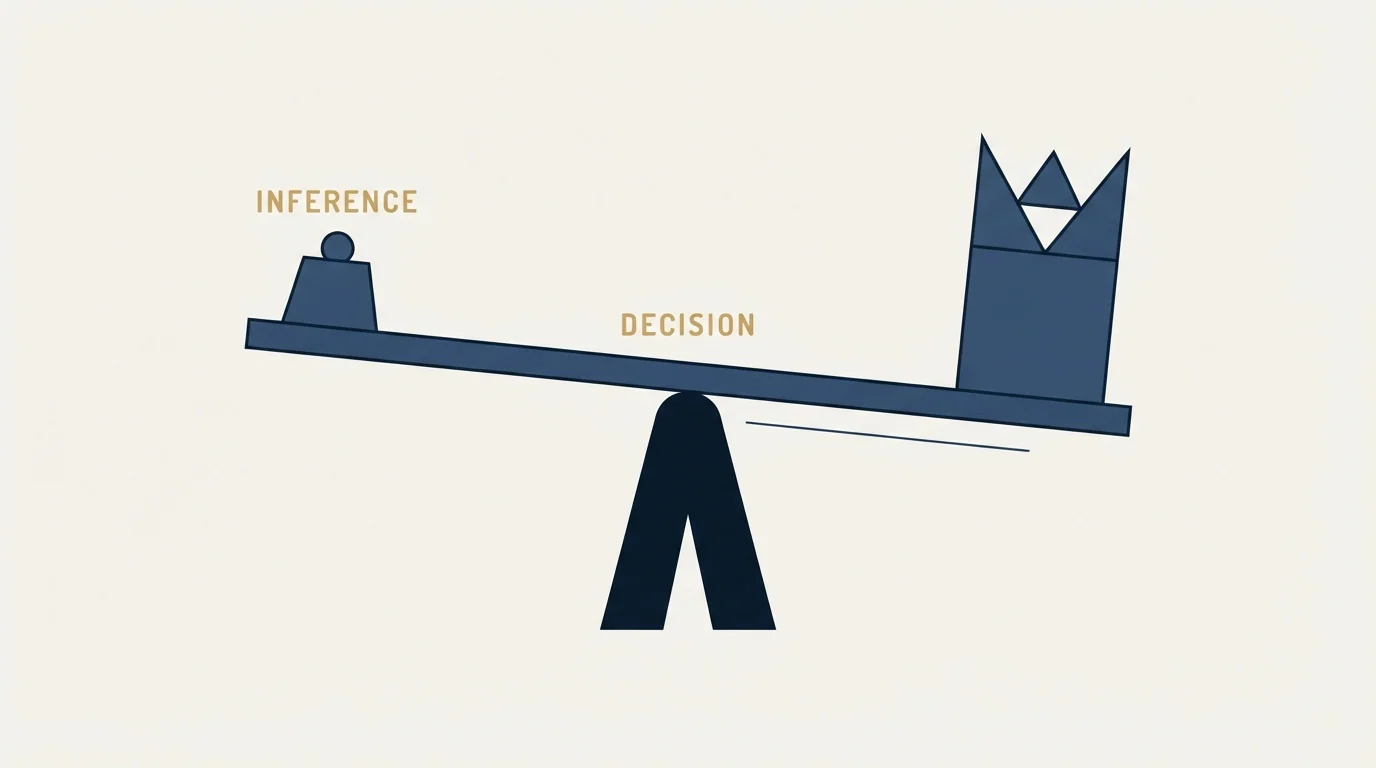
More inbound value is lost in the handling than in the generating, and the handling is usually nobody's stated job. The speed problem has been in print for a long time: in The Short Life of Online Sales Leads, in the March 2011 Harvard Business Review, James B. Oldroyd, Kristina McElheran and David Elkington wrote that "most companies are not responding nearly fast enough" to potential customers' online queries.
The mechanism is structural rather than lazy. An enquiry arrives in a marketing system, gets handled by a sales process, and the seam between the two is where the hours go. A routing rule fires, an owner is assigned by territory, and the owner sees it when they next work their queue. Everyone in that chain did their job correctly and the person waited two days.
Three changes fix most of it and none requires new software.
Name an owner by hour rather than by territory. Somebody is responsible for inbound between nine and one, somebody else after. Territory routing is a reporting convenience and it is paid for in response time.
Write the first reply from what they told you. If the form captured a situation, use it. A first message referencing the specific thing they typed is a different object from one thanking them for their interest, and it takes the same amount of time to send.
Decide what happens to the ones you will not pursue. Most inbound is not a fit. A single honest sentence saying so is better for everyone than silence, it keeps the database honest, and it occasionally produces a referral.
The measurement that matters here is the median time from submission to a human reply, and most teams have never computed it. It is usually worse than anyone believes, because the average is dragged down by the fast weekday cases and the ones that hurt are the Friday afternoon enquiries answered on Monday.
One further note on routing. Speed only helps if the reply reaches the right person, and a fast automated acknowledgement is not a reply. The thing the enquirer is deciding in that first hour is whether they reached a company or a queue, and an instant templated response answers that question in the wrong direction.
The reply itself, one template per way an enquiry arrives, is in inbound lead reply email templates.
The most useful thing an inbound lead tells you
Set aside the individual for a moment. An inbound enquiry is a data point about a company, and read that way it is worth considerably more than it is worth as a contact.
If a person at a 600-person logistics company searched for your category and filled in a form, that company has the problem, whatever happens to that particular conversation. The same is true of the ones who never converted: the accounts appearing in your inbound flow describe the segment that finds you relevant, and that description is evidence about targeting rather than about individuals.
Two things follow. Inbound is a segmentation instrument, and the companies that appear in it belong in the ideal customer profile work rather than only in the CRM. And the right person at that company is often not the one who enquired, so a company that produced a junior enquiry is a company worth approaching properly, on its own premise, rather than a lead to be discarded.
Judge company fit and contact seniority separately, then act on the pair.
Related terms
Lead qualification is the judgment applied to one. Lead scoring is the automated version of it. Lead nurturing is what conventionally happens to the ones who go quiet. And market segmentation is what the population of them is genuinely good for.
The short version

An inbound lead initiated contact. That establishes awareness, a recent prompt and a willingness to be identified, and nothing about fit, budget or authority. Split the types, answer fast, verify what the form claims, and judge the company separately from the person. Then use the whole population for the thing it is best at, which is telling you which companies to go after deliberately.
Most of those companies have never filled in anything, and reaching them is a different job: see what one campaign against that list produces.
Frequently asked questions.
Frequently asked questions- What are inbound leads?
- Inbound leads are people who contacted your company before you contacted them, and identified themselves while doing it: a demo or pricing request, a trial signup, a content download, an event or webinar registration, or a reply to a newsletter. The term comes from inbound marketing, which HubSpot's inbound marketing page describes as reaching buyers who are actively seeking solutions.
- What is the difference between an inbound and an outbound lead?
- An inbound lead initiated contact with you. An outbound lead was contacted first. The distinction records who moved first and says nothing about quality: an outbound conversation with exactly the right person at a perfect-fit company is worth more than an inbound enquiry from someone who cannot buy anything.
- How quickly should you respond to an inbound lead?
- Within the same working period, because the thing that prompted the enquiry is gone within a day or two. The measurement that matters is median time from submission to a human reply, and most teams have never computed it. It is usually worse than they believe, because the Friday afternoon enquiries answered on Monday are hidden in the average.
- Are inbound leads always qualified?
- No. Form data is self-reported, job titles are aspirational, and a large share of content downloads come from researchers, students and competitors. The company can be well qualified while the contact is not, and treating those as one judgment loses accounts worth having.