Product-Led Growth: What Has to Be True Before the Product Can Sell
Product-led growth, or PLG, is a go-to-market model in which the product is the primary way customers are acquired, converted and expanded, rather than a sales team. People find it, use it without talking to anyone, get value, and buy. Sales still exists, and arrives after usage rather than before it.
Key takeaways
- PLG is decided by the product and the buying context, not by marketing: four preconditions have to hold before the tactics work.
- One person must reach a real outcome alone, quickly, at a price below their own approval limit, in a product whose usage grows by itself.
- It does not remove sales, it retimes it: sellers enter after a usage signal, talking to someone who has already used the product.
- Bottom-up adoption stalls at security review and procurement, exactly where self-serve revenue is meant to become enterprise revenue.
Product-Led Growth: What Has to Be True Before the Product Can Sell
Product-led growth, usually shortened to PLG, is a go-to-market model in which the product itself is the primary way customers are acquired, converted and expanded, rather than a sales team. People find the product, use it without talking to anyone, get value from it, and buy. Free trials, free tiers and self-serve checkout are the usual mechanics. Sales still exists in most PLG companies, but it arrives after usage rather than before it.
The definition is easy. What the definition leaves out is that PLG is a set of preconditions about the product and the buyer, not a marketing choice, and a company that adopts the tactics without the preconditions gets the cost structure of self-serve with the conversion rate of enterprise sales.
The mechanics
Four things have to happen in order, with no human intervention available at any step.
Discovery without a seller. The person finds the product through search, a recommendation, an integration directory, or a colleague already using it. Nobody prospected them.
Value before payment. They do something real with the product and get an outcome, on their own, usually within the first session. This is the load-bearing step and the one most products fail.
Expansion by usage. Consumption, seats or teams grow because the work grew, not because someone sold an upgrade. Pricing has to be built so that growing usage naturally crosses a paid boundary.
Sales after signal. A salesperson enters when usage indicates a larger opportunity, and they are talking to someone who has already used the product. That conversation is a different one from a cold pitch, which is what makes the model efficient.
That fourth step treated as a job, with a written threshold and somebody accountable for it, is product-led sales, and the whole design question in it is which accounts are worth a person.
- Value is demonstrable in one session, alone
- An individual can start without permission
- Price per starting unit is low enough to be uncontroversial
- Usage grows on its own as work grows
- Sales enters after a usage signal
- Value requires configuration, data or integration first
- Purchase needs several people to agree
- Price crosses an approval threshold from day one
- Growth is negotiated at renewal
- Sales enters before any usage exists
The preconditions, stated plainly
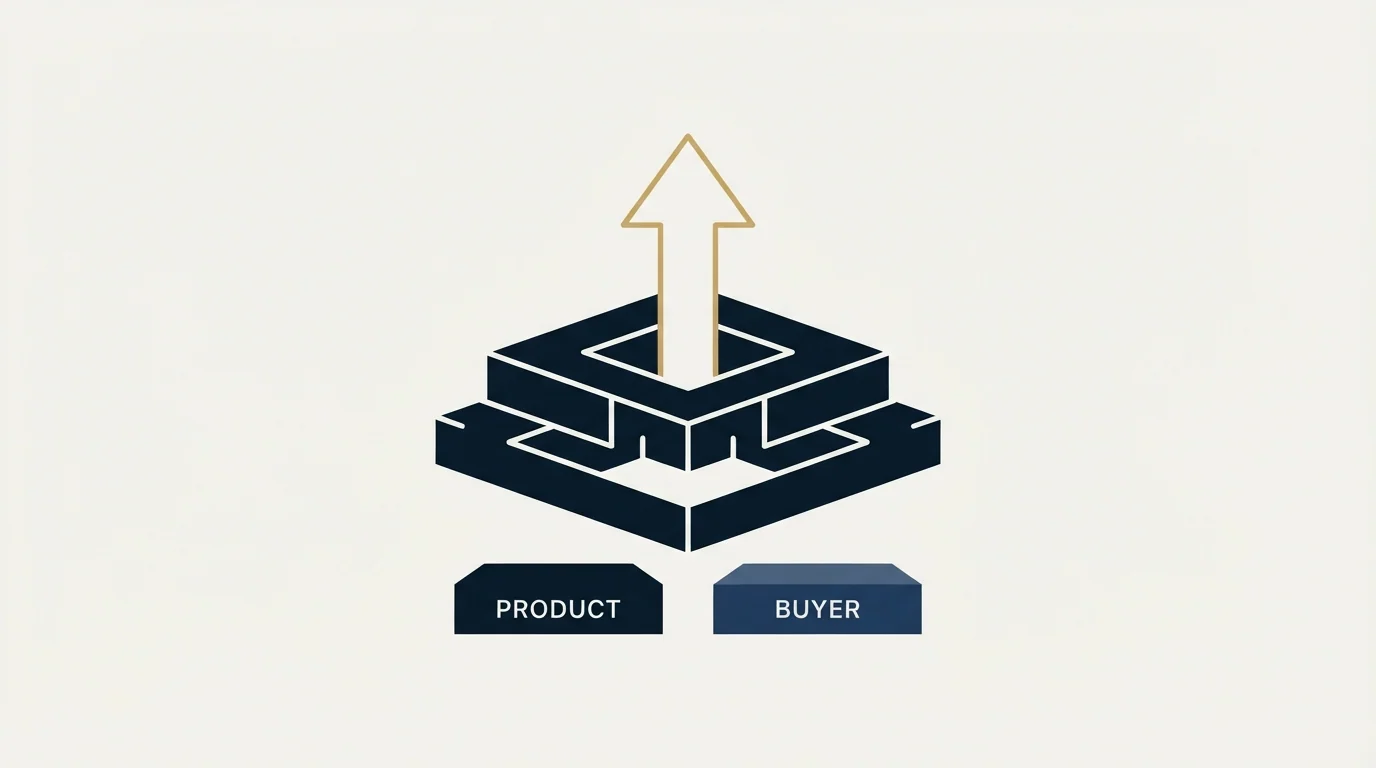
A product can be sold this way when four things hold. Where any one fails, the model tends to fail with it.
A single person can get value alone. If the product needs data loaded, a second department involved, or an admin to grant access before anything works, the individual cannot reach the value step and the funnel ends at signup.
Time to value is short. Short enough to survive one sitting. Every hour of setup between signup and the first useful outcome removes a large share of the people who signed up, and none of them tell you why.
The starting price is below the permission line. An individual can put a low monthly figure on a card without asking anyone. Above their own approval limit, the purchase becomes a committee decision and the self-serve path stops being self-serve, whatever the checkout page says.
Usage naturally grows. If a customer's usage is flat by nature, expansion has to be sold, and the model loses the mechanism that makes its economics work.
Nothing in that list mentions the sales team. That is the point: PLG is decided by the product and the buying context, and the go-to-market design follows.
Where the textbook definition breaks
PLG is treated as the absence of sales. In practice most PLG companies at scale run a substantial sales organisation, aimed at the accounts where usage has already appeared. What changed is the trigger and the starting information, not the existence of the seat. An account executive working usage signals is doing a different job from one working a cold list, and it is usually a more productive one.
A free tier is confused with a product-led motion. Giving the product away is the cheap half. The hard half is that the free experience has to deliver a real outcome and then run into a boundary the user wants to cross. A free tier that is merely a reduced version of the paid one produces users who are content to stay, which is a cost centre. The same design question, asked about giveaways generally, is worked through in try before you buy.
It is adopted as a cost-saving measure. Self-serve replaces sales cost with product and growth engineering cost, and the second is not obviously cheaper. Onboarding, pricing infrastructure, usage analytics, lifecycle messaging and in-product guidance are all now product work, and they are permanent.
Bottom-up adoption stalls exactly where it stops being individual. A tool spreads through a team on its own and then meets security review, procurement and a data processing agreement, all at once, at the moment somebody proposes paying properly for it. Companies discover this at the point where their self-serve revenue is meant to become enterprise revenue. It is the same paperwork problem enterprise sellers track deliberately, described in MEDDPICC.
The distribution problem does not go away, it moves. A product that sells itself still has to be found. PLG shifts the burden from a sales team to search, integrations, communities and word of mouth, and those channels are slower to build and harder to direct. A company that has built the product half and not the distribution half has a well-designed funnel with nobody entering it.
- Depends: One person can reach a real outcome alone, without another department
- Depends: Time from signup to first useful result is one sitting or less
- Depends: The entry price sits below an individual's own approval limit
- Depends: Usage grows as the customer's work grows, without being sold
- Depends: There is a plan for how people find the product in the first place
The numbers a product-led motion runs on
A sales-led business watches pipeline. A product-led one watches a different set, and the substitution is not optional: the leading indicators of a sales motion do not exist here, because there is no seller to generate them.
Activation rate. The share of signups that reach a defined first outcome. This is the single most important number in the model, and defining the outcome honestly is most of the work. An activation event chosen because it is easy to instrument, rather than because it corresponds to the user getting value, produces a metric that improves while the business does not.
Time to value. How long activation takes, measured as a distribution rather than an average. The tail matters more than the middle, because the people in it are the ones who quietly leave.
Free to paid conversion. The share of activated users who cross a paid boundary, and, more usefully, what they were doing when they crossed it. That second question tells you whether the boundary is placed where value is or where it was convenient to put a wall.
Expansion by account. Seats or usage growth inside accounts that already pay. In a working product-led motion this is the majority of revenue growth, which is why net revenue retention is the headline metric for the model rather than a secondary one.
Accounts with usage and no commercial relationship. The least standard of the five and often the most valuable. It is the population where the product has already been adopted by individuals and nobody has ever spoken to anyone with a budget.
That population has a name. A product qualified lead, usually shortened to PQL, is a user whose behaviour inside the product indicates a larger opportunity: not a signup and not simply a free-tier user, but somebody who has reached a real outcome, frequently alongside colleagues in the same account. It sits beside the marketing qualified lead, scored on content engagement, and the sales qualified lead, which a seller has accepted, and the threshold is the entire design question, because a product qualified lead defined at signup rather than at a genuine outcome turns a sales team into a support queue.
Two cautions about the set. Signups are not a metric, they are an input, and a dashboard leading with signup volume is measuring the top of a funnel whose losses happen further down. And every one of these figures should be readable by cohort, because a product-led motion changes underneath you: an onboarding change alters activation for new users only, and a blended figure hides it for months.
Where outbound sits in a product-led company
The two models are treated as opposites more often than they behave like opposites, and the useful framing is that they reach buyers in different states.
Product-led motions capture demand that already exists. Somebody is looking for a way to solve the problem, they find you, they try it. That is efficient and it is bounded by the number of people searching. Outbound reaches accounts that are not looking, which is a different and complementary job; the three-state version of this argument is in demand creation, capture and conversion.
Two specific uses of outbound inside a PLG company are worth naming because they use information a sales-led company does not have.
Reaching the accounts you already appear in. Usage data tells you which companies have people using the product without a commercial relationship. Contacting a decision-maker at one of those companies is outbound with an unusually strong premise, because something checkable about their own organisation is already true.
Reaching the segment the self-serve funnel structurally cannot serve. Larger organisations where nobody can start alone will never appear in a product-led funnel, however good the product. If that segment is worth having, it has to be reached deliberately, and the channel-mix arithmetic by deal size is set out in outbound lead generation for B2B SaaS.
Related terms
Net revenue retention is the metric a product-led model lives or dies on. Annual recurring revenue is what its expansion accumulates into. And inbound lead is what the top of its funnel produces.
The short version
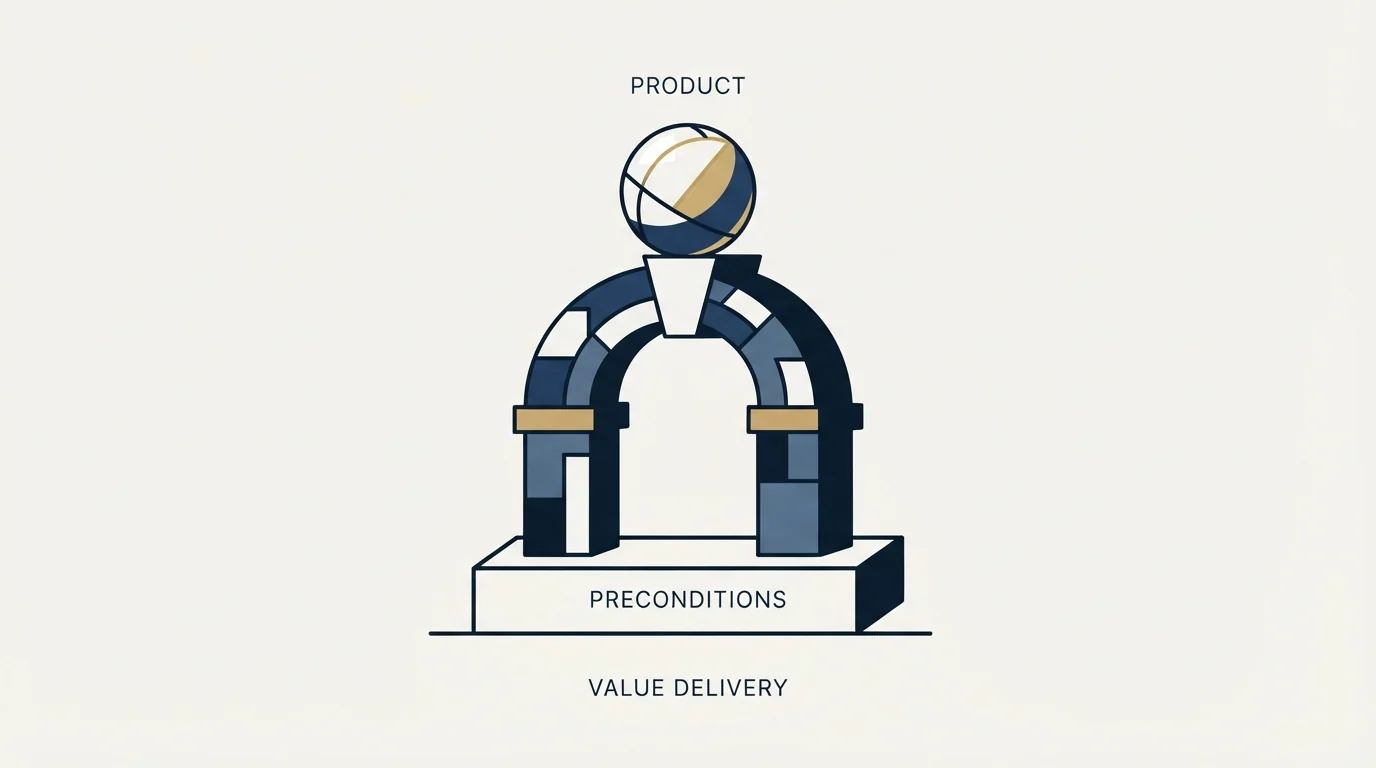
Product-led growth means the product does the acquiring, and it works when one person can get real value alone, quickly, below their own spending limit, in a product whose usage grows by itself. It does not remove sales, it retimes it. Test the preconditions before the tactics, and treat distribution as the problem the model does not solve.
If the segment that matters cannot start on its own, reaching them is a separate motion: see what one campaign against that list produces.
Frequently asked questions.
Frequently asked questions- What is the difference between product-led and sales-led growth?
- In a sales-led motion a person acquires the customer before any usage exists. In a product-led motion the product acquires them and a salesperson enters afterwards, if at all. The preconditions differ more than the tactics do: product-led requires that one person can reach value alone, without permission and without configuration.
- Does product-led growth mean you do not need salespeople?
- No. Most product-led companies at scale run substantial sales organisations, aimed at accounts where usage has already appeared. What changed is the trigger and the starting information rather than the existence of the seat, and a seller working usage signals is doing a more productive job than one working a cold list.
- Is a free tier the same as product-led growth?
- No, and confusing the two is the common failure. Giving the product away is the cheap half. The hard half is that the free experience has to deliver a real outcome and then meet a boundary the user wants to cross. A free tier that is simply a reduced paid tier produces contented non-payers.
- Does outbound have a role in a product-led company?
- Two specific ones. Reaching decision makers at companies where people already use the product without a commercial relationship, which is outbound with an unusually strong premise. And reaching the segment the self-serve funnel cannot serve, where nobody can start alone because permission is required.