14 Renewal Email Templates That Retain Customers
Master subscription and contract renewals with 14 proven email templates. Reduce churn, lock in renewals early, and maintain customer relationships.
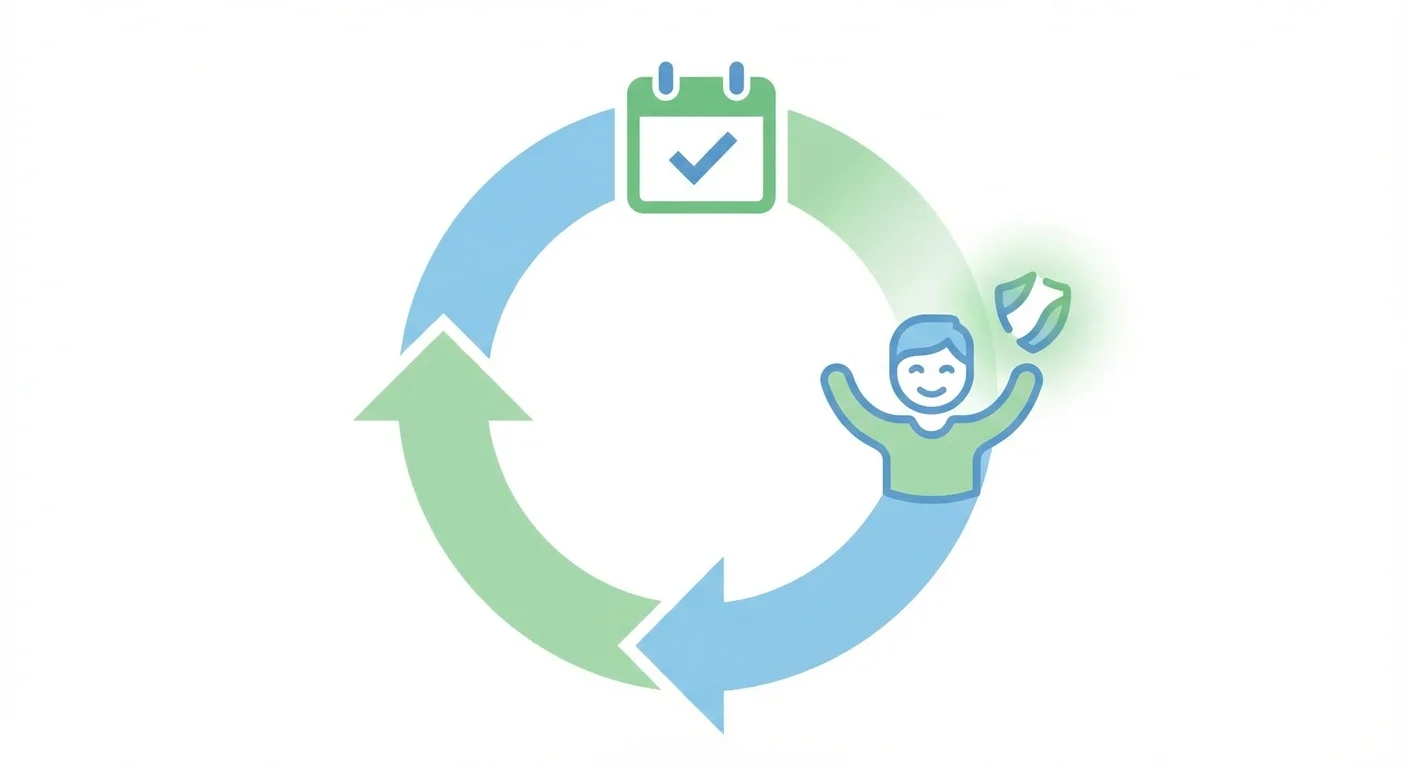
Renewal emails retain customers by starting engagement 60-90 days before expiration, reinforcing delivered value with concrete metrics, making direct renewal requests 14-30 days out, and offering early-commitment incentives. The framework includes value review requests, success summaries with data tables, problem-solution reminders, and multi-stakeholder coordination templates. Early value reviews surface addressable concerns before renewal decisions solidify, while data-driven summaries justify continued investment.
Key takeaways
- A 5% increase in customer retention can boost profits by 25-95% according to Bain & Company research.
- Effective renewal communication begins 60-90 days before expiration to address concerns while there's time to resolve them.
- Value review requests should explicitly state they're not sales pitches to reduce customer defensiveness and encourage honest dialogue.
- Success summary emails should include data tables comparing metrics from the beginning of the period to current performance.
- Early renewal incentives that offer discounts or price locks for commitments made before the standard renewal date provide budget certainty for both parties.
Reviewed and updated September 15, 2026
14 Renewal Email Templates That Retain Customers
Customer retention generates more profit than acquisition. A 5% increase in retention can boost profits by 25-95% according to research from Bain & Company. Yet many companies treat renewals as administrative transactions rather than strategic relationship moments.
The renewal period is when customers actively evaluate whether your product remains worth the investment. Proactive, value-focused renewal communication can transform this evaluation moment into a retention opportunity.
Customer renewals are mostly decided in the weeks before that evaluation rather than during it, which is why the sequence below opens sixty to ninety days out rather than at the expiry date.
This guide provides 14 email templates for managing the renewal process, from early engagement through post-renewal follow-up.
The Renewal Conversation Framework

Effective renewal communication follows a structured approach throughout the customer lifecycle.
Early Engagement (60-90 Days Before)
Begin the renewal conversation early enough to address concerns, demonstrate value, and adjust if needed.
Value Reinforcement (30-60 Days Before)
Remind customers of the value they've received and set expectations for continued partnership.
Direct Renewal Request (14-30 Days Before)
Make the formal renewal request with clear terms and easy next steps.
Final Reminders (7-14 Days Before)
Ensure the renewal doesn't slip through the cracks.
Post-Renewal (After Completion)
Express appreciation and set the stage for continued success.
Early Engagement Templates
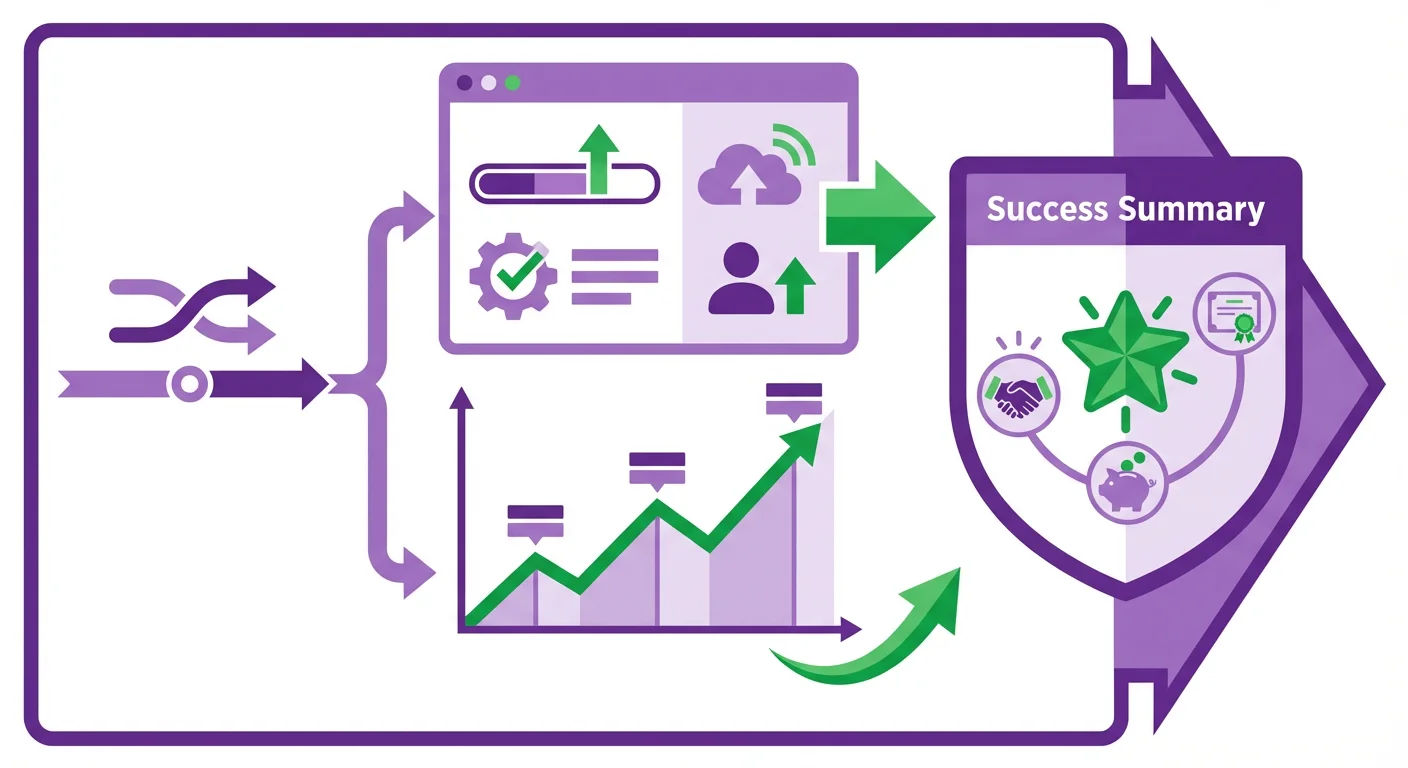
These templates initiate renewal conversations well before expiration.
Template 1: The Value Review Request
Best for: Starting renewal conversations 60-90 days before expiration.
Subject line: Let's review your year with [Product]
Email:
Hi [First Name],
Your [Product] subscription renews in [X] days. Before we get to the renewal itself, I'd like to schedule a value review to make sure you're getting what you need.
What I'd like to cover:
- How [Product] has performed against your original goals
- What's working well and what could be better
- Any changes in your needs we should discuss
- How we can maximize your value going forward
This isn't a renewal pitch. It's an opportunity to make sure [Company Name] is getting full value from our partnership.
Available times: [Calendar link]
Even if everything is going great, these reviews often surface opportunities to improve your experience.
[Your Name]
Why it works: Early value reviews surface issues before renewal, when there's still time to address them. Framing as non-sales reduces defensiveness.
Template 2: The Success Summary Email
Best for: Proactively sharing value delivered before the renewal conversation.
Subject line: Your year with [Product]: By the numbers
Email:
Hi [First Name],
With your renewal coming up in [X] days, I put together a summary of what [Company Name] has achieved with [Product] over the past year.
[Company Name]'s results:
| Metric | Beginning | Now | Change |
|---|---|---|---|
| [Metric 1] | [Before] | [After] | [Change] |
| [Metric 2] | [Before] | [After] | [Change] |
| [Metric 3] | [Before] | [After] | [Change] |
Key milestones:
- [Accomplishment 1]
- [Accomplishment 2]
- [Accomplishment 3]
Total value delivered: [Estimated value if calculable]
Looking at these numbers, your investment of [$X] has generated [$Y in value/X% improvement/other ROI measure].
I'd love to discuss how we can build on this success in the coming year. Do you have time for a brief call?
[Your Name]
Why it works: Data-driven value demonstration provides concrete justification for renewal. Proactive sharing shows you're invested in their success.
Template 3: The Early Renewal Incentive
Best for: Encouraging early commitment with incentives.
Subject line: Renew early, save [X%]
Email:
Hi [First Name],
Your [Product] subscription renews on [Date]. I wanted to reach out early because we're offering an incentive for customers who commit before [Earlier Date].
Early renewal offer:
- [Discount, such as X% off renewal price]
- [Benefit, such as price lock for additional years]
- [Bonus, such as added features or services]
Standard renewal (after [Earlier Date]): [$X/period] with standard terms
Early renewal (before [Earlier Date]): [$X/period] with [incentive benefits]
Given [Company Name]'s success with [Product], I assume you're planning to continue. If that's the case, the early renewal saves you [$X] with no downside.
Want to lock this in? Reply to confirm, or I can send over the paperwork.
[Your Name]
Why it works: Early renewal incentives reward committed customers and provide budget certainty. Clear comparison makes the decision easy.
Value Reinforcement Templates
These templates remind customers of value received as renewal approaches.
Template 4: The Problem-Solution Reminder
Best for: Reminding customers why they purchased in the first place.
Subject line: Remember why you chose [Product]?
Email:
Hi [First Name],
As your renewal approaches, I wanted to revisit why [Company Name] originally chose [Product].
The challenges you faced [timeframe] ago:
- [Challenge 1]
- [Challenge 2]
- [Challenge 3]
What [Product] was supposed to solve:
- [Solution 1]
- [Solution 2]
- [Solution 3]
What actually happened:
- [Actual result 1]
- [Actual result 2]
- [Actual result 3]
My question: Are these challenges still solved? Is [Product] still delivering the value you signed up for?
If yes, renewal is straightforward. If anything has changed, let's discuss before your renewal date of [Date].
[Your Name]
Why it works: Revisiting original pain points reminds customers of problems they've forgotten they no longer have. The question invites dialogue about any gaps.
Template 5: The Future Value Preview
Best for: Showing customers what's coming in the next period.
Subject line: What's coming in your next year with [Product]
Email:
Hi [First Name],
Your renewal is coming up, and I wanted to share what [Company Name] can expect from [Product] over the next year.
Upcoming features and improvements:
- [Feature 1]: [Description and benefit]
- [Feature 2]: [Description and benefit]
- [Feature 3]: [Description and benefit]
Planned enhancements:
- [Enhancement 1]
- [Enhancement 2]
Included with your renewal:
- [What they get by renewing]
- [Any new additions to their plan]
We're committed to continuously improving [Product], and everything above is included in your renewal at no additional cost.
The next year looks exciting. Looking forward to continuing our partnership.
[Your Name]
Why it works: Future roadmap previews demonstrate ongoing investment and give customers something to anticipate. Included at no additional cost emphasizes continued value.
Template 6: The Peer Comparison Email
Best for: Showing customers how their results compare to peers.
Subject line: How [Company Name] compares to similar customers
Email:
Hi [First Name],
With renewal approaching, I thought you might find this interesting: how [Company Name]'s results with [Product] compare to similar customers.
[Company Name] vs. peer average:
| Metric | [Company Name] | Peer Average | Difference |
|---|---|---|---|
| [Metric 1] | [Their result] | [Average] | [Comparison] |
| [Metric 2] | [Their result] | [Average] | [Comparison] |
| [Metric 3] | [Their result] | [Average] | [Comparison] |
[If performing above average]: You're outperforming most similar companies, which suggests [Product] is working well for your team.
[If performing below average]: There's room to improve, and I'd like to discuss strategies to help [Company Name] get more value before renewal.
Either way, I'd love to connect and discuss these numbers. Are you available for a quick call?
[Your Name]
Why it works: Peer comparison provides context for results. Both outperformance and underperformance create conversation starters.
Direct Renewal Request Templates
These templates formally request renewal commitment.
Template 7: The Standard Renewal Request
Best for: Straightforward renewal requests when everything is going well.
Subject line: Your [Product] renewal: [Date]
Email:
Hi [First Name],
Your [Product] subscription renews on [Date]. I wanted to reach out personally to confirm you're all set for renewal.
Current terms:
- Plan: [Plan Name]
- Term: [Monthly/Annual]
- Price: [$X/period]
- Features: [Key features included]
Renewal options:
-
Auto-renew: Your subscription will automatically renew at the current rate. No action needed.
-
Manual renewal: If you prefer to process renewal manually, I can send an invoice or renewal agreement.
-
Changes: If you'd like to adjust your plan, add users, or make other changes, let me know and I'll prepare updated terms.
Based on your usage and success with [Product], I recommend [specific recommendation].
Let me know if you have any questions or if there's anything I should prepare before renewal.
[Your Name]
Why it works: Clear terms, multiple options, and a recommendation make renewal easy. Personal outreach signals the relationship matters.
Template 8: The Multi-Year Renewal Offer
Best for: Offering multi-year terms for committed customers.
Subject line: Lock in pricing for [X] years?
Email:
Hi [First Name],
Your renewal is coming up on [Date], and given [Company Name]'s success with [Product], I wanted to offer an option we reserve for committed customers.
Standard 1-year renewal: [$X/year]
2-year commitment: [$X/year] ([X%] discount, saves [$X] total) Price locked for both years
3-year commitment: [$X/year] ([X%] discount, saves [$X] total) Price locked for all three years
Benefits of longer terms:
- Price protection against any future increases
- Budget predictability
- [Additional benefit if applicable]
Multi-year commitments make sense for companies that know they'll be using [Product] long-term. Based on your usage and results, [Company Name] seems like a fit.
Interested in discussing which option works best?
[Your Name]
Why it works: Multi-year offers reward loyalty and provide budget certainty. Price lock protection is valuable in uncertain markets.
Template 9: The Expansion Renewal
Best for: Renewals that include plan upgrades or expansions.
Subject line: Renewal + upgrade discussion
Email:
Hi [First Name],
Your renewal is approaching, and based on our recent conversations about [specific need or goal], I wanted to propose a renewal that includes an upgrade.
Current plan:
- [Current Plan Name]
- [$X/period]
- [Current features and limits]
Proposed upgrade:
- [New Plan Name]
- [$X/period]
- [New features and limits]
Why I'm recommending this:
- [Reason 1 based on their usage or needs]
- [Reason 2 based on their goals]
- [Reason 3 based on limitations they've hit]
The investment difference: [$X more/period]
Expected additional value: [Specific value projection]
This is a suggestion based on your situation. If [Current Plan] still meets your needs, renewing as-is is completely fine.
Want to discuss?
[Your Name]
Why it works: Renewal is a natural time to discuss plan adjustments. Clear reasoning for the upgrade recommendation shows genuine interest in their success.
- The subscription renews at the current rate
- State the status plainly so nothing is a surprise
- Proactive outreach still belongs here, even with auto-renewal on
- An invoice or a renewal agreement, sent by you
- For complex accounts, a summary of contract end, term, amount and the date action is required by
- Named contacts for billing, legal and technical questions
- Adjust the plan, add users, or prepare updated terms
- A longer commitment in exchange for locked pricing and budget predictability
- An upgrade, with the reasons for the recommendation written out
- Renewing as it stands remains completely fine
Final Reminder Templates
These templates ensure renewals don't fall through the cracks.
Template 10: The One-Week Reminder
Best for: Final reminder one week before expiration.
Subject line: [Product] renewal: One week notice
Email:
Hi [First Name],
Quick reminder: Your [Product] subscription renews in one week on [Date].
Current status: [Auto-renew enabled/Manual action required]
If everything is set: No action needed. You're all set for another [term period].
If you need to make changes: Let me know by [Date] and I'll adjust your renewal accordingly.
If you have concerns: I'd rather address them now than have them affect your renewal decision. Reply to this email or grab time on my calendar: [Link]
[Your Name]
Why it works: Final reminders with clear status and action items prevent unintentional lapses. The invitation to discuss concerns catches last-minute issues.
Template 11: The Lapse Prevention Email
Best for: When renewal seems at risk of lapsing.
Subject line: Is everything okay with [Product]?
Email:
Hi [First Name],
Your [Product] subscription is set to expire on [Date], and I haven't heard back about renewal.
I wanted to check in directly: Is everything okay?
If you're planning to renew: Let me know and I'll ensure continuity of service.
If you're considering not renewing: I'd appreciate understanding what's driving that decision. If there's something we could do differently, I'd like the chance to discuss before you leave.
If you need more time to decide: I can extend your current terms by [X days] to give you more time.
Whatever your situation, I'd rather have a conversation than have your subscription lapse unexpectedly.
[Your Name]
Why it works: Direct questions when renewal seems at risk show you care. Offering an extension provides flexibility without pressure.
Post-Expiration and Recovery Templates
These templates address expired or lapsed subscriptions.
Template 12: The Grace Period Email
Best for: Customers whose subscriptions have recently expired.
Subject line: Your [Product] access has expired
Email:
Hi [First Name],
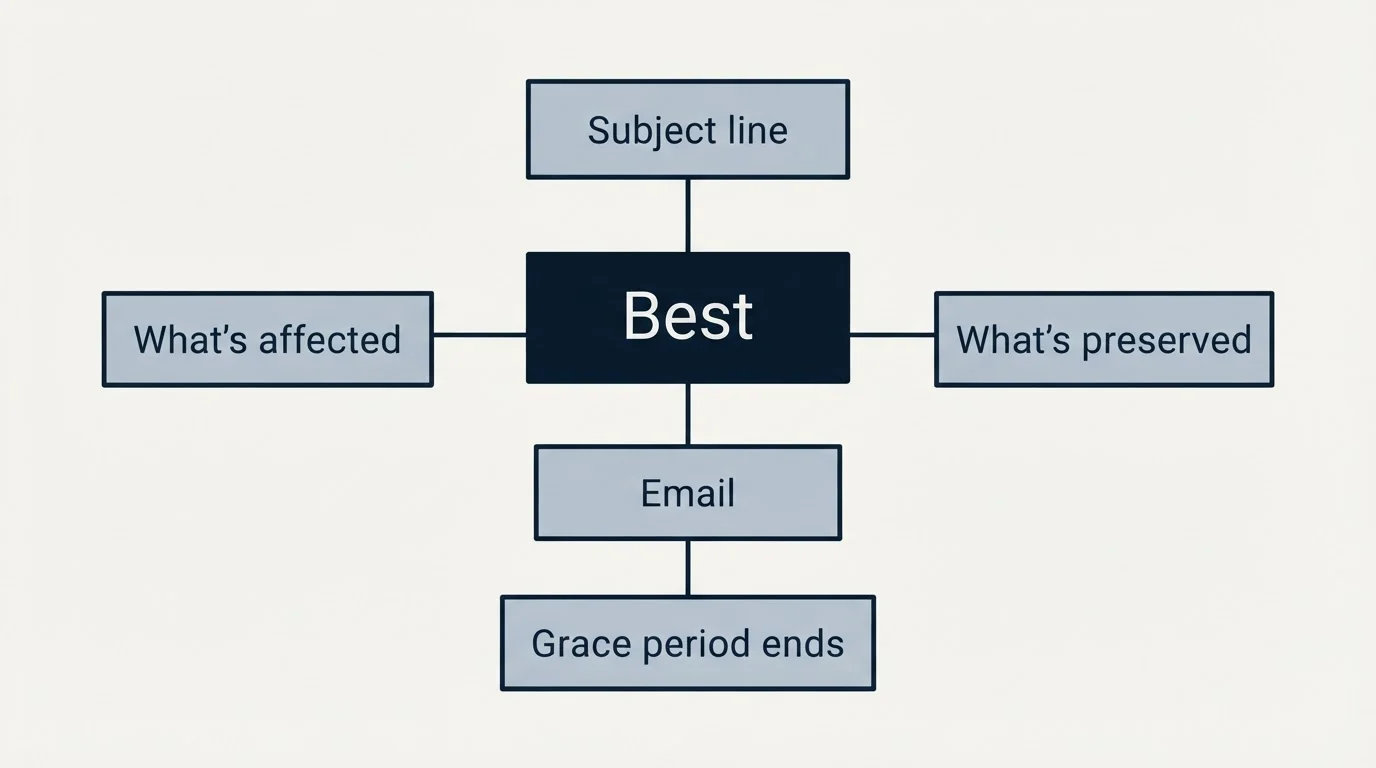
Your [Product] subscription expired on [Date]. Your account is currently in a grace period, which means:
What's affected:
- [Access limitations]
- [Features unavailable]
- [Data status]
What's preserved:
- [Data that's safe]
- [Settings maintained]
- [History preserved]
Grace period ends: [Date]
To reactivate: [Link or instructions]
If this was unintentional, I can reactivate your account immediately. Just reply to this email or click the link above.
If you've decided not to continue, I understand and would appreciate any feedback on what we could have done differently.
[Your Name]
Why it works: Grace periods give customers time to remedy accidental lapses. Clear information about what's affected creates urgency without panic.
Template 13: The Re-Engagement Offer
Best for: Trying to win back recently lapsed customers.
Subject line: We'd like you back
Email:
Hi [First Name],
It's been [timeframe] since [Company Name]'s [Product] subscription expired. I wanted to reach out and see if circumstances have changed.
What we've improved since you left:
- [New feature 1]
- [New feature 2]
- [Improvement]
Welcome back offer: If you'd like to return, I can offer:
- [Discount or incentive]
- [Onboarding support]
- [Additional benefit]
This offer is valid through [Date].
If [Product] isn't the right fit anymore, I understand. But if circumstances have changed or our improvements address what was missing before, we'd love to have you back.
Worth a conversation?
[Your Name]
Why it works: Win-back offers acknowledge departure while providing incentive to return. Highlighting improvements addresses the possibility that the product has evolved.
When renewal efforts fail and customers walk away entirely, templates for recovering lapsed customers target the specific reasons behind their departure.
Special Situation Templates
Template 14: The Multi-Stakeholder Renewal
Best for: Complex renewals involving multiple decision-makers.
Subject line: [Company Name] renewal: Key dates and contacts
Email:
Hi [First Name],
Your [Product] renewal involves several stakeholders, so I wanted to make sure everyone has the information they need.
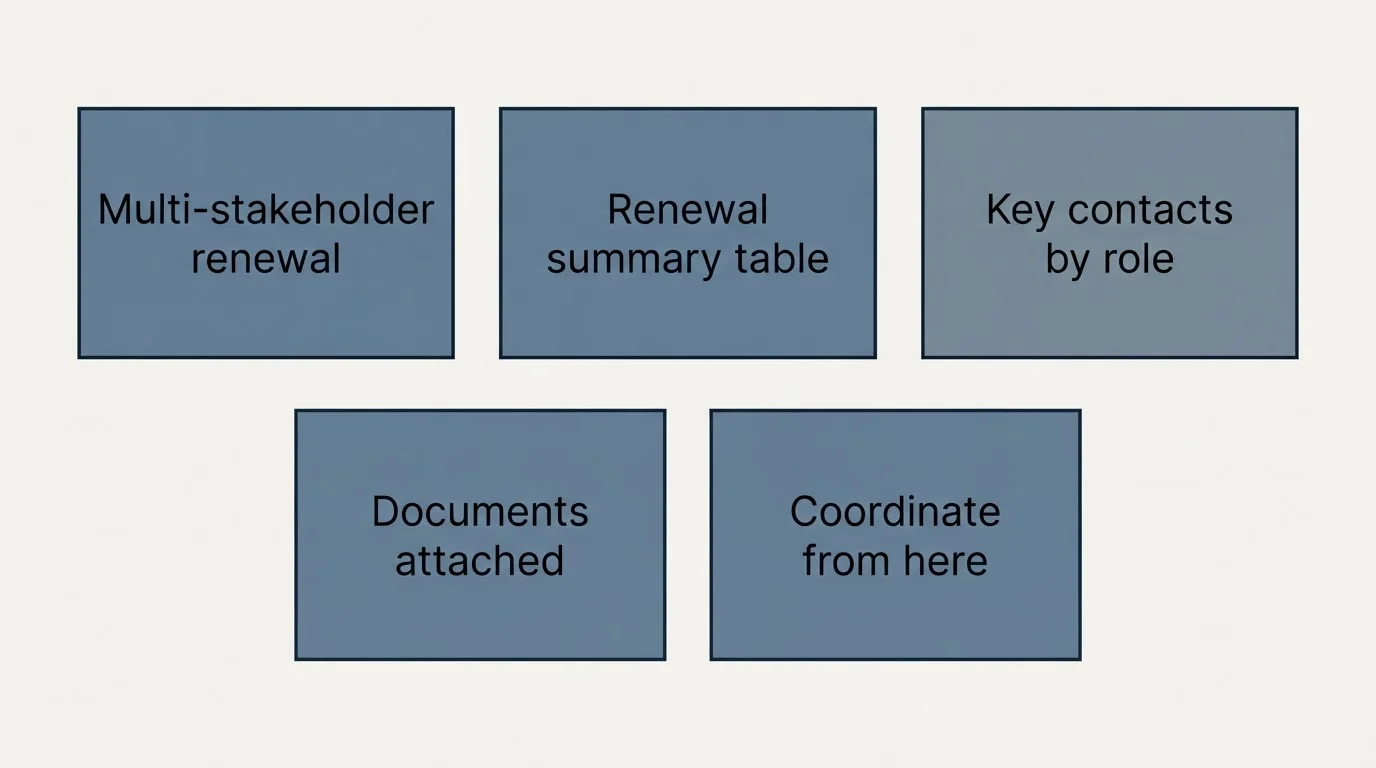
Renewal summary:
| Detail | Information |
|---|---|
| Current contract end | [Date] |
| Proposed renewal term | [Term] |
| Renewal amount | [$X] |
| Auto-renew status | [Yes/No] |
| Action required by | [Date] |
Key contacts for this renewal:
- Your account manager (me): [Questions about value, usage, account strategy]
- Billing contact: [Email] [For invoicing and payment questions]
- Legal/contracts: [Email] [For contract terms or legal review]
- Technical support: [Email] [For product questions or issues]
Documents attached:
- Renewal agreement draft
- [Any other relevant documents]
I've also cc'd [relevant colleagues] to ensure visibility on your side.
What's the best way to coordinate from here?
[Your Name]
Why it works: Enterprise renewals involve multiple stakeholders. Providing comprehensive information and clear contacts streamlines the process.
Best Practices for Renewal Communication
Start Early
Begin renewal conversations 60-90 days before expiration. This provides time to address issues and demonstrates proactive partnership.
Lead with Value
Every renewal communication should reinforce the value delivered, not just request continued payment.
Make It Personal
Automated renewal notices feel transactional. Personal outreach shows the relationship matters.
Offer Options
Flexible terms, payment options, and plan adjustments make renewal easier for customers with changing needs.
Address Concerns Directly
If customers have unresolved issues, tackle them before renewal. Ignoring problems leads to churn.
Celebrate Renewals
Renewal is a milestone worth acknowledging. Express genuine appreciation for continued partnership.
Common Mistakes to Avoid
Waiting Too Long: Last-minute renewal requests feel urgent rather than thoughtful. Start early.
Assuming Auto-Renew Means No Communication: Even with auto-renewal, proactive outreach builds relationships.
Focusing Only on Transaction: Renewal is a relationship moment, not just a billing event.
Ignoring Warning Signs: Declining usage, support complaints, or silence before renewal are signals to address, not ignore.
Generic Communication: Personalized renewal outreach based on actual usage and results significantly outperforms templates.
- Yes: Reinforce the value delivered in every renewal message
- Yes: Make it personal, since automated notices feel transactional
- Yes: Offer options: flexible terms, payment choices, plan adjustments
- Yes: Deal with unresolved issues before the renewal date, since ignoring them leads to churn
- Yes: Acknowledge the renewal itself as a milestone worth appreciating
- No: Treating the renewal as a billing event only
- No: Ignoring declining usage, support complaints or silence before the date
- No: Generic outreach that ignores their actual usage and results
Retain Your Best Customers
Renewal is when customers explicitly choose to continue (or not) their relationship with you. Proactive, value-focused communication transforms this decision moment into a retention opportunity. By starting early, demonstrating value, and making renewal easy, you increase retention rates and strengthen customer relationships.
Ready to improve your renewal rates? Start your free cold email campaign and keep your best customers for the long term.
Related Reading
Frequently asked questions.
Frequently asked questions- When should you start sending renewal emails to customers?
- Start renewal conversations 60-90 days before the contract expiration date. This early engagement window allows time to address customer concerns, demonstrate value, and make adjustments if needed. The renewal framework then progresses through value reinforcement at 30-60 days out, direct renewal requests at 14-30 days, and final reminders in the last 7-14 days before expiration.
- What should a renewal email include to demonstrate value?
- Renewal emails should include concrete metrics showing results achieved during the contract period. Use data tables comparing beginning and current performance across key metrics, list specific accomplishments and milestones, and calculate total value delivered relative to investment cost. Success summary emails that lead with numbers provide objective justification for renewal rather than relying on subjective claims.
- How do early renewal incentives improve retention rates?
- Early renewal incentives encourage customers to commit before the standard renewal date by offering discounts, price locks for additional years, or bonus features. These offers reward already-committed customers, provide budget certainty for both parties, and move the renewal decision forward to a less risky timeframe. The template should clearly compare standard versus early renewal terms to make the decision straightforward.
- Why should renewal emails revisit the original problems customers faced?
- Problem-solution reminder emails help customers remember challenges they've forgotten they no longer have. By listing the original pain points, what the product was meant to solve, and actual results achieved, these emails reframe the renewal decision around tangible problem-solving rather than price. This approach invites dialogue about whether the original value proposition still holds or needs adjustment.
About the author.

Ben Carden is CRO at RevenueFlow, which builds and operates outbound revenue engines for B2B companies. Previously at Gartner Enterprise. Studied at London School of Economics.
Ben Carden · CRO
Connect on LinkedIn →Explore more.
Ready to scale your outreach?
We build GTM engines that book real meetings. See the receipts.
Related articles.
10 B2B Cold Email Templates for One-Message Sends
Ten B2B cold email templates written for a single send, with the four slot structure underneath them and the test that separates a good example from a bad one.
13 Case Study Request Email Templates That Get Results
Get proven email templates for requesting case studies, video testimonials, and written reviews from your happiest customers. Includes templates for every stage from initial ask to final approval.
Follow-Up Call Scripts: Nine Calls Into a Live Conversation
Nine follow-up call scripts, each tied to the event that earns the call, from a demo to a renewal, plus the four moves they share and how each call should end.
Customer Onboarding Template: Five Messages and a Checklist
Five onboarding messages that take a new customer from signature to a working account with a named owner, plus the reasoning to rewrite before each one goes out.
Cold Email Templates for Customer Success Managers
Eleven cold email templates for customer success managers, covering champion change, expansion, renewal rescue, and win-back, with subject lines and timing.
13 Demo Follow-Up Email Templates to Close More Deals
Proven demo follow-up email templates for every scenario, from same-day recaps to re-engaging stalled prospects and handling competitive evaluations.