13 Value Proposition Email Templates That Show Your Worth
Clearly articulate what makes your solution valuable. These templates help you communicate ROI, differentiation, and specific benefits that resonate with prospects.

Strong value proposition emails articulate specific, quantifiable value rather than listing features. They use concrete numbers (ROI multiples, time savings, cost reductions), demonstrate differentiation through unique capabilities or approaches, and tailor messaging to specific buyer types (technical, business, executive, or end users). Effective templates lead with outcomes, back claims with evidence from similar companies, and connect value directly to the prospect's situation.
Key takeaways
- Value proposition emails that quantify outcomes with specific numbers, percentages, or timeframes outperform those using generic benefits or feature lists.
- The article provides 13 templates organized into four categories: ROI-focused (dollar impact, time savings, cost reduction), differentiation-focused (unique capabilities, approach differences, integration value), outcome-focused (transformation, problem-solving, growth), and audience-specific templates for technical, business, executive, and end-user buyers.
- Strong value propositions require five elements: specificity with quantifiable metrics, relevance to the prospect's challenges, differentiation explaining unique value, credibility through evidence or references, and clarity that communicates quickly.
- Common mistakes include feature dumping instead of focusing on outcomes, using unverifiable superlatives, making generic promises, taking an inside-out company view rather than customer perspective, and making claims without supporting evidence.
- Value proposition development requires customer interviews to understand actual impact, competitive analysis to identify differentiation, systematic data collection on outcomes, and a structured messaging framework to organize claims.
Reviewed and updated September 15, 2026
13 Value Proposition Email Templates That Communicate Your Worth
A strong value proposition answers the question every prospect asks: "Why should I care?"
Most cold emails fail because they talk about features, company history, or generic benefits. Strong value proposition emails communicate specific, relevant value that makes prospects want to learn more.
Cold email messaging fails at conveying value most often because it leans on a relationship the reader does not have with you yet, so the first line asks for warmth instead of offering a reason.
This guide provides 13 value proposition email templates that clearly articulate why your solution deserves attention. Each template demonstrates how to frame value in ways that resonate with busy decision-makers.
What Makes a Strong Value Proposition Email
Effective value proposition emails share several characteristics:
- Specificity: They quantify value with numbers, percentages, or timeframes
- Relevance: They connect to challenges the specific prospect faces
- Differentiation: They explain why this value is unique to your solution
- Credibility: They back claims with evidence or references
- Clarity: They communicate value quickly and simply
The templates below demonstrate these principles across different value proposition approaches.
Section 1: ROI-Focused Value Proposition Templates
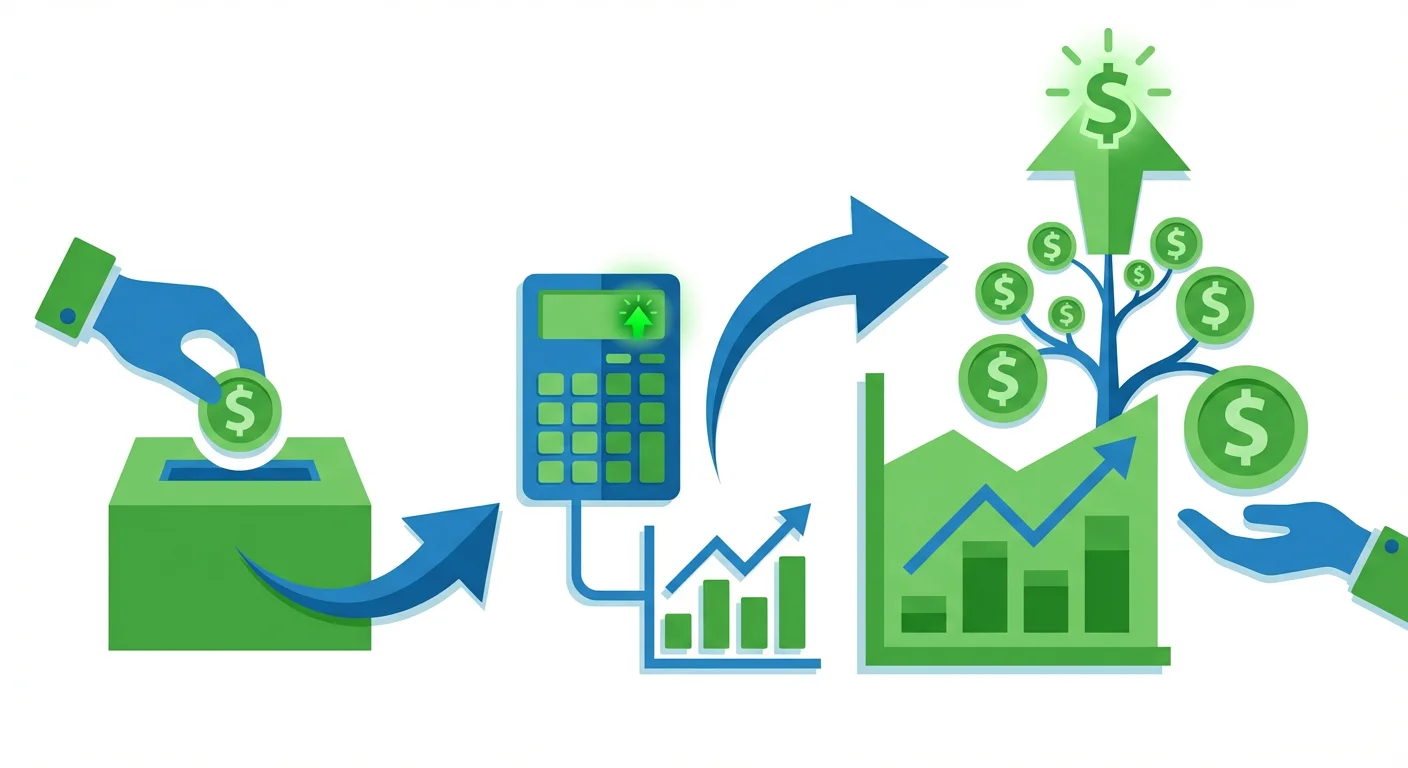
These templates lead with quantifiable return on investment.
Template 1: The Dollar Impact
When to use: When you can demonstrate clear financial impact.
Subject: [X]x ROI for [Company]
Email:
Hi [Name],
Companies like [Company] typically see [X]x return on [your solution] within [timeframe].
The math: [brief calculation showing input cost vs. output value].
For example, [Similar Company] invested [amount] and generated [return] in [period].
Would seeing how this applies to [Company]'s situation be worth 15 minutes?
Best, [Your name]
Customization tips:
- Use conservative, verifiable ROI numbers
- Show the calculation so prospects can evaluate it
- Reference companies similar to the prospect
Template 2: The Time Savings Value
When to use: When your solution saves significant time.
Subject: [X] hours back every [week/month]
Email:
Hi [Name],
Teams using [your solution] get [X] hours back every [week/month]. Time that was spent on [manual task] now goes toward [high-value activity].
At [Company]'s scale, that translates to [rough calculation of total hours or equivalent value].
[Similar Company] told us this was the biggest surprise, expecting efficiency gains but finding the recovered time even more valuable than projected.
Worth exploring what this could look like for your team?
Best, [Your name]
Customization tips:
- Research the prospect's team size to customize calculations
- Connect time savings to what they could do instead
- Use customer quotes about the impact of recovered time
Template 3: The Cost Reduction Approach
When to use: When your solution reduces specific costs.
Subject: Cutting [cost category] by [X]%
Email:
Hi [Name],
Companies in [industry] typically spend [X] on [cost category]. Our customers reduce this by [Y]%, averaging [Z] in annual savings.
How: [1-2 sentences explaining the mechanism].
For [Company], that could mean [rough estimate based on company size].
Would a quick analysis of potential savings be useful?
Best, [Your name]
Customization tips:
- Research typical costs in their industry
- Explain how the reduction happens (not just that it happens)
- Offer to do a custom analysis as the call-to-action
Section 2: Differentiation-Focused Value Proposition Templates
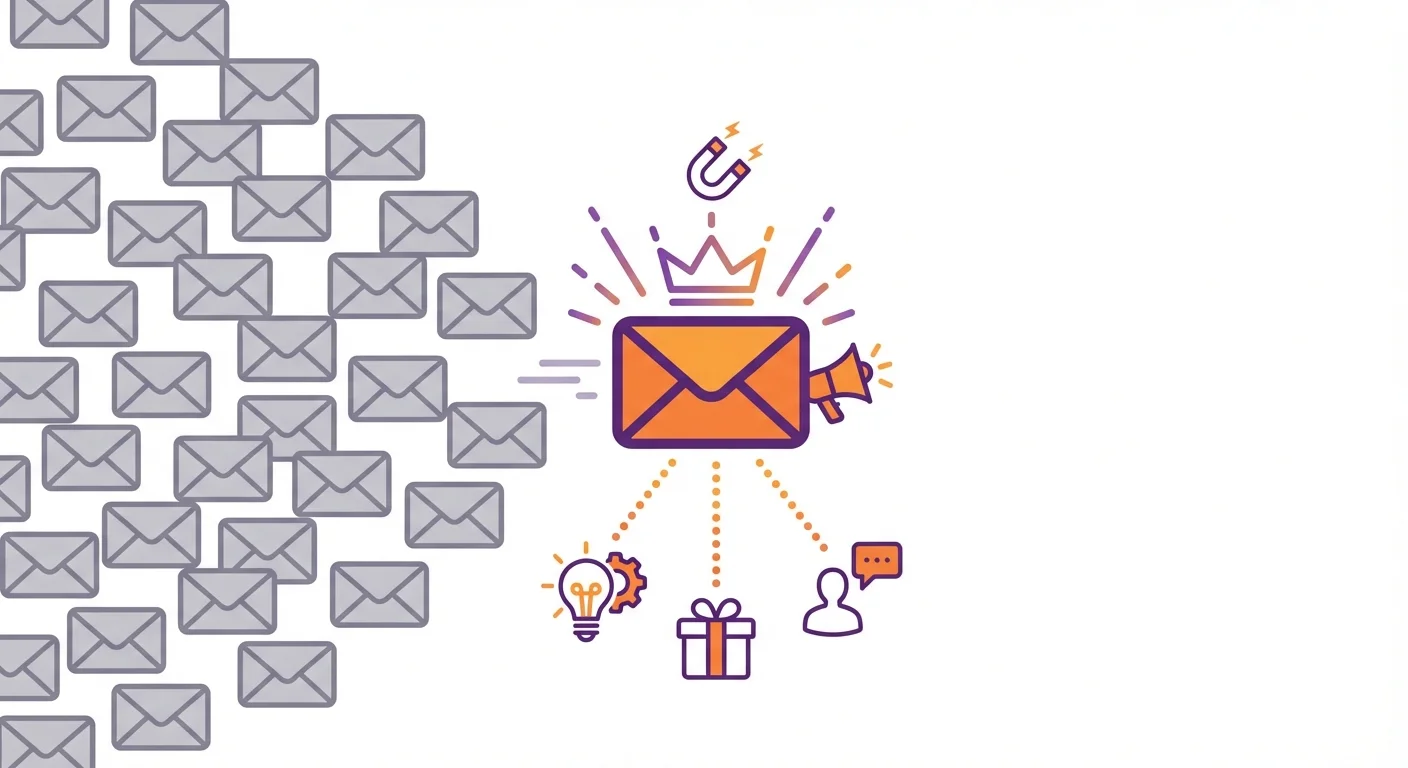
These templates highlight what makes your solution unique.
Template 4: The Only Solution Approach
When to use: When you have a unique capability.
Subject: The only way to [achieve specific outcome]
Email:
Hi [Name],
[Your solution] is the only platform that [specific unique capability].
This matters for teams like yours because [why this capability matters to their situation].
Other solutions require [workaround or limitation]. We built [capability] specifically because [customer problem it solves].
Would seeing how this works be valuable?
Best, [Your name]
Customization tips:
- Only claim uniqueness if it's genuinely true
- Explain why the unique capability matters to them specifically
- Be prepared to demonstrate the capability
Template 5: The Approach Difference
When to use: When your method differs from competitors.
Subject: A different approach to [problem]
Email:
Hi [Name],
Most [solutions in your category] work by [common approach]. The problem: [limitation of that approach].
We built [your solution] differently. Instead of [common approach], we [your different approach].
The result: [specific outcome difference].
[Similar Company] switched because [quote or reason].
Would understanding this difference be worth a conversation?
Best, [Your name]
Customization tips:
- Be honest about competitor approaches
- Explain the benefit of your different approach
- Share why customers chose you over alternatives
Template 6: The Integration Value
When to use: When integration with other tools creates unique value.
Subject: [Your solution] + [Their tools] = [outcome]
Email:
Hi [Name],
I noticed [Company] uses [Tool 1] and [Tool 2]. On their own, they're valuable. Connected through [your solution], they become more powerful.
The integration enables [specific capability that wasn't possible before].
Teams like [Similar Company] now [specific outcome] because data flows between systems automatically.
Worth seeing how this works with your stack?
Best, [Your name]
Customization tips:
- Research their tech stack via job postings or technology databases
- Explain specific value created by the integration
- Show you understand their tools, not just yours
Section 3: Outcome-Focused Value Proposition Templates
These templates lead with the end result prospects care about.
Template 7: The Transformation Story
When to use: When your solution enables significant transformation.
Subject: From [current state] to [desired state]
Email:
Hi [Name],
Companies like [Company] often start at [current state]: [brief description of common starting point].
After [timeframe] with [your solution], they're at [desired state]: [brief description of outcome].
The transformation: [key metrics that changed].
[Similar Company] made this shift and [specific result].
Would seeing what this could look like for [Company] be worthwhile?
Best, [Your name]
Customization tips:
- Describe the current state in terms they'd recognize
- Make the desired state specific and measurable
- Include a realistic timeframe for the transformation
Template 8: The Problem Solved
When to use: When you can directly solve a known problem.
Subject: Solving [specific problem] at [Company]
Email:
Hi [Name],
[Specific problem] costs companies in [industry] [quantified impact] annually.
[Your solution] eliminates this problem by [brief mechanism].
The result for teams like yours: [specific positive outcome].
[Similar Company] told us solving [problem] was [impact statement].
Would discussing how we could help [Company] be useful?
Best, [Your name]
Customization tips:
- Focus on one specific problem, not a list
- Quantify the cost of the problem
- Share how solving it changed things for similar companies
Template 9: The Growth Enablement
When to use: When your solution helps companies grow.
Subject: How [Similar Company] grew [metric] by [X]%
Email:
Hi [Name],
[Similar Company] increased their [key metric] by [X]% after implementing [your solution].
The driver: [brief explanation of how your solution contributed to growth].
For a company at [Company]'s stage, similar improvements could mean [rough estimate of impact].
Worth a conversation about your growth priorities?
Best, [Your name]
Customization tips:
- Use growth metrics relevant to their likely priorities
- Explain the connection between your solution and growth
- Customize the impact estimate to their size
Section 4: Audience-Specific Value Proposition Templates
These templates tailor value propositions to specific buyer personas.
Template 10: For Technical Buyers
When to use: When the prospect evaluates technical merit.
Subject: [Technical capability] that actually works
Email:
Hi [Name],
[Your solution] handles [technical capability] with:
- [Specific technical specification]
- [Performance metric]
- [Architecture or approach benefit]
Unlike alternatives that [common limitation], we [technical differentiator].
Documentation and API references available if you'd like to evaluate further.
Would a technical overview be useful?
Best, [Your name]
Customization tips:
- Use technical language appropriate to their expertise
- Include specific, verifiable technical claims
- Offer documentation and detailed resources
Template 11: For Business Buyers
When to use: When the prospect cares about business outcomes.
Subject: [Business outcome] in [timeframe]
Email:
Hi [Name],
[Your solution] delivers [business outcome] by [brief explanation].
For [Company], this could mean:
- [Business impact 1]
- [Business impact 2]
- [Business impact 3]
[Similar Company] saw these results within [timeframe].
Would exploring the business case for [Company] be worthwhile?
Best, [Your name]
Customization tips:
- Focus on outcomes, not features
- Translate technical capabilities into business impact
- Keep the language accessible and jargon-free
Template 12: For Executive Sponsors
When to use: When reaching out to senior leadership.
Subject: [Strategic initiative] at [Company]
Email:
Hi [Name],
Leaders in [industry] are prioritizing [strategic theme]. [Your solution] supports this by [brief connection].
Companies like [Recognizable Reference] have used us to [strategic outcome].
If [strategic initiative] is a priority for [Company], I'd welcome the chance to share what we're seeing work.
Worth a brief conversation?
Best, [Your name]
Customization tips:
- Lead with strategic themes, not product features
- Reference companies executives would respect
- Keep the email brief and focused on high-level value
Template 13: For End Users
When to use: When the prospect will use the solution daily.
Subject: Making [daily task] easier
Email:
Hi [Name],
The [daily task] that takes you [current time/effort] could take [reduced time/effort] with [your solution].
Users tell us the biggest difference is [specific user benefit]. One [role] said: "[Brief user quote about experience]."
Would a quick demo showing the day-to-day experience be helpful?
Best, [Your name]
Customization tips:
- Focus on daily experience, not abstract value
- Use quotes from users in similar roles
- Offer to show the actual experience in a demo
Best Practices for Value Proposition Emails
- Yes: Lead With Value, Not Features
- Yes: Be Specific and Quantifiable
- Yes: Make It Relevant to Them
- Yes: Back Claims With Evidence
- Yes: Keep It Simple
- Yes: Test Multiple Angles
Lead With Value, Not Features
Features are what your product does. Value is what that means for the prospect. Always translate features into value:
Sales messaging that emphasises features instead of outcomes usually does it in the first sentence, where the writer names the product before naming anything true about the reader.
Feature: "Real-time analytics dashboard" Value: "See what's working while there's still time to adjust"
Be Specific and Quantifiable
Vague value claims blend into noise. Specific claims stand out:
Vague: "Improve efficiency" Specific: "Reduce report generation from 4 hours to 15 minutes"
Make It Relevant to Them
Generic value propositions feel like spam. Relevant value propositions feel like insight:
Generic: "Companies save money with our solution" Relevant: "SaaS companies your size typically reduce customer acquisition costs by 30%"
Back Claims With Evidence
Every value claim should have backup:
- Customer case studies
- Industry research
- Your own data
- Third-party validation
Keep It Simple
Complex value propositions confuse prospects. If you can't explain your value in one or two sentences, it needs refinement.
Test Multiple Angles
Different prospects respond to different value propositions. Test variations:
- ROI vs. time savings
- Cost reduction vs. revenue growth
- Efficiency vs. strategic advantage
Track which angles generate the best responses for different segments.
Developing Your Value Proposition
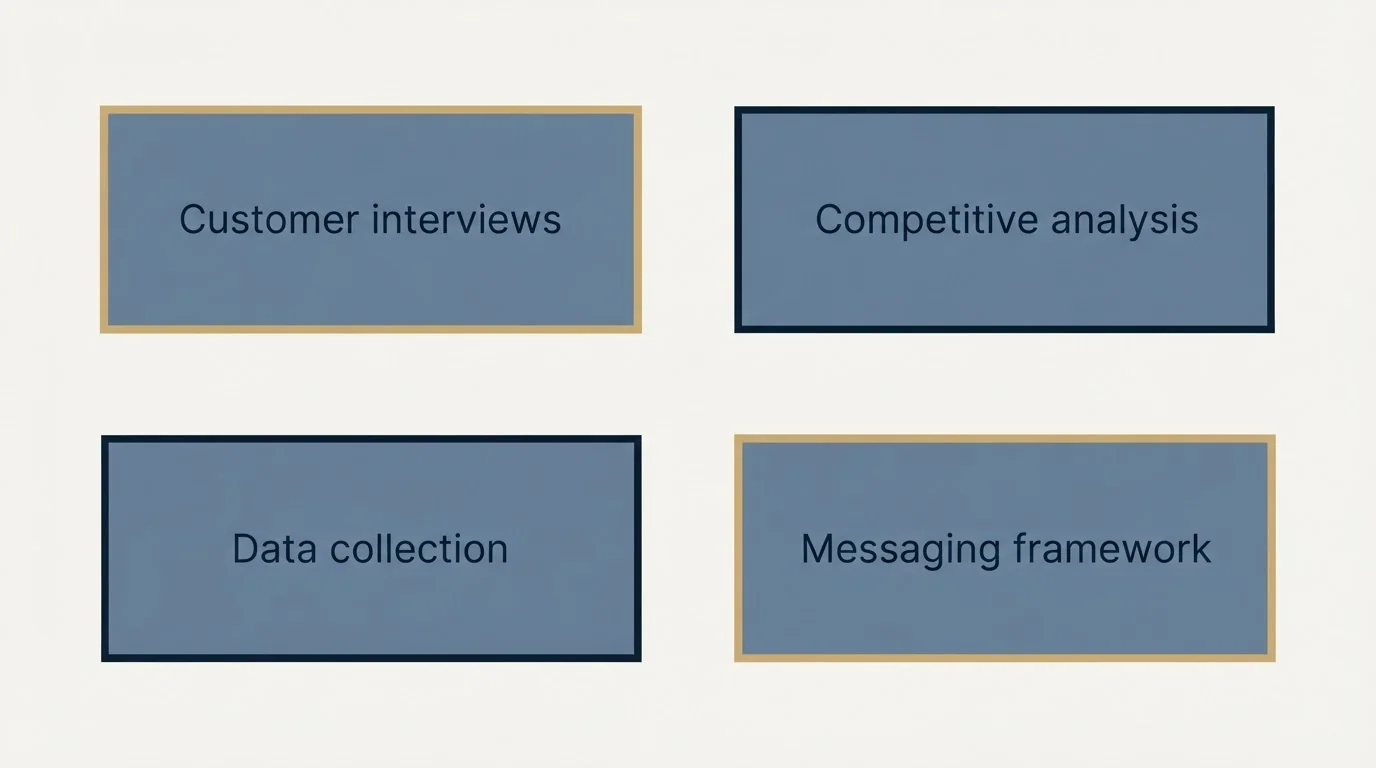
Before writing value proposition emails, clarify what value you actually deliver:
Customer Interviews
Talk to current customers about:
- Why they chose you
- What results they've achieved
- How they'd describe your value to peers
Competitive Analysis
Understand how your value compares:
- What do competitors claim?
- Where do you genuinely differentiate?
- What can you prove that they can't?
Data Collection
Gather quantifiable evidence:
- Average ROI across customers
- Time savings benchmarks
- Cost reduction data
- Growth metrics
Messaging Framework
Document your value propositions by:
- Audience segment
- Problem addressed
- Outcome delivered
- Proof points
This framework ensures consistency across your outreach.
Common Value Proposition Mistakes
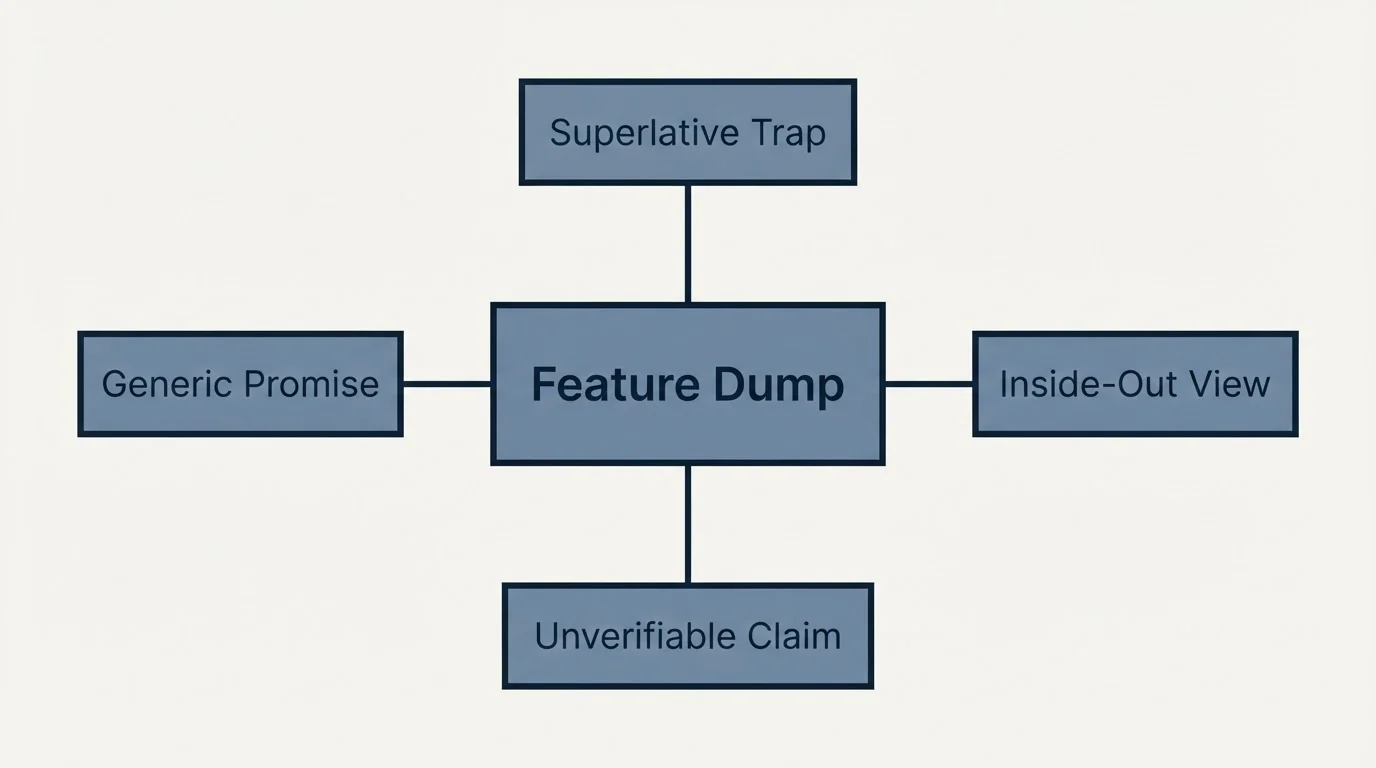
- No: The Feature Dump
- No: The Superlative Trap
- No: The Generic Promise
- No: The Inside-Out View
- No: The Unverifiable Claim
The Feature Dump
Listing every feature without connecting to value overwhelms prospects. Focus on the value most relevant to this specific prospect.
The Superlative Trap
Claims like "best," "leading," and "number one" are meaningless without evidence. Use specific, verifiable claims instead.
The Generic Promise
"We help companies succeed" could describe anyone. Make your value proposition specific enough that only you can claim it.
The Inside-Out View
Describing value from your perspective rather than the prospect's. Always frame value in terms of what they care about.
The Unverifiable Claim
Making promises you can't back up destroys credibility. Only claim what you can prove.
Measuring Value Proposition Performance
Track these metrics to optimize your value proposition messaging:
- Response rate by value proposition: Which value angles generate replies?
- Meeting conversion: Which propositions lead to actual conversations?
- Deal progression: Do certain value propositions lead to faster deals?
- Segment performance: Which value propositions work for which audiences?
- Competitive win rate: How do value propositions affect competitive situations?
Use this data to refine which value propositions to emphasize.
Related Reading
- 12 Urgency Email Templates That Drive Action Without Being Pushy
- 14 Social Proof Email Templates That Build Credibility Instantly
- 15 Pain Point Email Templates That Get Prospects to Respond
Getting Help With Value Proposition Development
Crafting clear, compelling value propositions requires understanding your customers, market, and differentiation. If you're looking to strengthen your value messaging:
Schedule a free strategy call to discuss:
- How to articulate your unique value
- Which value propositions resonate with your target market
- Testing approaches to find what works
- Campaign strategies that lead with value
Schedule your free strategy call here.
We'll help you develop value proposition messaging that clearly communicates why prospects should engage.
Frequently asked questions.
Frequently asked questions- What makes a value proposition email different from a regular cold email?
- A value proposition email leads with specific, quantifiable value rather than features or company information. It answers 'Why should I care?' immediately by communicating concrete outcomes like ROI multiples, time savings, or cost reductions. Regular cold emails often focus on what the product does, while value proposition emails focus on the tangible results prospects will achieve.
- How do I write a value proposition email when I can't quantify ROI?
- Use differentiation-focused or outcome-focused templates that highlight unique capabilities or transformations. Explain how your approach differs from alternatives and what that difference enables. Share specific customer examples of problems solved or outcomes achieved, even if you can't attach precise dollar figures. Focus on qualitative but concrete results like 'eliminated manual data entry' or 'reduced approval cycles from days to hours.'
- Should I use different value propositions for different types of buyers?
- Yes, buyer types respond to different value angles. Technical buyers care about capabilities, specifications, and integration details. Business buyers focus on operational efficiency and team outcomes. Executive sponsors want strategic impact and financial returns. End users need to understand daily workflow improvements. The article provides separate templates for each audience to address their specific priorities and decision criteria.
- What are the most common value proposition mistakes to avoid?
- The five critical mistakes are: feature dumping (listing capabilities without connecting to outcomes), the superlative trap (using unverifiable claims like 'best' or 'leading'), generic promises that could apply to any solution, inside-out views that focus on your company rather than customer results, and unverifiable claims without evidence or references. Each mistake fails because it doesn't give prospects concrete reasons to believe your solution will deliver specific value.
- How do I develop a strong value proposition if I'm selling a new product?
- Conduct customer interviews with early users to understand actual impact, even from pilot programs. Perform competitive analysis to identify what makes your approach different. Systematically collect data on outcomes from every customer interaction. Build a messaging framework that organizes your claims by benefit type and buyer persona. Start with qualitative outcomes and add quantitative metrics as you gather data from more customer deployments.
About the author.

Ben Carden is CRO at RevenueFlow, which builds and operates outbound revenue engines for B2B companies. Previously at Gartner Enterprise. Studied at London School of Economics.
Ben Carden · CRO
Connect on LinkedIn →Explore more.
Ready to scale your outreach?
We build GTM engines that book real meetings. See the receipts.
Related articles.
10 B2B Cold Email Templates for One-Message Sends
Ten B2B cold email templates written for a single send, with the four slot structure underneath them and the test that separates a good example from a bad one.
Cold Email Templates for Customer Success Managers
Eleven cold email templates for customer success managers, covering champion change, expansion, renewal rescue, and win-back, with subject lines and timing.
14 Renewal Email Templates That Retain Customers
Master subscription and contract renewals with 14 proven email templates. Reduce churn, lock in renewals early, and maintain customer relationships.
Follow-Up Call Scripts: Nine Calls Into a Live Conversation
Nine follow-up call scripts, each tied to the event that earns the call, from a demo to a renewal, plus the four moves they share and how each call should end.
13 Case Study Request Email Templates That Get Results
Get proven email templates for requesting case studies, video testimonials, and written reviews from your happiest customers. Includes templates for every stage from initial ask to final approval.
Email Subject Line Capitalization: What the Guides Say
What the style authorities actually rule on subject line case, what the published tests measured, and the default for a one to one sales email.