Cold Email Click Rate Benchmarks: 2026 Performance Data
Complete benchmark data for cold email click-through rates across industries and personas. Learn what drives clicks and how to optimize your email content for engagement.
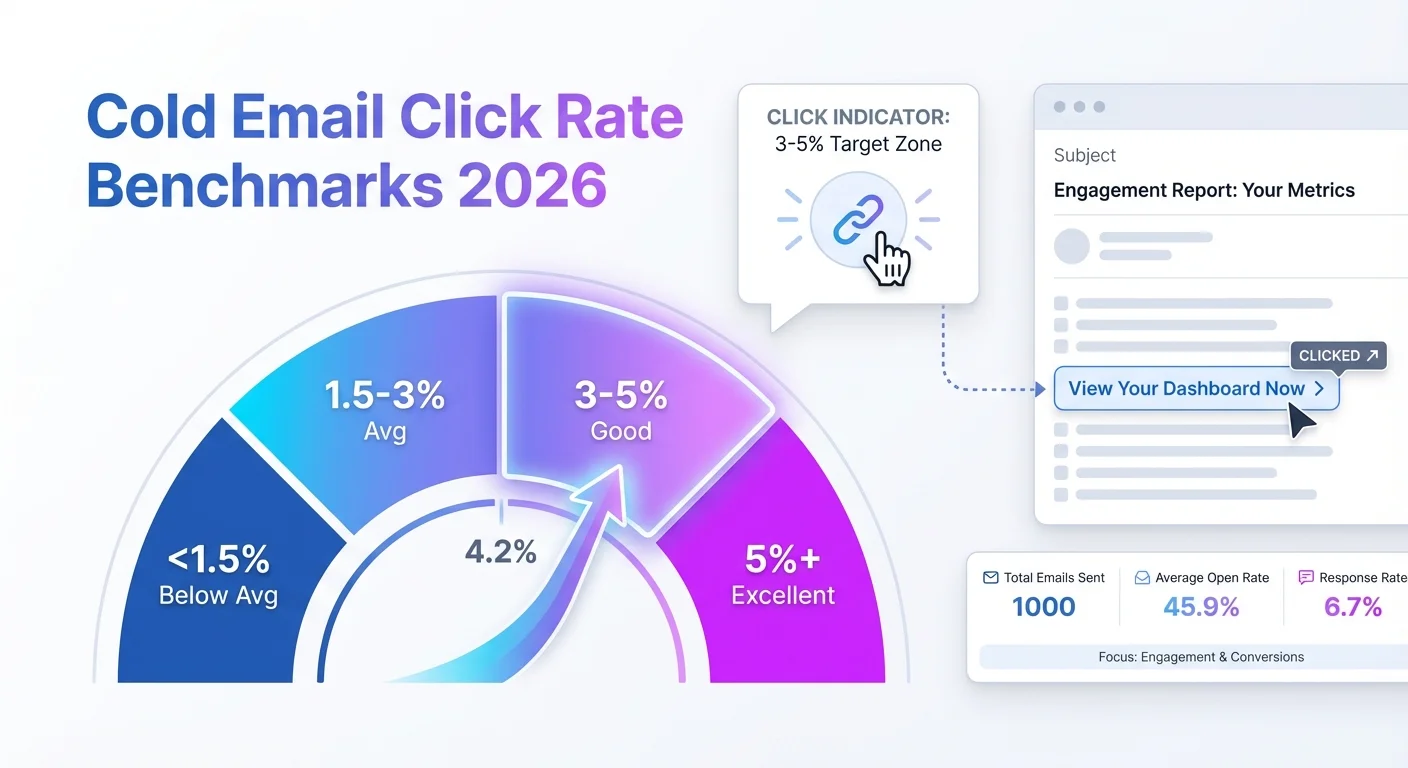
B2B cold email click-through rates average 1.5-3% across industries, with excellent performance at 5% or higher. Technology and consulting sectors see the strongest engagement (2-5% typical), while security-conscious industries like cybersecurity and banking trend lower (1.2-3.5%). Personalized content (particularly industry-specific case studies and custom demo videos) drives 2-3x higher clicks than generic product links. Link placement in the first paragraph increases CTR by 25-40%.
Key takeaways
- Average B2B cold email click-through rates range from 1.5-3%, with performance above 5% considered excellent.
- Consulting and SaaS industries achieve the highest click rates (2-5% typical), while security-focused sectors like cybersecurity and banking see lower rates (1.2-3.5%).
- Personalized demo videos (4-7% CTR) outperform generic product pages (0.8-2% CTR) by up to 6x.
- Industry-specific case studies generate 2.5-4.5% click rates compared to 1.5-3% for generic case studies.
- Links placed in the first paragraph receive 25-40% higher click-through rates than links positioned later in emails.
Reviewed and updated September 5, 2026
Click-through rates measure the percentage of email recipients who click on links within your cold emails. Unlike open rates, click-through rates provide more reliable engagement data since they require deliberate action and are not affected by privacy features like Apple Mail Privacy Protection.
This benchmark report provides comprehensive click-through rate data across industries, company sizes, and email types. Understanding these benchmarks helps you optimize your email content and calls-to-action.
Benchmarks only mean something once the metric is pinned down, and the click-through rate definition marks where the measurement breaks in cold email.
Methodology and Definitions
Click Rate Metrics
Click-through rate (CTR): Clicks divided by emails delivered Click-to-open rate (CTOR): Clicks divided by unique opens
This report primarily focuses on CTR as the more reliable metric given open rate measurement challenges.
Data Sources
The benchmarks presented here represent industry-standard performance ranges compiled from publicly available research, industry publications, and commonly cited B2B outreach metrics. Individual results vary based on numerous factors.
Overall Cold Email Click Rate Benchmarks
Across all B2B cold email campaigns with links, click-through rates typically fall within these ranges:
| Performance Level | CTR Range |
|---|---|
| Below Average | Under 1.5% |
| Average | 1.5-3% |
| Good | 3-5% |
| Excellent | 5%+ |
Note that many effective cold email strategies minimize or eliminate links entirely, focusing on reply-driven engagement instead. These benchmarks apply to campaigns that include trackable links.
Click Rate Benchmarks by Industry
Different industries show varying click-through patterns based on content preferences and digital engagement habits.
Technology and Software
SaaS and Software:
- Typical CTR range: 2-4.5%
- Top performers: 6%+
Software buyers are digitally savvy and comfortable engaging with linked content.
IT Services:
- Typical CTR range: 1.8-4%
- Top performers: 5.5%+
Cybersecurity:
- Typical CTR range: 1.5-3.5%
- Top performers: 4.5%+
Security professionals are cautious about clicking links from unknown senders.
Financial Services
Banking:
- Typical CTR range: 1.2-3%
- Top performers: 4%+
Banking professionals are security-conscious about external links.
Investment Management:
- Typical CTR range: 1.5-3.5%
- Top performers: 4.5%+
Insurance:
- Typical CTR range: 1.8-4%
- Top performers: 5%+
Healthcare and Life Sciences
Healthcare:
- Typical CTR range: 1.5-3.5%
- Top performers: 4.5%+
Pharma and Biotech:
- Typical CTR range: 1.8-4%
- Top performers: 5%+
Scientific content and research links perform well in life sciences.
Manufacturing and Industrial
Manufacturing:
- Typical CTR range: 1.5-3.5%
- Top performers: 4.5%+
Automotive:
- Typical CTR range: 1.3-3%
- Top performers: 4%+
Aerospace:
- Typical CTR range: 1.2-2.8%
- Top performers: 3.8%+
Professional Services
Consulting:
- Typical CTR range: 2.2-5%
- Top performers: 6.5%+
Consultants are highly engaged with thought leadership content.
Legal:
- Typical CTR range: 1.5-3.5%
- Top performers: 4.5%+
Accounting:
- Typical CTR range: 1.8-4%
- Top performers: 5%+
Retail and E-commerce
Retail:
- Typical CTR range: 1.8-4%
- Top performers: 5%+
E-commerce:
- Typical CTR range: 2.2-5%
- Top performers: 6%+
Click Rate Benchmarks by Link Type
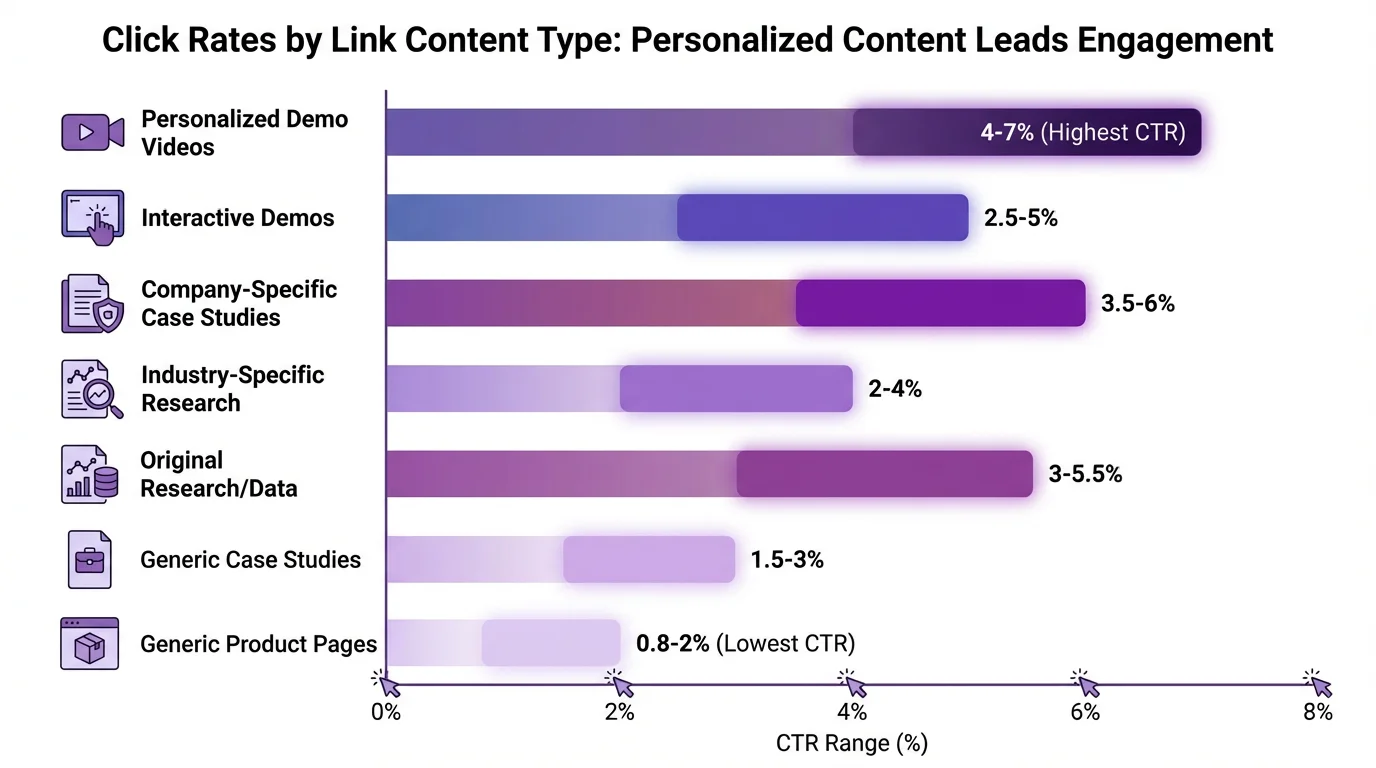
The type of content linked significantly impacts click-through rates.
Case Studies and Success Stories
Typical CTR ranges:
- Generic case studies: 1.5-3%
- Industry-specific case studies: 2.5-4.5%
- Company-specific references: 3.5-6%
Case studies with specific, quantified results outperform general success stories.
Thought Leadership and Research
Typical CTR ranges:
- Generic content: 1-2.5%
- Industry-specific research: 2-4%
- Original research and data: 3-5.5%
Original research and proprietary data drive higher engagement than curated content.
Product and Demo Content
Typical CTR ranges:
- Generic product pages: 0.8-2%
- Feature-specific content: 1.5-3.5%
- Interactive demos: 2.5-5%
- Personalized demo videos: 4-7%
Personalized content significantly outperforms generic product information.
Calendly and Scheduling Links
Typical CTR ranges:
- Generic calendar links: 0.5-1.5%
- Contextualized scheduling: 1.5-3%
- Value-added scheduling (with agenda): 2.5-4.5%
Scheduling links perform better when embedded in compelling context.
Social Proof and Validation
Typical CTR ranges:
- Customer logos/lists: 1-2.5%
- Video testimonials: 2-4%
- G2/Capterra reviews: 1.5-3.5%
- Industry awards: 1-2%
Video content generally drives higher engagement than static proof points.
Click Rate Benchmarks by Email Position
Where links appear in your email affects click-through rates.
First Email in Sequence
Typical CTR ranges:
- Single link: 1.5-3.5%
- Multiple links: 1-2.5%
First emails should focus on one clear action rather than multiple options.
Follow-up Emails
Typical CTR patterns:
- Follow-up 1: Often lower than first email (1-2.5%)
- Follow-up 2-3: Can exceed first email with new angles (1.5-3.5%)
- Late sequence: Generally declining (0.5-1.5%)
Successful follow-ups introduce new value rather than repeating initial content.
Breakup and Final Emails
Typical CTR ranges:
- Breakup emails: 1.5-4%
- "Last chance" framing: 2-4.5%
Urgency and finality can drive higher engagement in closing emails.
Link Placement and Formatting Impact
How links are presented affects click behavior.
Above vs. Below the Fold
Performance patterns:
- Links in first paragraph: 25-40% higher CTR
- Links after value proposition: Strongest performance
- Links at end only: Lower overall CTR
Early link placement works when context is established quickly.
Link Format
Typical performance differences:
- Hyperlinked text: Baseline performance
- Naked URLs: Often 10-20% lower CTR
- Button-style links (HTML): Variable (can trigger spam filters)
- Shortened URLs: Can reduce trust and CTR
Clean, contextual hyperlinks typically perform best in cold email.
Number of Links
Performance patterns:
- Single link: Highest click rate per link
- Two links: 15-25% lower per-link CTR
- Three or more links: Significant dilution
Focus on one primary action per email for optimal click performance.
Click Rate Benchmarks by Buyer Persona
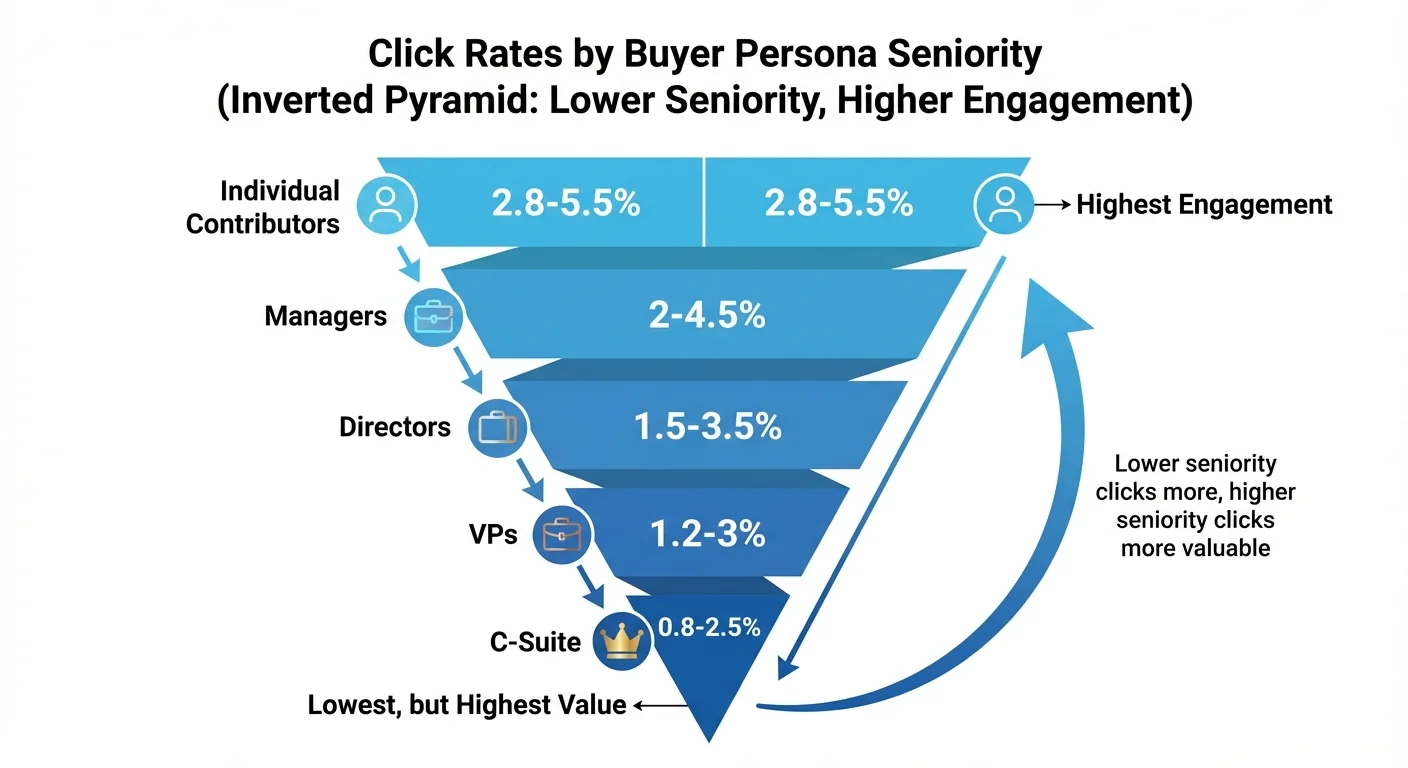
Different roles show varying click-through patterns.
C-Suite Executives
Typical CTR ranges:
- CEOs: 0.8-2%
- CFOs: 0.9-2.2%
- CIOs/CTOs: 1-2.5%
- CMOs: 1.2-3%
Executives click less frequently but their engagement is highly valuable.
VP and Director Level
Typical CTR ranges:
- VP Sales: 1.8-4%
- VP Marketing: 2-4.5%
- VP Engineering: 1.2-3%
- Directors (average): 1.5-3.5%
Senior managers balance time constraints with information gathering.
Manager and Individual Contributor
Typical CTR ranges:
- Managers: 2-4.5%
- Senior ICs: 2.5-5%
- Specialists: 2.8-5.5%
Individual contributors often have more time for content consumption.
Optimizing for Click-Through Rates
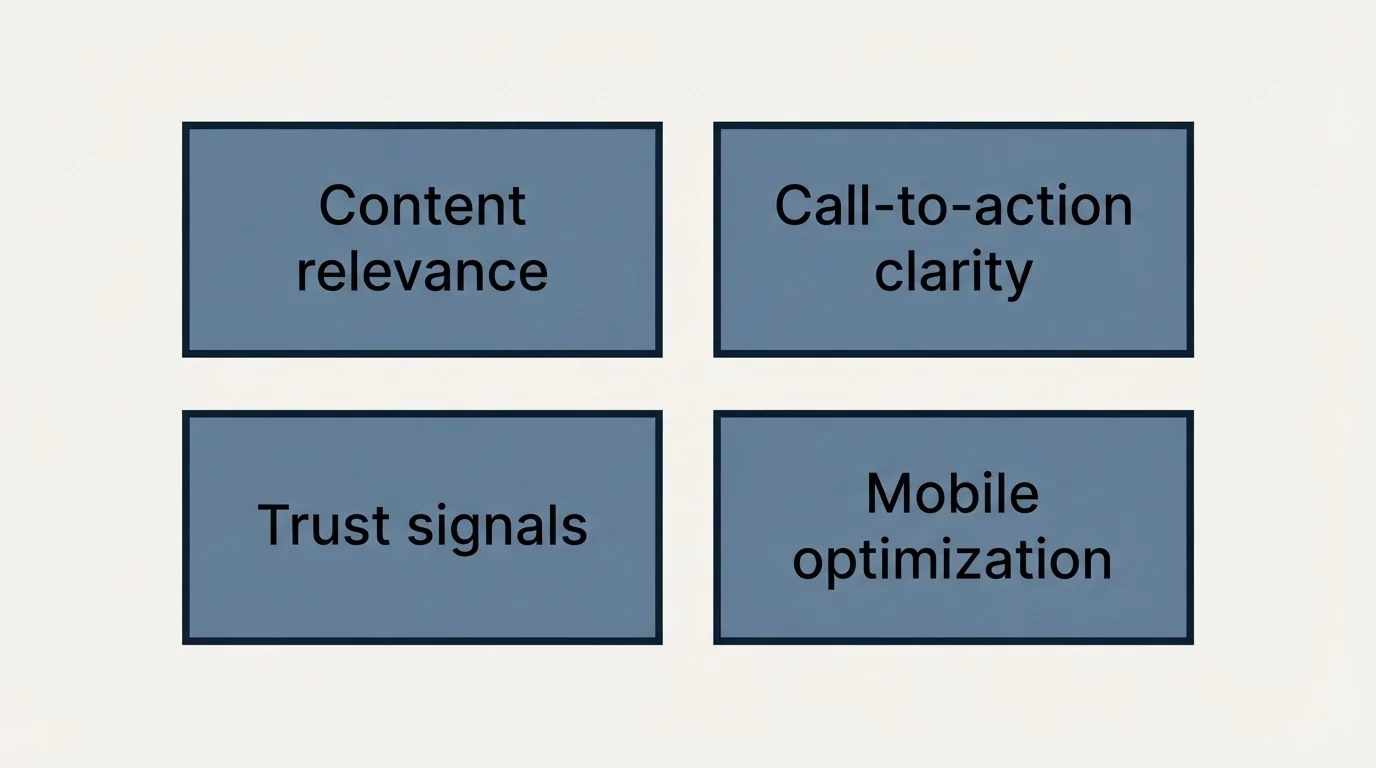
Understanding what drives clicks helps improve performance.
Content Relevance
Relevance is the primary driver of click behavior:
- Industry-specific content: 40-60% improvement
- Role-specific content: 30-50% improvement
- Company-specific references: 50-80% improvement
- Timing-based relevance: 25-45% improvement
Call-to-Action Clarity
Clear, compelling CTAs improve click rates:
- Specific benefit statements outperform vague invitations
- Action-oriented language (Learn, See, Discover) performs well
- Reducing friction language (Quick, Brief, 2-minute) can help
- Personalized CTAs outperform generic versions
Trust Signals
Building credibility improves willingness to click:
- Recognizable brand mentions
- Customer logos (when appropriate)
- Specific, verifiable claims
- Professional email formatting
Mobile Optimization
With significant mobile email consumption:
- Prominent link placement for thumb-friendly clicking
- Sufficient spacing around links
- Shorter URLs for readability
- Mobile-responsive landing pages
Click Rate vs. Reply Rate Strategy
Consider whether click-driven or reply-driven strategies serve your goals.
- You have compelling content to share
- Your goal is awareness or education
- Landing page conversion is strong
- You need engagement data for nurturing
- You want direct conversation
- Personalization is your strength
- Landing pages are not optimized
- You prefer quality over volume
When to Focus on Clicks
Click-driven strategies work well when:
- You have compelling content to share
- Your goal is awareness or education
- Landing page conversion is strong
- You need engagement data for nurturing
When to Focus on Replies
Reply-driven strategies work well when:
- You want direct conversation
- Personalization is your strength
- Landing pages are not optimized
- You prefer quality over volume
Hybrid Approaches
Many successful campaigns combine both:
- Primary CTA for reply
- Secondary content link for research-oriented buyers
- Different approaches by sequence position
Improving Below-Average Click Rates
If your click-through rates fall below industry benchmarks, focus on these areas.
Content Improvement
Link destination optimization:
- Ensure landing pages deliver on email promises
- Mobile-optimize destination content
- Reduce page load times
- Match messaging between email and landing page
Content selection:
- Test different content types
- Use more specific, relevant content
- Create content for specific personas
- Invest in original research or data
Email Optimization
CTA improvement:
- Test specific vs. general CTAs
- Experiment with placement
- Reduce to single primary CTA
- Add context around why to click
Email formatting:
- Improve scannability
- Reduce email length to essentials
- Increase white space around links
- Test different link formats
Targeting Refinement
Audience optimization:
- Focus on higher-intent segments
- Improve persona targeting
- Time outreach to relevant triggers
- Remove low-engagement segments
Tracking and Measurement
Accurate click tracking requires proper methodology.
Link Tracking Setup
Best practices for reliable tracking:
- Use consistent UTM parameters
- Implement click tracking at campaign level
- Track unique clicks vs. total clicks
- Monitor for bot clicks and filter appropriately
Bot Click Filtering
Security systems can inflate click rates:
- Enterprise email security may pre-click links
- Filter patterns suggesting bot behavior
- Focus on click-to-conversion metrics
- Use click timestamps to identify patterns
Statistical Significance
Ensure sufficient sample sizes:
- Minimum 500-1000 emails per variant
- Allow 48-72 hours for full engagement
- Account for sequence position in analysis
Next Steps
Understanding where your click-through rates fall relative to industry benchmarks is the first step toward optimization. Systematic testing of content types, CTAs, and link placement can move metrics from below-average to excellent over 2-3 months.
If click rates remain low despite optimization, consider whether your email strategy should shift toward reply-driven engagement or whether content and targeting need fundamental improvement.
Get your free campaign strategy to see how your click rates compare to industry benchmarks and identify specific opportunities for improvement.
Related Reading
Frequently asked questions.
Frequently asked questions- What is a good click-through rate for cold emails?
- A good cold email click-through rate ranges from 3-5%, with excellent performance at 5% or above. Average performance falls between 1.5-3%, and below 1.5% is considered below average. However, many effective cold email strategies minimize links entirely and focus on driving replies instead of clicks, so these benchmarks apply specifically to campaigns that include trackable links.
- Which industries have the highest cold email click rates?
- Consulting services achieve the highest typical click rates at 2.2-5%, with top performers reaching 6.5%. E-commerce (2.2-5%) and SaaS (2-4.5%) also show strong engagement. Digitally-native industries tend to perform better. Conversely, security-conscious sectors like cybersecurity (1.5-3.5%), banking (1.2-3%), and aerospace (1.2-2.8%) typically see lower click rates due to caution around external links.
- What type of content gets clicked most in cold emails?
- Personalized demo videos achieve the highest click rates at 4-7%, followed by company-specific case study references at 3.5-6%. Original research and proprietary data drive 3-5.5% clicks. Generic content performs significantly worse: generic product pages get only 0.8-2% clicks, and generic calendar links receive just 0.5-1.5%. The more personalized and specific the content, the higher the engagement.
- Does link placement affect click-through rates in cold emails?
- Yes, link placement significantly impacts click rates. Links positioned in the first paragraph receive 25-40% higher click-through rates than links placed later in the email. Links that appear after clearly establishing value proposition perform strongest. Emails with links only at the end typically see lower overall CTR. First emails should focus on a single link rather than multiple options, which can reduce clicks by up to 50%.
About the author.

Hosun Chung is COO at RevenueFlow, which builds and operates outbound revenue engines for B2B companies. Previously at Gleacher Shacklock LLP. Studied at London School of Economics.
Hosun Chung · COO
Connect on LinkedIn →Explore more.
Ready to scale your outreach?
We build GTM engines that book real meetings. See the receipts.
Related articles.
Cold Email Conversion Benchmarks: 2026 Performance Data
Complete benchmark data for cold email conversion rates from reply to meeting to opportunity. Learn what drives conversions and how to optimize your full funnel.
Education Cold Email Benchmarks: 2026 Performance Data
Industry benchmark data for education cold email campaigns, including open rates, reply rates, and conversion metrics for companies targeting K-12 schools, higher education, and corporate training organizations.
Automotive Cold Email Benchmarks: 2026 Performance Data
Industry benchmark data for automotive sector cold email campaigns, covering OEMs, suppliers, dealerships, and automotive technology with performance metrics by segment and buyer role.
Real Estate Cold Email Benchmarks: 2026 Performance Data
Comprehensive benchmark data for real estate cold email campaigns, including open rates, reply rates, and conversion metrics for companies targeting brokerages, property managers, developers, and real estate investors.
Fintech Cold Email Benchmarks: 2026 Performance Data
Comprehensive benchmark data for fintech cold email campaigns, including open rates, reply rates, and conversion metrics specific to financial technology companies targeting banks, financial institutions, and businesses.
Media Cold Email Benchmarks: 2026 Performance Data
Comprehensive benchmark data for media and entertainment industry cold email campaigns, covering publishers, streaming platforms, advertising, and content creators.