Crono vs Kixie: Sales Engagement Platform Comparison
Compare Crono and Kixie side by side. See pricing, features, and integrations to choose the right sales engagement platform for your needs.
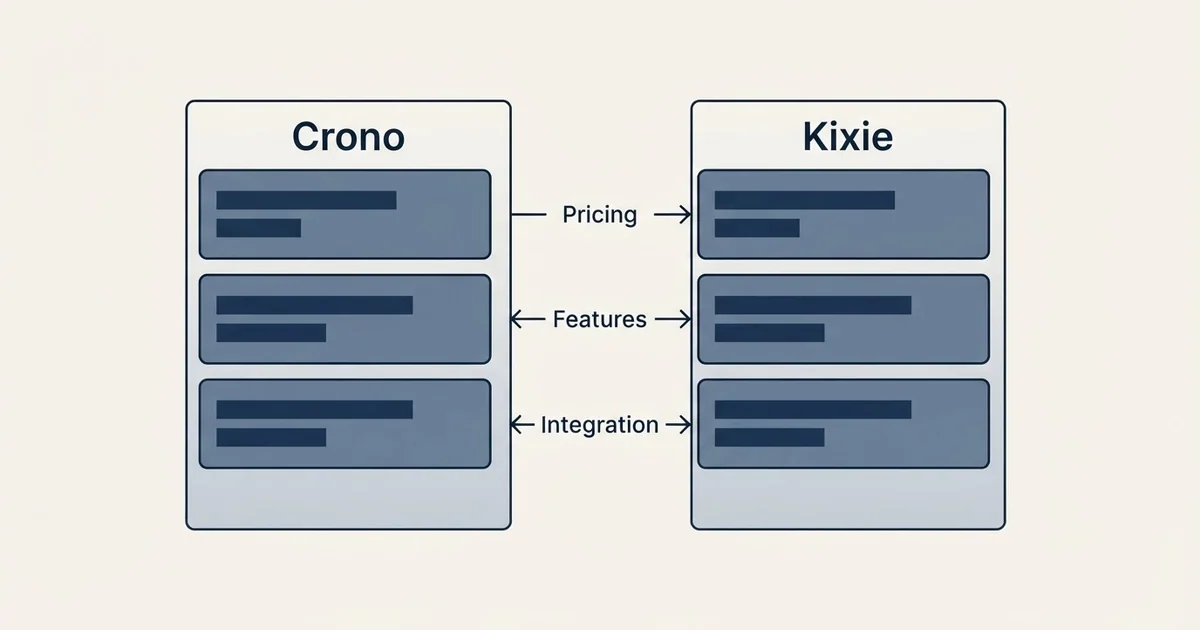
Compare Crono and Kixie side by side. See pricing, features, and integrations to choose the right sales engagement platform for your needs.
Reviewed and updated September 5, 2026
Crono vs Kixie: Sales Engagement Platform Comparison
If you are comparing multi-channel sales outreach and engagement tracking tools, Crono and Kixie will likely both appear on your radar. They share some surface-level similarities, but the details reveal important differences in pricing, capability, and target audience.
The Quick Answer
By each vendor's own wording, Crono lists multichannel sequences (unlimited) and email finder, while Kixie lists outbound call & text cadences and bi-directional crm integration. A capability both offer can appear under different names, so read both feature lists below.
Both Crono and Kixie use custom pricing, so the decision comes down to features and workflow fit.
If your priority is coordinating outreach across email, phone, and social channels, both tools target it. The right choice depends on your budget, team size, and the specific capabilities you need most.
Understanding the Core Difference
Crono is AI sales platform and sales execution layer for B2B revenue teams that captures buying signals, enriches data, runs unlimited multichannel sequences and orchestrates workflows and AI agents from one unified feed, with native CRM, email and dialer integrations.
Kixie is AI-powered sales communications platform combining a multi-line power dialer, business SMS and a contact center with bi-directional CRM integration. Runs automated outbound calling and texting cadences and adds conversation intelligence for call analysis and coaching.
The two platforms take different approaches to solving the same core challenge.
Pricing Comparison
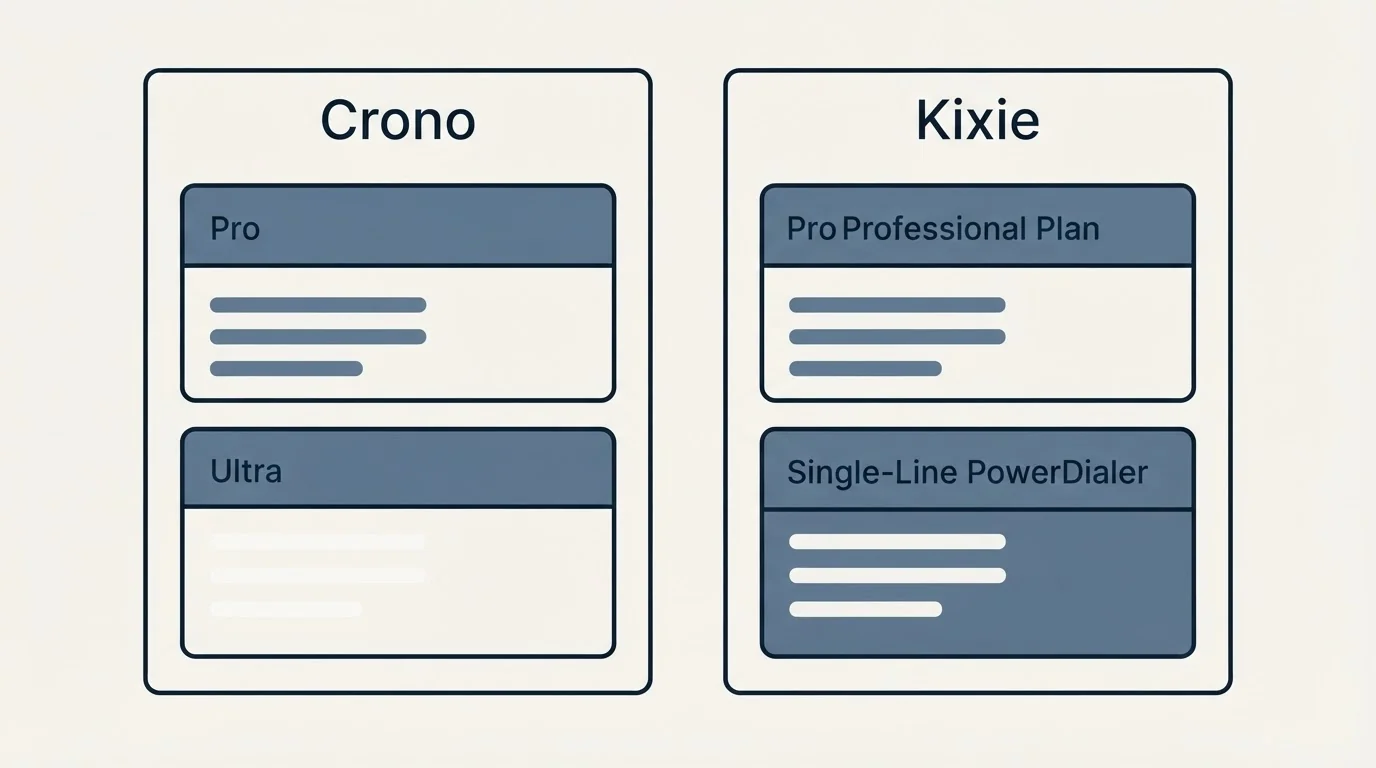
Crono Pricing (as of September 2026)
| Plan | Price | Contacts | Emails |
|---|---|---|---|
| Pro | Contact Sales | Min. 2 users; 3 mailboxes per user; Email Finder 500 credits; Mobile Number Finder 50 credits; AI credits 5.000 | Multichannel sequences (unlimited) |
| Ultra | Contact Sales | Min. 5 users; 10 mailboxes per user; Email Finder 1000 credits; Mobile Number Finder 100 credits; AI credits 10.000 | Everything in Pro; Integrated Voip Dialer (200 minutes included) |
| Enterprise | Contact Sales | Ideal for teams with 50+ users; tailored credit plans; unlimited mailboxes | Unlimited mailboxes; access to all integrations |
Source: Crono Pricing
Kixie Pricing (as of September 2026)
| Plan | Price | Emails |
|---|---|---|
| Professional Plan | Contact Sales | Unlimited Minutes for US/Canada calls |
| Single-Line PowerDialer | Contact Sales | Unlimited Minutes for US/Canada calls; 1-line PowerDialer |
| Multi-Line PowerDialer | Contact Sales | Unlimited Minutes for US/Canada calls; PowerDial up to 4 lines |
Source: Kixie Pricing
Pricing Analysis
One or both platforms use custom or contact-based pricing for some tiers. Reach out to their sales teams for exact quotes based on your usage needs.
Features Breakdown
- Multichannel sequences (unlimited)
- Email Finder
- Mobile Number Finder
- AI credits
- Real-time CRM Integration
- Custom CRM Fields Mapping
- and 6 more listed below
- Outbound Call & Text Cadences
- Bi-Directional CRM Integration
- Click-to-Call / Click-to-Text
- SMS Templates
- Team SMS
- Voicemail Drop
- and 6 more listed below
Crono Key Features
- Multichannel sequences (unlimited)
- Email Finder
- Mobile Number Finder
- AI credits
- Real-time CRM Integration
- Custom CRM Fields Mapping
- Full Analytics & Reports
- Integrated Voip Dialer
- MCP Server
- Lead scoring
- Signals (Job Changes, Companies News, Web Visits, Hot Conversations, etc)
- Agents Hub
Kixie Key Features
- Outbound Call & Text Cadences
- Bi-Directional CRM Integration
- Click-to-Call / Click-to-Text
- SMS Templates
- Team SMS
- Voicemail Drop
- Live Call Coaching
- IVR Auto-Attendant
- Call Recording
- ConnectionBoost
- Conversation Intelligence
- Developer API
The two lists below are a diff of each vendor's own feature list by exact wording, so a capability both tools offer can appear on either side under a different name.
Listed only by Crono
- Multichannel sequences (unlimited)
- Email Finder
- Mobile Number Finder
- AI credits
- Real-time CRM Integration
- Custom CRM Fields Mapping
- Full Analytics & Reports
- Integrated Voip Dialer
- MCP Server
- Lead scoring
- Signals (Job Changes, Companies News, Web Visits, Hot Conversations, etc)
- Agents Hub
Listed only by Kixie
- Outbound Call & Text Cadences
- Bi-Directional CRM Integration
- Click-to-Call / Click-to-Text
- SMS Templates
- Team SMS
- Voicemail Drop
- Live Call Coaching
- IVR Auto-Attendant
- Call Recording
- ConnectionBoost
- Conversation Intelligence
- Developer API
Integration Ecosystem
Crono Integrations
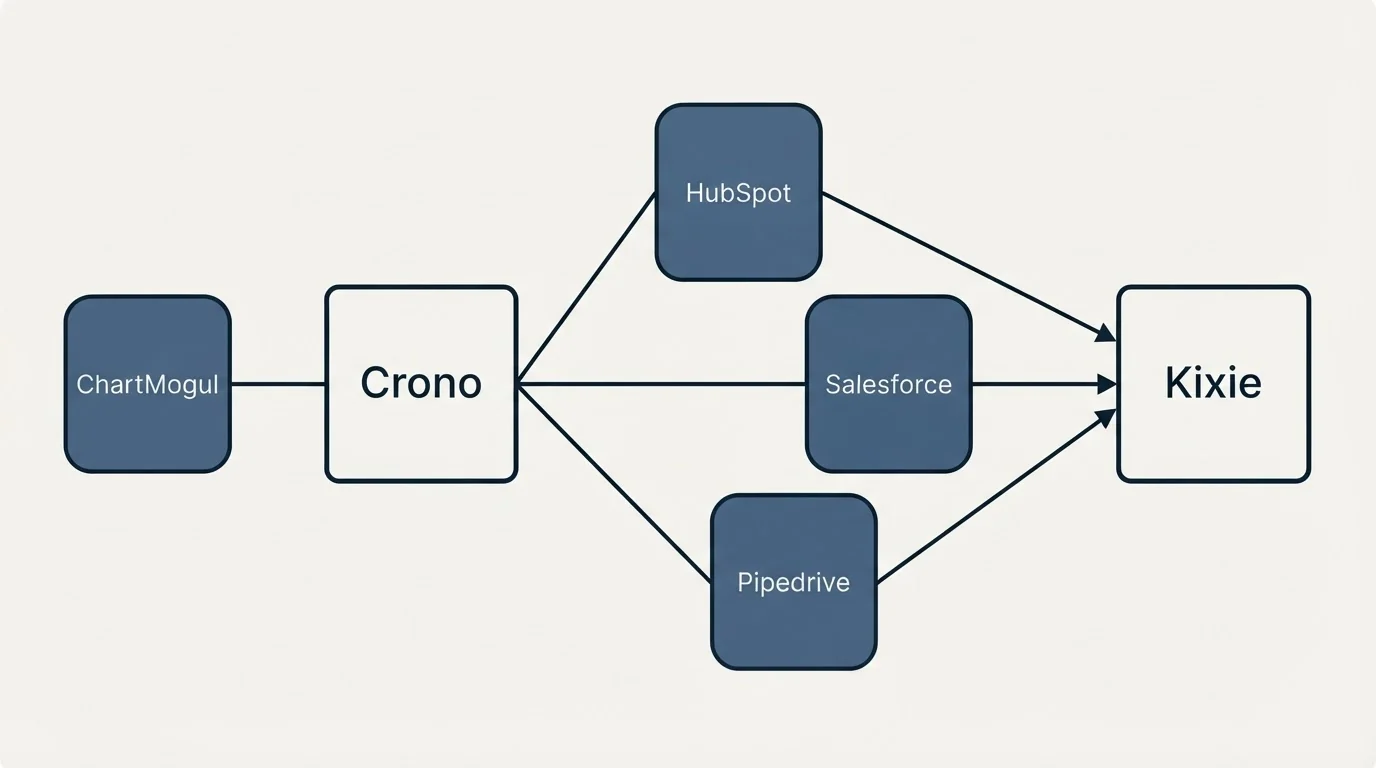
Crono connects with: HubSpot, Salesforce, Pipedrive, ChartMogul, Gmail, Outlook, Clay, n8n, Lusha, ZoomInfo, Cognism, Aircall, HubSpot Phone, Ringover.
Kixie Integrations
Kixie connects with: HubSpot, Salesforce, Zoho, Pipedrive, Zapier.
Shared Integrations
Both tools integrate with: HubSpot, Salesforce, Pipedrive.
Integrations listed only by Crono: ChartMogul, Gmail, Outlook, Clay, n8n, Lusha, ZoomInfo, Cognism, Aircall, HubSpot Phone, Ringover.
Integrations listed only by Kixie: Zoho, Zapier.
Use Case Recommendations
Best Fit for Crono
- Organizations with complex tech stacks needing broad integration support (14 integrations)
- Enterprise buyers who prefer custom pricing and dedicated support
- SDR teams running multi-channel outreach sequences
- Sales managers tracking team engagement metrics
Best Fit for Kixie
- Enterprise buyers who prefer custom pricing and dedicated support
- SDR teams running multi-channel outreach sequences
- Sales managers tracking team engagement metrics
- Revenue teams coordinating email, phone, and social touches
Feature Comparison Summary
| Feature | Crono | Kixie |
|---|---|---|
| Starting Price | Contact Sales | Contact Sales |
| Top Tier Price | Contact Sales | Contact Sales |
| Total Features Listed | 12 | 12 |
| Integrations | 14 | 5 |
Getting Started Checklist
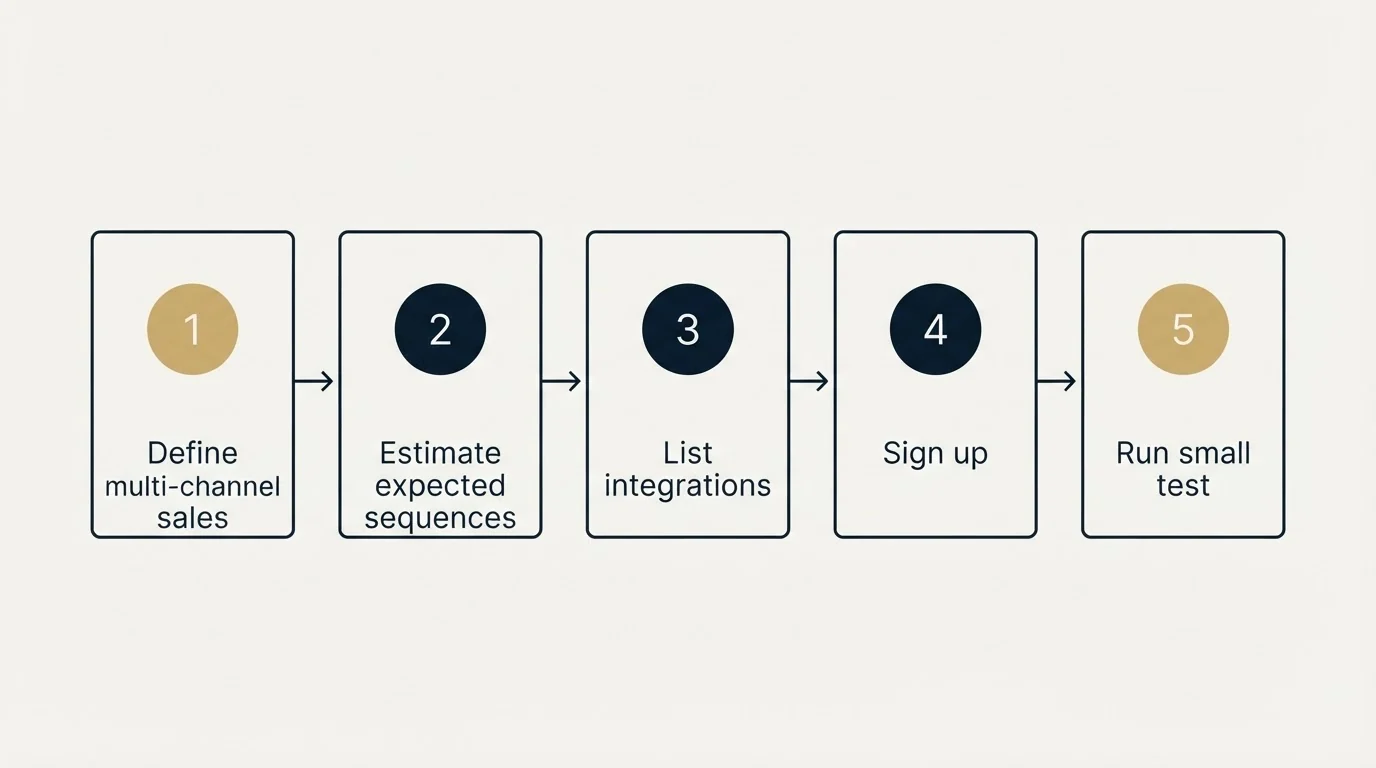
- Define your multi-channel sales outreach and engagement tracking requirements and monthly budget
- Estimate your expected sequences and engagement actions to find the right tier
- List the integrations your team currently relies on
- Sign up for free trials or demos of both platforms
- Run a small test with each tool before making a commitment
- Evaluate the onboarding experience and support quality
Final Thoughts
Crono and Kixie both serve the multi-channel sales outreach and engagement tracking market. Crono and Kixie both use custom pricing, so weigh the specific features that matter most for your workflow against the quotes you are given. Your decision should weigh pricing against the specific features that matter most for your workflow.
Start with a trial of each to see which platform fits your team's daily process. The best tool is the one your team actually uses consistently.
Pricing and features verified as of September 2026. Visit Crono and Kixie for current information.
About the author.

Tim Carden is CMO / CTO at RevenueFlow, which builds and operates outbound revenue engines for B2B companies. Studied at McGill University.
Tim Carden · CMO / CTO
Connect on LinkedIn →Explore more.
Ready to scale your outreach?
We build GTM engines that book real meetings. See the receipts.
Related articles.
AroundDeal vs Leadspicker: Data Enrichment Tool vs Sales Engagement Platform Comparison
Compare AroundDeal (data enrichment tool) and Leadspicker (sales engagement platform) side by side. See pricing, features, and integrations to decide which one, or both, your stack needs.
GetSales.io vs Yet Another Mail Merge: Sales Engagement Platform vs Cold Email Platform Comparison
Compare GetSales.io (sales engagement platform) and Yet Another Mail Merge (cold email platform) side by side. See pricing, features, and integrations to decide which one, or both, your stack needs.
Gong vs NeverBounce: Sales Engagement Platform vs Data Enrichment Tool Comparison
Gong vs NeverBounce: what Gong's own pages say about enrichment, what NeverBounce's API returns about an address, and how each vendor prices.
ContactOut vs Luru: Data Enrichment Tool vs Sales Engagement Platform Comparison
Compare ContactOut (data enrichment tool) and Luru (sales engagement platform) side by side. See pricing, features, and integrations to decide which one, or both, your stack needs.
Enginy vs Success.ai: Sales Engagement Platform vs Cold Email Platform Comparison
Compare Enginy (sales engagement platform) and Success.ai (cold email platform) side by side. See pricing, features, and integrations to decide which one, or both, your stack needs.
Enrich Layer vs La Growth Machine: Data Enrichment Tool vs Sales Engagement Platform Comparison
Compare Enrich Layer (data enrichment tool) and La Growth Machine (sales engagement platform) side by side. See pricing, features, and integrations to decide which one, or both, your stack needs.