Gong vs NeverBounce: Sales Engagement Platform vs Data Enrichment Tool Comparison
Gong vs NeverBounce: what Gong's own pages say about enrichment, what NeverBounce's API returns about an address, and how each vendor prices.
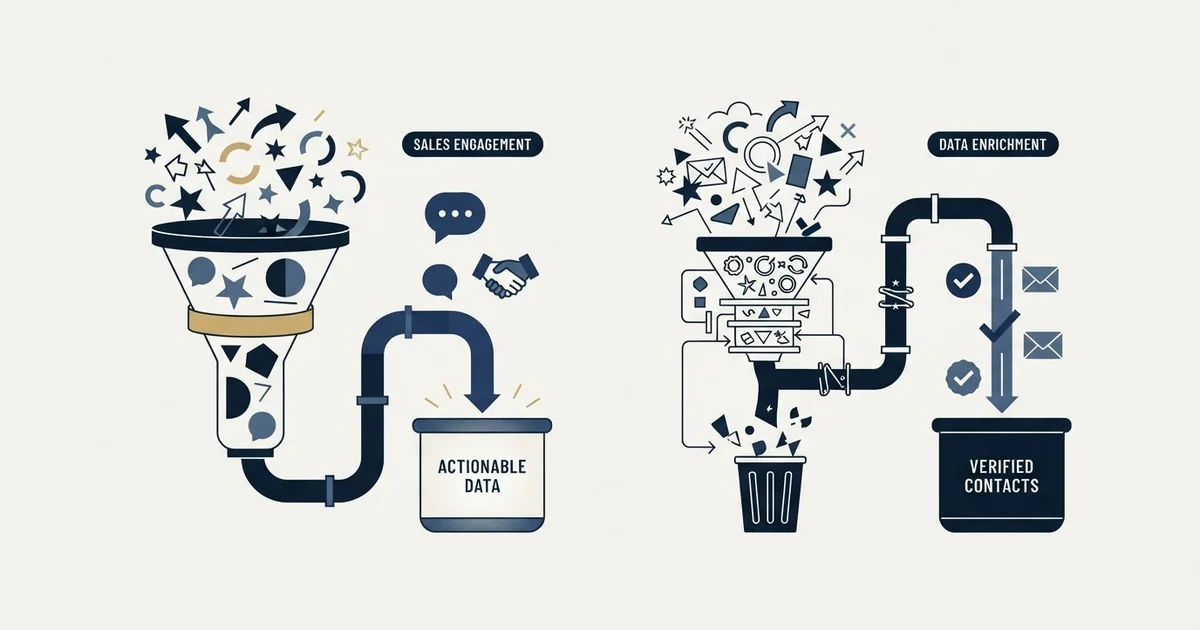
Gong names no enrichment product of its own. Its Gong Engage FAQ says contacts are added and enriched inside Gong flows through ZoomInfo and LeadIQ. NeverBounce does a different job: its API says whether an address is valid, invalid, disposable, catchall or unknown, with flags and parsed address parts, before anything is sent.
Key takeaways
- Gong's pricing page publishes no price: licenses are priced per user, a platform fee depends on the number of users supported, and integrating an existing tech stack is free.
- Gong Engage's FAQ names ZoomInfo and LeadIQ as the contact data providers that add and enrich contacts directly in Gong flows.
- NeverBounce's API version 4.2 returns one of five result codes, valid, invalid, disposable, catchall or unknown, plus flags such as role_account and a suggested correction.
- NeverBounce's docs say list jobs count toward usage as soon as they start, and credits are bought in bulk from the dashboard or billed monthly on request.
Reviewed and updated September 21, 2026
Gong records and analyzes sales conversations and runs outbound through Gong Engage. NeverBounce checks whether an email address will accept mail. So when someone searches Gong enrich, the useful answer sits on Gong's own product page: Gong names no enrichment product of its own, and its Gong Engage FAQ says contacts are added and enriched inside Gong flows through ZoomInfo and LeadIQ. NeverBounce works one step earlier, deciding which of those addresses are safe to send to. This page covers what each one does, what each publishes about price, and where the two meet.
Does Gong Enrich Contacts?
Not with a product of its own, going by Gong's pages. The Gong Engage FAQ lists contact data providers among its integrations: "Add and enrich contacts directly to Gong flows within ZoomInfo, and LeadIQ." Gong Engage itself captures interaction data, emails, phone calls, web conference meetings, document views and website visits, and syncs contact data with Salesforce and other CRMs.
So the enrichment question for a Gong customer is a provider question, and the two named providers each have their own comparison: Gong vs ZoomInfo and Gong vs LeadIQ. Gong's own blog makes the case for checking the data as well as finding it. A post by one of its enterprise account executives argues that "no single data provider wins at everything" and that a bounced first email is what breaks a prospecting block. That is the gap a verifier like NeverBounce fills, and neither vendor documents a direct connection between the two.
What Gong Is, From Its Own Pages
Gong calls itself a Revenue AI OS and says it is trusted by 5,000+ customers. Its product menu names Gong Engage, Gong Forecast, Gong Enable, Gong Agents, the Gong Revenue Graph and the Gong Collective of integrations and services. The core of it is conversation intelligence: the homepage promise is to capture every interaction, analyze what is working and automate what happens next.
Gong Engage is the outbound part. Its page lists AI Composer, Flows, AI Tasker, a Dialer, Gong Anywhere and Analytics, and its FAQ describes the integrations around it:
- CRM: bi-directional sync with Salesforce, HubSpot and Microsoft Dynamics 365.
- Contact data providers: ZoomInfo and LeadIQ, which add and enrich contacts in Gong flows.
- Power dialers: Nooks, with Orum listed as coming soon.
- Intent data: 6sense, G2, LinkedIn and Dealroom among others.
- Scheduling: Chili Piper and Calendly inside Engage flows and the Email Composer.
With Gong Anywhere for Salesforce, the FAQ adds, reps can view contact details, trigger flows and send emails or make calls without leaving the CRM. That is where contact data a provider has enriched ends up being used, which is why the quality of that data shows up in Gong's own activity numbers.
What NeverBounce Is, From Its Developer Docs
NeverBounce describes itself as real-time email verification and email list cleaning. Its developer documentation treats API version 4.2 as current and keeps the legacy V3 docs behind a separate link. Two jobs are documented.
Single checks. The /check endpoint verifies one address and returns one of five result codes: valid, invalid, disposable, catchall or unknown. Flags add detail about the address and its domain, such as role_account, free_email_host, disposable_email and spamtrap_network, and a suggested correction catches typos like "gmal.com". For sign-up forms the docs suggest letting valid, catchall and unknown addresses through, blocking only disposable and invalid ones, and treating a timeout of about 10 seconds as unknown. The endpoint also takes a timeout parameter, how long the API should try before giving up and returning unknown, and the reference warns that a + alias must be encoded as %2B in form-encoded requests.
List jobs. A list is submitted to jobs/create, indexed and deduped, then verified. You poll jobs/status, every 5 to 10 seconds for lists under 50k, and download a CSV whose last column holds the result code. Version 4.2 added job callbacks, so polling is no longer required; it also renamed the misspelled acedemic_host flag to academic_host, a breaking change for code that matches on the old spelling, and made manual review of API jobs an opt-in. The docs also offer a free analysis that returns an estimated bounce rate before you decide to verify the whole list.
Response to /single/check, from the API reference example
"result": "valid" 1
"flags": ["has_dns", "has_dns_mx", "role_account"] 2
"suggested_correction": "" 3
"address_info": host "neverbounce.com", tld "com" 4
- 1One of five result codes: valid, invalid, disposable, catchall or unknown.
- 2Flags describe the address and its domain; role_account marks addresses such as admin@, help@ or sales@.
- 3A soft suggestion that may correct a common typo such as gmal.com.
- 4Optional parsed address parts. The reference documents no company, phone or job-title field.
That response is the whole of what NeverBounce adds to a record: a verdict on the address, flags about it, a possible correction, and the address split into parts. It is not a contact data provider in the sense Gong's FAQ means. For the full endpoint walk-through, see NeverBounce's API mechanics.
What Each One Costs
Gong's pricing page publishes no price. It says licenses are priced per user, that there is a platform fee based on the number of users supported, and that you can integrate your existing tech stack for free. The page then asks for team size, in bands from 1 - 50 up to 10,000+, and what you want help with, and offers a customized proposal.
NeverBounce's pricing page and homepage answer automated readers with a press-and-hold check asking them to confirm they are human, so no NeverBounce plan or price is quoted here and the figures an earlier version of this page carried have been withdrawn. Read the current rates on its pricing page directly. Its developer docs do describe the billing mechanics: lists added through the API start verifying immediately and count toward your usage, a job fails if your credit balance is insufficient, and credits are bought in bulk from the dashboard or billed through a monthly option on request.
| Gong | NeverBounce | |
|---|---|---|
| Unit | A user | A credit; the API reports paid and free credits separately |
| How you pay | Per-user licenses plus a platform fee based on the number of users supported | Credits bought in bulk, or a monthly billing option on request |
| Free | Integrating your existing tech stack | A free analysis that estimates a list's bounce rate |
| Published price | None; a form leads to a customized proposal | Not readable: the pricing page shows a bot check |
What A Verification Pass Does To A List
NeverBounce's documentation includes a sample list job, and it shows the shape of a verification result better than any description. Of 24,606 addresses, 18,227 came back valid, 1,305 invalid, 4,342 catchall, 16 disposable and 716 unknown, with a bounce estimate of about 5.3%. It is an example in the docs, not a benchmark.
Read against the docs' own sign-up form rule, 1,321 of those addresses, invalid plus disposable, would be blocked. The 5,058 catchall and unknown addresses are the judgment call: a catchall domain accepts mail at any address, so the verifier cannot confirm the person. What a team does with them depends on how much a bounce costs it. Our own rule is one message per campaign, which makes that cost high: a bounce on the only message is the whole campaign for that contact.
Where They Meet In An Outbound Stack
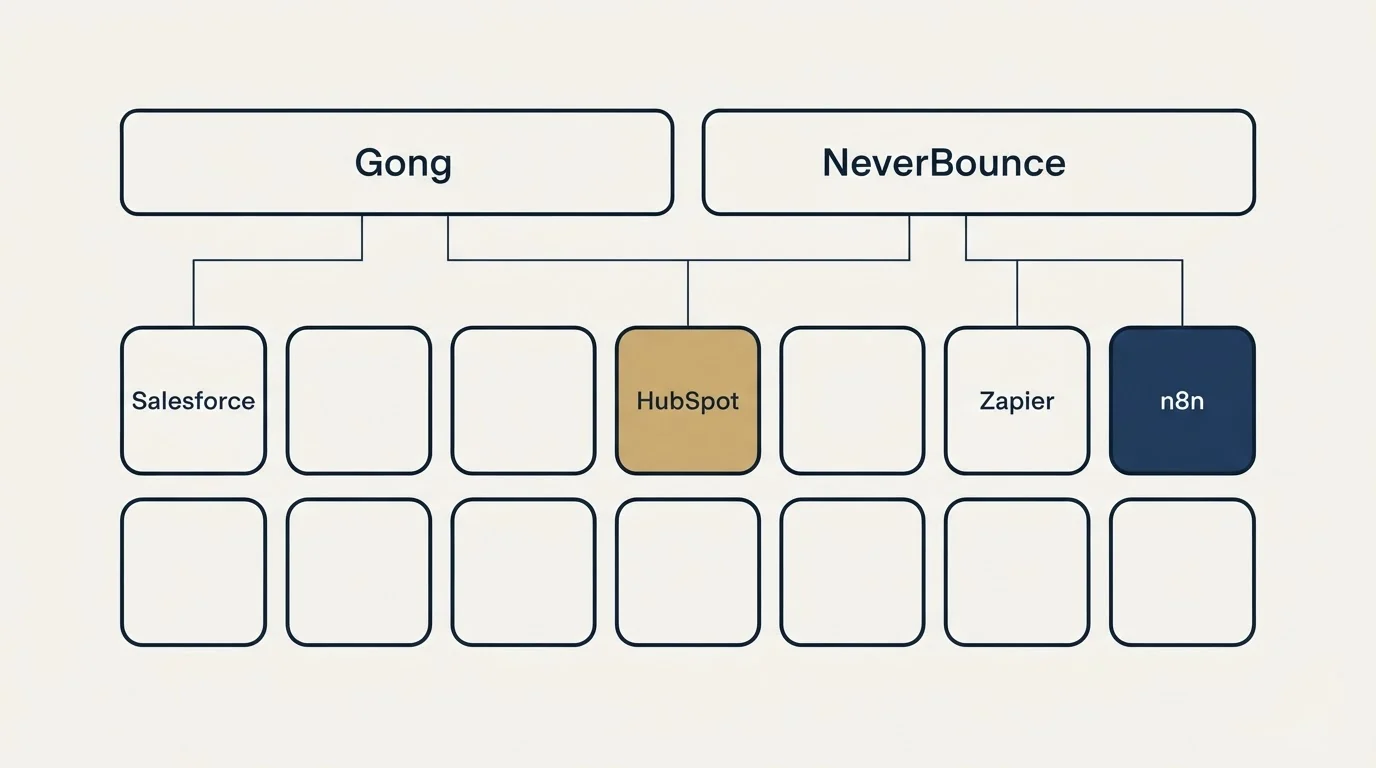
These two do not compete. A contact is sourced and enriched first, through a provider such as the ZoomInfo or LeadIQ integrations Gong names. The address is verified next, which is NeverBounce's job. The message goes out from whatever sends it, Gong Engage included. The conversation that follows is what Gong captures and analyzes.
The practical consequence is the order of spend. Verification is paid per address before anything is sent; Gong is licensed per user for as long as the team uses it. A team that already runs Gong and has bouncing addresses needs a verifier, and a comparison of email verification tools is the place to shortlist one. A team that has clean addresses and no record of its calls needs Gong or something like it, and a verifier does nothing for that.
Who Needs Which
- You run Gong and need more contacts: Gong's FAQ points to ZoomInfo and LeadIQ as the providers that enrich inside its flows.
- You have addresses and need to know which will bounce: that is NeverBounce's /check endpoint or a list job, with a free analysis first if you are unsure the list is worth verifying.
- You need to know what happened on calls and emails: that is Gong's conversation capture, and NeverBounce has no part in it.
Getting Started
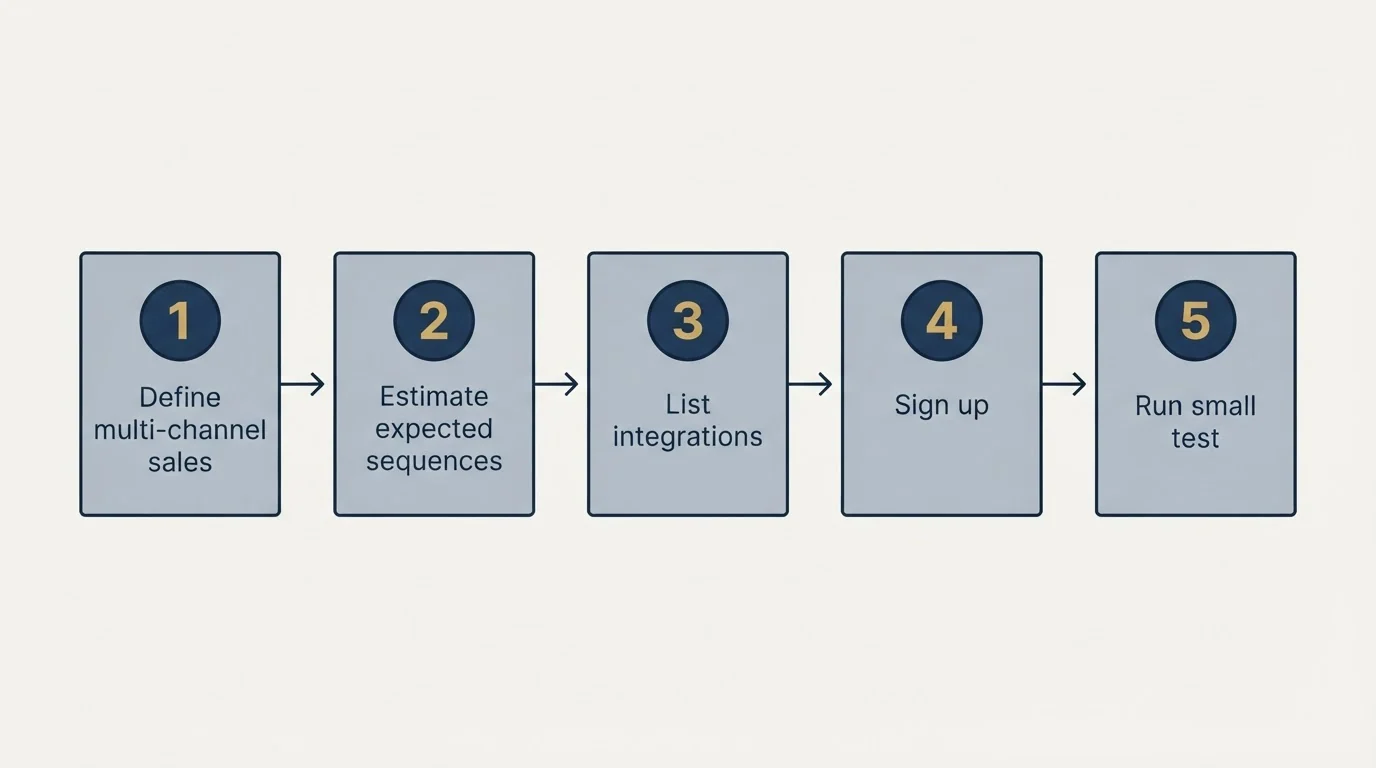
- Decide which problem you are solving: missing contacts, bad addresses or no record of conversations. Each has a different tool.
- For Gong, prepare your team size and use case before filling in its pricing form, because the quote is per user plus a platform fee.
- For NeverBounce, run the free analysis on a sample list first; the docs return an estimated bounce rate before any verification spend.
- Test the API with small batches, as the docs recommend fewer than 10 contacts while you build an integration.
Final Thoughts
Gong enriches nothing by itself; its pages hand that job to ZoomInfo and LeadIQ. NeverBounce enriches nothing about the person either; it tells you whether the address works. Most outbound teams that run Gong still need a verifier, and most teams that buy a verifier still need somewhere to see what their conversations produced.
If you would rather have this run for you, RevenueFlow books qualified meetings on a pay-per-meeting basis.
Pricing and features are taken from the vendors' own pages. Verify current terms with the vendor before relying on them.
Frequently asked questions.
Frequently asked questions- Does Gong enrich contact data?
- Not with a product of its own, going by Gong's pages. The Gong Engage FAQ lists contact data providers among its integrations and says contacts can be added and enriched directly in Gong flows within ZoomInfo and LeadIQ. Gong Engage itself captures interaction data such as emails, calls, meetings and website visits, and syncs contact data with Salesforce and other CRMs.
- What does NeverBounce add to a contact record?
- A verdict on the address and details about it. The /check endpoint returns a result code, valid, invalid, disposable, catchall or unknown, plus flags such as role_account or free_email_host, a suggested correction for typos, and optionally the address split into parts. The API reference documents no company, phone or job-title field, so it is a verifier rather than a contact data provider.
- How much do Gong and NeverBounce cost?
- Gong's pricing page publishes no price; licenses are priced per user plus a platform fee based on the number of users supported, quoted after a form. NeverBounce's pricing page shows automated readers a bot check, so its current rates are best read there directly. Its developer docs say credits are bought in bulk from the dashboard or billed monthly on request.
- Can Gong and NeverBounce be used together?
- Yes, because they do different jobs at different points. A contact is sourced and enriched through a provider, verified by NeverBounce, sent from a tool such as Gong Engage, and the conversation is captured by Gong. Neither vendor's pages document a direct connection between the two, so the verification runs on the list before it reaches Gong.
About the author.

Tim Carden is CMO / CTO at RevenueFlow, which builds and operates outbound revenue engines for B2B companies. Studied at McGill University.
Tim Carden · CMO / CTO
Connect on LinkedIn →Explore more.
Ready to scale your outreach?
We build GTM engines that book real meetings. See the receipts.
Related articles.
Leadspicker vs NeverBounce: Sales Engagement Platform vs Data Enrichment Tool Comparison
Compare Leadspicker (sales engagement platform) and NeverBounce (data enrichment tool) side by side. See pricing, features, and integrations to decide which one, or both, your stack needs.
AroundDeal vs Leadspicker: Data Enrichment Tool vs Sales Engagement Platform Comparison
Compare AroundDeal (data enrichment tool) and Leadspicker (sales engagement platform) side by side. See pricing, features, and integrations to decide which one, or both, your stack needs.
ContactOut vs Luru: Data Enrichment Tool vs Sales Engagement Platform Comparison
Compare ContactOut (data enrichment tool) and Luru (sales engagement platform) side by side. See pricing, features, and integrations to decide which one, or both, your stack needs.
Enrich Layer vs La Growth Machine: Data Enrichment Tool vs Sales Engagement Platform Comparison
Compare Enrich Layer (data enrichment tool) and La Growth Machine (sales engagement platform) side by side. See pricing, features, and integrations to decide which one, or both, your stack needs.
11x vs Adapt.io: Sales Engagement Platform vs Data Enrichment Tool Comparison
Compare 11x (sales engagement platform) and Adapt.io (data enrichment tool). See pricing, features, and integrations to decide which one, or both, your stack needs.
AiSDR vs Clearout: Sales Engagement Platform vs Data Enrichment Tool Comparison
Compare AiSDR (sales engagement platform) and Clearout (data enrichment tool) side by side. See pricing, features, and integrations to decide which one, or both, your stack needs.