Gong vs ZoomInfo: Cross-Category Comparison
Compare Gong (sales engagement platform) and ZoomInfo (data enrichment tool) side by side. Understand how these tools fit different stages of your sales workflow.
Gong vs ZoomInfo compares two kinds of sales intelligence. ZoomInfo supplies intelligence before the conversation: B2B company and contact data and buying signals. Gong, a Revenue AI OS, analyses the conversations that follow and adds engagement, forecast and enablement products. Neither replaces the other; the gap costing meetings decides which comes first.
Key takeaways
- ZoomInfo describes itself as "a go to market intelligence platform" providing B2B company and contact data and real time buying signals.
- Gong calls itself a Revenue AI OS and names four products: Gong Engage, Gong Forecast, Gong Enable and Gong Agents.
- Gong's pricing page publishes a model rather than a figure: licences priced per user plus a platform fee based on the number of users supported.
- ZoomInfo's pricing page could not be read from this network, so any ZoomInfo figure is a quote to request rather than a rate to budget.
Reviewed and updated September 18, 2026
Gong vs ZoomInfo is really a question about two different kinds of sales intelligence. ZoomInfo's own page calls it "a go to market intelligence platform" built on B2B company and contact data and real time buying signals: intelligence about who to reach. Gong calls itself a Revenue AI OS that works on the conversations a team is already having: intelligence about what happens once you are talking. Neither replaces the other, and the useful question is which gap is costing meetings.
Gong vs ZoomInfo: Which Provides Better Sales Intelligence?
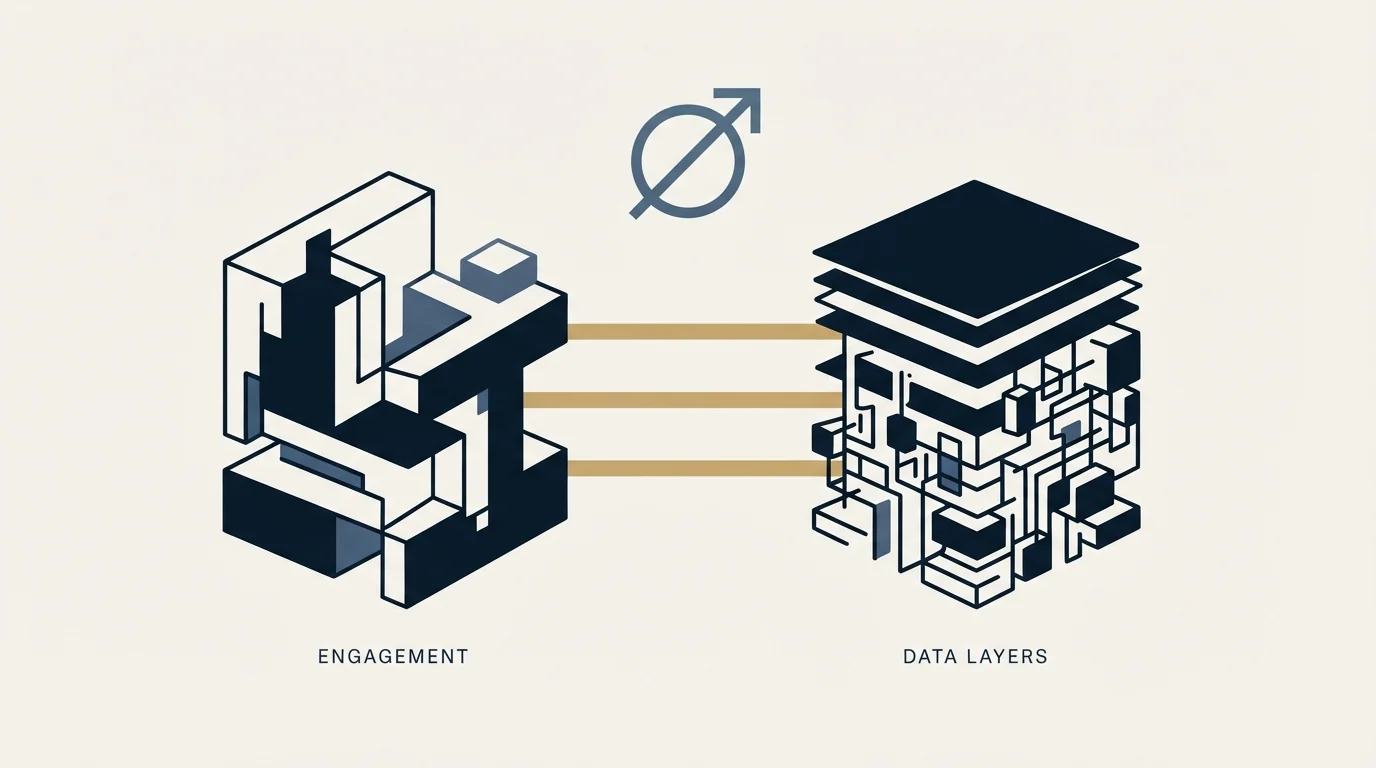
They answer different questions. ZoomInfo provides intelligence before the conversation: company and contact data, buying signals and lead routing. Gong provides intelligence during and after it: recorded and analysed customer interactions, deal and forecast views, and engagement workflows through Gong Engage. A team short of the right people to contact needs the first; a team losing deals it is already working needs the second.
| Question | ZoomInfo | Gong |
|---|---|---|
| Who should we contact? | Company and contact data | - |
| Who is showing intent? | Real time buying signals | - |
| What was said on the call? | - | Customer interactions analysed |
| Will the deal close? | - | Gong Forecast |
What Each Product Is, In Its Own Words
ZoomInfo's About page describes "a go to market intelligence platform that helps businesses find, engage, and win customers more efficiently", providing "accurate B2B company and contact-level data" and "real time buying signals". Its product menu adds Copilot, an AI sales agent; GTM Workspace and GTM Studio for workflows triggered by buying signals; ZoomInfo MCP, which connects AI tools to its data; lead routing and data quality for operations; and Data as a Service for feeding its data into other systems.
Gong describes itself as a Revenue AI OS and names four products: Gong Engage, to "prioritize and personalize every sales engagement"; Gong Forecast; Gong Enable, its revenue enablement product; and Gong Agents, which automate follow-ups and pipeline edits. The common thread is the customer conversation: Gong works on interactions that are already happening.
Framing Gong as an outbound sending tool with ZoomInfo as its data supplier gets the shape half right. ZoomInfo does sit at the start of a run. Gong sits across the middle and the end of it, and its engagement product is one module rather than the whole platform.
How To Compare Gong Engage With Outreach Or ZoomInfo
Gong Engage, which Gong's product page describes as covering email, a dialer and workflows, is the part of Gong that competes on sales engagement, so it compares directly with a sales engagement platform such as Outreach and not with ZoomInfo at all. The fair test is the same real sequence run through both, judged on the workflow a rep lives in every day; our Gong vs Outreach comparison sets out how Outreach packages its sequencing today.
ZoomInfo sits upstream of either engagement tool. It supplies the people and the signals that a sequence is built from, which is why a team comparing Gong Engage with Outreach should settle the data source separately rather than treat ZoomInfo as a third option in the same decision.
What Each Side Actually Does in a Cold Outbound Run
A cold outbound run has a fixed shape. Targeting comes first, and that is a decision about who is worth writing to rather than a piece of software. Then the list gets built and a mailbox gets resolved for every person on it; that is ZoomInfo's ground, through search, enrichment and its buying signals.
Sending sits in a sending tool. RevenueFlow runs one message per campaign, so nothing there is a bump step or a thread reply waiting to fire, and a prospect who stays quiet is re-approached later through a new campaign with a different angle.
The conversation that follows is where Gong starts to matter: once replies turn into calls and meetings, Gong records and analyses them, and its forecast and deal views read the pipeline those conversations produce. The meeting itself counts only against qualification criteria written down before launch.
Pricing Comparison
Gong Pricing
Gong's pricing page names no figure and sets out the model instead, in three lines: "Licenses are priced per user", "There is a platform fee based on the number of users supported", and "You can integrate your existing tech stack for free." The quote form asks for team size in bands of 1 to 50, 51 to 1,000, 1,001 to 9,999 and 10,000 or more.
A platform fee on top of per-seat licences is what catches small teams out, because cost per rep is not linear at the bottom of the range. The same model read beside a conversation-intelligence add-on rather than a database is in Zoom Revenue Accelerator against Gong.
Source: Gong Pricing
ZoomInfo Pricing
ZoomInfo's pricing page refused both a plain and a rendered request from this network, so this page carries no ZoomInfo figure at all, and any tier table circulating for it should be treated as unconfirmed. Its About page lists a free trial. A ZoomInfo line in a budget is a quote until a call happens.
Source: ZoomInfo Pricing
Gong
- Licences priced per user
- A platform fee by users supported
- Existing stack integrations free
Bring: seats, and seats plus growth
ZoomInfo
- Pricing page unreadable from here
- A free trial is listed
- Data, signals, Copilot, GTM Studio
Bring: contacts a year, seats, modules
Reading the Two Price Shapes Together
Neither half of this pair can be costed from a page read today, for two different reasons. Gong withholds its figures and produces them on a call; ZoomInfo's sit behind a page this network could not open. A budget here is two quotes, and the honest move is to record that in the plan rather than carry a number forward as though it were current.
Ask each for the split. From Gong, the licence line and the platform fee separately, at today's headcount and at the headcount you expect in a year. From ZoomInfo, the contacts and seats the quote assumes and the modules it includes, so the per-contact cost can be compared with a vendor that publishes one.
When to Choose Which

Read that sequence as a question about which gap is open rather than about which product is better. A team that names the wrong gap buys a capable tool that changes nothing.
Do You Need Both, and in Which Order?
For most teams the order is data first, conversations second, for reasons of measurement rather than preference. A conversation intelligence platform bought onto a thin pipeline analyses very little, and its reporting will describe a quiet quarter accurately without changing it.
One case honestly reverses it. A team already booking meetings and losing them to disorganised follow-through has a conversation gap rather than a data gap, and Gong is bought precisely to understand conversations that are already happening. It cannot manufacture the conversations themselves.
Using Both Together

Teams that run both put ZoomInfo at the top of the funnel and Gong across the conversations that follow, joined by the CRM. Gong's pricing page says existing tech stack integrations are free, and ZoomInfo's platform pages describe connecting its data across the tech stack, so the join to check in a trial is the CRM record both write to. A handoff that needs a CSV in the middle is one somebody stops doing in week three.
Two ownership questions come up once both are live: which system records that a contact was reached, and which records what was said. ZoomInfo's data and routing answer the first, Gong's analysed interactions the second, and the CRM is where a rep should find both without switching tools. Decide which system writes each field before the first sync runs.
Rolling It Out Without Breaking the Run
Keep the sending inventory out of either change. Sender domains, mailbox warmup and daily caps are their own project, and a stack change made in the same week as a sending change leaves nothing to attribute a result to. Change one layer, let a full wave run, then change the next, and trial on the accounts already being sold to, because coverage is a property of a segment rather than of a database.
Decision Framework
- Name the gap before naming a tool. Write down which stage is costing meetings: a list that runs out, or deals that stall after the first call.
- Check what the existing stack already covers. Overlapping spend is the normal failure, and it hides because the two products sit under different budget lines.
- Ask both vendors for the split. Gong's licence line and platform fee; ZoomInfo's contacts, seats and modules.
- Trial on the accounts being sold to. Coverage and call volume are properties of a segment.
- Measure at the pipeline, not per tool. Meetings booked against criteria fixed before launch is the one number both are trying to move.
Related Reading
- Best Gong Alternatives in 2026
- Best ZoomInfo Alternatives in 2026
- Gong vs Outreach: Sales Engagement Platform Comparison
- Gong vs Salesloft: Sales Engagement Platform Comparison
- Apollo.io vs ZoomInfo: Which B2B Data Platform Should You Choose?
- Best Salesloft Alternatives in 2026
If you would rather have this run for you, RevenueFlow books qualified meetings on a pay-per-meeting basis and publishes client results.
Pricing and features are taken from the vendors' own pages. Verify current terms with the vendor before relying on them.
Frequently asked questions.
Frequently asked questions- Which provides better sales intelligence, Gong or ZoomInfo?
- They provide different intelligence. ZoomInfo covers the part before a conversation: company and contact data, buying signals and lead routing, which decide who to reach. Gong covers the conversation and what follows: recorded and analysed customer interactions, deal and forecast views and engagement workflows. A team short of the right contacts needs ZoomInfo; a team losing deals it already works needs Gong.
- How does Gong Engage compare with Outreach and ZoomInfo?
- Gong Engage is Gong's sales engagement product, described as helping teams prioritize and personalize every sales engagement, so it compares directly with a sequencing platform such as Outreach. ZoomInfo is not an alternative to either: it supplies the people and buying signals a sequence is built from. Settle the data source separately, then run the same real sequence through Gong Engage and Outreach.
- How much does Gong cost?
- Gong publishes its pricing model rather than a figure. Its pricing page says licences are priced per user, a platform fee is added based on the number of users supported, and existing tech stack integrations are free. The quote form asks for team size in bands starting at 1 to 50, so ask for the licence line and the platform fee separately.
- Do I need both Gong and ZoomInfo?
- Only if both gaps are real. Most teams close the data gap first, because a conversation intelligence platform bought onto a thin pipeline has little to analyse. The exception is a team already booking meetings and losing them after the first call: that is a conversation gap, and Gong is built for conversations that are already happening.
About the author.

Tim Carden is CMO / CTO at RevenueFlow, which builds and operates outbound revenue engines for B2B companies. Studied at McGill University.
Tim Carden · CMO / CTO
Connect on LinkedIn →Explore more.
Ready to scale your outreach?
We build GTM engines that book real meetings. See the receipts.
Related articles.
Gong vs NeverBounce: Sales Engagement Platform vs Data Enrichment Tool Comparison
Gong vs NeverBounce: what Gong's own pages say about enrichment, what NeverBounce's API returns about an address, and how each vendor prices.
AroundDeal vs Leadspicker: Data Enrichment Tool vs Sales Engagement Platform Comparison
Compare AroundDeal (data enrichment tool) and Leadspicker (sales engagement platform) side by side. See pricing, features, and integrations to decide which one, or both, your stack needs.
ContactOut vs Luru: Data Enrichment Tool vs Sales Engagement Platform Comparison
Compare ContactOut (data enrichment tool) and Luru (sales engagement platform) side by side. See pricing, features, and integrations to decide which one, or both, your stack needs.
Enrich Layer vs La Growth Machine: Data Enrichment Tool vs Sales Engagement Platform Comparison
Compare Enrich Layer (data enrichment tool) and La Growth Machine (sales engagement platform) side by side. See pricing, features, and integrations to decide which one, or both, your stack needs.
Leadspicker vs NeverBounce: Sales Engagement Platform vs Data Enrichment Tool Comparison
Compare Leadspicker (sales engagement platform) and NeverBounce (data enrichment tool) side by side. See pricing, features, and integrations to decide which one, or both, your stack needs.
11x vs Adapt.io: Sales Engagement Platform vs Data Enrichment Tool Comparison
Compare 11x (sales engagement platform) and Adapt.io (data enrichment tool). See pricing, features, and integrations to decide which one, or both, your stack needs.