DeBounce vs mailfloss: Data Enrichment Tool Comparison
Compare DeBounce and mailfloss side by side. See pricing, features, and integrations to choose the right data enrichment tool for your needs.
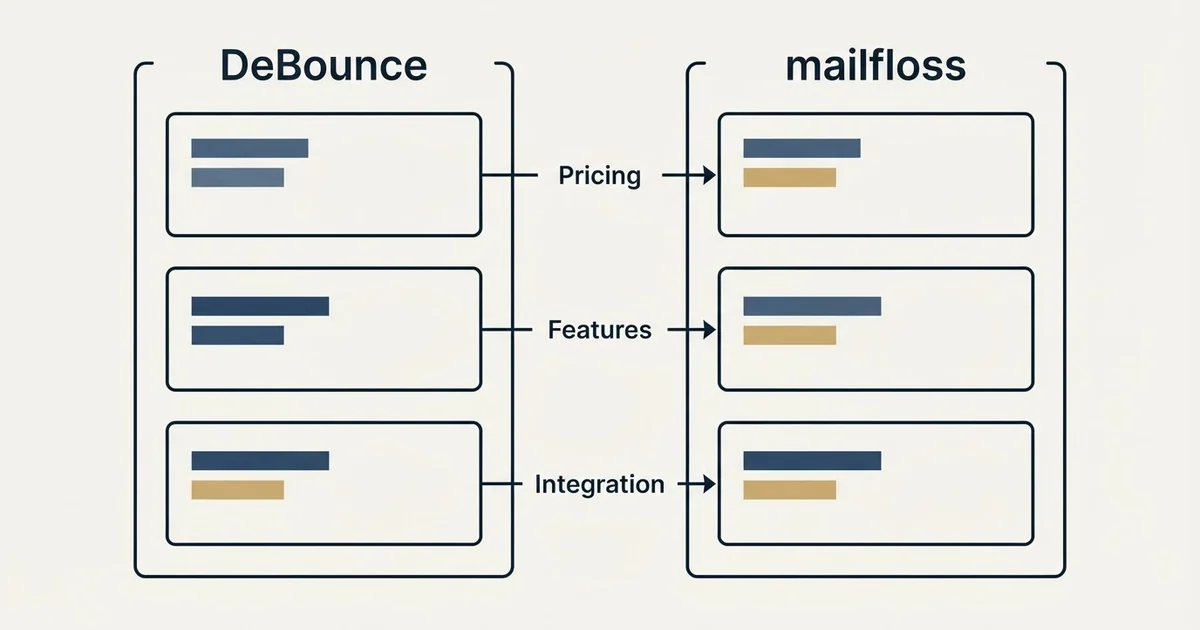
DeBounce and mailfloss are both email verification and data enrichment tools, but they differ in pricing and approach. DeBounce starts free at $0/mo with pay-as-you-go credits, real-time validation, and an email finder, while mailfloss starts at $29/mo for 10,000 credits monthly with daily autopilot list cleaning and typo fixing. Budget and required features determine the better fit.
Key takeaways
- DeBounce offers a free plan with 100 free credits, while mailfloss's cheapest plan, Lite, costs $29/mo for 10,000 credits per month.
- mailfloss's Business plan costs $59/mo for 25,000 credits, and its Pro plan costs $209/mo for 125,000 credits.
- DeBounce lists features such as email validation API, catch-all validator, email list monitoring, data enrichment, email finder, and free deduplication.
- mailfloss lists features such as daily automatic list cleaning, custom keep and remove rules, webhooks, typo fixing, and single sign-on.
- Both tools share integrations including Zapier, HubSpot, Mailchimp, ActiveCampaign, Mautic, MailerLite, Klaviyo, Brevo, Drip, Moosend, and Ontraport.
Reviewed and updated September 4, 2026
DeBounce vs mailfloss: Data Enrichment Tool Comparison
DeBounce and mailfloss are both data enrichment tools. Choosing between them depends on your team size, budget, and specific B2B lead data and contact enrichment requirements. Here is what each vendor publishes about pricing, features, and integrations.
The Quick Answer
By each vendor's own wording, DeBounce lists email list validation and email validation api, while mailfloss lists cleans your list daily and removes addresses that decay over time. A capability both offer can appear under different names, so read both feature lists below.
DeBounce offers a lower entry point at $0/mo compared to mailfloss at $29/mo.
If your priority is finding accurate contact data for target accounts, both tools target it. The right choice depends on your budget, team size, and the specific capabilities you need most.
Understanding the Core Difference
DeBounce is DeBounce is an email validation and verification tool that cleans email lists before you send, blocks bad signups in real time through an API and widget, and identifies catch-all domains. It also offers list monitoring, data enrichment and an email finder on the same credit balance.
mailfloss is mailfloss is an email verification service that connects to your email marketing platform and cleans the list daily on autopilot, removing bad addresses, fixing typos and blocking bot and spam signups in real time. Subscriptions are sized by credits per month; prepaid credits cover one-time list uploads.
The two platforms take different approaches to solving the same core challenge.
Pricing Comparison
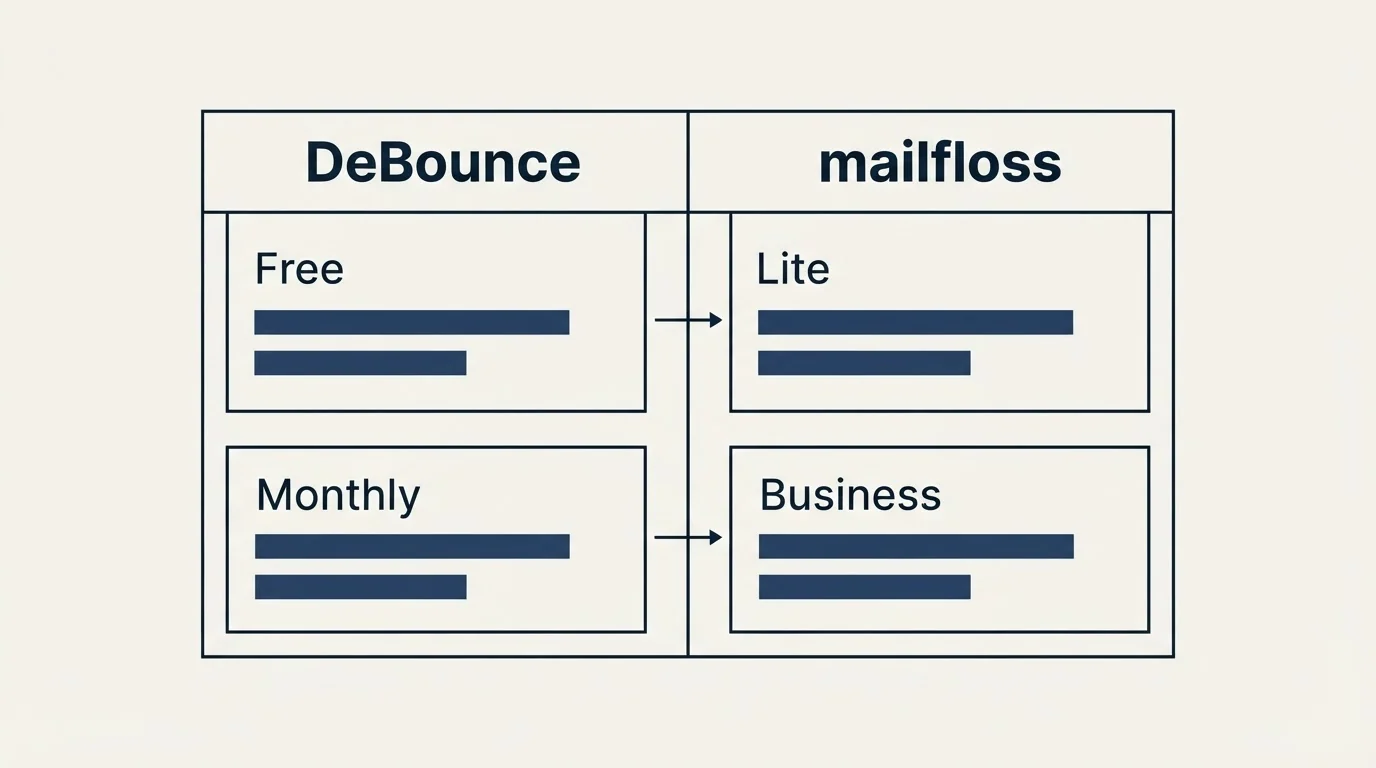
Free
Lite
DeBounce Pricing (as of September 2026)
| Plan | Price | Emails |
|---|---|---|
| Free | Free | 100 free credits |
| Pay-As-You-Go 5K | Usage-based | 5,000 credits |
| Pay-As-You-Go 500K | Usage-based | 500,000 credits |
| Monthly | Contact Sales | - |
Source: DeBounce Pricing
mailfloss Pricing (as of September 2026)
| Plan | Price | Emails |
|---|---|---|
| Lite | $29/mo | 10,000 credits/month |
| Business | $59/mo | 25,000 credits/month |
| Pro | $209/mo | 125,000 credits/month |
| Prepaid credits | Usage-based | - |
Source: mailfloss Pricing
Pricing Analysis
DeBounce is more affordable at the entry level ($0/mo vs $29/mo). For teams with tight budgets or those just getting started with B2B lead data and contact enrichment, this price difference matters.
DeBounce includes a free tier, letting you test the platform before committing financially.
Features Breakdown
- Email list validation
- Email validation API
- Real-time validation widget
- Catch-all validator
- Email list monitoring
- Data enrichment
- and 2 more listed below
- Cleans your list daily
- Removes addresses that decay over time
- Custom keep and remove rules
- Zapier integration
- Real-time API
- Webhooks
- and 4 more listed below
DeBounce Key Features
- Email list validation
- Email validation API
- Real-time validation widget
- Catch-all validator
- Email list monitoring
- Data enrichment
- Email finder
- Free deduplication
mailfloss Key Features
- Cleans your list daily
- Removes addresses that decay over time
- Custom keep and remove rules
- Zapier integration
- Real-time API
- Webhooks
- Automatically fixes typos
- Prevents bounces in real-time
- Auto-tags subscribers after verification
- Single sign-on
The two lists below are a diff of each vendor's own feature list by exact wording, so a capability both tools offer can appear on either side under a different name.
Listed only by DeBounce
- Email list validation
- Email validation API
- Real-time validation widget
- Catch-all validator
- Email list monitoring
- Data enrichment
- Email finder
- Free deduplication
Listed only by mailfloss
- Cleans your list daily
- Removes addresses that decay over time
- Custom keep and remove rules
- Zapier integration
- Real-time API
- Webhooks
- Automatically fixes typos
- Prevents bounces in real-time
- Auto-tags subscribers after verification
- Single sign-on
Integration Ecosystem
DeBounce Integrations
DeBounce connects with: WordPress, Zapier, HubSpot, Google Sheets, Mailchimp, ActiveCampaign, Mailjet, Mautic, ConvertKit, MailerLite, Klaviyo, Brevo, Mailgun, SendGrid, Apollo, Drip, lemlist, Moosend, SparkPost, Drupal, Ontraport, Leadpages, Unbounce, ClickFunnels.
mailfloss Integrations
mailfloss connects with: Mailchimp, Klaviyo, HubSpot, ActiveCampaign, Kit, beehiiv, GoHighLevel, Braze, AWeber, Drip, MailerLite, Constant Contact, Brevo, Campaign Monitor, GetResponse, Ontraport, iContact, Sendlane, Moosend, Keap, Intercom, Customer.io, Iterable, Ghost, Emma, SendPulse, Benchmark, Mautic, Zapier.
Shared Integrations
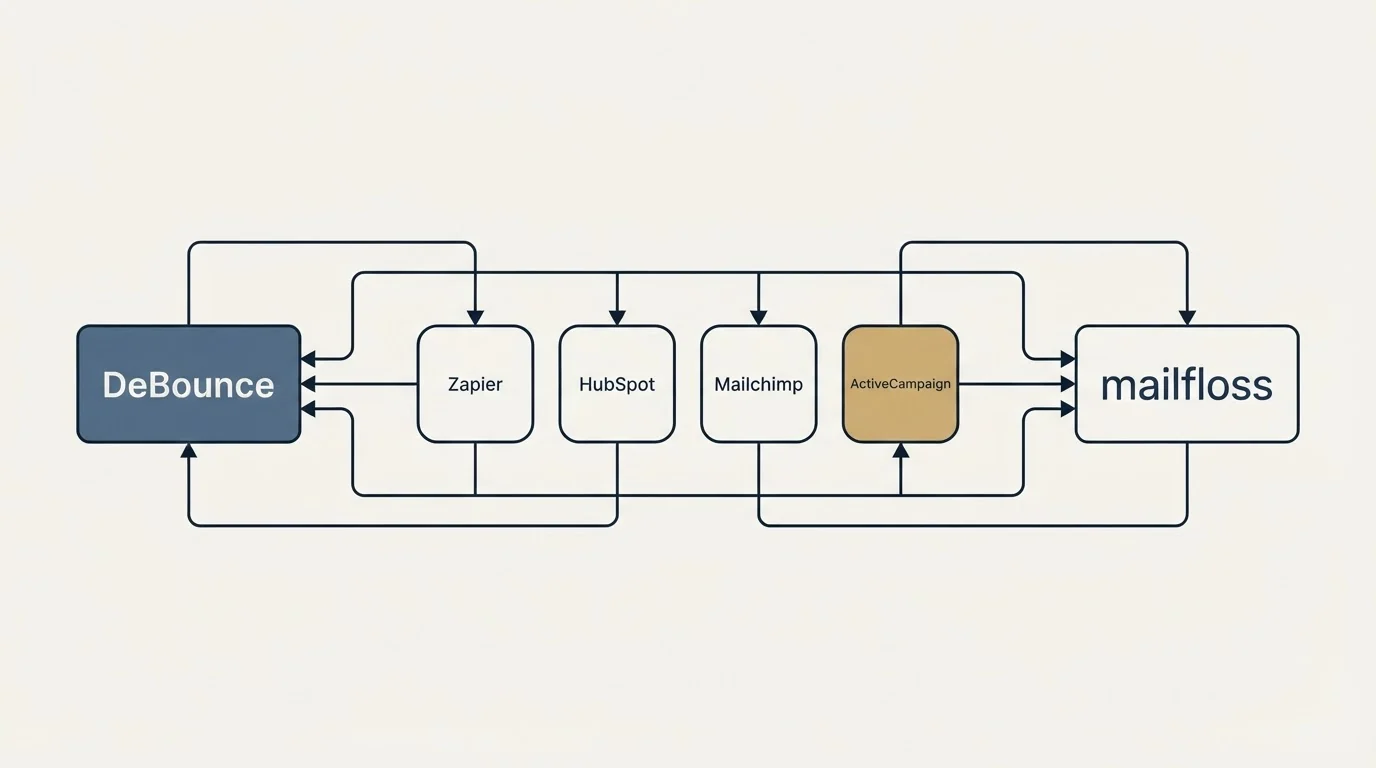
Both tools integrate with: Zapier, HubSpot, Mailchimp, ActiveCampaign, Mautic, MailerLite, Klaviyo, Brevo, Drip, Moosend, Ontraport.
Integrations listed only by DeBounce: WordPress, Google Sheets, Mailjet, ConvertKit, Mailgun, SendGrid, Apollo, lemlist, SparkPost, Drupal, Leadpages, Unbounce, ClickFunnels.
Integrations listed only by mailfloss: Kit, beehiiv, GoHighLevel, Braze, AWeber, Constant Contact, Campaign Monitor, GetResponse, iContact, Sendlane, Keap, Intercom, Customer.io, Iterable, Ghost, Emma, SendPulse, Benchmark.
Use Case Recommendations
Best Fit for DeBounce
- Budget-conscious teams looking for an affordable data enrichment tool
- Teams that want to start free and scale up as needs grow
- Enterprise buyers who prefer custom pricing and dedicated support
Best Fit for mailfloss
- Budget-conscious teams looking for an affordable data enrichment tool
- Teams that need a wide feature set (10 capabilities listed)
- Organizations with complex tech stacks needing broad integration support (29 integrations)
- Enterprise buyers who prefer custom pricing and dedicated support
Feature Comparison Summary
| Feature | DeBounce | mailfloss |
|---|---|---|
| Starting Price | Free | $29/mo |
| Top Tier Price | Contact Sales | Usage-based |
| Total Features Listed | 8 | 10 |
| Integrations | 24 | 29 |
Getting Started Checklist
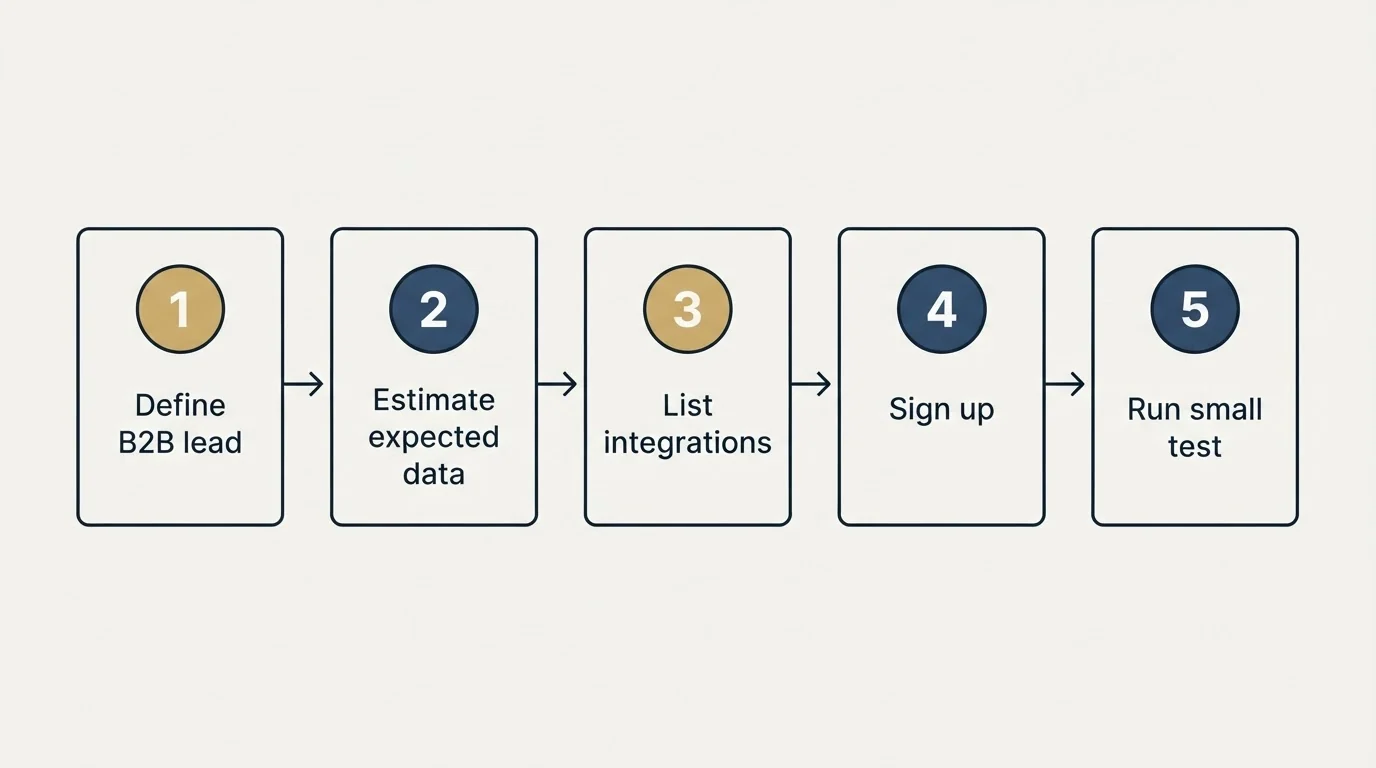
- Define your B2B lead data and contact enrichment requirements and monthly budget
- Estimate your expected data credits or contact lookups to find the right tier
- List the integrations your team currently relies on
- Sign up for free trials or demos of both platforms
- Run a small test with each tool before making a commitment
- Evaluate the onboarding experience and support quality
Final Thoughts
DeBounce and mailfloss both serve the B2B lead data and contact enrichment market. DeBounce offers a more accessible entry point, while mailfloss starts at $29/mo. Your decision should weigh pricing against the specific features that matter most for your workflow.
Start with a trial of each to see which platform fits your team's daily process. The best tool is the one your team actually uses consistently.
Pricing and features verified as of September 2026. Visit DeBounce and mailfloss for current information.
Frequently asked questions.
Frequently asked questions- What is the main pricing difference between DeBounce and mailfloss?
- DeBounce offers a free entry plan at $0/mo with pay-as-you-go credit options, while mailfloss's cheapest plan, Lite, costs $29/mo for 10,000 credits per month. This makes DeBounce more affordable for budget-conscious teams or those just starting with email verification and enrichment.
- Does DeBounce or mailfloss have more integrations?
- The article lists 24 integrations for DeBounce and 29 for mailfloss. Both tools share integrations such as Zapier, HubSpot, Mailchimp, ActiveCampaign, Mautic, MailerLite, Klaviyo, Brevo, Drip, Moosend, and Ontraport, but each also has integrations the other does not list.
- What features does DeBounce offer that mailfloss does not list?
- DeBounce lists email list validation, an email validation API, a real-time validation widget, a catch-all validator, email list monitoring, data enrichment, an email finder, and free deduplication. These are listed only by DeBounce, though mailfloss may offer similar capabilities under different wording.
- What features does mailfloss offer that DeBounce does not list?
- mailfloss lists daily automatic list cleaning, removal of addresses that decay over time, custom keep and remove rules, Zapier integration, a real-time API, webhooks, automatic typo fixing, real-time bounce prevention, auto-tagging of subscribers, and single sign-on. These are listed only by mailfloss based on each vendor's own wording.
- Which tool is better for budget-conscious teams?
- DeBounce is positioned as the better fit for budget-conscious teams, according to the article's use case recommendations. It offers a free tier and pay-as-you-go pricing, letting teams test the platform before committing financially, unlike mailfloss's subscription starting at $29/mo.
About the author.

Tim Carden is CMO / CTO at RevenueFlow, which builds and operates outbound revenue engines for B2B companies. Studied at McGill University.
Tim Carden · CMO / CTO
Connect on LinkedIn →Explore more.
Ready to scale your outreach?
We build GTM engines that book real meetings. See the receipts.
Related articles.
Groove by Clari vs mailfloss: Sales Engagement Platform vs Data Enrichment Tool Comparison
Compare Groove by Clari (sales engagement platform) and mailfloss (data enrichment tool) side by side. See pricing, features, and integrations to decide which one, or both, your stack needs.
Apollo.io vs Proofy: Data Enrichment Tool Comparison
Compare Apollo.io and Proofy side by side. See pricing, features, and integrations to choose the right data enrichment tool for your needs.
AroundDeal vs Leadspicker: Data Enrichment Tool vs Sales Engagement Platform Comparison
Compare AroundDeal (data enrichment tool) and Leadspicker (sales engagement platform) side by side. See pricing, features, and integrations to decide which one, or both, your stack needs.
AroundDeal vs Salesflare: Data Enrichment Tool vs CRM Platform Comparison
Compare AroundDeal (data enrichment tool) and Salesflare (CRM platform) side by side. See pricing, features, and integrations to decide which one, or both, your stack needs.
Gong vs NeverBounce: Sales Engagement Platform vs Data Enrichment Tool Comparison
Gong vs NeverBounce: what Gong's own pages say about enrichment, what NeverBounce's API returns about an address, and how each vendor prices.
ContactOut vs Luru: Data Enrichment Tool vs Sales Engagement Platform Comparison
Compare ContactOut (data enrichment tool) and Luru (sales engagement platform) side by side. See pricing, features, and integrations to decide which one, or both, your stack needs.