Emailable vs GetProspect: Data Enrichment Tool Comparison
Compare Emailable and GetProspect side by side. See pricing, features, and integrations to choose the right data enrichment tool for your needs.

Emailable and GetProspect both start at $0/mo but solve different problems. Emailable is an email verification service built for bulk validation through an API or signup widget, with credits that never expire. GetProspect is an email finder and B2B contact database that supplies emails, phone numbers, and company data, plus cold email sequences.
Key takeaways
- Emailable's Monthly plan costs $32.30/mo for 5,000 credits, while GetProspect's Starter plan costs $49/mo for 1,000 valid emails and 2,000 email verifications.
- GetProspect offers five pricing tiers up to $399/mo, compared to Emailable's four tiers that top out at custom enterprise pricing.
- Both tools list eight key features on their own pages and integrate with 10 platforms each, sharing six integrations: HubSpot, Salesforce, Pipedrive, Google Sheets, Zapier, and Make.
- GetProspect was founded in 2016, while the article lists no founding date for Emailable.
- Emailable's free plan provides 250 credits, while GetProspect's free plan provides 50 valid emails and 100 email verifications.
Reviewed and updated September 5, 2026
Emailable vs GetProspect: Data Enrichment Tool Comparison
Sales teams evaluating B2B lead data and contact enrichment tools often narrow their shortlist to Emailable and GetProspect. Both target the same job, but they cater to different workflows and budgets. This comparison covers pricing, features, and integrations so you can pick the right fit.
The Quick Answer
By each vendor's own wording, Emailable lists bulk and verifier, while GetProspect lists credits roll over and proprietary catch-all email verification. A capability both offer can appear under different names, so read both feature lists below.
Both start at the same price point ($0/mo), so the decision comes down to features and workflow fit.
If your priority is finding accurate contact data for target accounts, both tools target it. The right choice depends on your budget, team size, and the specific capabilities you need most.
Understanding the Core Difference
Emailable is Email verification service that validates addresses in bulk, through an API or a signup-form widget, and charges one credit per verification. Also runs inbox placement reports and blacklist monitoring.
GetProspect is Email finder and B2B contact database that supplies valid emails, phone numbers and company data to sales teams, marketers and recruiters. Also verifies emails and sends cold email sequences.
The two platforms take different approaches to solving the same core challenge.
Pricing Comparison
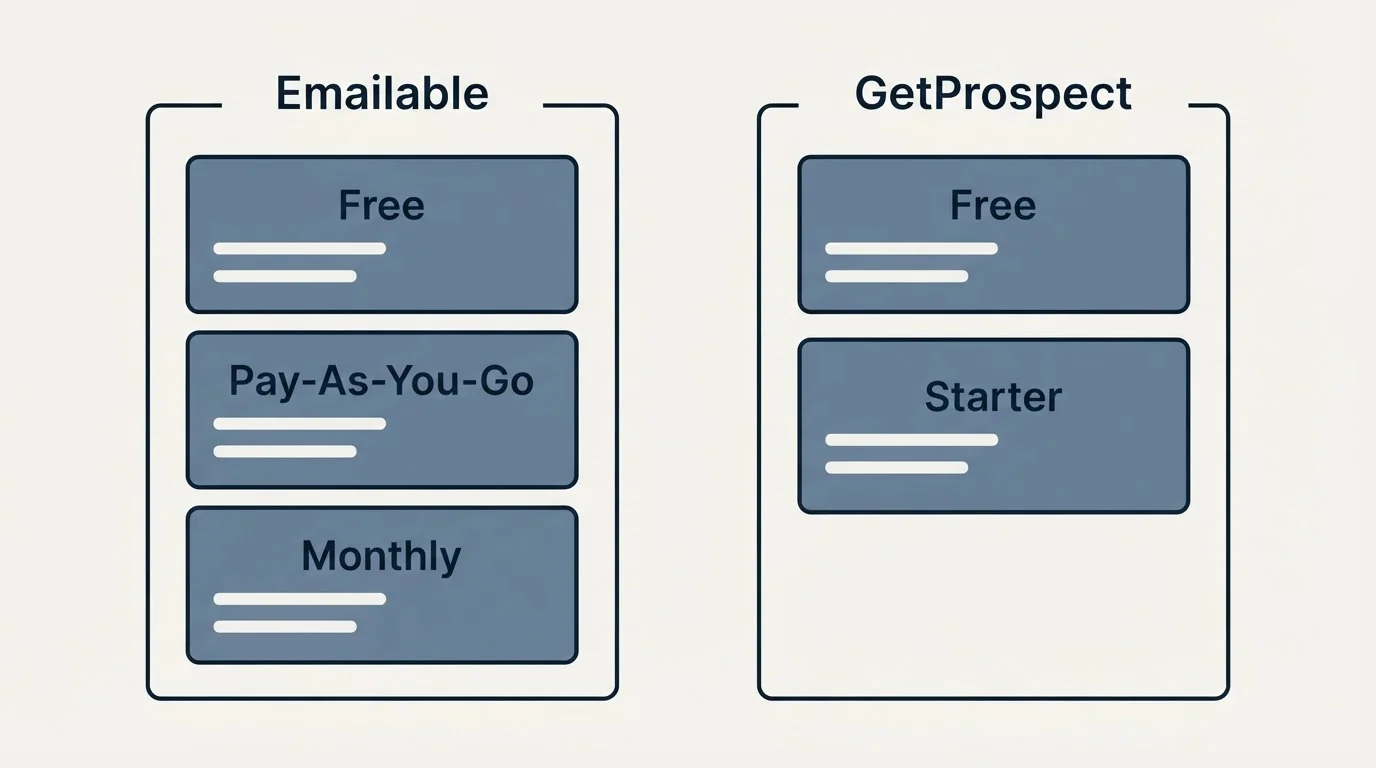
Emailable Pricing (as of September 2026)
| Plan | Price | Emails |
|---|---|---|
| Free | Free | 250 free credits |
| Pay-As-You-Go | Usage-based | 5,000 credits |
| Monthly | $32.30/mo | 5,000 credits |
| Custom | Contact Sales | - |
Source: Emailable Pricing
GetProspect Pricing (as of September 2026)
| Plan | Price | Contacts | Emails |
|---|---|---|---|
| Free | Free | 50 valid emails | 100 email verifications |
| Starter | $49/mo | 1 000 valid emails | 2 000 email verifications |
| Growth 5k | $99/mo | 5 000 valid emails | 10 000 email verifications |
| Growth 20k | $199/mo | - | - |
| Growth 50k | $399/mo | - | - |
Source: GetProspect Pricing
Pricing Analysis
Both platforms start at the same $0/mo price point. The decision comes down to which feature set and tier structure works better for your expected usage.
GetProspect offers 5 pricing tiers compared to Emailable's 4, giving you more granularity as you scale.
Both platforms offer free tiers, so you can test each one before spending anything.
Features Breakdown
- Bulk
- Verifier
- API
- Widget
- Inbox Reports
- Blacklist Monitors
- and 2 more listed below
- Credits roll over
- Proprietary catch-all email verification
- LinkedIn extension
- Bulk email finder
- CSV Enrichment
- Advanced filters
- and 2 more listed below
Emailable Key Features
- Bulk
- Verifier
- API
- Widget
- Inbox Reports
- Blacklist Monitors
- Credits never expire
- Unknown results are free
GetProspect Key Features
- Credits roll over
- Proprietary catch-all email verification
- LinkedIn extension
- Bulk email finder
- CSV Enrichment
- Advanced filters
- Reverse email lookup
- API access
The two lists below are a diff of each vendor's own feature list by exact wording, so a capability both tools offer can appear on either side under a different name.
Listed only by Emailable
- Bulk
- Verifier
- API
- Widget
- Inbox Reports
- Blacklist Monitors
- Credits never expire
- Unknown results are free
Listed only by GetProspect
- Credits roll over
- Proprietary catch-all email verification
- LinkedIn extension
- Bulk email finder
- CSV Enrichment
- Advanced filters
- Reverse email lookup
- API access
Integration Ecosystem
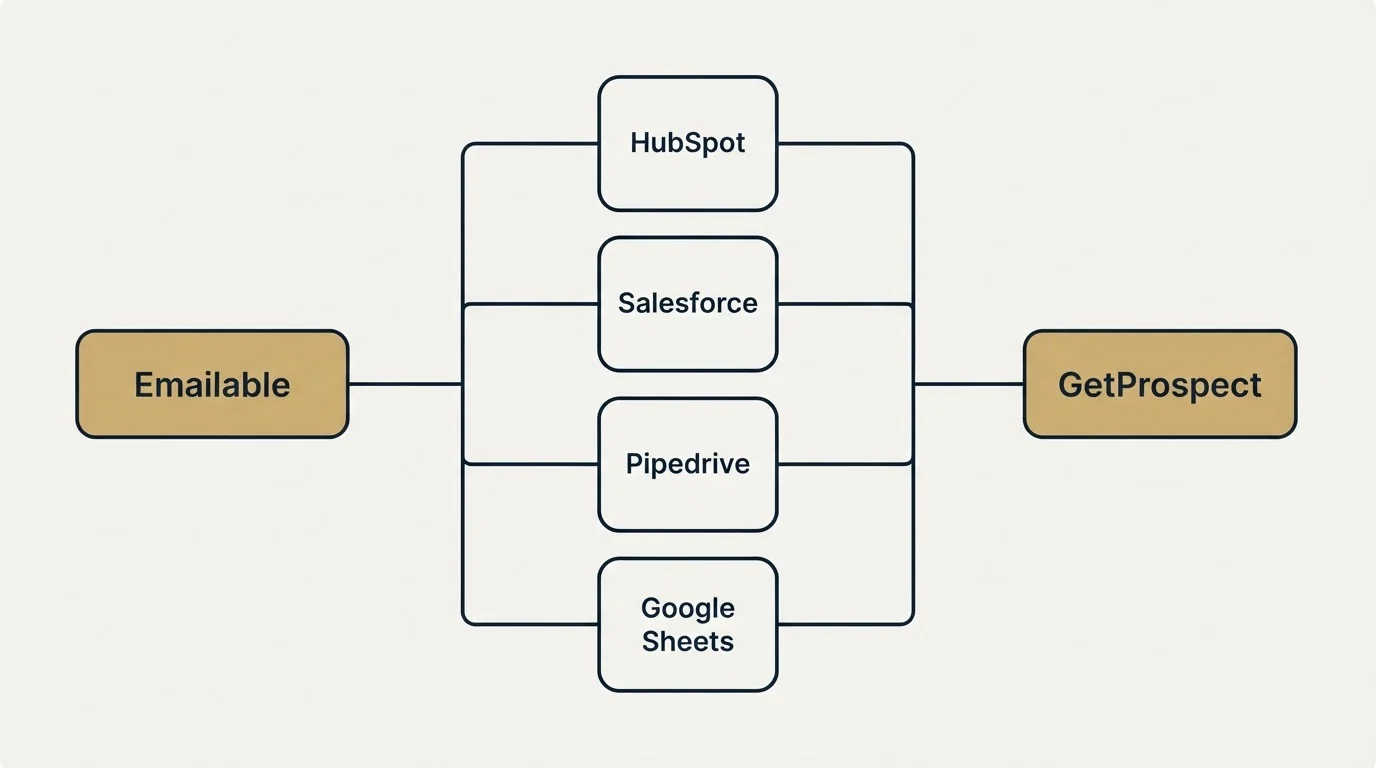
Emailable Integrations
Emailable connects with: HubSpot, Salesforce, Mailchimp, Klaviyo, ActiveCampaign, Brevo, Pipedrive, Google Sheets, Zapier, Make.
GetProspect Integrations
GetProspect connects with: HubSpot, Salesforce, Pipedrive, Zoho CRM, Gmail, Outlook, Google Sheets, Airtable, Zapier, Make.
Shared Integrations
Both tools integrate with: HubSpot, Salesforce, Pipedrive, Google Sheets, Zapier, Make.
Integrations listed only by Emailable: Mailchimp, Klaviyo, ActiveCampaign, Brevo.
Integrations listed only by GetProspect: Zoho CRM, Gmail, Outlook, Airtable.
Use Case Recommendations
Best Fit for Emailable
- Budget-conscious teams looking for an affordable data enrichment tool
- Teams that want to start free and scale up as needs grow
- Enterprise buyers who prefer custom pricing and dedicated support
Best Fit for GetProspect
- Budget-conscious teams looking for an affordable data enrichment tool
- Teams that want to start free and scale up as needs grow
- Revenue operations teams building targeted prospect lists
- Marketing teams enriching CRM data for segmentation
Feature Comparison Summary
| Feature | Emailable | GetProspect |
|---|---|---|
| Starting Price | Free | Free |
| Top Tier Price | Contact Sales | $399/mo |
| Total Features Listed | 8 | 8 |
| Integrations | 10 | 10 |
| Founded | N/A | 2016 |
Getting Started Checklist
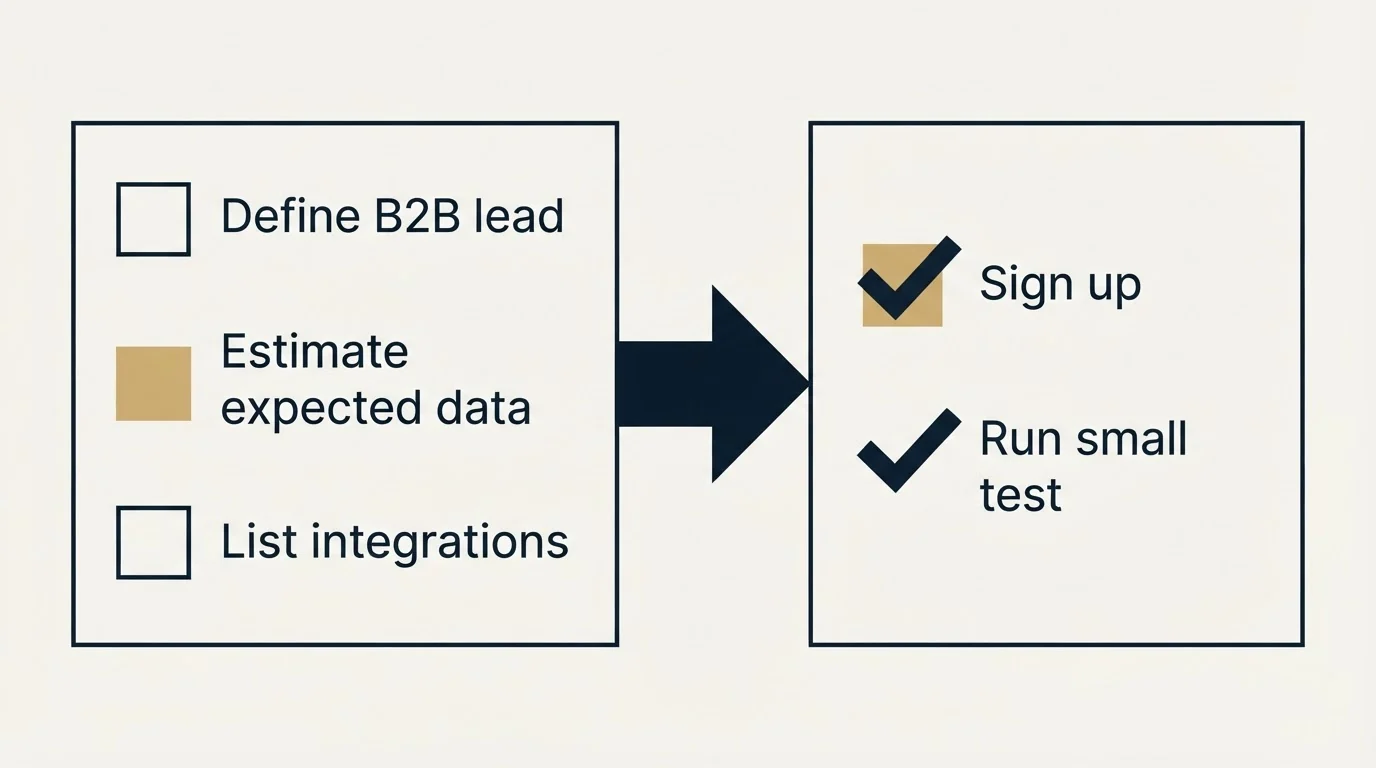
- Define your B2B lead data and contact enrichment requirements and monthly budget
- Estimate your expected data credits or contact lookups to find the right tier
- List the integrations your team currently relies on
- Sign up for free trials or demos of both platforms
- Run a small test with each tool before making a commitment
- Evaluate the onboarding experience and support quality
Final Thoughts
Emailable and GetProspect both serve the B2B lead data and contact enrichment market. Emailable offers a more accessible entry point, while GetProspect starts at $0/mo. Your decision should weigh pricing against the specific features that matter most for your workflow.
Start with a trial of each to see which platform fits your team's daily process. The best tool is the one your team actually uses consistently.
Pricing and features verified as of September 2026. Visit Emailable and GetProspect for current information.
Frequently asked questions.
Frequently asked questions- What's the main difference between Emailable and GetProspect?
- Emailable is an email verification service that validates addresses in bulk through an API or a signup-form widget, charging one credit per verification and offering inbox placement reports and blacklist monitoring. GetProspect is an email finder and B2B contact database that supplies emails, phone numbers, and company data, and also verifies emails and sends cold email sequences.
- How much does Emailable cost compared to GetProspect?
- Emailable's Monthly plan costs $32.30/mo for 5,000 credits, while GetProspect's Starter plan costs $49/mo for 1,000 valid emails and 2,000 email verifications. Both also offer free plans, and GetProspect's paid tiers scale up to $399/mo for its Growth 50k plan, while Emailable's top tier is custom enterprise pricing.
- Which integrations do Emailable and GetProspect share?
- Emailable and GetProspect both integrate with HubSpot, Salesforce, Pipedrive, Google Sheets, Zapier, and Make. Emailable additionally connects with Mailchimp, Klaviyo, ActiveCampaign, and Brevo, while GetProspect additionally connects with Zoho CRM, Gmail, Outlook, and Airtable.
- Which tool is better for finding new leads versus verifying existing contacts?
- GetProspect is built for finding new leads since it supplies emails, phone numbers, and company data alongside cold email sequences, making it a fit for revenue operations and marketing teams building prospect lists. Emailable is built for verifying existing contacts through bulk email validation, an API, and a signup widget.
- Do both Emailable and GetProspect offer free plans?
- Yes, both tools offer free plans priced at $0/mo. Emailable's free plan includes 250 credits, while GetProspect's free plan includes 50 valid emails and 100 email verifications, letting teams test either platform before committing to a paid tier.
About the author.

Tim Carden is CMO / CTO at RevenueFlow, which builds and operates outbound revenue engines for B2B companies. Studied at McGill University.
Tim Carden · CMO / CTO
Connect on LinkedIn →Explore more.
Ready to scale your outreach?
We build GTM engines that book real meetings. See the receipts.
Related articles.
Emailable vs UpLead: Data Enrichment Tool Comparison
Compare Emailable and UpLead side by side. See pricing, features, and integrations to choose the right data enrichment tool for your needs.
Bouncer vs Emailable: Data Enrichment Tool Comparison
Compare Bouncer and Emailable side by side. See pricing, features, and integrations to choose the right data enrichment tool for your needs.
Apollo.io vs Proofy: Data Enrichment Tool Comparison
Compare Apollo.io and Proofy side by side. See pricing, features, and integrations to choose the right data enrichment tool for your needs.
AroundDeal vs Leadspicker: Data Enrichment Tool vs Sales Engagement Platform Comparison
Compare AroundDeal (data enrichment tool) and Leadspicker (sales engagement platform) side by side. See pricing, features, and integrations to decide which one, or both, your stack needs.
AroundDeal vs Salesflare: Data Enrichment Tool vs CRM Platform Comparison
Compare AroundDeal (data enrichment tool) and Salesflare (CRM platform) side by side. See pricing, features, and integrations to decide which one, or both, your stack needs.
Gong vs NeverBounce: Sales Engagement Platform vs Data Enrichment Tool Comparison
Gong vs NeverBounce: what Gong's own pages say about enrichment, what NeverBounce's API returns about an address, and how each vendor prices.