Inbox Warmup vs MailWarm.io: Email Warmup Tool Comparison
Compare Inbox Warmup and MailWarm.io side by side. See pricing, features, and integrations to choose the right email warmup tool for your needs.
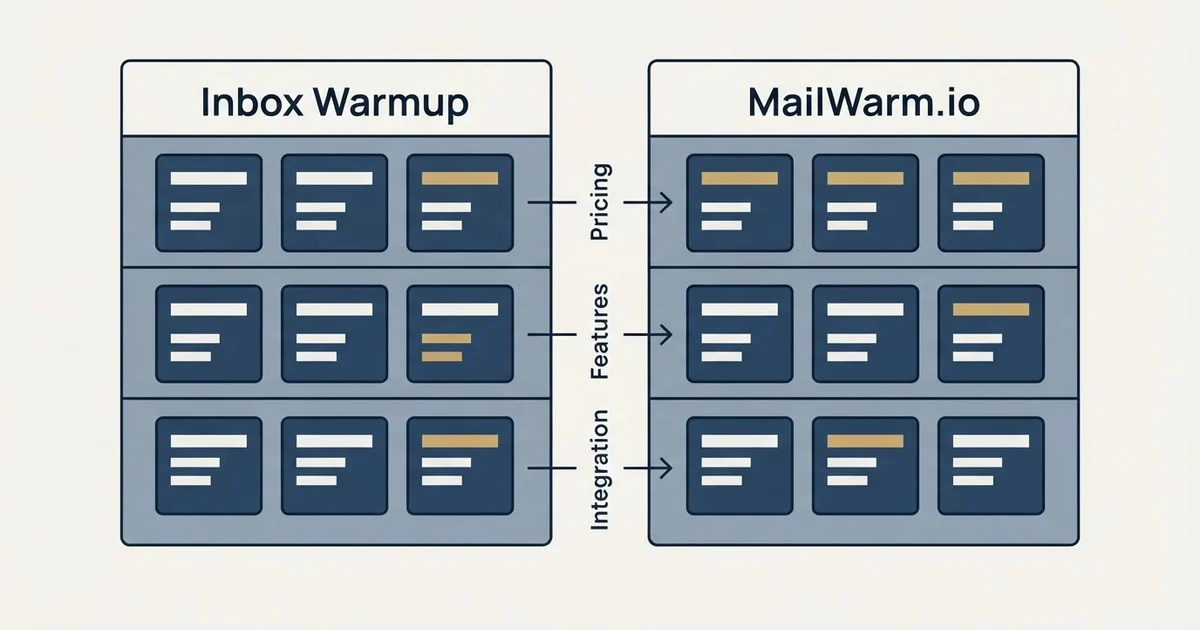
Compare Inbox Warmup and MailWarm.io side by side. See pricing, features, and integrations to choose the right email warmup tool for your needs.
Reviewed and updated September 5, 2026
Inbox Warmup vs MailWarm.io: Email Warmup Tool Comparison
Finding the right email warmup tool can directly impact your revenue pipeline. Inbox Warmup and MailWarm.io both aim to solve the same core problem (building sender reputation and improving inbox placement), yet they approach it differently. Let's break down the specifics.
The Quick Answer
By each vendor's own wording, Inbox Warmup lists smtp diagnostics and dns authentication, while MailWarm.io lists p2p enabled and human review. A capability both offer can appear under different names, so read both feature lists below.
Inbox Warmup offers a lower entry point at $39/mo compared to MailWarm.io at $90/mo.
If your priority is building sender reputation and improving inbox placement, both tools target it. The right choice depends on your budget, team size, and the specific capabilities you need most.
Understanding the Core Difference
Inbox Warmup is Inbox warm-up and sender reputation platform that connects SMTP infrastructure, authenticates sending domains (SPF, DKIM, DMARC), increases activity gradually, monitors reputation signals and enforces hourly and monthly sending limits from one dashboard.
MailWarm.io is Email warmup tool for cold emails that exchanges warmup emails with real human inboxes, keeps replies in natural threads and connects mailboxes from 10+ email providers with auto-pilot scheduling. Not the same product as Mailwarm (mailwarm.com).
The two platforms take different approaches to solving the same core challenge.
Pricing Comparison
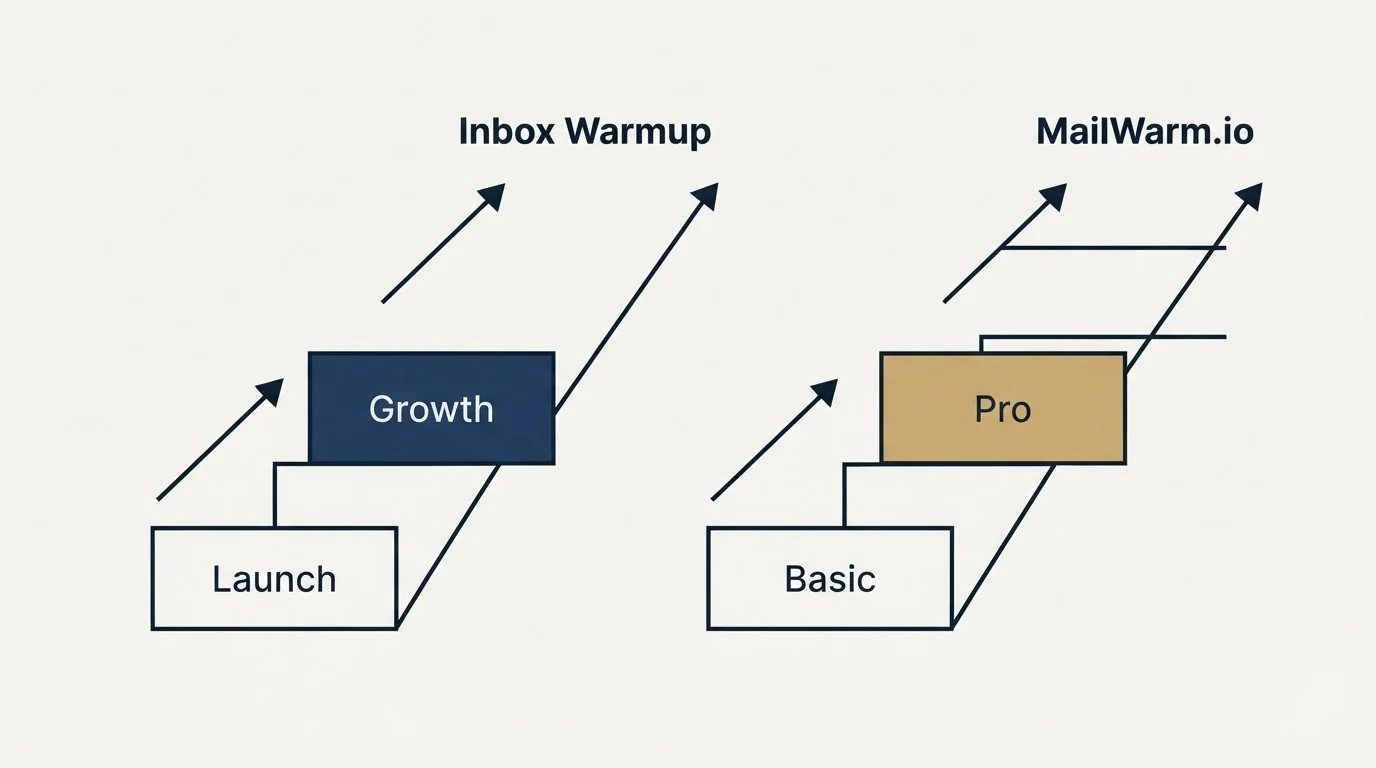
Launch
Basic
Inbox Warmup Pricing (as of September 2026)
| Plan | Price | Contacts | Emails |
|---|---|---|---|
| Launch | $39/mo | Not published per mailbox; plans are sized by credits | 5,000 credits and 75 emails/hour |
| Growth | $99/mo | Not published per mailbox; plans are sized by credits | 20,000 credits and 200 emails/hour |
| Professional | $199/mo | Not published per mailbox; plans are sized by credits | 100,000 credits and 500 emails/hour |
| Agency | Contact Sales | Custom credits | Custom credits and support through live chat |
Source: Inbox Warmup Pricing
MailWarm.io Pricing (as of September 2026)
| Plan | Price | Contacts | Emails |
|---|---|---|---|
| Basic | $90/yr | 50 email inboxes warmup | upto 40 emails per day |
| Pro | $190/yr | Unlimited inboxes warmup | upto 80 emails per day |
Source: MailWarm.io Pricing
Pricing Analysis
Inbox Warmup is more affordable at the entry level ($39/mo vs $90/mo). For teams with tight budgets or those just getting started with email domain warming and deliverability, this price difference matters.
Inbox Warmup offers 4 pricing tiers compared to MailWarm.io's 2, giving you more granularity as you scale.
Features Breakdown
- SMTP diagnostics
- DNS authentication
- Smart warmup
- Reputation Center
- Campaign controls
- Admin-managed SMTP
- and 1 more listed below
- P2P enabled
- Human review
- Fully automated
- Premium support
- Auto-pilot mode Available.
- Auto Warmup Scheduling.
- and 2 more listed below
Inbox Warmup Key Features
- SMTP diagnostics
- DNS authentication
- Smart warmup
- Reputation Center
- Campaign controls
- Admin-managed SMTP
- Free Tools
MailWarm.io Key Features
- P2P enabled
- Human review
- Fully automated
- Premium support
- Auto-pilot mode Available.
- Auto Warmup Scheduling.
- Anti-Spam technology
- Real human inbox.
The two lists below are a diff of each vendor's own feature list by exact wording, so a capability both tools offer can appear on either side under a different name.
Listed only by Inbox Warmup
- SMTP diagnostics
- DNS authentication
- Smart warmup
- Reputation Center
- Campaign controls
- Admin-managed SMTP
- Free Tools
Listed only by MailWarm.io
- P2P enabled
- Human review
- Fully automated
- Premium support
- Auto-pilot mode Available.
- Auto Warmup Scheduling.
- Anti-Spam technology
- Real human inbox.
Integration Ecosystem
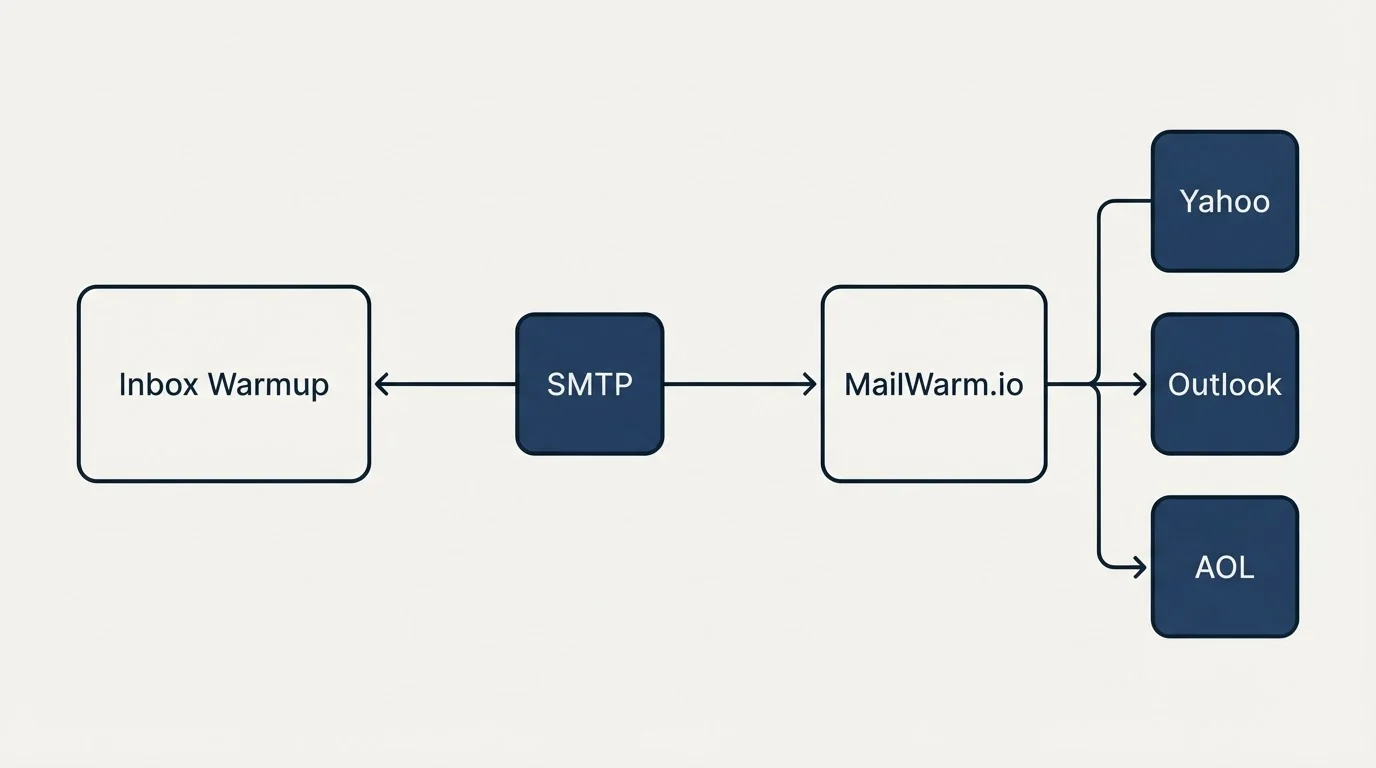
Inbox Warmup Integrations
Inbox Warmup connects with: SMTP.
MailWarm.io Integrations
MailWarm.io connects with: Yahoo, Outlook, AOL, SMTP, Gmail, ProtonMail, Zoho Mail, Apple Mail, FastMail.
Shared Integrations
Both tools integrate with: SMTP.
Integrations listed only by MailWarm.io: Yahoo, Outlook, AOL, Gmail, ProtonMail, Zoho Mail, Apple Mail, FastMail.
Use Case Recommendations
Best Fit for Inbox Warmup
- Budget-conscious teams looking for an affordable email warmup tool
- Enterprise buyers who prefer custom pricing and dedicated support
- Teams launching new email domains for outreach
- Organizations recovering from deliverability issues
Best Fit for MailWarm.io
- Teams that need a wide feature set (8 capabilities listed)
- Organizations with complex tech stacks needing broad integration support (9 integrations)
- Teams launching new email domains for outreach
- Organizations recovering from deliverability issues
Feature Comparison Summary
| Feature | Inbox Warmup | MailWarm.io |
|---|---|---|
| Starting Price | $39/mo | $90/yr |
| Top Tier Price | Contact Sales | $190/yr |
| Total Features Listed | 7 | 8 |
| Integrations | 1 | 9 |
Getting Started Checklist
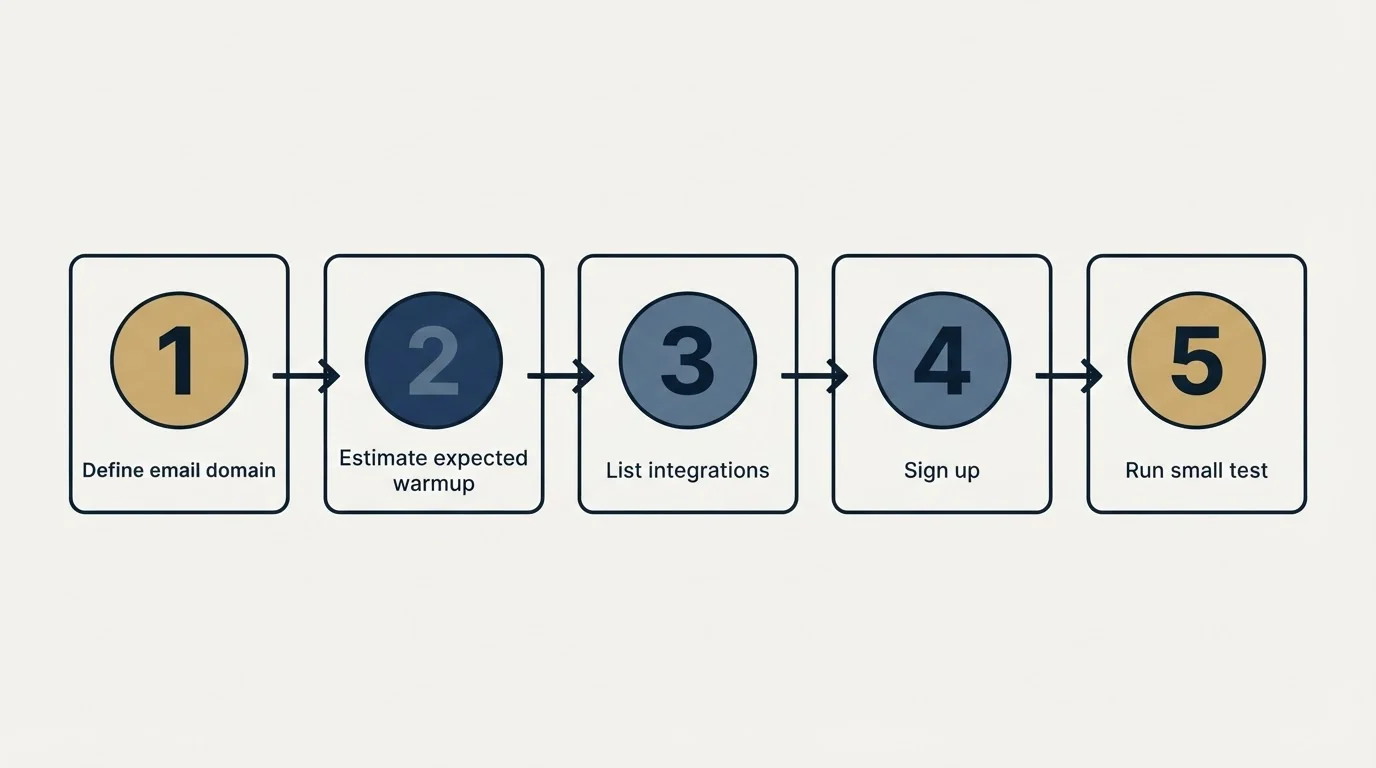
- Define your email domain warming and deliverability requirements and monthly budget
- Estimate your expected warmup email volume to find the right tier
- List the integrations your team currently relies on
- Sign up for free trials or demos of both platforms
- Run a small test with each tool before making a commitment
- Evaluate the onboarding experience and support quality
Final Thoughts
Inbox Warmup and MailWarm.io both serve the email domain warming and deliverability market. Inbox Warmup offers a more accessible entry point at $39/mo, while MailWarm.io starts at $90/mo. Your decision should weigh pricing against the specific features that matter most for your workflow.
Start with a trial of each to see which platform fits your team's daily process. The best tool is the one your team actually uses consistently.
Pricing and features verified as of September 2026. Visit Inbox Warmup and MailWarm.io for current information.
About the author.

Tim Carden is CMO / CTO at RevenueFlow, which builds and operates outbound revenue engines for B2B companies. Studied at McGill University.
Tim Carden · CMO / CTO
Connect on LinkedIn →Explore more.
Ready to scale your outreach?
We build GTM engines that book real meetings. See the receipts.
Related articles.
Growbots vs MailHeat: Cold Email Platform vs Email Warmup Tool Comparison
Compare Growbots (cold email platform) and MailHeat (email warmup tool) side by side. See pricing, features, and integrations to decide which one, or both, your stack needs.
Apollo.io vs Proofy: Data Enrichment Tool Comparison
Compare Apollo.io and Proofy side by side. See pricing, features, and integrations to choose the right data enrichment tool for your needs.
AroundDeal vs Leadspicker: Data Enrichment Tool vs Sales Engagement Platform Comparison
Compare AroundDeal (data enrichment tool) and Leadspicker (sales engagement platform) side by side. See pricing, features, and integrations to decide which one, or both, your stack needs.
AroundDeal vs Salesflare: Data Enrichment Tool vs CRM Platform Comparison
Compare AroundDeal (data enrichment tool) and Salesflare (CRM platform) side by side. See pricing, features, and integrations to decide which one, or both, your stack needs.
GetSales.io vs Yet Another Mail Merge: Sales Engagement Platform vs Cold Email Platform Comparison
Compare GetSales.io (sales engagement platform) and Yet Another Mail Merge (cold email platform) side by side. See pricing, features, and integrations to decide which one, or both, your stack needs.
Gong vs NeverBounce: Sales Engagement Platform vs Data Enrichment Tool Comparison
Gong vs NeverBounce: what Gong's own pages say about enrichment, what NeverBounce's API returns about an address, and how each vendor prices.