EmailListVerify vs Gong: Data Enrichment Tool vs Sales Engagement Platform Comparison
Compare EmailListVerify (data enrichment tool) and Gong (sales engagement platform) side by side. See pricing, features, and integrations to decide which one, or both, your stack needs.

EmailListVerify and Gong serve different parts of the sales workflow, so they are not direct substitutes. EmailListVerify is a data enrichment tool for B2B lead data and email verification, starting free. Gong is a sales engagement platform for multi-channel outreach, call recording, and deal intelligence, priced through custom quotes. Many teams use both together.
Key takeaways
- EmailListVerify's entry plan is free and offers 100 free verifications, while its monthly subscription tier for 5,000 credits costs $16 per month.
- Gong uses contact-based custom pricing with only one listed plan tier, compared to EmailListVerify's four pricing tiers.
- EmailListVerify lists features such as bulk email verification, email verification API, email finder, domain search, and an MCP server.
- Gong lists features such as AI-powered call recording and transcription, deal intelligence and risk alerts, revenue forecasting, and coaching insights.
- HubSpot is the only integration both EmailListVerify and Gong list in common, while EmailListVerify also connects with Mailchimp, Zapier, and n8n, and Gong connects with Salesforce, Slack, and Outreach.
Reviewed and updated September 4, 2026
EmailListVerify vs Gong: Data Enrichment Tool vs Sales Engagement Platform Comparison
EmailListVerify is a data enrichment tool; Gong is a sales engagement platform. Whether you need one, the other, or both depends on which part of the workflow you are buying for: B2B lead data and contact enrichment on one side, multi-channel sales outreach and engagement tracking on the other. This guide lays out what each vendor publishes.
The Quick Answer
EmailListVerify is a data enrichment tool for B2B lead data and contact enrichment; Gong is a sales engagement platform for multi-channel sales outreach and engagement tracking. By each vendor's own wording, EmailListVerify lists bulk email verification and email verification api, and Gong lists ai-powered call recording and transcription and deal intelligence and risk alerts.
EmailListVerify publishes an entry price of $0/mo; Gong uses custom pricing, so the two cannot be compared on list price.
If your priority is finding accurate contact data for target accounts, EmailListVerify is the one built for it; for coordinating outreach across email, phone, and social channels, that is Gong. Many teams run one of each.
Understanding the Core Difference
EmailListVerify is EmailListVerify is a bulk email list verification service with a real-time verification API, an email finder and email enrichment API. It removes spam traps, hard bounces, disposable and catch-all addresses and sells credits either pay as you go or as a monthly subscription.
Gong is Revenue AI platform that captures and analyzes customer interactions across calls, emails, and meetings to deliver deal intelligence, forecasting, and sales coaching insights.
The two platforms take different approaches to solving the same core challenge.
Pricing Comparison

Free
Gong (platform)
EmailListVerify Pricing (as of September 2026)
| Plan | Price | Emails |
|---|---|---|
| Free | Free | 100 free verifications |
| Pay as you go 1,000 credits | Usage-based | 1,000 credits |
| Monthly subscription 5,000 credits | $16/mo | 5,000 credits per month |
| Volume | Contact Sales | - |
Source: EmailListVerify Pricing
Gong Pricing (as of September 2026)
| Plan | Price |
|---|---|
| Gong (platform) | Contact Sales |
Source: Gong Pricing
Pricing Analysis
One or both platforms use custom or contact-based pricing for some tiers. Reach out to their sales teams for exact quotes based on your usage needs.
EmailListVerify offers 4 pricing tiers compared to Gong's 1, giving you more granularity as you scale.
EmailListVerify includes a free tier, letting you test the platform before committing financially.
Features Breakdown
- Bulk email verification
- Email verification API
- Email finder
- Domain search
- Email enrichment API
- Inbox placement test
- and 2 more listed below
- AI-powered call recording and transcription
- Deal intelligence and risk alerts
- Revenue forecasting with pipeline analytics
- Sales engagement sequences (Engage module)
- Coaching insights and talk-track analysis
- Email and web conferencing capture
- and 4 more listed below
EmailListVerify Key Features
- Bulk email verification
- Email verification API
- Email finder
- Domain search
- Email enrichment API
- Inbox placement test
- Chrome extension
- MCP server
Gong Key Features
- AI-powered call recording and transcription
- Deal intelligence and risk alerts
- Revenue forecasting with pipeline analytics
- Sales engagement sequences (Engage module)
- Coaching insights and talk-track analysis
- Email and web conferencing capture
- Smart trackers for competitive mentions
- Team and rep performance dashboards
- Data Cloud for revenue data warehouse
- Ask Anything AI-generated insights
The two lists below are a diff of each vendor's own feature list by exact wording, so a capability both tools offer can appear on either side under a different name.
Listed only by EmailListVerify
- Bulk email verification
- Email verification API
- Email finder
- Domain search
- Email enrichment API
- Inbox placement test
- Chrome extension
- MCP server
Listed only by Gong
- AI-powered call recording and transcription
- Deal intelligence and risk alerts
- Revenue forecasting with pipeline analytics
- Sales engagement sequences (Engage module)
- Coaching insights and talk-track analysis
- Email and web conferencing capture
- Smart trackers for competitive mentions
- Team and rep performance dashboards
- Data Cloud for revenue data warehouse
- Ask Anything AI-generated insights
Integration Ecosystem

EmailListVerify Integrations
EmailListVerify connects with: Mailchimp, AWeber, MailerLite, Gist, Sendloop, SparkPost, Mailgun, HubSpot, Campaign Monitor, Zapier, SureTriggers, Apify, n8n.
Gong Integrations
Gong connects with: Salesforce, HubSpot, Microsoft Dynamics 365, Zoom, Microsoft Teams, Google Meet, Webex, Gmail, Microsoft Outlook, Slack, Outreach, Salesloft.
Shared Integrations
Both tools integrate with: HubSpot.
Integrations listed only by EmailListVerify: Mailchimp, AWeber, MailerLite, Gist, Sendloop, SparkPost, Mailgun, Campaign Monitor, Zapier, SureTriggers, Apify, n8n.
Integrations listed only by Gong: Salesforce, Microsoft Dynamics 365, Zoom, Microsoft Teams, Google Meet, Webex, Gmail, Microsoft Outlook, Slack, Outreach, Salesloft.
Use Case Recommendations
Best Fit for EmailListVerify
- Budget-conscious teams looking for an affordable data enrichment tool
- Organizations with complex tech stacks needing broad integration support (13 integrations)
- Teams that want to start free and scale up as needs grow
- Enterprise buyers who prefer custom pricing and dedicated support
Best Fit for Gong
- Teams that need a wide feature set (10 capabilities listed)
- Enterprise buyers who prefer custom pricing and dedicated support
- SDR teams running multi-channel outreach sequences
- Sales managers tracking team engagement metrics
Feature Comparison Summary
| Feature | EmailListVerify | Gong |
|---|---|---|
| Starting Price | Free | Contact Sales |
| Top Tier Price | Contact Sales | Contact Sales |
| Total Features Listed | 8 | 10 |
| Integrations | 13 | 12 |
| Founded | N/A | 2015 |
Getting Started Checklist
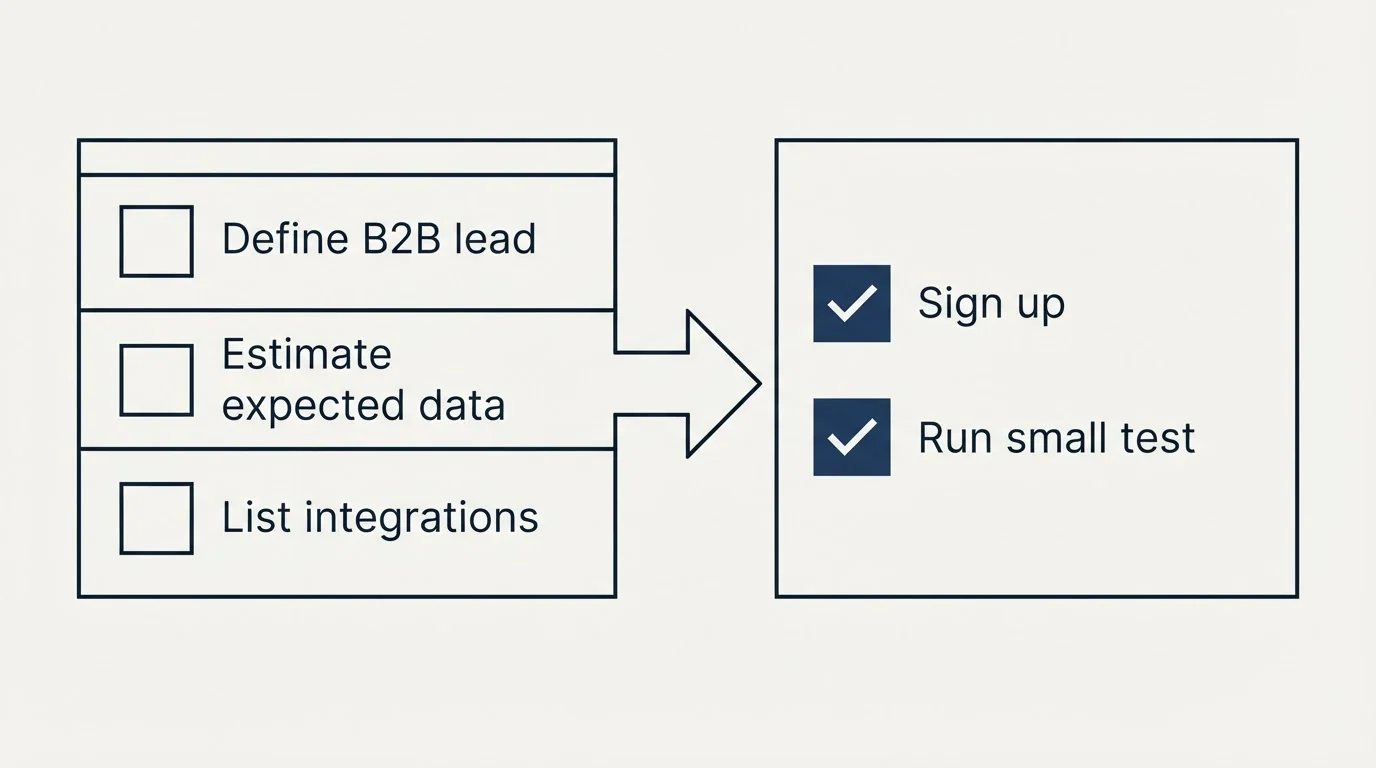
- Define your B2B lead data and contact enrichment and multi-channel sales outreach and engagement tracking requirements and monthly budget
- Estimate your expected data credits or contact lookups and sequences and engagement actions to find the right tier
- List the integrations your team currently relies on
- Sign up for free trials or demos of both platforms
- Run a small test with each tool before making a commitment
- Evaluate the onboarding experience and support quality
Final Thoughts
EmailListVerify serves the B2B lead data and contact enrichment side of an outbound stack and Gong the multi-channel sales outreach and engagement tracking side. EmailListVerify publishes an entry price (a free tier), while Gong uses custom pricing for its plans, so compare on features and on the quote you receive. Your decision should weigh pricing against the specific features that matter most for your workflow.
Start with a trial of each to see which platform fits your team's daily process. The best tool is the one your team actually uses consistently.
Pricing and features verified as of September 2026. Visit EmailListVerify and Gong for current information.
Frequently asked questions.
Frequently asked questions- What is the main difference between EmailListVerify and Gong?
- EmailListVerify is a data enrichment tool focused on B2B lead data and contact enrichment, while Gong is a sales engagement platform focused on multi-channel outreach and engagement tracking. EmailListVerify handles email verification and finding, and Gong handles call recording, deal intelligence, and coaching insights.
- How much does EmailListVerify cost compared to Gong?
- EmailListVerify starts at $0 per month with a free tier offering 100 free verifications, and its monthly subscription for 5,000 credits costs $16 per month. Gong uses custom, contact-based pricing with no published rate, so the two cannot be compared on list price directly.
- Can EmailListVerify and Gong be used together?
- Yes, the article notes that many teams run one of each since they address different parts of the workflow. EmailListVerify supplies accurate contact data for target accounts, while Gong coordinates and tracks outreach across email, phone, and social channels.
- What integrations do EmailListVerify and Gong share?
- HubSpot is the only integration listed by both tools. EmailListVerify separately connects with Mailchimp, AWeber, MailerLite, Sendloop, SparkPost, Mailgun, Campaign Monitor, Zapier, SureTriggers, Apify, and n8n, while Gong connects with Salesforce, Microsoft Dynamics 365, Zoom, Microsoft Teams, Google Meet, Webex, Gmail, Microsoft Outlook, Slack, Outreach, and Salesloft.
- Which tool is a better fit for finding accurate contact data?
- EmailListVerify is built for finding accurate contact data for target accounts through its bulk email verification, email finder, domain search, and enrichment API features. Gong is designed instead for coordinating and analyzing outreach across email, phone, and social channels.
About the author.

Tim Carden is CMO / CTO at RevenueFlow, which builds and operates outbound revenue engines for B2B companies. Studied at McGill University.
Tim Carden · CMO / CTO
Connect on LinkedIn →Explore more.
Ready to scale your outreach?
We build GTM engines that book real meetings. See the receipts.
Related articles.
Gong vs NeverBounce: Sales Engagement Platform vs Data Enrichment Tool Comparison
Gong vs NeverBounce: what Gong's own pages say about enrichment, what NeverBounce's API returns about an address, and how each vendor prices.
AroundDeal vs Leadspicker: Data Enrichment Tool vs Sales Engagement Platform Comparison
Compare AroundDeal (data enrichment tool) and Leadspicker (sales engagement platform) side by side. See pricing, features, and integrations to decide which one, or both, your stack needs.
ContactOut vs Luru: Data Enrichment Tool vs Sales Engagement Platform Comparison
Compare ContactOut (data enrichment tool) and Luru (sales engagement platform) side by side. See pricing, features, and integrations to decide which one, or both, your stack needs.
Enrich Layer vs La Growth Machine: Data Enrichment Tool vs Sales Engagement Platform Comparison
Compare Enrich Layer (data enrichment tool) and La Growth Machine (sales engagement platform) side by side. See pricing, features, and integrations to decide which one, or both, your stack needs.
Leadspicker vs NeverBounce: Sales Engagement Platform vs Data Enrichment Tool Comparison
Compare Leadspicker (sales engagement platform) and NeverBounce (data enrichment tool) side by side. See pricing, features, and integrations to decide which one, or both, your stack needs.
11x vs Adapt.io: Sales Engagement Platform vs Data Enrichment Tool Comparison
Compare 11x (sales engagement platform) and Adapt.io (data enrichment tool). See pricing, features, and integrations to decide which one, or both, your stack needs.