HubSpot CRM vs SalesRobot: CRM Platform vs Sales Engagement Platform Comparison
Compare HubSpot CRM (CRM platform) and SalesRobot (sales engagement platform) side by side. See pricing, features, and integrations to decide which one, or both, your stack needs.

HubSpot CRM is a CRM platform for contact management, deal pipelines, and sales pipeline tracking, starting free. SalesRobot is a sales engagement platform for multi-channel LinkedIn and email outreach with AI personalization, starting at $59/mo. They serve different workflow stages, so many teams use both together rather than choosing one over the other.
Key takeaways
- HubSpot CRM offers a free entry plan, while its paid tiers are Sales Hub Starter at $20/mo, Professional at $100/mo, and Enterprise at $150/mo.
- SalesRobot's Basic LinkedIn plan starts at $59/mo, with Advanced at $79/mo and Professional at $99/mo.
- SalesRobot also offers email automation tiers including Growth at $47/mo for 5,000 monthly emails and Hypergrowth at $113/mo for 100,000 monthly emails.
- SalesRobot publishes 6 pricing tiers compared to HubSpot CRM's 4, giving buyers more granular scaling options.
- HubSpot CRM lists features such as contact and company management and deal pipeline tracking, while SalesRobot lists multi-step LinkedIn and email sequences and AI-personalized follow-ups.
Reviewed and updated September 5, 2026
HubSpot CRM vs SalesRobot: CRM Platform vs Sales Engagement Platform Comparison
HubSpot CRM is a CRM platform; SalesRobot is a sales engagement platform. Whether you need one, the other, or both depends on which part of the workflow you are buying for: customer relationship management and sales pipeline tracking on one side, multi-channel sales outreach and engagement tracking on the other. This guide lays out what each vendor publishes.
The Quick Answer
HubSpot CRM is a CRM platform for customer relationship management and sales pipeline tracking; SalesRobot is a sales engagement platform for multi-channel sales outreach and engagement tracking. By each vendor's own wording, HubSpot CRM lists contact and company management and deal pipeline and tracking, and SalesRobot lists multi-step linkedin and email sequences and smart time delays and conditions.
HubSpot CRM offers a lower entry point at $0/mo compared to SalesRobot at $59/mo.
If your priority is organizing contacts, tracking deals, and forecasting revenue, HubSpot CRM is the one built for it; for coordinating outreach across email, phone, and social channels, that is SalesRobot. Many teams run one of each.
Understanding the Core Difference
HubSpot CRM is A popular all-in-one CRM platform with a generous free tier that includes contact management, deal tracking, and email marketing. HubSpot offers separate Hubs for marketing, sales, service, and content, making it ideal for growing businesses that want a unified platform.
SalesRobot is Cloud-based outreach tool that runs multi-step LinkedIn and email sequences with smart delays and conditions, AI personalization, a unified inbox and native CRM sync.
The two platforms take different approaches to solving the same core challenge.
Pricing Comparison
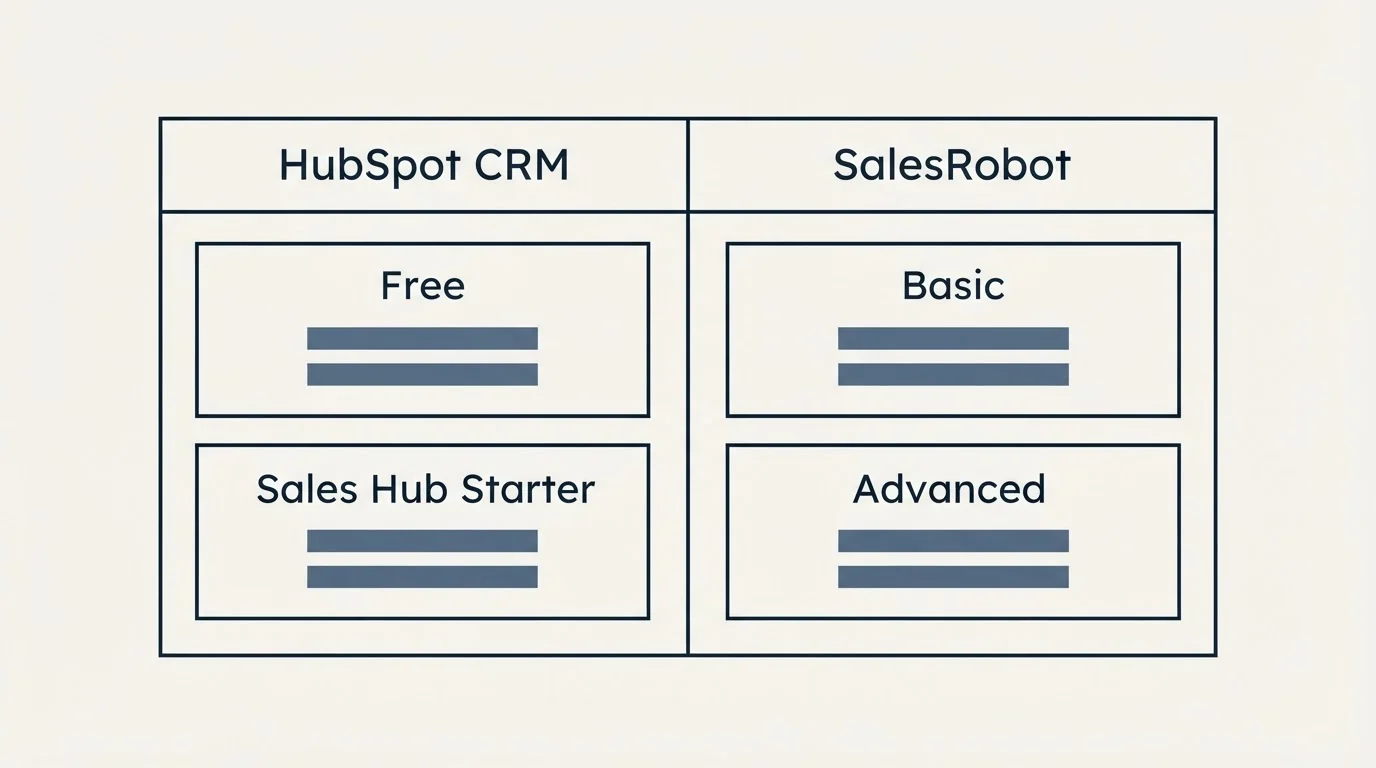
Free
Basic (LinkedIn)
HubSpot CRM Pricing (as of September 2026)
| Plan | Price |
|---|---|
| Free | Free |
| Sales Hub Starter | $20/mo |
| Sales Hub Professional | $100/mo |
| Sales Hub Enterprise | $150/mo |
Source: HubSpot CRM Pricing
SalesRobot Pricing (as of September 2026)
| Plan | Price | Contacts | Emails |
|---|---|---|---|
| Basic (LinkedIn) | $59/mo | 1 LinkedIn account, 1 active campaign, limited daily quotas | - |
| Advanced (LinkedIn) | $79/mo | 1 LinkedIn account, unlimited active campaigns, full daily quotas | - |
| Professional (LinkedIn) | $99/mo | 1 LinkedIn account, unlimited active campaigns, team management | - |
| Growth (Email Automation) | $47/mo | 1000 Uploaded Contacts | 5000 Emails Monthly |
| Hypergrowth (Email Automation) | $113/mo | 25,000 Uploaded Contacts | 100,000 Emails Monthly |
| Light Speed (Email Automation) | $210/mo | 100,000 Uploaded Contacts | 500,000 Emails Monthly |
Source: SalesRobot Pricing
Pricing Analysis
HubSpot CRM is more affordable at the entry level ($0/mo vs $59/mo). For teams with tight budgets or those just getting started with customer relationship management and sales pipeline tracking and multi-channel sales outreach and engagement tracking, this price difference matters.
SalesRobot offers 6 pricing tiers compared to HubSpot CRM's 4, giving you more granularity as you scale.
HubSpot CRM includes a free tier, letting you test the platform before committing financially.
Features Breakdown
- Contact and company management
- Deal pipeline and tracking
- Email tracking and notifications
- Meeting scheduling
- Live chat and chatbot builder
- Sales automation and sequences
- and 2 more listed below
- Multi-step LinkedIn and email sequences
- Smart time delays and conditions
- Dynamic follow-ups with AI personalization
- Unified inbox for LinkedIn and email
- AI variables that auto-personalize copy
- Smart reply suggestions
- and 4 more listed below
HubSpot CRM Key Features
- Contact and company management
- Deal pipeline and tracking
- Email tracking and notifications
- Meeting scheduling
- Live chat and chatbot builder
- Sales automation and sequences
- Customizable reporting dashboards
- Document tracking and e-signatures
SalesRobot Key Features
- Multi-step LinkedIn and email sequences
- Smart time delays and conditions
- Dynamic follow-ups with AI personalization
- Unified inbox for LinkedIn and email
- AI variables that auto-personalize copy
- Smart reply suggestions
- AI appointment setter agent
- Voice and video message personalization
- Dedicated local IP rotation per account
- A/B testing with lead info scraping for email and phone
The two lists below are a diff of each vendor's own feature list by exact wording, so a capability both tools offer can appear on either side under a different name.
Listed only by HubSpot CRM
- Contact and company management
- Deal pipeline and tracking
- Email tracking and notifications
- Meeting scheduling
- Live chat and chatbot builder
- Sales automation and sequences
- Customizable reporting dashboards
- Document tracking and e-signatures
Listed only by SalesRobot
- Multi-step LinkedIn and email sequences
- Smart time delays and conditions
- Dynamic follow-ups with AI personalization
- Unified inbox for LinkedIn and email
- AI variables that auto-personalize copy
- Smart reply suggestions
- AI appointment setter agent
- Voice and video message personalization
- Dedicated local IP rotation per account
- A/B testing with lead info scraping for email and phone
Integration Ecosystem
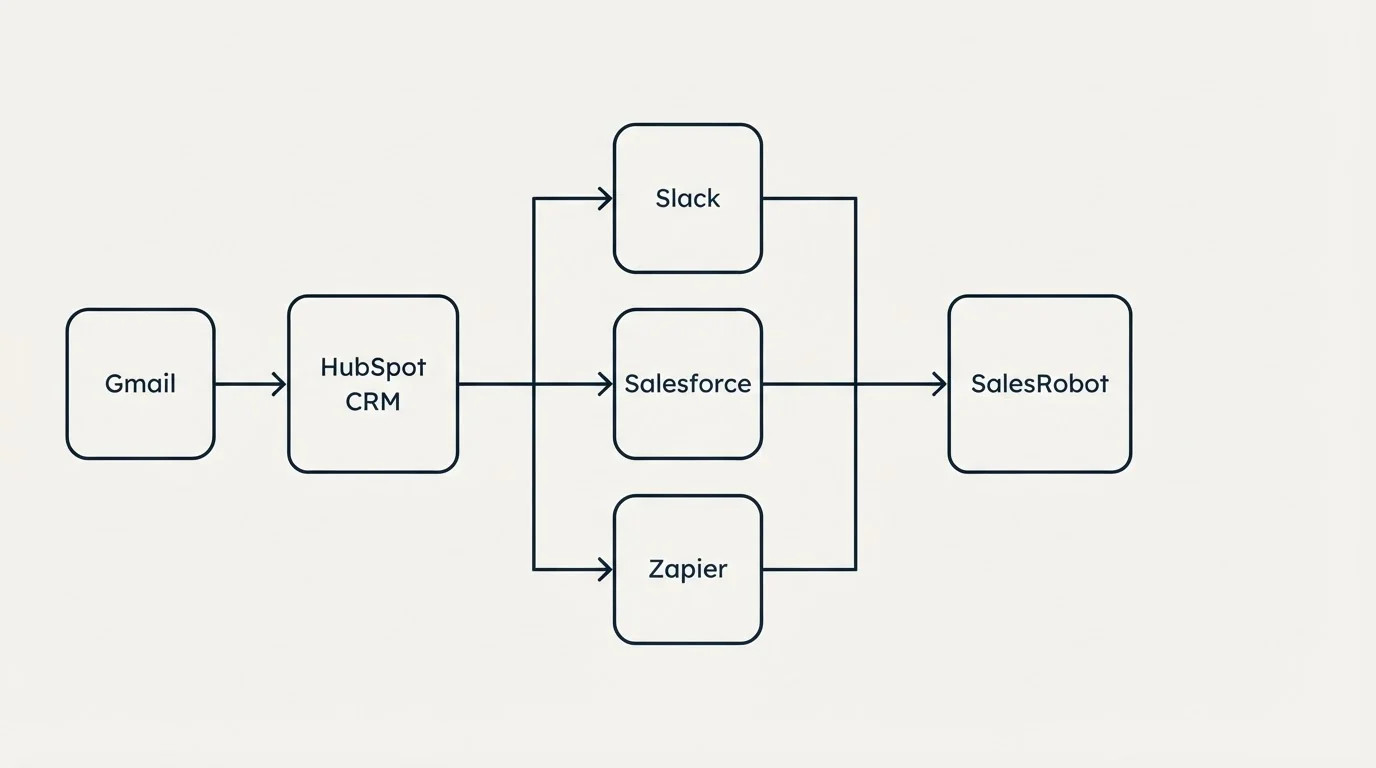
HubSpot CRM Integrations
HubSpot CRM connects with: Gmail, Microsoft Outlook, Slack, Salesforce, Zapier, Shopify, WordPress, Zoom.
SalesRobot Integrations
SalesRobot connects with: HubSpot, Pipedrive, Salesforce, Zapier, Webhooks, Google Sheets, Slack.
Shared Integrations
Both tools integrate with: Slack, Salesforce, Zapier.
Integrations listed only by HubSpot CRM: Gmail, Microsoft Outlook, Shopify, WordPress, Zoom.
Integrations listed only by SalesRobot: HubSpot, Pipedrive, Webhooks, Google Sheets.
Use Case Recommendations
Best Fit for HubSpot CRM
- Budget-conscious teams looking for an affordable CRM platform
- Organizations with complex tech stacks needing broad integration support (8 integrations)
- Teams that want to start free and scale up as needs grow
Best Fit for SalesRobot
- Teams that need a wide feature set (10 capabilities listed)
- SDR teams running multi-channel outreach sequences
- Sales managers tracking team engagement metrics
- Revenue teams coordinating email, phone, and social touches
Feature Comparison Summary
| Feature | HubSpot CRM | SalesRobot |
|---|---|---|
| Starting Price | Free | $59/mo |
| Top Tier Price | $150/mo | $210/mo |
| Total Features Listed | 8 | 10 |
| Integrations | 8 | 7 |
| Founded | 2006 | N/A |
Getting Started Checklist
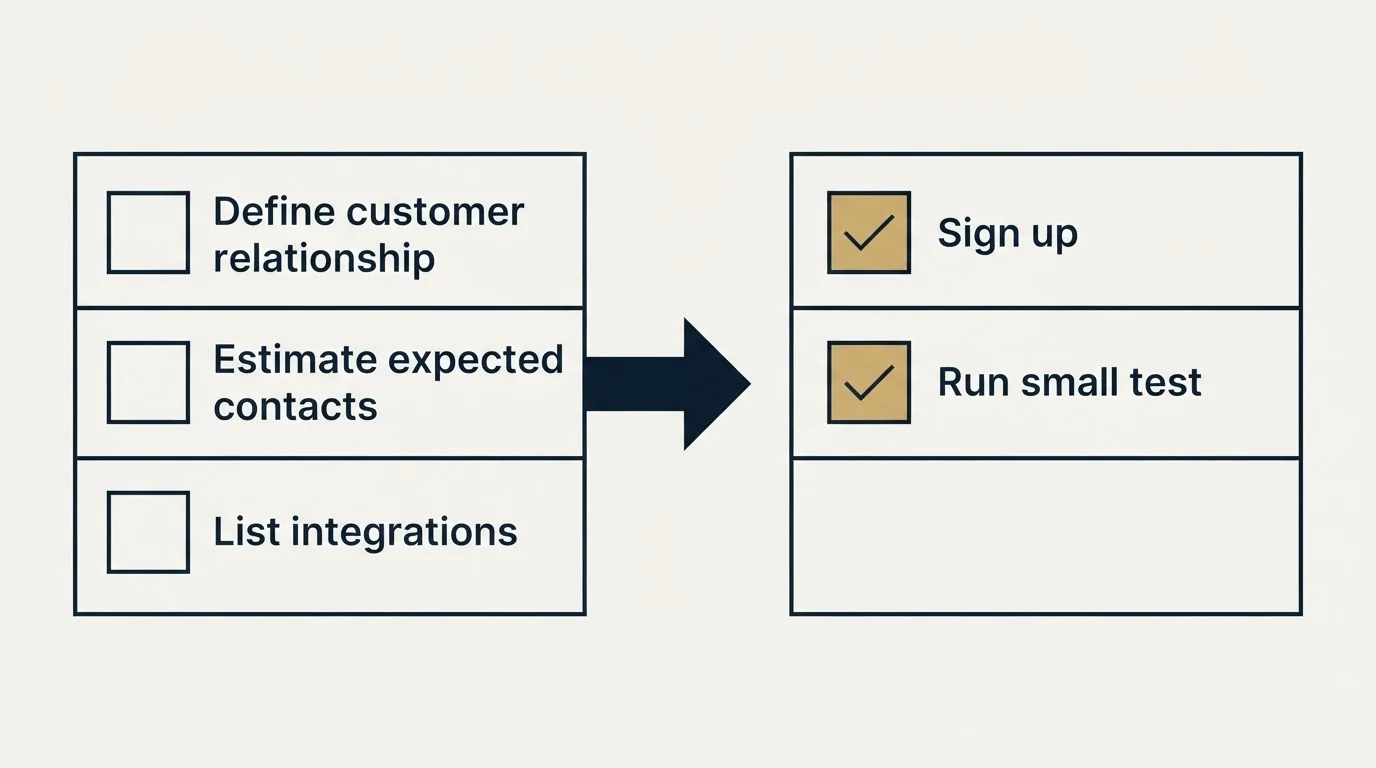
- Define your customer relationship management and sales pipeline tracking and multi-channel sales outreach and engagement tracking requirements and monthly budget
- Estimate your expected contacts and deals and sequences and engagement actions to find the right tier
- List the integrations your team currently relies on
- Sign up for free trials or demos of both platforms
- Run a small test with each tool before making a commitment
- Evaluate the onboarding experience and support quality
Final Thoughts
HubSpot CRM serves the customer relationship management and sales pipeline tracking side of an outbound stack and SalesRobot the multi-channel sales outreach and engagement tracking side. HubSpot CRM offers a more accessible entry point, while SalesRobot starts at $59/mo. Your decision should weigh pricing against the specific features that matter most for your workflow.
Start with a trial of each to see which platform fits your team's daily process. The best tool is the one your team actually uses consistently.
Pricing and features verified as of September 2026. Visit HubSpot CRM and SalesRobot for current information.
Frequently asked questions.
Frequently asked questions- Is HubSpot CRM cheaper than SalesRobot?
- Yes, at the entry level HubSpot CRM is free, while SalesRobot's cheapest plan, Basic LinkedIn, costs $59 per month. This makes HubSpot CRM more accessible for teams with tight budgets or those just starting with pipeline tracking, though SalesRobot's pricing scales across 6 tiers depending on channel and volume needs.
- What's the core difference between HubSpot CRM and SalesRobot?
- HubSpot CRM is a CRM platform built for customer relationship management and sales pipeline tracking, while SalesRobot is a sales engagement platform built for multi-channel sales outreach across LinkedIn and email. One organizes contacts and deals, the other automates and personalizes outbound sequences.
- Can I use HubSpot CRM and SalesRobot together?
- Yes, the article notes that many teams run one of each. HubSpot CRM handles organizing contacts, tracking deals, and forecasting revenue, while SalesRobot handles coordinating outreach across email, phone, and social channels, so they can complement rather than replace each other.
- Does HubSpot CRM have a free plan?
- Yes, HubSpot CRM includes a free tier priced at $0 per month, letting users test the platform before committing financially. Paid upgrades include Sales Hub Starter at $20/mo, Professional at $100/mo, and Enterprise at $150/mo.
- How many pricing tiers does SalesRobot offer compared to HubSpot CRM?
- SalesRobot publishes 6 pricing tiers, including LinkedIn plans like Basic at $59/mo and email automation plans like Growth at $47/mo, compared to HubSpot CRM's 4 tiers ranging from free to $150 per month. This gives SalesRobot buyers more granularity as they scale.
About the author.

Tim Carden is CMO / CTO at RevenueFlow, which builds and operates outbound revenue engines for B2B companies. Studied at McGill University.
Tim Carden · CMO / CTO
Connect on LinkedIn →Explore more.
Ready to scale your outreach?
We build GTM engines that book real meetings. See the receipts.
Related articles.
Kommo vs Luru: CRM Platform vs Sales Engagement Platform Comparison
Compare Kommo (CRM platform) and Luru (sales engagement platform) side by side. See pricing, features, and integrations to decide which one, or both, your stack needs.
Dripify vs Membrain: Sales Engagement Platform vs CRM Platform Comparison
Compare Dripify (sales engagement platform) and Membrain (CRM platform). See pricing, features, and integrations to decide which one, or both, your stack needs.
HubSpot CRM vs Twenty: CRM Platform Comparison
Compare HubSpot CRM and Twenty side by side. See pricing, features, and integrations to choose the right CRM platform for your needs.
AroundDeal vs Leadspicker: Data Enrichment Tool vs Sales Engagement Platform Comparison
Compare AroundDeal (data enrichment tool) and Leadspicker (sales engagement platform) side by side. See pricing, features, and integrations to decide which one, or both, your stack needs.
AroundDeal vs Salesflare: Data Enrichment Tool vs CRM Platform Comparison
Compare AroundDeal (data enrichment tool) and Salesflare (CRM platform) side by side. See pricing, features, and integrations to decide which one, or both, your stack needs.
GetSales.io vs Yet Another Mail Merge: Sales Engagement Platform vs Cold Email Platform Comparison
Compare GetSales.io (sales engagement platform) and Yet Another Mail Merge (cold email platform) side by side. See pricing, features, and integrations to decide which one, or both, your stack needs.