EmailBison vs Instantly: Cold Email Platform Comparison
Compare EmailBison and Instantly side by side. See pricing, features, and integrations to choose the right cold email platform for your needs.
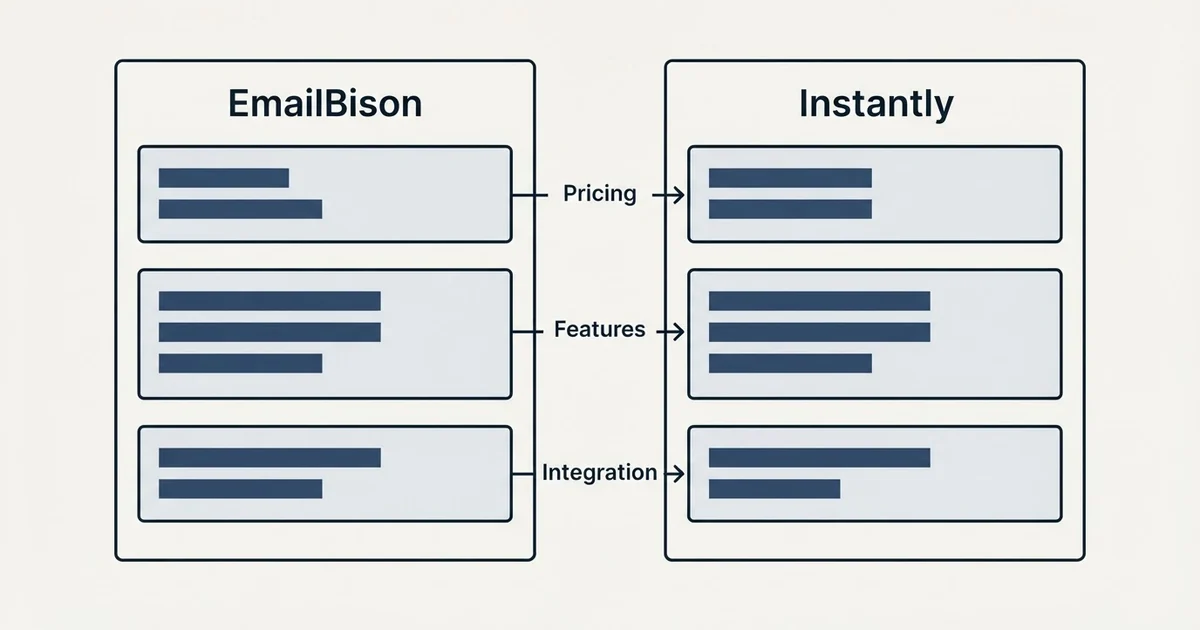
EmailBison is a private email sequencer that sells one plan: $599 a month for 500,000 emails, with unlimited leads, workspaces and teammates. Instantly steps from $47 for 5,000 emails to $358 for 500,000 on monthly billing and caps uploaded contacts. Instantly costs less at every published volume; EmailBison includes unlimited storage and dedicated IPs.
Key takeaways
- EmailBison's only plan is $599 a month for 500,000 emails, with unlimited lead storage, workspaces and teammates, no per-seat fees, and extra monthly buckets above 500,000 at a price its page does not print.
- Instantly's Email Outreach plans cost $47, $97 and $358 a month on monthly billing, or $37.6, $77.6 and $286.3 on yearly billing, for 5,000 to 500,000 emails a month.
- Instantly caps uploaded contacts at 1,000, 25,000 or 100,000 across all campaigns, with an $87 add-on for 25,000 more on Hyper Growth or Light Speed, while EmailBison stores unlimited leads.
- EmailBison puts dedicated IP pools on its only plan; Instantly's SISR dedicated IP system starts at Light Speed, and its Enterprise tier adds a private deliverability network.
Reviewed and updated September 21, 2026
EmailBison sells one plan: $599 a month for 500,000 emails, with unlimited lead storage, workspaces and teammates and no per-seat fees. Instantly sells email volume in steps of $47, $97 and $358 a month on monthly billing, and each step caps both the emails sent and the contacts uploaded. At every volume both pages publish, Instantly's list price is the lower one, so the EmailBison vs Instantly choice turns on the meters and the sending infrastructure rather than on the entry price.
This page describes each platform from its own pricing and product pages as they read today. Prices are quoted as each page prints them, with a dollar sign and no currency named.
What Is EmailBison?
EmailBison is a private email sequencer that its homepage pitches at agencies and GTM teams. It runs sequences on an isolated network with dedicated IP pools and single-tenant clusters, and bundles a master inbox, unlimited lead storage, private warm-up, an API and webhooks. It sells one Base Plan at $599 a month, which includes 500,000 emails.
The homepage headline calls it a "Private email sequencer for the top 10%", and the pricing page sums up the model in one line: one plan that covers everything, no per-seat fees, scaling with email sends. Above 500,000 emails a month the pricing page says to buy additional monthly buckets, and it does not print their price. The footer names the company behind it as Itachi Technologies Inc. A fuller walk through EmailBison's pricing covers the single plan on its own.
EmailBison vs Instantly: The Short Answer
Instantly is cheaper at every volume both pages price: $47 for 5,000 emails, $97 for 125,000 and $358 for 500,000 a month on monthly billing, against EmailBison's $599 for 500,000. EmailBison's case is what that price includes: unlimited lead storage where Instantly caps uploaded contacts, unlimited workspaces with isolated data, and dedicated IP pools on its only plan.
A team sending under 125,000 emails a month to a list it can hold under 25,000 contacts has little reason to pay $599. An agency keeping several clients' lead history, or a team that wants isolated sending from the first email, is the buyer EmailBison's homepage names. Instantly's own ceiling on contacts is the line that moves a team from one answer to the other.
What Each Plan Meters
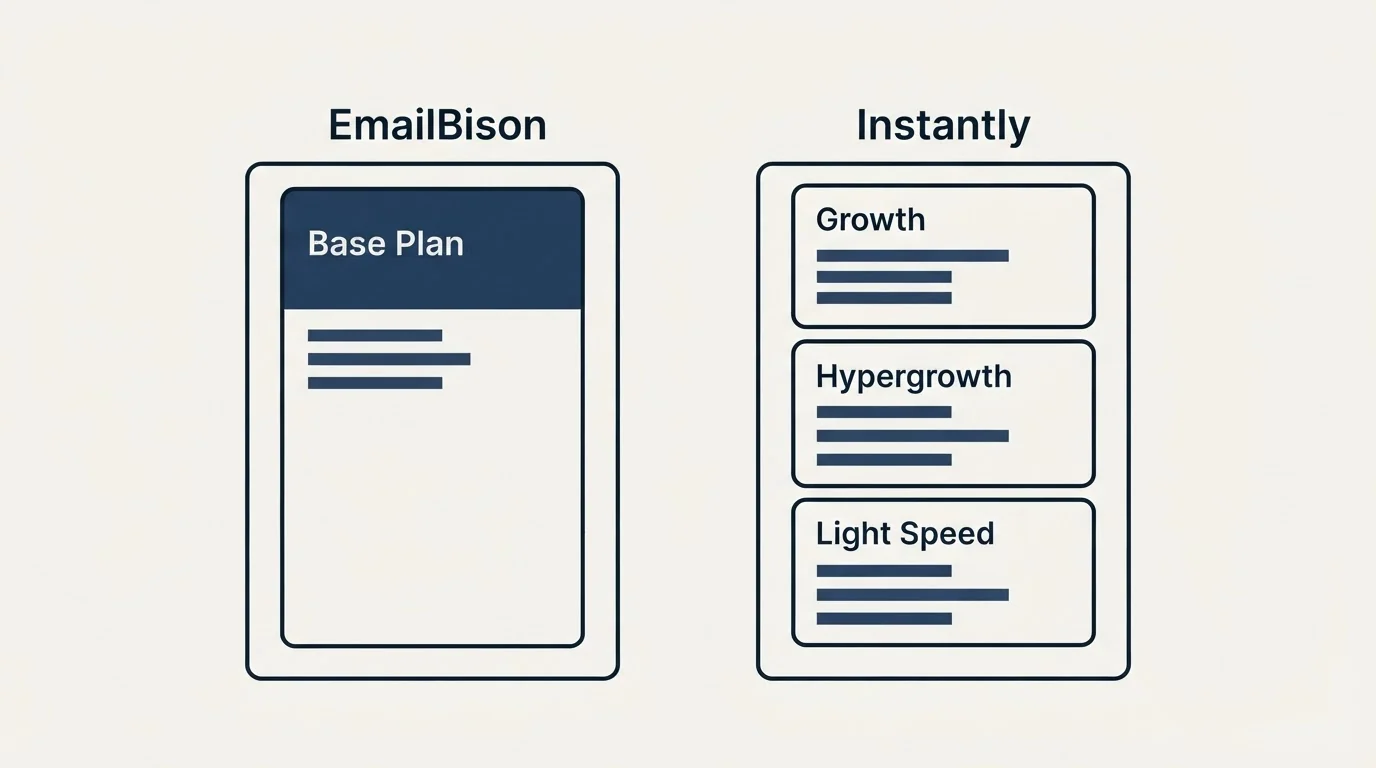
EmailBison Pricing
| Plan | Price | Emails | Everything else |
|---|---|---|---|
| Base Plan | $599 a month | 500,000 included; additional monthly buckets above that, price not printed | unlimited leads, workspaces and teammates, no per-seat fees |
The plan card lists four inclusions beyond the volume: an isolated network with dedicated IPs, email warm-up with smart warm-up and bounce protection, an API, and dedicated support through a private Slack channel with 1:1 onboarding and migration help. The pricing page offers a demo booking and lists no self-serve trial.
Source: EmailBison Pricing
Instantly Pricing
| Plan | Monthly billing | Yearly billing | Emails a month | Uploaded contacts |
|---|---|---|---|---|
| Growth | $47 | $37.6 | 5,000 | 1,000 |
| Hypergrowth | $97 | $77.6 | 125,000 on the monthly card, 100,000 on the yearly card | 25,000 |
| Light Speed | $358 | $286.3 | 500,000 | 100,000 |
| Enterprise | Custom | Custom | 500,000+ | 100,000+ |
Billing basis: a monthly price for the Email Outreach plan, which the pricing page opens on monthly billing; its Yearly switch drops the per-month price to $37.6, $77.6 and $286.3. Every plan includes unlimited email accounts and unlimited warm-up. The two Hypergrowth cards disagree with each other: the monthly card lists 125,000 emails a month, while the yearly card and the page's own comparison table list 100,000. The help centre's plans overview sides with 125,000.
That overview adds three things the plan cards leave out. There is a free trial of 250 uploaded contacts and 1,000 emails. An Email Outreach add-on costs $87 a month for another 25,000 uploaded contacts and 125,000 emails, on Hyper Growth or Light Speed only. And the contact ceiling is "a fixed limit across all campaigns, not per month", so a contact uploaded once counts against the plan for as long as it stays. Leads and AI features sit on a separate Instantly Credits plan, from $47 a month for 1,500 credits, with a database the pricing page puts at 450M+ B2B leads. For the full tier-by-tier picture, see this breakdown of Instantly's pricing.
Source: Instantly Pricing
| Meter | EmailBison | Instantly |
|---|---|---|
| Emails a month | 500,000 on the one plan, more in paid buckets | 5,000, 125,000 or 500,000 by plan |
| Contacts you can keep | Unlimited lead storage | 1,000, 25,000 or 100,000 uploaded, fixed across all campaigns |
| Workspaces and teammates | Unlimited, no per-seat fees | Team member invites listed |
| Sending IPs | Dedicated IP pools on the one plan | SISR dedicated IP blocks from Light Speed |
| Warm-up | Private warm-up included | Unlimited warm-up on every plan |
| Support | Private Slack channel, 1:1 onboarding | Chat on Growth, premium live support from Hypergrowth |
| Way in | Book a demo | Free trial: 250 contacts, 1,000 emails |
What The Two Bills Look Like
The arithmetic below is illustrative: the four volumes are invented to show where the meters bind, and every price is the list price on monthly billing.
- 100,000 emails, 20,000 contacts. Instantly Hypergrowth covers it at $97. EmailBison is $599, because the Base Plan is its only plan.
- 250,000 emails, 50,000 contacts. Hypergrowth plus one add-on reaches 250,000 emails and 50,000 contacts for $184. EmailBison is still $599.
- 500,000 emails, 100,000 contacts. Light Speed covers it at $358, $241 a month or $2,892 a year below EmailBison. On yearly billing Light Speed is $286.3, a gap of $312.7 a month.
- 625,000 emails, 125,000 contacts. Light Speed plus one add-on is $445. EmailBison is $599 plus a monthly bucket whose price its page does not print.
Past 125,000 stored contacts Instantly's published prices run out: the overview does not say whether the add-on stacks, and Enterprise is priced on a call. EmailBison's plan stores unlimited leads at $599 for as long as sends stay within 500,000.
Sending Infrastructure
EmailBison's homepage describes single-tenant clusters that keep "workloads shielded from noisy neighbors", with dedicated VPCs, static egress and private networking, and it routes sequences across dedicated IP pools that it says are fully managed by its engineers. Deliverability testing runs through a native EmailGuard integration, and custom tracking domains are listed.
Instantly puts its infrastructure on the plan ladder. Light Speed adds the SISR system, which the pricing page expands as Server and IP Sharding and Rotation: it assigns dedicated or private server and IP blocks and swaps flagged IPs out. Enterprise adds a private deliverability network. The Growth and Hypergrowth cards describe no IP arrangement. Warm-up for unlimited accounts is on every plan, and the comparison table lists reputation protection and bounce detection. The help centre also prices separate Inbox Placement plans at $47 and $97 a month, domains at $15 a year and done-for-you Google accounts at $5 a month.
Features Each Page Lists
EmailBison's pages list an isolated network, a master inbox with unified threads, labels and filters, multi-step sequencing with conditional logic, A/B split tests at every step, custom variables, unlimited lead storage with statuses, tags and segments, private warm-up, an API with real-time webhooks, unlimited workspaces with roles and permissions, and dedicated Slack support.
Instantly's pricing page lists unlimited email accounts and warm-up, advanced warm-up capabilities, advanced sequences and scheduling, email and account analytics, a global block list, A/Z testing, reputation protection and bounce detection, an API with webhooks and integrations, a unified inbox it calls Unibox, and team member invites. Its other products, including the lead database, verification, a CRM, website visitors and AI agents, are sold through Instantly Credits and their own plans.
Both lists describe what each vendor advertises, so a capability named on one side may exist on the other under a different name: both run multi-step sequences with a unified inbox and split testing. RevenueFlow's own practice is one message per campaign with no follow-up steps, so the sequence builders on both pages are described here as vendor features.
Integrations
EmailBison's homepage lists a native Clay integration, native deliverability testing with EmailGuard, compatibility with n8n and make.com, native HubSpot and Salesforce sync through OutboundSync, and its API and webhooks for anything else.
Instantly's integrations marketplace, titled "50+ Sales and Outreach Integrations", displays nine today: Slack, HubSpot, Zapier, Trigify, RB2B, BetterContact, Findymail, Gojiberry and a Replit connector over MCP. HubSpot is the one name both pages list, so a team on Salesforce should confirm its sync path with Instantly directly.
Which One Fits
Contact storage decides first. A team that needs to keep more than 125,000 contacts across campaigns has run past every price Instantly publishes, and EmailBison's unlimited lead storage at $599 is the published answer. Below that, volume decides. Up to 250,000 emails a month, Instantly's Growth, Hypergrowth or Hypergrowth with one add-on costs $47 to $184. Above it, the comparison is Light Speed at $358 against EmailBison at $599, and the difference buys dedicated IP pools from the first email, unlimited workspaces and a private Slack channel. Anyone comparing more sending platforms can start from EmailBison compared with Smartlead.
How To Run The Evaluation
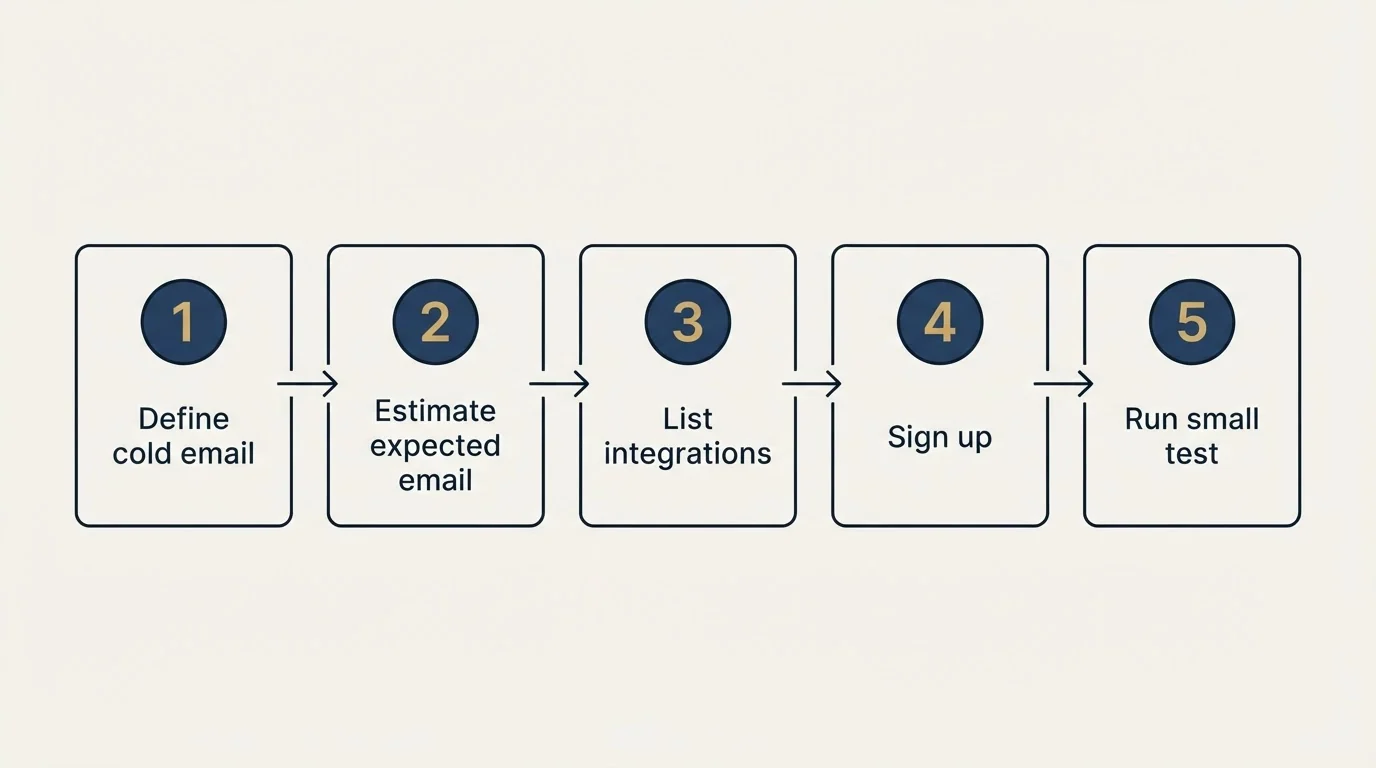
- Write down two numbers: the emails you send a month and the contacts you need to keep across all campaigns. On Instantly the second number decides the plan as often as the first.
- Price both at that pair with the tables above, on the billing term you will actually use.
- Start Instantly's free trial of 250 contacts and 1,000 emails, and book EmailBison's demo, which is the only route its pricing page offers.
- Ask each vendor what happens to your sending IPs at your volume. EmailBison lists dedicated IP pools on the Base Plan; Instantly's SISR system begins at Light Speed.
- Confirm the CRM sync for your CRM. EmailBison syncs HubSpot and Salesforce through OutboundSync, and Instantly's marketplace lists HubSpot.
Final Thoughts
Instantly is the cheaper platform at every volume both vendors price, and its ladder lets a small team start at $47. EmailBison charges $599 from the first email and spends it on unlimited storage, isolated infrastructure and support, which is worth most to a team whose contact list or client count has outgrown Instantly's ceilings.
Related Reading
If you would rather have this run for you, RevenueFlow books qualified meetings on a pay-per-meeting basis and publishes client results.
Pricing and features are taken from the vendors' own pages. Verify current terms with the vendor before relying on them.
Frequently asked questions.
Frequently asked questions- What is EmailBison?
- EmailBison is a private email sequencer that its homepage pitches at agencies and GTM teams. It sends from an isolated network with dedicated IP pools and single-tenant clusters, and includes a master inbox, unlimited lead storage, private warm-up, an API and webhooks. Its one Base Plan costs $599 a month and includes 500,000 emails, with no per-seat fees.
- Is Email Bison cheaper than Instantly?
- No, not at any volume both pages price. Instantly's Email Outreach plans cost $47 for 5,000 emails, $97 for 125,000 and $358 for 500,000 a month on monthly billing, while EmailBison's one plan is $599 for 500,000. EmailBison's price includes unlimited lead storage and dedicated IP pools, which Instantly caps or reserves for Light Speed and above.
- How many contacts can I keep on Instantly?
- Growth allows 1,000 uploaded contacts, Hypergrowth 25,000 and Light Speed 100,000, and Instantly's help centre says the limit is fixed across all campaigns rather than monthly. An $87 add-on adds 25,000 contacts and 125,000 emails on Hyper Growth or Light Speed. EmailBison's pricing page lists unlimited lead storage on its single plan instead.
- What happens above 500,000 emails a month?
- On EmailBison you buy additional monthly buckets, and the pricing page does not print their price. On Instantly, Light Speed plus the $87 add-on reaches 625,000 emails and 125,000 contacts for $445 a month, and the Enterprise tier, priced on a call, covers anything larger along with a private deliverability network.
About the author.

Tim Carden is CMO / CTO at RevenueFlow, which builds and operates outbound revenue engines for B2B companies. Studied at McGill University.
Tim Carden · CMO / CTO
Connect on LinkedIn →Explore more.
Ready to scale your outreach?
We build GTM engines that book real meetings. See the receipts.
Related articles.
EmailBison vs Emelia: Cold Email Platform Comparison
Compare EmailBison and Emelia side by side. See pricing, features, and integrations to choose the right cold email platform for your needs.
EmailBison vs Luru: Cold Email Platform vs Sales Engagement Platform Comparison
Compare EmailBison (cold email platform) and Luru (sales engagement platform) side by side. See pricing, features, and integrations to decide which one, or both, your stack needs.
GetSales.io vs Yet Another Mail Merge: Sales Engagement Platform vs Cold Email Platform Comparison
Compare GetSales.io (sales engagement platform) and Yet Another Mail Merge (cold email platform) side by side. See pricing, features, and integrations to decide which one, or both, your stack needs.
Enginy vs Success.ai: Sales Engagement Platform vs Cold Email Platform Comparison
Compare Enginy (sales engagement platform) and Success.ai (cold email platform) side by side. See pricing, features, and integrations to decide which one, or both, your stack needs.
Artisan vs Yet Another Mail Merge: Sales Engagement Platform vs Cold Email Platform Comparison
Compare Artisan (sales engagement platform) and Yet Another Mail Merge (cold email platform) side by side. See pricing, features, and integrations to decide which one, or both, your stack needs.
Growbots vs MailHeat: Cold Email Platform vs Email Warmup Tool Comparison
Compare Growbots (cold email platform) and MailHeat (email warmup tool) side by side. See pricing, features, and integrations to decide which one, or both, your stack needs.