EmailBison Pricing: One Plan, Priced by Sends
EmailBison publishes a single plan and no toggle. The dated price, what it includes, the unpriced send buckets above it, and the figure the vendor's blog still carries.
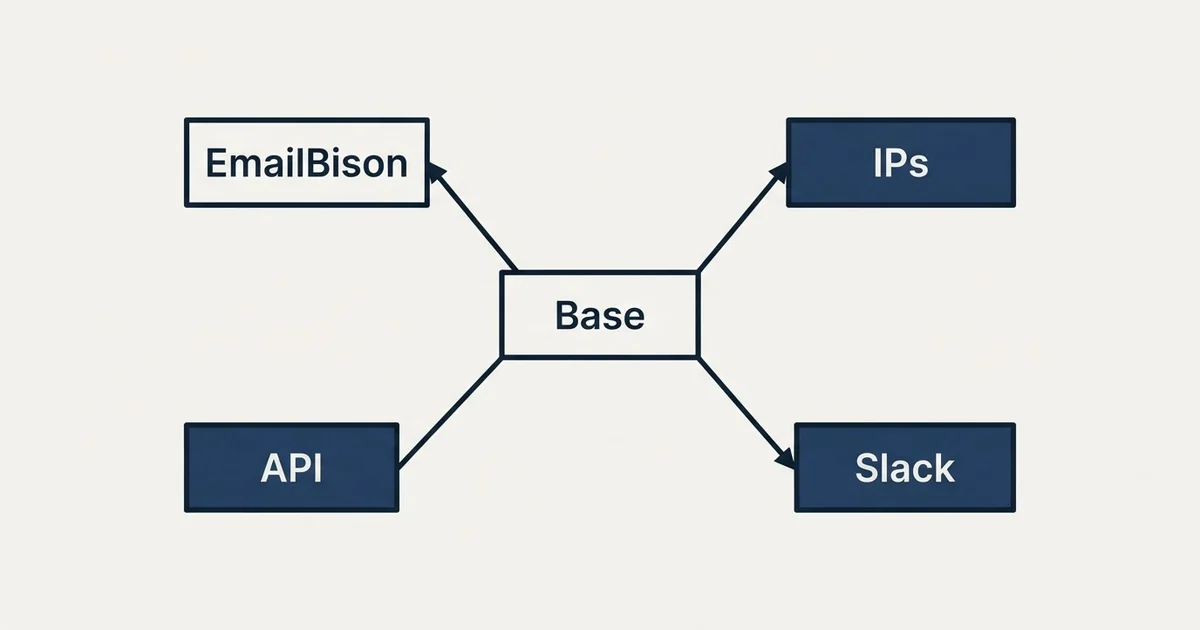
As published on EmailBison's pricing page on 4 September 2026, there is one plan, the Base Plan at $599 a month, including 500,000 emails a month, an isolated network with dedicated IPs, warm-up, an API, private Slack support, and unlimited leads, workspaces and teammates with no per-seat fee. Buckets above 500,000 are unpriced.
Key takeaways
- EmailBison's pricing page carries one plan at $599 a month including 500,000 emails a month on 4 September 2026, with no toggle, trial or checkout.
- Seats, workspaces and lead storage are unlimited, so the only published meter is monthly sends.
- Sends above 500,000 are sold as additional monthly buckets whose size and price the page does not publish.
- The vendor's Mailshake comparison post still states $499 a month while its Instantly post and the pricing page state $599; the pricing page wins.
Reviewed and updated September 5, 2026
EmailBison publishes one price and no toggle. As published on EmailBison's pricing page on 4 September 2026, the Base Plan is $599 a month and includes 500,000 emails a month, with everything else on the page listed as unlimited or included. The vendor's own blog says the same plan costs $499 a month on one post and $599 on another, both last modified on the same day in August.
That is the whole pricing story, and the interesting part is what a single-number page does and does not tell an evaluator. A disclosure before going further: we run EmailBison for sending, so this is a documentation read of the vendor's published pages rather than an account of operating the product, and nothing below comes from anything other than emailbison.com fetched on 4 September 2026.
The one plan, as the page publishes it
The pricing page is short. Its heading reads simple, no-fuss pricing, and the line under it states that one plan covers everything with no per-seat fees and no hidden charges, and that the vendor scales with email sends.
The single card is labelled Base Plan at $599 a month, with a line stating it includes 500,000 emails per month. Under the price, four items are listed: an isolated network with dedicated IPs, email warm-up with bounce protection, an API for automating tests and managing data programmatically, and dedicated support through a private Slack channel with one-to-one onboarding and migration help. A further block reads unlimited everything else, naming unlimited lead storage, unlimited workspaces and unlimited teammates, all with no per-seat fees.
The call to action on the card and at the foot of the page is book a demo. There is no checkout, no trial and no free tier anywhere on the pricing page or the homepage, and the page's only currency token is the one plan price. A rendered browser read of the page returned the same figure and nothing further, so the single number is the page rather than a client-rendered ladder waiting behind it.
The meter is sends, and the bucket above 500,000 is unpriced
The one line on the page that describes growth is under a heading for additional sends: need more than 500k, buy additional monthly buckets, scale as you grow. No bucket size and no bucket price appear on the page.
That is the gap to take into the demo call. The plan is priced on volume, the vendor says so in its own framing, and the only published volume point is the one inside the base plan. A team sending under half a million a month has a complete price. A team sending more has a price for the first half million and a sentence for the rest.
Two things follow. The first is that the effective rate inside the base plan is arithmetic anyone can do: $599 across 500,000 sends is about $0.0012 a send, which is a division of two published figures rather than a rate the vendor prints. The second is that the rate above the plan is unknowable from the page, so any comparison against a competitor's per-send overage is a comparison against a number the vendor has not published.
- 500,000 emails a month
- Isolated network with dedicated IPs
- Email warm-up with bounce protection
- API access
- Private Slack support with onboarding and migration help
- Unlimited leads, workspaces and teammates
- Additional monthly send buckets above 500,000
- Bucket size not stated
- Bucket price not stated
- No annual state or toggle
- No free trial or checkout
The vendor disagrees with itself, and the pricing page wins
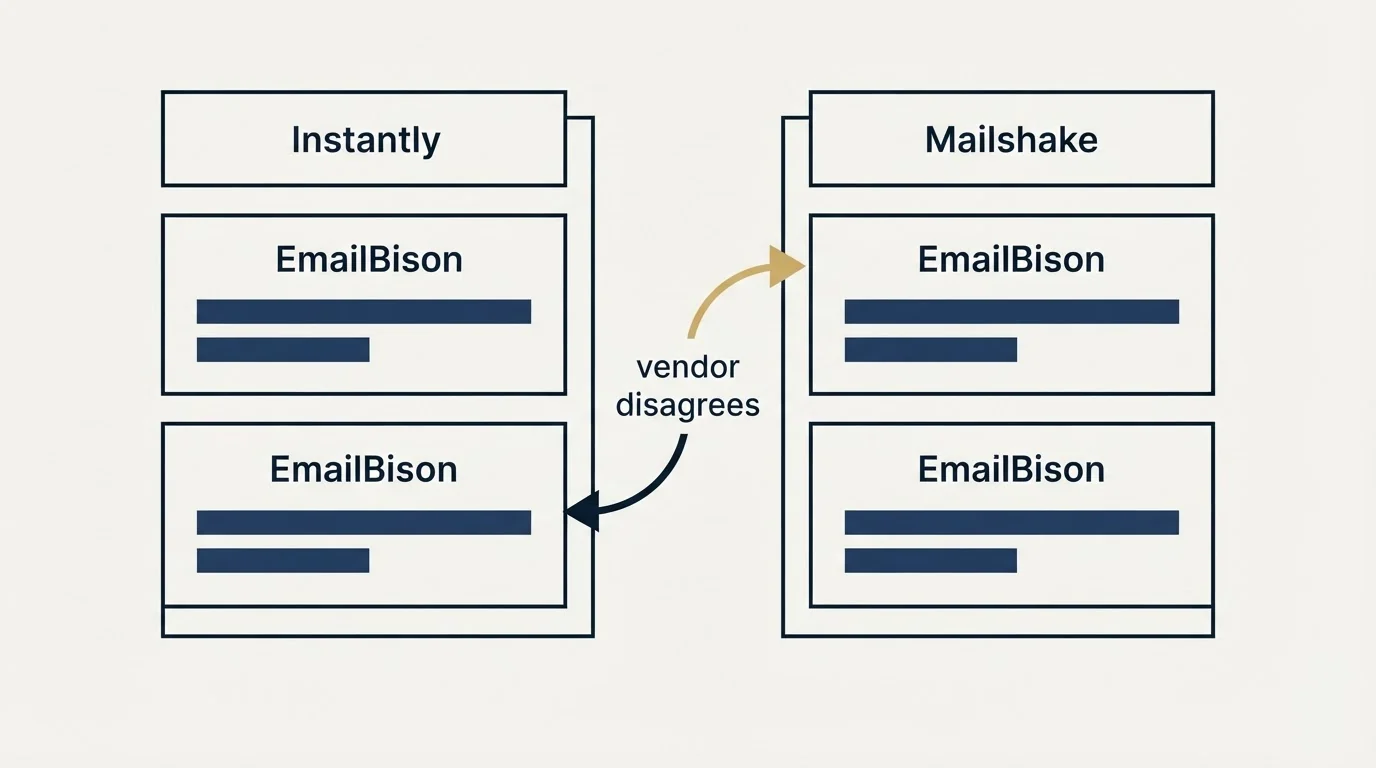
Two posts on the vendor's own blog describe the same plan with different numbers. The comparison against Instantly, published 27 November 2025 and last modified 6 August 2026, states the base plan at $599 a month for 500,000 sends with unlimited users and workspaces, which matches the pricing page. The comparison against Mailshake, published 13 January 2026 and last modified on the same day in August, describes a flat pricing model of $499 monthly for up to 500,000 emails with unlimited team members, and repeats the $499 figure through its cost comparisons.
Both posts are vendor-published, both carry the same last-modified date, and they disagree by $100 a month. The pricing page is the surface a buyer transacts on, and on 4 September 2026 it reads $599, so that is the figure quoted here. The older figure is recorded because a reader who arrives from the Mailshake comparison will budget $1,200 a year too low, and because the same post's arithmetic about per-seat competitors is built on the stale number.
What those posts say about Instantly and Mailshake is a rival's description of another vendor, and it is not used here for either. What they say about EmailBison itself is the vendor's own statement and is quotable as such: the Instantly post describes the pricing as volume-based, scaling with sends per month rather than with contact storage, which is the clearest description of the meter on any vendor surface.
Why a sends meter with unlimited seats is the right shape for this product
The page prices the thing that actually costs the vendor something: mail leaving isolated infrastructure. Seats, workspaces and stored leads are listed as unlimited because none of them consume sending capacity.
For an agency that is the whole appeal, and the vendor says so on its homepage, which describes the product as a private sequencer for agencies and GTM teams and lists client isolation across unlimited workspaces. A per-seat sequencer gets more expensive as an agency adds clients and staff; a sends-metered one gets more expensive only as the agency sends more, which is the number the agency is being paid for.
The same shape appears elsewhere in the category with lower entry points. QuickMail prices on volume bands rather than seat counts, with three published tiers and no annual option, and the comparison between the two is the comparison between a published entry band and a published ceiling: QuickMail's top published tier and EmailBison's single plan both sit at 500,000 sends a month, at very different prices, with different infrastructure underneath. Which of them is the right buy depends on whether isolated IP pools are the thing being paid for, which is a deliverability question before it is a pricing one.
- Step 1Size your monthly sends honestly
The plan includes 500,000 a month. Count sends across every mailbox and every workspace, because the meter is the total, not the seat.
- Step 2Ask for the bucket size and price
Above 500,000 the page says buckets are sold monthly and says nothing else. Both numbers decide the cost of growth.
- Step 3Confirm what isolated means for your domains
Dedicated IPs and a private network are the product's claim. Ask which sending domains and IPs are yours alone and which are shared.
- Step 4Settle the term
The page shows a monthly figure with no annual state. Whether a term discount exists is a question for the call, not the page.
What the infrastructure claim is and is not
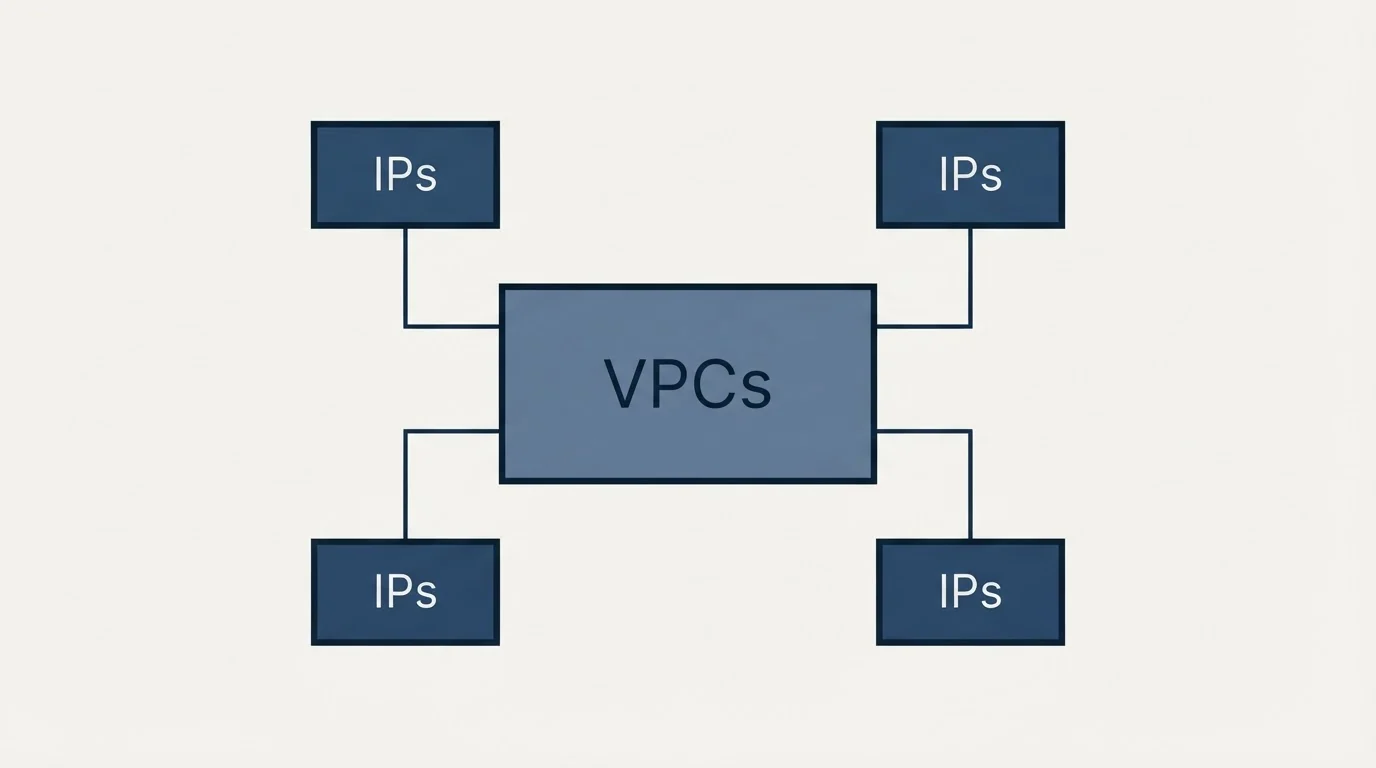
The homepage describes single-tenant clusters, dedicated VPCs, static egress, private networking and noisy-neighbour isolation, and says the sending servers are managed by the vendor's engineers across multiple IP pools. Those are the vendor's descriptions of its own architecture, and they explain what the $599 is buying beyond a sequencer.
What they do not change is the arithmetic that governs any sending programme. Volume comes from mailbox count and pacing under the provider ceilings set out in email sending limits by provider, and a dedicated IP pool does not lift those ceilings; it isolates your reputation from other senders on the platform, which is the argument dedicated IPs works through in both directions. The domains, authentication and warm-up that sit underneath any sequencer are the subject of cold email infrastructure, and they are the part a buyer still owns whichever tool carries the sends.
One doctrine note, because sequencing is the product's headline capability. We run one message per campaign for cold outbound, with no thread replies and no bumps, so the multi-step sequencing and reply follow-up features the homepage describes are reported here as the vendor's features rather than as a recommended way to use them. Any sequencer will run either way; the default is what happens unless somebody decides otherwise.
Where this sits in a stack
At $599 a month with no trial, EmailBison is priced as infrastructure rather than as a tool a solo operator tries for a week. The page's own framing agrees: it is aimed at teams that take reliability seriously, and the support line is a private Slack channel rather than a ticket queue.
That places it at the sending layer of a stack whose other layers are bought separately, which is the arrangement the 60-tool GTM stack describes from the operator's side. Several of the vendor's competitors publish a lower entry price with a per-seat or per-contact meter behind it, which is the comparison to run on your own send volume rather than on the headline figure.
- Yes: Count total monthly sends across all workspaces, since that is the only published meter
- Yes: Take the pricing page figure, not the older blog figure, into the budget
- Yes: Ask for the size and price of an additional monthly bucket
- Yes: Have your own domains, authentication and warm-up plan ready, because the platform sits on top of them
- Depends: Ask whether an annual term changes the monthly figure
- No: Expect a trial or a self-serve checkout, because the page offers neither
- No: Budget per seat or per workspace
This page is the price sheet, not a shortlist. For a ranked set of substitutes to weigh against it, this site keeps a separate page of EmailBison alternatives.
The short version
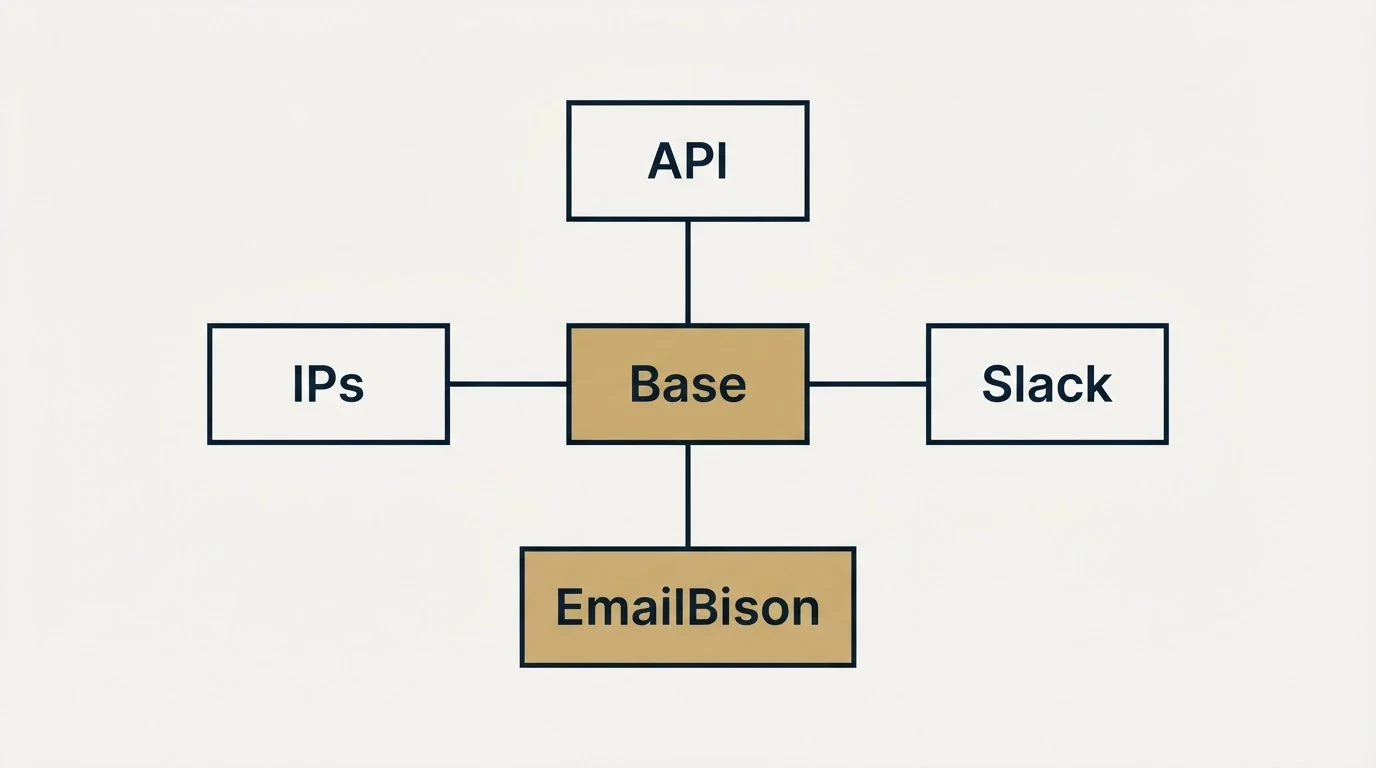
As published on EmailBison's pricing page on 4 September 2026, there is one plan, the Base Plan at $599 a month, including 500,000 emails a month, an isolated network with dedicated IPs, warm-up, an API, private Slack support, and unlimited leads, workspaces and teammates with no per-seat fee. Sends above 500,000 are sold as additional monthly buckets that the page does not price. There is no trial, no checkout and no annual state, and the vendor's own blog still carries a $499 figure on one post that the pricing page does not.
Size the demo conversation on total monthly sends and ask for the bucket price, because that is the one number the page leaves out.
If the constraint is the supply of qualified conversations rather than the sending platform, you can see what a first campaign produces on your own market.
The plan price, inclusions and the additional-sends line above were read from EmailBison's own pricing page and homepage on 4 September 2026, and the two blog figures from the vendor's own comparison posts the same day. Verify current terms with the vendor before relying on them.
Sources: EmailBison pricing, EmailBison vs Instantly (vendor blog), EmailBison vs Mailshake (vendor blog)
Frequently asked questions.
Frequently asked questions- How much does EmailBison cost?
- As published on EmailBison's pricing page on 4 September 2026, the Base Plan is $599 a month and includes 500,000 emails a month, an isolated network with dedicated IPs, email warm-up, API access and private Slack support, with unlimited leads, workspaces and teammates and no per-seat fees. There is no annual state, no free trial and no self-serve checkout; the page asks you to book a demo.
- What happens if I need more than 500,000 sends a month?
- The pricing page states that teams needing more than 500k can buy additional monthly buckets and scale as they grow, and publishes nothing further. Neither the size of a bucket nor its price appears on the page as of 4 September 2026, so the cost of growth above the base plan is a question for the demo call rather than a figure that can be quoted.
- Does EmailBison charge per seat or per workspace?
- No. The pricing page lists unlimited teammates, unlimited workspaces and unlimited lead storage inside the single plan with no per-seat fees, and the homepage describes client isolation across unlimited workspaces. The vendor's own Instantly comparison post describes the model as volume-based, scaling with sends per month rather than with contact storage.
- Why do some pages say EmailBison costs $499 a month?
- Because the vendor's own blog still does. Its Mailshake comparison post, last modified 6 August 2026, describes a flat $499 monthly rate for up to 500,000 emails, while its Instantly comparison post modified the same day and the pricing page itself state $599. The pricing page is the surface a buyer transacts on, so $599 is the figure to budget as of 4 September 2026.
About the author.

Tim Carden is CMO / CTO at RevenueFlow, which builds and operates outbound revenue engines for B2B companies. Studied at McGill University.
Tim Carden · CMO / CTO
Connect on LinkedIn →Explore more.
Ready to scale your outreach?
We build GTM engines that book real meetings. See the receipts.
Related articles.
Email Warmup Pricing in 2026: What 20 Tools Charge, and What 10 Mailboxes Cost
Email warmup tools start at a median of $29 a month, but warming ten mailboxes costs from $7.50 to $1,190 depending on how the vendor prices a mailbox.
Mailwarm Pricing: The Page Opens on Its Yearly Tab
Mailwarm's pricing tabs open on yearly and the plans meter daily volume rather than mailboxes. Both tabs, the overage rate, the no-trial rule and the per-mailbox cost.
Warmup Inbox Pricing: Per Inbox, Annual Loads First
Warmup Inbox prices per inbox and its page opens on the annual switch. Both states for all three plans, the reply ceiling meter, the trial and how a fleet bill is built.
MailReach Pricing: The Headline Rate Is the Second Band
MailReach prices warmup on a slider with four mailbox bands and two billing states. Every band at both states, and why the printed rate is not the entry rate.
Manyreach Pricing: Credits Buy Sends and Warmup Alike
Manyreach prices in credits rather than seats: a one-time pack or a monthly refill. What a credit buys, the two IP figures on one page, and where a pack beats a plan.
ReachInbox Pricing: The Page Loads on Its Yearly Rate
ReachInbox's pricing toggle loads on the yearly side. Both ladders, the four meters behind unlimited accounts, and the fair use question the page leaves open.