Manyreach Pricing: Credits Buy Sends and Warmup Alike
Manyreach prices in credits rather than seats: a one-time pack or a monthly refill. What a credit buys, the two IP figures on one page, and where a pack beats a plan.
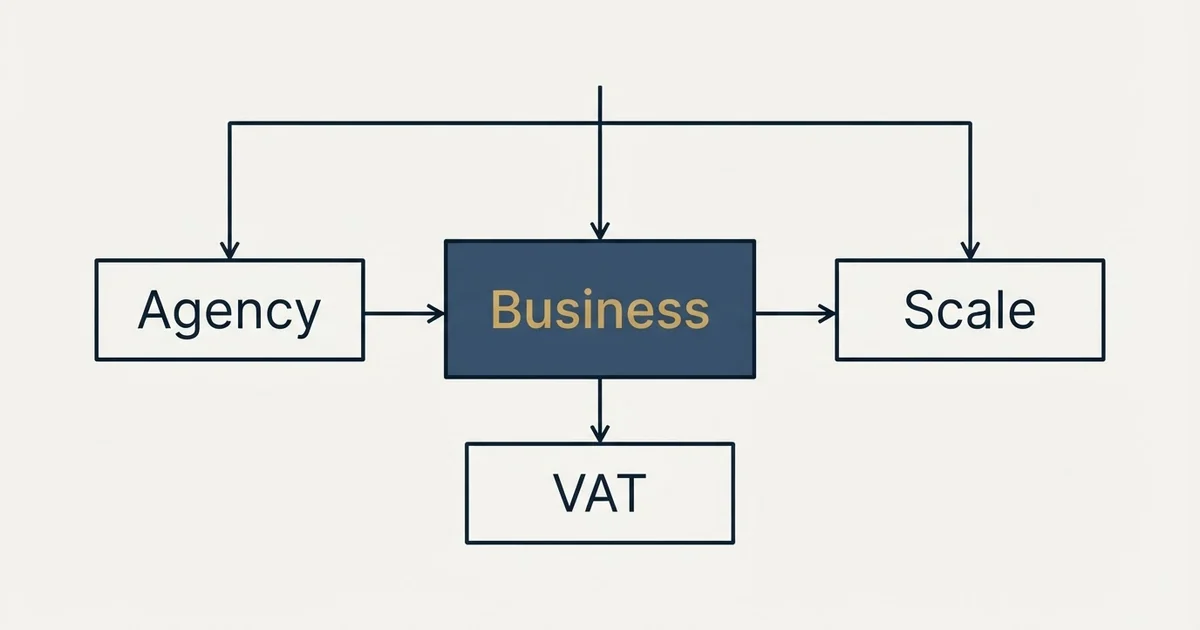
Manyreach pricing is published in credits: a 100,000 credit pack costs $199 and never expires, Business is $79 a month with 150,000 credits and 15,000 data tokens, and Agency is $299 a month with 500,000 credits and 50,000 tokens. One credit is one campaign email or ten warmup emails, and every plan allows unlimited sending accounts.
Key takeaways
- Manyreach's pricing page lists a 100,000 credit pack at $199, Business at $79 a month and Agency at $299, with Scale priced on request.
- One credit is one campaign email or ten warmup emails, so warming a fleet costs little against the sending meter.
- Business and Agency add monthly data tokens and private IPs; pay-as-you-go packs carry neither but never expire.
- Every plan lists unlimited sending accounts, so the credit pool, not the mailbox count, is the real limit.
Reviewed and updated September 21, 2026
Manyreach publishes its prices, and the shape is unusual for a cold email sender: a bag of credits you can buy once, or a monthly plan that refills a much bigger bag. On Manyreach's pricing page, the pay as you go example is 100,000 credits for $199, the Business plan is $79 a month, the Agency plan is $299 a month, and a Scale tier is quoted. The page carries no monthly or annual toggle, so every figure below is the one figure the page prints, in US dollars, with sales tax or VAT added at checkout.
The number that decides which route you take is not the price. It is what a credit buys.
What a credit is
Manyreach meters everything in credits, and the page states the exchange rate in one line: one credit is one campaign email, and one credit is ten warmup emails. Credits on the pay as you go route never expire. The monthly plans refill a credit allowance every month rather than selling you a stock.
That ratio is the reason the credit route can be cheaper than a seat-priced sender for a team that warms a lot of mailboxes and sends from few of them. Ten warmup emails per credit means a mailbox warming at fifty emails a day costs five credits a day, or roughly 150 credits a month. A campaign mailbox sending fifty a day costs 1,500 credits a month. The page does not do that arithmetic for you; it only states the rate.
Manyreach pricing: the three routes
| Route | Price | Credits | Also included |
|---|---|---|---|
| Pay as you go | $199 pack | 100,000, never expire | No tokens or IP |
| Business | $79 a month | 150,000 a month | 15,000 tokens, 1 IP |
| Agency | $299 a month | 500,000 a month | 50,000 tokens, 3 IPs |
| Scale | Custom | Custom | Custom |
Pay as you go. The card example is 100,000 credits for $199, and the page says other packs run from 250 credits up to one million. That is the only pack the page prices on its cards. Lower on the same page, a comparison strip lists pay as you go as "From $99", which is a different figure from the $199 example and is not paired with a credit count. Both figures are on the vendor's page today; this article records both rather than guessing which pack the $99 buys.
Business, $79 a month. 150,000 sending credits a month, 15,000 data tokens a month, and one private IP. At the stated rate that allowance is 150,000 campaign emails or 1.5 million warmup emails a month, or any mix.
Agency, $299 a month. 500,000 sending credits, 50,000 data tokens, three private IPs.
Scale. Custom, above Agency, no figure printed.
Extra IPs on the plan cards are listed at $29 a month. The same page's add-on section lists Private IPs at $10 a month. Those are two different lines on one page; whether they describe the same thing is a question for the vendor, and a buyer who needs dedicated IPs should ask before assuming the lower one.
The add-on meters
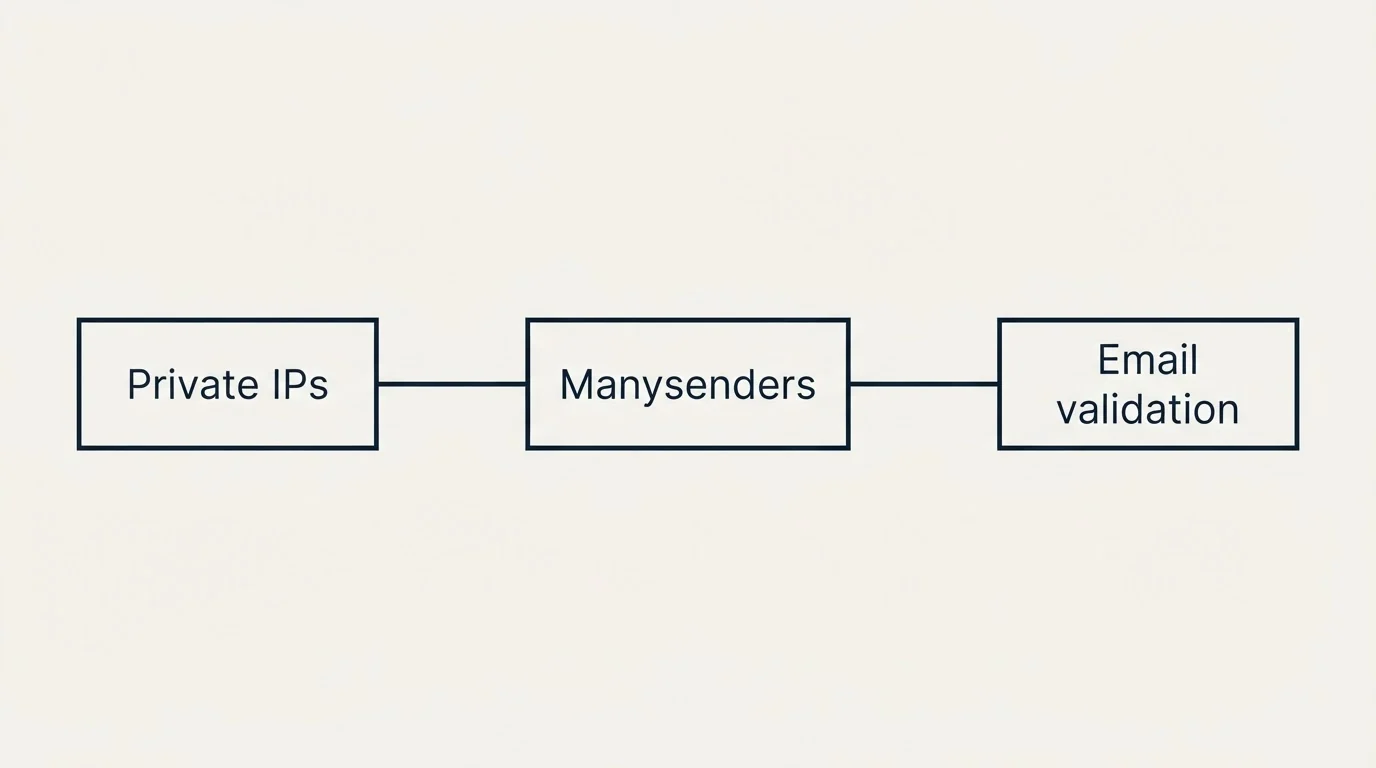
Three add-ons are priced on the page.
Manysenders is the vendor's mailbox supply. It is $4 per mailbox a month plus $15 per domain a year. That is the line to compare against any other mailbox vendor, and the comparison is direct because both halves are printed. Our guide to Mailforge's mailbox pricing sets out what a per-mailbox rate usually bundles and what it leaves out, and the same questions apply here: is warmup included, who registers the domain, and what happens to the domain when you leave.
Private IPs at $10 a month on the add-on list, discussed above.
Email validation at $24 a month. The page prices it as a flat monthly add-on rather than per verification, which is the opposite of how most standalone verification tools meter. If you verify in bursts, a flat fee is expensive in quiet months and cheap in busy ones.
Data tokens are a second meter
Business and Agency each carry a monthly data token allowance beside the sending credits: 15,000 on Business, 50,000 on Agency. The page does not print the exchange rate for a token the way it does for a credit, so what a token buys in lead data is not stated on the pricing page. Two things follow. A pay as you go buyer gets no tokens at all, so a team that relies on the vendor for lead data is on a monthly plan whether or not the credit arithmetic favours a pack. And the token allowance does not roll into sending credits or back, so a team that sources leads elsewhere is paying for a meter it never touches. Ask what a token buys before treating the allowance as part of the price.
What the page does not say
The page prints no seat count on any plan and no daily send limit, and its comparison table lists "Unlimited sending accounts" and mailbox rotation on every plan. Its meter is credits and data tokens, plus IPs. That is a different shape from the seat-and-mailbox ladders in the cold email pricing guide, and it means the usual first question, how many mailboxes a plan can connect, has a one-word answer here: unlimited, with the credit pool as the real limit.
The page also prints no annual rate and no discount for prepaying a plan. The pay as you go pack is the only prepaid route, and it is a different product with no monthly allowance and no data tokens rather than a discount on a plan.
Third-party pages list several other pack sizes and lifetime deals for this vendor. None of them is on the vendor's page today, so none of them is in this article.
Who the vendor says it is for
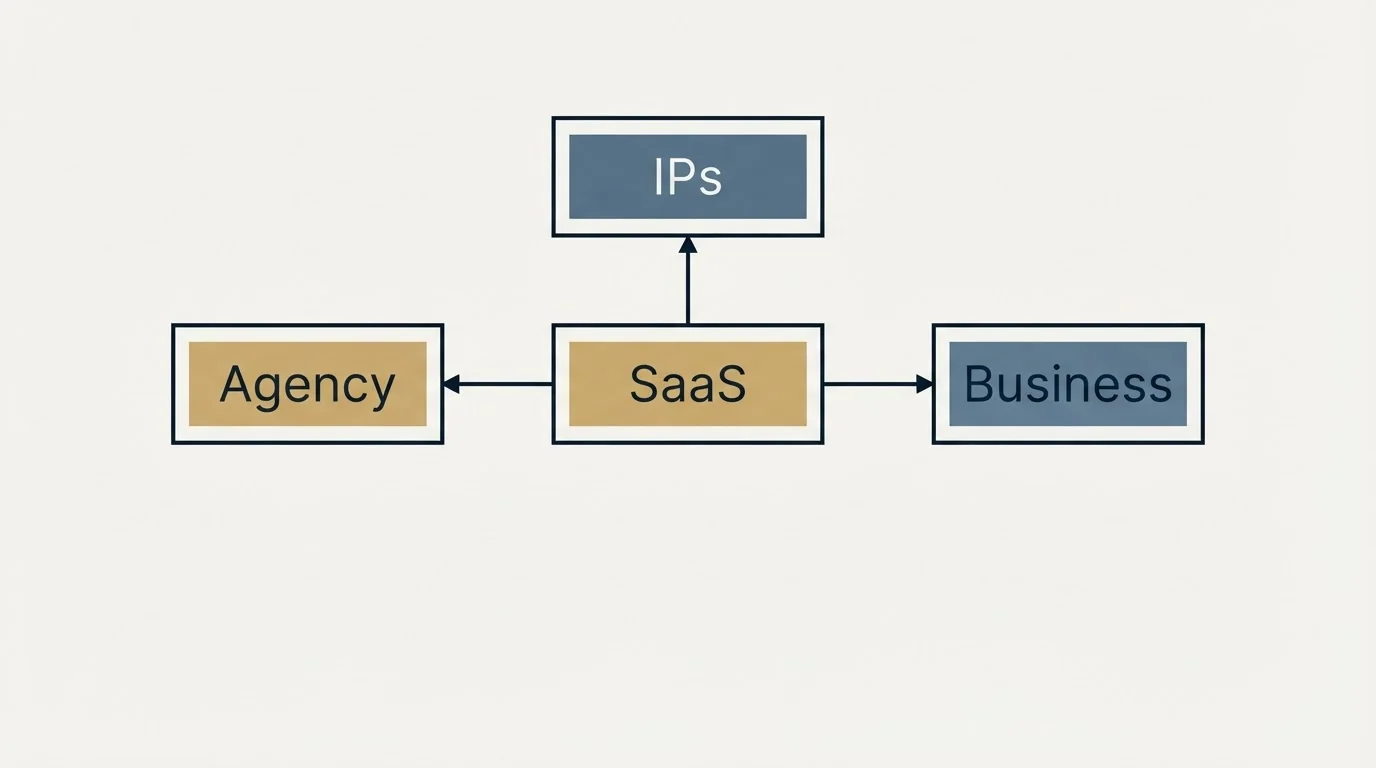
The vendor's own solutions menu names agencies, freelancers, SaaS founders and recruiters, and its pricing page speaks to "serious outbound teams". The Agency plan's three private IPs and 500,000 credits are sized for a firm running many client accounts through one bill. The Business plan is sized for one team.
Pricing it against a seat-priced sender
A seat-priced cold email tool charges for the person and caps the volume; Manyreach charges for the volume and ignores the person. The honest comparison is at a stated send volume.
Take a team sending 30,000 campaign emails a month from twenty mailboxes, with all twenty warming at forty emails a day. Campaign sends cost 30,000 credits. Warmup costs 20 mailboxes times 40 emails times 30 days, which is 24,000 warmup emails, or 2,400 credits. The total is 32,400 credits a month, inside the Business allowance of 150,000, using less than a quarter of it. The pay as you go pack of 100,000 credits at $199 would last that team three months, which is roughly $66 a month against the Business plan's $79, at the cost of the data tokens and the included IP.
Go up to 200,000 campaign emails a month and the Business allowance no longer covers it. The Agency plan does, and the pay as you go route would consume two packs a month.
The break point, then, is around the Business allowance. Under it, a pack is cheaper if you do not need data tokens. Over it, the plan is cheaper and the private IPs come with it. The vendor's own alternatives set is mostly seat-priced, so run the same volume arithmetic against each before assuming the seat price is the smaller number.
Warmup and sending on one meter

Manyreach bundles warmup into the same credit pool as sending, at the ten-for-one rate. The senders and warmup vendors in the warmup services survey either include warmup free with a mailbox or sell it as a separate per-mailbox product. The credit route makes warmup nearly free at the vendor's rate, which is good for fleets, but it also means a runaway warmup setting draws down the same pool your campaigns need. Check the warmup volume per mailbox before you check anything else.
Whatever the meter, the sending rules do not change. One message per campaign, sent once, and no re-targeting of people who did not reply with a second campaign carrying the same offer. A credit pool that makes sends cheap is not a reason to send more of them to the same people.
Ask the vendor
- Which pack the "From $99" strip refers to, and its credit count
- Whether the $29 plan-card IP and the $10 add-on IP are the same product
- What one data token buys
Work out yourself
- Warmup volume per mailbox, priced against the pool
- Whether you need data tokens, since packs carry none
- Tax, since prices are listed before VAT or sales tax
The short version
On the vendor's page: a 100,000 credit pack for $199 with no expiry, Business at $79 a month with 150,000 credits and 15,000 data tokens, Agency at $299 a month with 500,000 credits and 50,000 tokens, Scale on request. One credit is one campaign email or ten warmup emails. Mailboxes cost $4 a month plus $15 a domain a year, private IPs $10 a month on the add-on list, validation $24 a month. No annual state, no seat count, and unlimited sending accounts on every plan.
If the credit arithmetic is the part you would rather not own, the sending side of an outbound program is something we run as part of a campaign engagement, and you can see what one would look like for your market.
Every price above is from Manyreach's pricing page, in US dollars before tax, with no billing toggle on the page. Prices change; check the page before you buy.
Frequently asked questions.
Frequently asked questions- How much does Manyreach cost?
- Manyreach's pricing page lists a pay-as-you-go pack of 100,000 credits for $199 that never expires, a Business plan at $79 a month with 150,000 sending credits, and an Agency plan at $299 a month with 500,000. Scale is custom. Prices are in US dollars before sales tax or VAT, and the page has no annual toggle.
- What does a Manyreach credit buy?
- One credit sends one campaign email or ten warmup emails, from any mailbox. Pay-as-you-go credits never expire, while Business and Agency refill a monthly allowance. Business and Agency also include data tokens for contact data, a separate meter whose exchange rate the pricing page does not print.
- Does Manyreach limit the number of mailboxes?
- No. Its pricing page comparison lists unlimited sending accounts and mailbox rotation on every plan, so the limit is the credit pool rather than the number of connected mailboxes. Mailboxes bought through its Manysenders add-on cost $4 a month each plus $15 a domain a year.
- Is a Manyreach credit pack cheaper than the Business plan?
- Under the Business allowance, often yes. A team sending 30,000 campaign emails a month and warming twenty mailboxes uses about 32,400 credits, so one $199 pack lasts three months, roughly $66 a month against $79. Above 150,000 credits a month the plans win, and packs carry no data tokens or private IP.
About the author.

Tim Carden is CMO / CTO at RevenueFlow, which builds and operates outbound revenue engines for B2B companies. Studied at McGill University.
Tim Carden · CMO / CTO
Connect on LinkedIn →Explore more.
Ready to scale your outreach?
We build GTM engines that book real meetings. See the receipts.
Related articles.
MailReach Pricing: The Headline Rate Is the Second Band
MailReach prices warmup on a slider with four mailbox bands and two billing states. Every band at both states, and why the printed rate is not the entry rate.
Warmup Inbox Pricing: Per Inbox, Annual Loads First
Warmup Inbox prices per inbox and its page opens on the annual switch. Both states for all three plans, the reply ceiling meter, the trial and how a fleet bill is built.
Mailwarm Pricing: The Page Opens on Its Yearly Tab
Mailwarm's pricing tabs open on yearly and the plans meter daily volume rather than mailboxes. Both tabs, the overage rate, the no-trial rule and the per-mailbox cost.
ReachInbox Pricing: The Page Loads on Its Yearly Rate
ReachInbox's pricing toggle loads on the yearly side. Both ladders, the four meters behind unlimited accounts, and the fair use question the page leaves open.
Email Warmup Pricing in 2026: What 20 Tools Charge, and What 10 Mailboxes Cost
Email warmup tools start at a median of $29 a month, but warming ten mailboxes costs from $7.50 to $1,190 depending on how the vendor prices a mailbox.
EmailBison Pricing: One Plan, Priced by Sends
EmailBison publishes a single plan and no toggle. The dated price, what it includes, the unpriced send buckets above it, and the figure the vendor's blog still carries.