Mailwarm Pricing: The Page Opens on Its Yearly Tab
Mailwarm's pricing tabs open on yearly and the plans meter daily volume rather than mailboxes. Both tabs, the overage rate, the no-trial rule and the per-mailbox cost.
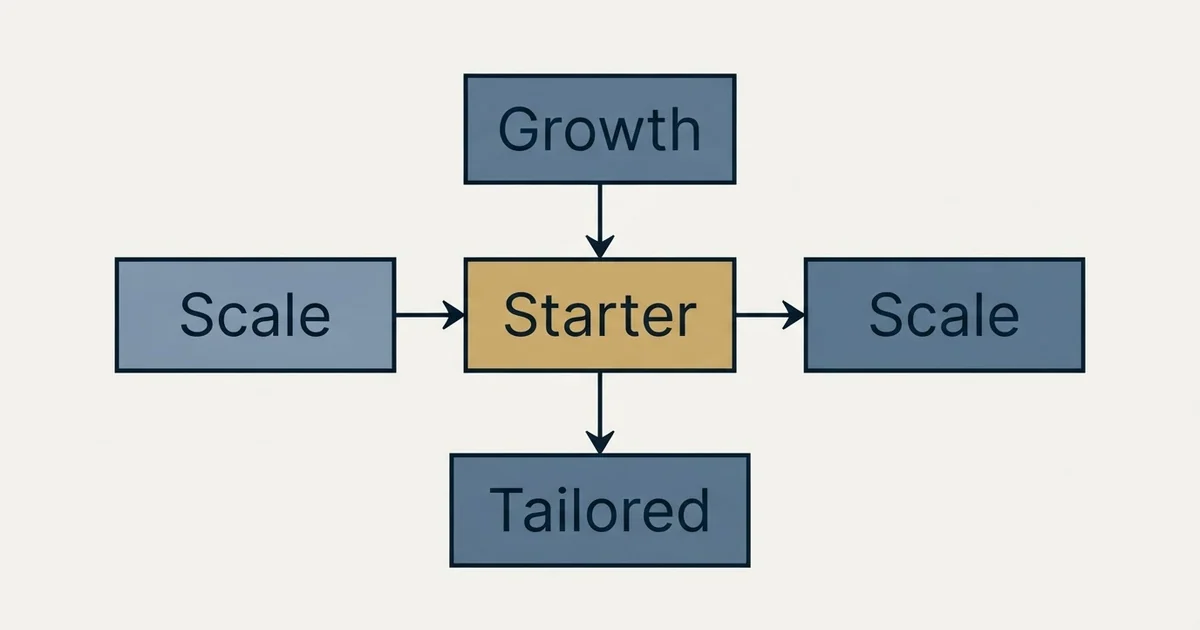
Mailwarm's pricing page opens on its yearly tab: Starter is $69 a month billed annually or $79 monthly for 50 warmup emails a day, Growth $159 or $189 for 200 a day, and Scale $479 or $549 for 500 a day. Extra interactions cost $0.02 each, and there is no free trial.
Key takeaways
- The pricing tabs load on yearly with a 13% off badge, so the first figures a visitor sees are $69, $159 and $479 rather than the monthly $79, $189 and $549.
- The plans meter total daily warmup volume, 50, 200 or 500 emails a day shared across the plan's mailboxes; extra interactions are $0.02 each, and the page does not define an interaction.
- Per mailbox the rate is $69, $53 and $47.90 a month annually across the three plans, roughly three to four and a half times Warmup Inbox's $15 Basic inbox.
- The FAQ states there is no traditional free trial and describes no refund, and the vendor's own site gives two founding years, 2020 and 2021.
Reviewed and updated September 22, 2026
Mailwarm's pricing page opens on its yearly tab. The Monthly and Yearly tabs above the ladder load with Yearly selected and a 13% off badge beside it, so the three figures a visitor sees first are the annual ones. Those are Starter at $69 a month, Growth at $159 a month and Scale at $479 a month, each marked billed annually. Click the Monthly tab and the same plans read $79, $189 and $549, marked billed monthly.
There is no free trial. Asked whether it offers one, the page's FAQ answers that it does not offer a traditional free trial and that warmup begins as soon as a mailbox is connected, on a paid plan. By contrast, Warmup Inbox's pricing page offers a 7-day free trial. A buyer who wants to try before paying is on the wrong page.
Mailwarm pricing at both billing states
| Plan | Annual / monthly | Plan limits |
|---|---|---|
| Starter | $69 / $79 | 50 warmup emails a day, 1 mailbox, 1 user |
| Growth | $159 / $189 | 200 a day, 3 mailboxes, 2 users |
| Scale | $479 / $549 | 500 a day, 10 mailboxes, 5 users |
| Tailored | Custom | Unlimited mailboxes, users and volume |
Starter. On the page, $69 a month billed annually, $79 a month billed monthly. 50 warmup emails a day, one mailbox, one user, one expert call a month.
Growth. On the page, $159 annually, $189 monthly. 200 warmup emails a day, three mailboxes, two users, four expert calls a month.
Scale. On the page, $479 annually, $549 monthly. 500 warmup emails a day, ten mailboxes, five users, expert calls on demand.
Tailored. Custom pricing, no figure printed: everything in Scale with unlimited mailboxes, users, warmup emails and replies, plus a dedicated deliverability expert managing the strategy end to end.
Beyond the plan, the page sells more interactions at $0.02 each. It does not define an interaction, and the plans suggest it is not one warmup email: Starter lists up to 50 warmup emails a day, up to 50 replies to warmup emails and 200+ positive interactions, Growth 200, 200 and 800+, Scale 500, 500 and 2,000+. Ask how overage is counted before relying on it.
The annual saving is the 13% the badge states, give or take rounding: $79 to $69 is 12.7%, $189 to $159 is 15.9%, $549 to $479 is 12.8%. The page prints one badge for the three, and this article records the three ratios rather than the one badge.
The meter is daily volume, not mailboxes
Warmup Inbox and MailReach, the two per-inbox products read alongside it, price per mailbox. Mailwarm prices per plan and caps total daily volume, with a mailbox count and a user count as secondary limits. That changes what you are buying.
Fifty, two hundred or five hundred warmup emails a day across the plan, not per mailbox.
One, three or ten mailboxes share the plan's volume. Three on Growth is about sixty-seven a day each.
Extra interactions are sold individually, at a rate the page prints and a unit it does not define.
One, two or five seats in the tool, separate from mailboxes.
The per-mailbox arithmetic is where the plan shape shows. Starter is $69 annually for one mailbox at 50 a day. Growth is $159 annually for three mailboxes, which is $53 a mailbox at about 67 a day each. Scale is $479 for ten mailboxes, $47.90 a mailbox at 50 a day each. Warmup Inbox's pricing page lists its Basic plan at $15 an inbox a month billed annually or $19 monthly, for 75 warmup messages a day, and Pro at $49 or $59 for 250 a day (Warmup Inbox pricing has the full ladder). Against Basic, Mailwarm's per-mailbox rate is roughly three to four and a half times higher. Against Pro, Growth and Scale are about level at $53 and $47.90 a mailbox against $49, and Pro warms 250 a day per inbox where Growth warms about 67 per mailbox. MailReach served its pricing in euros when we read it, at €25 a mailbox a month for one mailbox billed monthly; the warmup services survey prices the rest of the category. The vendor's FAQ makes its own case for the rate: it combines warmup software with deliverability guidance, and every plan includes expert guidance, spam score monitoring and a 50,000+ real inbox network. A buyer should decide whether they want the guidance before comparing on price.
The overage rate is the other distinctive line. At $0.02 each, 1,000 extra interactions cost $20 a month. Whether that beats the step to the next plan depends on how many interactions a warmup email generates, which the page leaves open, so the overage price cannot be compared with a plan price until the vendor answers.
Pricing a real fleet
A team with three sending mailboxes fits Growth exactly: three mailboxes, 200 warmup emails a day shared, which is about 67 a day each. Billed annually that is $159 a month, $1,908 a year; billed monthly it is $189 a month, $2,268 a year. The same three inboxes on Warmup Inbox's Basic plan would be at most $45 a month billed annually, at its one-inbox list price of $15, since its page says every inbox you add lowers the average. Growth costs at least three and a half times as much for the mailboxes alone, and three Basic inboxes warm 225 messages a day against Growth's 200 shared. The difference buys four expert calls a month and the shared volume pool, and a buyer who wants neither is paying for both.
A team with six mailboxes has no plan that fits exactly. Growth allows three and Scale allows ten. The FAQ says you can upgrade, downgrade or add more inboxes at any time, but prints no price for an added inbox, so six mailboxes means Scale at $479 annually, $47.90 a mailbox with four slots unused, or a quote for three inboxes added to Growth. Ten mailboxes is Scale at $479 with 500 a day shared, 50 each.
The user count is a third limit, and it binds only when several people need their own logins. Starter's single user and Growth's two suit a team where one or two people run the fleet; Scale's five suit an agency with several people managing client inboxes.
The expert calls are part of the price
Each plan includes calls with the vendor's deliverability team: one a month on Starter, four on Growth, on demand on Scale. Warmup Inbox's plans list customer support chat, and priority customer support from Pro up, rather than calls; the calls are the clearest explanation of Mailwarm's per-mailbox premium. A team that already has someone who reads its bounce logs and postmaster data is buying a service it will not use. A team that has nobody doing that is buying a monthly deliverability consultation at Starter's rate, with a warmup tool attached.
The calls are also why the plan volume rather than the mailbox count is the meter. The vendor is pricing an outcome, a warmed sending program with someone watching it, rather than a utility. Whether that is worth the rate depends entirely on whether the watching is needed.
What the page says about trials and payment
The FAQ states there is no traditional free trial, that you can cancel whenever you want with no long-term commitments, and that support will enable payment in crypto on request. Asked whether it offers refunds, the FAQ answers that support will review your setup, identify the issues and help fix them. It does not describe a refund for unused months on an annual plan, and this article does not assume one.
The crypto line is unusual enough to note, but it is an option rather than the route: the same FAQ says all major payment methods are supported, so a finance team that prefers a card and an invoice has the ordinary path.
Two founding years on one site
The pricing page says the vendor has been trusted since 2020, and the about page says Mailwarm has helped teams since 2020. The same about page also says the product has been recognised since launching in 2021. Both statements are on the vendor's own site today. This article records both and does not pick one; a buyer for whom the vendor's age matters should ask.
Reading a quoted Mailwarm price
Because the page opens on the yearly tab, a Mailwarm price quoted without its billing state is ambiguous: $69 and $79 are both Starter, $159 and $189 are both Growth, and $479 and $549 are both Scale. A figure copied from the page without the tab beside it is half a price, so ask which tab it came from before comparing it with anything.
Where it sits
Mailwarm is a warmup product built in Paris and backed by Y Combinator, with a team its about page places across Paris, Casablanca and Dubai, priced for teams that want a service with calls attached rather than a per-inbox utility. It is not a sender. The behaviour of warmup tools in use, and the reasons a team might want one at all, are in the warmup tools review; the deliverability platforms that bundle warmup with monitoring are priced in the deliverability platforms survey. The vendor's nearest alternatives are mostly per-inbox products, so the honest comparison is the per-mailbox arithmetic above rather than the plan price.
Warmup buys a reputation; sending discipline keeps it. A warmed mailbox that runs multi-step bump sequences spends what the warmup bought. One message per campaign is the cheapest warmup there is.
Settle before you buy
- Which tab a quoted price came from
- Your total daily warmup volume
- Whether you want the expert calls
The page does not say
- What one interaction counts
- What adding an inbox costs
- Any refund on an annual plan
The short version
On Mailwarm's pricing page, which opens on the yearly tab: Starter $69 a month annually or $79 monthly for 50 warmup emails a day and one mailbox, Growth $159 or $189 for 200 a day and three mailboxes, Scale $479 or $549 for 500 a day and ten mailboxes, a Tailored plan quoted, overage at $0.02 an interaction, and no free trial.
If warmup is a line you would rather not manage, RevenueFlow builds and runs the outbound engine and is paid only for meetings that are actually attended. See if you qualify.
Every price above is from Mailwarm's pricing page, read at both tabs, with the page opening on its yearly tab. Trial, payment and refund terms are from the page's FAQ; the founding-year statements are from the pricing and about pages. Prices change; check the page before you buy.
Sources: Mailwarm pricing page, Mailwarm about page
Frequently asked questions.
Frequently asked questions- How much does Mailwarm cost?
- Mailwarm's pricing page lists Starter at $79 a month billed monthly or $69 billed annually, Growth at $189 or $159, and Scale at $549 or $479. A Tailored plan above Scale is priced on request. The page opens on the yearly tab, so the lower figures show first. Extra interactions beyond the plan cost $0.02 each.
- Does Mailwarm have a free trial?
- No. The pricing page FAQ says it does not offer a traditional free trial and that warmup begins as soon as a mailbox is connected. The FAQ also says you can cancel whenever you want, and that crypto payment is available on request. It describes no refund on an annual plan, so a buyer wanting to test should start monthly.
- What do the Mailwarm plans limit?
- Daily warmup volume across the plan, then mailboxes and users. Starter is 50 emails a day, one mailbox and one user with one expert call a month; Growth is 200 a day, three mailboxes, two users and four calls; Scale is 500 a day, ten mailboxes, five users and calls on demand. Inboxes can be added, at a price the page does not print.
- Is Mailwarm cheaper than per-inbox warmup tools?
- Not per mailbox against a basic per-inbox plan. Mailwarm's Growth works out to about $53 a mailbox a month annually and Scale to $47.90, against Warmup Inbox's Basic plan at $15 an inbox for 75 messages a day. Warmup Inbox's Pro plan, at $49 for 250 a day, is about level with Growth and Scale per mailbox. The higher Mailwarm rate buys included expert calls.
About the author.

Tim Carden is CMO / CTO at RevenueFlow, which builds and operates outbound revenue engines for B2B companies. Studied at McGill University.
Tim Carden · CMO / CTO
Connect on LinkedIn →Explore more.
Ready to scale your outreach?
We build GTM engines that book real meetings. See the receipts.
Related articles.
MailReach Pricing: The Headline Rate Is the Second Band
MailReach prices warmup on a slider with four mailbox bands and two billing states. Every band at both states, and why the printed rate is not the entry rate.
Warmup Inbox Pricing: Per Inbox, Annual Loads First
Warmup Inbox prices per inbox and its page opens on the annual switch. Both states for all three plans, the reply ceiling meter, the trial and how a fleet bill is built.
Email Warmup Pricing in 2026: What 20 Tools Charge, and What 10 Mailboxes Cost
Email warmup tools start at a median of $29 a month, but warming ten mailboxes costs from $7.50 to $1,190 depending on how the vendor prices a mailbox.
Manyreach Pricing: Credits Buy Sends and Warmup Alike
Manyreach prices in credits rather than seats: a one-time pack or a monthly refill. What a credit buys, the two IP figures on one page, and where a pack beats a plan.
EmailBison Pricing: One Plan, Priced by Sends
EmailBison publishes a single plan and no toggle. The dated price, what it includes, the unpriced send buckets above it, and the figure the vendor's blog still carries.
ReachInbox Pricing: The Page Loads on Its Yearly Rate
ReachInbox's pricing toggle loads on the yearly side. Both ladders, the four meters behind unlimited accounts, and the fair use question the page leaves open.