RocketReach vs Seamless.AI: Data Enrichment Tool Comparison
Compare RocketReach and Seamless.AI side by side. See pricing, features, and integrations to choose the right data enrichment tool for your needs.
RocketReach publishes a per seat ladder from $69 a month for 100 lookups. The Seamless.AI pricing page fetched here shows no rate on either paid tier and routes buyers to sales, offering a free tier of 1 user and 50 credits. Choose RocketReach to buy without a call, Seamless.AI for data and engagement in one platform.
Key takeaways
- Seamless.AI's pricing page publishes no rate for Pro or Enterprise, listing only a free tier of 1 user and 50 credits.
- RocketReach publishes three paid rungs from $69 to $209 a month per seat, with the annual toggle advertising a 50 percent saving.
- Seamless.AI sells buyer intent, job changes, data enrichment and autopilot as add-ons rather than as tier features.
- Seamless.AI bundles emailing, calling and task management with its data, while RocketReach leaves engagement to a separate tool.
Reviewed and updated August 28, 2026
RocketReach vs Seamless.AI: Data Enrichment Tool Comparison
One of these vendors publishes a price ladder and the other does not. RocketReach lists three paid tiers with rates on its pricing page. Seamless.AI's pricing page describes what each plan includes and routes both paid tiers to a sales conversation, so the only published number on it is the 50 credit free allowance. That gap shapes the evaluation before any data quality question is asked.
The Quick Answer
RocketReach is priced per seat from $69 a month for 100 lookups on Essentials, with the ladder published. The pricing page fetched for this comparison shows no rate for Pro or Enterprise, offering a free tier of 1 user and 50 credits and routing paid buyers to sales. Choose RocketReach when you want to size and buy without a call. Choose Seamless.AI when you want data and engagement in one platform and can absorb a sales process.
Understanding the Core Difference
RocketReach is a global contact and company search platform with 700M+ profiles, verified emails, direct dials, and org chart intelligence.
Seamless.AI is an AI-powered sales lead platform with real-time contact search engine, pitch intelligence, and data enrichment for B2B prospecting.
Seamless.AI sells a search engine plus an engagement layer, with calling, emailing and task management inside the same product and intent, job changes and enrichment sold as add-ons. RocketReach sells lookups and leaves the engagement to whatever you already run. That is the whole difference in shape, and it explains why one publishes a rate and the other prefers a conversation.
Pricing Comparison
Essentials, email only, billed monthly
Free plan, 1 user and 50 credits
RocketReach Pricing
| Plan | Billed monthly | Billed annually | Lookups |
|---|---|---|---|
| Free | Free | Free | 5 lookups, no credit card |
| Essentials, email only | $69/mo per seat | $33/mo per seat | 100 a month, 1,200 exports a year on annual |
| Pro, email and phone | $119/mo per seat | $75/mo per seat | 250 a month, 3,600 exports a year on annual |
| Ultimate, email and phone | $209/mo per seat | $142/mo per seat | 1,000 a month, 20,000 exports a year on annual |
| Custom team plans | Talk to sales | From $6K a year | Pooled credits |
Two mechanics on this page matter more than the headline rate. A lookup is consumed only when RocketReach finds and verifies an email or a phone number, and is refunded when it does not. And the annual toggle is where the discount lives: the page advertises a saving of 50 percent with annual billing, plus a further 5 percent for each seat added.
One warning for anyone re-checking these numbers. The pricing page geo-serves currency, and the fetch behind this comparison was served pounds rather than dollars, listing the same three tiers at £20, £51 and £105 a month on the annual toggle. The dollar figures above come from the pricing dataset behind this site, verified for this comparison.
Source: RocketReach Pricing
Seamless.AI Pricing
| Plan | Price | Included |
|---|---|---|
| Free | Free | 1 user, 50 credits |
| Pro | Talk to sales | Per user, unlimited exports, annual credit packages |
| Enterprise | Talk to sales | Unlimited users, custom packages |
The pricing page fetched for this comparison shows no rate on either paid tier. The page describes what each plan includes and routes both to a sales conversation, so the only published number on it is the 50 credit free allowance.
Source: Seamless.AI Pricing
How these figures were checked
RocketReach's tier structure, lookup and export allowances and annual saving were read from a dated snapshot of its own pricing page taken for this comparison, fetched with a headless browser because the prices render in JavaScript. That page served pounds rather than dollars to this fetch, so the dollar rates come from the pricing dataset behind this site, verified the same day. Seamless.AI's pricing page was fetched for this comparison and carries no rate for either paid tier, which is what the statement above rests on rather than an inference from silence.
Two habits sit behind those sentences and both are worth borrowing when you check a vendor price yourself. A figure belongs to a page rather than to a company, because vendors contradict themselves across their own surfaces, so the page is part of the fact. And a pricing page that renders a monthly and an annual state into the same document will hand a careless reader a rate no visitor is shown, which is why the billing basis is named beside every number above rather than left implied.
What the two cost at a realistic volume
The arithmetic only runs on one side. Take an invented requirement of 250 verified contacts a month with phone numbers. The volume is illustrative and the RocketReach rates are published. RocketReach's Pro tier covers it at $119 a month per seat billed monthly or $75 billed annually according to the pricing dataset behind this site, and phone numbers are included at that tier. Seamless.AI produces no comparable figure without a sales call, and its published add-on structure means the quote will separate data from intent, job changes, enrichment and autopilot rather than bundling them. Ask for the all-in number rather than the per credit one.
Reading the price ladders against each other
Add-on pricing is the thing to interrogate on the Seamless.AI side. Its pricing page lists buyer intent data, job changes, data enrichment and autopilot as add-ons rather than as tier features, so a quote that looks competitive on base data can grow substantially once the capabilities you actually wanted are added. RocketReach's equivalent capabilities sit inside the published tiers, and its annual toggle advertises a 50 percent saving, so what you see is closer to what you pay.
Features Breakdown
- 700M+ professional profiles
- Verified email addresses and phone numbers
- Advanced people and company search
- Chrome and Edge browser extensions
- Built-in email verification
- Autopilot automated list building
- and 4 more listed below
- Real-time B2B contact search engine
- Email and cell phone lookups
- Pitch intelligence
- Data enrichment
- Buyer intent data (add-on)
- Job changes tracking (add-on)
- and 4 more listed below
RocketReach key features
- 700M+ professional profiles
- Verified email addresses and phone numbers
- Advanced people and company search
- Chrome and Edge browser extensions
- Built-in email verification
- Autopilot automated list building
- Bulk lookups and enrichment
- Technographics and firmographics
- Org charts and company news
- Intent data
Seamless.AI key features
- Real-time B2B contact search engine
- Email and cell phone lookups
- Pitch intelligence
- Data enrichment
- Buyer intent data (add-on)
- Job changes tracking (add-on)
- Autopilot list building (add-on)
- AI writing assistant
- Chrome extension
- Enterprise security and compliance
Seamless.AI's list is wide because it covers two jobs: a real time contact search engine, pitch intelligence and an AI writing assistant on the data side, plus emailing, calling and task management on the engagement side. RocketReach's is narrower and deeper on resolution: verified emails and phone numbers, org charts, technographics, bulk lookups and autopilot list building. Neither list is short, and they overlap least where it matters most, which is sending.
Integration Ecosystem
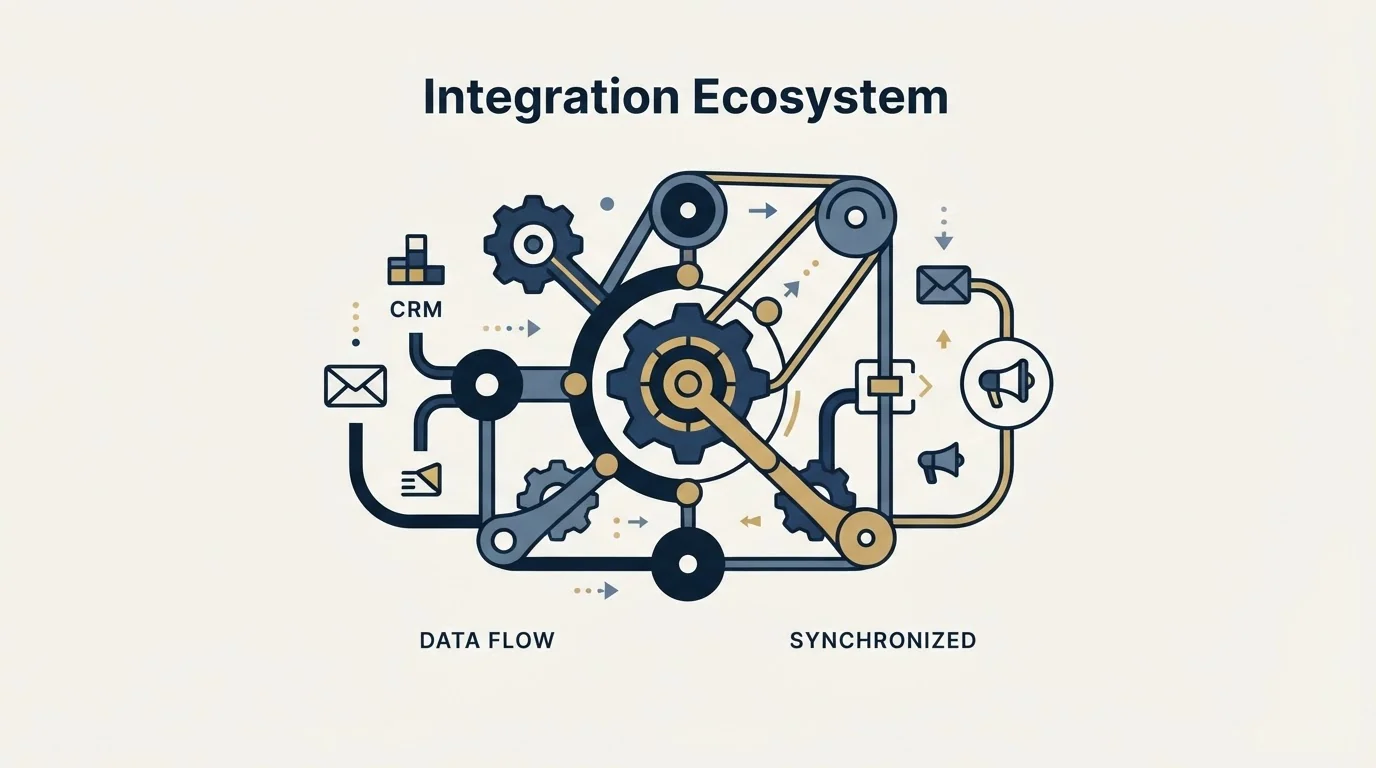
RocketReach connects with: Salesforce, HubSpot, Outreach, SalesLoft, Bullhorn, Zapier.
Seamless.AI connects with: Salesforce, HubSpot, Outreach, SalesLoft, Pipedrive, Microsoft Dynamics 365, Zapier.
Both tools integrate with: Salesforce, HubSpot, Outreach, SalesLoft, Zapier.
Both reach Salesforce, HubSpot, Outreach, SalesLoft and Zapier, which covers the majority of sales stacks. Seamless.AI adds Pipedrive and Microsoft Dynamics 365, so teams on either of those are better served. RocketReach adds Bullhorn, which is the staffing case. This section is unlikely to decide the purchase unless one of those three names is load bearing.
Who Should Pick Which
Pick RocketReach when you want price certainty and a separate data layer. Sizing a budget from a published ladder takes minutes, the free account gives 5 lookups with no credit card, and nothing about the purchase commits your sending stack.
Pick Seamless.AI when consolidating data and engagement into one vendor is genuinely worth something to you, and when you have the procurement patience for a quote. Teams that want one contract and one support relationship across sourcing and outreach are the honest fit.
Pick RocketReach when you are still testing whether a market is worth pursuing. An unpriced platform with add-ons is a poor instrument for an experiment, because the cost of finding out is a sales cycle rather than a card payment.
Where Each One Sits in a Cold Outbound Stack
- Step 1Build the list
Decide who belongs on it at all. RocketReach is a lookup engine you point at a person you have already identified.
- Step 2Resolve the contact
Turn a name into an address you can send to. Seamless.AI is a search engine plus an engagement layer sold together.
- Step 3Verify before sending
Check the address separately from whoever supplied it, because a bounce costs sending reputation.
- Step 4Send one message
One message per campaign, no bumps and no thread replies, so each address gets a single attempt.
RocketReach is one layer of a cold outbound stack and expects the rest to exist. Seamless.AI wants to be several layers, which reduces vendor count and increases what a single change of mind costs you.
The bundling question is worth less here than a platform vendor's pitch suggests. House practice is one message per campaign with no bumps and no thread replies, so an engagement layer's sequence features have limited use, and meetings are qualified against criteria agreed in writing before launch rather than against what a tool reports. What actually carries the outbound is address quality and sending domain health, which is why keeping the data source separable from the sender is usually worth more than the consolidation saving.
Switching Between Them
Leaving Seamless.AI is heavier than leaving RocketReach, since the engagement side holds sequences and task history as well as contacts. Export contacts and any live sequences before the term ends, and decide where sending will live before you cancel, because RocketReach will not take that job.
Going the other way is simple and mostly a matter of timing. Both share five integrations, so the CRM stays connected either way. Ask what the term is and what notice is required before signing anything quoted, and check whether the add-ons you rely on are separately cancellable or bundled into the same term.
Feature Comparison Summary
| Comparison | RocketReach | Seamless.AI |
|---|---|---|
| Entry rung | $69/mo | Free |
| First paid rung | $69/mo | Quoted |
| What that paid rung is | Essentials, email only, billed monthly | Pro is sold through sales |
| Where it sits in a stack | A lookup engine you point at a person you have already identified | A search engine plus an engagement layer sold together |
Getting Started Checklist
- Decide whether one vendor for data and sending is a goal or an accident
- Accept that pricing Seamless.AI requires a call, and budget the time
- Ask for the all-in quote including intent, job changes, enrichment and autopilot rather than the base rate
- Size RocketReach from its published ladder and compare against that all-in number
- Use RocketReach's 5 free lookups and Seamless.AI's 50 free credits on the same 100 rows
- Confirm the contract term and notice period before signing a quoted deal
Final Thoughts
RocketReach is the faster purchase, the easier one to budget, and the right one when your sending stack is settled. Seamless.AI is the broader platform and worth a conversation if consolidating data and engagement genuinely matters to you. Insist on an all-in quote before comparing, because the add-on structure means a base rate answers a narrower question than you asked.
Related Reading
- Best RocketReach Alternatives in 2026
- Best Seamless.AI Alternatives in 2026
- Apollo.io vs RocketReach: Data Enrichment Tool Comparison
- RocketReach vs ZoomInfo: Data Enrichment Tool Comparison
- Apollo.io vs Seamless.AI: Data Enrichment Tool Comparison
If you would rather have this run for you, RevenueFlow books qualified meetings on a pay-per-meeting basis and publishes client results.
Pricing and features are taken from the vendors' own pages. Verify current terms with the vendor before relying on them.
Frequently asked questions.
Frequently asked questions- How much does Seamless.AI cost?
- Seamless.AI's pricing page publishes no figure for either paid tier. Pro and Enterprise both route to a sales conversation, and the only published number is the free tier's 50 credits for one user. Buyer intent, job changes, data enrichment and autopilot are listed as add-ons, so a quote should be requested as an all-in number rather than a base rate.
- Does RocketReach include a dialer or sequencer?
- RocketReach's pricing page lists an email sending limit of 500 a day, and the product is otherwise a data and lookup platform rather than an engagement tool. Seamless.AI takes the opposite approach, bundling emailing, calling and task management alongside its search engine. Teams with a settled sending stack usually prefer keeping the two separate.
- Which is better for a small team?
- A small team that already has a sequencer usually gets more from RocketReach, because the ladder is published, the free account needs no credit card and nothing about the purchase touches the sending stack. Seamless.AI makes more sense for a team that wants one vendor across sourcing and outreach and can absorb a sales cycle to get priced.
- What should I ask for in a Seamless.AI quote?
- Ask for the all-in annual number including every add-on you intend to use, since buyer intent, job changes, data enrichment and autopilot are priced separately from the base plan. Also ask for the contract term, the notice period, and whether add-ons can be cancelled independently, because those terms usually matter more than the headline rate.
About the author.

Tim Carden is CMO / CTO at RevenueFlow, which builds and operates outbound revenue engines for B2B companies. Studied at McGill University.
Tim Carden · CMO / CTO
Connect on LinkedIn →Explore more.
Ready to scale your outreach?
We build GTM engines that book real meetings. See the receipts.
Related articles.
RocketReach vs Scrupp: Data Enrichment Tool Comparison
Compare RocketReach and Scrupp side by side. See pricing, features, and integrations to choose the right data enrichment tool for your needs.
Apollo.io vs Proofy: Data Enrichment Tool Comparison
Compare Apollo.io and Proofy side by side. See pricing, features, and integrations to choose the right data enrichment tool for your needs.
AroundDeal vs Leadspicker: Data Enrichment Tool vs Sales Engagement Platform Comparison
Compare AroundDeal (data enrichment tool) and Leadspicker (sales engagement platform) side by side. See pricing, features, and integrations to decide which one, or both, your stack needs.
AroundDeal vs Salesflare: Data Enrichment Tool vs CRM Platform Comparison
Compare AroundDeal (data enrichment tool) and Salesflare (CRM platform) side by side. See pricing, features, and integrations to decide which one, or both, your stack needs.
Gong vs NeverBounce: Sales Engagement Platform vs Data Enrichment Tool Comparison
Gong vs NeverBounce: what Gong's own pages say about enrichment, what NeverBounce's API returns about an address, and how each vendor prices.
ContactOut vs Luru: Data Enrichment Tool vs Sales Engagement Platform Comparison
Compare ContactOut (data enrichment tool) and Luru (sales engagement platform) side by side. See pricing, features, and integrations to decide which one, or both, your stack needs.