TrulyInbox vs Warmbox: Email Warmup Tool Comparison
Compare TrulyInbox and Warmbox side by side. See pricing, features, and integrations to choose the right email warmup tool for your needs.
TrulyInbox is an email warmup platform that bills for warmup emails sent per day, never for mailboxes: a free plan warms 1 account at 10 emails a day, and paid plans from $22 a month billed annually connect unlimited accounts. Warmbox bills per inbox, 1, 3 or 6, so TrulyInbox becomes cheaper once you warm more than three mailboxes.
Key takeaways
- TrulyInbox's pricing page states the model as paying for emails sent and not accounts connected: every paid plan connects unlimited mailboxes and meters total warmup emails a day.
- Warmbox meters mailboxes: Solo warms 1 inbox, Start-up 3 and Growth 6, and anything larger is the Team plan, which its page describes only as for custom needs.
- TrulyInbox publishes a 2:1 sizing rule, two warmup emails for every one cold email, every day and ongoing, which works for sizing either tool.
- Warmbox renders two prices for every plan, $15 or $19, $69 or $79 and $139 or $159, so plan against the figure your checkout screen shows.
Reviewed and updated September 18, 2026
TrulyInbox is an email warmup tool that charges for the warmup emails it sends instead of for the mailboxes you connect, which is the opposite of how Warmbox bills. Warmbox's pricing page publishes an inbox count beside every plan: 1 on Solo, 3 on Start-up, 6 on Growth. TrulyInbox's comparison table publishes "Email Accounts: 1, Unlimited, Unlimited" and prices the plans by warmup emails per day instead. Two warmup tools, two different billing units, and the number of mailboxes you intend to warm decides the answer before any feature list does.
Once sender reputation is under control, attention often turns upstream to prospecting data, where the technographic data enrichment comparison breaks down how two enrichment tools differ in focus and integrations.
What is TrulyInbox?
TrulyInbox is an email warmup platform. It connects to your mailboxes, exchanges AI-written warmup emails to build sender reputation, and reports a deliverability score for each one. Its pricing page sums up the model in a sentence: "Pay for emails sent. Not accounts connected." The free plan warms 1 email account at 10 warmup emails a day. Paid plans start at $22 a month billed annually, connect unlimited accounts, and meter daily volume from 200 warmup emails on Starter to 3,000 on Scale.
The Short Answer
TrulyInbox charges for volume. Its page says so in a sentence: "Pay for emails sent. Not accounts connected." Every paid plan connects unlimited mailboxes and meters the total warmup emails sent across them per day, from 200 on Starter up to 20,000 on the largest Scale Plus rung.
Warmbox charges for mailboxes. Solo warms one inbox, Start-up three, Growth six, and anything above that is the Team plan, which the page describes only as "For custom needs".
For a single mailbox, Warmbox Solo is the simpler purchase. From roughly four mailboxes upward, Warmbox's published ladder runs out and TrulyInbox's pricing model stops charging for the thing you are adding. That is the comparison.
Who Should Pick Which
Pick Warmbox for one or two mailboxes. Solo is one inbox at 50 warmup emails a day, and Warmbox does not tier its features: the page states "All these features are included in all our plans", so a Solo customer gets the same spam-score monitoring, DNS and blacklist checker and warmup scheduling as anyone else.
Pick TrulyInbox once you run more than three mailboxes. Warmbox's published plans stop at 6 inboxes on Growth. TrulyInbox's Growth plan is the same rough price bracket, connects unlimited accounts, and its page suggests that plan suits about 15 inboxes.
Pick Warmbox if you need Amazon SES or an unusual mailbox host. Its integration list runs to Gmail, Outlook, Yahoo, iCloud, AOL, Yandex, Zoho, Sendgrid, Sendinblue, Mailgun, Amazon SES and generic SMTP. TrulyInbox's published list is shorter and does not include SES.
Pick TrulyInbox if you want the warmup volume itself to be the dial. Its per-plan reply-rate ceiling rises with the tier, published as 10%, 25%, up to 45%, up to 60% and up to 65%, and its Scale Plus rung is a slider across 5,000, 10,000 and 20,000 warmup emails a day.
Pricing Comparison

TrulyInbox Pricing (as published on the vendor's own pricing page)
| Plan | Price | Accounts | Emails |
|---|---|---|---|
| Free | Free | 1 email account | 10 warmup emails/day |
| Starter | $22/mo billed annually ($264/year), $29/mo if paid monthly | Unlimited, suited to 3 inboxes | 200 warmup emails/day |
| Growth | $84/mo billed annually ($1,008/year), $99/mo if paid monthly | Unlimited, suited to 15 inboxes | 1,000 warmup emails/day |
| Scale | $169/mo billed annually ($2,028/year), $199/mo if paid monthly | Unlimited, suited to 50 inboxes | 3,000 warmup emails/day |
| Scale Plus / Custom Plan | $407/mo billed annually ($4,884/year), $479/mo if paid monthly | Unlimited, suited to 100 inboxes | 5,000 warmup emails/day, sliding to 10,000 and 20,000 |
Source: TrulyInbox Pricing
Warmbox Pricing (as published on the vendor's own pricing page)
| Plan | Price | Inboxes | Emails |
|---|---|---|---|
| Solo | $15/month or $19/month | 1 inbox warm-up | 50 emails/day |
| Start-up | $69/month or $79/month | 3 inbox warm-up | 250 emails/day |
| Growth | $139/month or $159/month | 6 inbox warm-up | 500 emails/day |
| Team | Contact Us | For custom needs | Not published |
Source: Warmbox Pricing
Two notes on that table, because both were wrong on this page until today.
The top tier is called Team, not Enterprise. That is the word the page uses, beside the line "We offer flexible plans that can fit any needs, for any sending volumes."
Warmbox publishes two prices for every plan and does not make the mapping obvious. The page carries a toggle reading "YEARLY BILLING MONTHLY BILLING" and renders both states into the same document: one set at $15, $69 and $139, another at $19, $79 and $159, each labelled "/month". The lower set is the one a yearly commitment normally buys. The page's own markup labels the two blocks the opposite way round from that reading, so this comparison quotes both figures rather than picking one, and the number to plan against is the one your checkout screen shows.
Pricing Analysis
TrulyInbox is cheaper at the entry level because it has a free tier and Warmbox does not: one account and 10 warmup emails a day, with no card required. That free plan is a trial in everything but name, since one mailbox at 10 emails a day supports very little real sending.
Above the free tier the ladders are not comparable rung for rung, because they meter different things. Warmbox Growth at $139 or $159 buys 6 inboxes and 500 warmup emails a day. TrulyInbox Growth at $84 or $99 buys 1,000 warmup emails a day across as many mailboxes as you connect. The TrulyInbox plan is cheaper and carries twice the daily volume; the Warmbox plan gives a fixed, predictable per-inbox allocation and includes every feature the product has.
TrulyInbox also publishes a 14-day money-back guarantee and a 7-day free trial on paid plans. Warmbox publishes neither, and instead tells buyers to expect "15-30 days" of uninterrupted warming before the first results show.
How to Size a Warmup Plan
TrulyInbox publishes the rule that makes this arithmetic possible, and it is worth using whichever tool you buy: "Warmup runs on a 2:1 ratio: 2 warmup emails for every 1 cold email, every day and ongoing. So if each inbox sends 50 cold emails a day, keep it warming with 100 a day."
A Worked Example, With Invented Volumes
Every number below that is not a published price is invented. The rates and the ratio are on the two pricing pages today; the mailbox count and the cold-sending target are a stand-in so the arithmetic has something to bite on.
Take ten mailboxes, each sending 30 cold emails a day. At the published 2:1 ratio that is 60 warmup emails per mailbox per day, and 600 a day across the ten.
On TrulyInbox, 600 a day fits inside Growth, which publishes 1,000 warmup emails a day and unlimited accounts, at $84 a month billed annually or $99 monthly. TrulyInbox's own page suggests Growth for about 15 inboxes, so ten sits comfortably inside its guidance.
On Warmbox, ten mailboxes has no published plan at all. Growth covers 6 inboxes at 500 emails a day, so a ten-mailbox setup is a Team quote and the price is not something a buyer can look up.
The point is not that one number is smaller. It is that at ten mailboxes only one of these two vendors publishes a price you can plan against, and the other requires a conversation.
Features Breakdown
trulyinbox.com/pricing
Listed by TrulyInbox
- Unlimited email accounts on paid plans
- A reply-rate ceiling that rises by tier, 10% to 65%
- AI adaptive warmup strategy
- Per-mailbox reports with deliverability scores
- API access
- A 14-day money-back guarantee
On both
Listed by both
- Automated inbox warmup with AI-written content
- Custom warmup schedules
- DNS record and blacklist checking
- Reporting
warmbox.ai
Listed by Warmbox
- Growth, flat or random warm-up
- Spam score monitoring
- A private inboxes network
- Amazon SES among its inbox types
- Team members included per plan
The middle column is the one that changed. An earlier version of this comparison said Warmbox's DNS checker for SPF, DKIM and DMARC was a capability TrulyInbox did not include. TrulyInbox's own comparison table publishes "Account Health Monitoring (SPF/DKIM/DMARC)" on every tier including Free, so that was a statement about our list rather than about the products.
Shared Capabilities
Both tools automate inbox warmup with generated conversational content, both let you shape the ramp and the schedule, both check DNS records and blacklists, and both report on results in a dashboard. The differences that matter are the billing unit and the mailbox ceiling, not the capability list.
Integration Ecosystem
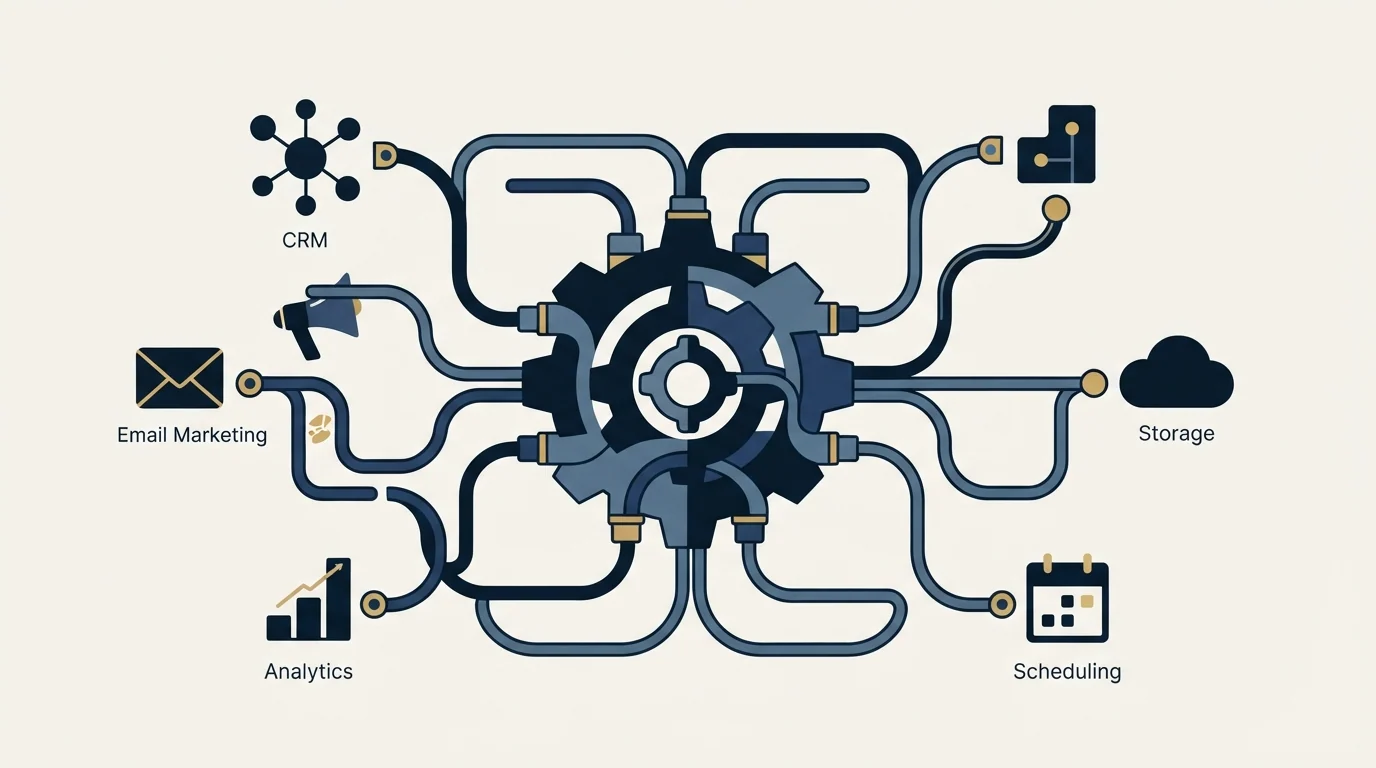
TrulyInbox Integrations
TrulyInbox connects with: Gmail, Google Workspace, Outlook, Microsoft 365, Zoho Mail, SMTP, Yahoo Mail.
Warmbox Integrations
Warmbox connects with: Gmail, Google Workspace, Outlook, Microsoft 365, Yahoo Mail, Amazon SES, SMTP, Zoho Mail. Its page also lists iCloud, AOL, Yandex, Sendgrid, Sendinblue and Mailgun as supported inbox types.
Shared Integrations
Both tools integrate with Gmail, Google Workspace, Outlook, Microsoft 365, Zoho Mail, SMTP and Yahoo Mail. Warmbox additionally publishes Amazon SES and several transactional providers, which matters if the sending infrastructure is not a normal mailbox.
Where Warmup Sits in a Cold Outbound Stack
Warmup is infrastructure, not a channel. It runs continuously underneath whatever is sending, and it is the thing that decides whether a well-targeted message is read or filed in spam.
Two practical consequences follow from the published numbers above. Warmup is ongoing rather than a phase: the 2:1 ratio is expressed per day and "ongoing", so the volume you buy has to cover steady-state sending and not just the ramp. And warmup capacity has to be bought against the mailbox pool you actually plan to run, which is why the mailbox ceiling matters more than the headline price. A pool built for one shape of plan and then grown past it is how a domain ends up sending unwarmed.
Neither tool changes what makes outbound work. We send one message per campaign and run no bump sequences, so deliverability is doing more of the work than sequence depth ever could. The wider picture is in the cold email deliverability guide.
Switching Between Them
Moving between warmup tools is mostly a reconnection exercise, because neither one holds content you need to keep. Reconnect the mailboxes, set the ramp and the daily volume, and let the new tool build its own history.
The part worth planning is the overlap. Warmup reputation decays when it stops, and Warmbox's own page puts first results at 15 to 30 days of uninterrupted warming. Run both for a short overlap rather than cutting one off on the day the other starts, and do not raise daily cold volume during the switch.
Going from Warmbox to TrulyInbox, expect the mental model to change from per-inbox allocations to one shared daily pool: TrulyInbox's FAQ says the volume "is shared across every account you connect", so adding mailboxes reduces the warmup each one receives rather than adding cost. Going the other way, count the mailboxes first, because six is where the published Warmbox ladder ends.
Use Case Recommendations
Best Fit for TrulyInbox
- Teams running more than three sending mailboxes, where per-inbox pricing compounds
- Agencies adding and retiring client mailboxes often, since accounts are not the billing unit
- Buyers who want a free tier to test with before committing
- Anyone who wants the reply-rate ceiling and warmup strategy to be tunable by plan
Best Fit for Warmbox
- Individuals and small teams warming one to six mailboxes
- Senders on Amazon SES, Sendgrid, Sendinblue or Mailgun rather than a normal mailbox
- Buyers who prefer every feature included on the cheapest plan
- Agencies wanting per-plan team member seats included
Feature Comparison Summary
| Feature | TrulyInbox | Warmbox |
|---|---|---|
| Starting Price | Free | $15/mo or $19/mo |
| Top Published Tier | $407/mo billed annually, $479/mo monthly | Team, quote only |
| Billing unit | Warmup emails per day | Mailboxes warmed |
| Published mailbox ceiling | Unlimited on paid plans | 6 on Growth |
| Integrations | 7 | 8 |
| Founded | 2023 | Not published |
Getting Started Checklist

- Count the mailboxes you will actually send from, including ones not yet bought
- Multiply your target cold volume per mailbox by two to get the daily warmup each one needs
- Add those up, then read TrulyInbox's daily ladder and Warmbox's inbox counts against the total
- Check which billing state each published price belongs to before budgeting
- Confirm your mailbox host is supported, especially for SES or another transactional sender
- Start warming well before the campaign, and keep it running once sending begins
Final Thoughts
TrulyInbox and Warmbox both do the same job and charge for different things. Warmbox prices mailboxes and includes every feature on every plan, which makes it clean and predictable up to six inboxes. TrulyInbox prices daily warmup volume and connects unlimited accounts, which makes it the cheaper answer as soon as the mailbox pool grows.
Count the mailboxes, double the cold volume, and read the two ladders against that number. The tool that covers your real pool without a sales conversation is usually the right one.
Related Reading
- Lemwarm vs TrulyInbox: Email Warmup Tool Comparison
- InboxAlly vs TrulyInbox: Email Warmup Tool Comparison
- GMass and TrulyInbox compared across workflow stages
- Campaign tools and warmup compared
- A sales engagement platform against a warmup tool
If you would rather have this run for you, RevenueFlow books qualified meetings on a pay-per-meeting basis and publishes client results.
Pricing and features are taken from the vendors' own pages. Verify current terms with the vendor before relying on them.
Frequently asked questions.
Frequently asked questions- What is TrulyInbox?
- TrulyInbox is an email warmup platform. It connects to your mailboxes and exchanges AI-written warmup emails to build sender reputation before and during cold campaigns, and it reports a deliverability score per mailbox. Its pricing page sums up the billing model as paying for emails sent, not accounts connected, so paid plans allow unlimited email accounts and meter daily warmup volume.
- How much does TrulyInbox cost?
- TrulyInbox's pricing page lists a free plan for 1 email account at 10 warmup emails a day. Starter is $22 a month billed annually or $29 monthly for 200 a day, Growth is $84 or $99 for 1,000 a day, and Scale is $169 or $199 for 3,000 a day. A Scale Plus rung starts at $407 billed annually for 5,000 a day.
- Is TrulyInbox or Warmbox cheaper?
- For one mailbox Warmbox Solo is the simpler purchase at $15 or $19 a month, though TrulyInbox has a free plan for a single account. From roughly four mailboxes upward TrulyInbox is cheaper, because it does not charge per mailbox and Warmbox's published plans stop at 6 inboxes. TrulyInbox Growth at $84 or $99 covers 1,000 warmup emails a day.
- How many warmup emails do I need per mailbox?
- TrulyInbox publishes a rule you can use with any tool: warmup runs on a 2:1 ratio, two warmup emails for every one cold email, every day and ongoing. A mailbox sending 50 cold emails a day should keep warming with 100 a day. Multiply by your mailbox count to find the daily total a plan has to cover.
About the author.

Tim Carden is CMO / CTO at RevenueFlow, which builds and operates outbound revenue engines for B2B companies. Studied at McGill University.
Tim Carden · CMO / CTO
Connect on LinkedIn →Explore more.
Ready to scale your outreach?
We build GTM engines that book real meetings. See the receipts.
Related articles.
Growbots vs MailHeat: Cold Email Platform vs Email Warmup Tool Comparison
Compare Growbots (cold email platform) and MailHeat (email warmup tool) side by side. See pricing, features, and integrations to decide which one, or both, your stack needs.
Apollo.io vs Proofy: Data Enrichment Tool Comparison
Compare Apollo.io and Proofy side by side. See pricing, features, and integrations to choose the right data enrichment tool for your needs.
AroundDeal vs Leadspicker: Data Enrichment Tool vs Sales Engagement Platform Comparison
Compare AroundDeal (data enrichment tool) and Leadspicker (sales engagement platform) side by side. See pricing, features, and integrations to decide which one, or both, your stack needs.
AroundDeal vs Salesflare: Data Enrichment Tool vs CRM Platform Comparison
Compare AroundDeal (data enrichment tool) and Salesflare (CRM platform) side by side. See pricing, features, and integrations to decide which one, or both, your stack needs.
GetSales.io vs Yet Another Mail Merge: Sales Engagement Platform vs Cold Email Platform Comparison
Compare GetSales.io (sales engagement platform) and Yet Another Mail Merge (cold email platform) side by side. See pricing, features, and integrations to decide which one, or both, your stack needs.
Gong vs NeverBounce: Sales Engagement Platform vs Data Enrichment Tool Comparison
Gong vs NeverBounce: what Gong's own pages say about enrichment, what NeverBounce's API returns about an address, and how each vendor prices.