Apollo.io vs Gong: Sales Engagement Platform Comparison
Compare Apollo.io and Gong side by side. See pricing, features, and integrations to choose the right sales engagement platform for your needs.
To evaluate Apollo vs Gong for a team that needs both prospecting and call coaching, compare stage and seat. Apollo covers prospecting from $49 a seat a month billed annually, with call recording and AI insights from Professional at $79. Gong covers the calls and coaching, priced per user plus a platform fee by quote.
Key takeaways
- Apollo publishes a self-serve ladder: Free, then $49, $79 and $119 a seat a month billed annually, or $65, $99 and $149 monthly.
- Gong's pricing page publishes no figure: licences are priced per user, a platform fee is sized by users supported, and integrating your stack is free.
- Apollo lists call recording with AI call insights, 150 minutes on Basic and 4,000 on Professional; Gong builds Engage, Forecast, Enable and Agents around recorded interactions.
- Too few conversations points at Apollo first; too few wins from the calls you already have points at Gong.
Reviewed and updated September 19, 2026
Gong's pricing page publishes no number and one structural fact worth more than a number: licences are priced per user AND there is a platform fee on top, sized by how many users the deployment supports. Apollo publishes a full self-serve ladder from free to $119 a seat. A team that needs both prospecting and call coaching should evaluate the pair by stage before price: Apollo finds and contacts people, Gong analyses the calls that follow, and only one of them can be budgeted from a web page.
How to evaluate Apollo vs Gong for a team that needs both prospecting and call coaching
Evaluate the pair by stage and by seat. Apollo covers prospecting: its contact database, sequences and dialer, with call recording and AI call insights from Professional at $79 a seat a month billed annually. Gong covers what happens on the calls, with coaching through Gong Enable, and prices per user plus a platform fee by quote. Count who needs each seat before comparing.
Three checks settle most evaluations. First, which bottleneck is real: too few conversations points at Apollo, too few wins from the conversations you already have points at Gong. Second, how much coaching the calls need: Apollo's plan cards list call recording with AI insights, 150 minutes on Basic and 4,000 on Professional, which covers reviewing a rep's calls, while Gong's homepage builds a whole product line on them, with Gong Forecast and Gong Agents beside Enable. Third, who needs a seat: Apollo seats go to the people doing outbound, while Gong seats tend to spread to managers, leaders and enablement, and that spread is what the platform fee is sized on. A separate cross-category Apollo vs Gong comparison covers the same pair from the data side.
The Short Answer
The Short Answer
Pick Apollo.io when you need to find people and contact them. Pick Gong when you need to understand what happened on the calls you are already having.
These are complementary far more often than they are alternatives, which is why so many teams run both. Apollo is a prospecting and engagement platform with a contact database; Gong calls itself a Revenue AI OS that captures every interaction, analyses what is working and automates what happens next. Choosing between them usually means one of the two problems is not yet real for you.
What Apollo.io And Gong Actually Are
Apollo.io combines a B2B contact database of 240M contacts and 30M companies with sequences, a dialer and engagement workflows. Its pricing page lists Free at $0 with 900 credits a seat a year granted monthly, Basic $49 with 30,000 credits granted upfront, Professional $79 with 48,000 and Organization $119 with 72,000 and a three-seat minimum, all per seat billed annually.
Gong is a revenue AI platform. Its homepage describes capturing every interaction, predicting pipeline risk and closing deals faster, and names Gong Engage for prioritising and personalising sales engagement, Gong Forecast, Gong Enable for coaching reps from real customer interactions, and Gong Agents that automate follow-ups and pipeline edits. Gong Engage is where the two overlap.
The pricing models are opposites. Apollo grants a paid seat its entire year of credits upfront, so the constraint is annual and visible. Gong asks for team size first and quotes a per-user licence plus a platform fee, so the constraint is a conversation and the platform fee is the part that surprises teams sizing a deployment from seat count alone.
Pricing Compared
Apollo Professional · 20 seats · billed annually
20 seats at $79 a month = $1,580 a month 1
48,000 credits per seat a year, granted upfront
Monthly billing instead: $99 a seat = $1,980 a month
Gong · 20 users · quote
20 licences, priced per user 2
Plus a platform fee based on the number of users supported 3
Integrating your existing stack: free
- 1A published rate, so the line can be written before any call.
- 2No per-user figure is published; the form asks team size first.
- 3The line a seat-count estimate leaves out.
Apollo.io Pricing
| Plan | Per seat, billed annually | Per seat, billed monthly | Credits |
|---|---|---|---|
| Free | $0 | $0 | 900 per seat per year, granted monthly |
| Basic | $49/mo | $65/mo | 30,000 per seat per year, granted upfront |
| Professional | $79/mo | $99/mo | 48,000 per seat per year, granted upfront |
| Organization | $119/mo | $149/mo, annual only | 72,000 per seat per year, granted upfront |
Apollo is the only platform in this comparison publishing a self-serve ladder, and it grants a paid seat's whole year of credits upfront rather than monthly. Organization carries a three-seat minimum, and the page advertises annual billing at 24 percent below monthly.
Source: Apollo.io pricing
Gong Pricing
| What the page publishes | Detail |
|---|---|
| Licence model | Priced per user |
| Platform fee | Charged on top, sized by the number of users supported |
| Integrations | Connect your existing stack at no charge |
| Rate card | Not published; a form collects team size first |
Gong's pricing page carries no number at all. What it does publish is the shape of the bill, and the platform fee is the part that surprises people: seats are not the whole cost, and the fee scales with how many users the deployment supports. The form's first question is team size, in bands of 1 to 50, 51 to 1,000, 1,001 to 9,999 and 10,000 and above, and its second asks what the team needs help with, from coaching and forecasting to prospecting.
Source: Gong pricing
Why seat count is not the whole Gong bill
Here is an invented but arithmetically honest example built from what each page publishes. It is illustrative only and nothing in it comes from a customer.
Twenty seats on Apollo Professional billed annually is 20 at $79 a month, so $1,580 a month, and each of those seats carries 48,000 credits a year granted upfront; on monthly billing the same seats are $99 each, $1,980 a month. That is a number you can put in a budget before speaking to anyone.
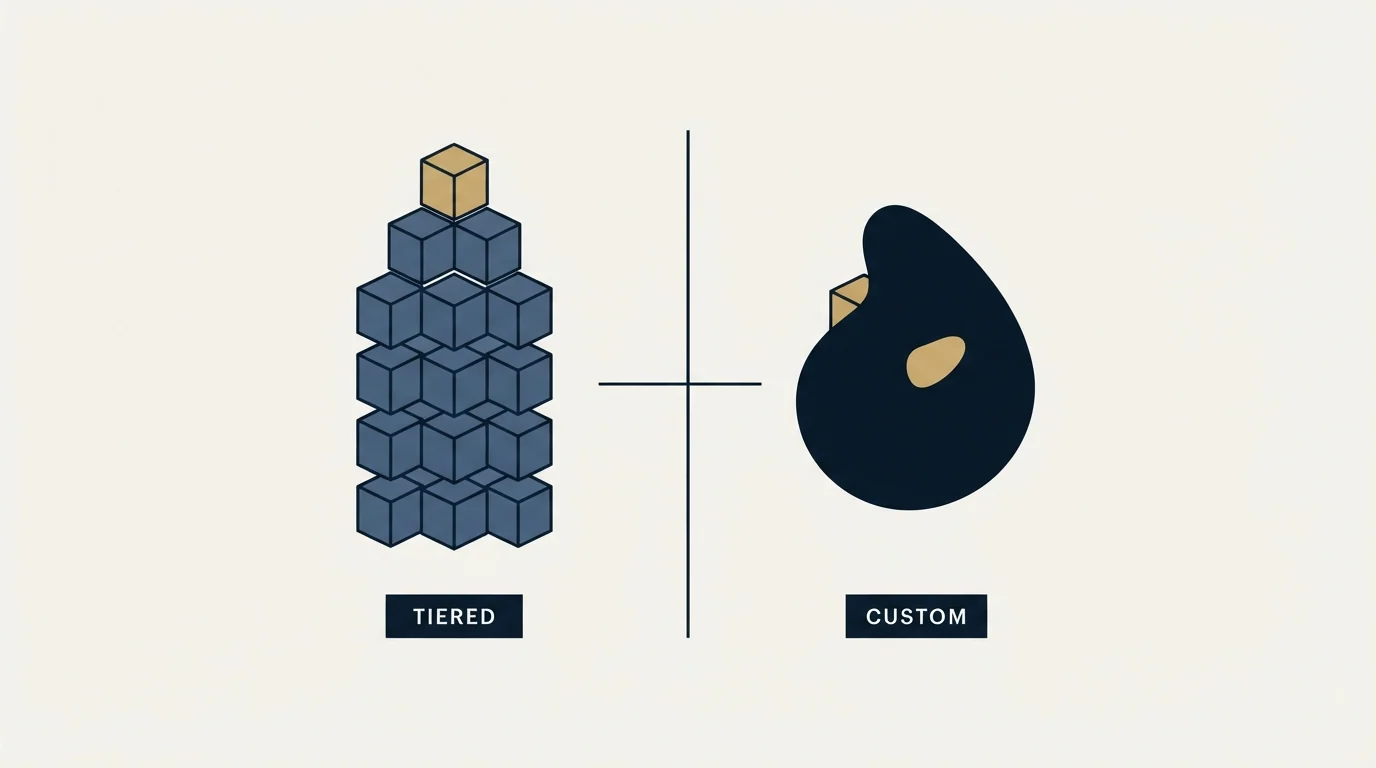
Gong cannot be priced that way, and its page is explicit about why: the licence is per user and there is a platform fee on top based on the number of users supported. So a twenty-person Gong deployment is twenty licences plus a fee that does not appear in any per-seat calculation, and a team that budgets from a per-seat figure it heard secondhand will be wrong in one direction only.
The other half of the arithmetic is who needs a seat. Apollo seats go to people doing outbound. Gong seats tend to spread: managers who coach, leaders who read forecasts, and enablement. That spread is what makes the platform fee material, and it is worth modelling before the first call rather than after the quote.
Who Should Pick Which
Pick Apollo.io when the bottleneck is pipeline creation. A database, sequences, a dialer and deliverability tooling in one subscription is a complete top-of-funnel motion, and the free tier is enough to prove the data quality on your own segment.
Pick Gong when the bottleneck is conversion. If you have enough conversations and lose too many of them, recorded calls with coaching and deal risk alerts are what moves the number. Apollo's pricing page does list call recording with AI call insights from Professional, so a small team can review calls there; Gong builds its whole product around them.
If both are true, sequence the purchases rather than choosing. Apollo first while pipeline is thin, Gong once there are enough calls a week for coaching data to mean anything.
What Each One Lists
Both lists below are each vendor's own wording from its own pages. Read them as advertising rather than as an audit: both record calls and both sequence outreach, and a column implying otherwise would overstate the difference.
Apollo's pricing page lists 240M contacts and 30M companies, unlimited sequences with A/Z testing from Professional, the Deliverability Suite and email warmup, a US dialer that draws on credits, call recording with AI call insights and pre-meeting AI insights from Professional, deal management, intent topics, job change enrichment and website visitor identification.
Gong's homepage lists capture of every customer interaction, pipeline risk prediction and churn prediction, Gong Engage for prioritised and personalised sales engagement, Gong Forecast, Gong Enable for coaching reps from real customer interactions, Gong Agents that automate follow-ups, pipeline edits and forecast corrections, and the Gong Revenue Graph that connects the interactions.
Neither of the Gong pages read for this comparison lists a contact database or a dialer, and Apollo's pricing page lists call recording from its Free plan, 150 minutes, up to 8,000 on Organization. So on sales intelligence and conversation insight the two start from different ends. Apollo's engagement analytics sit on top of the outreach it sends, with call insights added to its dialer. Gong's call and deal intelligence sit on top of every recorded interaction. Both list call recording and both list sequences, which is real overlap, but the centre of gravity is unmistakably different.
Integration Ecosystem
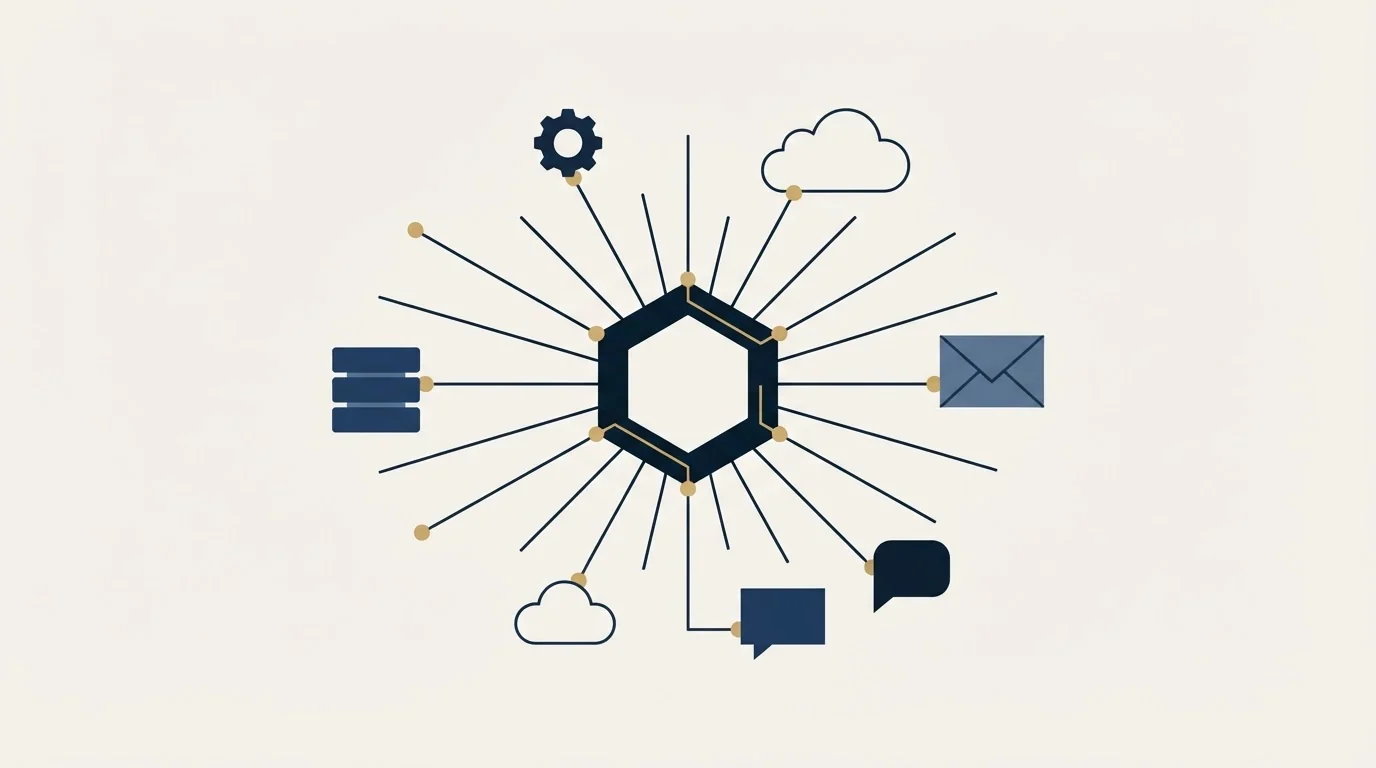
Apollo's pricing page names CRM integrations with Salesforce, HubSpot and Pipedrive, an Outreach and Salesloft integration, SendGrid and Mailgun, Gmail and Microsoft email, and LLM integrations over MCP.
Gong's integrations page returned an access block to this site's fetch, so its connector list is not reproduced here. Its pricing page says you can integrate your existing tech stack for free, and its homepage describes Gong Collective as a curated set of integrations and services. Confirm your CRM and conferencing platform with Gong directly before a trial.
Where Apollo.io And Gong Sit In A Cold Outbound Stack
Apollo is a top-of-funnel engine: find the person, verify the address, send the message. Gong is a middle-of-funnel instrument: understand the conversation that follows.
Our own house rule keeps the first half simple. We send one message per campaign and never bump a thread, so what we want from Apollo is the data and the deliverability rather than the sequence engine. Gong's value sits entirely after the meeting is booked, which is why the two so rarely compete in practice: they are answering questions at different stages, and a team that genuinely has to choose is usually choosing which stage to fix first.
Switching Between Them
These are rarely swapped for one another, so the realistic move is adding or dropping. Adding Gong to an Apollo stack means connecting the conferencing tools and the CRM first, then giving it a few weeks of calls before expecting the coaching data to say anything useful. Model the platform fee against your real seat spread, not against the outbound team alone.
Dropping Gong to save money loses the recordings, and recordings are the asset. Export or archive what you need before the contract ends. Dropping Apollo loses the database access, which means your enrichment moves to another provider and your credit costs change shape entirely.
Getting Started
- Decide which bottleneck is real: too few conversations or too few wins from the ones you have.
- Model Gong's cost as per-user licences plus a platform fee, and count every manager and leader who would want a seat.
- Test Apollo's data quality on your own segment through the free tier before paying for credits.
- Check that your CRM and conferencing platform are on Gong's integration list before the trial.
- If you might buy both, sequence them rather than negotiating both at once.
Final Thoughts
Apollo publishes a ladder you can budget from and sells the top of the funnel. Gong asks for a conversation, charges a platform fee alongside seats, and sells an understanding of the middle.
The honest answer for most teams is that these are not substitutes. Pick the stage that is actually costing you money and buy for that, then revisit when the other one becomes the constraint.
Related Reading
- Best Apollo.io Alternatives in 2026
- Best Gong Alternatives in 2026
- Apollo.io vs Outreach: Sales Engagement Platform Comparison
- Conversation intelligence
- Sales engagement platforms
- AI sales forecasting tools
If you would rather have this run for you, RevenueFlow books qualified meetings on a pay-per-meeting basis and publishes client results.
Pricing and features are taken from the vendors' own pages. Verify current terms with the vendor before relying on them.
Frequently asked questions.
Frequently asked questions- Why would a revenue team use both Apollo and Gong?
- Because they work at different stages. Apollo finds people and contacts them, with a contact database, sequences and a dialer. Gong records and analyses the calls that follow and coaches reps from them. A team with enough pipeline but too few wins adds Gong; a team with too few conversations starts with Apollo, and many teams end up running both.
- Which should an early-stage outbound team buy first, Apollo or Gong?
- Apollo, in most cases. An early-stage outbound team's bottleneck is usually too few conversations, which is the stage Apollo covers, and its Free plan lets you test the data on your own segment before paying $49 a seat a month billed annually. Gong earns its place once there are enough calls a week for coaching data to mean anything.
- Does Apollo have call recording like Gong?
- Apollo's pricing page lists call recording on its paid plans, 150 minutes on Basic and 4,000 on Professional with AI insights, plus AI call insights and pre-meeting insights from Professional. Gong's whole platform is built around recorded interactions, with Gong Enable for coaching and Gong Forecast for pipeline. Apollo's version suits reviewing calls; Gong's suits coaching at scale.
- How much does Gong cost compared to Apollo?
- Gong does not publish a price. Its pricing page says licences are priced per user, a platform fee is added based on the number of users supported, and integrations are free; a form collects team size first. Apollo publishes per-seat prices, so 20 Professional seats cost $1,580 a month billed annually. Budget Gong from a quote, never a secondhand per-seat figure.
About the author.

Tim Carden is CMO / CTO at RevenueFlow, which builds and operates outbound revenue engines for B2B companies. Studied at McGill University.
Tim Carden · CMO / CTO
Connect on LinkedIn →Explore more.
Ready to scale your outreach?
We build GTM engines that book real meetings. See the receipts.
Related articles.
Gong vs NeverBounce: Sales Engagement Platform vs Data Enrichment Tool Comparison
Gong vs NeverBounce: what Gong's own pages say about enrichment, what NeverBounce's API returns about an address, and how each vendor prices.
AiSDR vs Apollo.io: Sales Engagement Platform Comparison
Compare AiSDR and Apollo.io side by side. See pricing, features, and integrations to choose the right sales engagement platform for your needs.
AroundDeal vs Leadspicker: Data Enrichment Tool vs Sales Engagement Platform Comparison
Compare AroundDeal (data enrichment tool) and Leadspicker (sales engagement platform) side by side. See pricing, features, and integrations to decide which one, or both, your stack needs.
GetSales.io vs Yet Another Mail Merge: Sales Engagement Platform vs Cold Email Platform Comparison
Compare GetSales.io (sales engagement platform) and Yet Another Mail Merge (cold email platform) side by side. See pricing, features, and integrations to decide which one, or both, your stack needs.
ContactOut vs Luru: Data Enrichment Tool vs Sales Engagement Platform Comparison
Compare ContactOut (data enrichment tool) and Luru (sales engagement platform) side by side. See pricing, features, and integrations to decide which one, or both, your stack needs.
Enginy vs Success.ai: Sales Engagement Platform vs Cold Email Platform Comparison
Compare Enginy (sales engagement platform) and Success.ai (cold email platform) side by side. See pricing, features, and integrations to decide which one, or both, your stack needs.