AI Sales Forecasting Tools: What the Model Can See
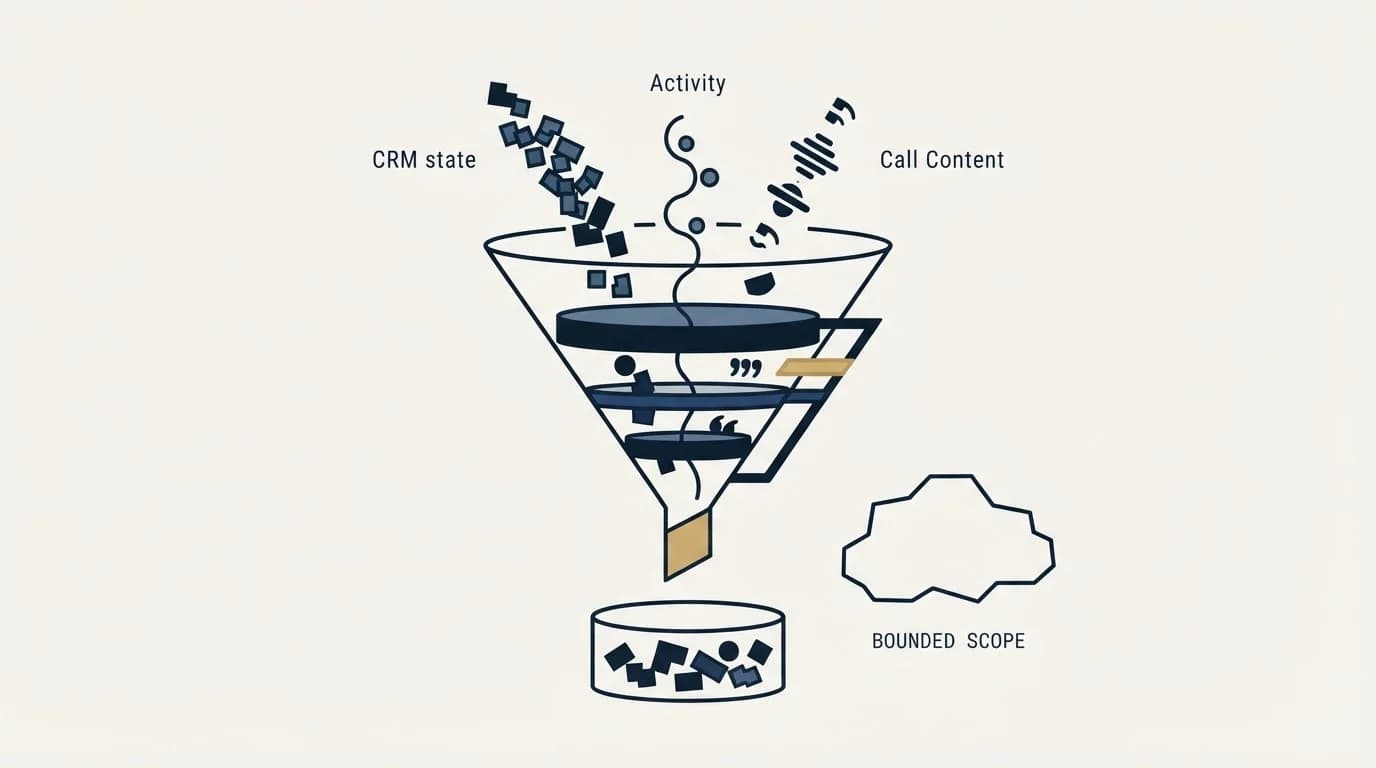
These tools read CRM state and history, sometimes activity, sometimes call content. What they can claim to know is bounded by which of those they actually ingest.
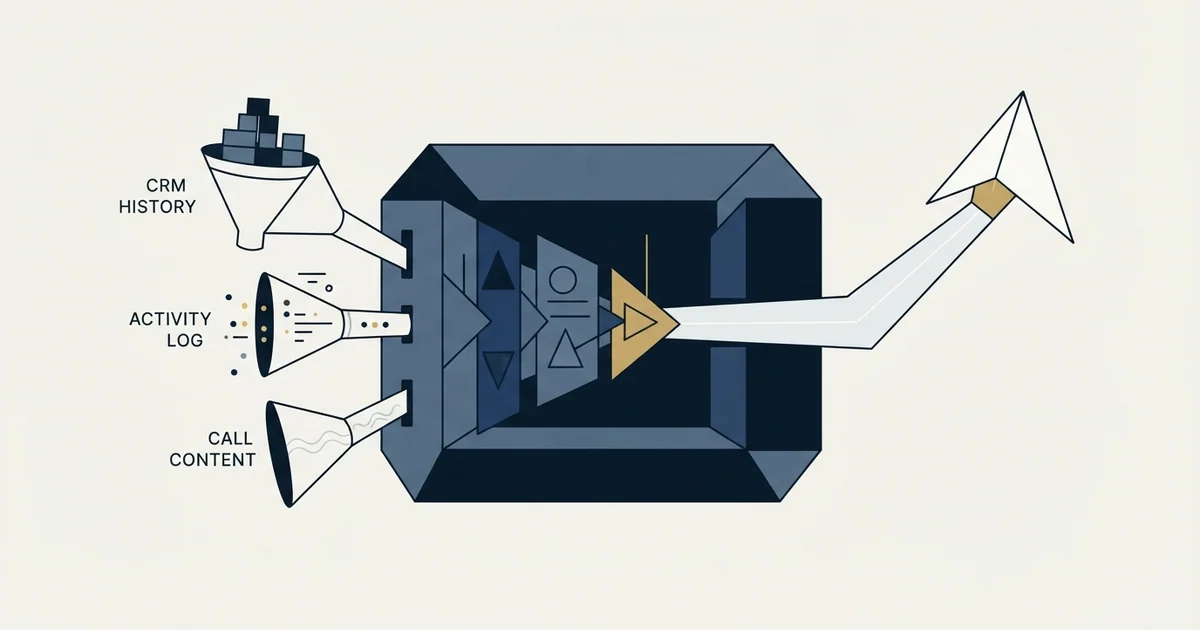
AI sales forecasting uses a model trained on your sales records to predict how much revenue will close. It reads up to three layers: CRM state and history, activity data, and conversation content. Its ceiling is set by which layers it ingests and how clean they are, so fix stage definitions first and judge tools against actuals over two cycles.
Key takeaways
- An AI sales forecasting tool reads up to three input layers, CRM state and its change history, activity data, and conversation content, and cannot know anything those layers did not capture.
- The model's real advantages are applying one standard to every deal and reading deal history at a scale nobody does by hand.
- It cannot see what was never recorded and cannot repair ambiguous stage definitions, so fix the stage exit criteria before evaluating any tool.
- Judge a forecasting tool on prediction against closed revenue over at least two full cycles, never on whether its number feels right or agrees with the rep's.
Reviewed and updated September 18, 2026
An AI sales forecasting tool that ingests your CRM will produce a number in its first week, and the number will be wrong in exactly the ways your CRM is wrong. This is the single most useful thing to understand before evaluating the category, and it is also the thing the vendors are least coy about. HubSpot's own forecasting product page answers the accuracy question by saying that forecast accuracy improves with clean CRM data and consistent deal stage management, which is a fair statement of the constraint and an unusual one to find in marketing copy.
The category is real and some of it works. What it does not do is supply judgment about data that was never captured.
What is AI sales forecasting?
AI sales forecasting uses a model trained on your own sales records to predict how much revenue will close in a period. It can read up to three layers: CRM state and its change history, activity data such as emails and meetings, and conversation content from recorded calls. What any AI sales forecasting tool can know is set by which of those layers it actually ingests, and by how well they were kept.
What these tools are reading
Strip the positioning away and there are three input sources, and which ones a given product uses determines what it can plausibly know.
CRM state and its history. Stage, amount, close date, owner, and crucially how those fields have changed over time. A model reading only current state is doing arithmetic. A model reading the history can see that a deal has been pushed three times, which is genuinely predictive.
Activity data. Emails, meetings and calls associated with the deal, usually pulled from a connected mailbox and calendar. This is where the claim of seeing engagement comes from, and it measures contact rather than progress.
Choosing which mailbox tool feeds that activity layer matters just as much to recruiters comparing email sending platforms for outreach.
Conversation content. Call recordings and transcripts, analysed for what was said. Salesloft's AI Forecast page describes its agent as analysing deals and conversations to predict whether you will meet, beat or miss revenue targets, and states that it analyses pipeline data, buyer interactions and historical deal outcomes. That is a fair description of the richest end of the category.
The practical consequence is that a product reading only the first layer cannot know anything a careful analyst with a spreadsheet could not derive. That is not a criticism, since most teams do not have that analyst, but it does set the ceiling on what the tool is buying you.
Predictive sales analytics is the category name for the same three layers, and the qualifier in front of it rarely changes anything: an inside sales team and a field team hand the model the same CRM history, so what the tool can know is set by which layers it reads rather than by which seat produced the data.
Predictive forecasting is one rung of a wider analytical ladder, and what each rung demands of the underlying records is set out in CRM analytics above the saved reports.
AI sales analytics is the same category under a broader name, and the boundary holds there too, because an analytics layer can only report on what those three input layers carried and no dashboard knows a champion left if nobody recorded it.
The two things the model genuinely does better than a person
It applies one standard to every deal. A human forecast is a set of judgments made by people with different optimism levels, different quotas and different weeks. A model applies the same function to every row, which makes the output comparable across a team even when it is wrong. Comparable error is more useful than uncomparable accuracy, because you can correct a consistent bias and you cannot correct an inconsistent one.
It reads history at a scale nobody does by hand. The prediction that a deal pushed twice will push again is available to anyone who looks, and nobody looks at every deal every week. This is the bulk of the real value in the category, and it is the least exciting way to describe it.
The two things it cannot do, whatever the positioning says
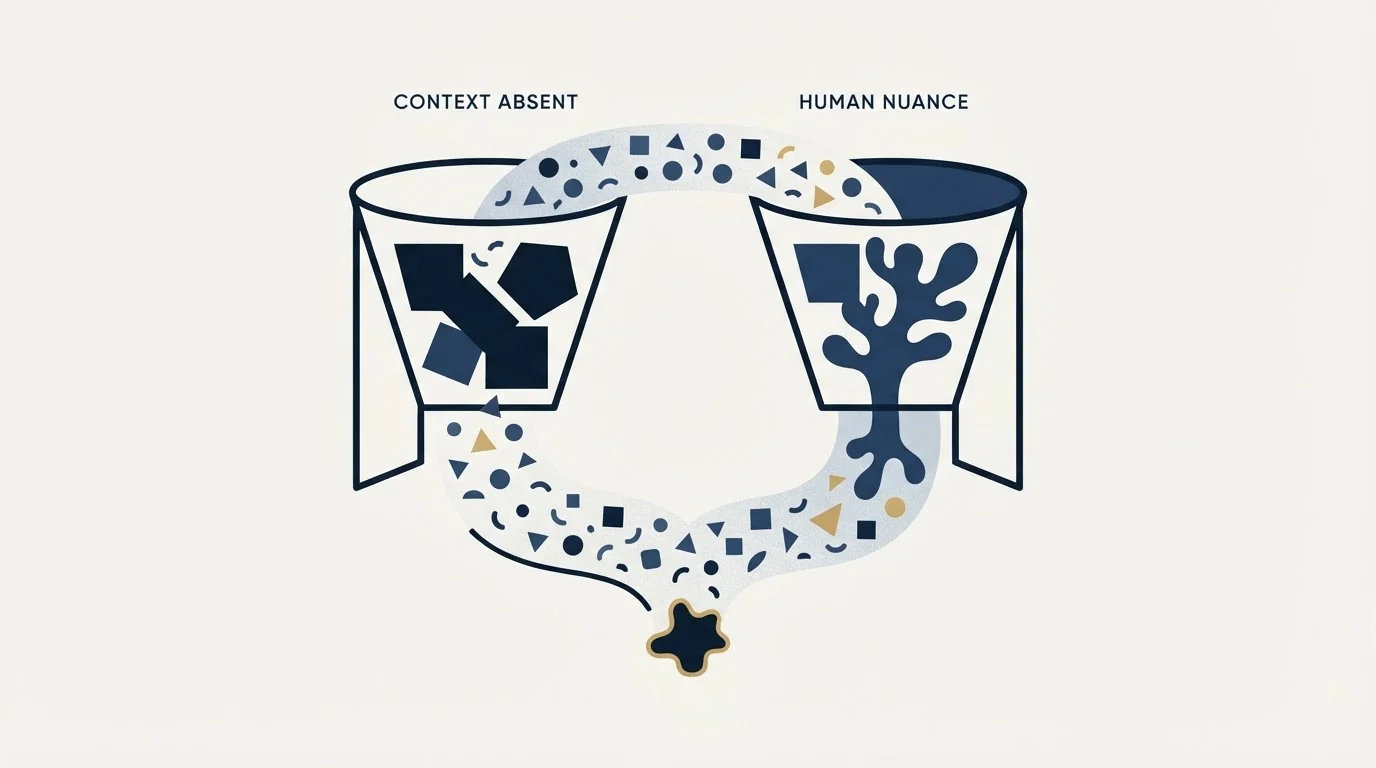
It cannot see what was not recorded. A deal where the champion left the company three weeks ago looks identical to a healthy deal if nobody updated the record. Activity data closes part of that gap and conversation data closes more of it, but every layer is still a record of things that touched your systems. The buying group's internal meeting, where the decision is actually made, touches nothing you own.
The article on best email sending tools for solopreneurs rounds up outreach platforms whose activity logs are exactly the kind of data a forecasting model needs to read.
It cannot fix the stage definitions. If two reps mean different things by Proposal, the model is learning from a label that means two things, and it will produce a confident number built on that ambiguity. This is the failure mode worth taking seriously before buying anything, and sales pipeline stages has the test that prevents it: every stage needs an exit criterion someone other than the deal owner could check. A tool bought to avoid doing that work will reproduce the problem with a better interface.
Judging accuracy without fooling yourself
There is one honest evaluation and it takes two quarters. Record the tool's prediction at a fixed point in the period, record what actually closed, and compare. Do that for two full cycles before concluding anything, because a single quarter of agreement between a model and reality is as likely to be luck as skill.
The trap is judging the tool on whether its number feels right, which selects for models that agree with the leadership's existing expectation. A forecasting tool that never disagrees with the sales leader is an expensive mirror. The value, when there is value, is in the weeks it says something unwelcome and turns out to be correct.
The other trap is comparing the tool's number against the rep-submitted number and treating agreement as validation. Both are reading the same underlying pipeline, so agreement mostly tells you the pipeline is internally consistent. Only closed revenue settles it.
Underneath both traps sits the same question every forecasting method has to answer, which is what it trusts and why. A stage-weighted forecast trusts the historical conversion rate of a stage. A commit forecast trusts the rep. A model trusts the patterns in whatever it was allowed to read. The AI category does not escape that question; it makes the assumption harder to inspect, because the weighting is learned rather than declared. The SaaS sales funnel sets out the discipline that makes any of them work, which is defining every stage exit by something the buyer did rather than something the seller felt.
Where the category fits worst
Two situations make these products a poor purchase, and both are common in the companies most attracted to them.
The first is a young pipeline. A model reading deal history needs history, and a company with four quarters of records and a changing sales motion does not have a stable population to learn from. Every input has shifted underneath the data: the segment, the price, the stage definitions, often the whole team. A prediction built on that is fitting noise, and the confidence it reports is a property of the model rather than of your business.
The second is a small deal count. A team closing a modest number of deals per quarter hits the same problem that afflicts every conversion metric at low volume: the numbers look like information and are not. One large deal landing or slipping moves the whole picture, and no amount of modelling recovers a signal from a sample that small. The honest instrument at that size is a deal-by-deal review with named blockers, which is cheaper and more accurate than anything you could buy.
The category works best where it is least exciting: an established motion, consistent stage definitions, several years of history, and enough deals per period that the aggregate is stable. That is also the profile of a company that already forecasts reasonably well, which is the awkward truth underneath the category's marketing.
A poor purchase
- A young pipeline: four quarters of records and a changing sales motion
- A small deal count, where one large deal moves the whole picture
- Use a deal-by-deal review with named blockers
Where it works
- An established motion
- Consistent stage definitions
- Several years of history
- Enough deals per period for a stable aggregate
What to ask in the demo
Four questions separate a useful evaluation from a tour.
Ask what happens when a rep works a deal outside the connected systems. The answer tells you how much of the activity layer is real coverage and how much is assumption.
Ask the vendor to run the model on your last two closed quarters and show what it would have predicted. Any product confident in its history reading can do this, and the exercise is far more informative than a forward-looking demo on live deals nobody can grade yet.
Ask which fields the model treats as load-bearing. If close date and amount carry most of the weight, the product is reading the same two fields your reps already guess at, and the sophistication is in the presentation.
Ask what the tool does when it disagrees with the rep. A product that silently averages the two has hidden the most useful thing it produces, which is the list of deals where the model and the human see different things.
Where this sits against the adjacent categories
Forecasting tools overlap heavily with pipeline management tools and are sold into the same budget, which makes the boundary worth stating. A pipeline management tool is bought to change what sellers do. A forecasting tool is bought to change what leadership believes. Buying one expecting the other is the commonest disappointment in this category, and the two are frequently sold by the same vendor as modules of one platform.
If the pipeline itself is unreadable, neither purchase helps, and the work is in the CRM configuration rather than in a new product. Every field the model reads was typed in by the person it describes, which is the root of all of this, and choosing the system it lives in is the adjacent decision covered in CRM tools for B2B SaaS. Two related figures are worth holding beside any model output: pipeline coverage and sales velocity, both of which move for reasons a forecast model will attribute to something else.
On price, and why this section is short
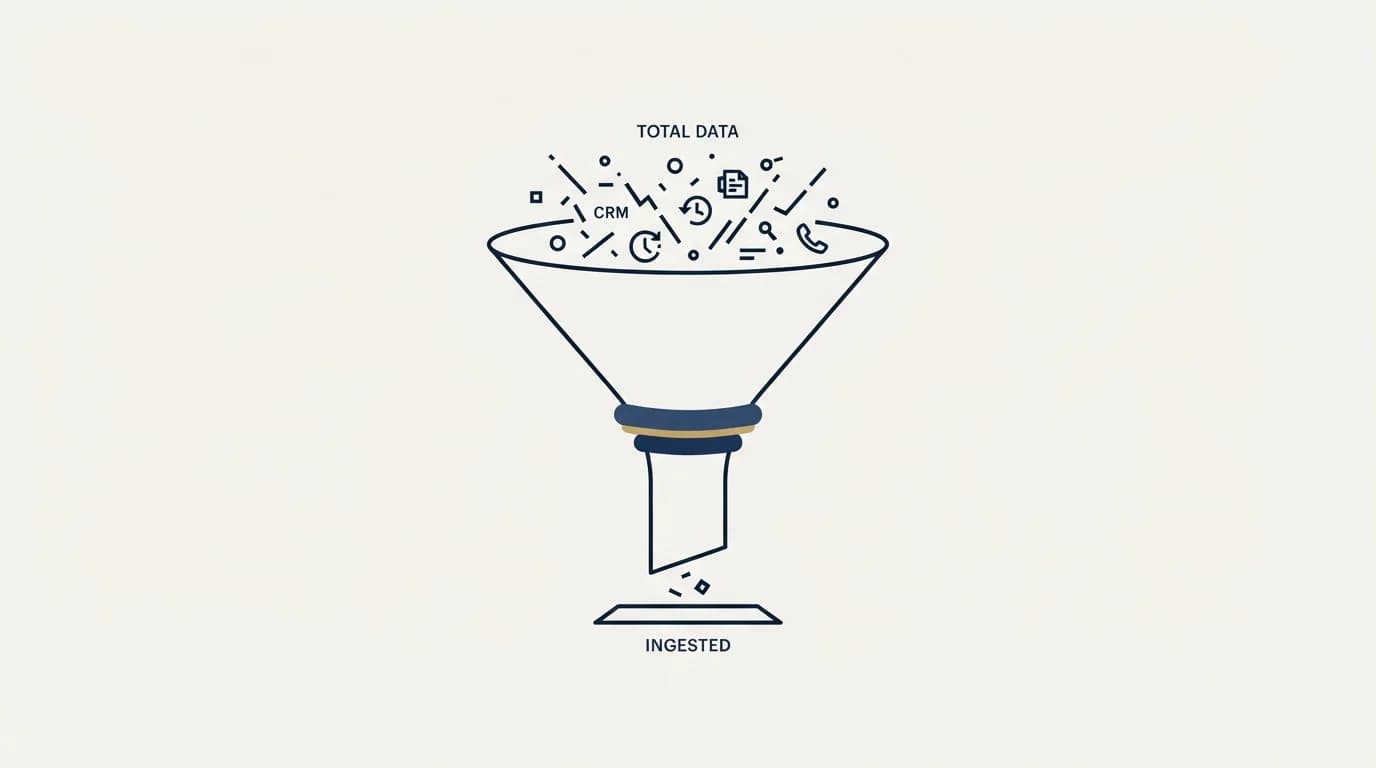
Price comparison is not available to a reader of these vendors' own pages. Clari's pricing address no longer exists as a page of its own: it redirects to a Salesloft demo form, because Clari and Salesloft completed their merger on December 3, 2025, and Salesloft now sells Clari Forecast inside its own platform. HubSpot's forecasting product page publishes no figure and routes to a demo request. Salesloft's AI Forecast page publishes no figure and routes to Talk to Sales. Those are the surfaces checked directly, and each is a statement about that page rather than about everything the vendor has ever published.
Practically, this means any per-seat figure you find in a comparison article came from somewhere other than the vendor, and the number you will pay is the one you negotiate. Budget for the evaluation to include a real quote rather than a published rate, and expect the quote to depend on seat count and on which adjacent modules get bundled in.
The short version
These tools read CRM state and history, sometimes activity, sometimes conversation content, and their ceiling is set by which of those they actually ingest. Their genuine advantages are consistency across a team and reading history at a scale nobody matches by hand. They cannot see what was never recorded and they cannot repair ambiguous stage definitions, so fix the stages first and buy second. Judge on prediction against actuals over two full cycles, not on whether the number feels right. None of the vendor pages checked here publishes a price.
Pricing and features verified as of mid-2026. Verify current terms with the vendor before relying on them.
If the pipeline going into the forecast is the thin part, a test campaign is the cheaper end of that problem.
Frequently asked questions.
Frequently asked questions- What is AI sales forecasting?
- AI sales forecasting uses a model trained on your own sales records to predict how much revenue will close in a period. Depending on the product it reads CRM state and its change history, activity data such as emails and meetings, and conversation content from recorded calls. What it can know is bounded by which of those layers it ingests.
- How accurate are AI sales forecasting tools?
- As accurate as the data underneath them. HubSpot's own forecasting page says accuracy improves with clean CRM data and consistent deal stage management. A model reproduces your CRM's errors with more consistency, which is useful because a consistent bias can be corrected. Measure accuracy yourself by comparing predictions with closed revenue over two full cycles.
- Which companies should not buy a sales forecasting tool?
- Two kinds. A company with a young pipeline, around four quarters of records and a changing sales motion, has no stable history for a model to learn from. A team with a small deal count gets numbers that look like information and are not, because one large deal moves everything. Both do better with a deal-by-deal review.
- How much do AI sales forecasting tools cost?
- The vendor pages checked for this guide publish no price. HubSpot's forecasting page routes to a demo request, Salesloft's AI Forecast page routes to Talk to Sales, and Clari's old pricing address now redirects to a Salesloft demo form since the two companies merged. Expect a negotiated quote that depends on seat count and bundled modules.
About the author.

Ben Carden is CRO at RevenueFlow, which builds and operates outbound revenue engines for B2B companies. Previously at Gartner Enterprise. Studied at London School of Economics.
Ben Carden · CRO
Connect on LinkedIn →Explore more.
Ready to scale your outreach?
We build GTM engines that book real meetings. See the receipts.
Related articles.
SFDC Sales Process: The Picklist Decides What a Stage Is
In Salesforce a sales process is a named subset of the Opportunity Stage picklist. What it enforces, what it silently leaves behind, and the order to build it in.
Optimising a Sales Process: Measure First, Then Delete
The step that feels worst is rarely the one costing most. Three measurements that find the real bottleneck, four causes worth checking, and why deleting beats adding.
Monthly Sales Meeting Agenda: What the Month Decides
The weekly meeting triages deals in flight. The monthly one closes a period and changes the list. Six blocks, ninety minutes, one output each.
Xactly Competitors: Nobody Publishes a Price
Five sales compensation platforms, none publishing a rate. What their own pages say about the unit each bills on, the setup fee, and what sits outside the subscription.
Sales Activity Tracking: What the Record Has to Say
Most activity tracking fails at capture rather than analysis. The unit you count decides what every later number can mean, and no tool fixes a wrong choice.
Sales Commission: A Plan That Survives a Bad Quarter
The headline rate is the last decision, not the first. How to derive a commission plan from contract value and margin, and the clauses that decide a bad quarter.